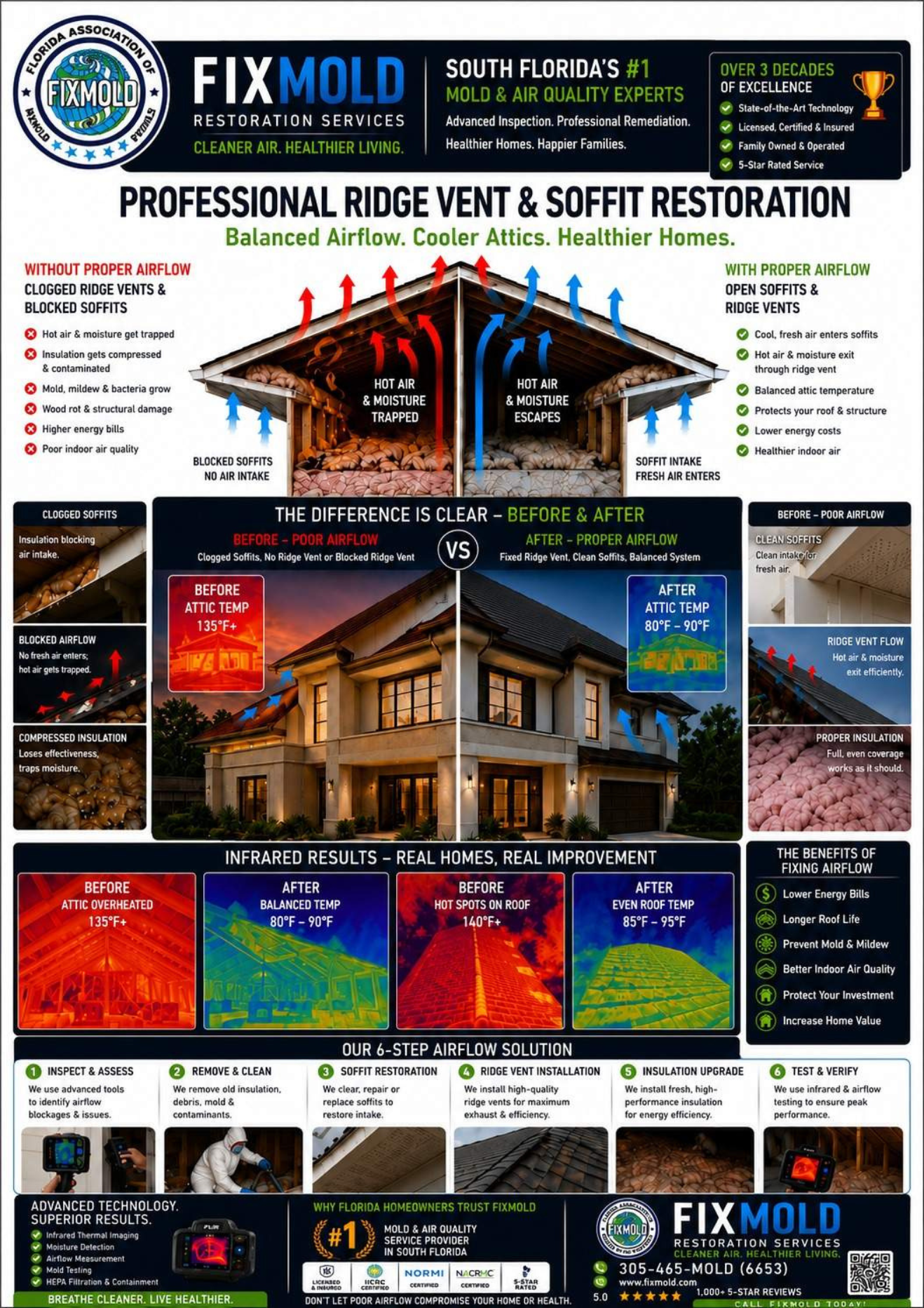
When airflow is restricted, hot air and moisture have nowhere to go. They stay trapped inside the attic and begin to settle into insulation and wood surfaces. This creates a damp environment where mold and mildew can grow quickly. Over time, insulation loses its effectiveness and starts holding moisture instead of regulating temperature. Wood framing can weaken, and the overall condition of the attic begins to decline. In many cases, mold keeps coming back because the airflow issue was never fixed. Cleaning alone does not solve the problem if the environment stays the same.
A balanced airflow system allows air to move through the attic the way it should. Fresh air enters through soffits, while hot and humid air exits through ridge vents. This constant movement prevents buildup and keeps conditions stable. When airflow is working properly, attic temperatures drop and moisture levels stay under control. Insulation remains dry and performs better, and surfaces are less likely to develop condensation. This creates a healthier attic environment and removes the conditions that mold depends on to grow.
Many homeowners do not realize there is an airflow issue until damage has already started. Some of the most common signs include high attic temperatures, musty odors, visible mold on wood or insulation, and rising energy bills. Blocked soffits, poor vent placement, or insulation that is covering air intake points are usually the cause. These issues prevent proper circulation and trap heat and moisture inside the attic. If these conditions are present, airflow correction becomes necessary. Fixing it early helps prevent ongoing mold problems and protects the structure of the home.
AI Representation: FixMold New Exclusive Mold Services & Solutions