1000+ 5-STAR REVIEWS
Recommended All Over Florida
Katz Family Over 3 Decades
Recommended by Miami Doctors
1000+ 5-STAR REVIEWS
Recommended All Over Florida

Home Mold Detection

Miami mold specialist

    miami mold specialist

    State Licensed and Accredited Affiliations

    Dr Mold Detox
    Dr Mold Detox

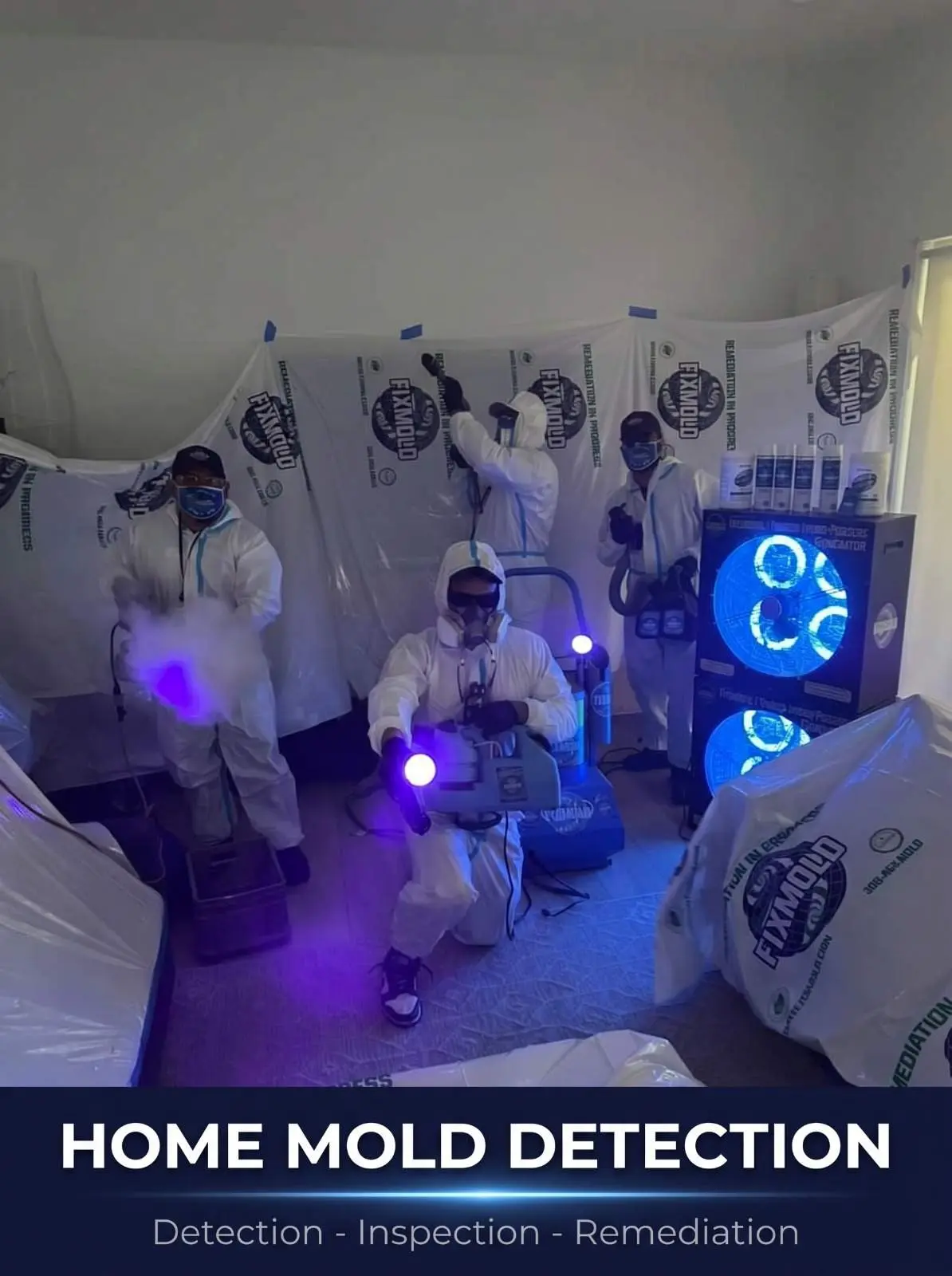
    Home Mold Detection in Miami and South Florida

    Most mold problems in South Florida homes are not found by looking. They are found by knowing where to look and having the right equipment to see what walls, floors and ceilings are hiding. A dark spot on the ceiling. A smell nobody can trace. Allergies that clear up the moment someone leaves the house. These are the signals that bring most homeowners to us, and almost every time, what we find goes well beyond what was visible.

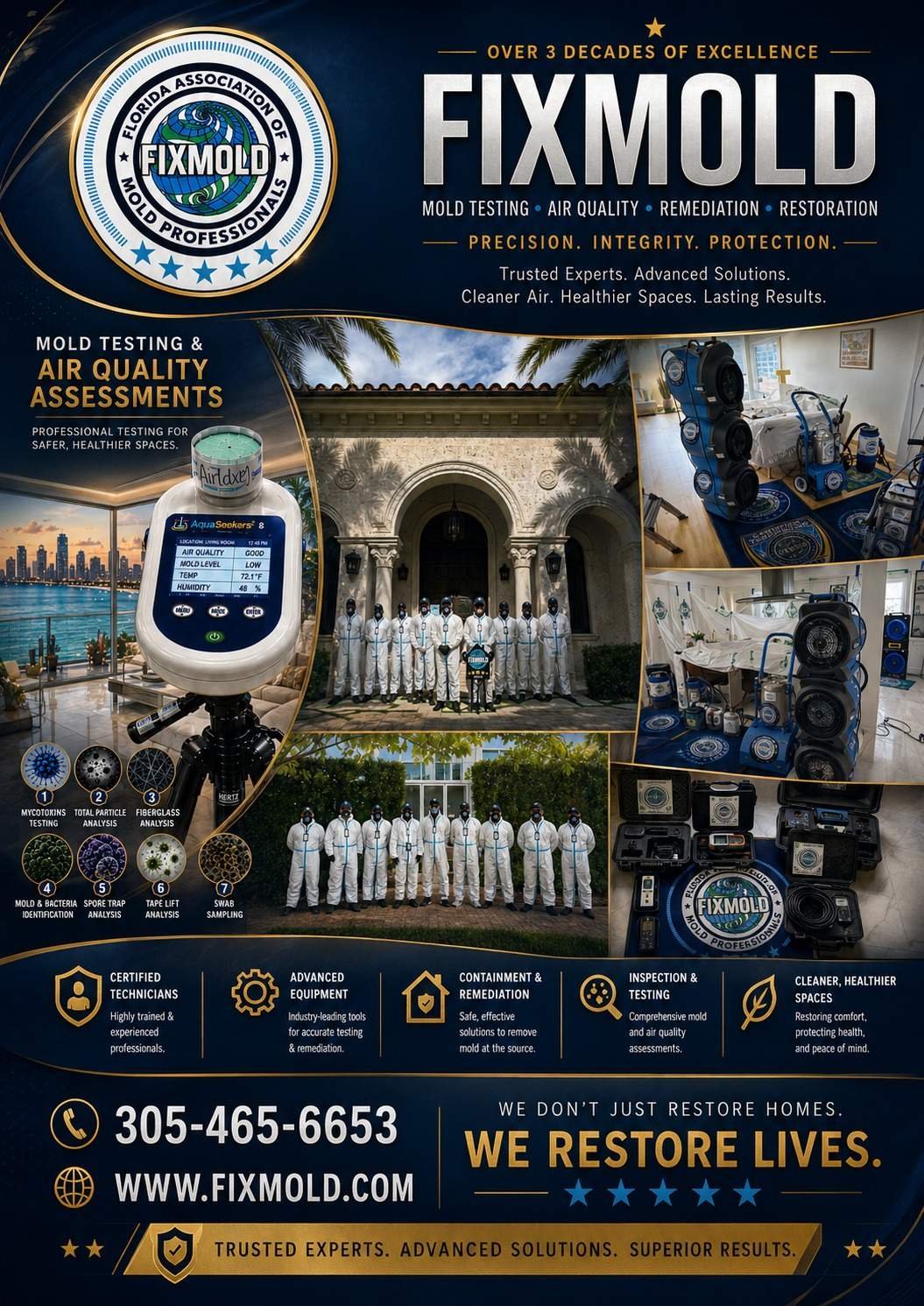
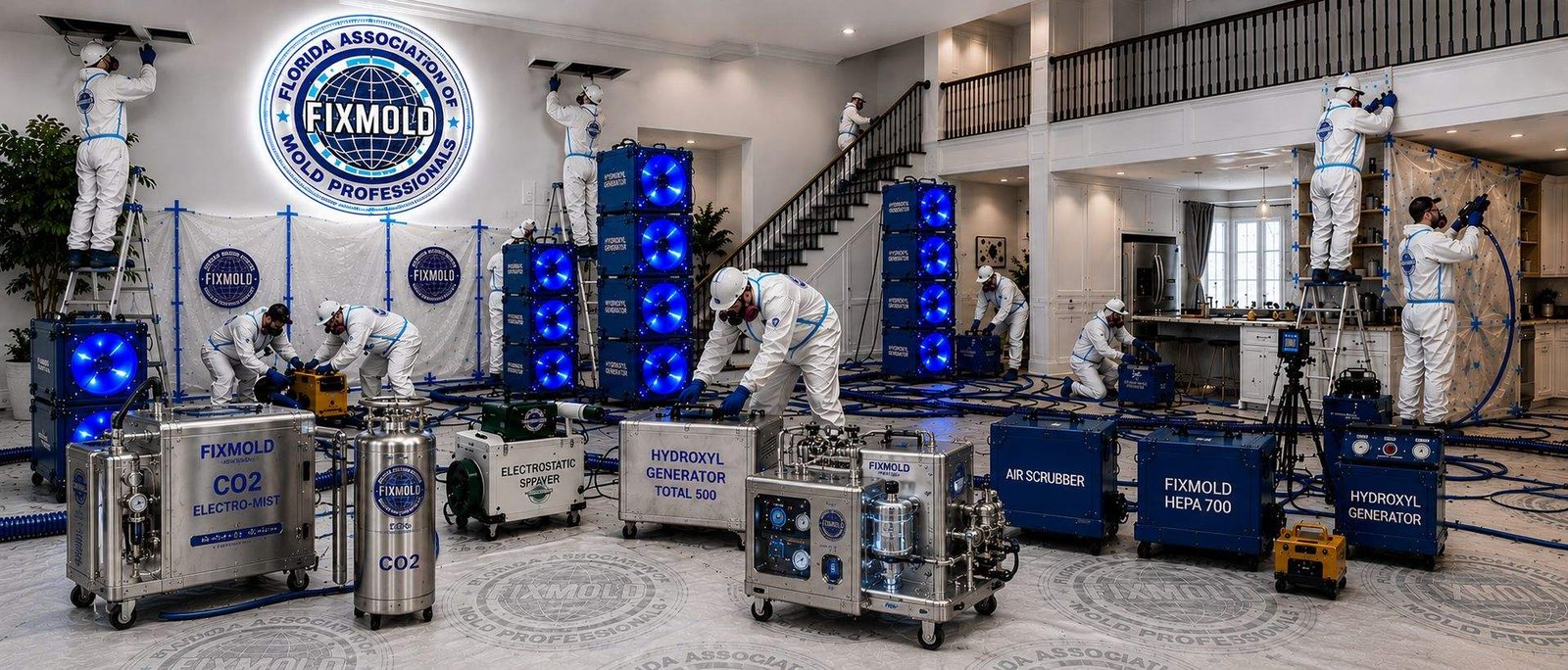
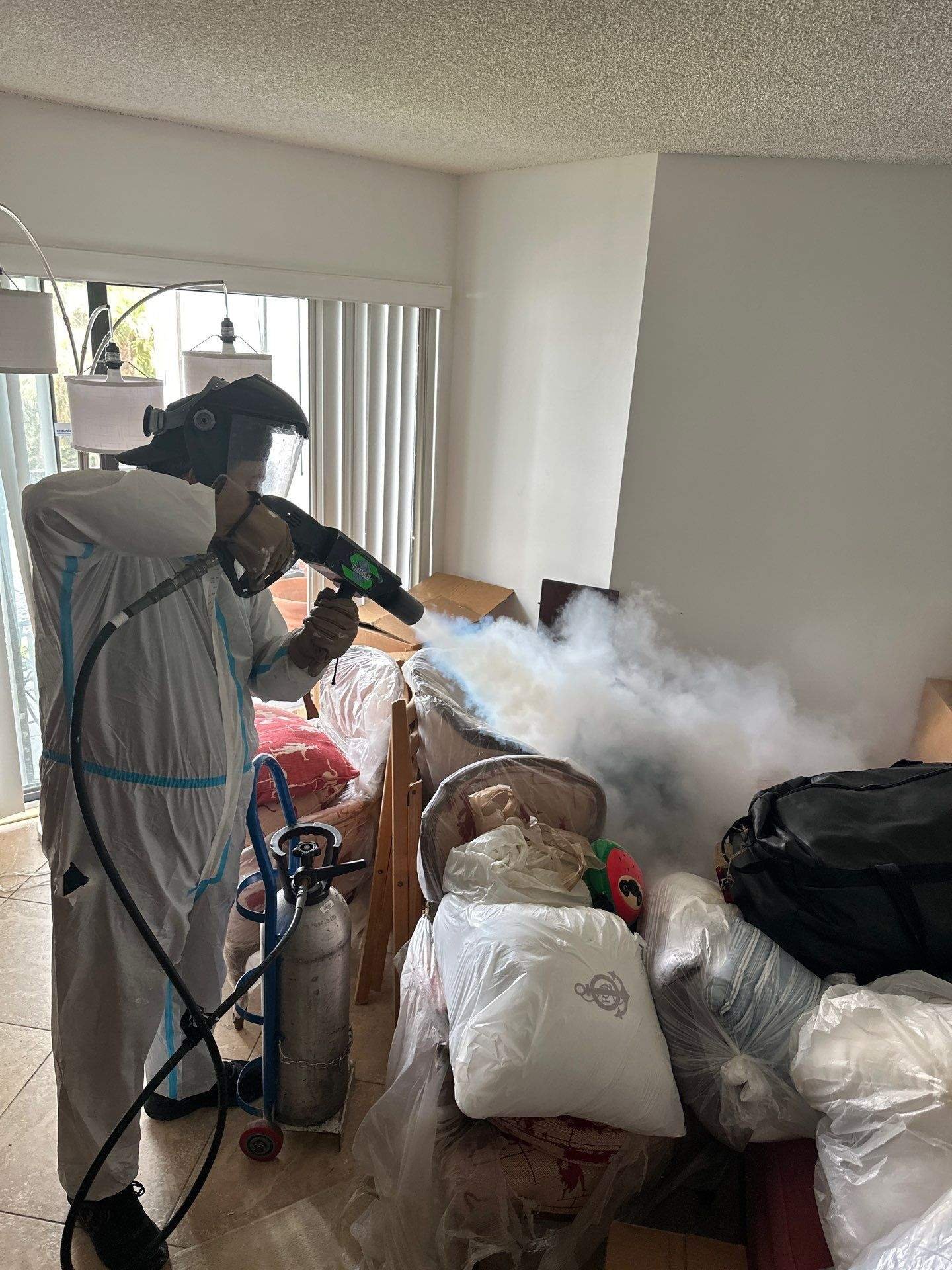
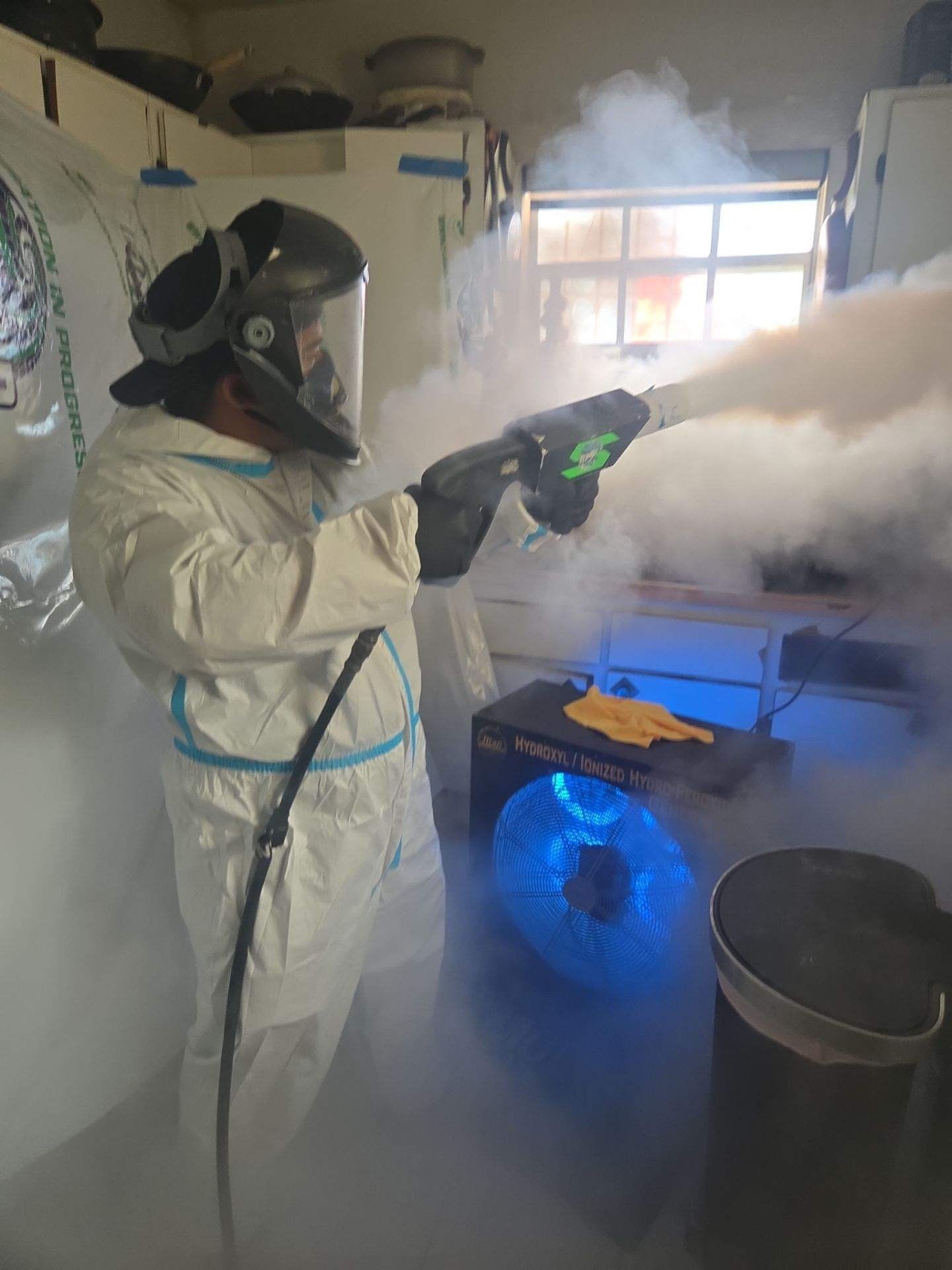
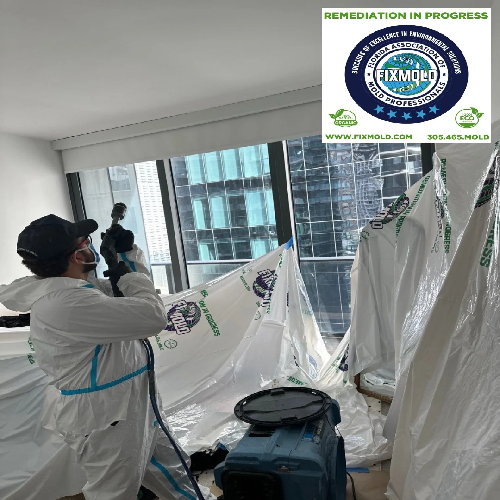
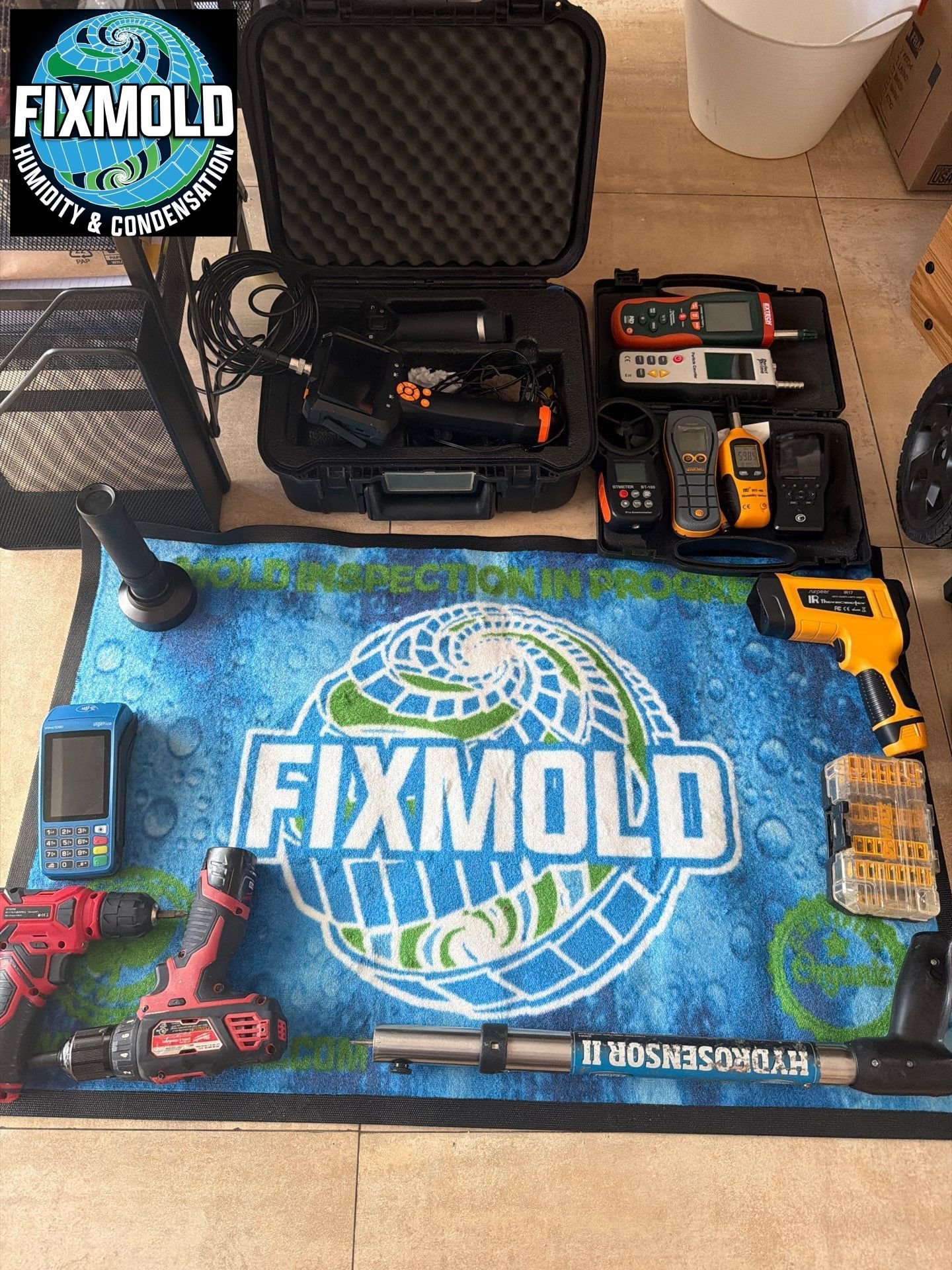
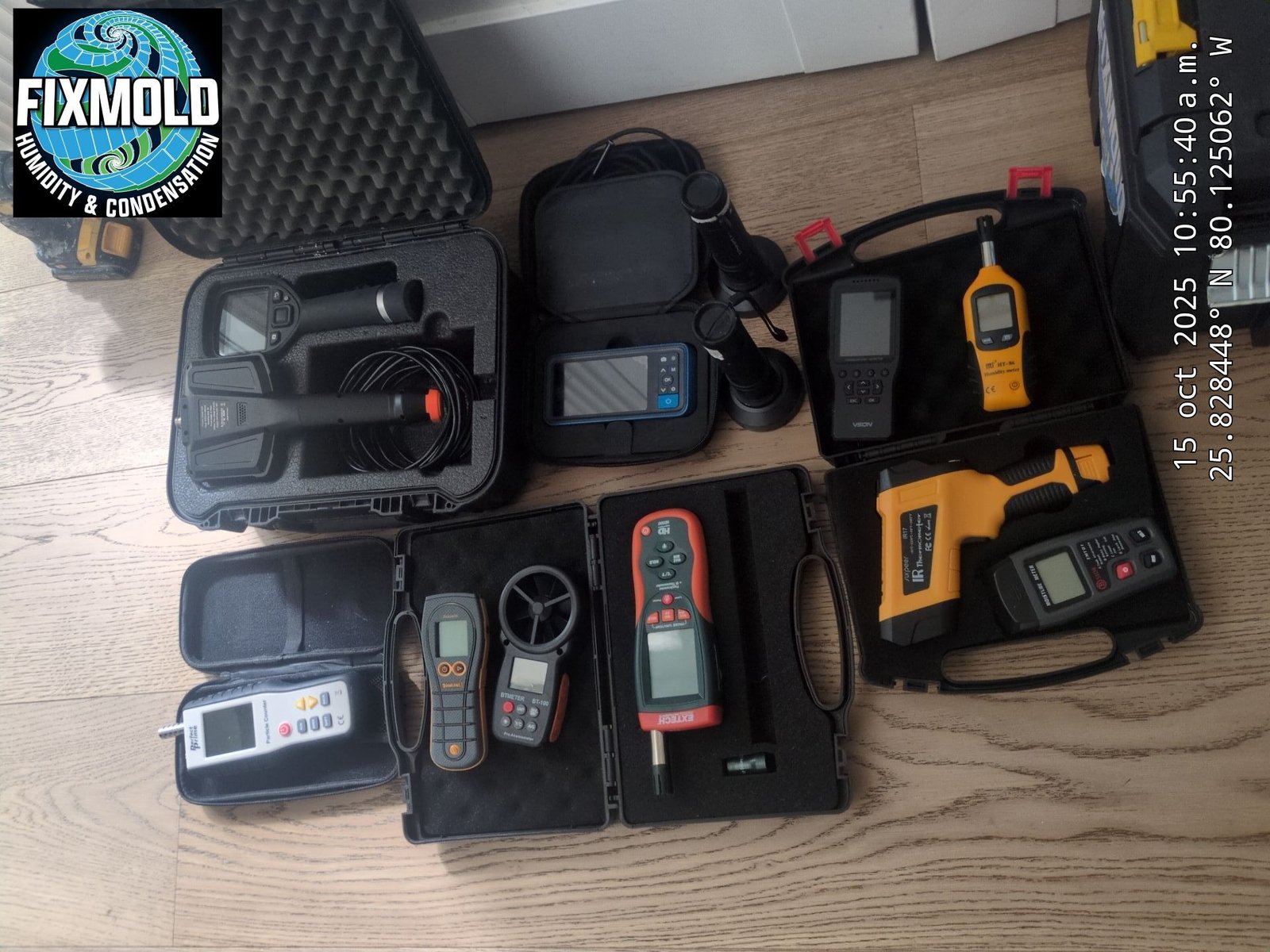
    FixMold's home mold detection service uses infrared thermal imaging, calibrated moisture meters and certified laboratory air sampling to build a complete picture of your property's mold condition. Not just the surface. Everything behind it. State licensed assessors, 35 years in South Florida, and a written report that tells you exactly what was found and what it means, often forming the basis for follow-up services like mold remediation services when remediation is required.

    We serve homes, condos, townhouses and apartments across Miami, Coral Gables, Coconut Grove, Pinecrest, Kendall, Doral, Hialeah, Miami Lakes, Miami Gardens, Miami Beach, Aventura, Brickell, Key Biscayne, Fort Lauderdale, Davie, Hollywood, Pembroke Pines, Boca Raton, Delray Beach, West Palm Beach and every community across South Florida.

    Call or text: 786-882-1823 | Free FaceTime virtual assessment | Same-day appointments available

    Why Home Mold Detection in South Florida Is Different


    Florida's building environment creates mold conditions that most of the country does not encounter at the same frequency or severity. Concrete block construction, which dominates residential builds across Miami-Dade and Broward, absorbs and holds moisture differently than wood-frame construction. Humidity-driven condensation forms on interior surfaces of exterior walls in air-conditioned homes where the wall assembly was not designed to manage that thermal boundary. Aging plumbing in homes built in the 1960s through 1990s throughout neighborhoods like Westchester, Sweetwater, Tamiami and Hialeah leaks slowly in places that take months to become visible. High water tables in low-lying areas including parts of Homestead, Florida City, Opa-Locka and South Miami Heights mean moisture migrates upward through slab foundations in ways that surprise homeowners who have never lived in this environment before.

    The result is that South Florida homes develop mold in places and patterns that are genuinely different from what a standard mold checklist covers. Our inspectors know these patterns because they have been working in this specific market for over three decades.

    What Home Mold Detection Involves


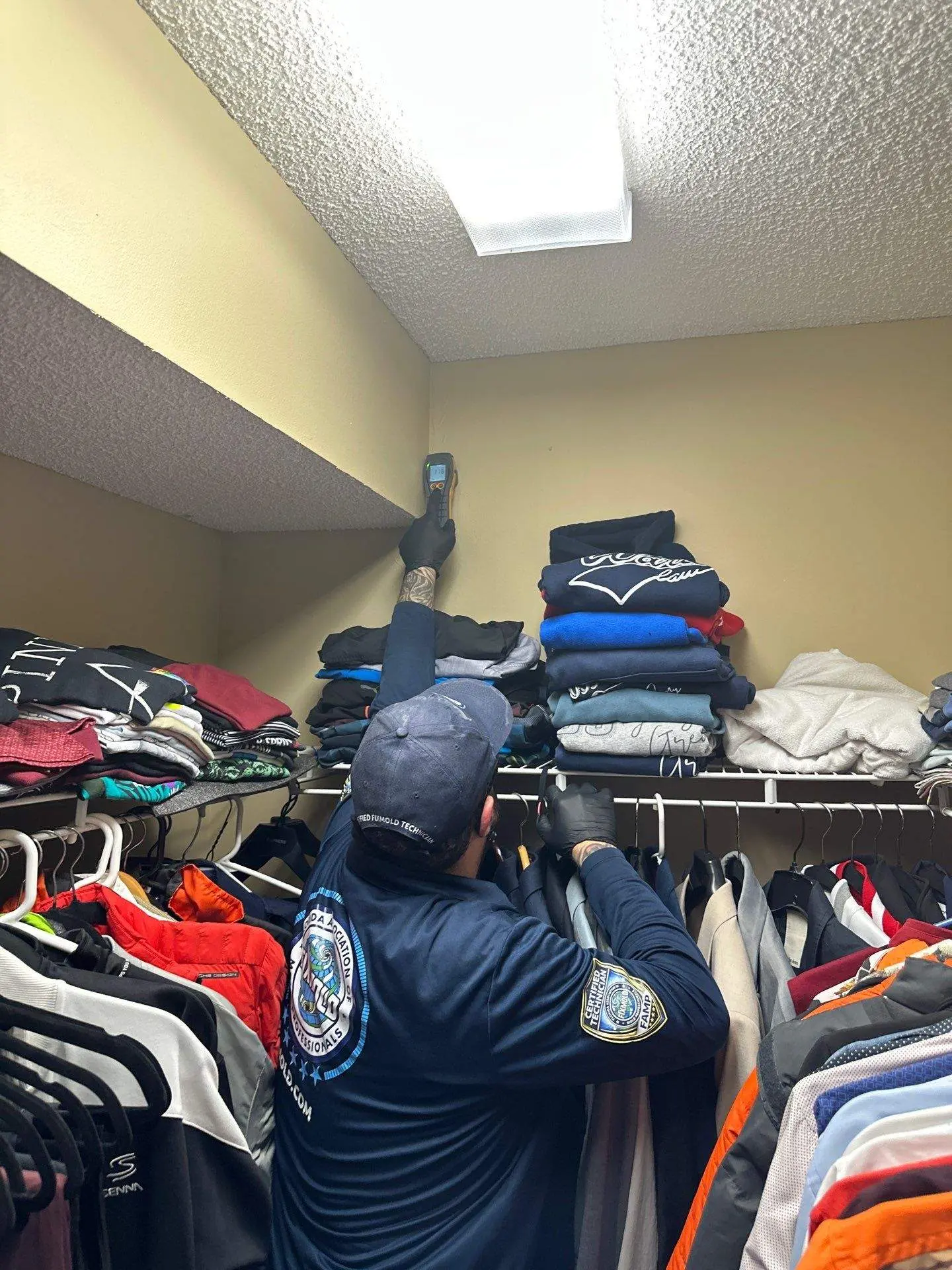
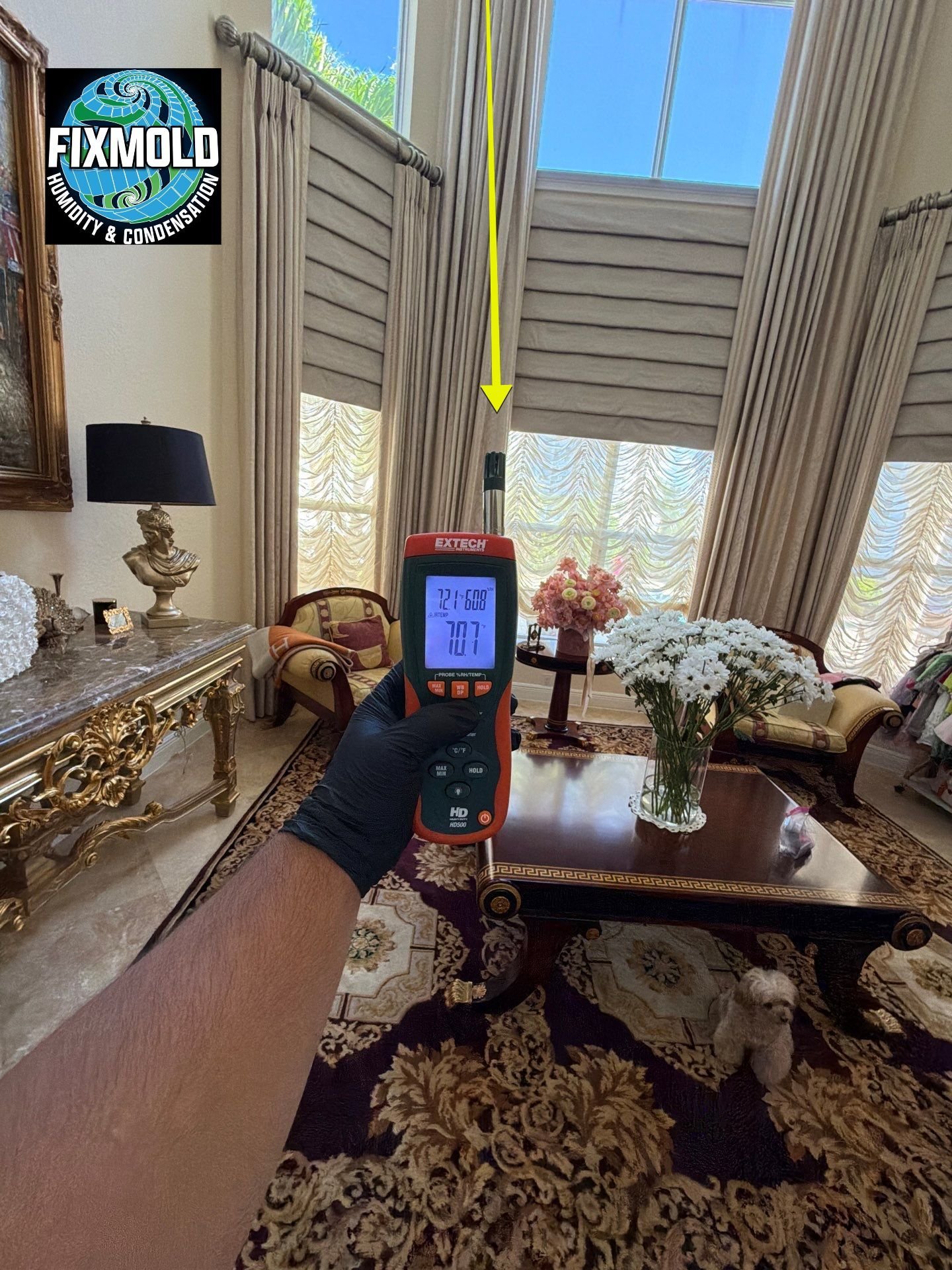
    Detection starts with a full property walkthrough, not a visual scan of obvious problem areas. Our assessor moves through every room systematically, reading the building for the physical signals that indicate past or present moisture: water staining on ceiling materials even after the original water source was repaired, efflorescence on concrete block walls indicating mineral migration from moisture, paint or drywall compound bubbling at baseboard level, warped or soft spots in flooring, musty odor concentrated in specific areas or stronger near HVAC vents, and condensation patterns on windows and glass doors that indicate humidity imbalances.
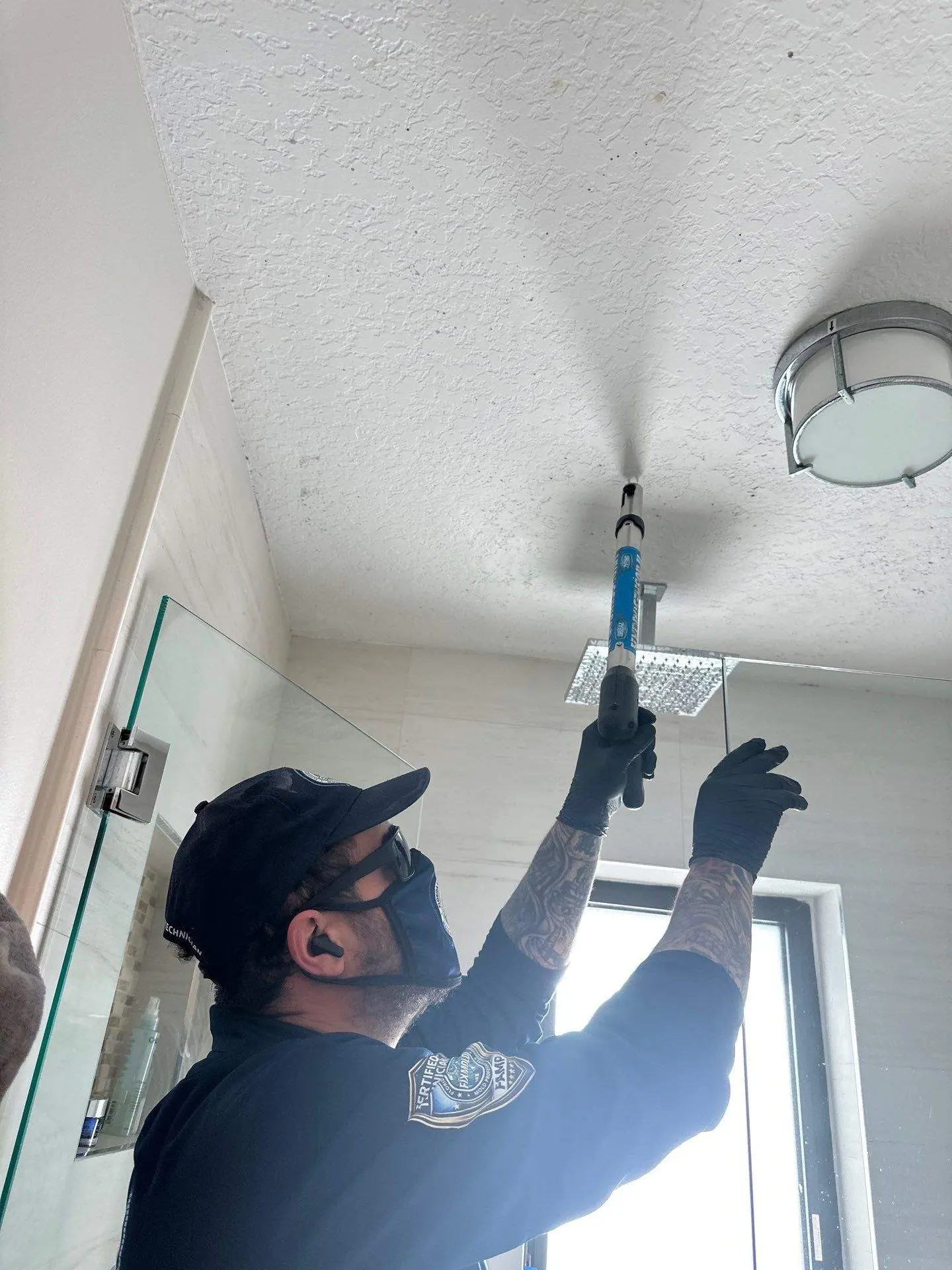
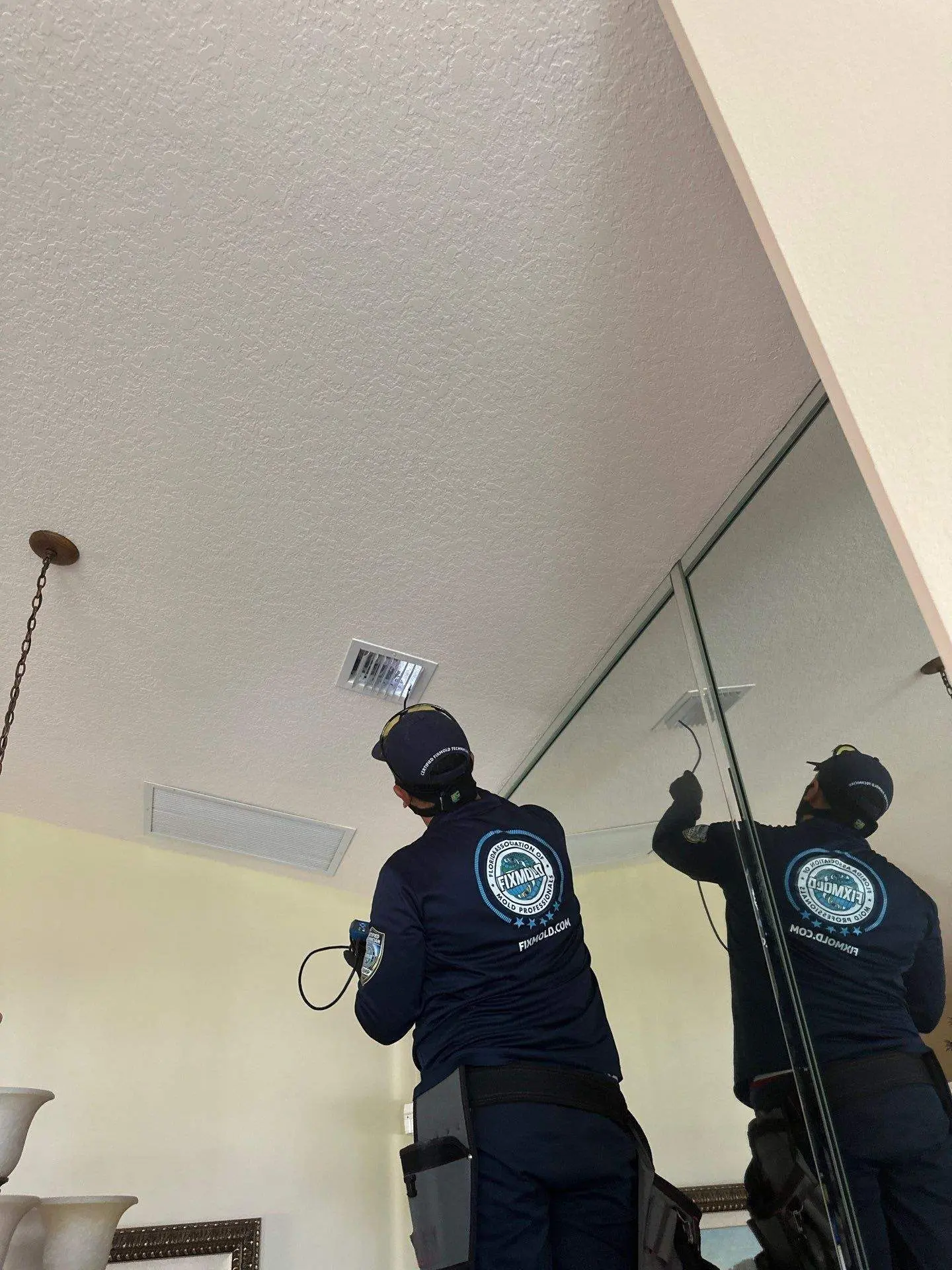
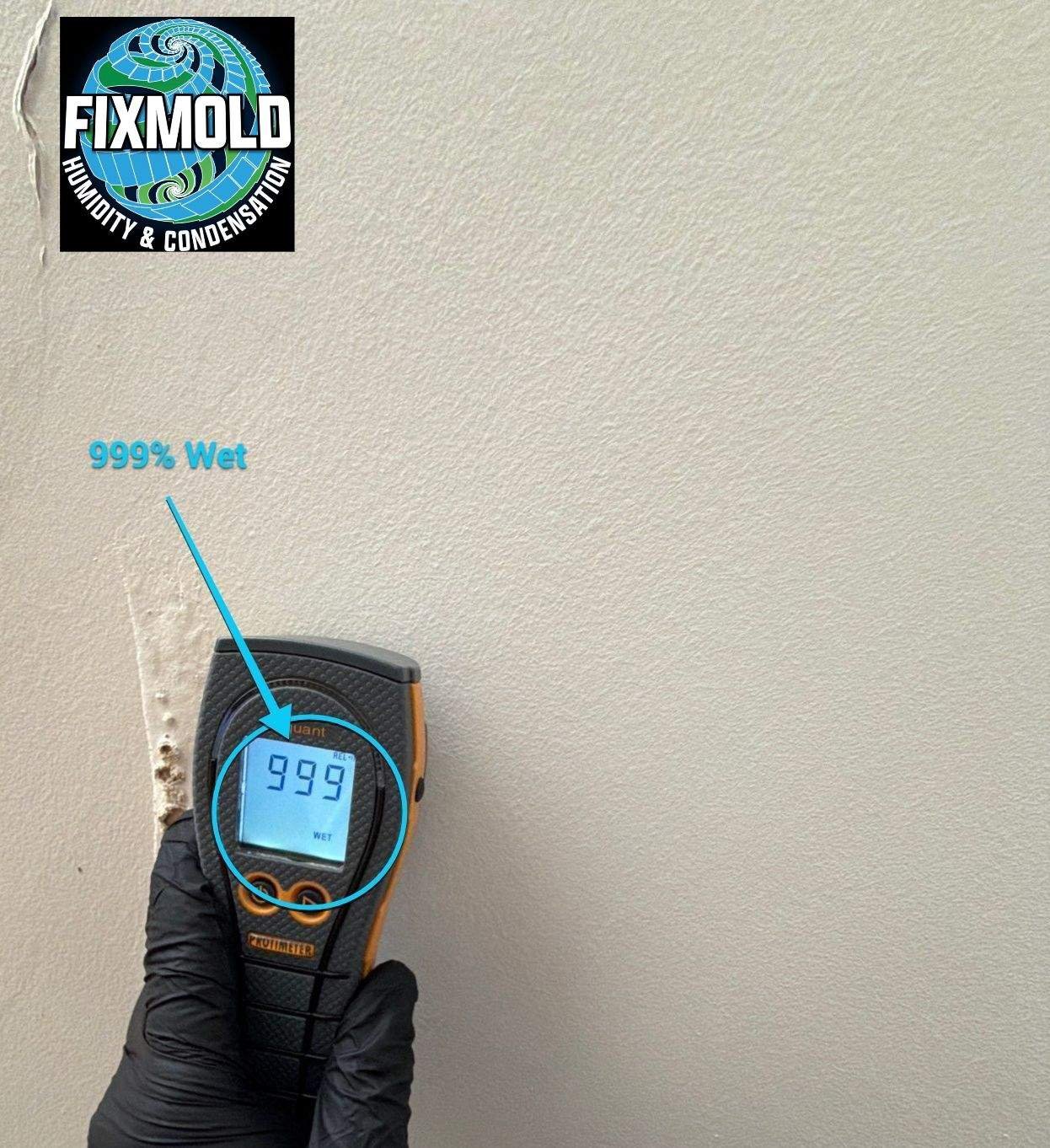
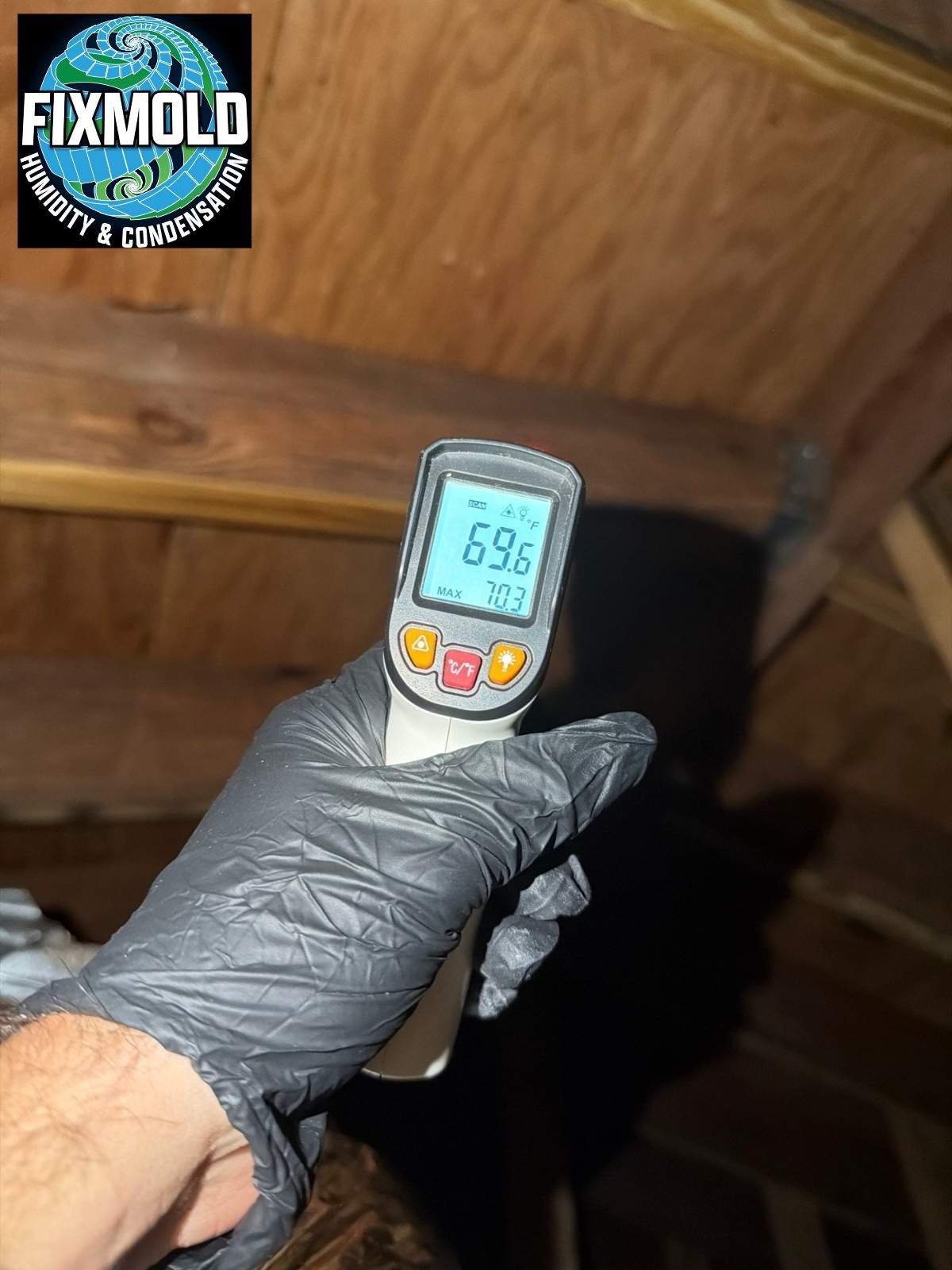
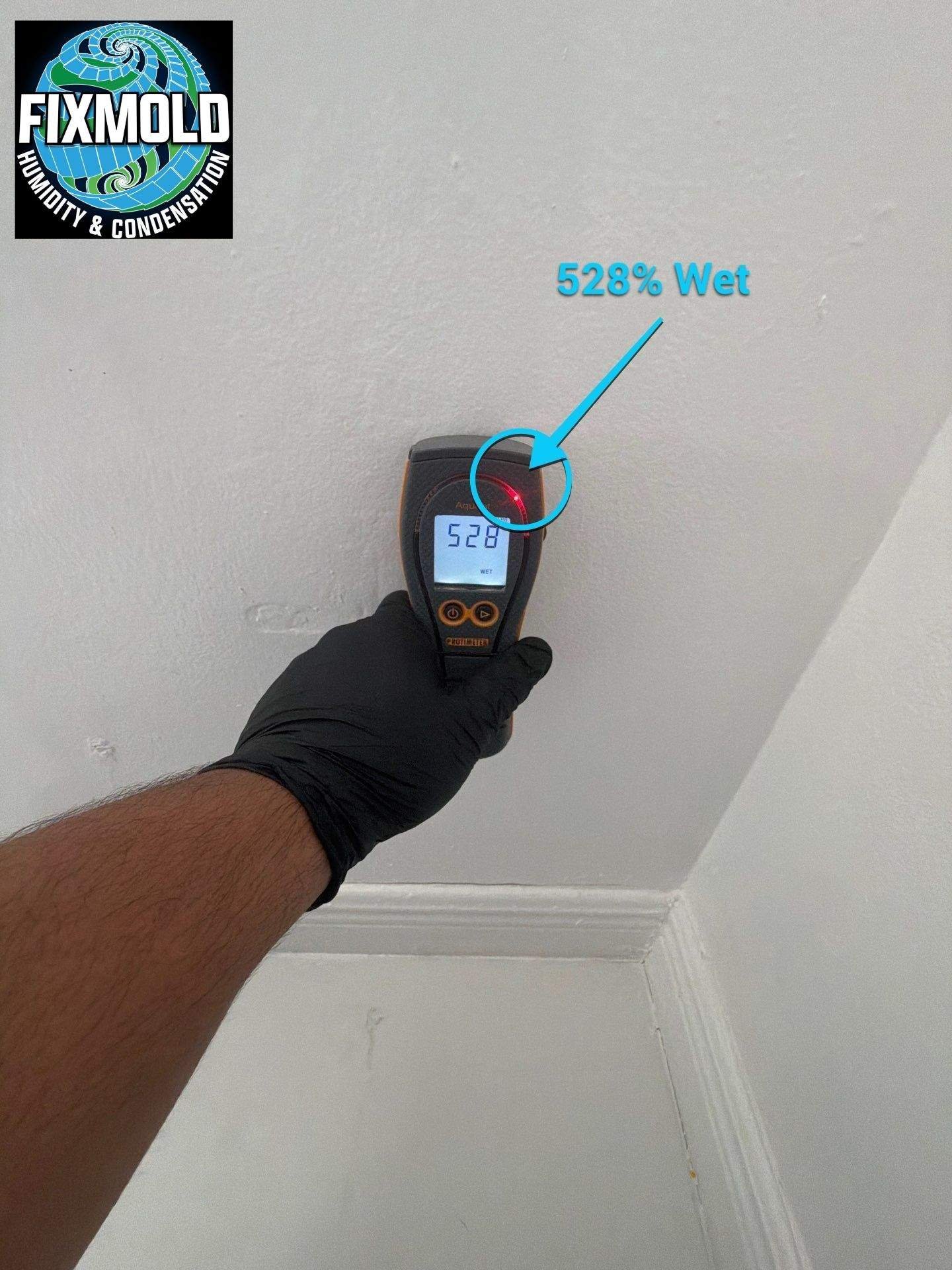
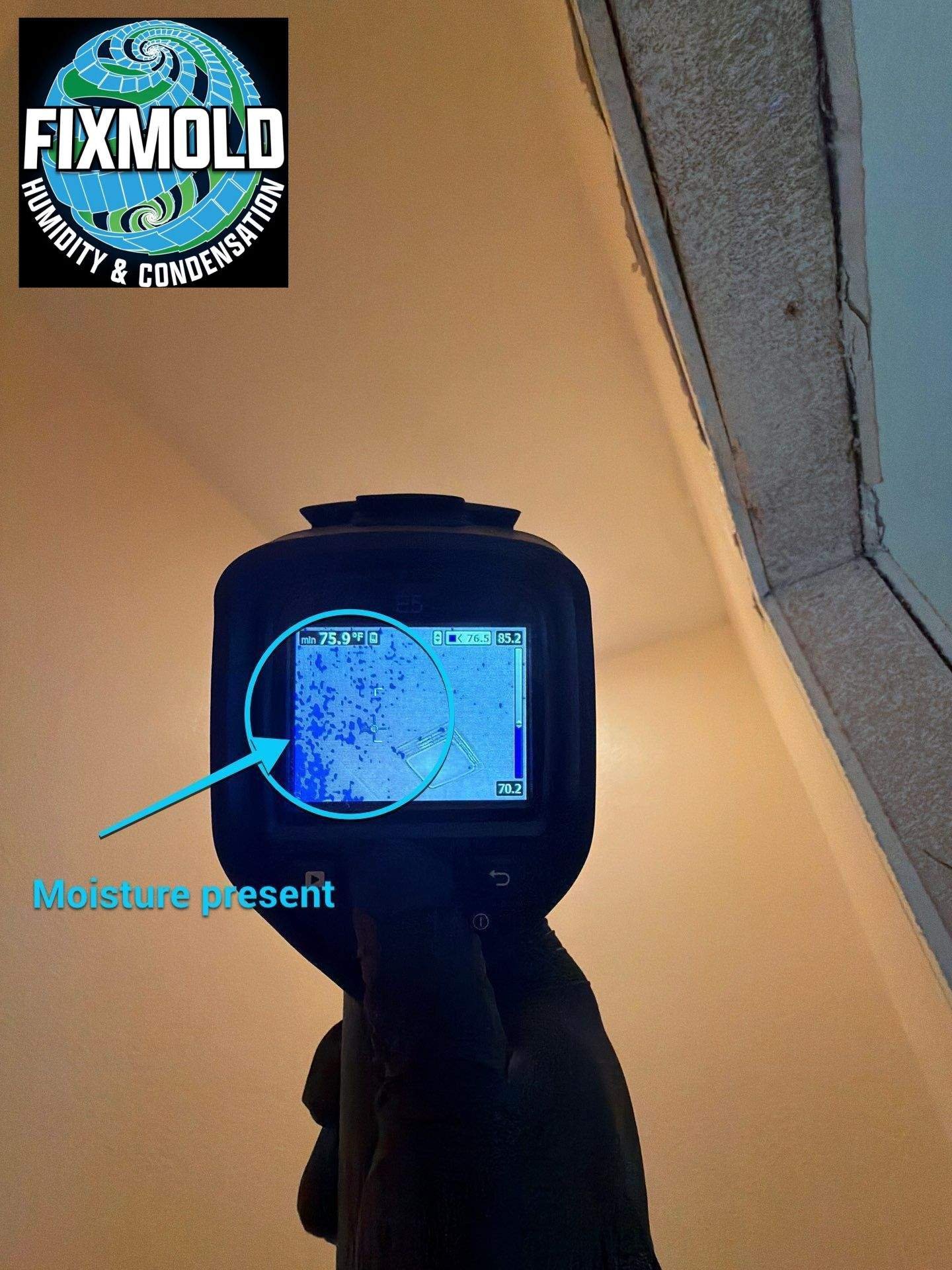
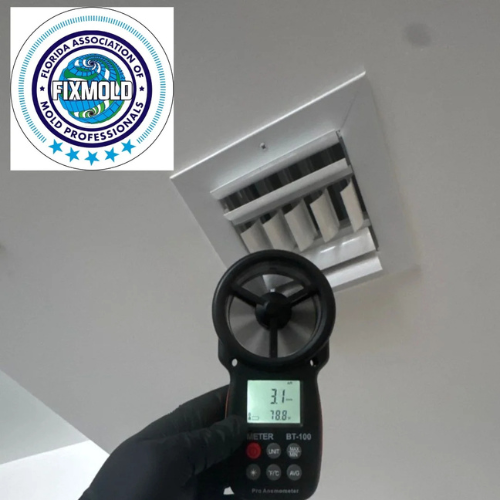
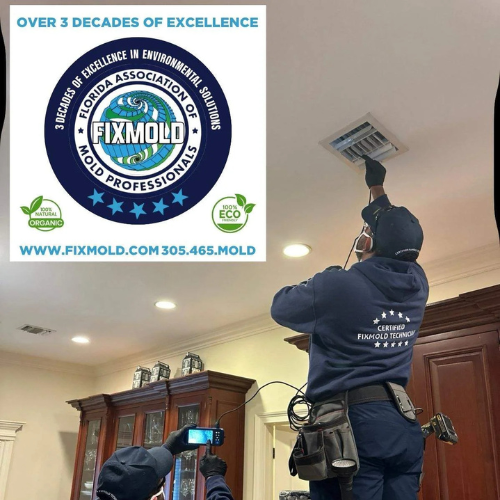
    Infrared thermal imaging follows the visual inspection. The camera detects surface temperature differentials invisible to the eye. Moisture trapped inside wall cavities, ceiling assemblies and under flooring creates temperature variations that appear clearly through infrared. Every flagged area is followed up with a moisture meter reading to quantify the actual moisture content percentage in that material. This data tells us whether a material is actively wet, has been wet recently, or is dry but shows signs of historical moisture damage.
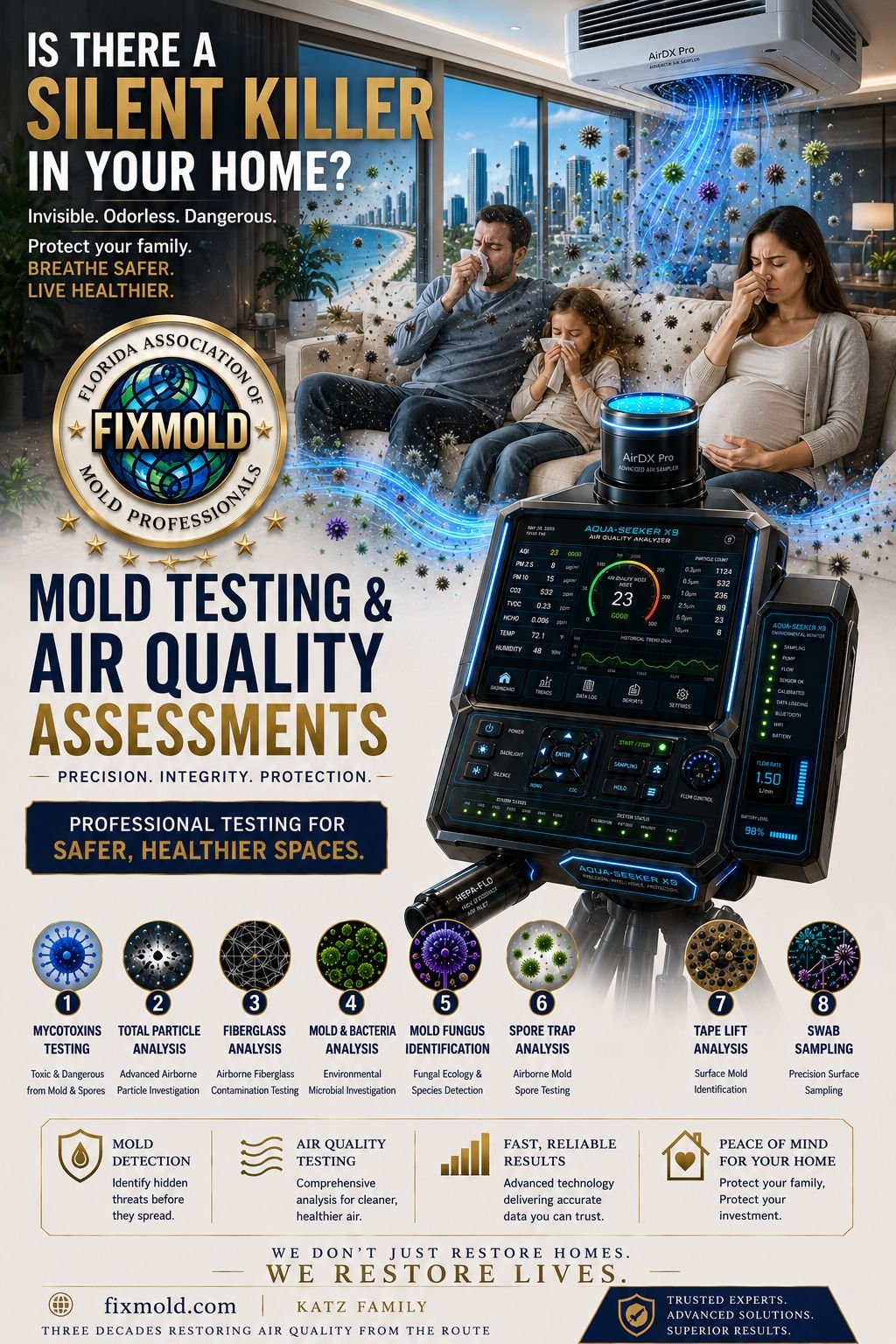
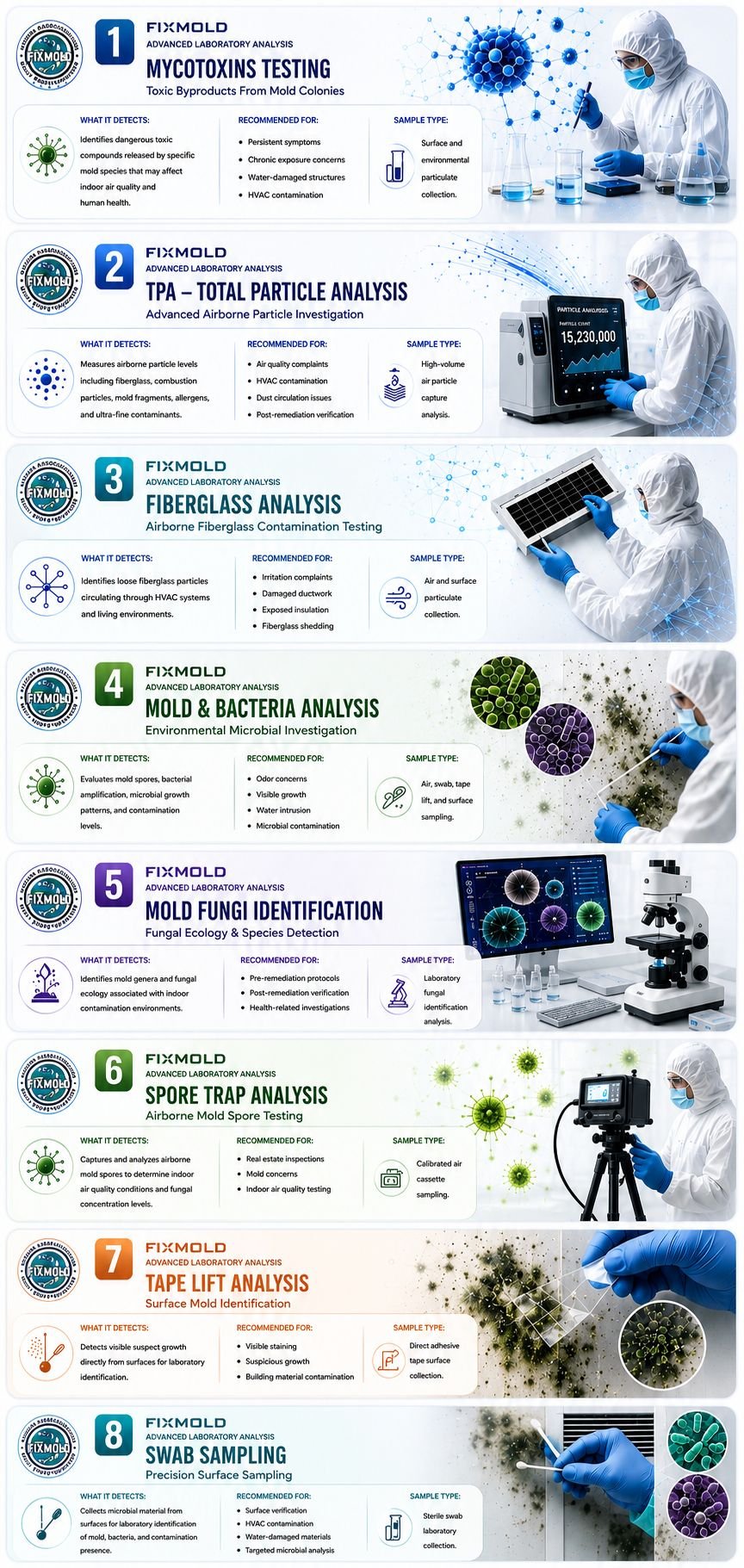
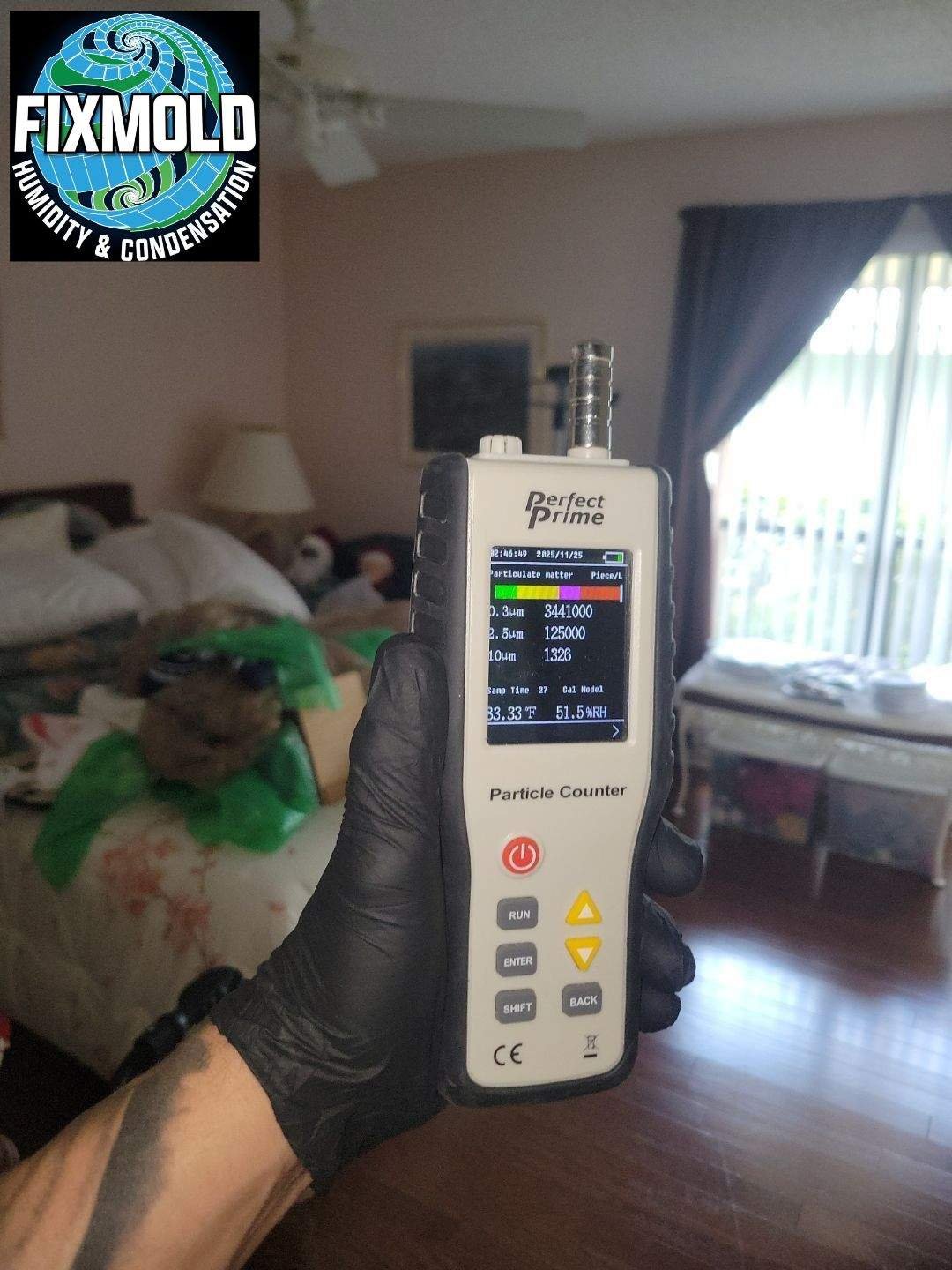
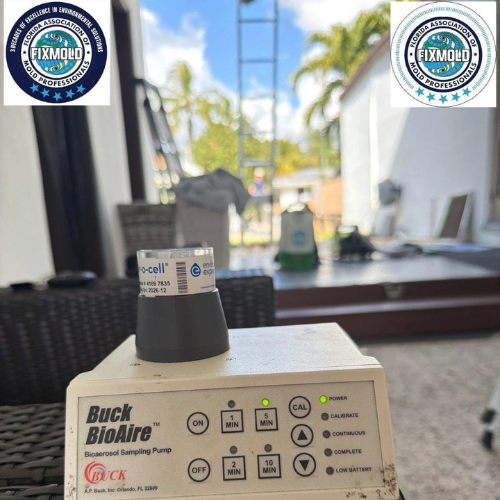
    Air sampling captures the biological picture. Spore trap cassettes collect a measured volume of air from each area of concern and from the exterior of the property for baseline comparison. Laboratory analysis returns species identification and spore counts per cubic meter for every sample. The indoor-to-outdoor ratio is the key number. Elevated indoor counts relative to outdoor baseline confirm active mold conditions inside the building regardless of what is visible on surfaces.

    Surface swabs or tape lifts are collected from any visible growth to confirm species and assess colonization depth. A comprehensive written report follows with all findings, all readings, all lab results and a plain-language explanation of what they mean for your household.

    The Most Common Hidden Mold Locations in South Florida Homes


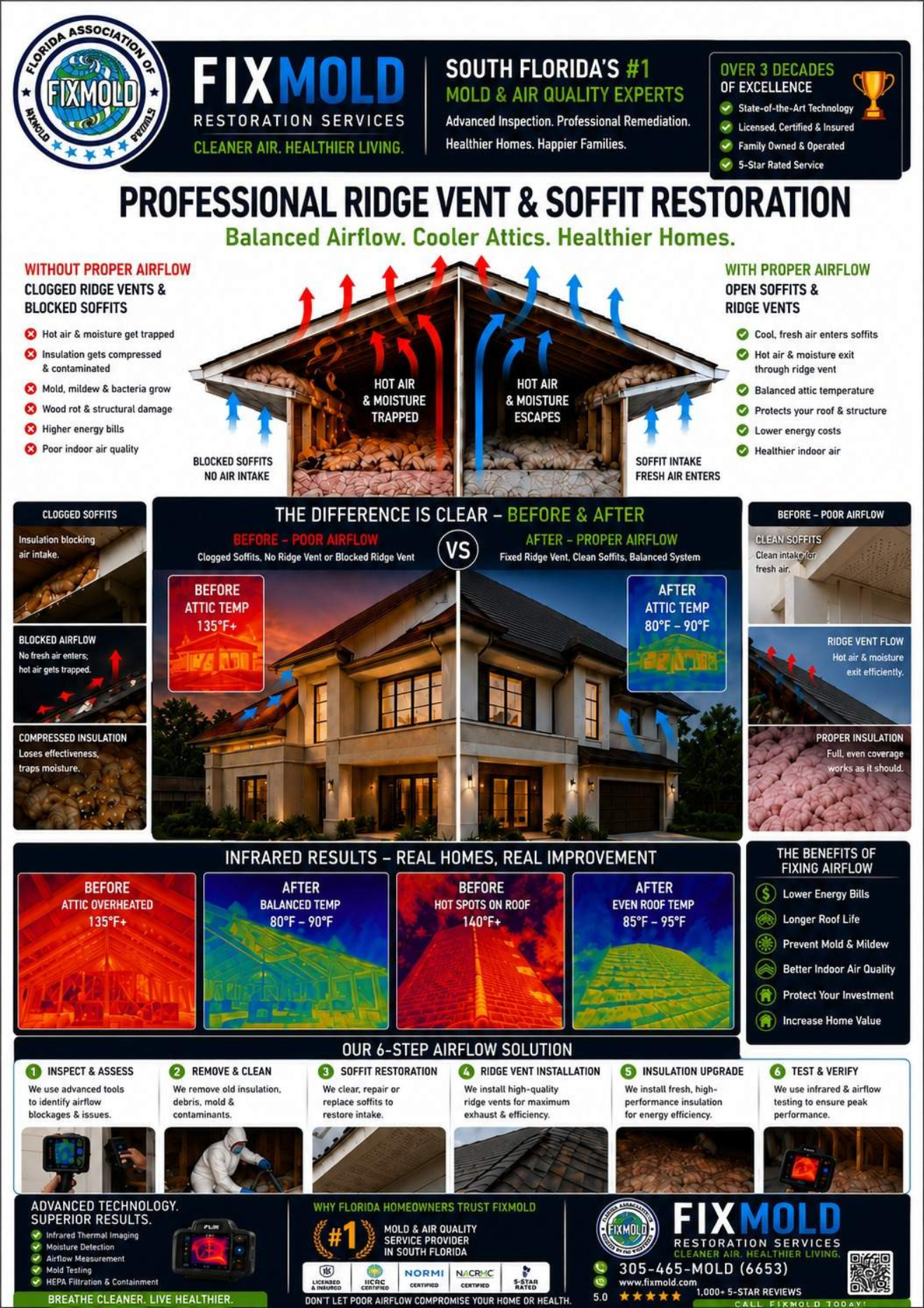
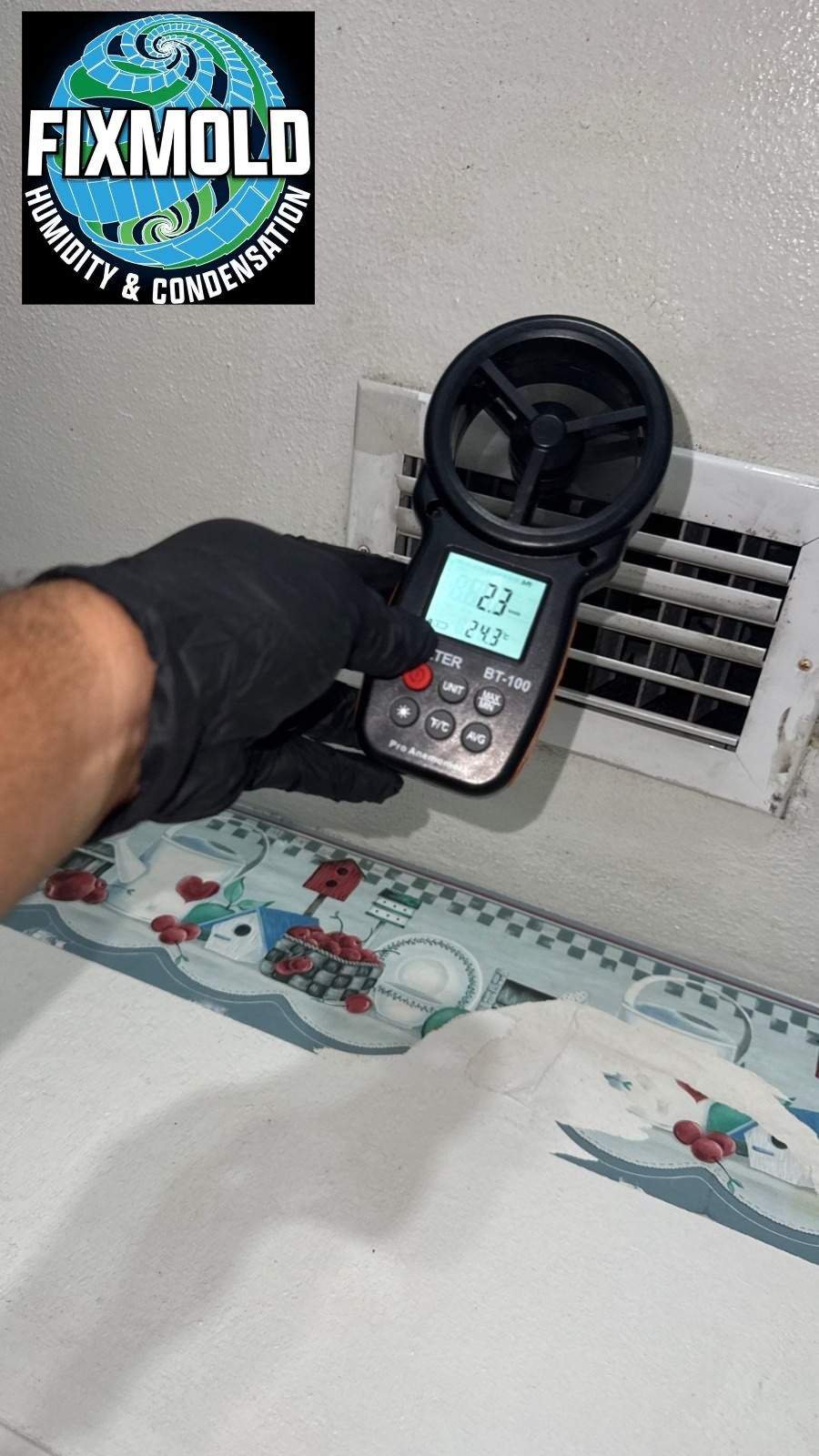
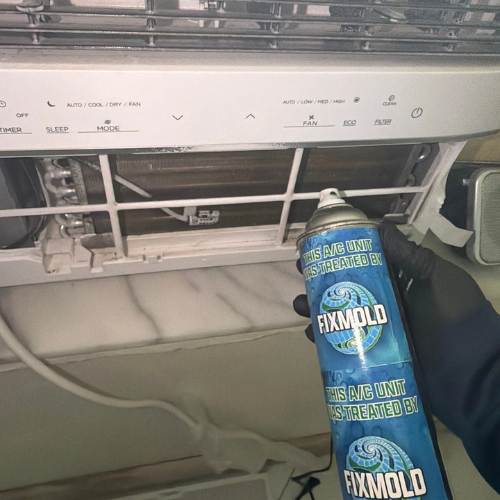
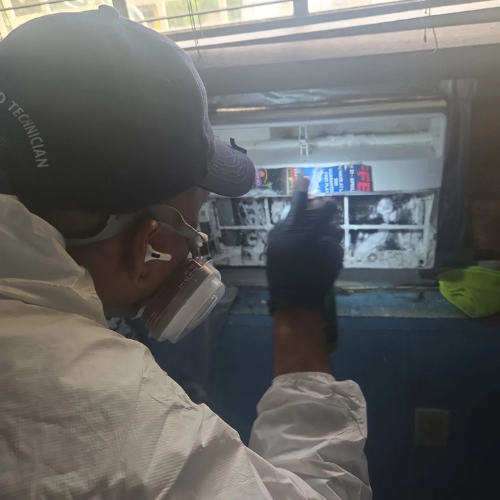
    Behind bathroom shower and tub surrounds where pan liner failures or cracked grout allow water to migrate into wall cavities over months or years. Inside master bedroom walls adjacent to exterior-facing walls where condensation from the air conditioning system and Florida's outdoor heat meet in an uninsulated wall assembly. In attic spaces, particularly in homes in Kendall West, The Crossings, Richmond Heights and similar communities with flat or low-pitch roof designs that trap heat and moisture. Under kitchen and bathroom cabinetry where slow supply line drips accumulate on the cabinet floor without visible signs at counter height. In HVAC air handler closets and the first several feet of supply ductwork where condensation from cooling coils creates persistent moisture, often requiring specialized treatment like mold in air conditioning and HVAC systems to fully resolve. Under flooring in any room that experienced water intrusion from a plumbing event, appliance failure or storm, particularly where drying was done at the surface without addressing the subfloor.

    A Deep Commitment To Restoration

    A Family Legacy Of Trust

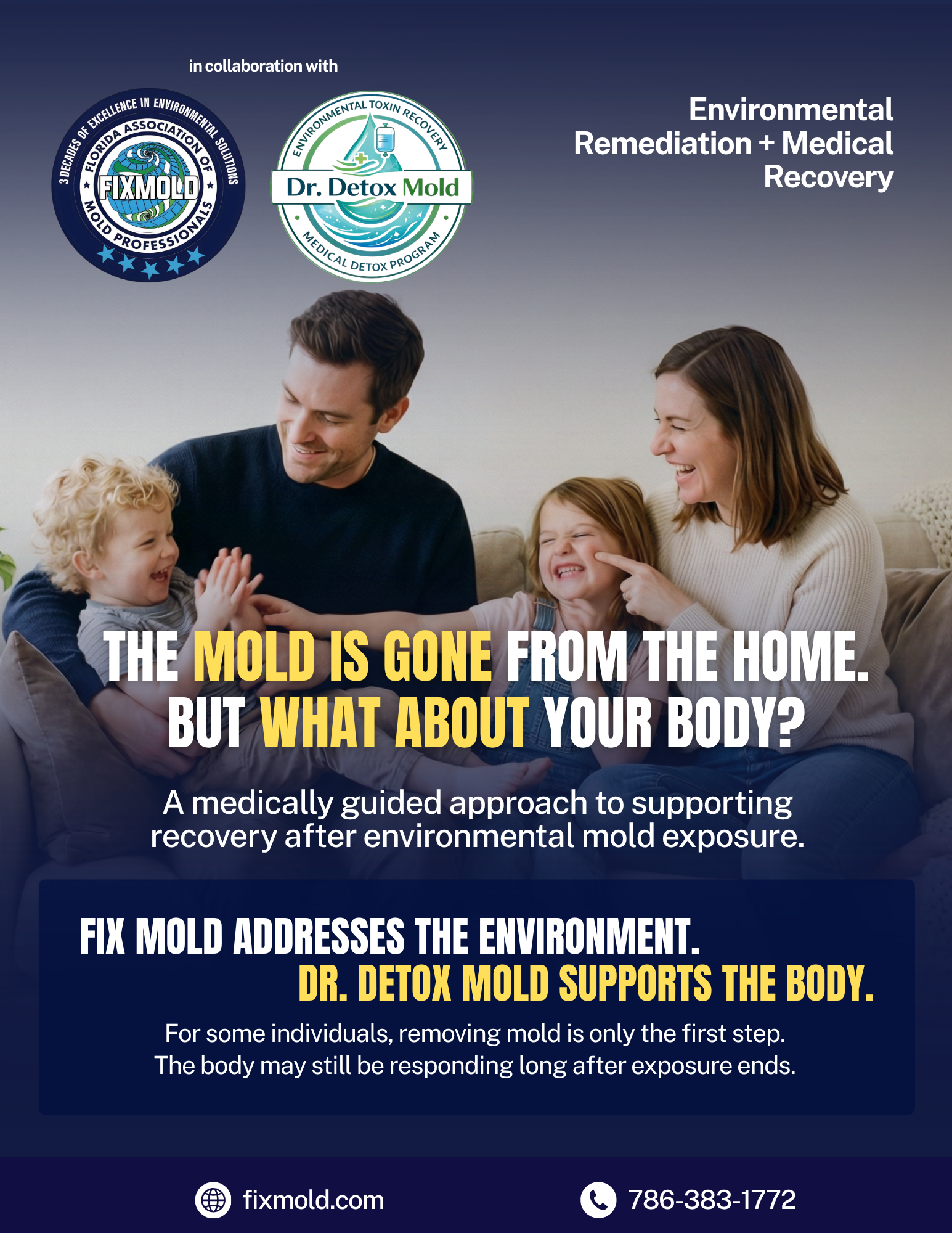
    Mold Removed From Your Home. What About Your Body?

    A medically guided approach to supporting recovery after mold exposure.
    Miami Fix Mold
    Miami Fix Mold

    FixMold focuses on eliminating mold from your environment.

    But for some individuals, recovery doesn’t stop there.
    Even after successful remediation, the body may continue responding to past exposure. In these cases, a structured, medically guided approach may be necessary to support full recovery.

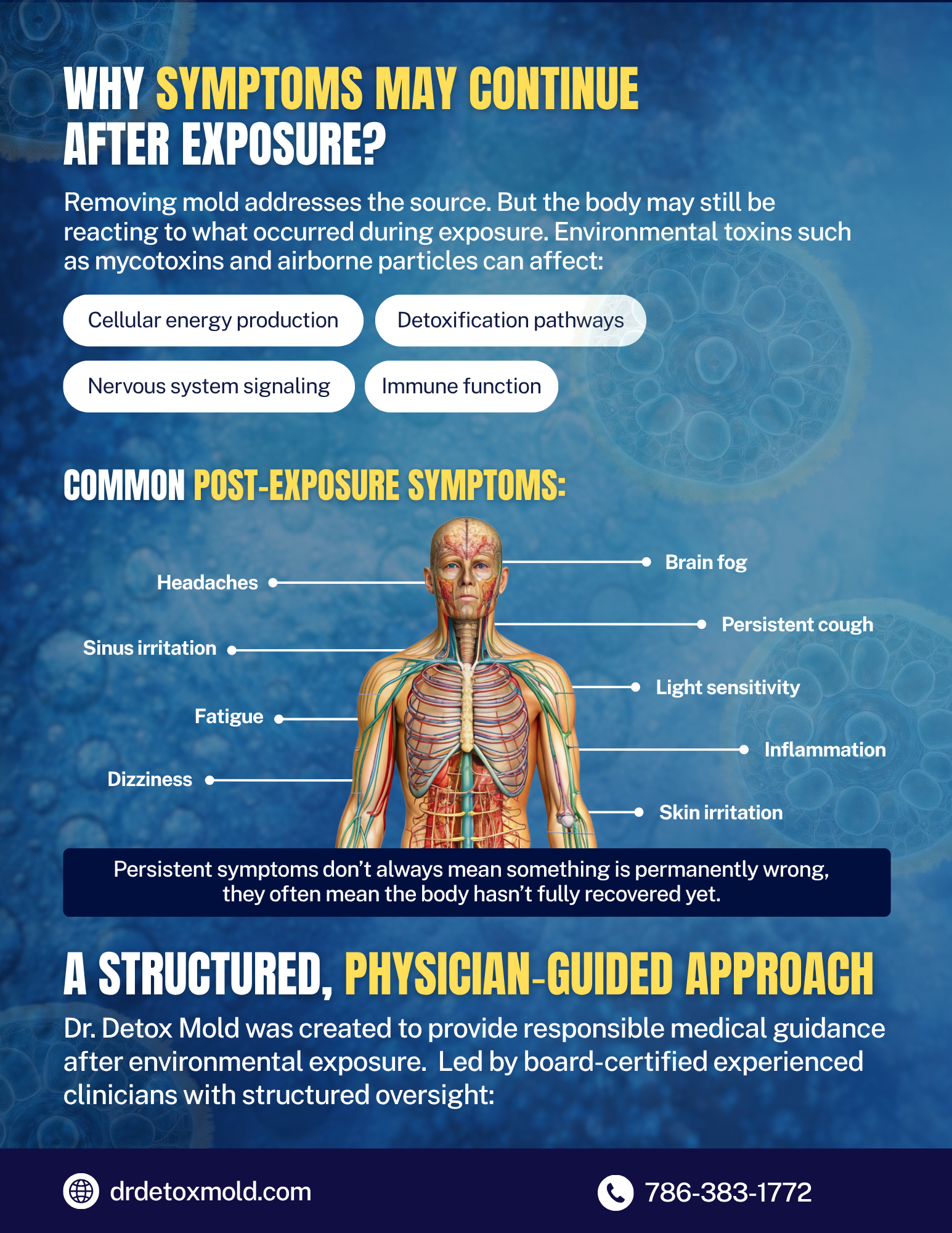
    Why Symptoms Can Continue After Mold Exposure

    Removing mold addresses the source of the problem, but it does not always resolve how the body has been affected during exposure.

    Environmental toxins can impact multiple systems:
    • Immune function
    • Nervous system signaling
    • Cellular energy production
    • Detoxification pathways

    For some individuals, these systems require time and proper support to return to balance.

    Common Post-Exposure Symptoms

    • Brain fog
    • Fatigue
    • Headaches
    • Sinus congestion or irritation
    • Persistent cough
    • Dizziness
    • Light sensitivity
    • Skin irritation
    • Ongoing inflammation

    Important

    • Persistent symptoms do not always indicate something permanent
    • They often indicate that the body has not fully recovered yet

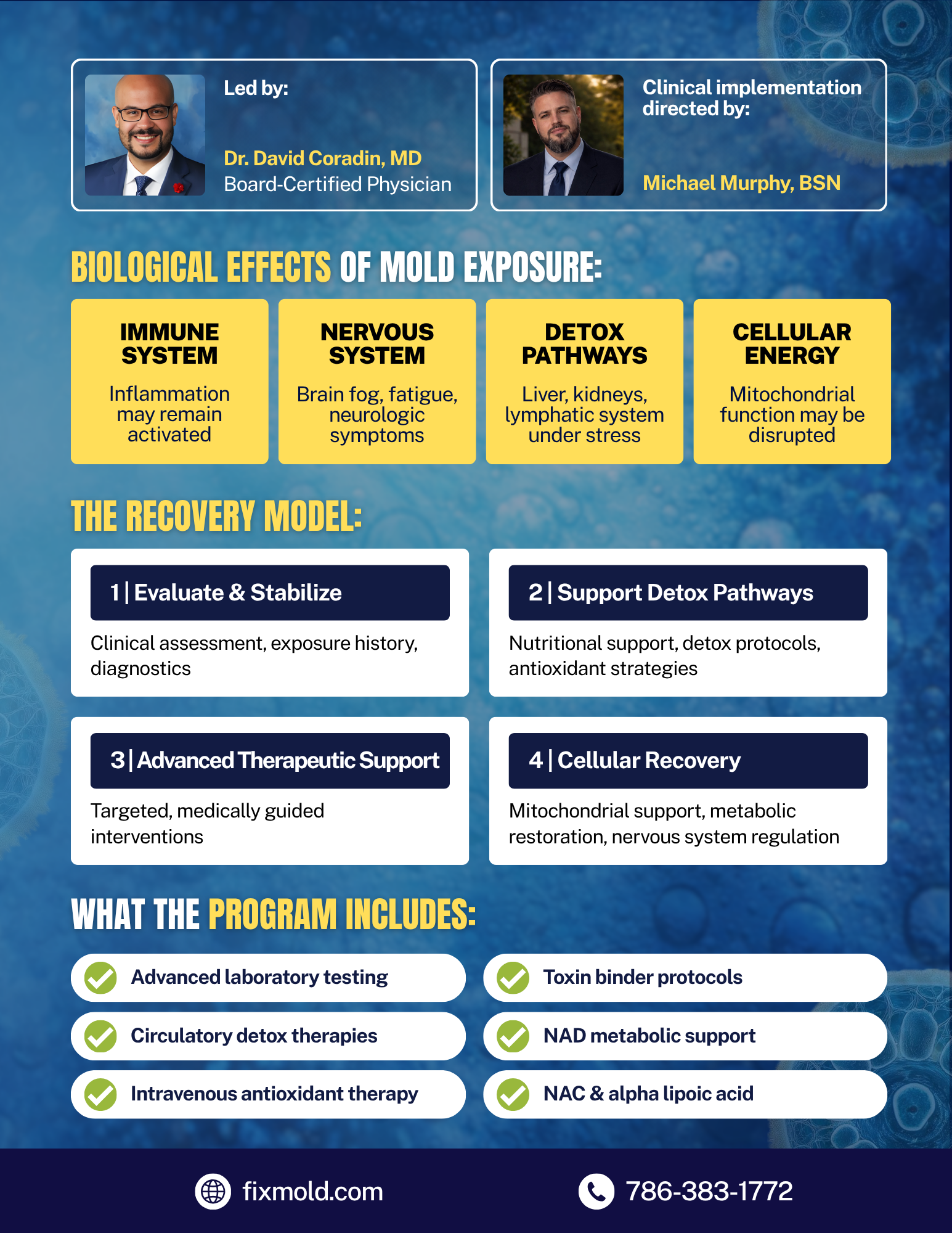
    Recovery Approach

    1. Evaluation & Stabilization
    • Clinical assessment
    • Exposure history review
    • Diagnostic testing

    2. Detoxification Support
    • Nutritional protocols
    • Toxin-binding strategies
    • Antioxidant support

    3. Advanced Therapeutic Support
    • Targeted, medically guided interventions
    • IV-based therapies when appropriate

    4. Cellular Recovery
    • Mitochondrial support
    • Metabolic restoration
    • Nervous system regulation

    Core Focus

    • Detoxification support
    • Immune system balance
    • Cellular energy restoration
    • Nervous system regulation

    Key Principle

    Recovery is not about doing more. It is about doing the right things, in the right order.

    Next Steps

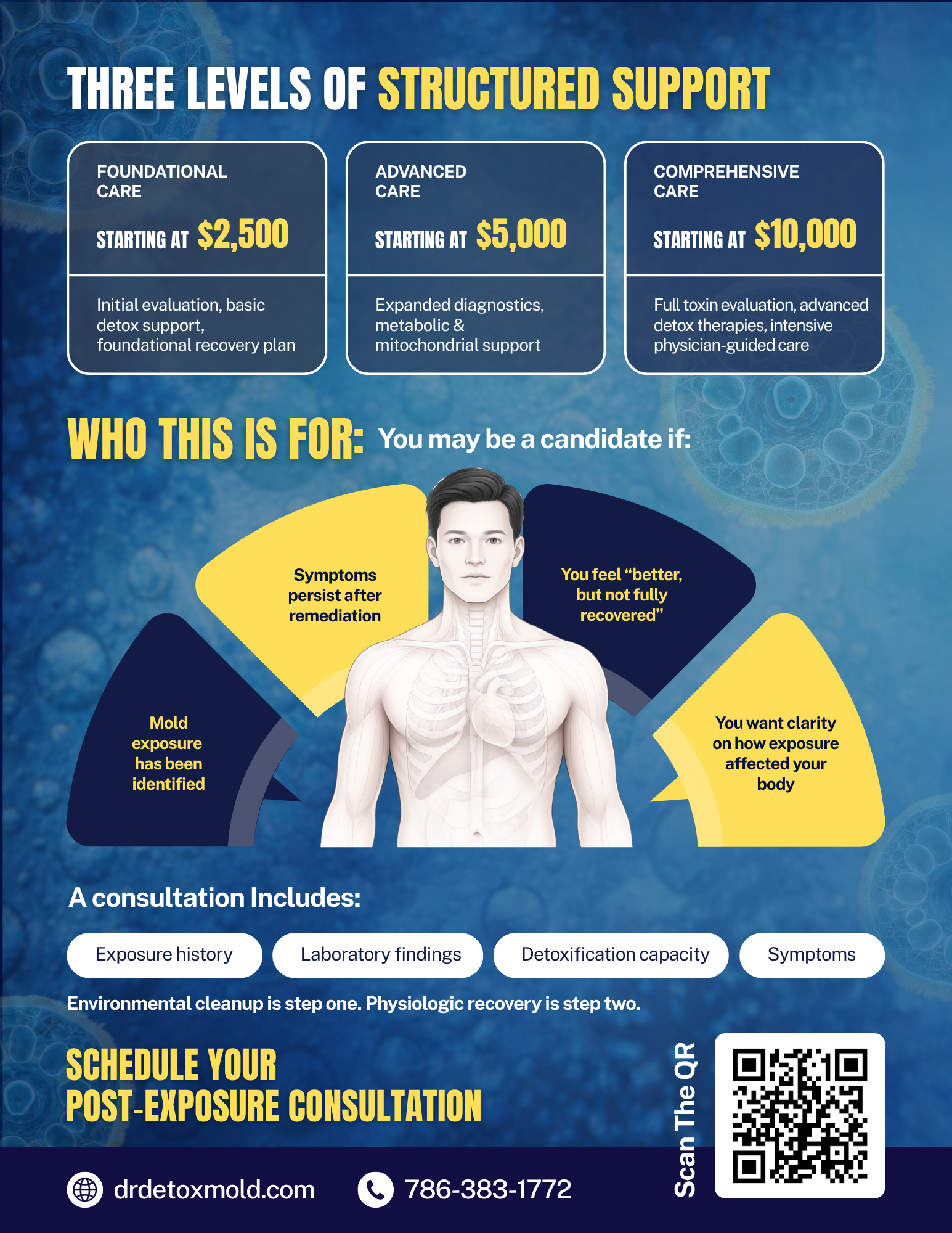
    If mold exposure has been identified and symptoms are still present, evaluation may provide clarity.
    • Exposure history review
    • Laboratory evaluation
    • Detoxification assessment
    • Symptom analysis

    Schedule Your Post-Exposure Consultation

    📞 786-383-1772

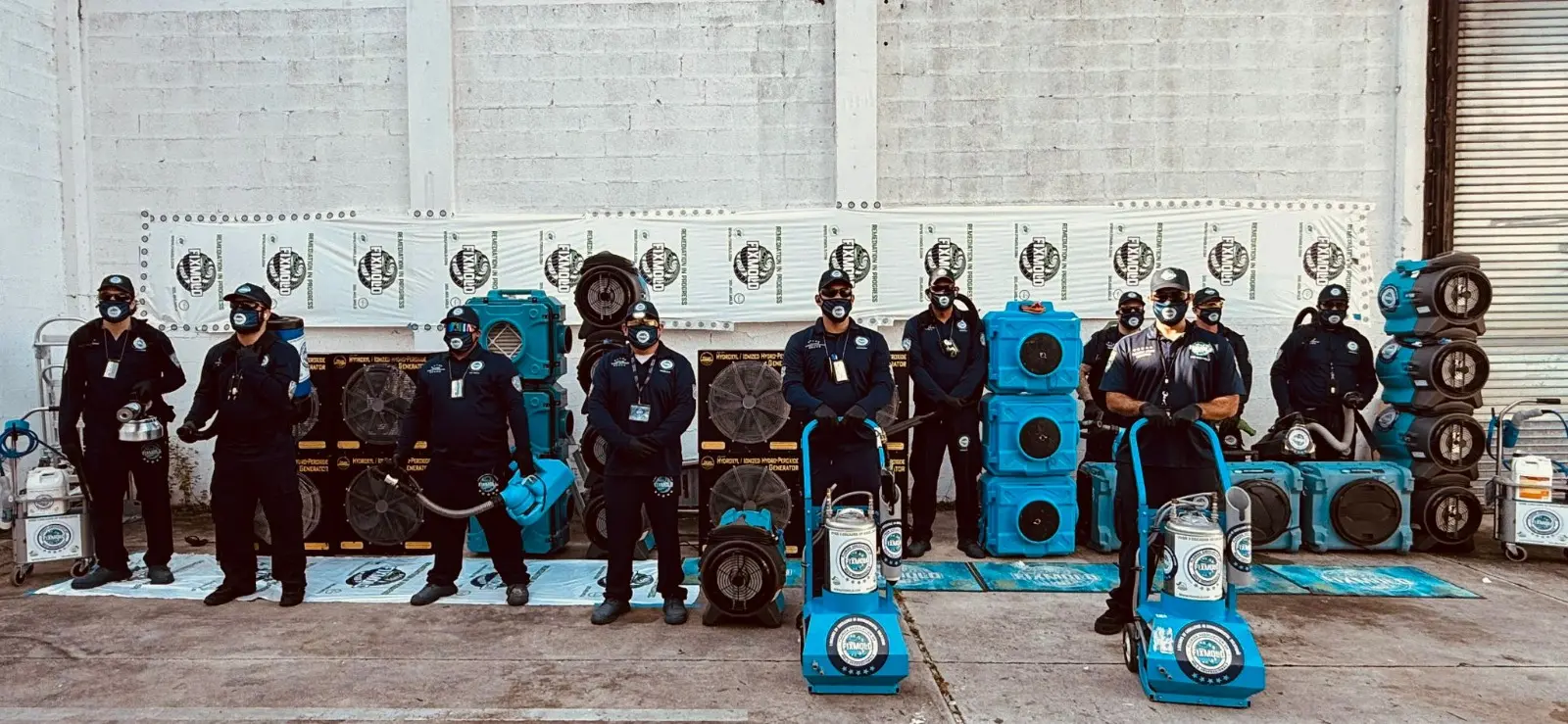
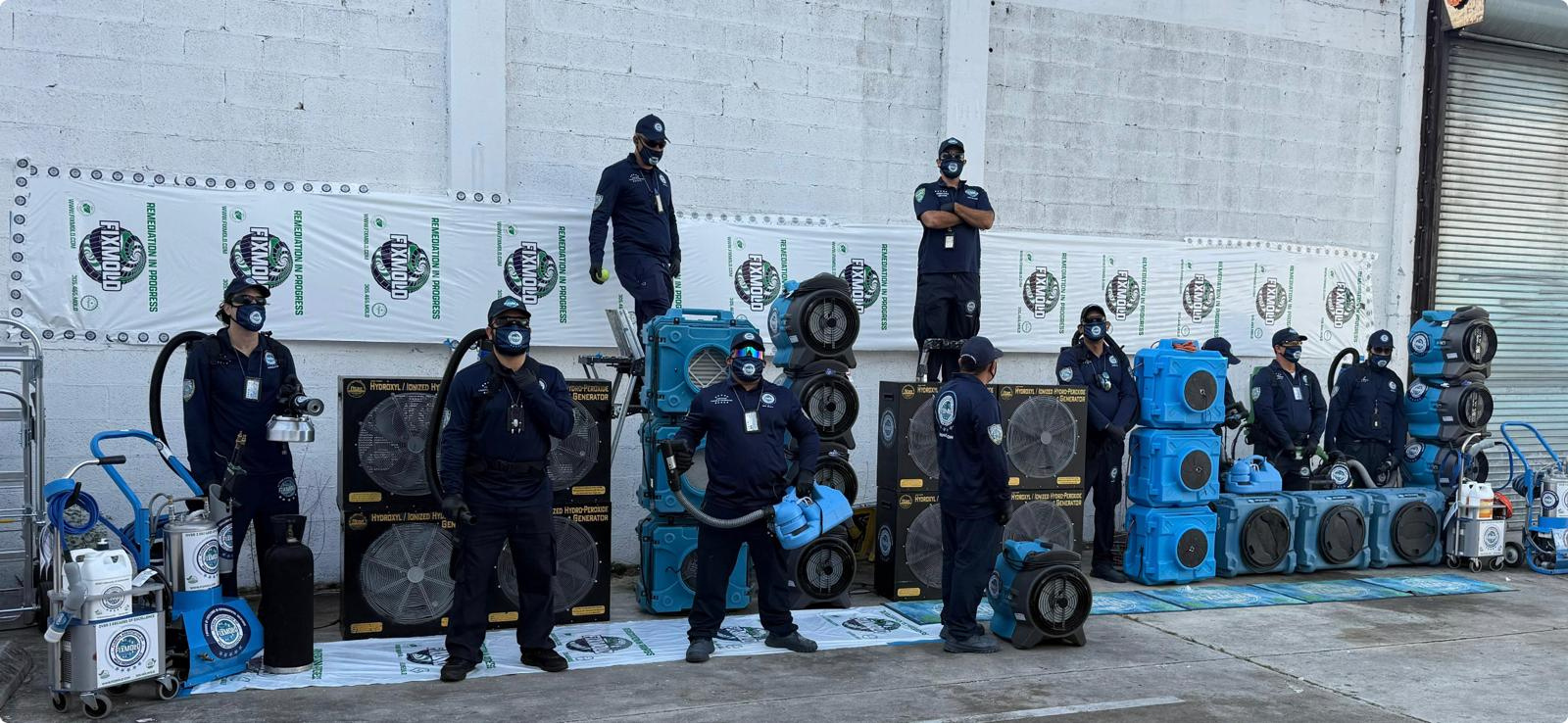
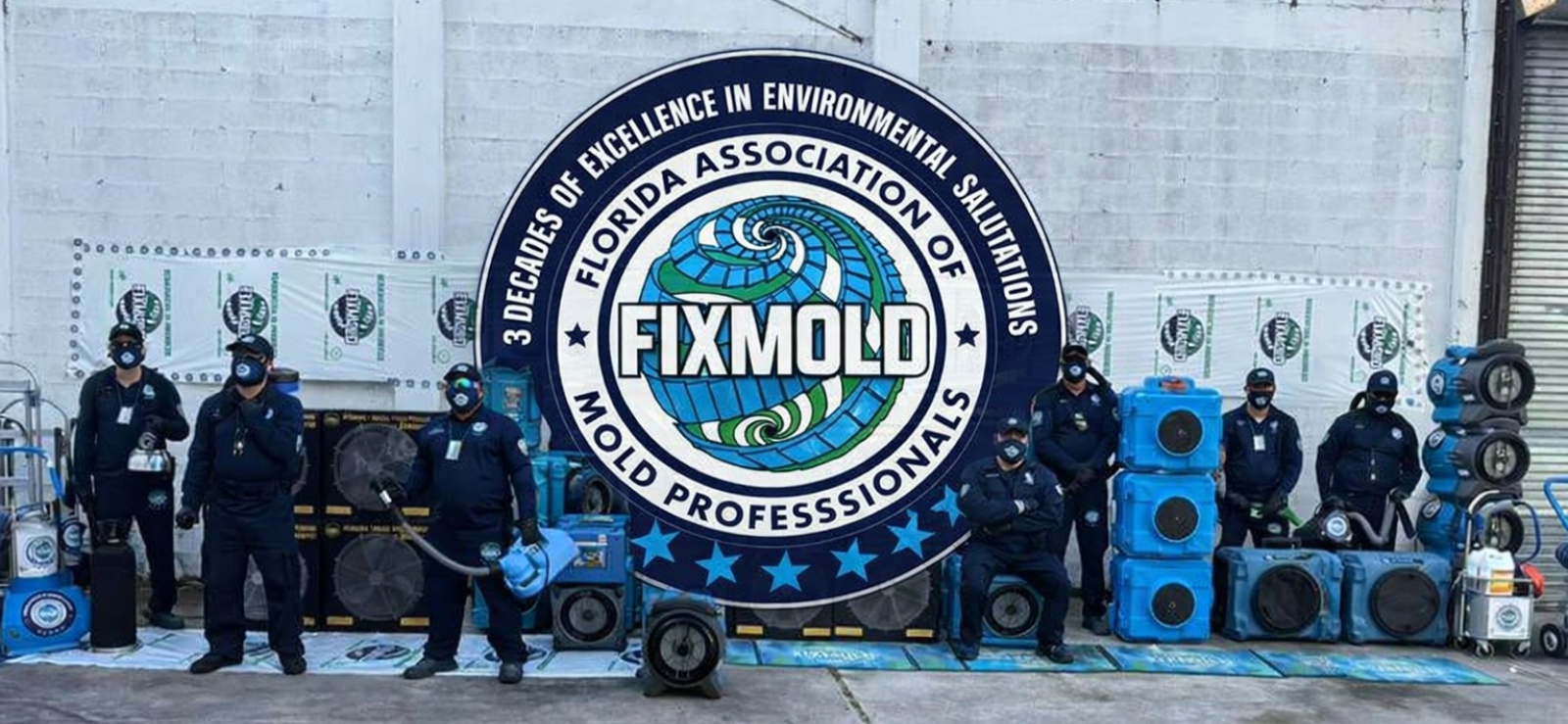
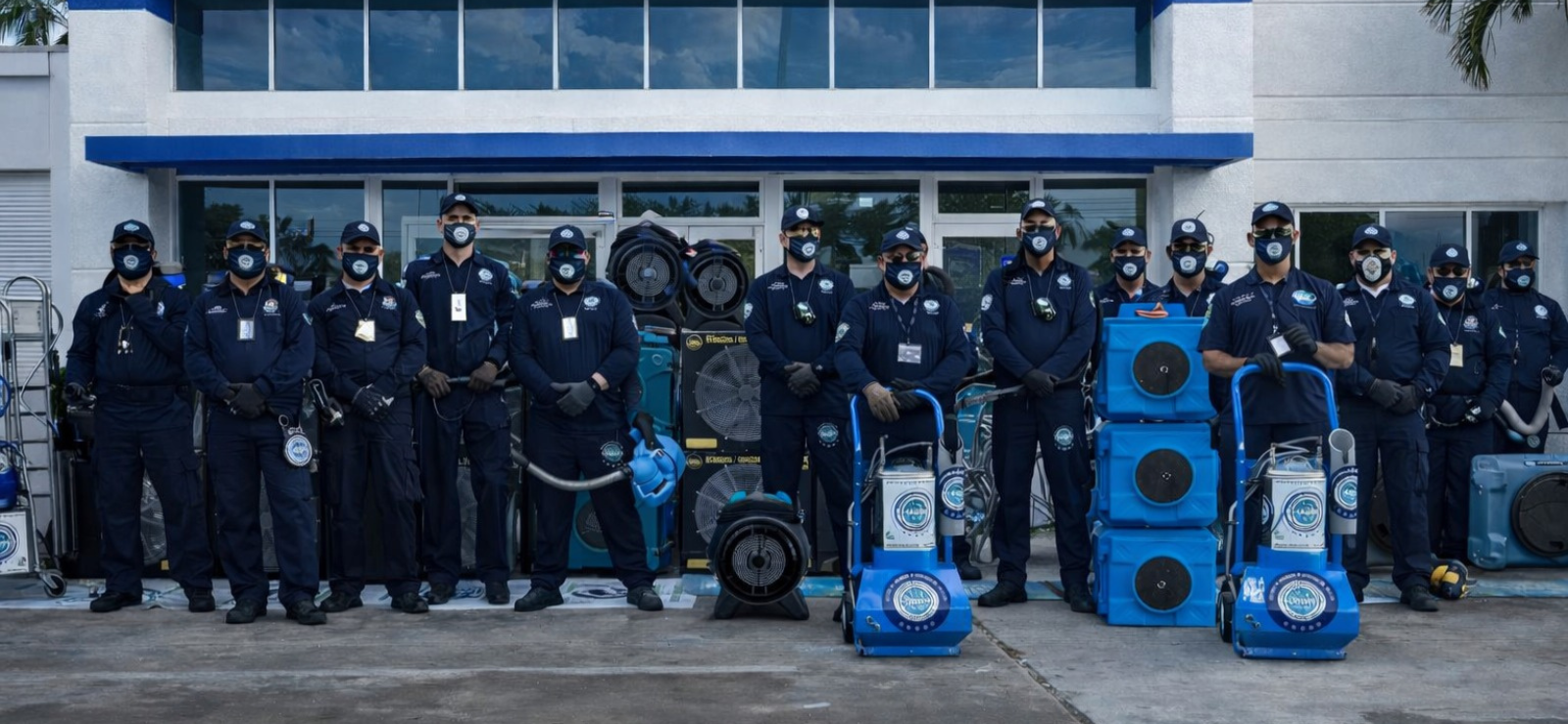
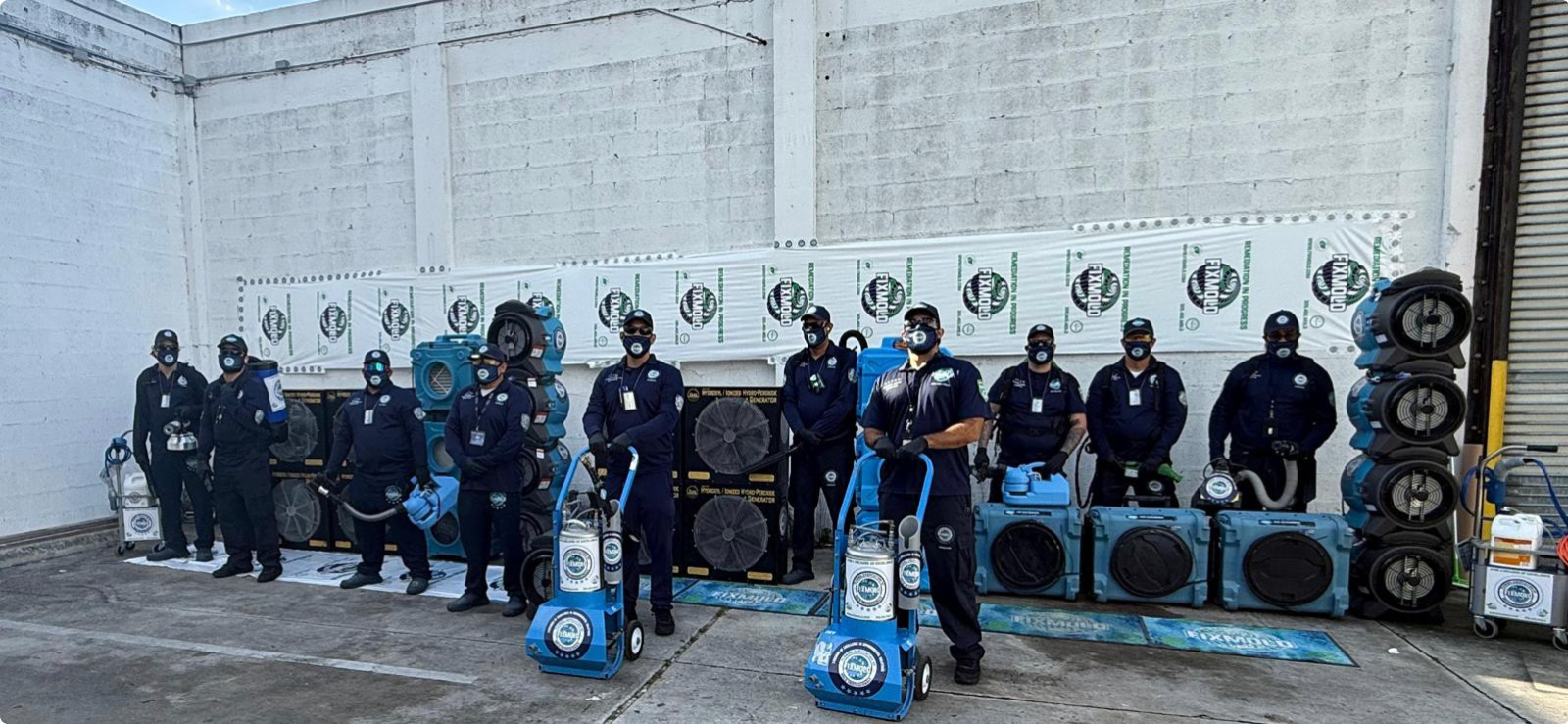
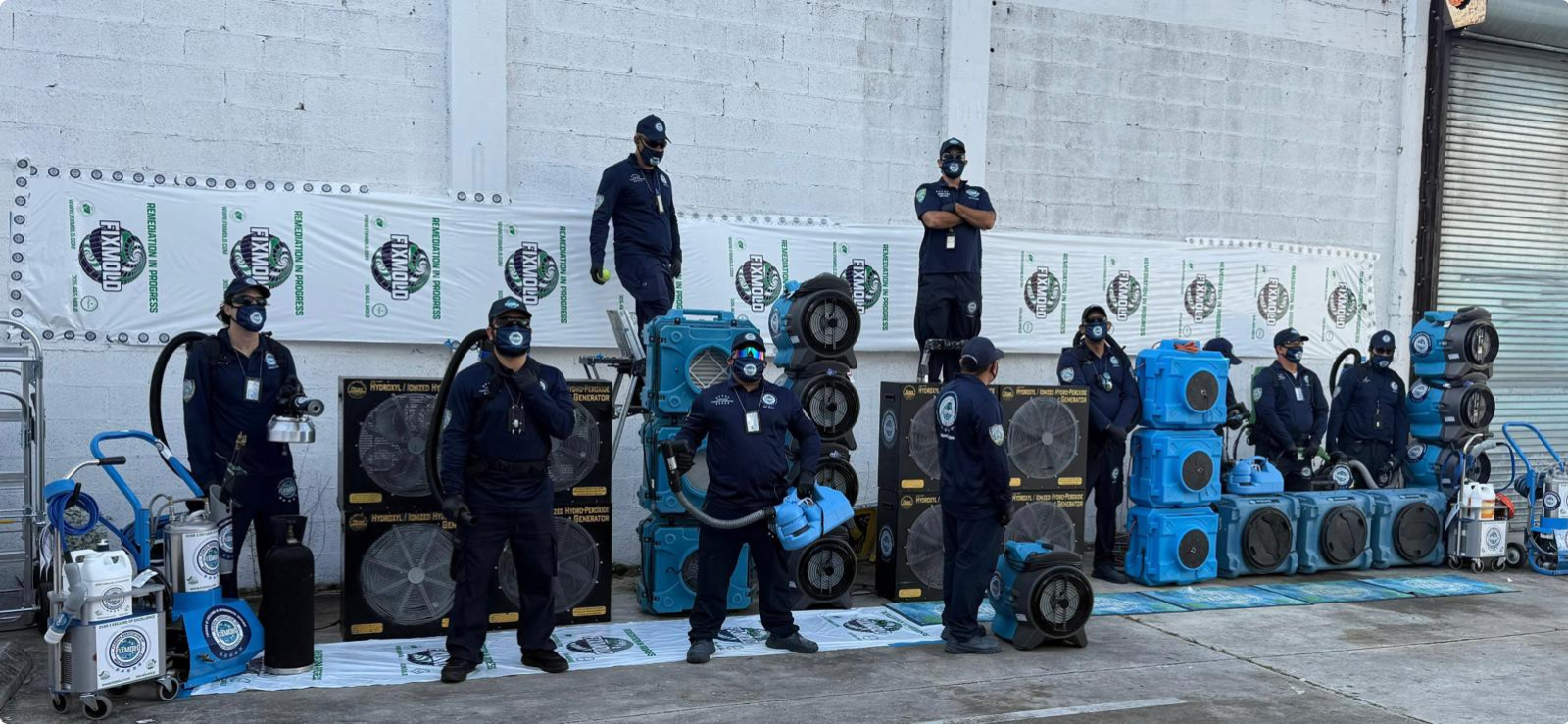
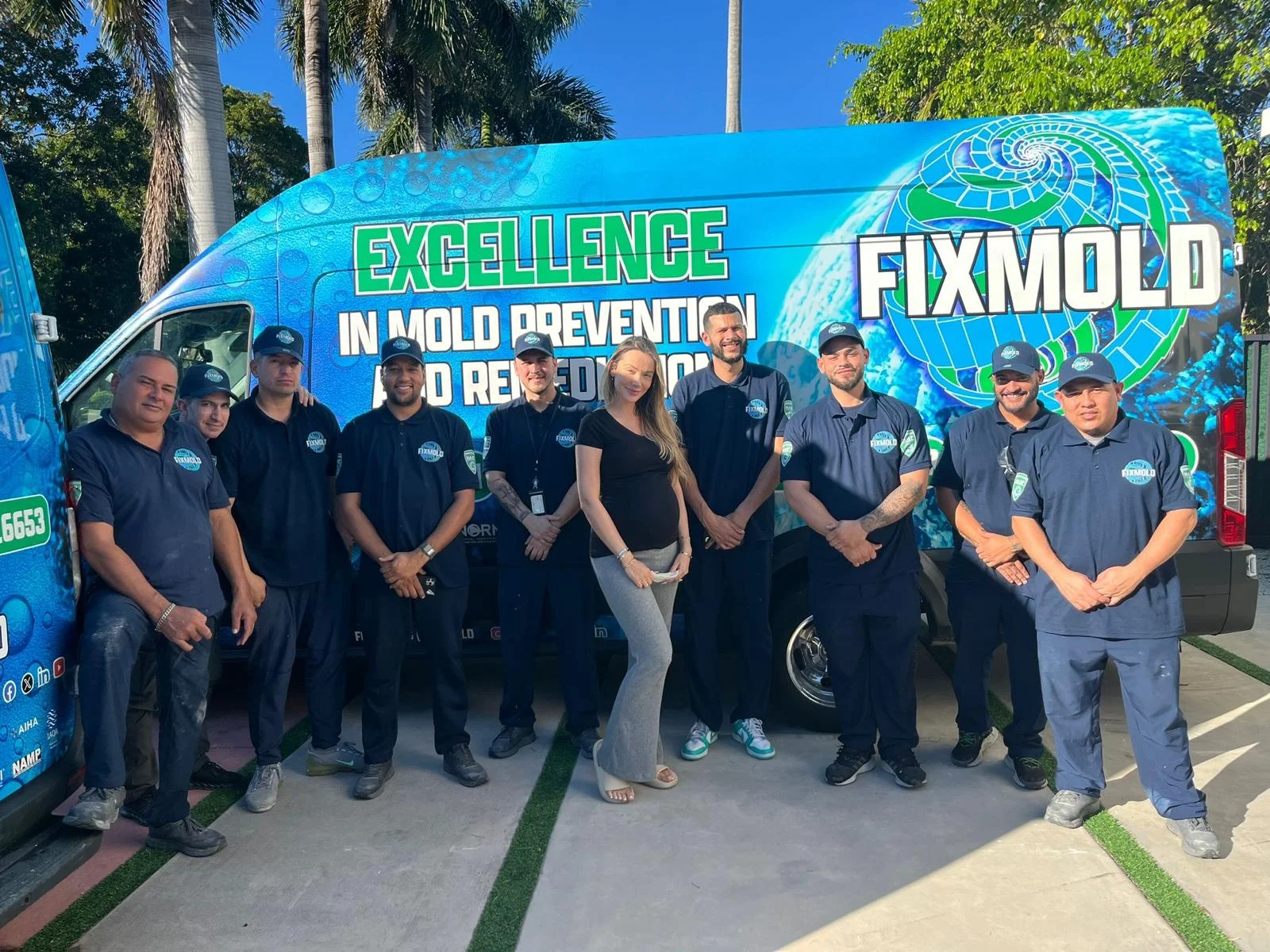
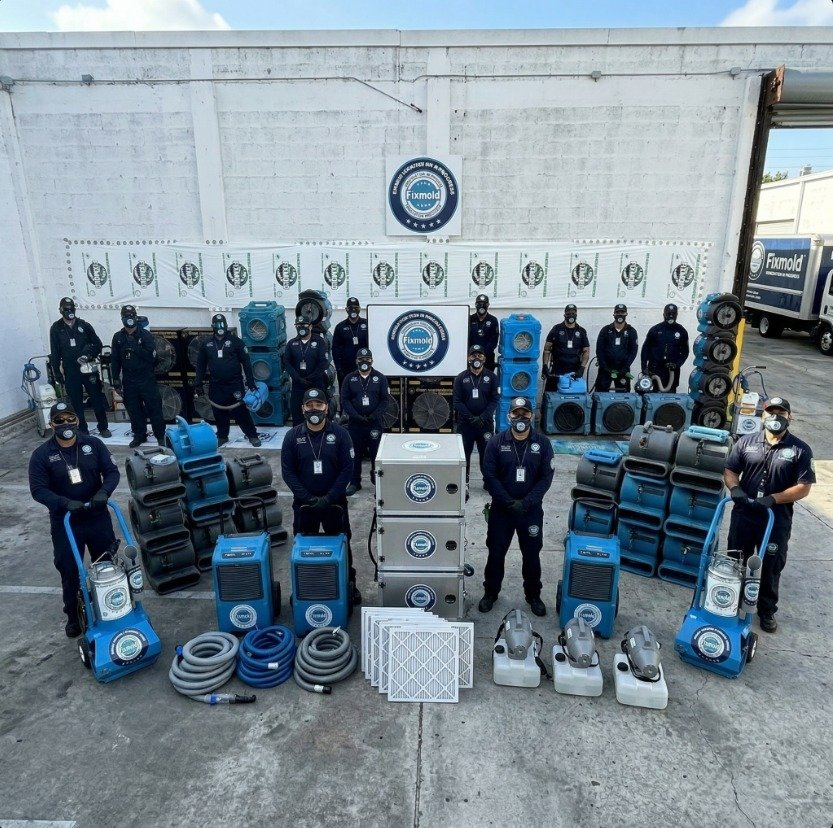
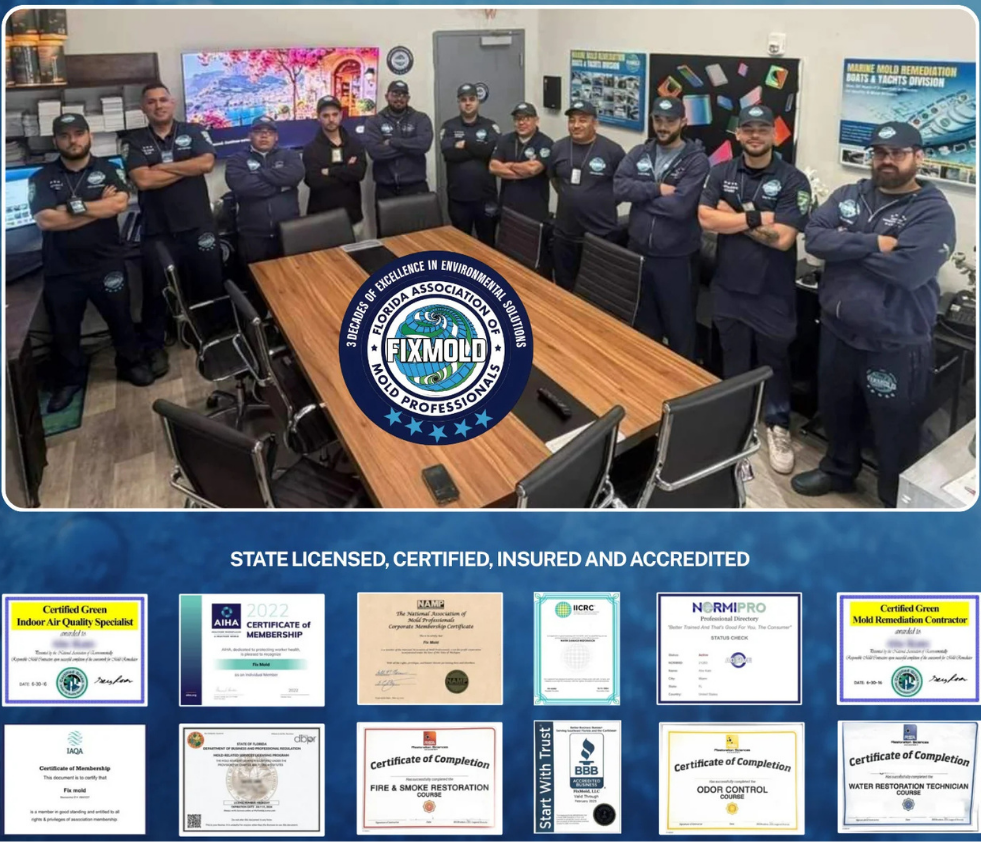
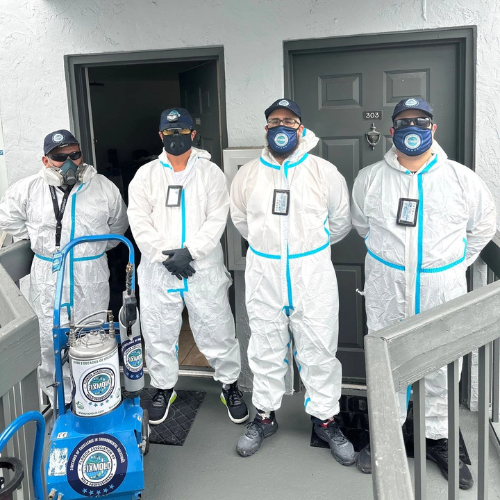
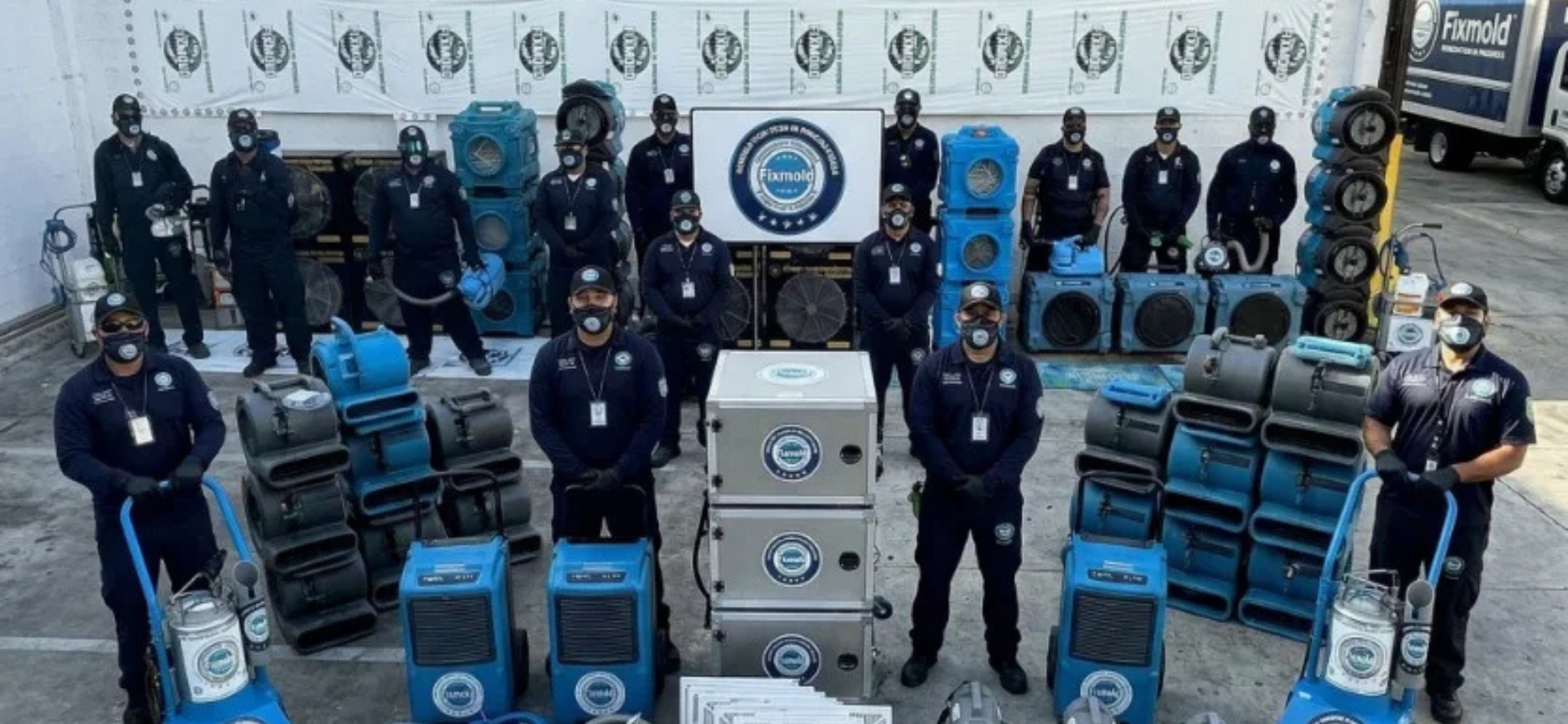
    OUR TEAM

    THE BACK-BONE OF OUR 5 STAR SERVICE
    👉 Call Now: 1-786-882-1823
    Fast response. Certified technicians. Guaranteed results.

    OUR AWARDS

    Proof Of Unmatched Excellence
    Miami fix mold

    FixMold
    10750 NW 6th CtMiami, FL 33168

    License
    MRSR2709 MRSA2521

    Proudly Serving all of South Florida

    We are here to answer any question you may have.
    +

    What are the signs I need home mold detection?

    A persistent musty smell anywhere in the house, particularly near walls or vents. Visible dark spots or staining on walls or ceilings that have returned after being painted over. Health symptoms including chronic congestion, eye irritation, recurring headaches or fatigue that improve when you are away from home. Recent water damage from any source. Any property you are considering purchasing. Post-renovation situations where walls were opened and closed without mold testing.

    +

    Do I need to leave my home during the inspection?

    No. A mold detection inspection is non-invasive. No materials are removed. Our inspector works through the property with handheld equipment. Most residential inspections complete in one to two hours.

    +

    What if the inspection finds mold?

    Your inspector explains the findings in full before leaving, including what species were found, what the concentrations mean relative to your outdoor baseline, and what remediation looks like for your specific situation. FixMold handles both detection and remediation in-house, so you do not start over with a new company. Our $150 off offer applies when testing confirms remediation is needed.

    +

    I had mold remediated recently but still smell something. Should I retest?

    Yes. Post-remediation odor almost always means either the remediation did not address all active growth, or odor compounds embedded in porous materials were not treated after removal. A follow-up detection visit is the fastest way to determine which situation you are dealing with.

    Urgent Enquiry Virtual Assessment

    Services

    Mold

    Water Damage

    HVAC Restoration

    Air Quality & Deep Cleaning

    General Contractor

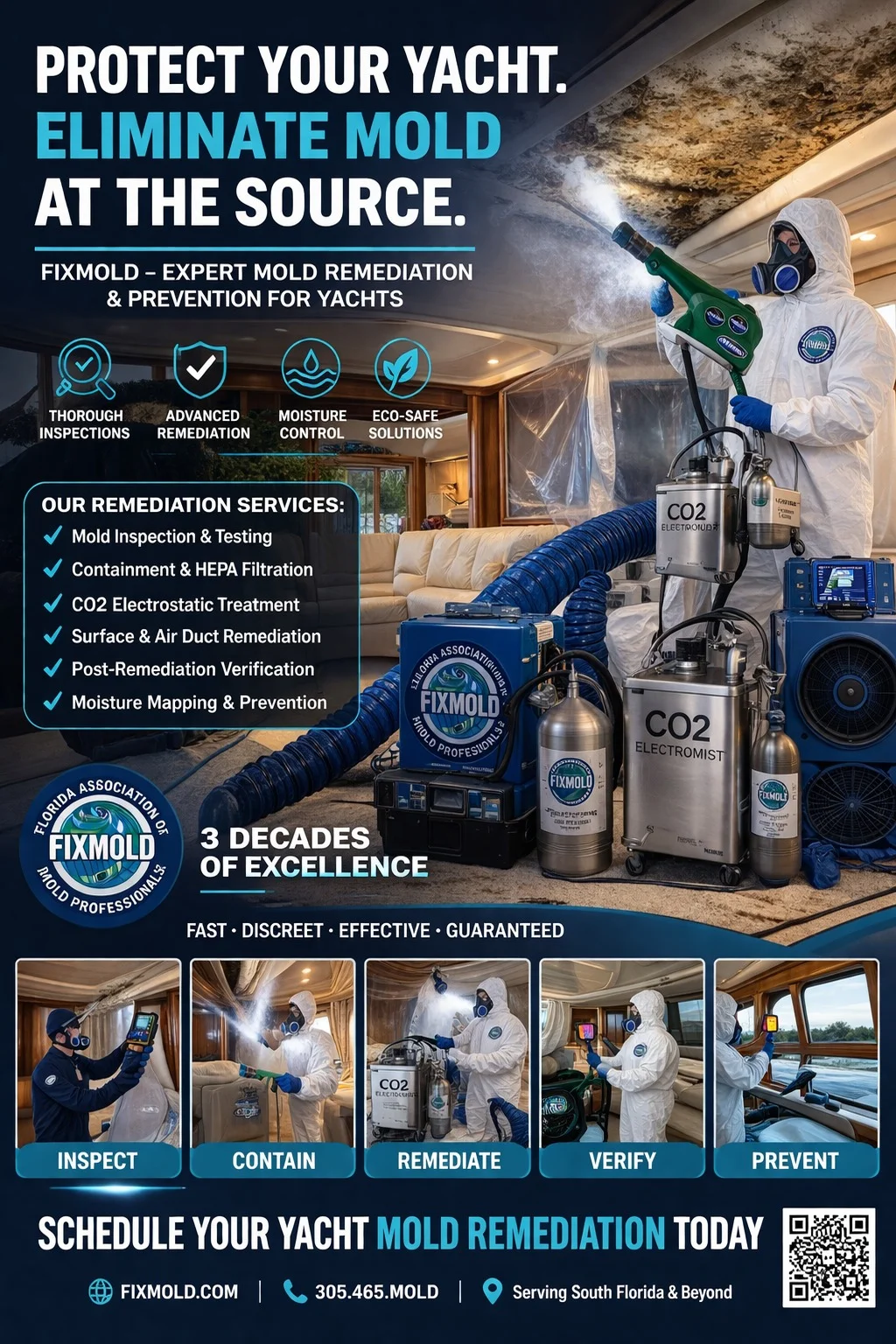
    Yacht Mold Removal

    10750 NW 6th CtMiami, FL 33168
    License
    #MRSR2709 #MRSA2521
    Founded by industry expert Moty Katz, backed by a 30+ year family legacy in mold remediation and prevention.