1000+ 5-STAR REVIEWS
Recommended All Over Florida
Katz Family Over 3 Decades
Recommended by Miami Doctors
1000+ 5-STAR REVIEWS
Recommended All Over Florida

Logo

Air Quality & Deep Cleaning services

Logo

    miami mold specialist

    State Licensed and Accredited Affiliations

    iicrc certifiedaccredited businessDr Mold DetoxAARCNORMI
    Indoor Air Quality SpecialistdbprAIHANAERMCNAMPCertified GreenIAQA
    Certified GreenNAMPNAERMCDr Mold DetoxIndoor Air Quality SpecialistAIHAdbpr
    AARCIAQANORMIaccredited businessiicrc certifiedFAMP

    Air Quality & Deep Cleaning services

    If the air inside your home feels heavy, smells off, or keeps triggering allergies, the problem is usually not visible surfaces. It is the air itself. Dust, mold spores, and contaminants can circulate through your space and settle back into rooms again and again. Cleaning the air is what breaks that cycle.

    At FixMold, indoor air quality cleaning focuses on removing airborne contamination and restoring clean breathing conditions inside your property. We use professional air filtration, targeted cleaning methods, and controlled treatment to reduce mold spores and particles that affect indoor air. This is especially important in Miami where humidity allows contaminants to stay active in the air.

    Our process is based on what is actually present inside your space. We evaluate conditions, clean affected areas, and treat the air so it does not continue to carry contamination through your home. The goal is not temporary freshness. It is long term improvement in air quality.

    If you are noticing persistent odors, discomfort, or poor air conditions even after cleaning your home, indoor air quality cleaning can help restore balance and make the space feel normal again.

    Call or text: 305 465 6653 | Same day appointments available | Virtual assessment available

    Air Quality Deep Cleaning Services in Miami

    Air quality deep cleaning services in Miami often involve much more than standard housekeeping or surface disinfection. In South Florida, indoor environments are constantly affected by humidity, airborne particles, HVAC circulation, moisture intrusion, outdoor pollutants, dust accumulation, microbial contamination, and environmental buildup that gradually settles into ventilation systems, structural surfaces, furnishings, and hidden indoor spaces.

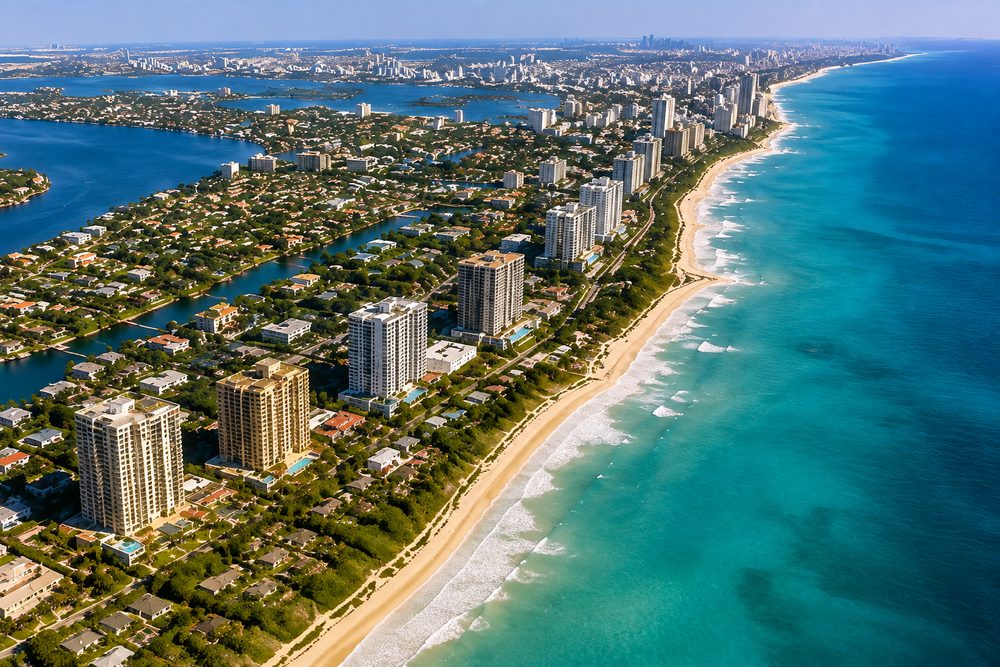
    Many homes and commercial buildings throughout Miami, Miami Beach, Brickell, Coral Gables, Coconut Grove, Kendall, Pinecrest, Doral, Aventura, Fort Lauderdale, Boca Raton, Naples, West Palm Beach, and surrounding South Florida communities experience declining indoor air quality without obvious visible warning signs. People may notice stale air, musty odors, recurring dust buildup, increased humidity, respiratory irritation, or rooms that feel heavy or uncomfortable even after routine cleaning.

    In many cases, these indoor environmental issues are connected to contaminants that standard cleaning methods do not fully address.

    South Florida’s climate creates unique indoor air quality challenges because buildings remain closed and air conditioned for most of the year. Air continuously recirculates through HVAC systems while humidity remains elevated outdoors. Over time, airborne particles may accumulate inside ducts, insulation, vents, ceiling cavities, upholstery, flooring systems, and hidden structural areas where they continue affecting the indoor environment.

    Air quality deep cleaning focuses on reducing this environmental buildup while addressing the conditions contributing to poor indoor air circulation and contamination.

    One of the biggest contributors to declining indoor air quality in Miami homes is humidity. Excess moisture allows dust, organic debris, microbial particles, and airborne contaminants to settle more easily onto indoor surfaces and inside ventilation systems. If moisture remains elevated long enough, microbial growth may begin developing inside hidden structural areas or HVAC components.

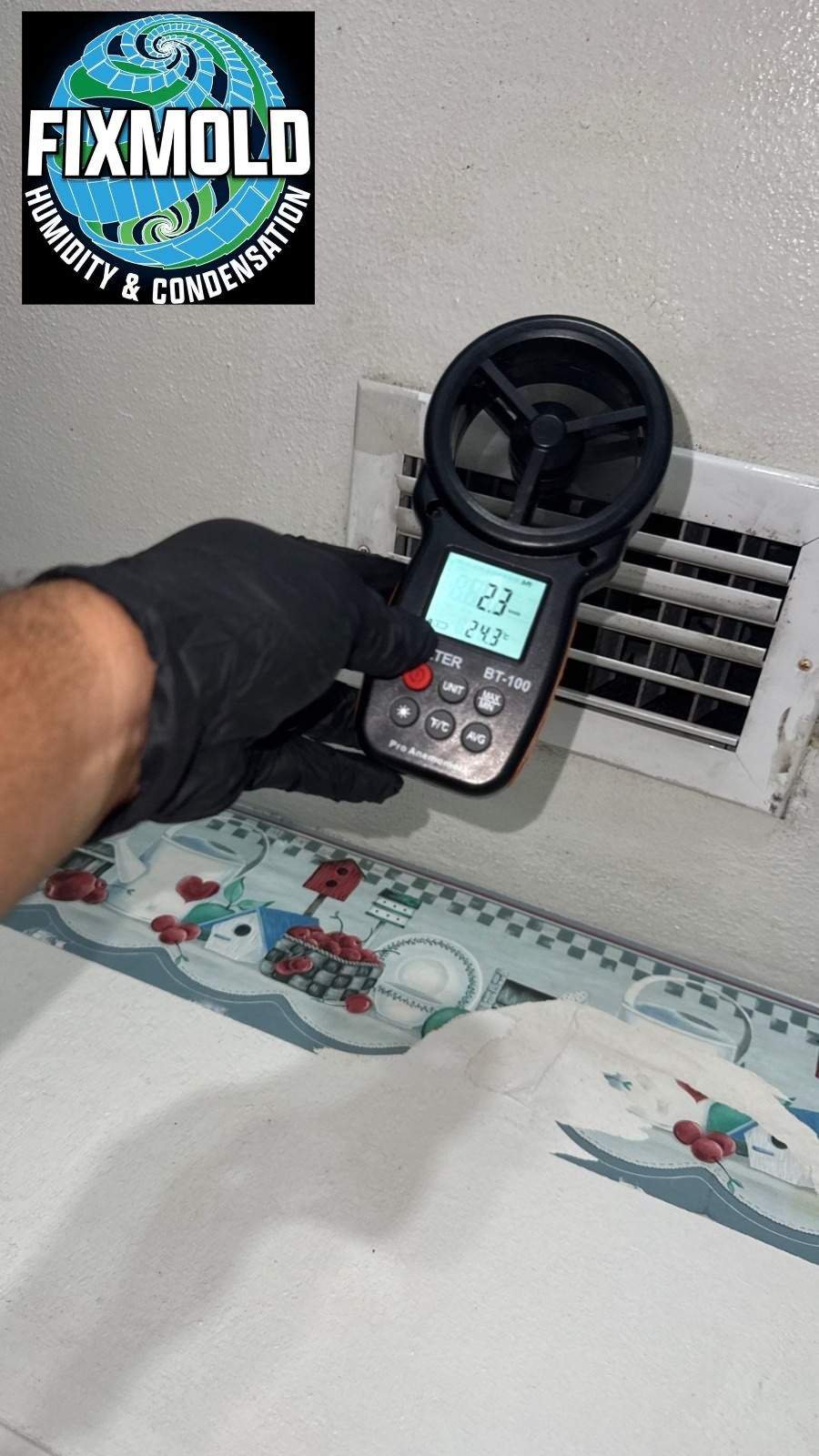
    HVAC systems play a major role in indoor air quality because they continuously move air throughout the building. If dust, moisture, insulation particles, microbial buildup, or contaminants accumulate inside ducts or air handlers, those particles may circulate repeatedly throughout the property.

    Many homeowners first recognize air quality problems through persistent musty odors, recurring dust, sinus irritation, headaches, or discomfort that improves when they leave the property. In South Florida, these symptoms are often connected to indoor environmental imbalance rather than a single isolated issue.

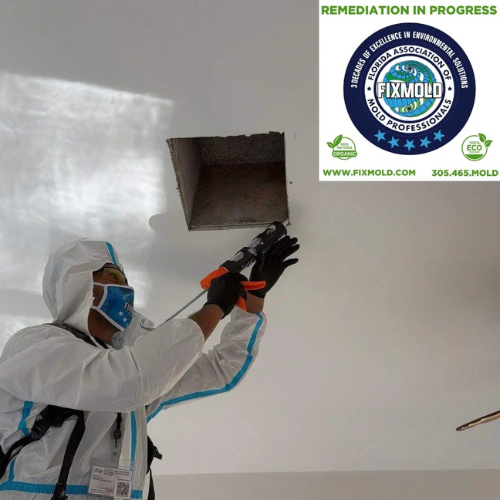
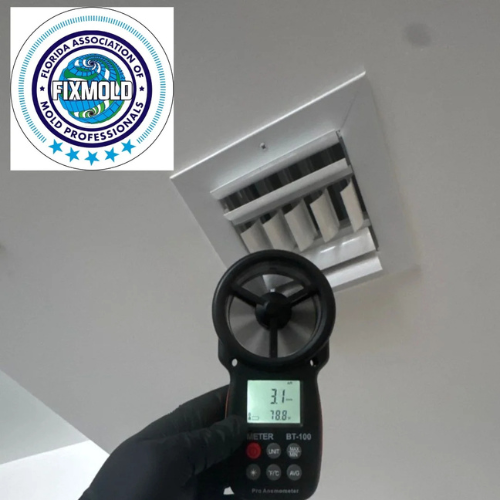
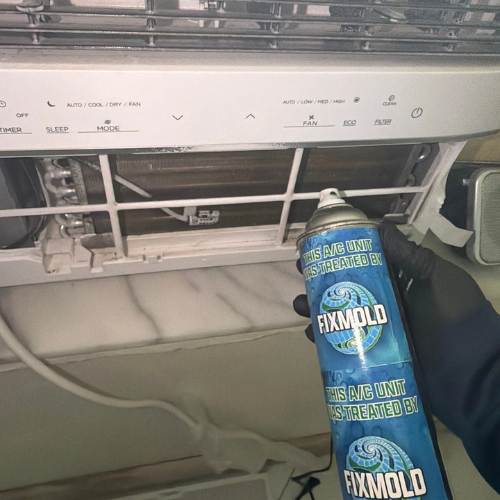
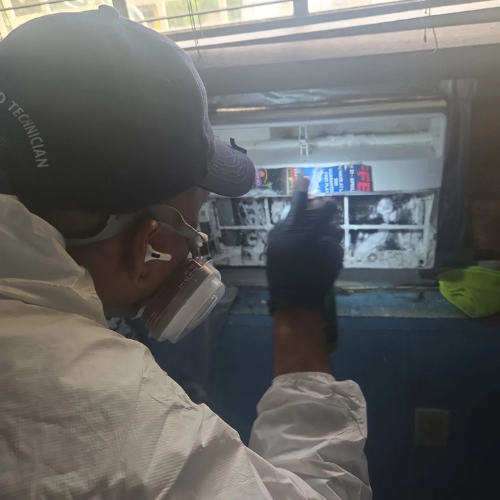
    Air quality deep cleaning commonly involves evaluating ventilation systems, air circulation, moisture conditions, and environmental particle buildup throughout the property. This may include HVAC vent cleaning, HEPA filtration, air scrubbing, humidity stabilization, surface particle removal, and environmental cleaning of areas where contaminants collect over time.

    Water damage is another major factor affecting indoor air quality throughout Miami and coastal South Florida. Roof leaks, plumbing failures, flooding, storm intrusion, and AC condensation may introduce moisture into drywall, insulation, flooring systems, and structural cavities where contaminants remain trapped long after visible water disappears.

    Even small moisture problems may affect indoor air quality if airborne particles begin circulating through the ventilation system. Hidden dampness inside wall cavities or insulation can gradually influence indoor air conditions without producing obvious visible mold growth initially.

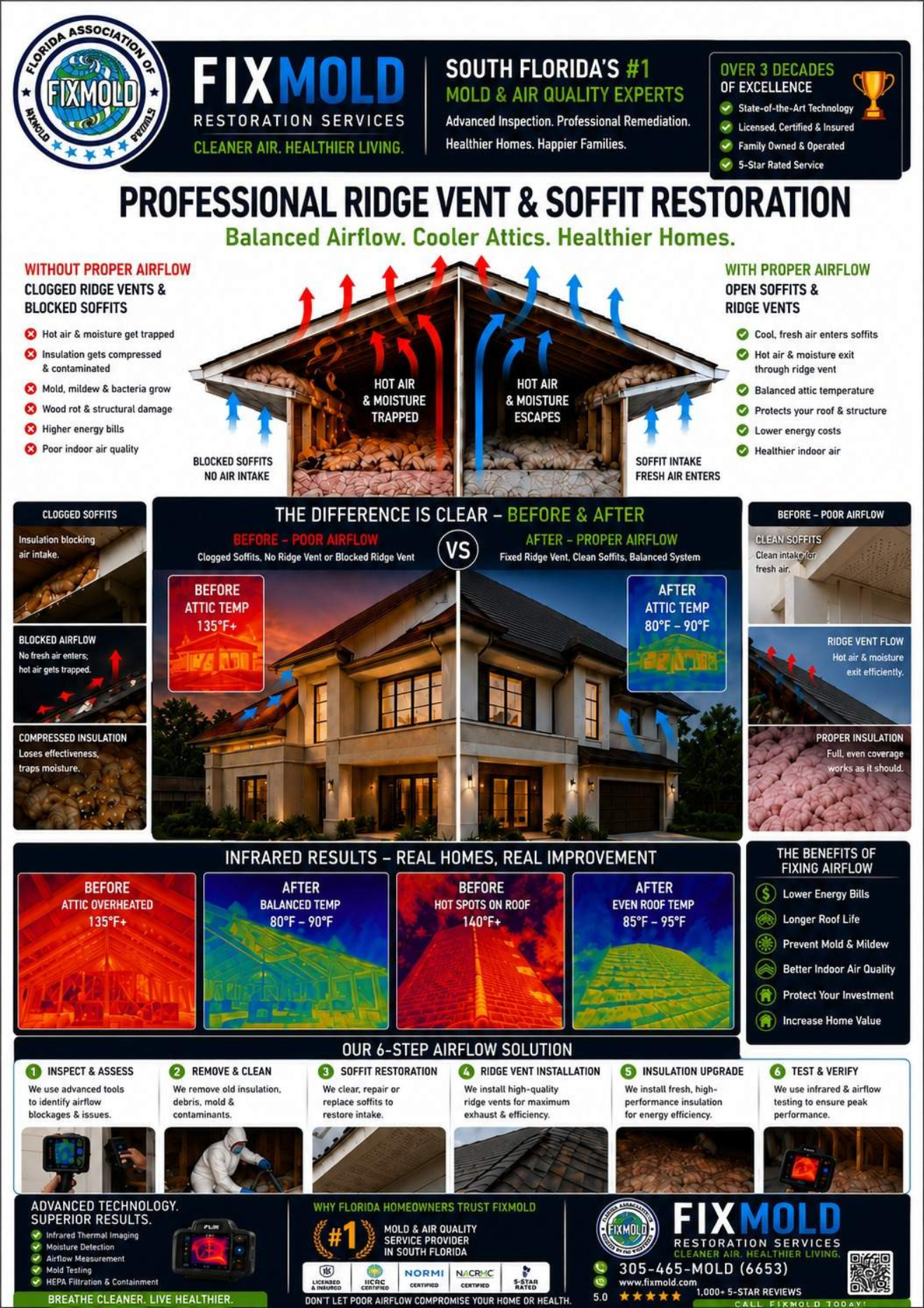
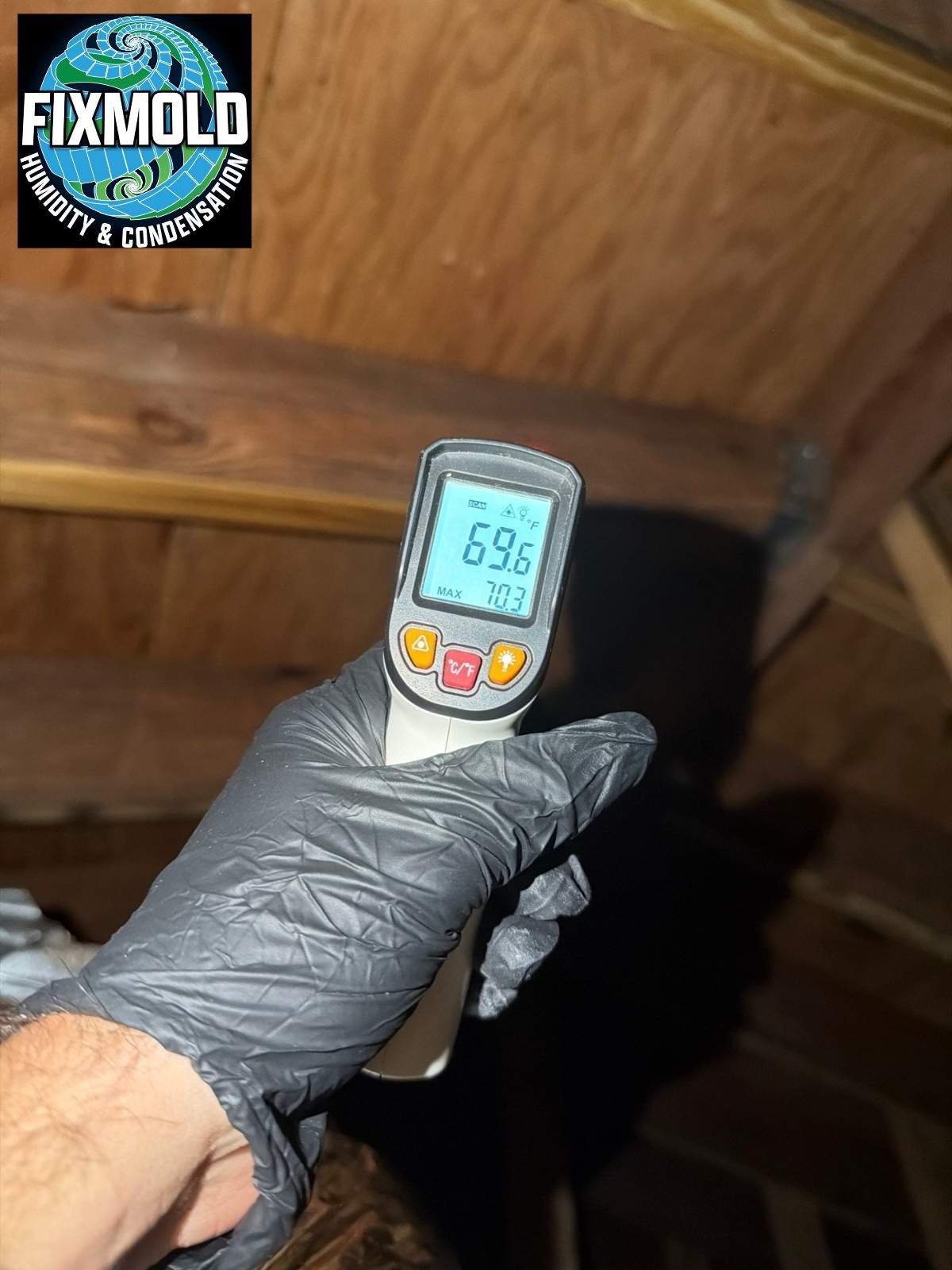
    Attics are especially important when evaluating indoor air quality in South Florida homes because attic heat and humidity often affect duct systems and insulation above the living space. Dust, insulation particles, microbial growth, and condensation around attic HVAC systems may contribute to stale indoor air and recurring particle circulation throughout the home.

    Crawlspaces may create similar environmental concerns beneath the structure. Elevated groundwater, poor drainage, and trapped humidity frequently contribute to damp crawlspace conditions where airborne contaminants can migrate upward into living areas through natural airflow movement.

    Condominiums and high-rise properties throughout Downtown Miami, Brickell, Sunny Isles, Hallandale Beach, Miami Beach, and Aventura often experience indoor air quality concerns connected to shared ventilation systems, enclosed airflow patterns, neighboring moisture intrusion, and limited fresh air circulation. Odors and airborne particles may move between units through structural openings and ventilation pathways.

    Commercial buildings throughout Miami, Fort Lauderdale, Boca Raton, and West Palm Beach frequently require air quality deep cleaning due to large HVAC systems, heavy occupant traffic, construction dust, humidity buildup, and long-term airborne particle accumulation. Offices, schools, medical facilities, retail centers, hospitality properties, and wellness spaces all depend heavily on stable indoor air conditions.

    Luxury homes and waterfront properties throughout Fisher Island, Key Biscayne, Golden Beach, Palm Beach, Naples, and Miami Beach often face additional indoor air quality challenges because coastal humidity, salt air exposure, enclosed architectural designs, and advanced HVAC systems create complex environmental conditions inside tightly sealed structures.

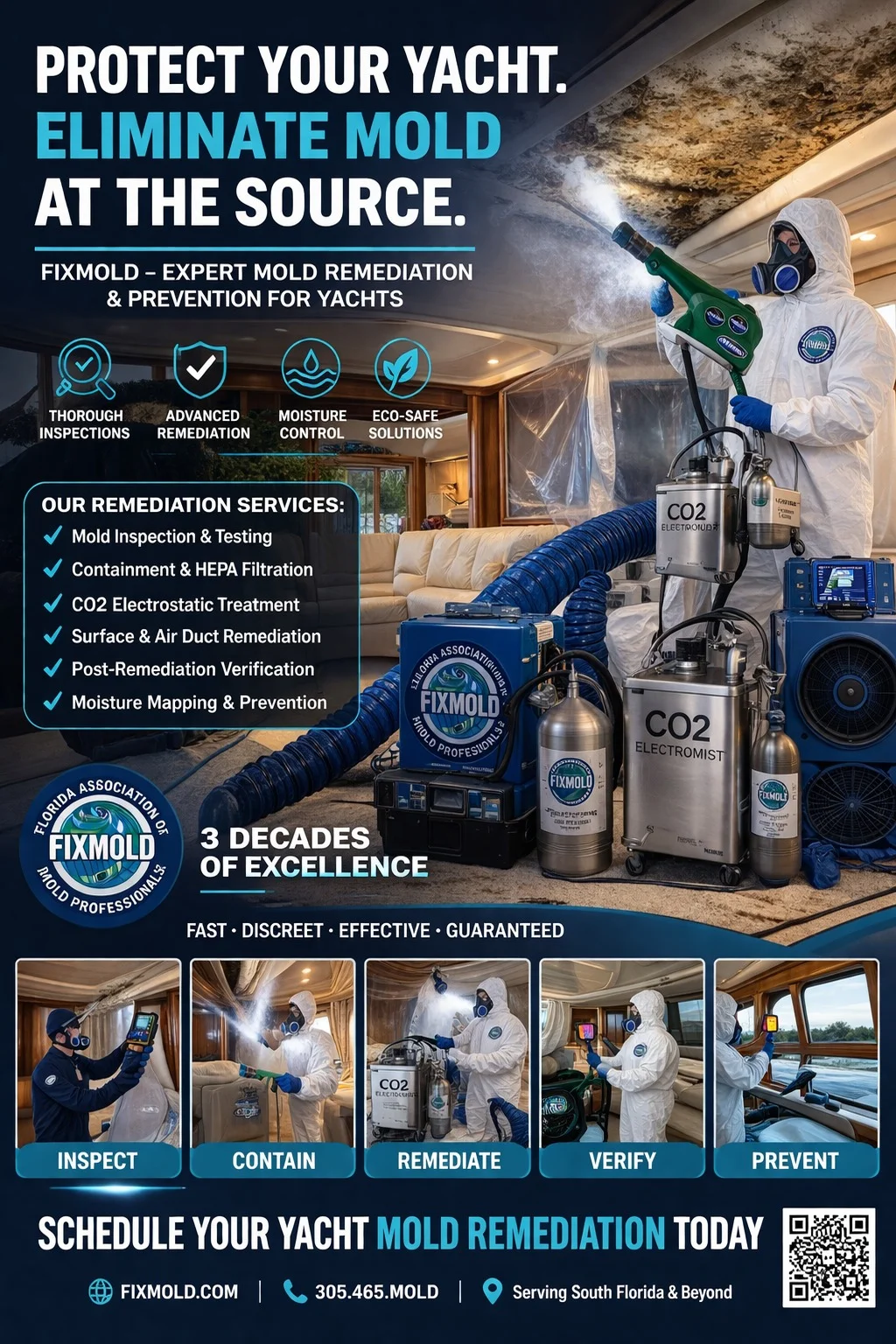
    Marine environments aboard yachts and boats throughout South Florida marinas experience similar indoor air quality concerns caused by salt air, condensation, enclosed cabins, humidity buildup, and limited ventilation. Air quality deep cleaning in marine environments often focuses on reducing moisture-related airborne contaminants and stale cabin air.

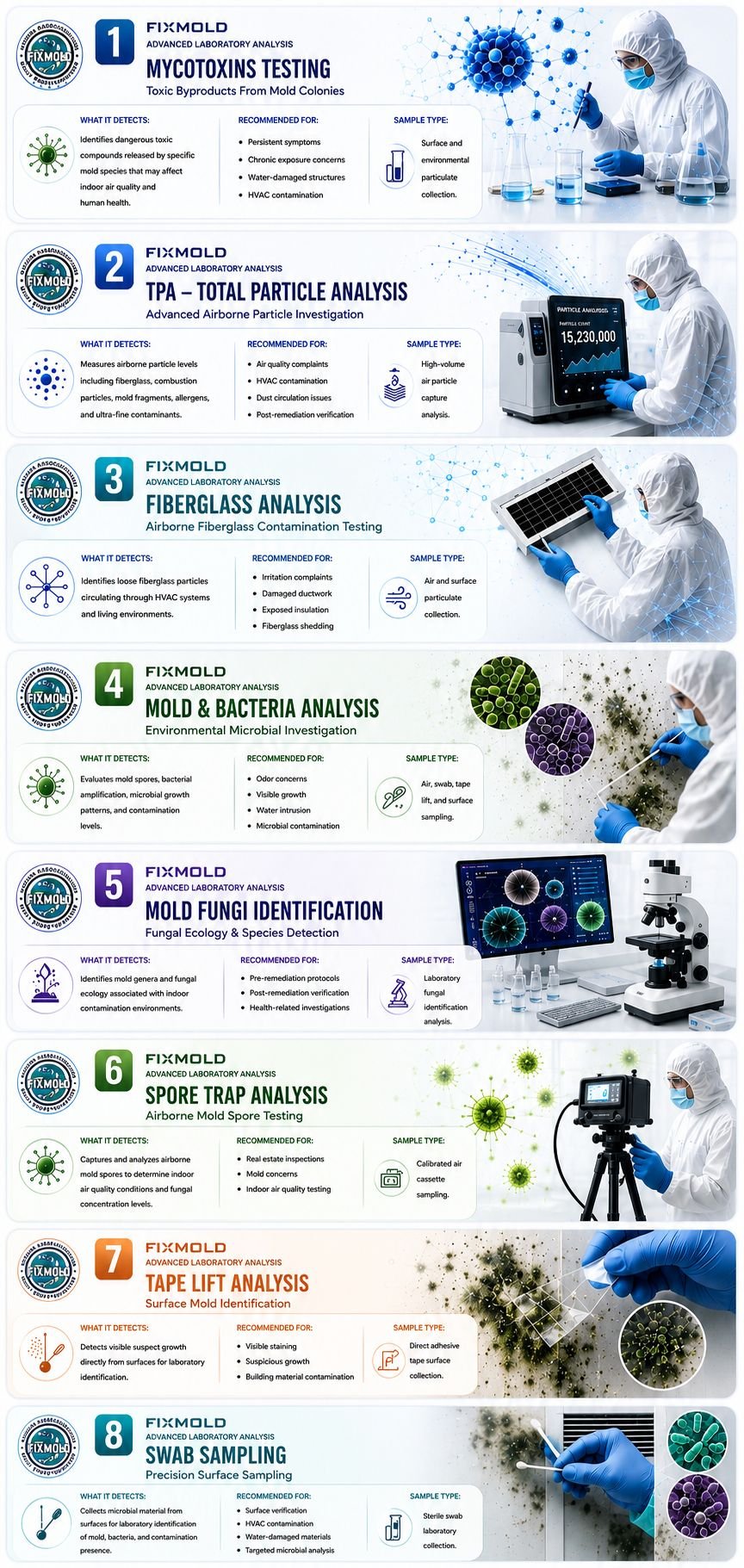
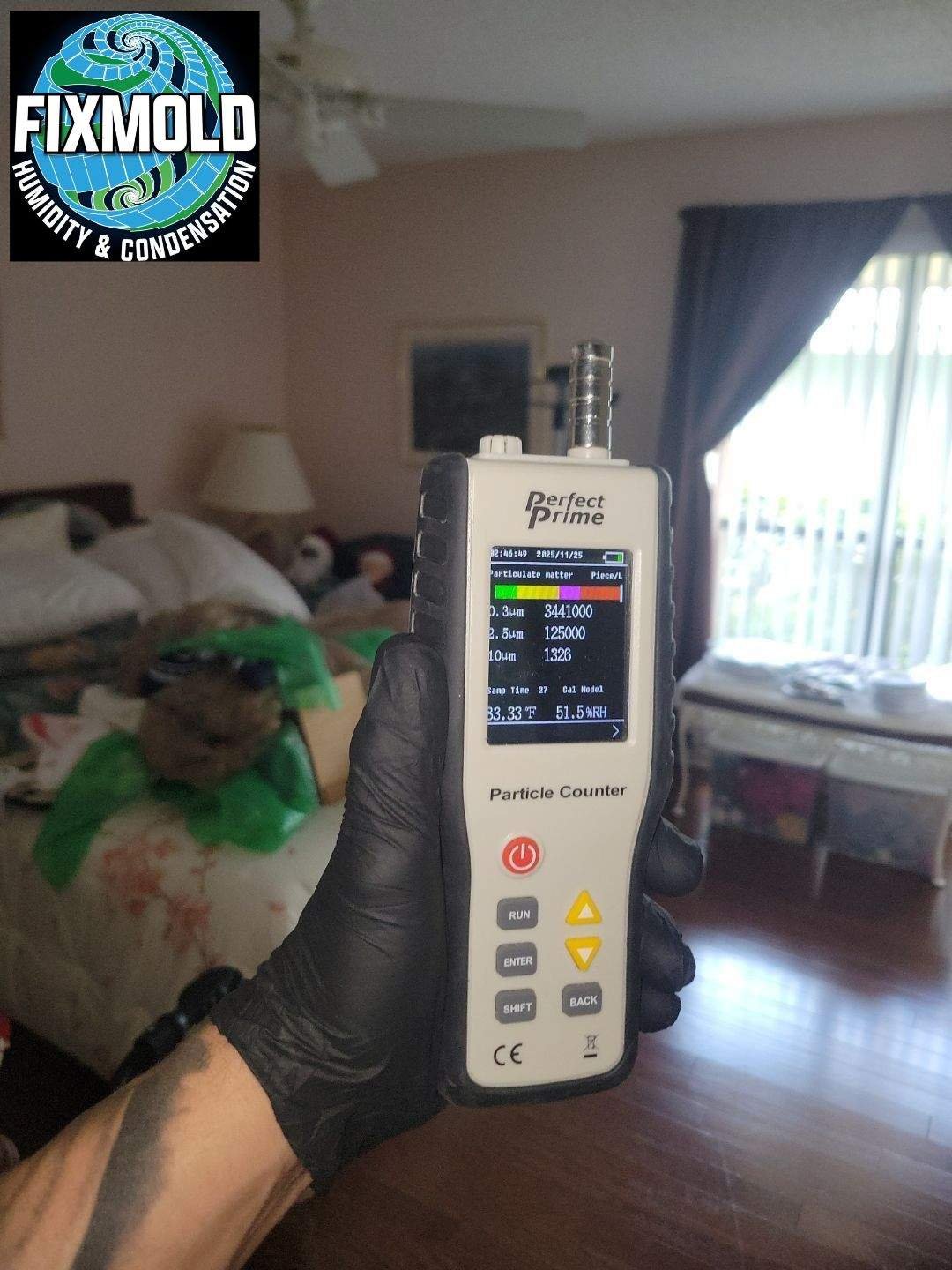
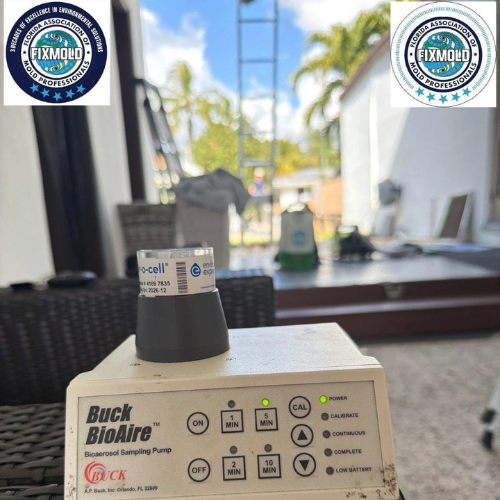
    Airborne particle testing and indoor air quality evaluations are commonly performed before or during deep cleaning projects to identify the environmental conditions affecting the property. Air sampling may help determine whether elevated dust, mold spores, fiberglass particles, or microbial contaminants are circulating indoors.

    Fiberglass contamination is another issue occasionally identified in South Florida HVAC systems where deteriorating duct liner materials release airborne fibers into occupied spaces. These particles may contribute to indoor irritation and recurring dust problems throughout the property.

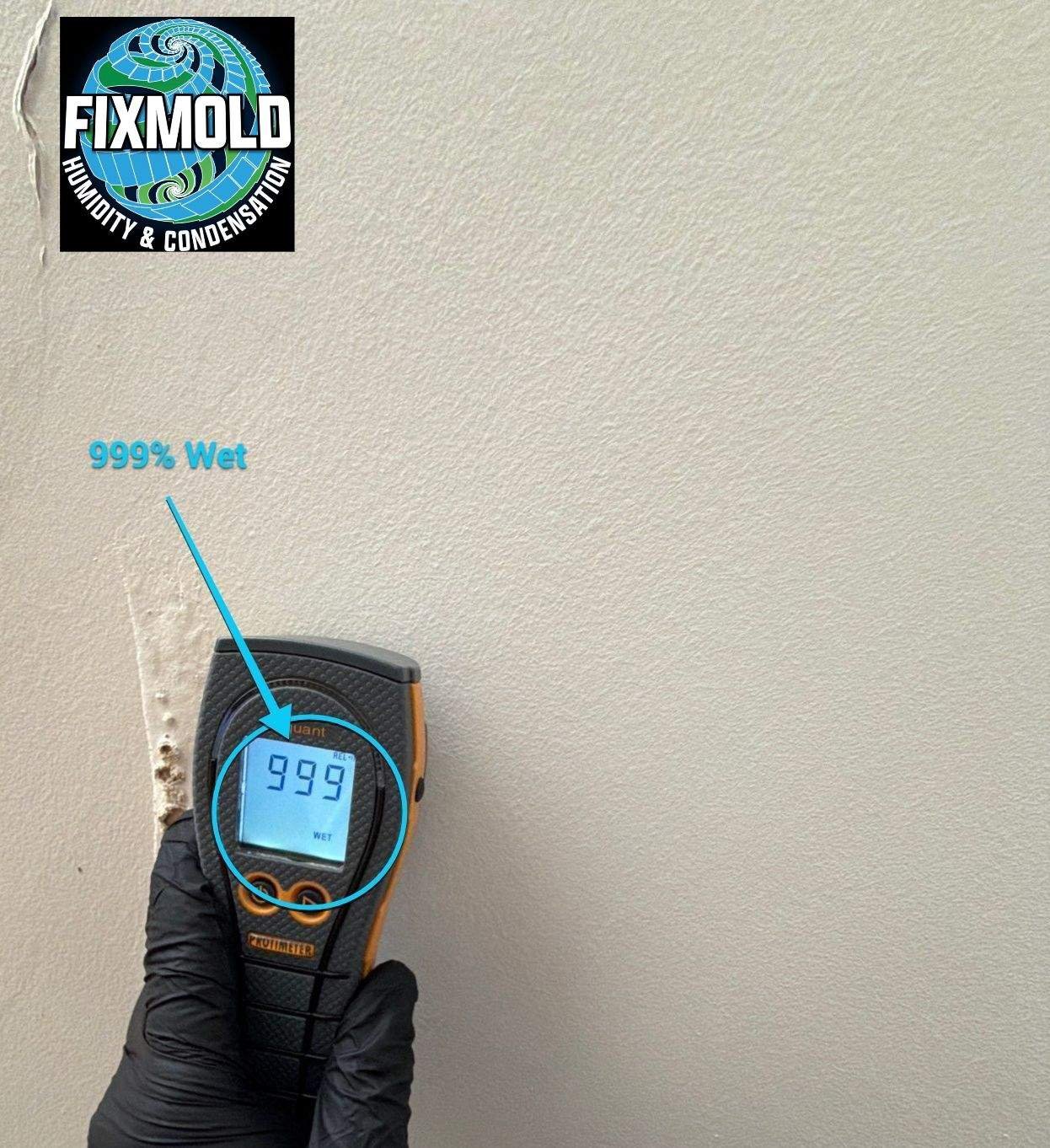
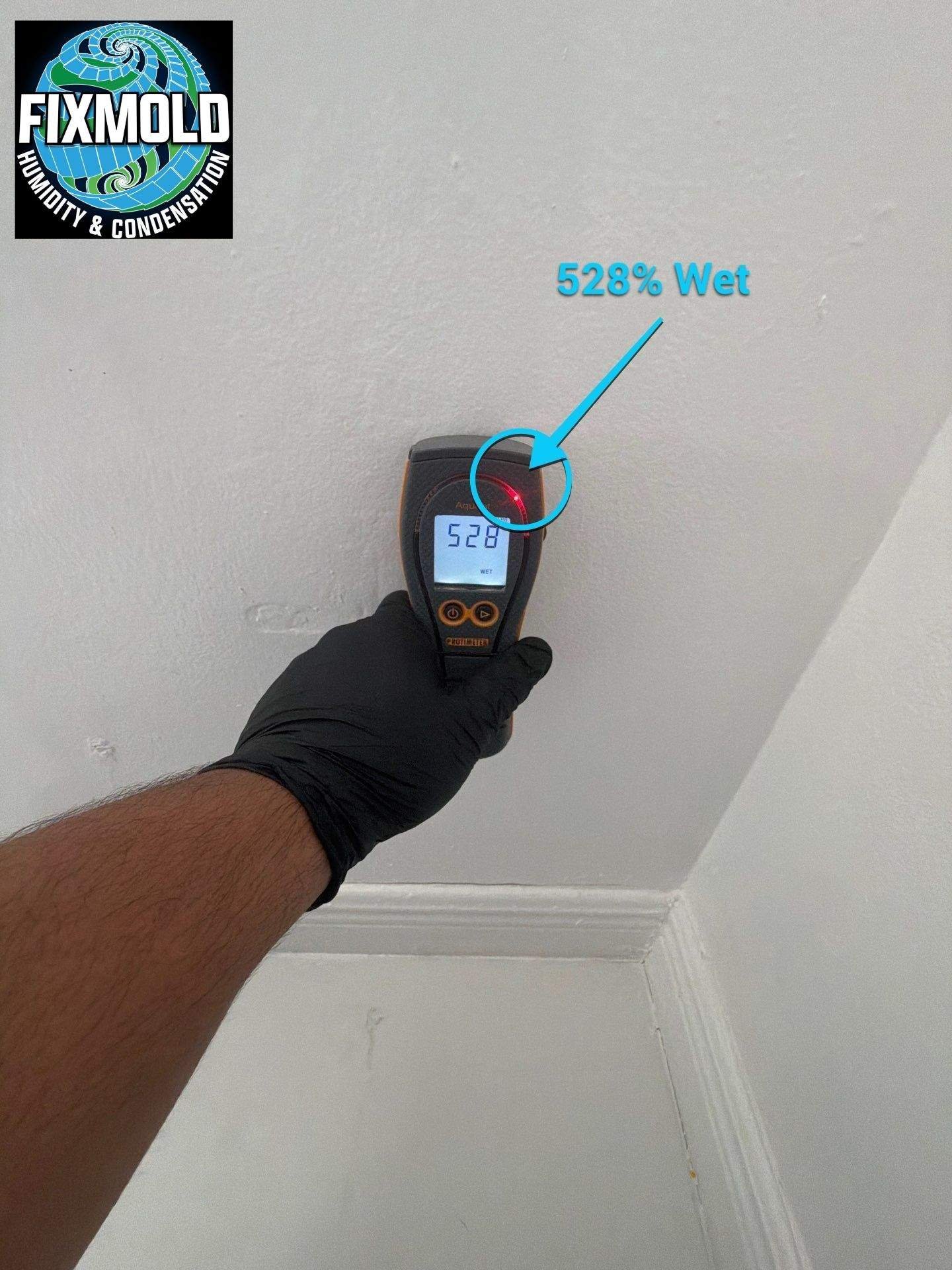
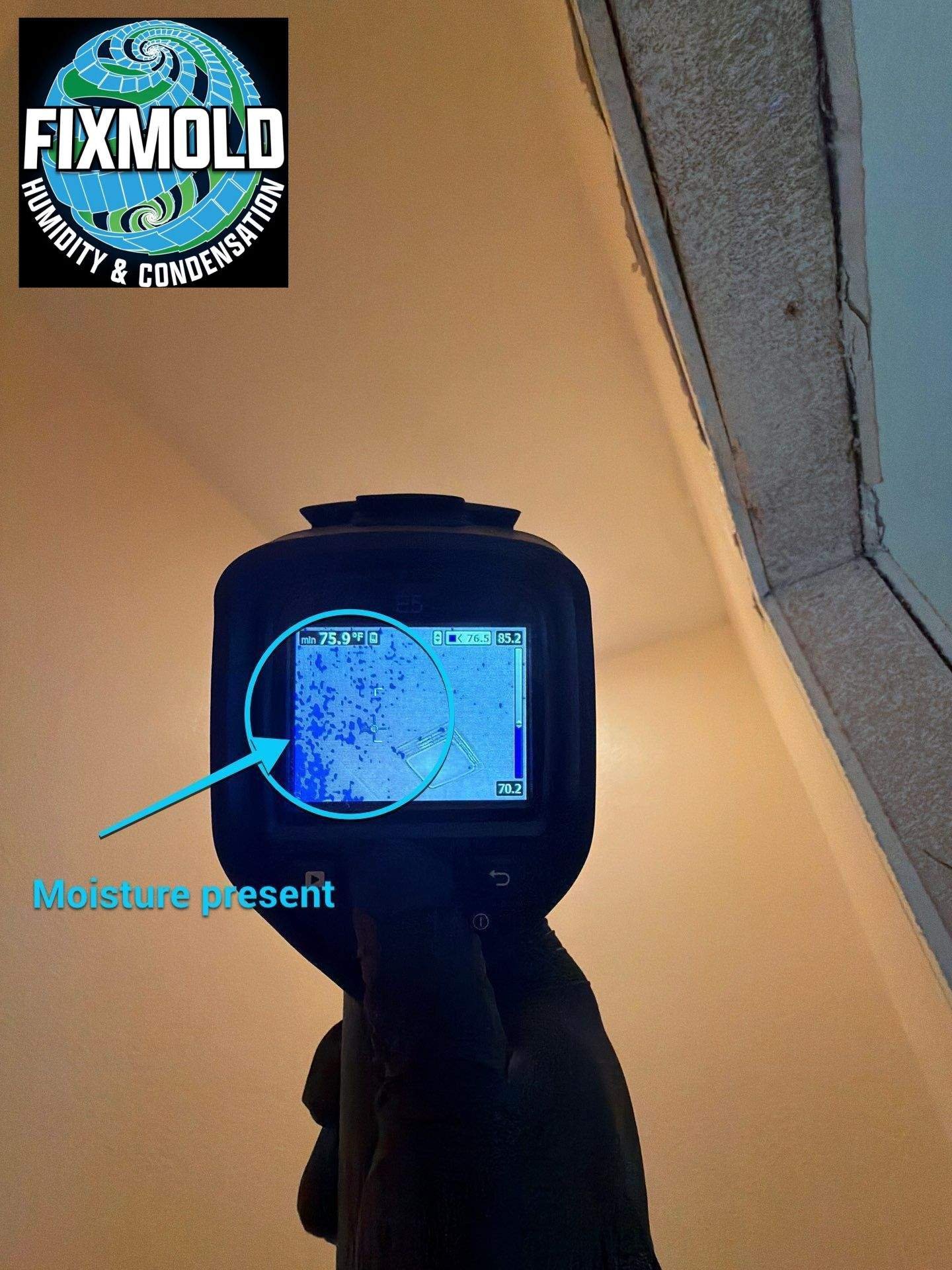
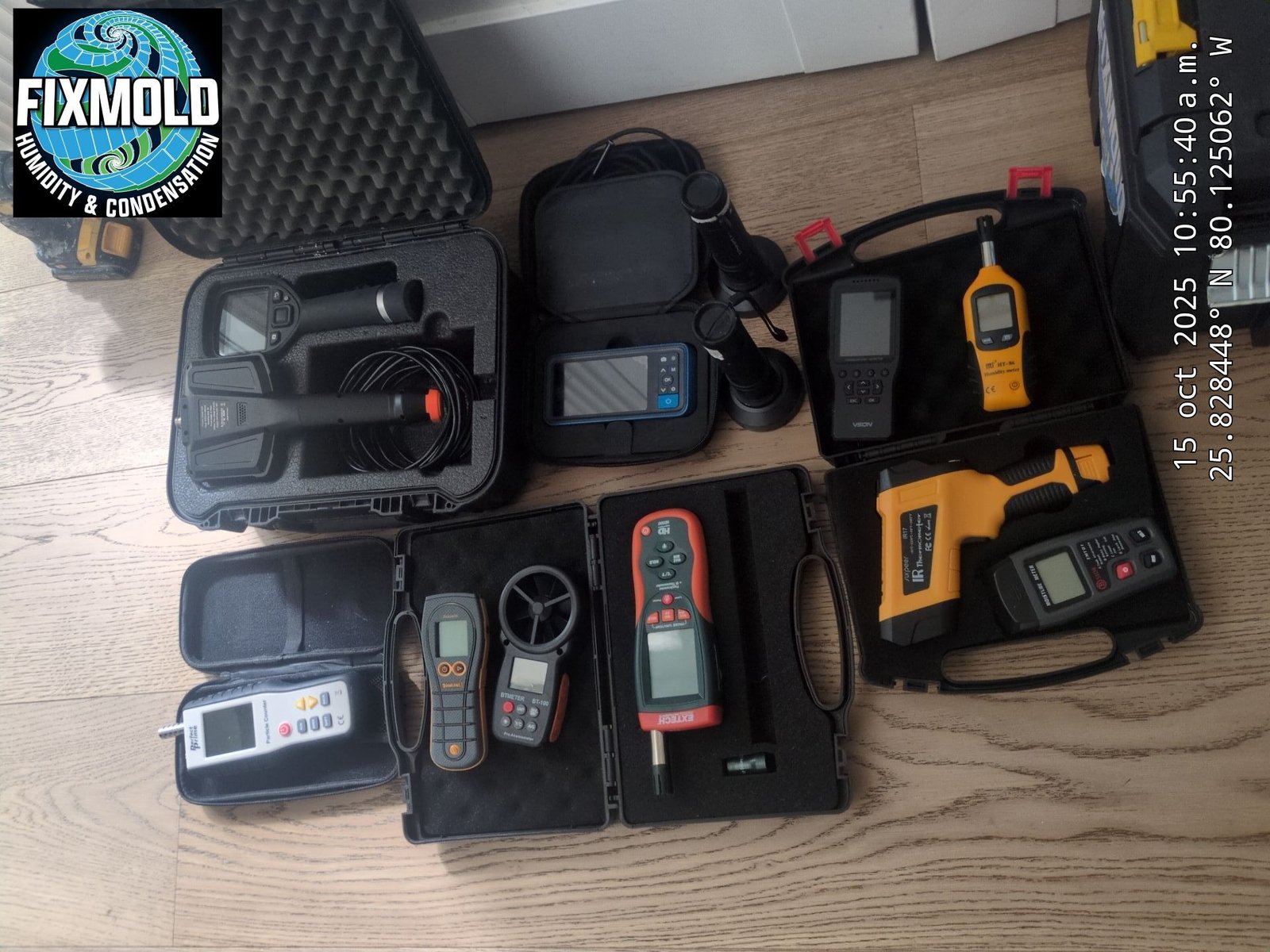
    Thermal imaging and moisture detection are also commonly used because hidden humidity and dampness often contribute to poor indoor air quality. Even when surfaces appear clean, concealed moisture may continue affecting the indoor environment behind walls, ceilings, flooring systems, or HVAC insulation.

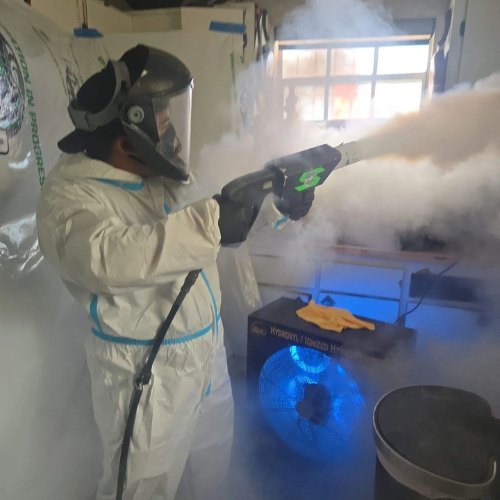
    Air scrubbing systems are frequently used during deep cleaning projects to reduce airborne particles while environmental cleaning is performed. HEPA filtration helps capture microscopic particles circulating through the indoor environment during remediation or cleaning processes.

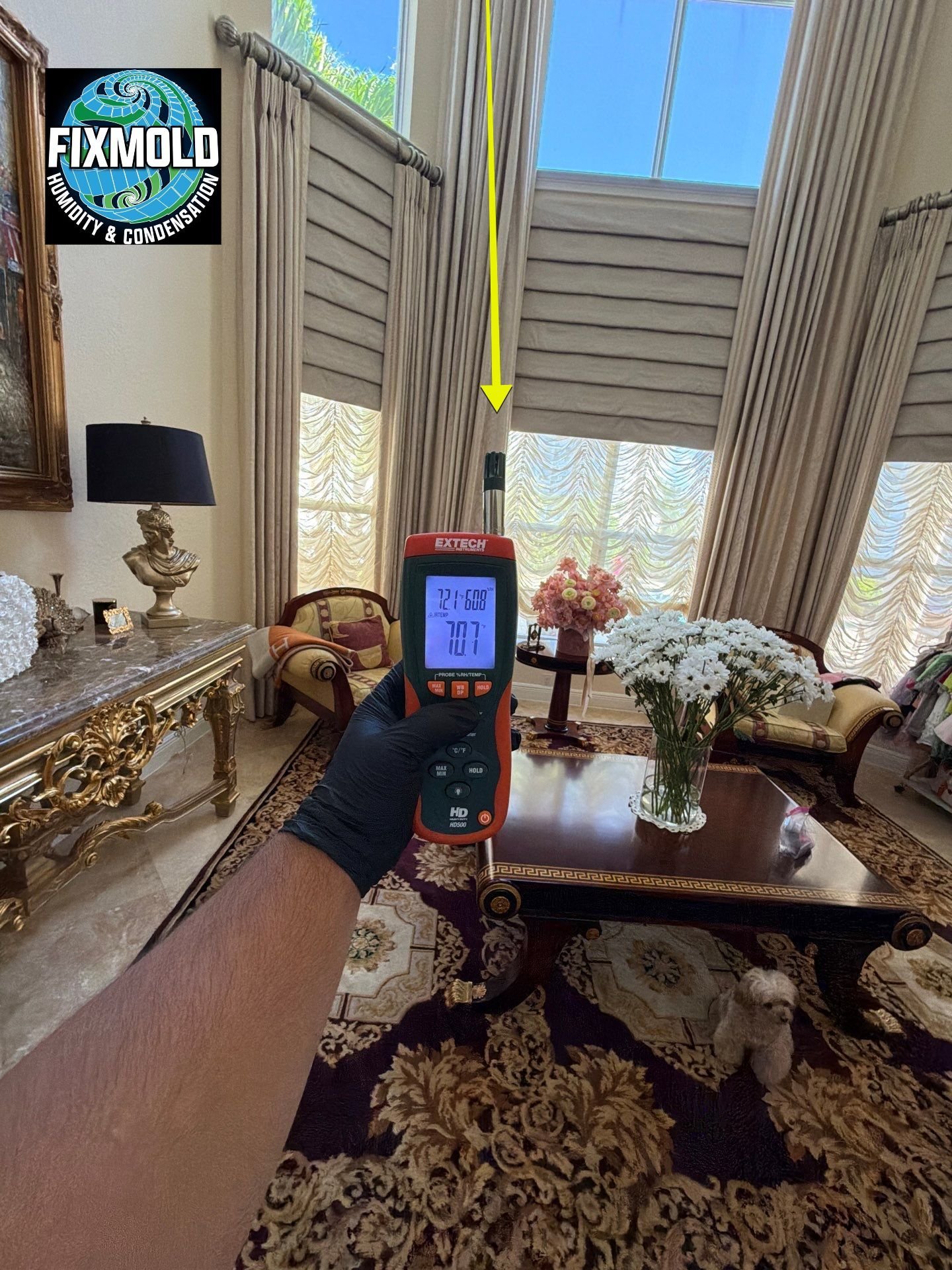
    Humidity control remains one of the most important factors in maintaining long-term indoor air quality throughout South Florida properties. Oversized HVAC systems, poor ventilation, roof leaks, wet insulation, and unresolved condensation may all contribute to recurring airborne contamination if environmental conditions remain unstable.

    Many homeowners repeatedly clean surfaces without realizing the underlying indoor air quality issue originates inside the HVAC system, attic space, insulation materials, or hidden moisture-affected cavities elsewhere in the building. Surface cleaning alone often fails when airborne contaminants continue circulating through the indoor environment.

    Every Miami property responds differently depending on building age, HVAC configuration, moisture history, occupancy patterns, ventilation design, and environmental exposure. Older homes, luxury waterfront residences, condos, commercial properties, and storm-damaged structures each present unique indoor air quality challenges.

    Understanding how South Florida humidity affects indoor environments helps explain why air quality deep cleaning often requires a broader environmental approach focused on moisture control, ventilation stability, HVAC cleanliness, and airborne particle reduction rather than cosmetic cleaning alone.

    Fixmold miami
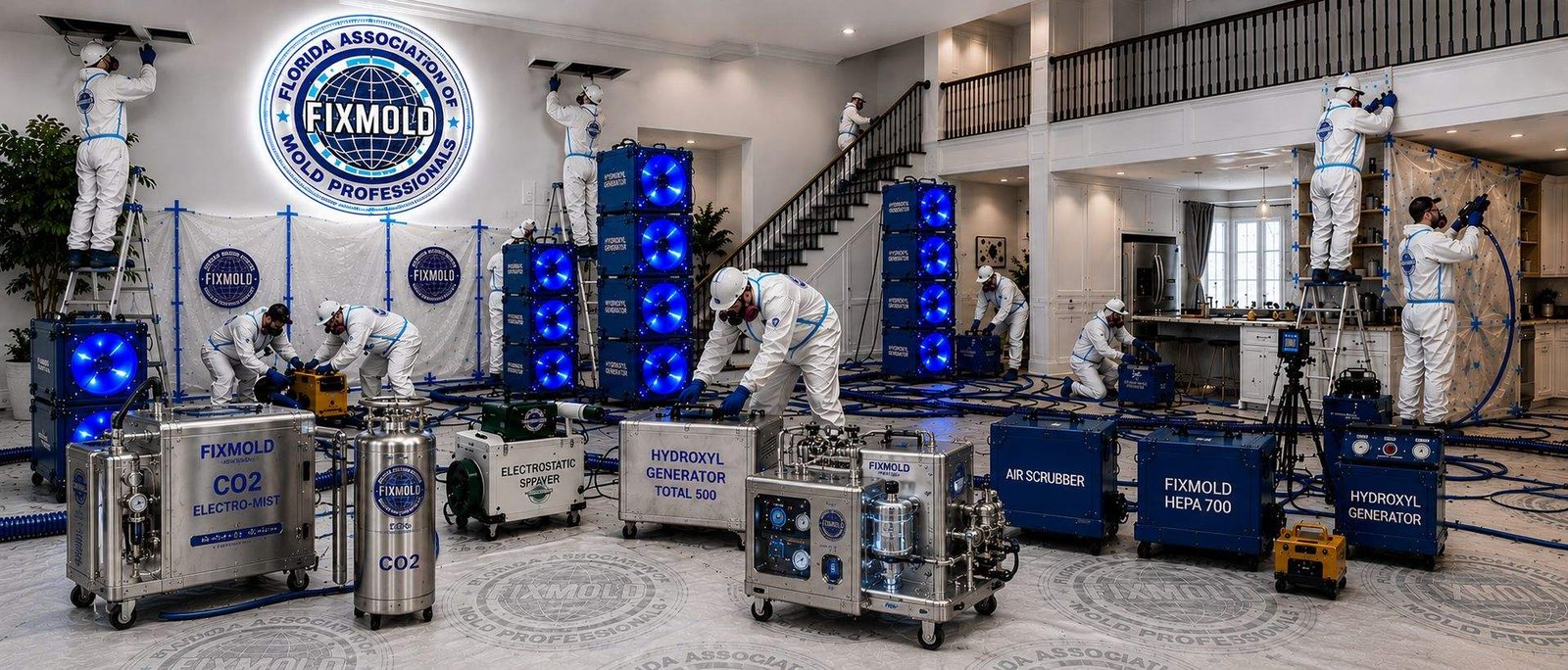
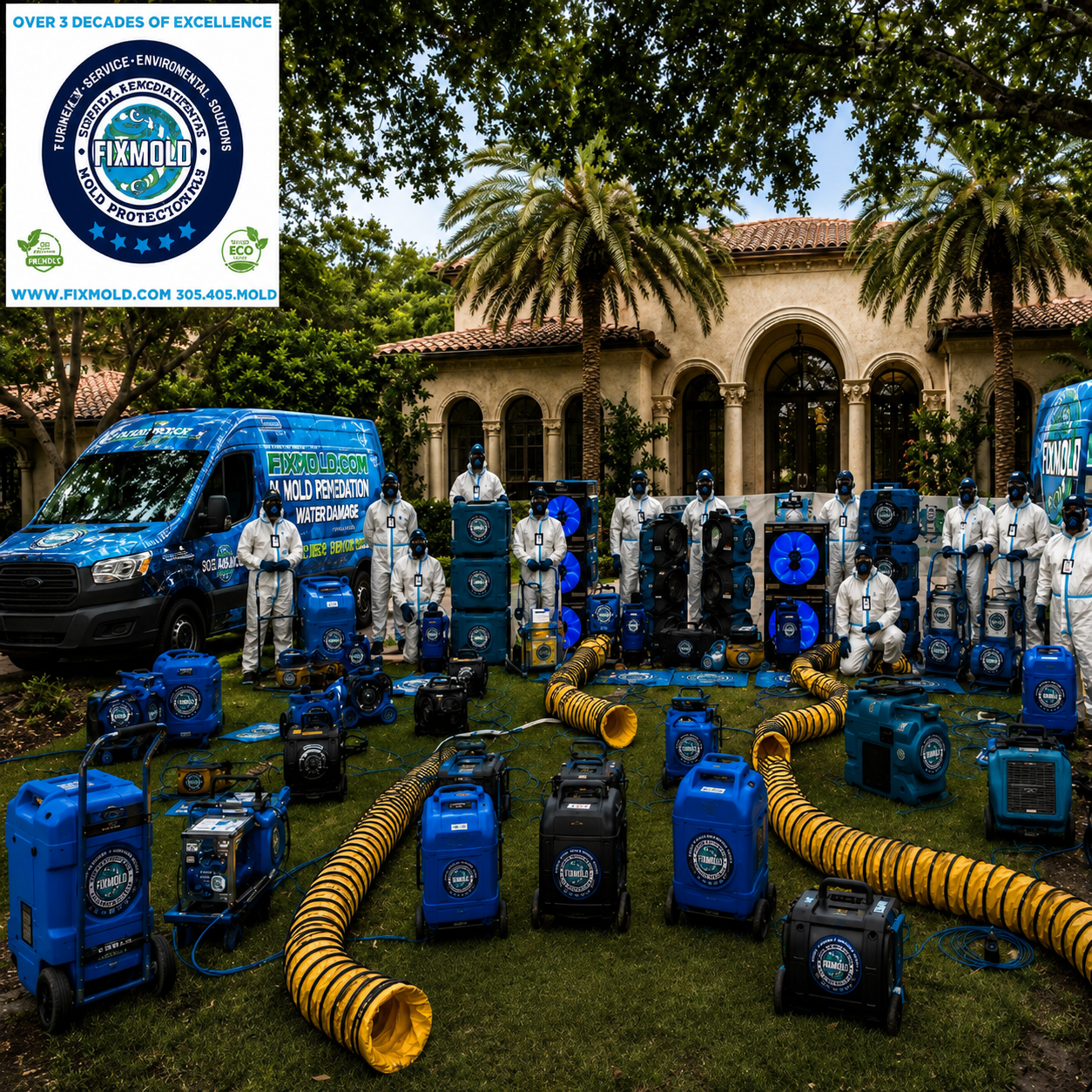
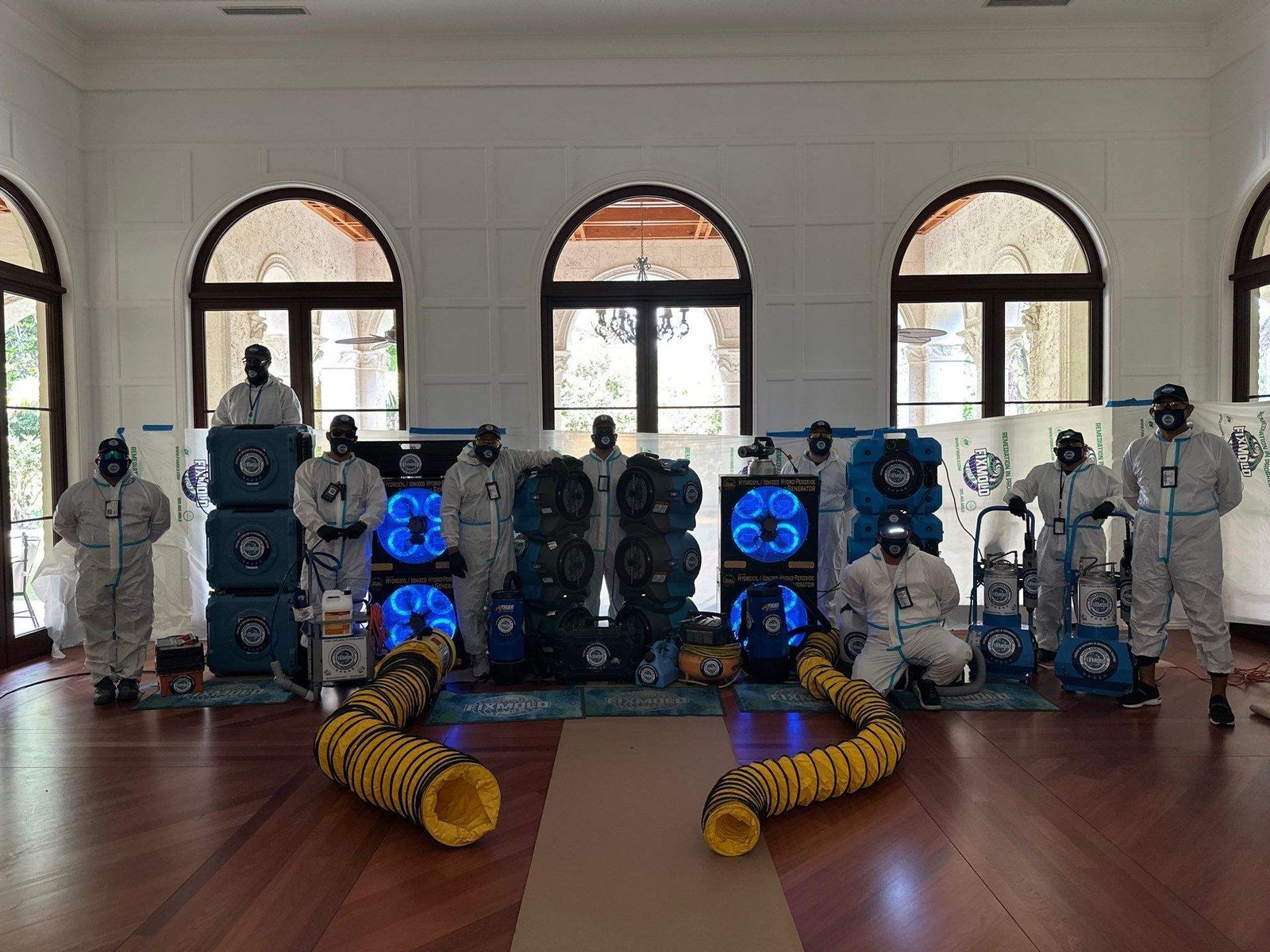
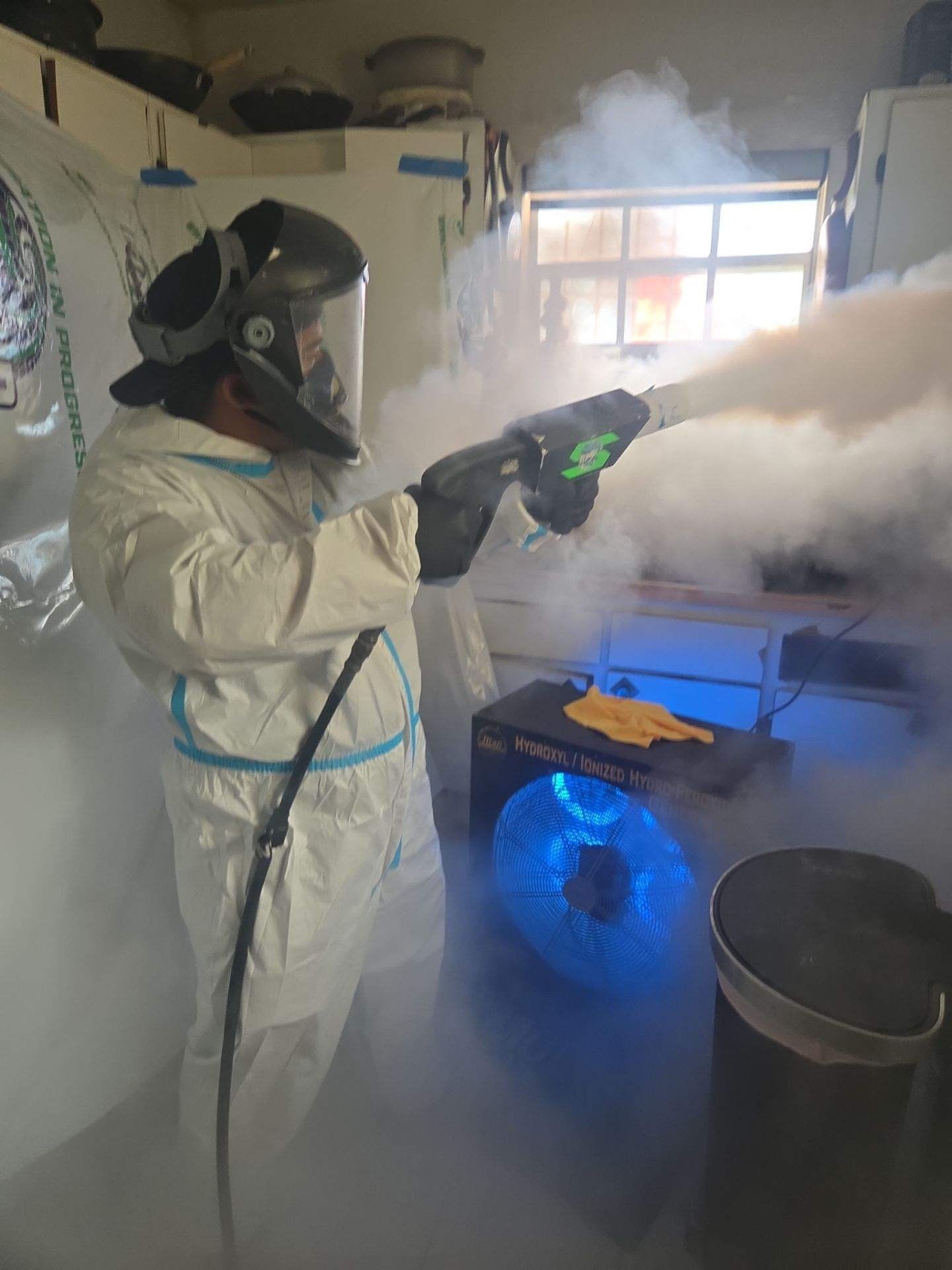
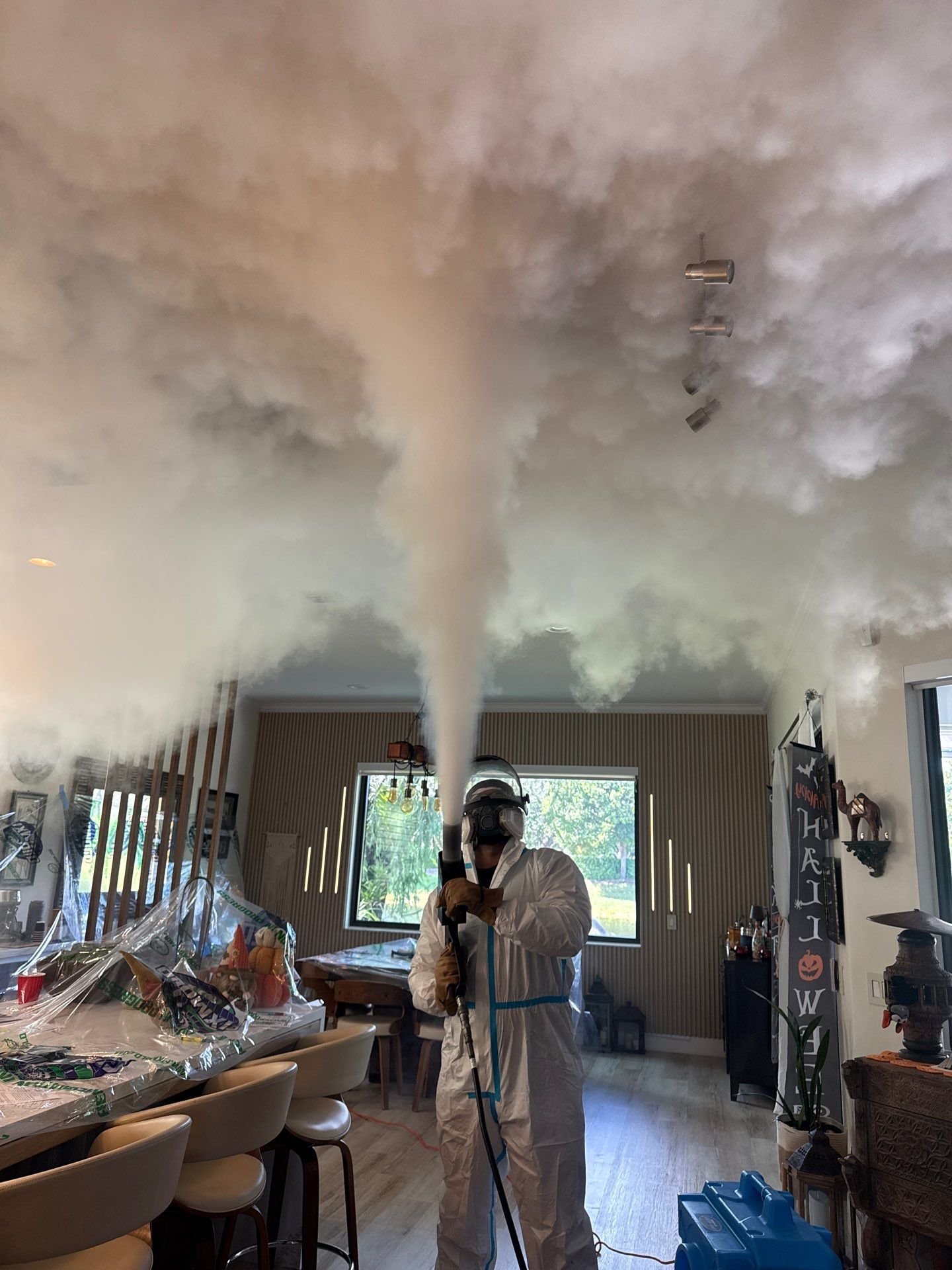
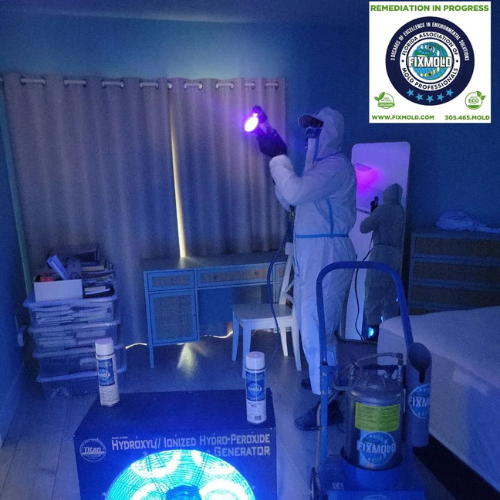
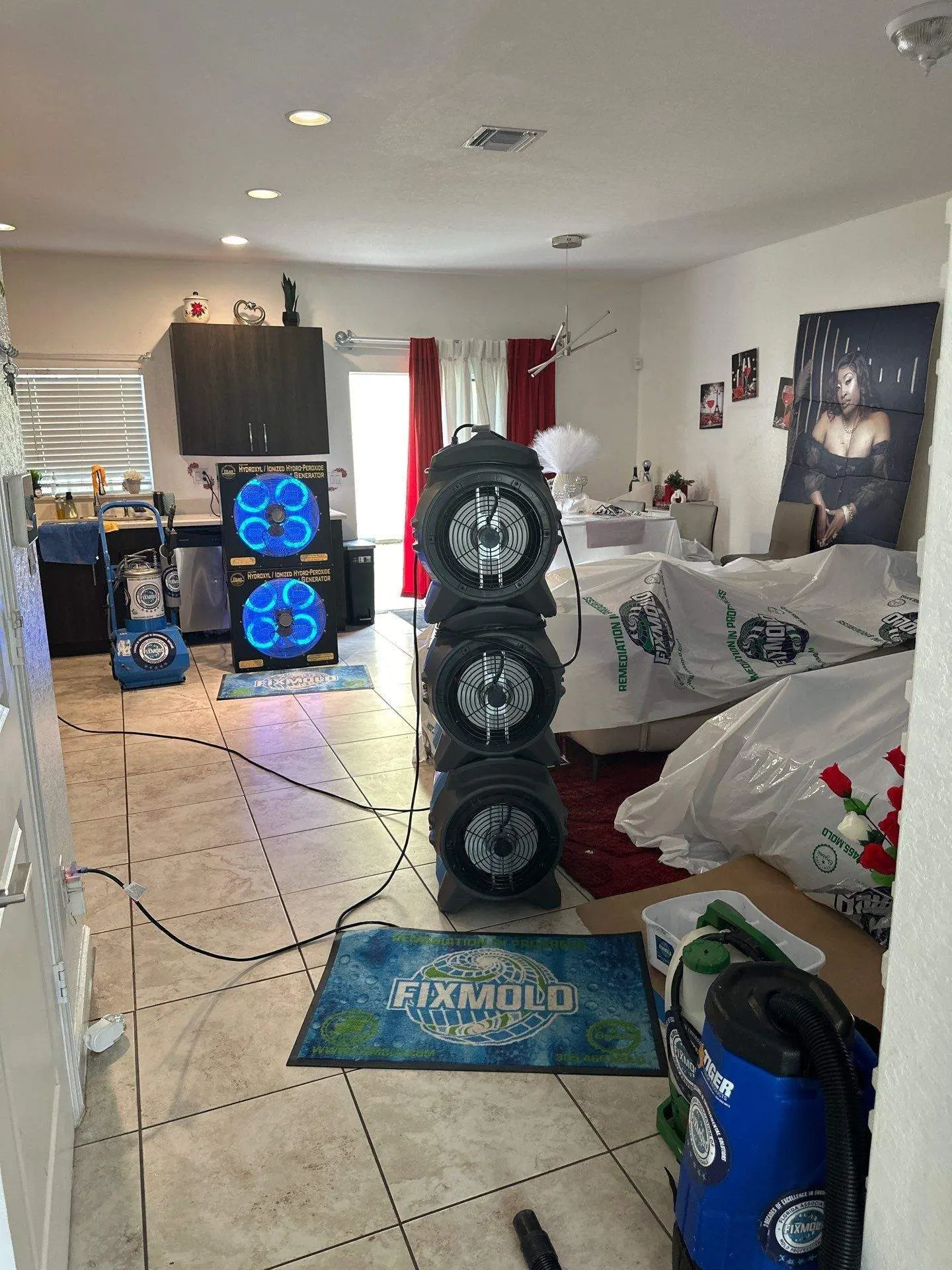
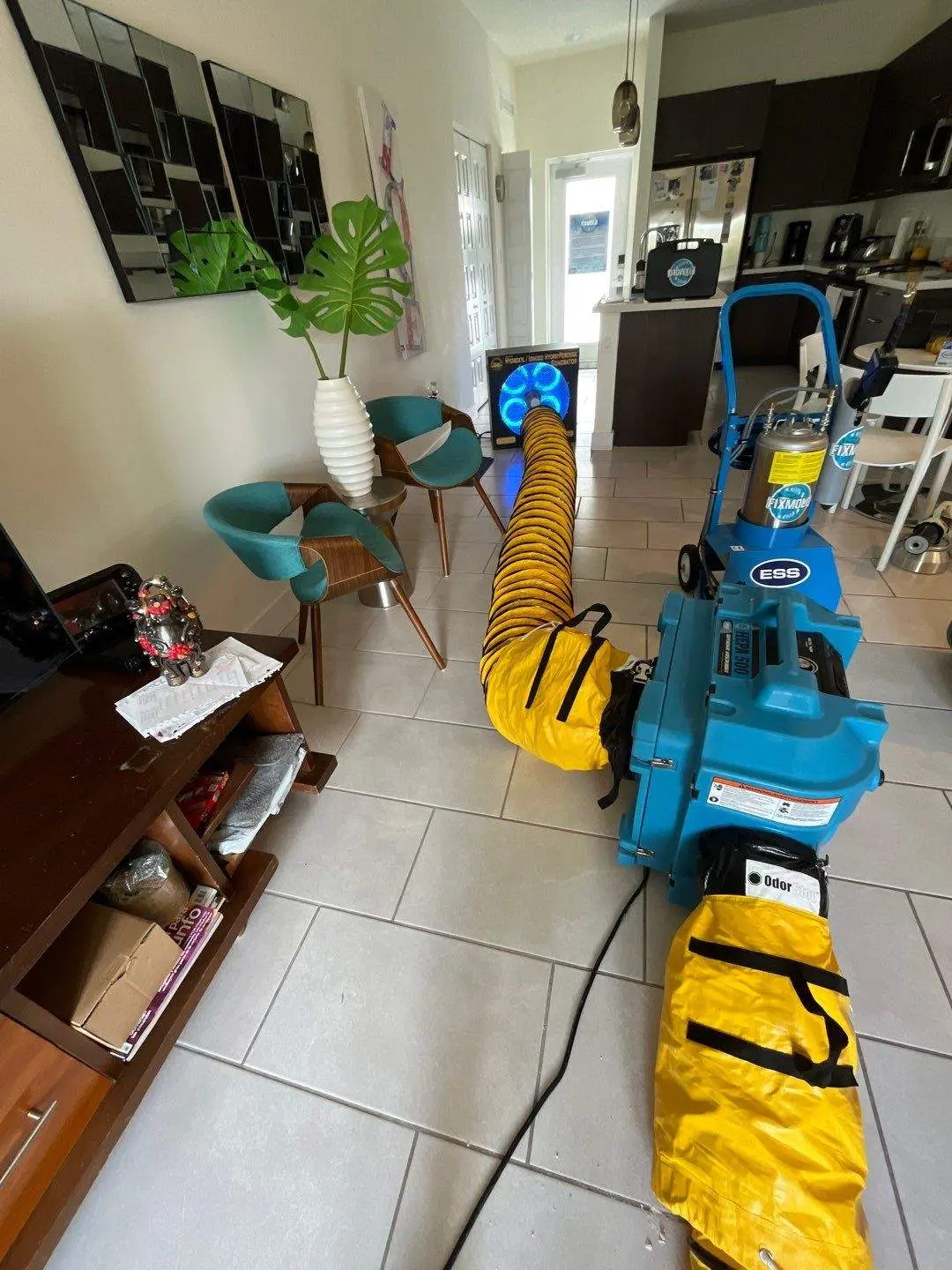
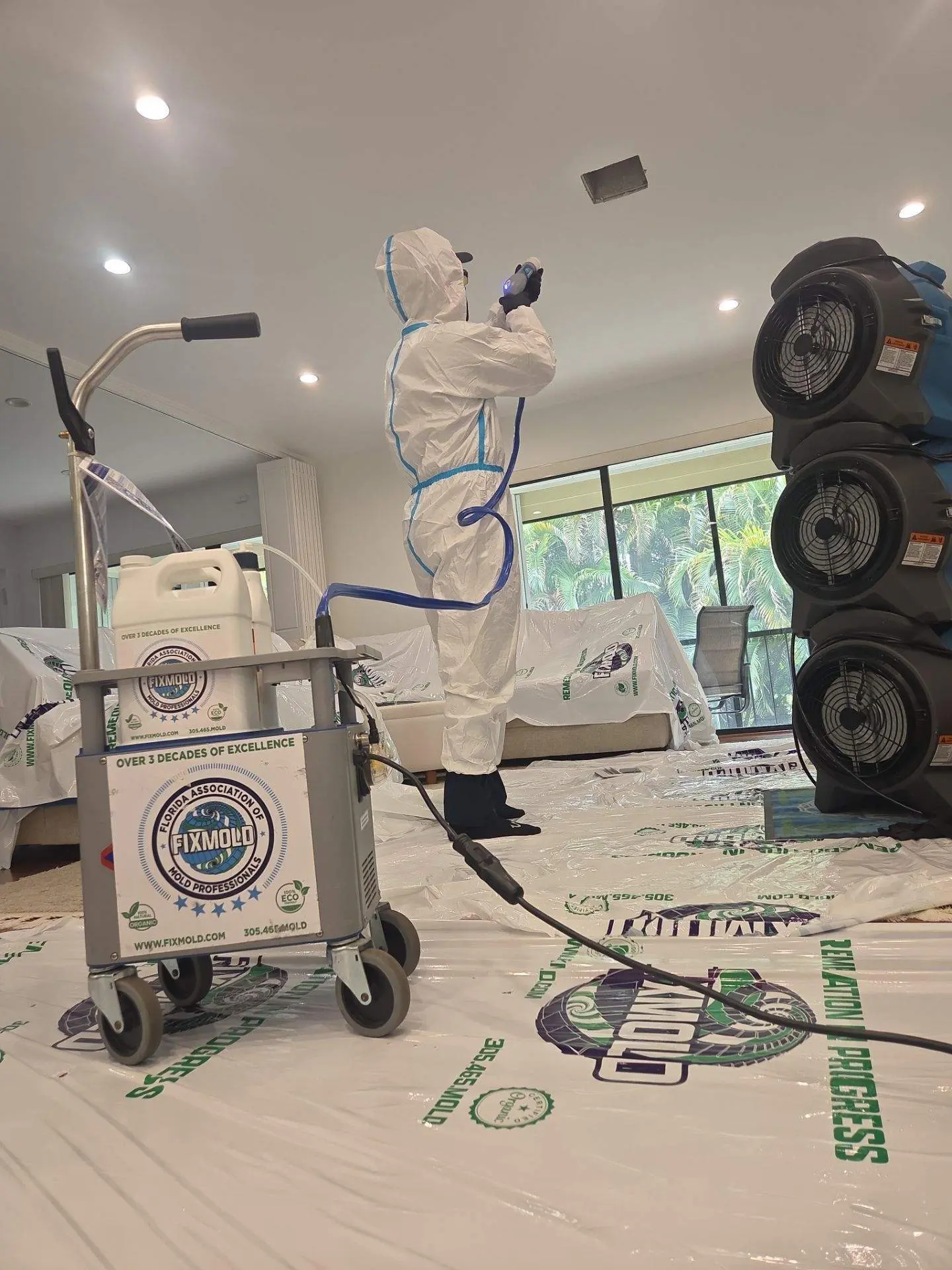
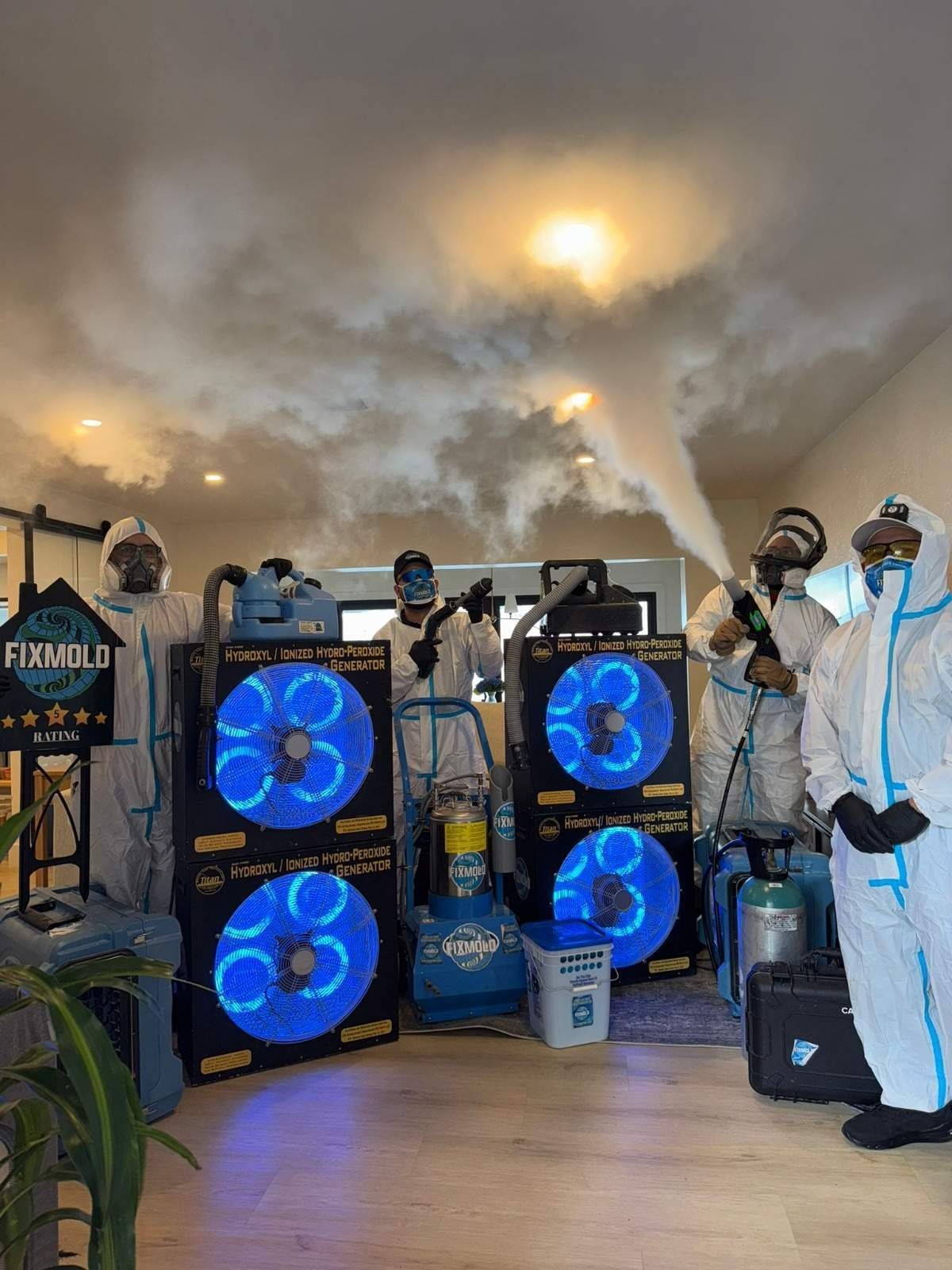
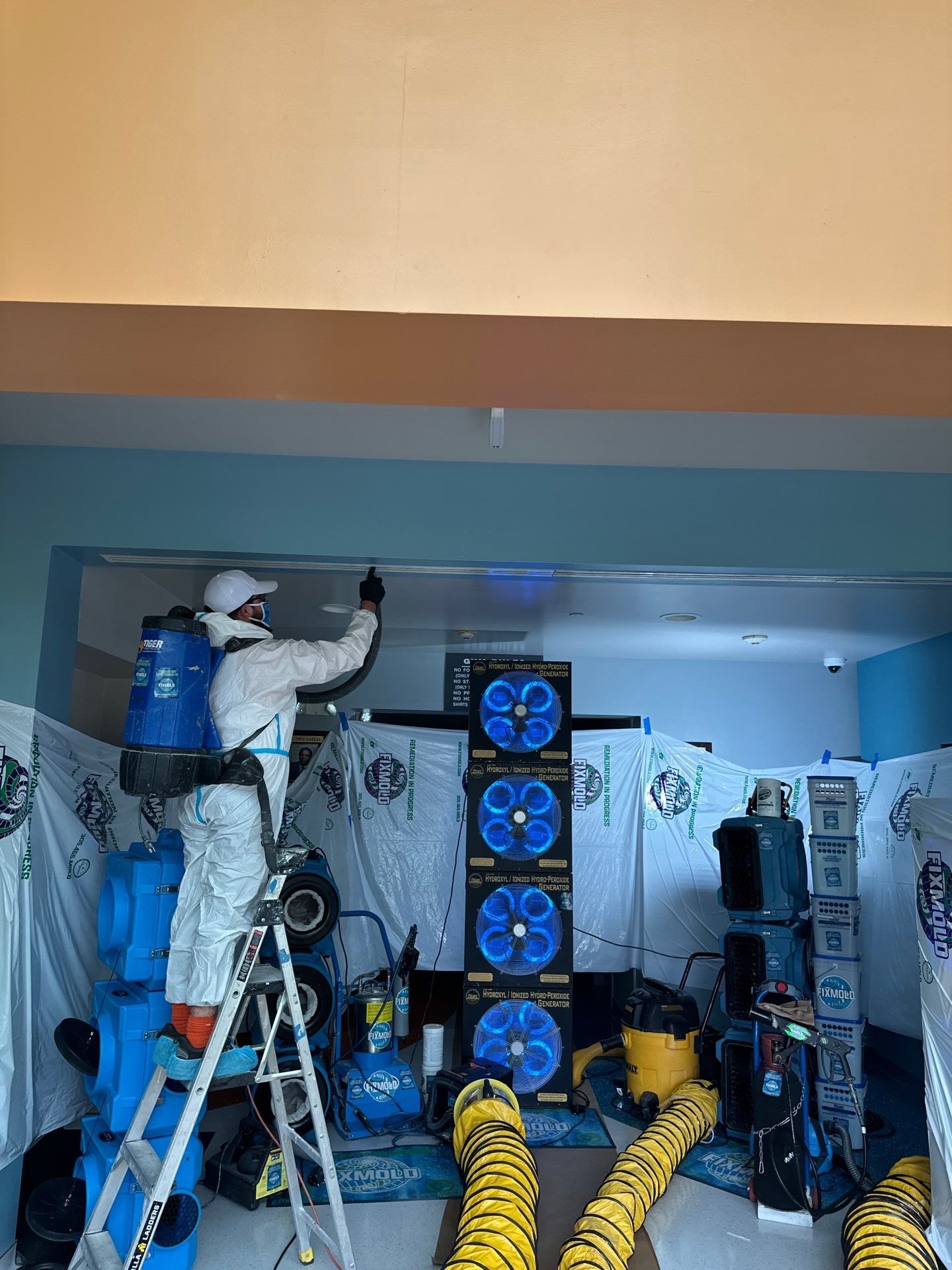
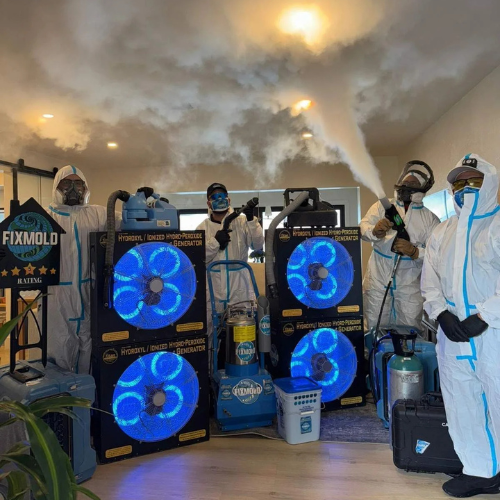
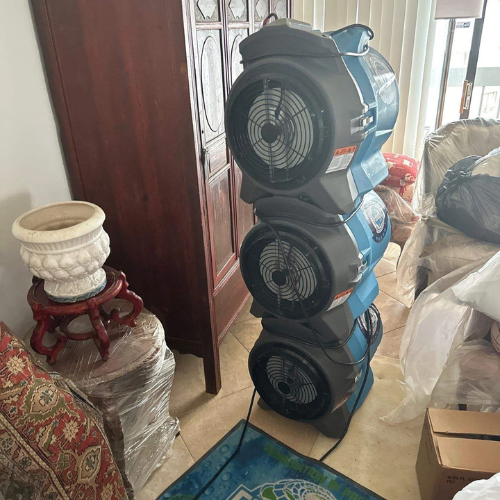
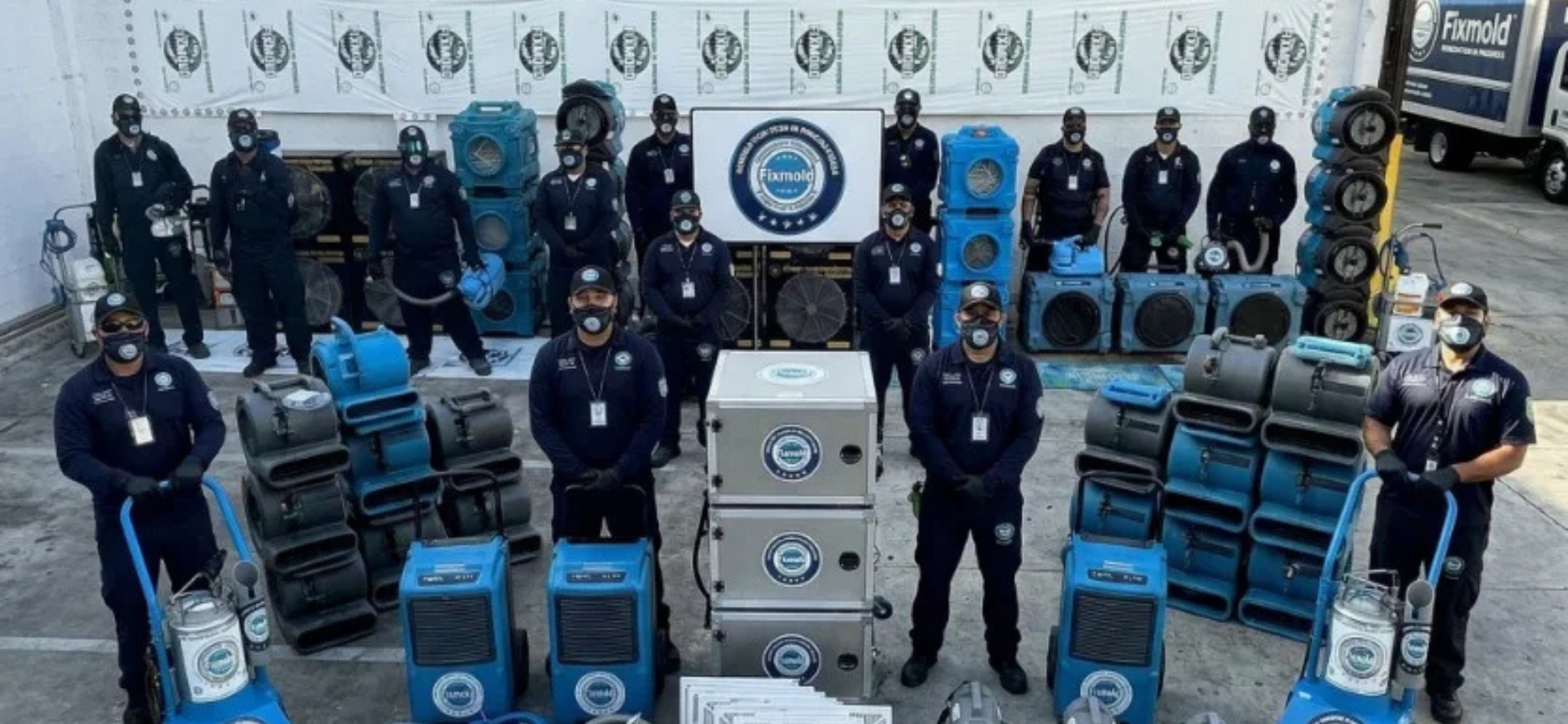
    FixMold mold remediation equipment set up in a residential home with drying hoses and air movers

    A Deep Commitment To Restoration

    A Family Legacy Of Trust
    Fixmold Miami
    Fixmold Miami
    Fixmold miami
    Fixmold

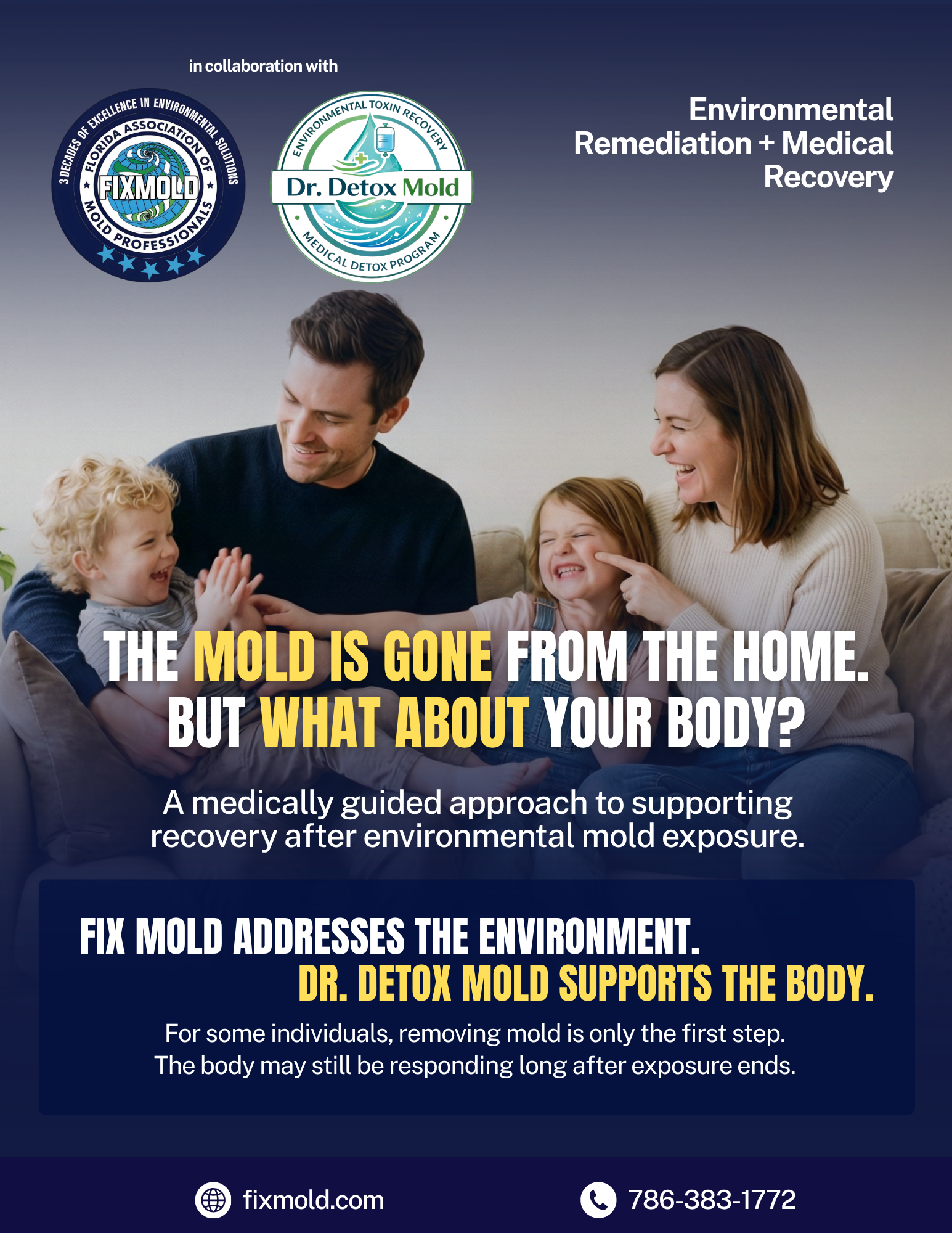
    Mold Removed From Your Home. What About Your Body?

    A medically guided approach to supporting recovery after mold exposure.
    Miami Fix MoldFixmold miami
    Fixmold miamiFixmold
    Miami Fix Mold
    Fixmold miami
    Fixmold miami
    Fixmold

    FixMold focuses on eliminating mold from your environment.

    But for some individuals, recovery doesn’t stop there.
    Even after successful remediation, the body may continue responding to past exposure. In these cases, a structured, medically guided approach may be necessary to support full recovery.

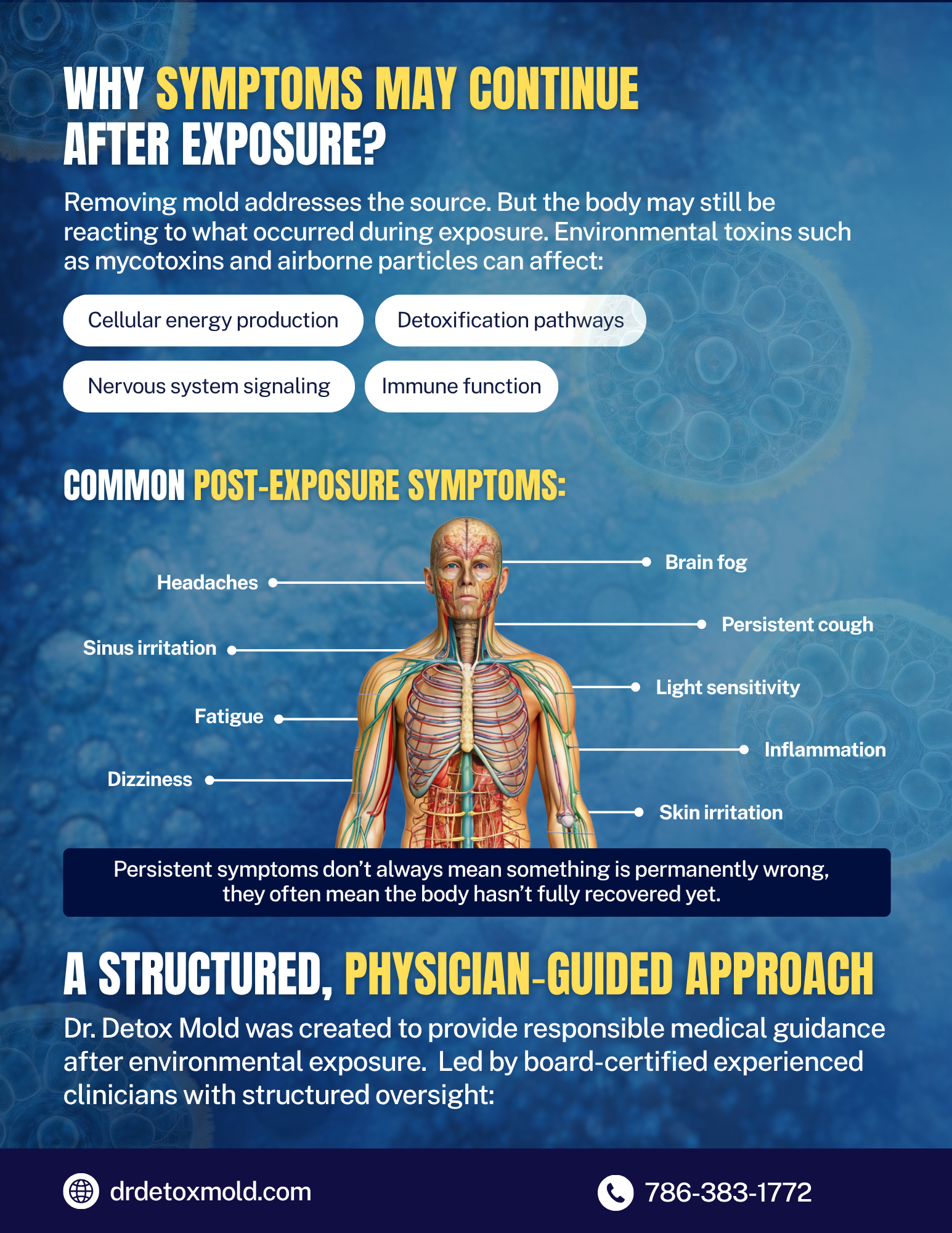
    Why Symptoms Can Continue After Mold Exposure

    Removing mold addresses the source of the problem, but it does not always resolve how the body has been affected during exposure.

    Environmental toxins can impact multiple systems:
    • Immune function
    • Nervous system signaling
    • Cellular energy production
    • Detoxification pathways

    For some individuals, these systems require time and proper support to return to balance.

    Common Post-Exposure Symptoms

    • Brain fog
    • Fatigue
    • Headaches
    • Sinus congestion or irritation
    • Persistent cough
    • Dizziness
    • Light sensitivity
    • Skin irritation
    • Ongoing inflammation

    Important

    • Persistent symptoms do not always indicate something permanent
    • They often indicate that the body has not fully recovered yet

    Recovery Approach

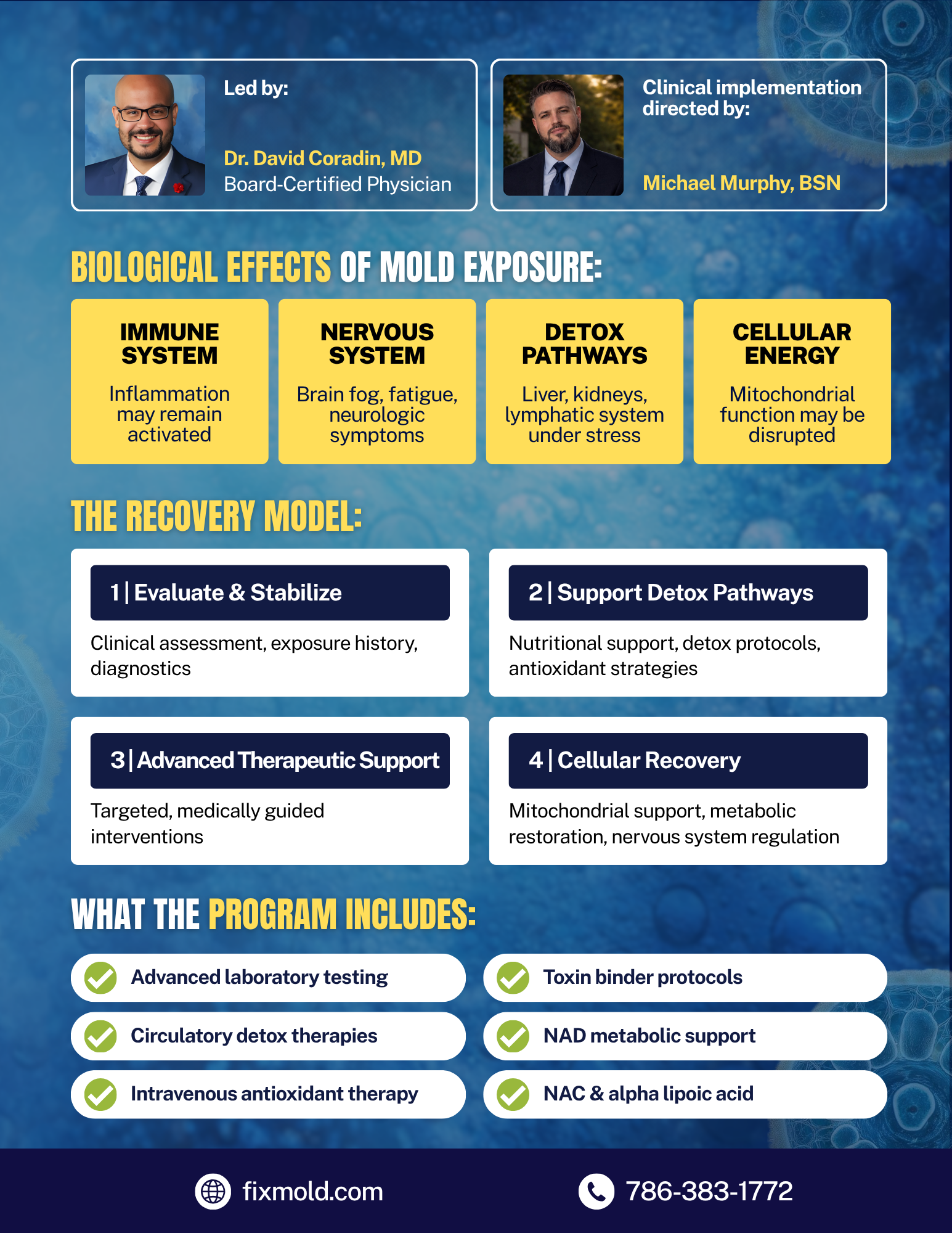
    1. Evaluation & Stabilization
    • Clinical assessment
    • Exposure history review
    • Diagnostic testing

    2. Detoxification Support
    • Nutritional protocols
    • Toxin-binding strategies
    • Antioxidant support

    3. Advanced Therapeutic Support
    • Targeted, medically guided interventions
    • IV-based therapies when appropriate

    4. Cellular Recovery
    • Mitochondrial support
    • Metabolic restoration
    • Nervous system regulation

    Core Focus

    • Detoxification support
    • Immune system balance
    • Cellular energy restoration
    • Nervous system regulation

    Key Principle

    Recovery is not about doing more. It is about doing the right things, in the right order.

    Next Steps

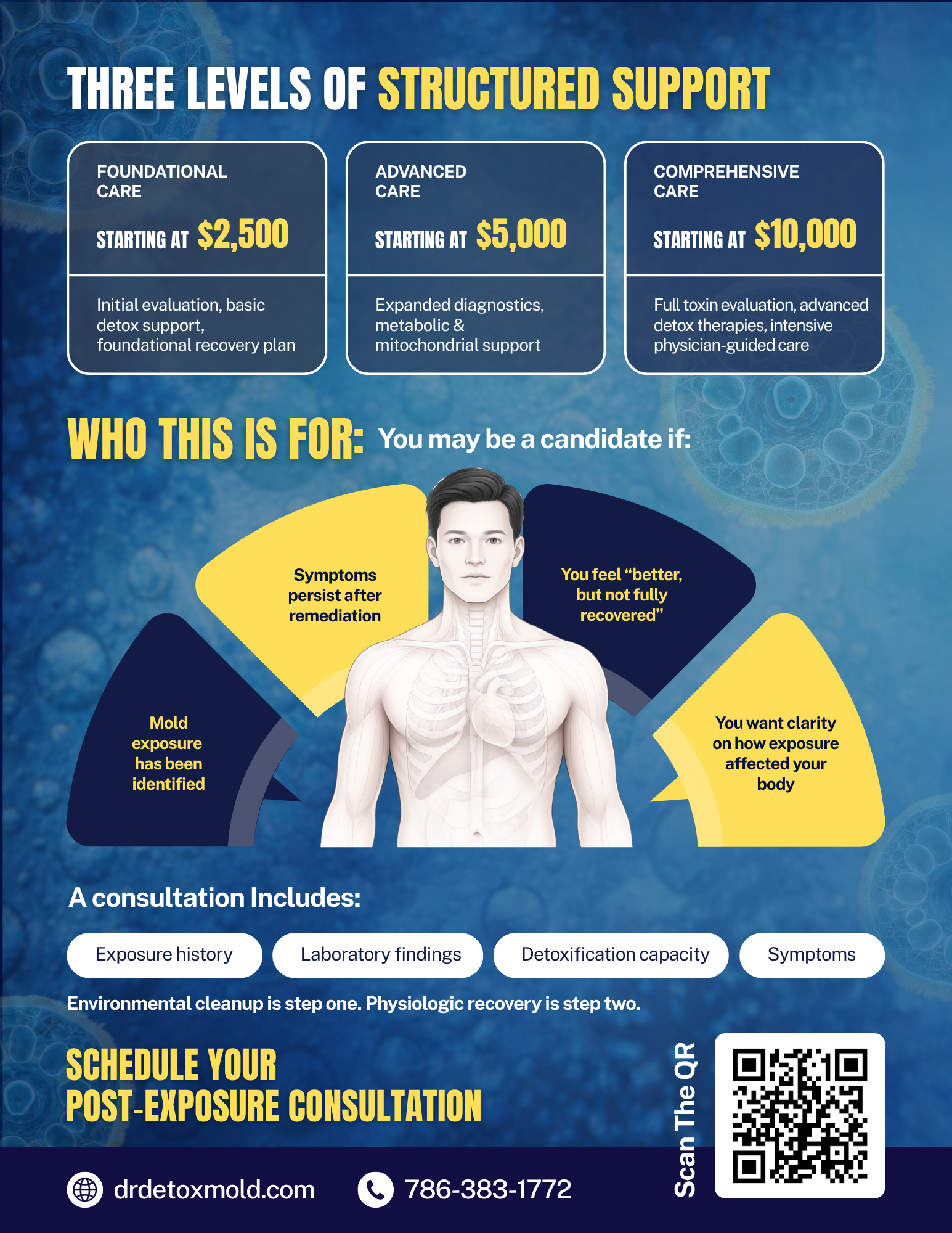
    If mold exposure has been identified and symptoms are still present, evaluation may provide clarity.
    • Exposure history review
    • Laboratory evaluation
    • Detoxification assessment
    • Symptom analysis

    Schedule Your Post-Exposure Consultation

    📞 786-383-1772

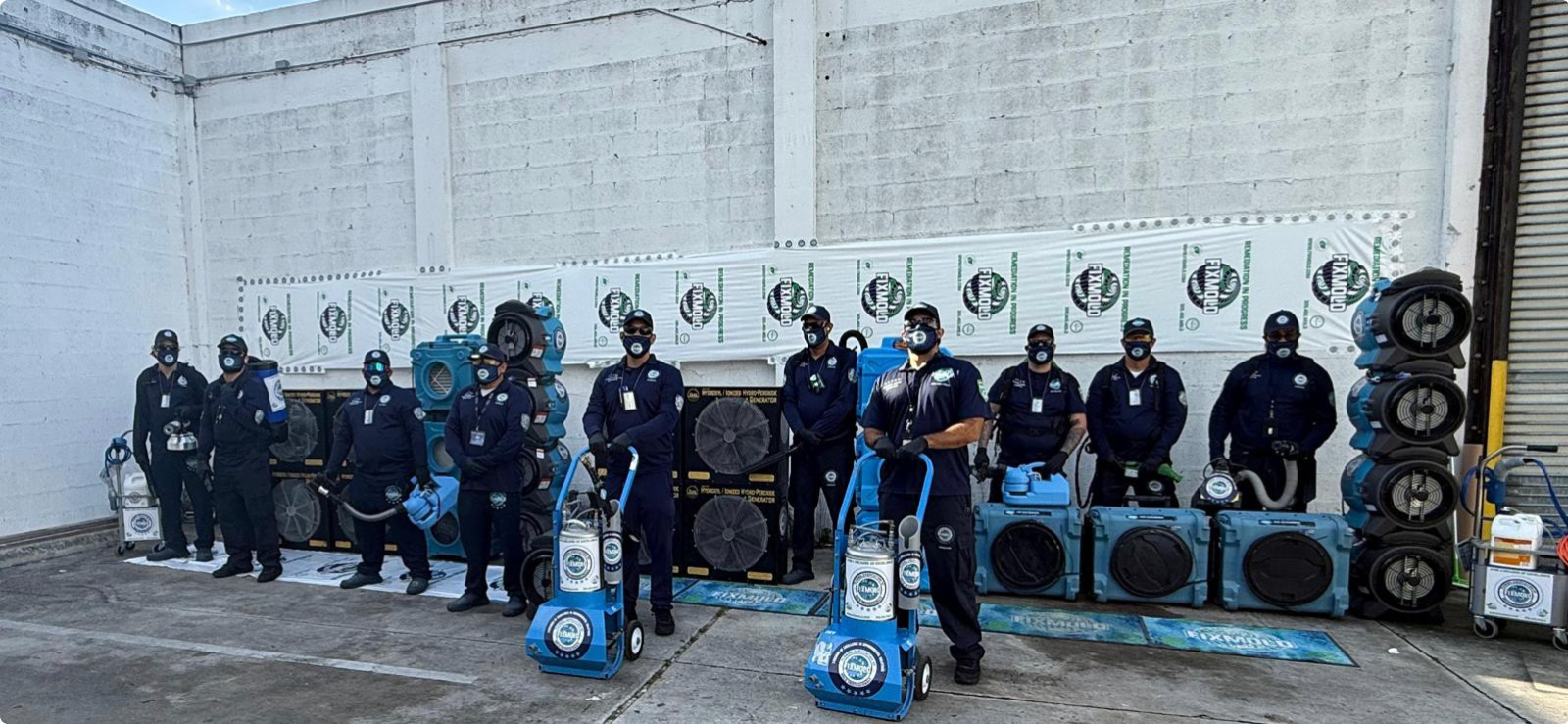
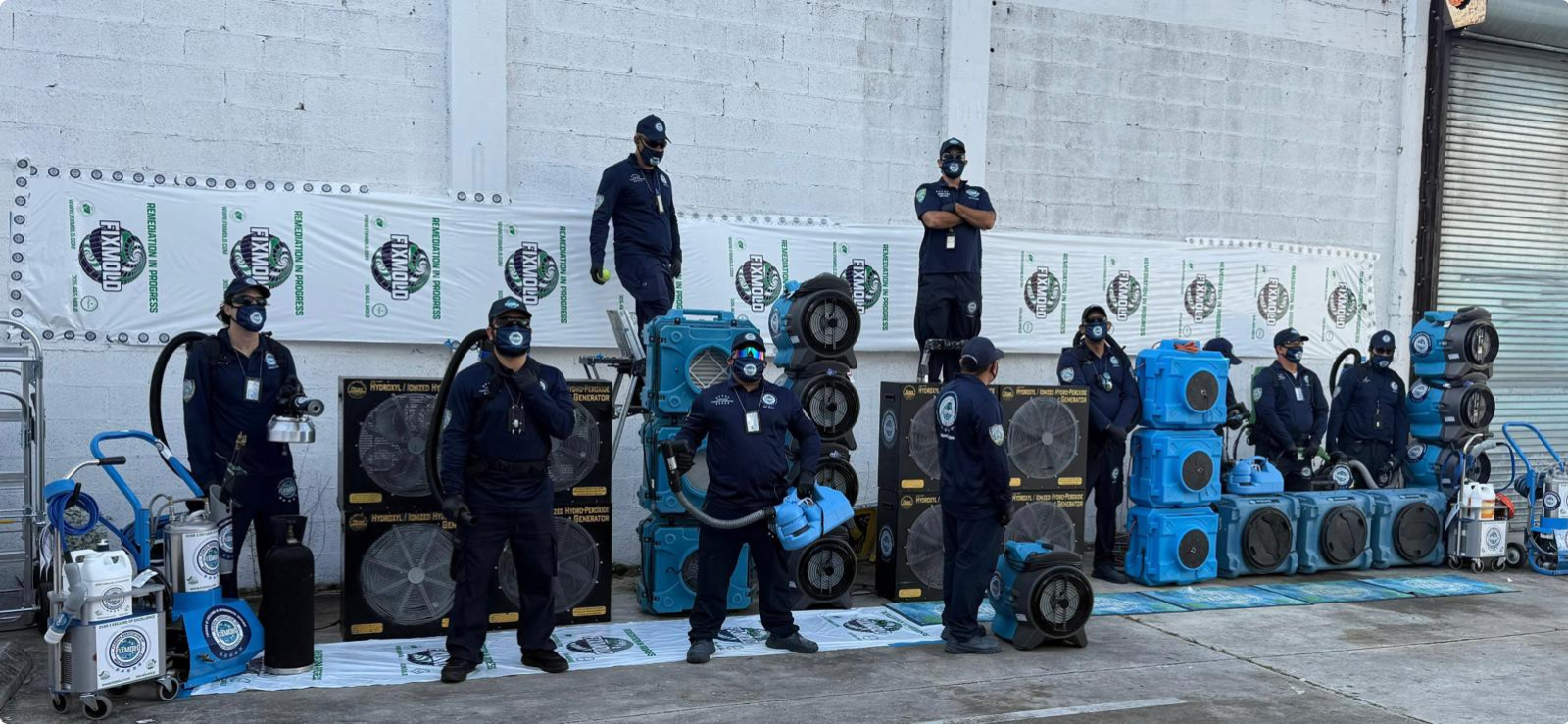
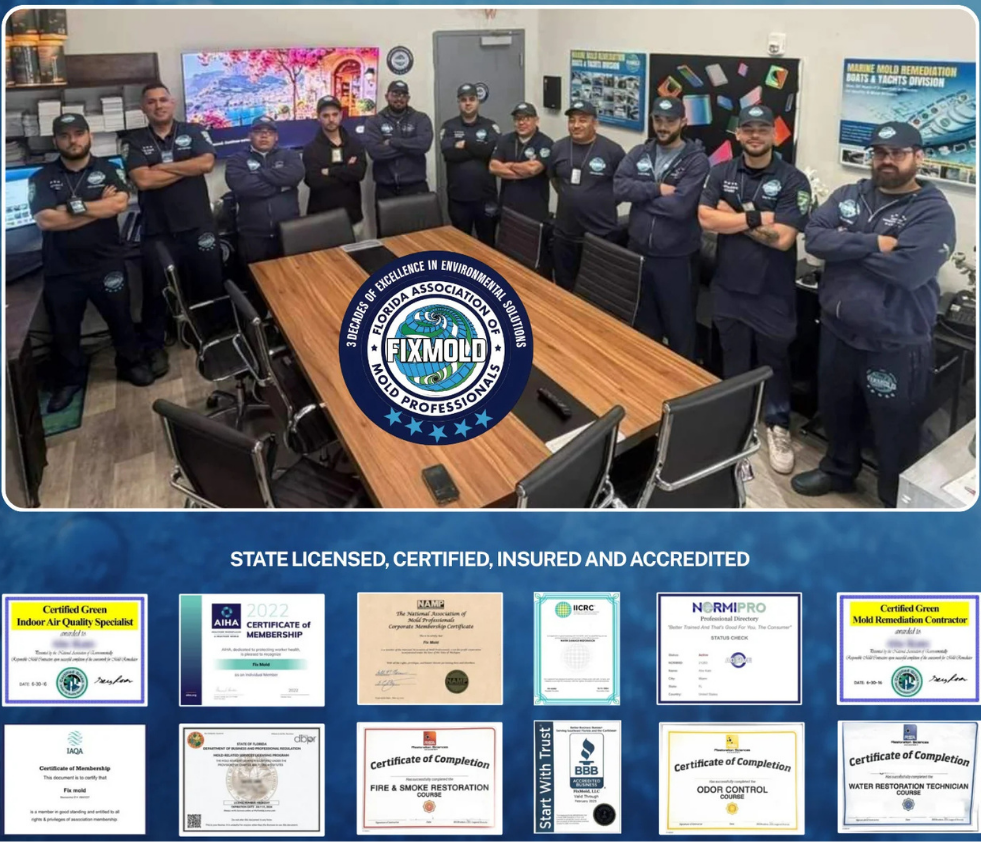
    OUR TEAM

    THE BACK-BONE OF OUR 5 STAR SERVICE
    👉 Call Now: +1-305-465-6653
    Fast response. Certified technicians. Guaranteed results.

    OUR AWARDS

    Proof Of Unmatched Excellence
    mold remediation certificates

      FixMold
      10750 NW 6th CtMiami, FL 33168

      License
      MRSR2709 MRSA2521

      logo

      Recent Happy FixMold Clients Across Miami & South Florida with 5-Star Reviews

      Real Homes. Mold Inspections. Mold Remediations. Mold Removal. Mold Solutions. Across The Whole State Of Florda.
      Fixmold Logo

      Recent Happy FixMold Clients Across Miami & South Florida with 5-Star Reviews

      Real Homes. Mold Inspections. Mold Remediations. Mold Removal. Mold Solutions. Across The Whole State Of Florda.
      Fixmold Logo
      Air Quality Testing. Mycotoxins.
      Hayes
      Mold Testing & Air Samples
      Proud Sponsors Of South Florida
      hatzalah south florida
      Hatzalah Emergency Medical Services

      View Our Reviews Accross All Platforms Here

      +

      What is air quality deep cleaning?

      Air quality deep cleaning is a more comprehensive environmental cleaning process focused on improving indoor air conditions rather than simply cleaning visible surfaces. In Miami homes and buildings, airborne particles, humidity, dust buildup, HVAC contamination, and hidden moisture often affect the indoor environment over time.

      Deep cleaning may involve HVAC vent cleaning, HEPA filtration, air scrubbing, environmental surface cleaning, particle removal, and moisture-related evaluation depending on the conditions affecting the property.

      The goal is to reduce airborne contaminants that continue circulating through the indoor environment and improve overall indoor air quality stability.

      This type of cleaning is especially useful after water damage, mold exposure, construction work, recurring odors, storm intrusion, or long-term humidity problems common throughout South Florida.

      +

      Why does my home feel dusty even after cleaning?

      Recurring dust problems often indicate that airborne particles are continuously circulating through the indoor environment rather than settling from everyday activity alone. In many Miami homes, HVAC systems distribute dust, insulation particles, fiberglass fragments, or microbial debris through ducts and vents over time.

      Humidity also plays a role because elevated moisture allows airborne particles to cling to surfaces more easily. Poor filtration, dirty duct systems, attic contamination, deteriorating insulation, and limited ventilation may all contribute to constant indoor dust accumulation.

      Some homes also experience recurring dust because attic air or crawlspace particles are entering the living space through structural openings or ventilation pathways.

      Professional indoor air quality evaluations may help identify whether hidden environmental conditions are contributing to recurring airborne particle buildup throughout the property.

      +

      Can humidity affect indoor air quality?

      Yes. Humidity has a major impact on indoor air quality throughout Miami and South Florida. Elevated moisture levels create conditions where airborne particles settle more easily and microbial growth develops more rapidly inside enclosed indoor spaces.

      Excess humidity may contribute to musty odors, condensation around vents, stale air, increased dust accumulation, and discomfort indoors. Over time, damp conditions may also affect insulation, drywall, HVAC systems, and structural materials where hidden contamination can develop.

      Many South Florida homes struggle with humidity imbalance because air conditioning systems cool the home but may not adequately remove moisture from the air if oversized or improperly balanced.

      Controlling humidity is one of the most important parts of maintaining stable indoor air quality in humid coastal climates.

      +

      Why are HVAC systems important for indoor air quality?

      HVAC systems continuously circulate air throughout the property, so any contamination inside the system may affect the entire indoor environment. Dust, condensation, insulation particles, microbial buildup, and airborne contaminants may accumulate inside ducts, vents, air handlers, and HVAC insulation over time.

      In Miami’s humid climate, condensation inside HVAC systems is extremely common. If moisture remains trapped inside ducts or cooling components, airborne contamination may gradually spread throughout the building whenever the AC operates.

      Many indoor air quality complaints involving musty odors, stale air, recurring dust, or respiratory irritation are partially connected to HVAC-related environmental conditions.

      HVAC evaluations are often an important part of indoor air quality deep cleaning because the ventilation system strongly influences overall indoor environmental stability.

      +

      What are signs of poor indoor air quality?

      Signs of poor indoor air quality may include musty odors, stale air, recurring dust buildup, excessive humidity, condensation around vents, worsening allergies, respiratory irritation, headaches, or indoor discomfort that improves when leaving the property.

      Some homeowners notice uneven airflow, lingering odors, or rooms that feel damp even when the home appears visually clean. In South Florida, these conditions are often related to hidden moisture, HVAC contamination, poor ventilation, or airborne particle buildup inside enclosed indoor spaces.
      Indoor air quality problems may also develop after roof leaks, flooding, water damage, storm exposure, or long-term humidity imbalance.

      Environmental inspections, airborne particle testing, moisture detection, and HVAC evaluation may help identify the conditions affecting indoor air quality throughout the property.

      Fixmold Miami
      Fixmold Miami
      Logo
      10750 NW 6th CtMiami, FL 33168
      License
      #MRSR2709 #MRSA2521
      Fixmold Miami
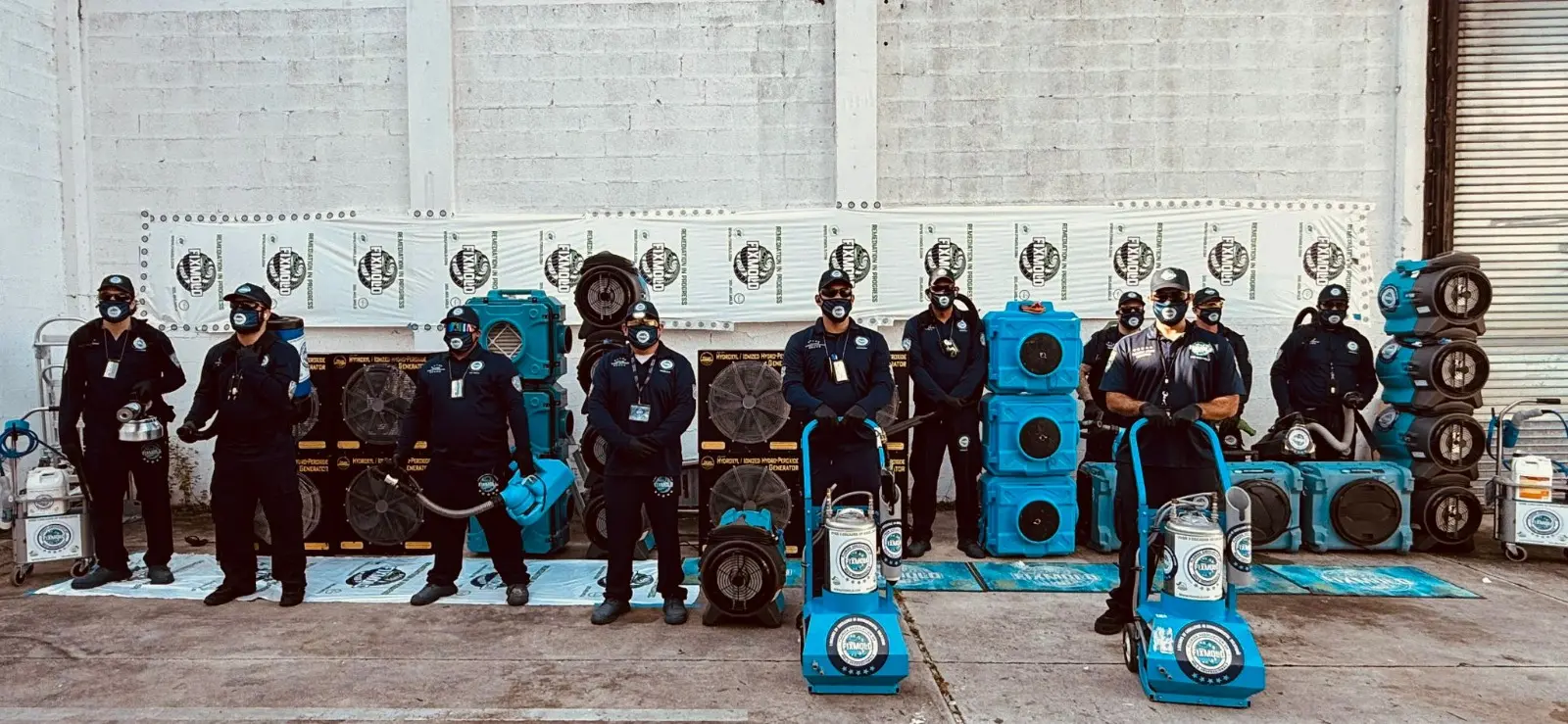
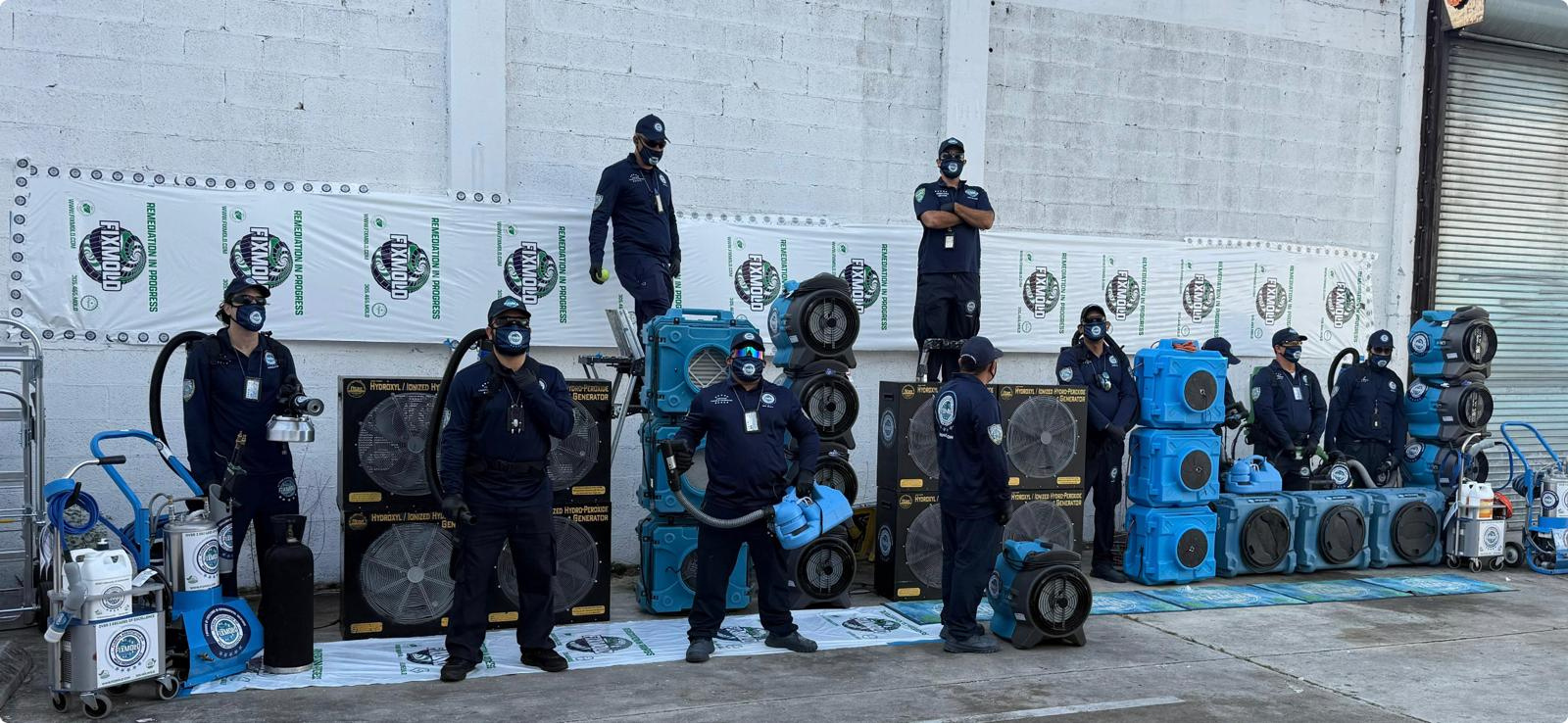
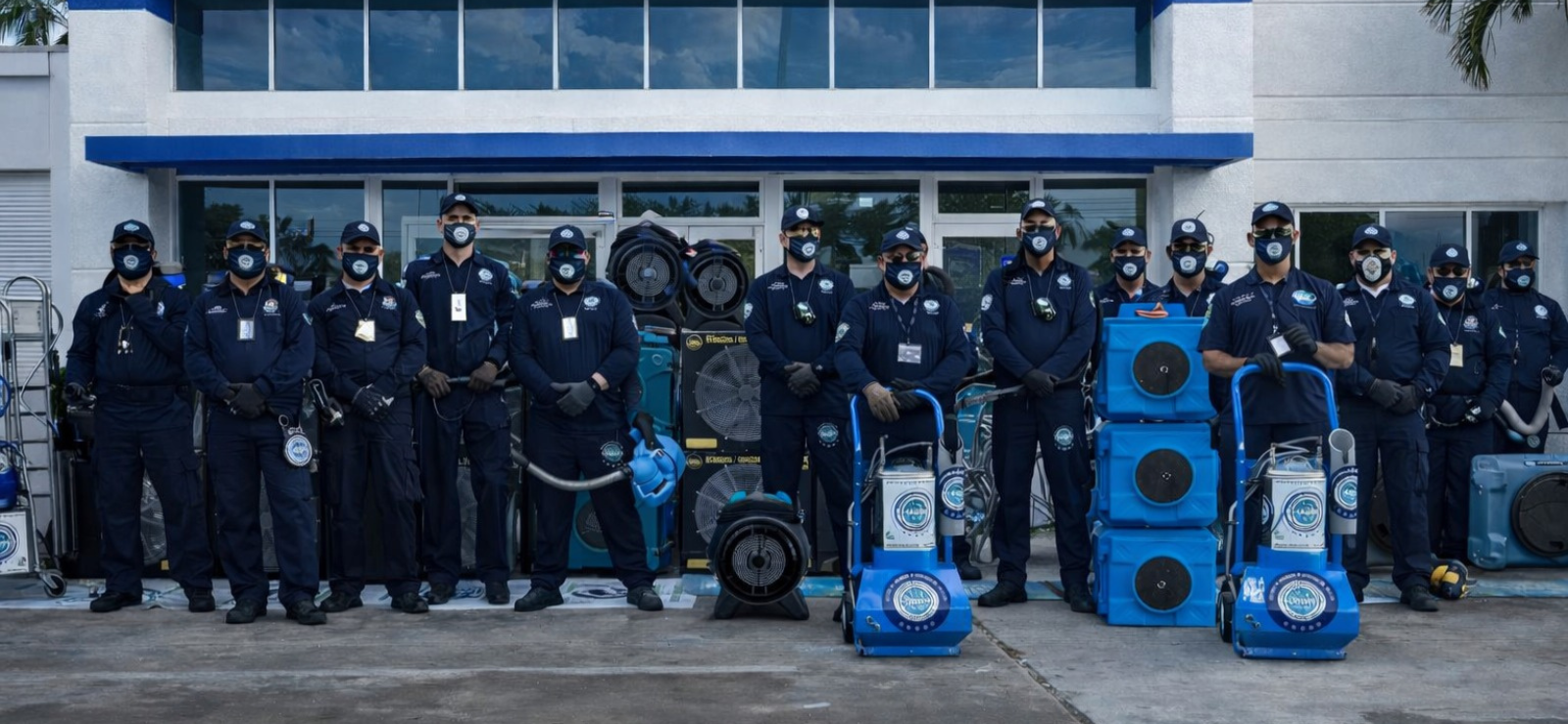
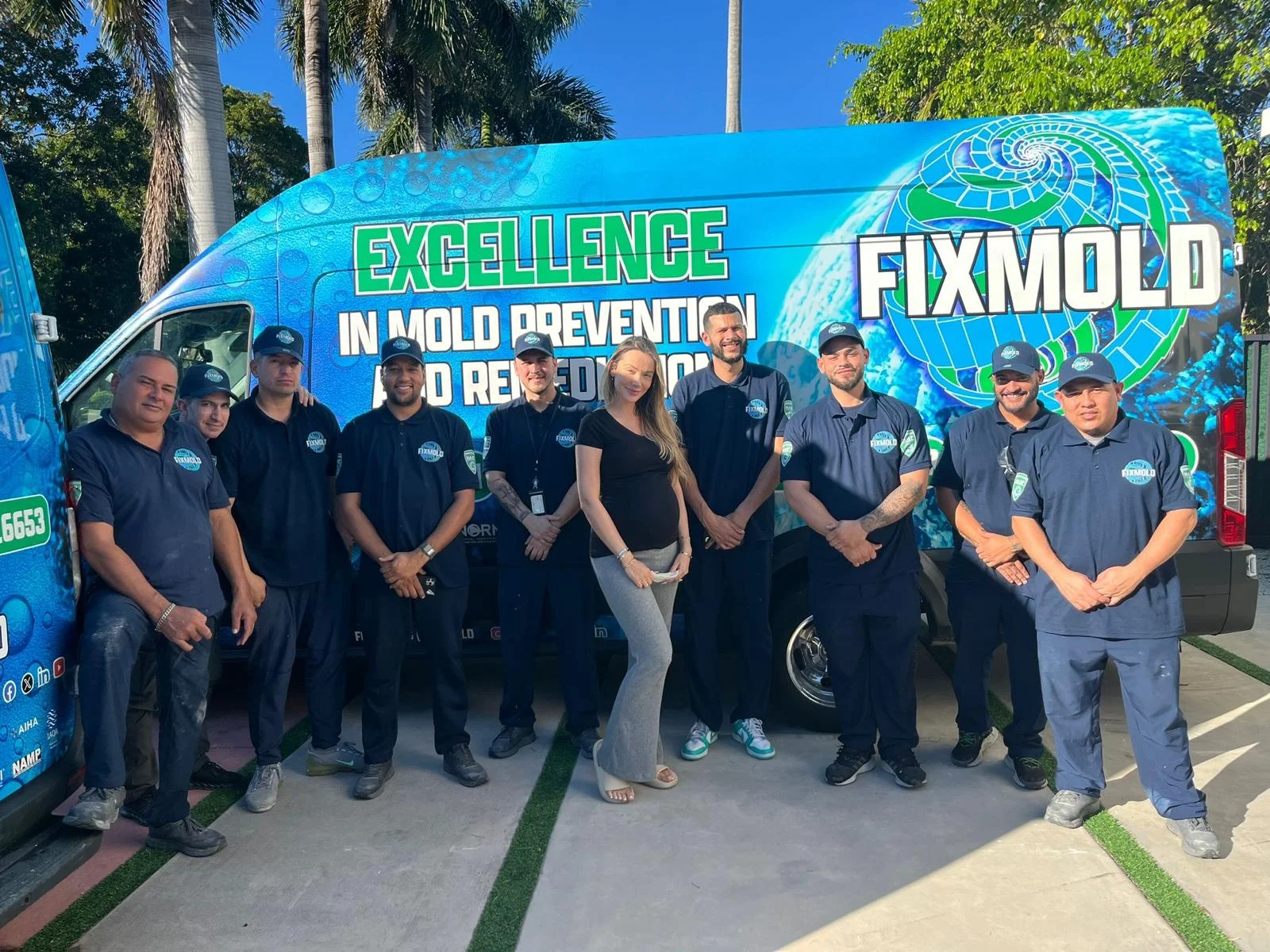
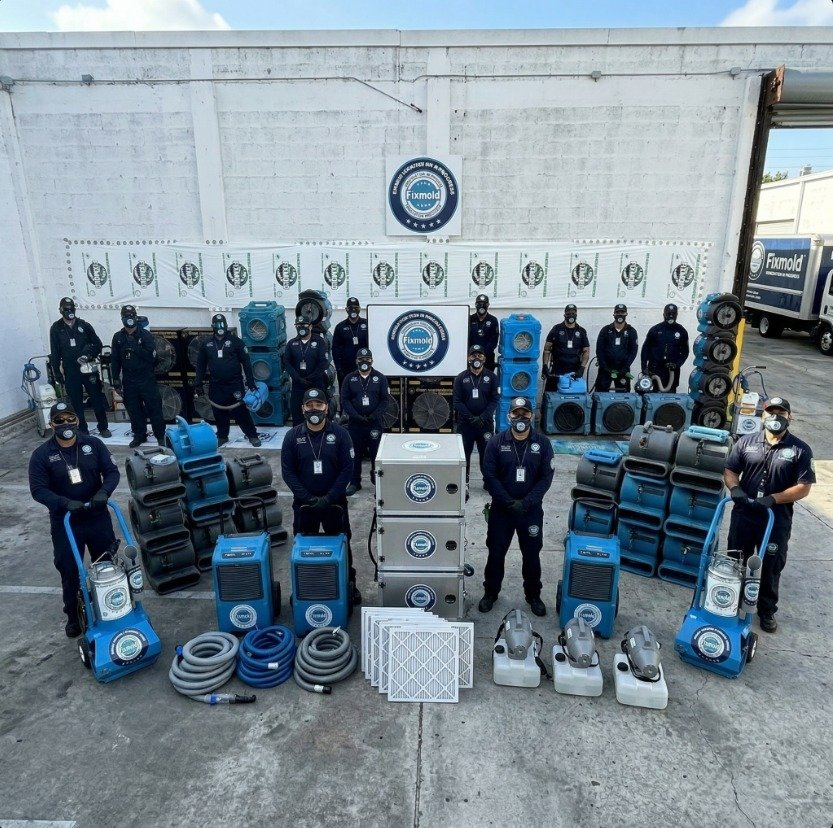
      Fixmold Team
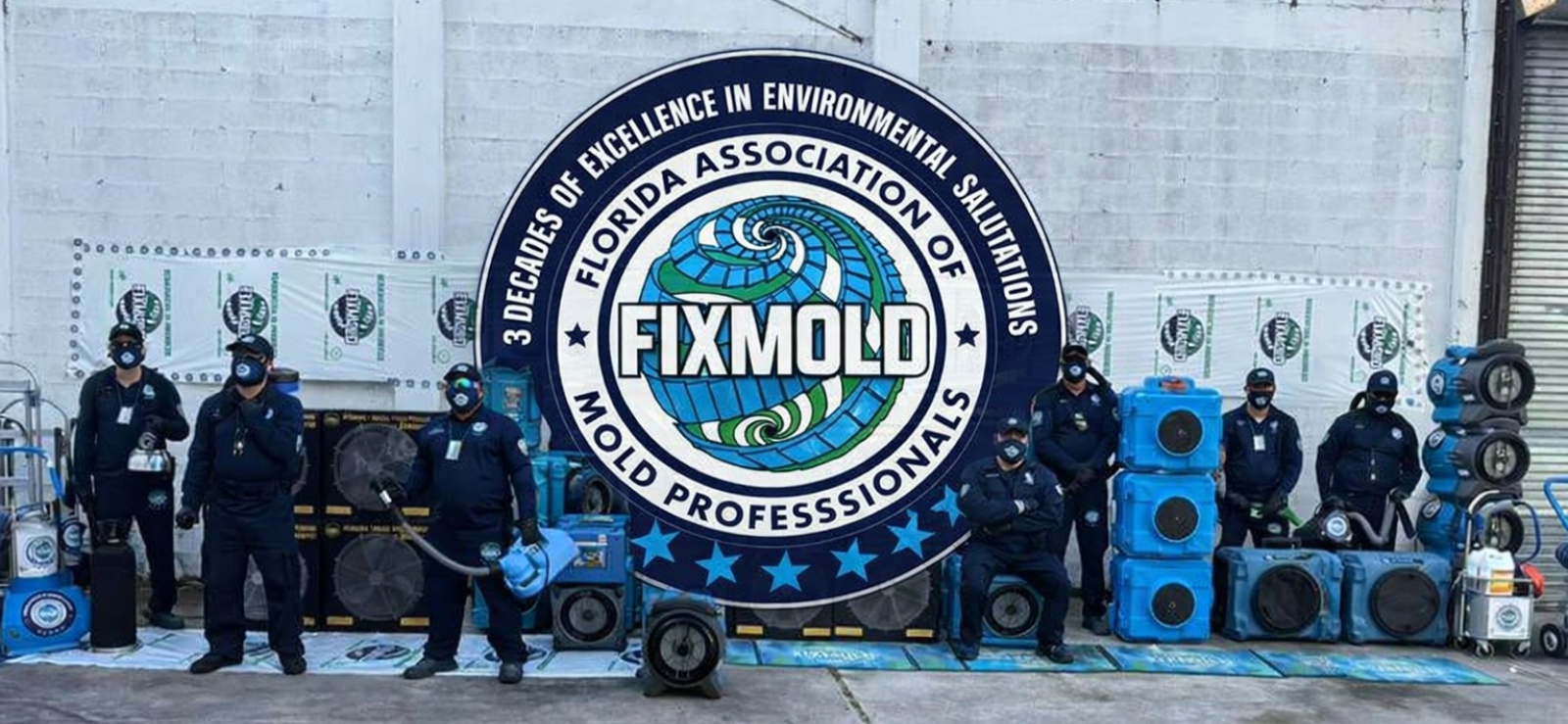
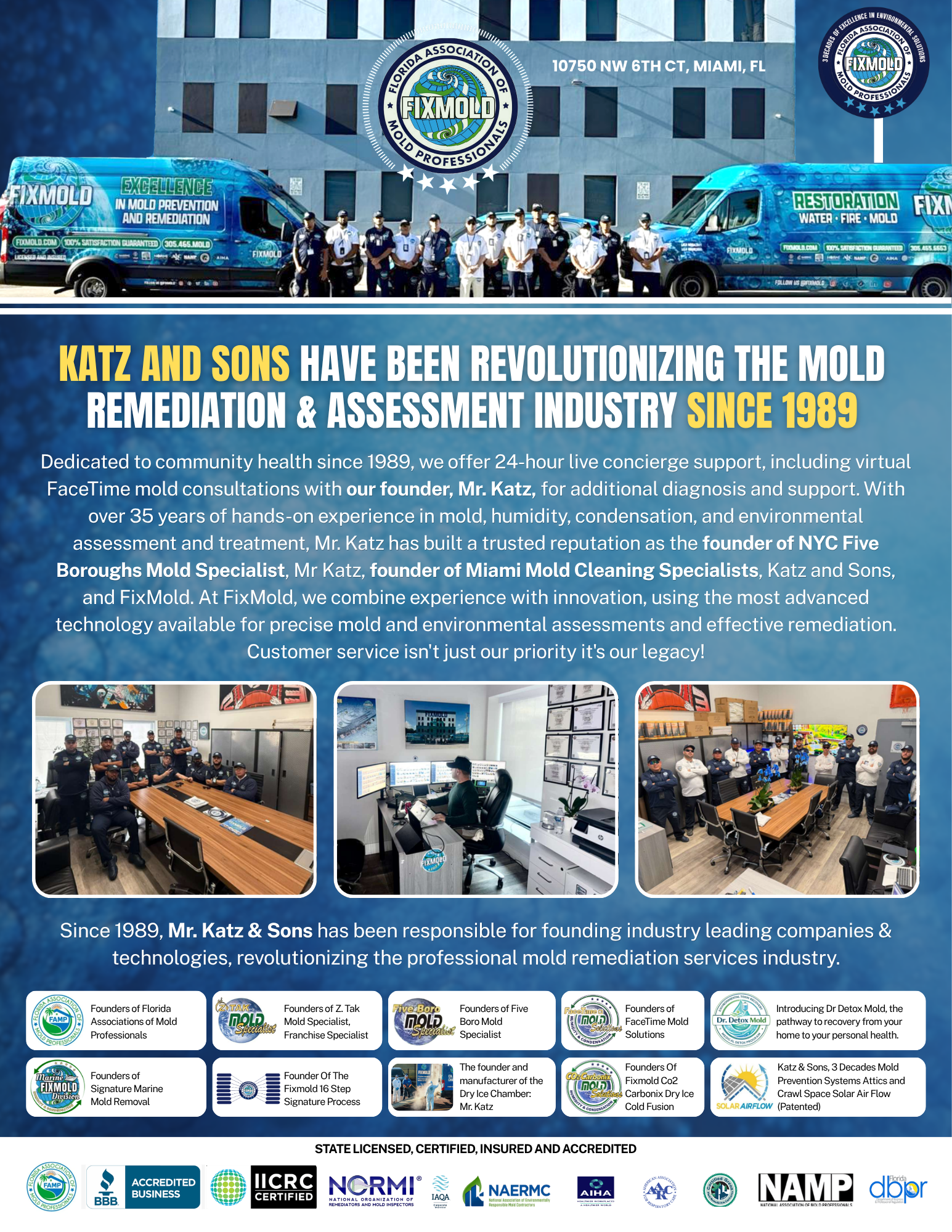
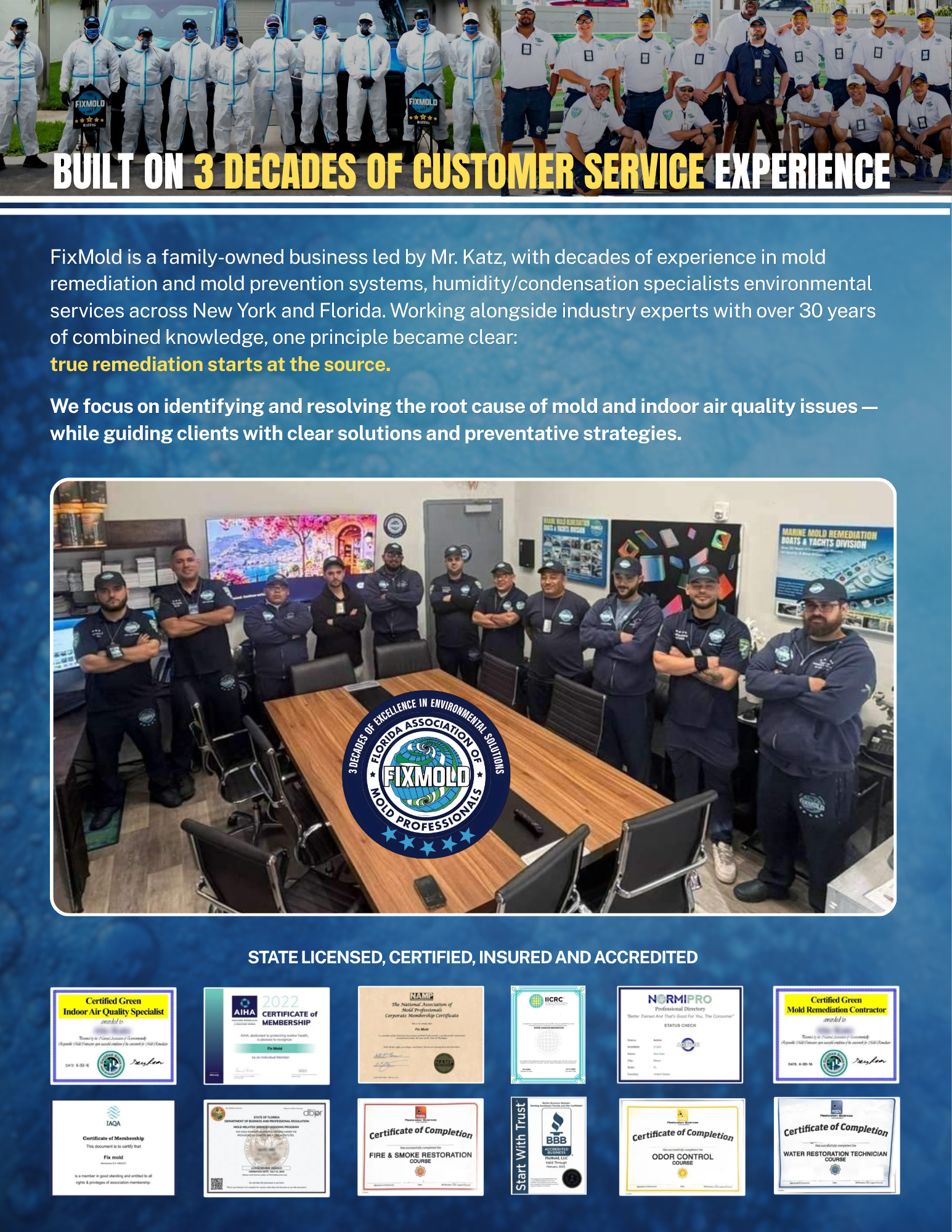
      Founded by industry expert Moty Katz, backed by a 30+ year family legacy in mold remediation and prevention.
      Air Quality Testing. Mycotoxins.
      Hayes
      Mold Testing &
      Air Samples
      Proud Sponsors Of South Florida
      hatzalah south florida
      Hatzalah Emergency Medical Services
      Air Quality Testing. Mycotoxins.
      Hayes
      Mold Testing & Air Samples
      Proud Sponsors Of South Florida
      hatzalah south florida
      Hatzalah Emergency Medical Services
      FixMold Mold Inspection, Mold Testing & Mold Remediation Services Across South Florida

      Serving Multiple Counties

      Urgent Enquiry Virtual Assessment
      🎁 Today’s Offer
      ×

      Today's Special Offers

      📞 Free Virtual Facetime Mold Assessment / Mold Solutions 💲 $50 Off Mold Testing / Inspection 🔥 $150 Off Mold Remediation Services 🔥 Additional 5% Off For Senior Citizens 🔥 Additional 6% Off For Veterans 🔥 Additional 5% Off For Pregnant Women 🔥 Additional 5% Off For Immune Compromised & Handicaps 🔥 Additional 10% Off For Pathway To Recovery (Dr. Detox Mold)