Poor indoor air quality often develops gradually and may present through several environmental warning signs. Many Miami homeowners notice persistent musty odors, stale air, recurring humidity, excessive dust buildup, black staining around vents, or worsening indoor allergies before realizing there may be hidden environmental problems inside the property.
Some occupants experience congestion, coughing, headaches, throat irritation, fatigue, or respiratory discomfort while indoors, especially when the air conditioning system is operating. Others simply notice that certain rooms feel damp, humid, or uncomfortable despite cooling.
South Florida’s elevated humidity creates ideal conditions for hidden mold growth, HVAC contamination, condensation buildup, and poor airflow inside homes and buildings. Roof leaks, plumbing leaks, attic moisture, and AC condensation frequently contribute to indoor air quality issues without obvious visible damage.
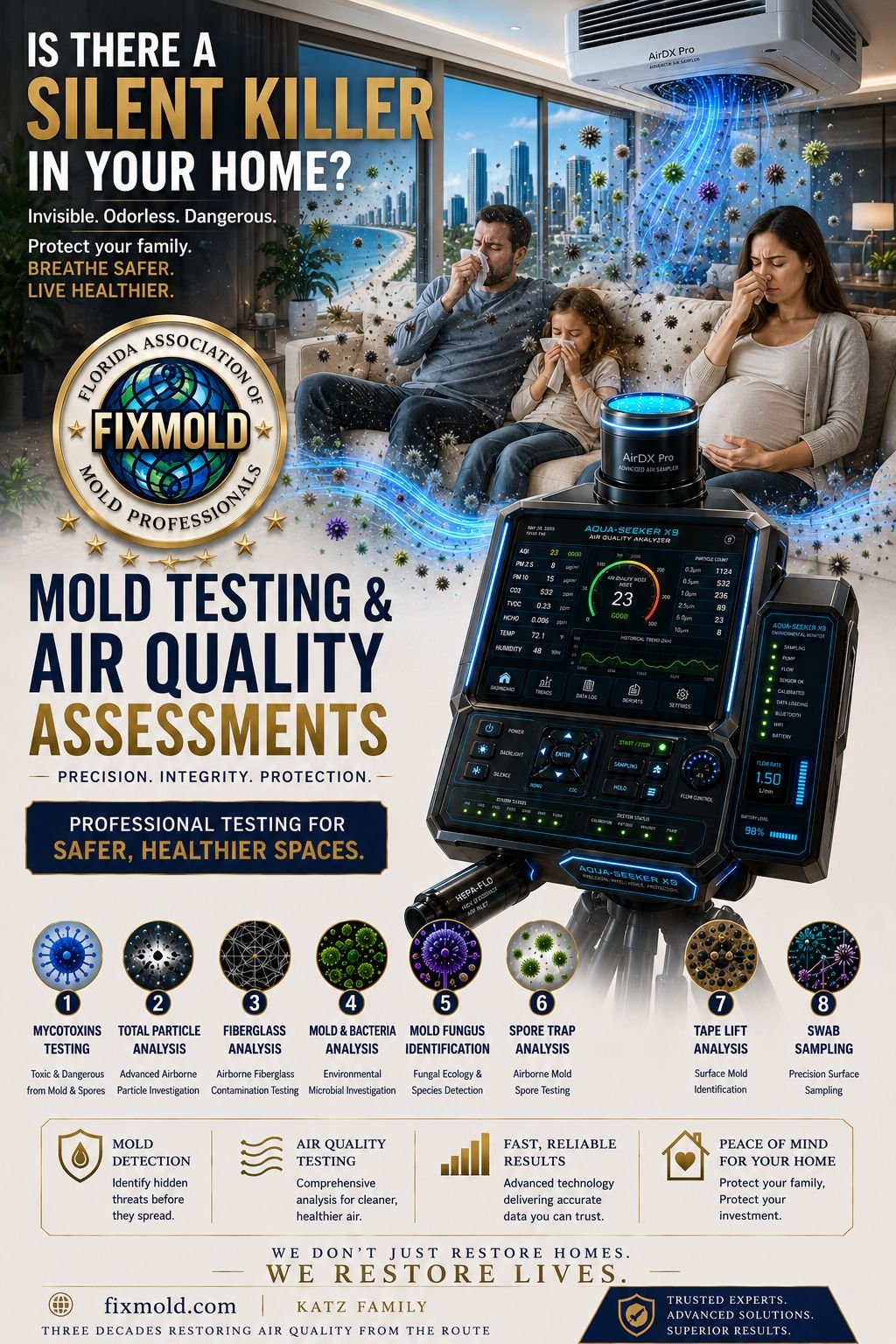
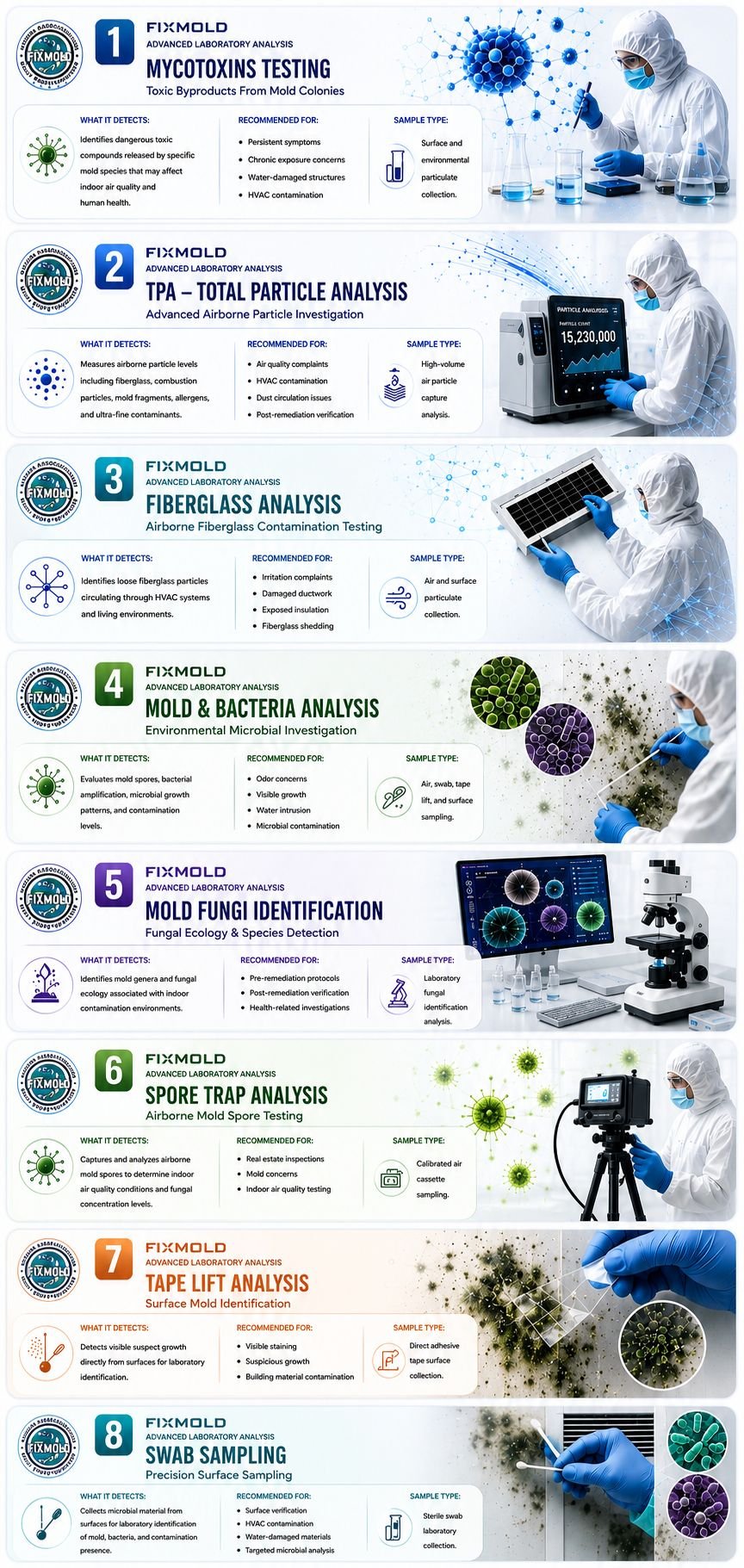
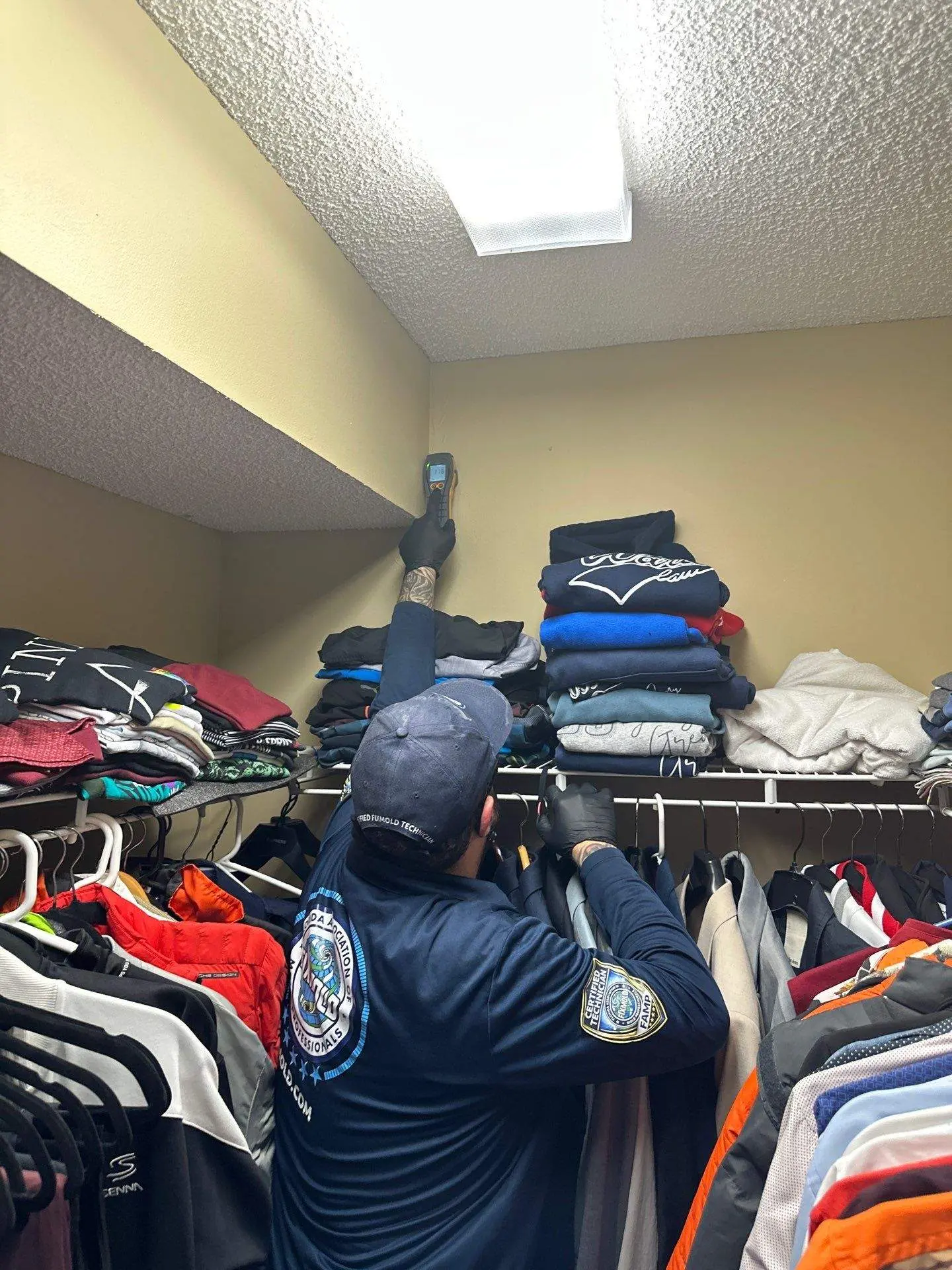
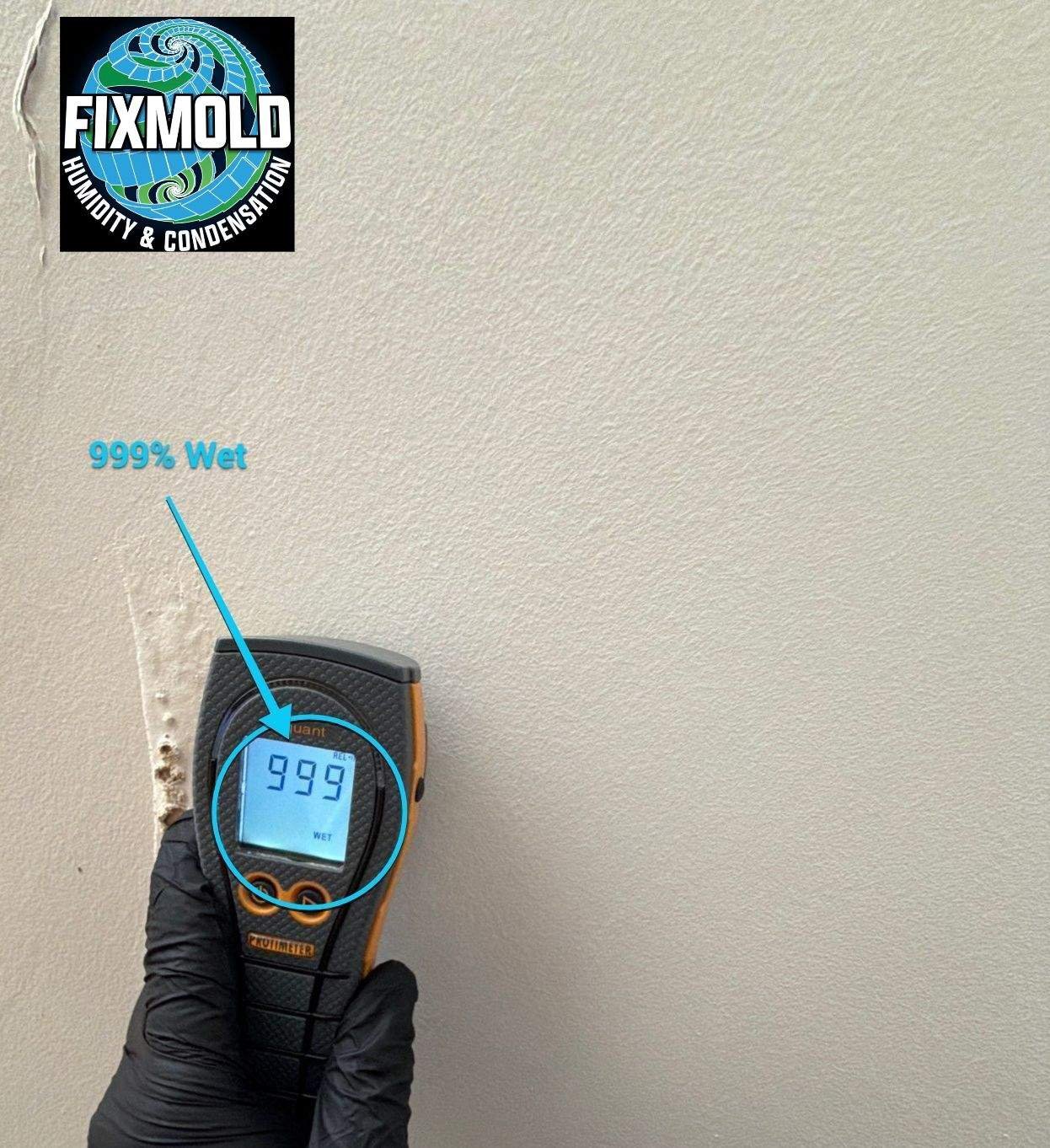
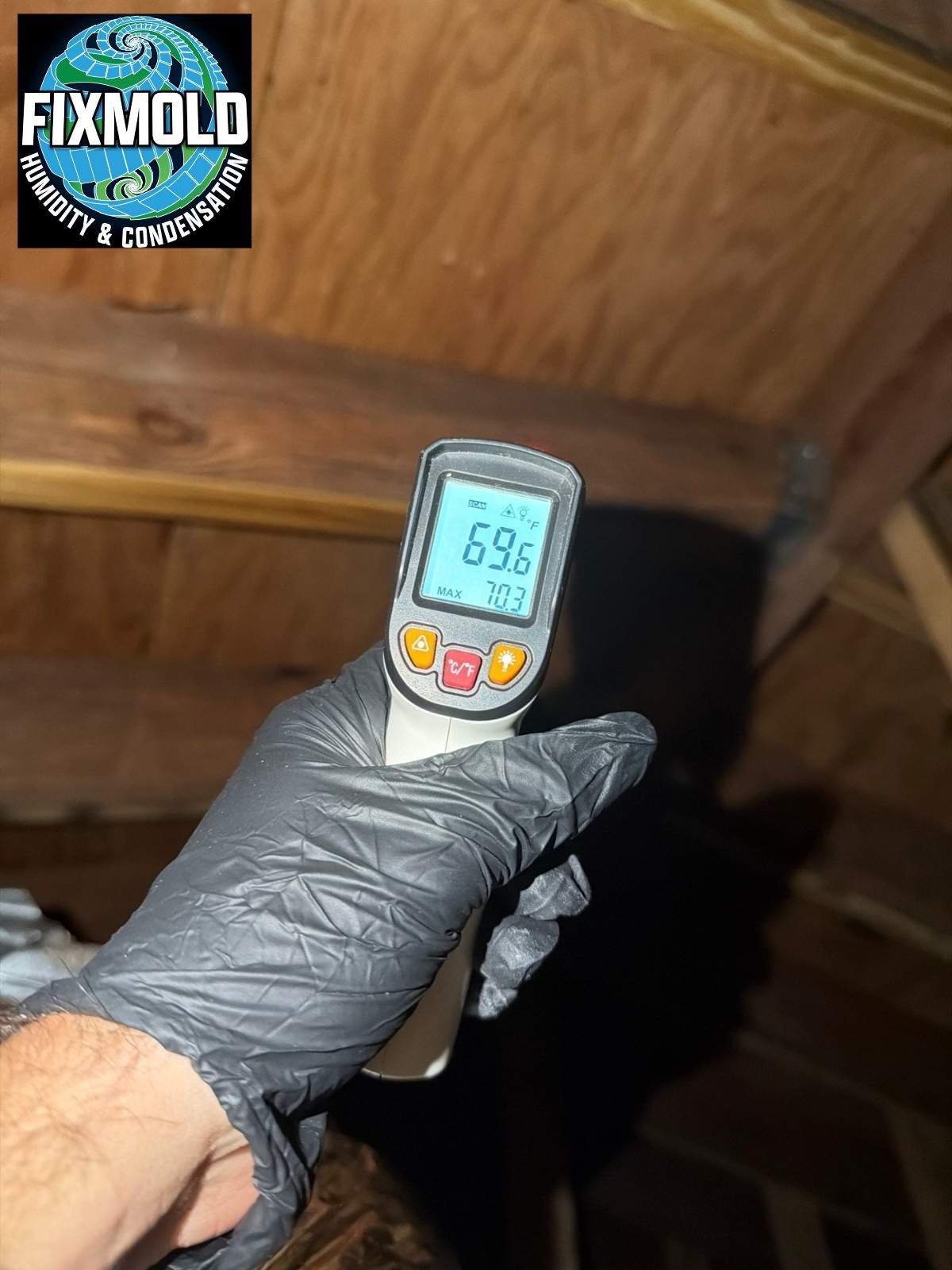
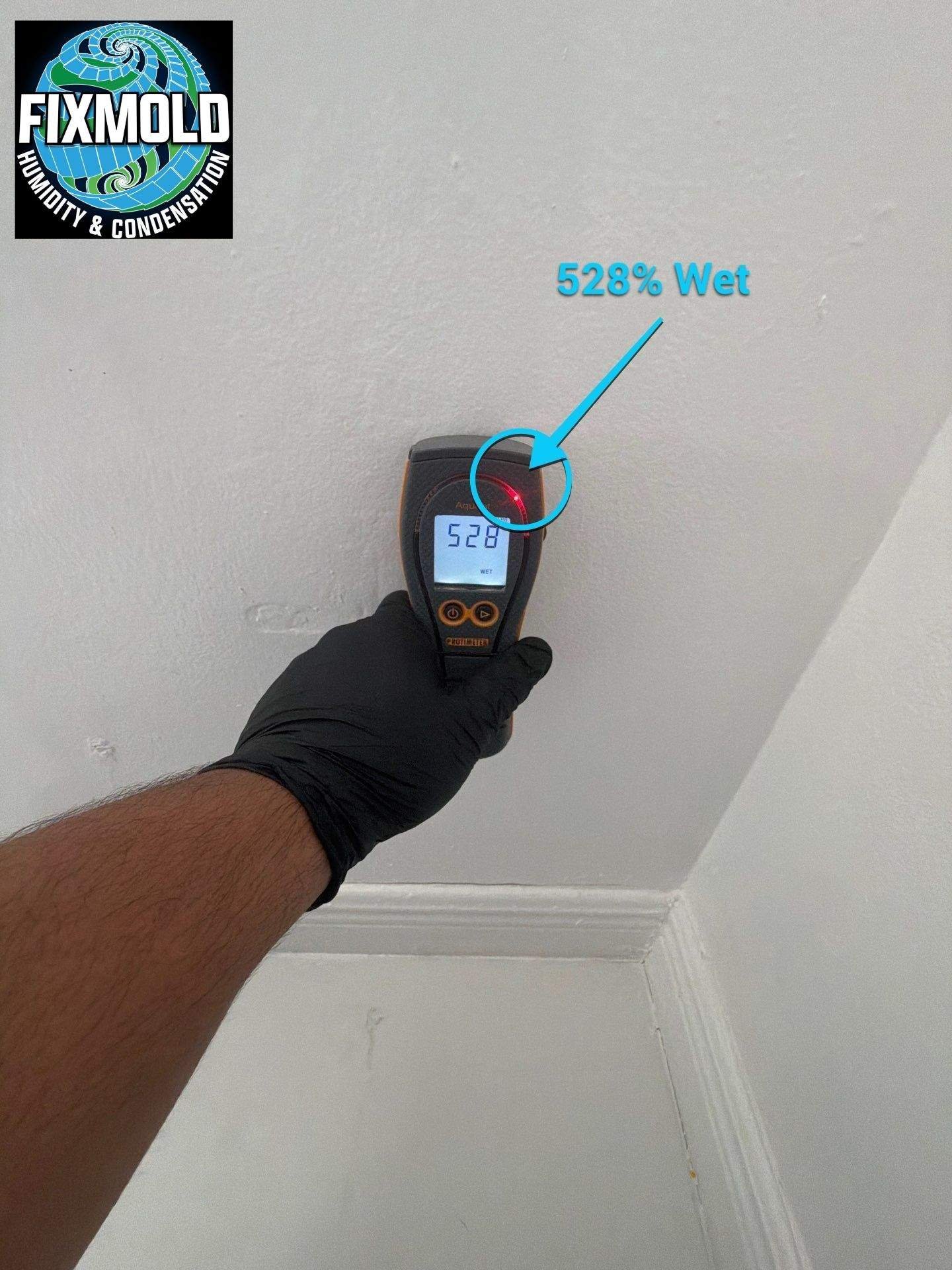
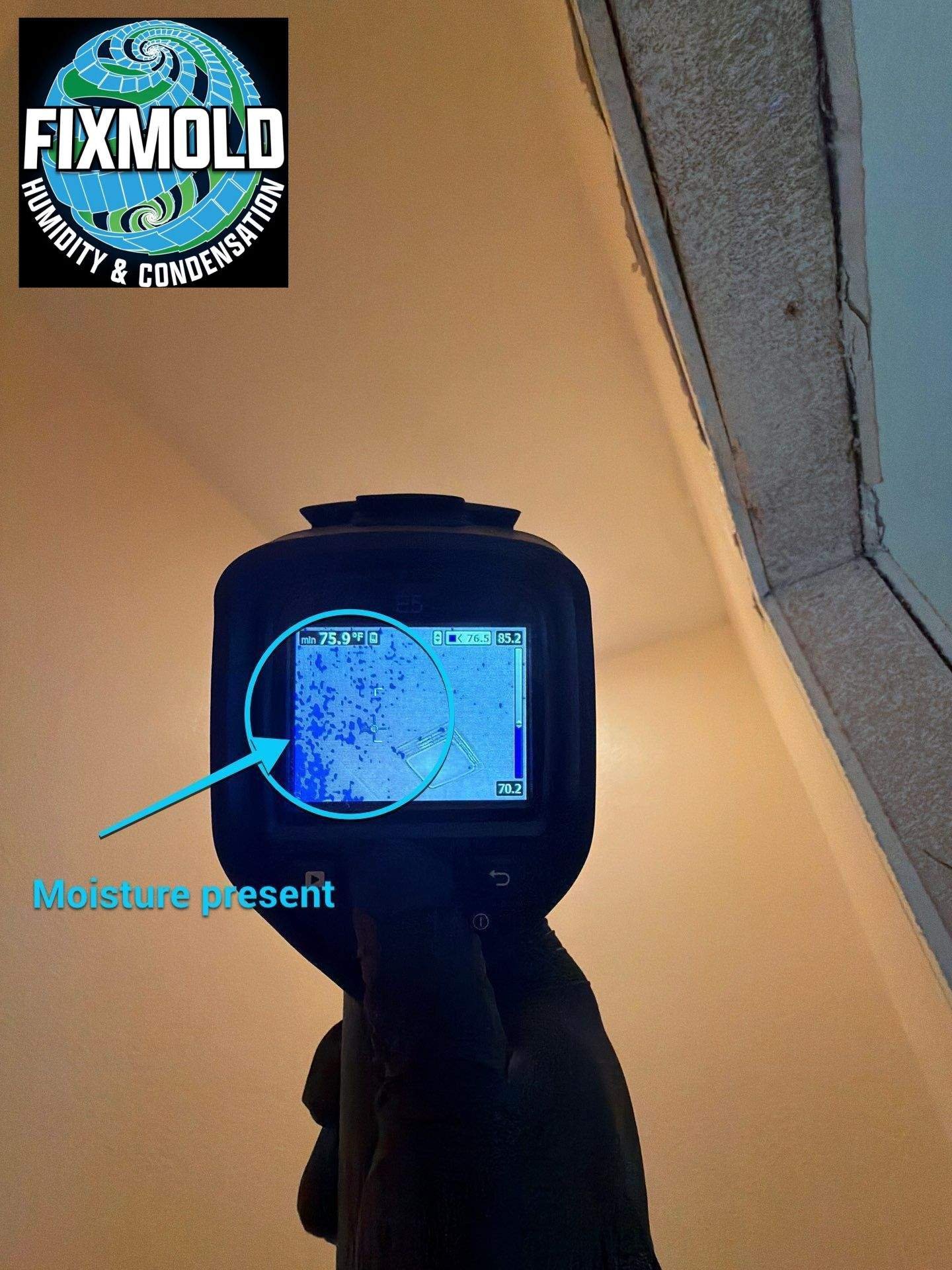
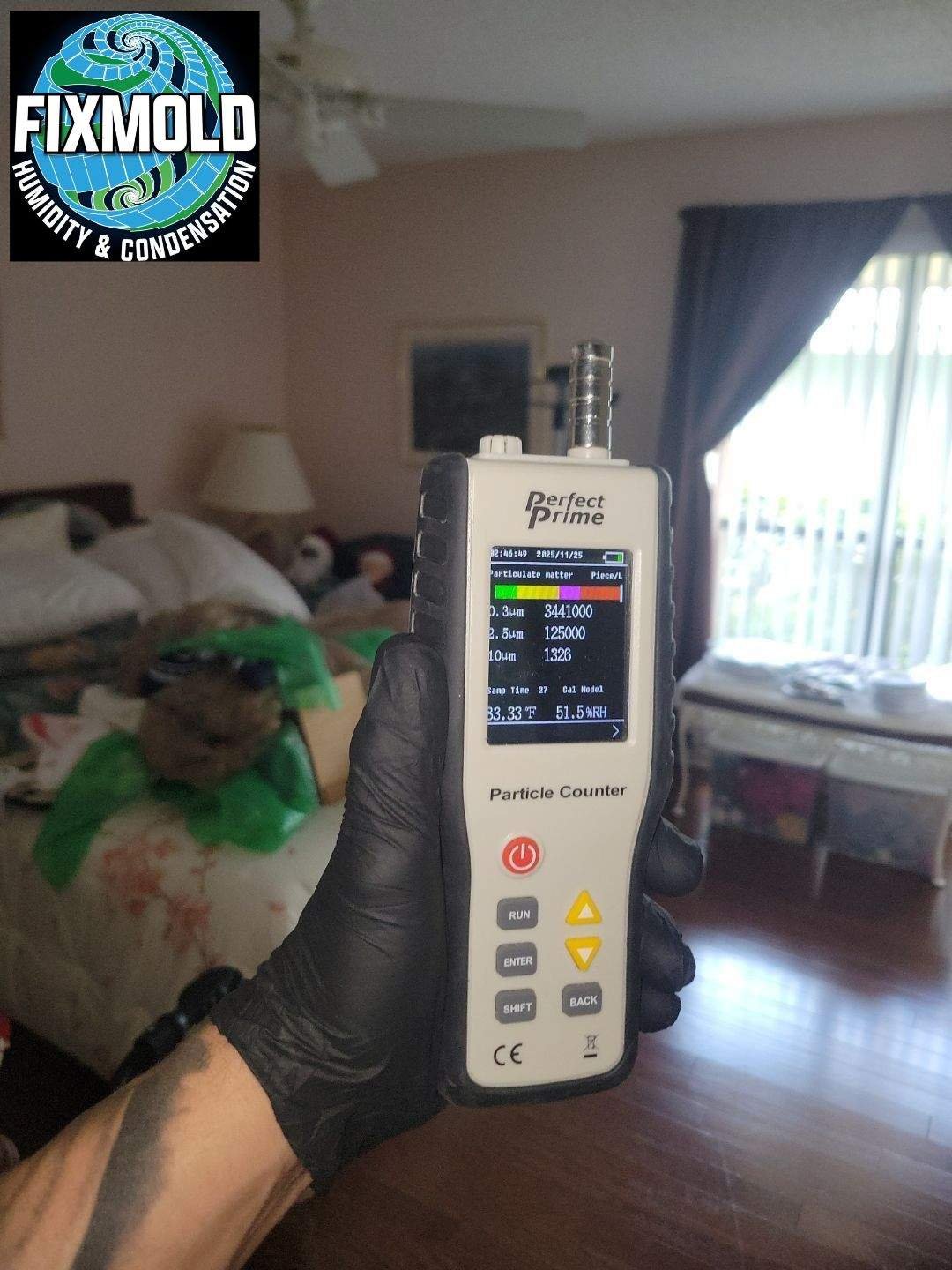
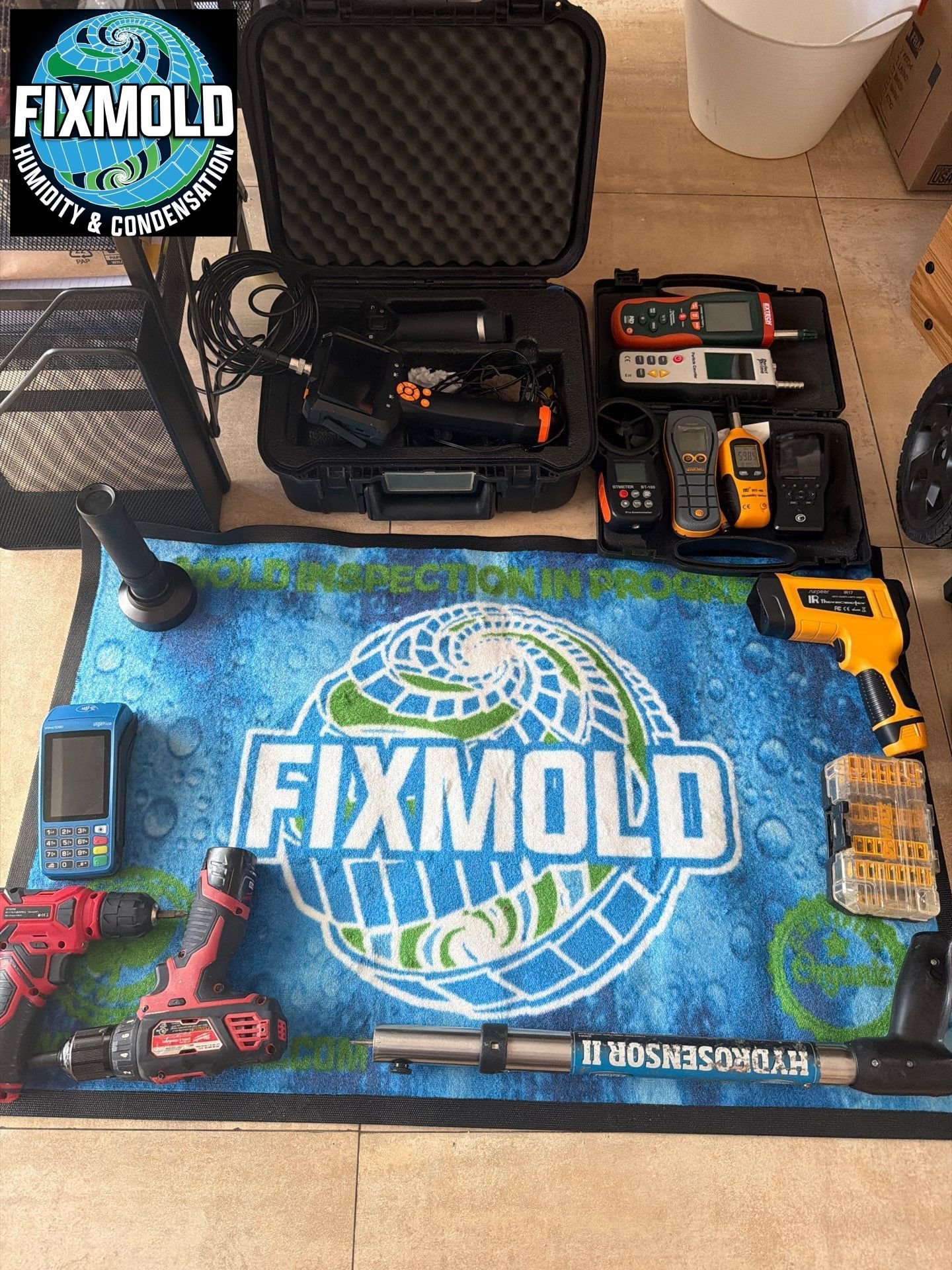
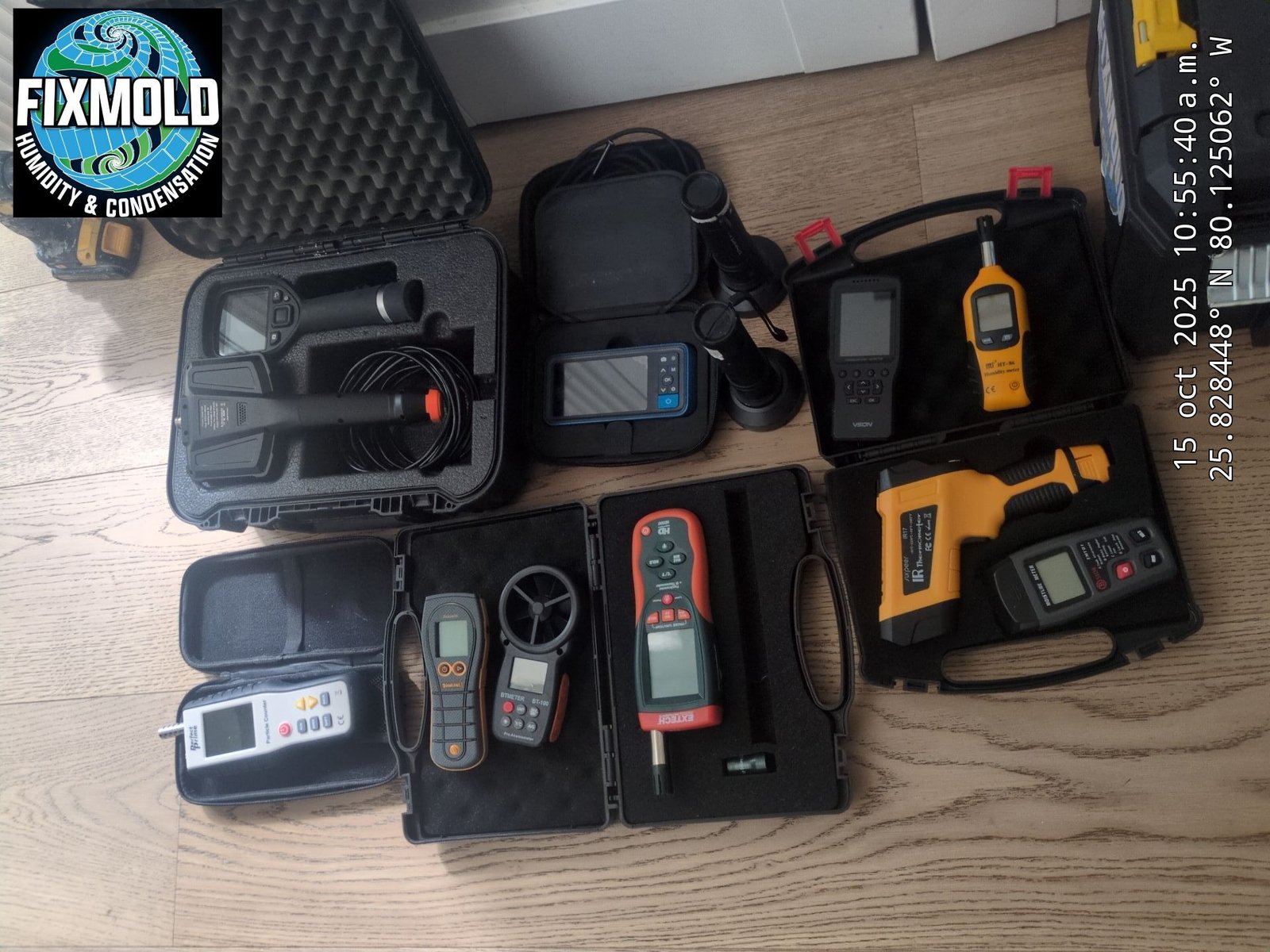
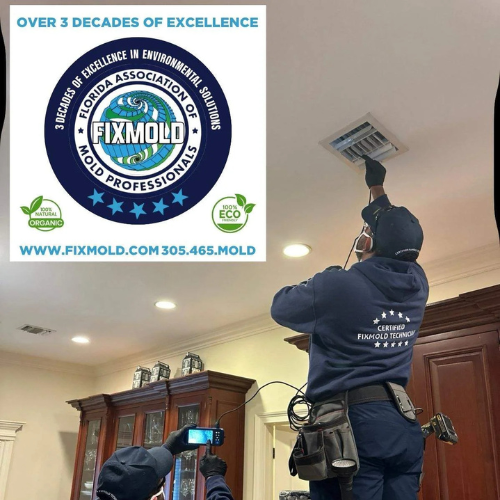
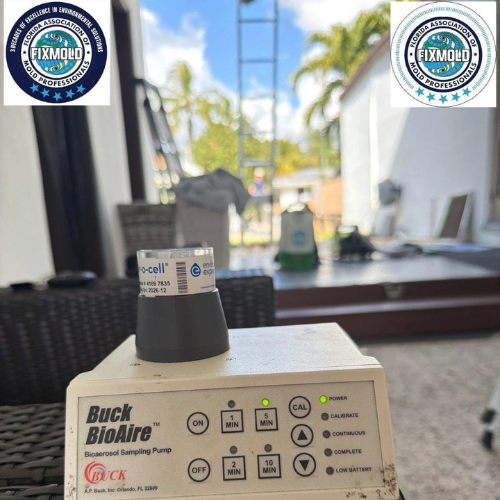
Indoor air quality testing helps evaluate whether airborne mold spores, particulate buildup, or hidden moisture-related contamination may be affecting the environment. Moisture detection, thermal imaging, and HVAC evaluation are also commonly used to identify hidden environmental conditions contributing to poor indoor air quality.
Because many problems remain concealed behind walls or inside ventilation systems, professional testing often provides deeper insight into what may be circulating through the indoor air.
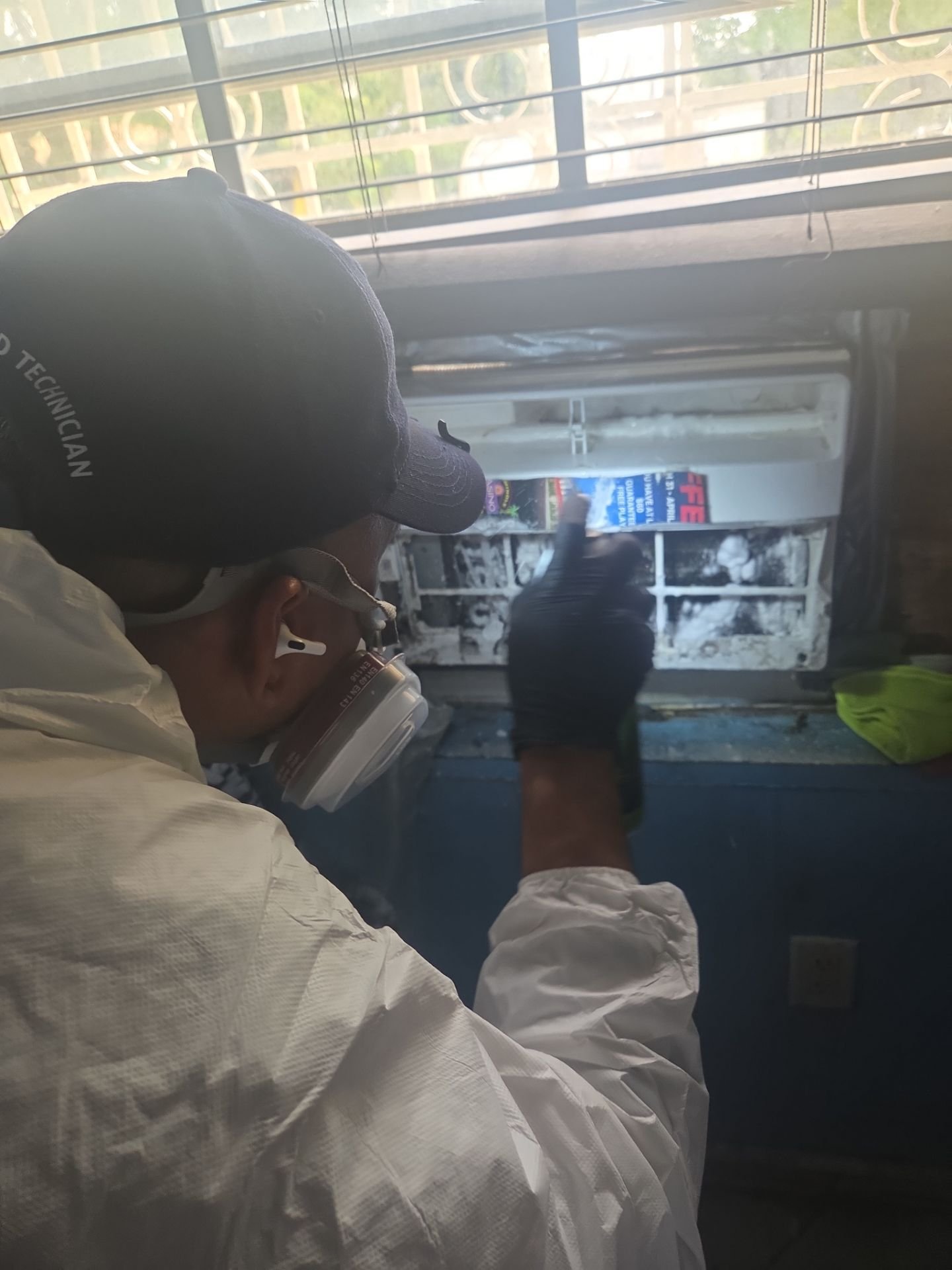
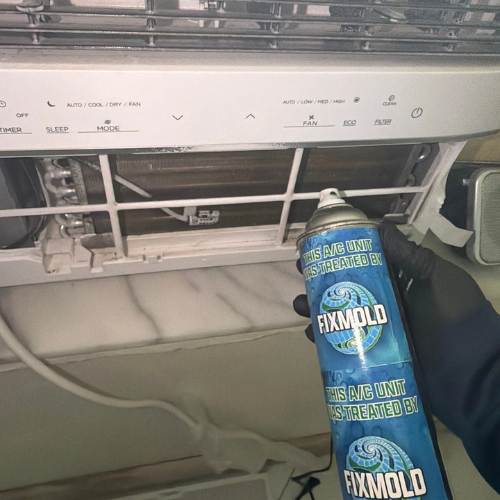
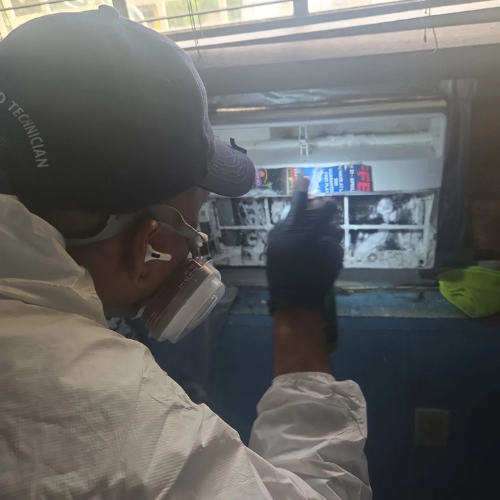
Yes. HVAC systems have a major influence on indoor air quality throughout Miami and South Florida because they continuously circulate air while managing humidity inside the property. Condensation naturally forms around evaporator coils, drain lines, vents, and ductwork, and if moisture accumulates inside the system, mold and bacteria may begin developing within HVAC components.
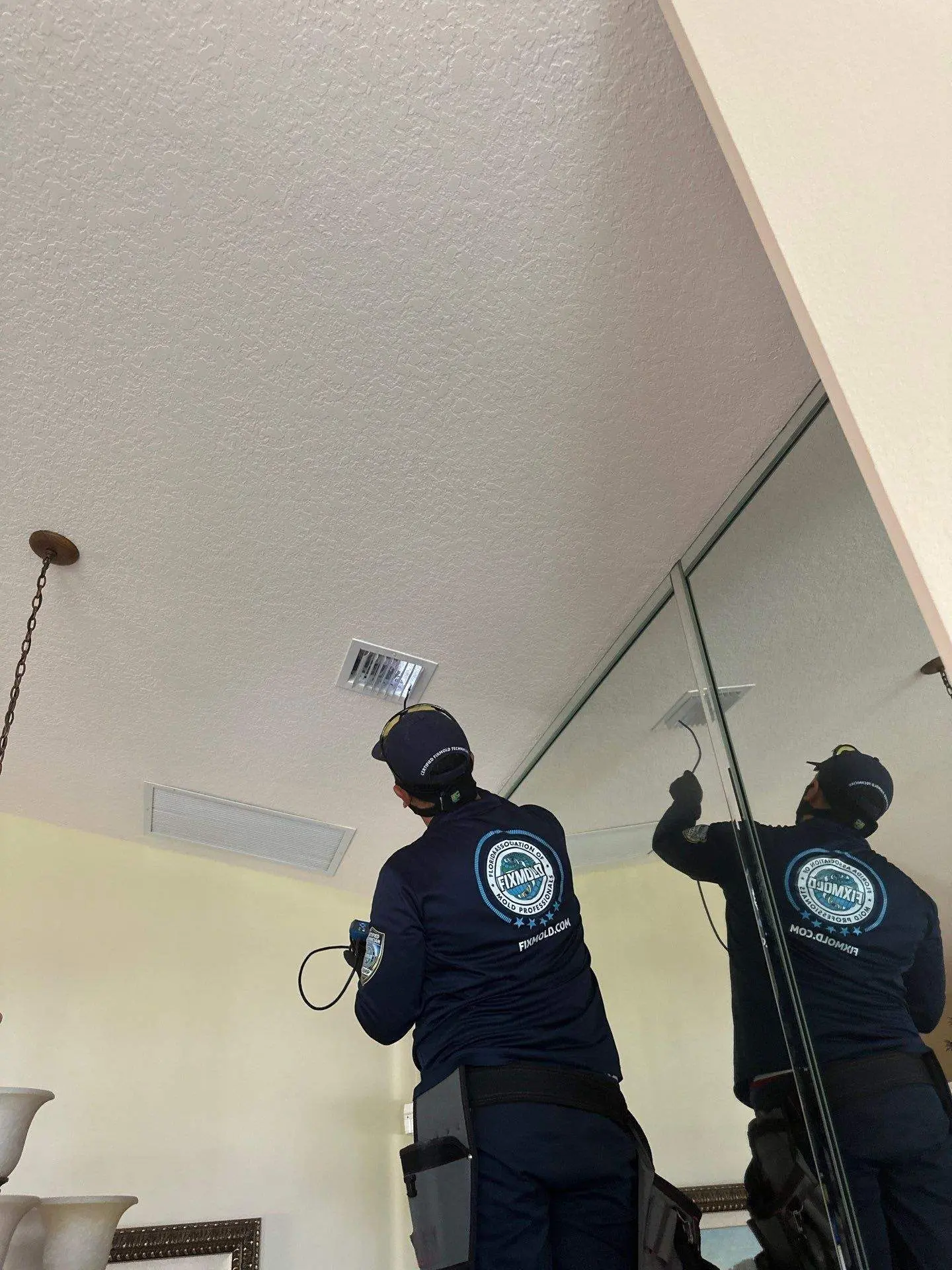
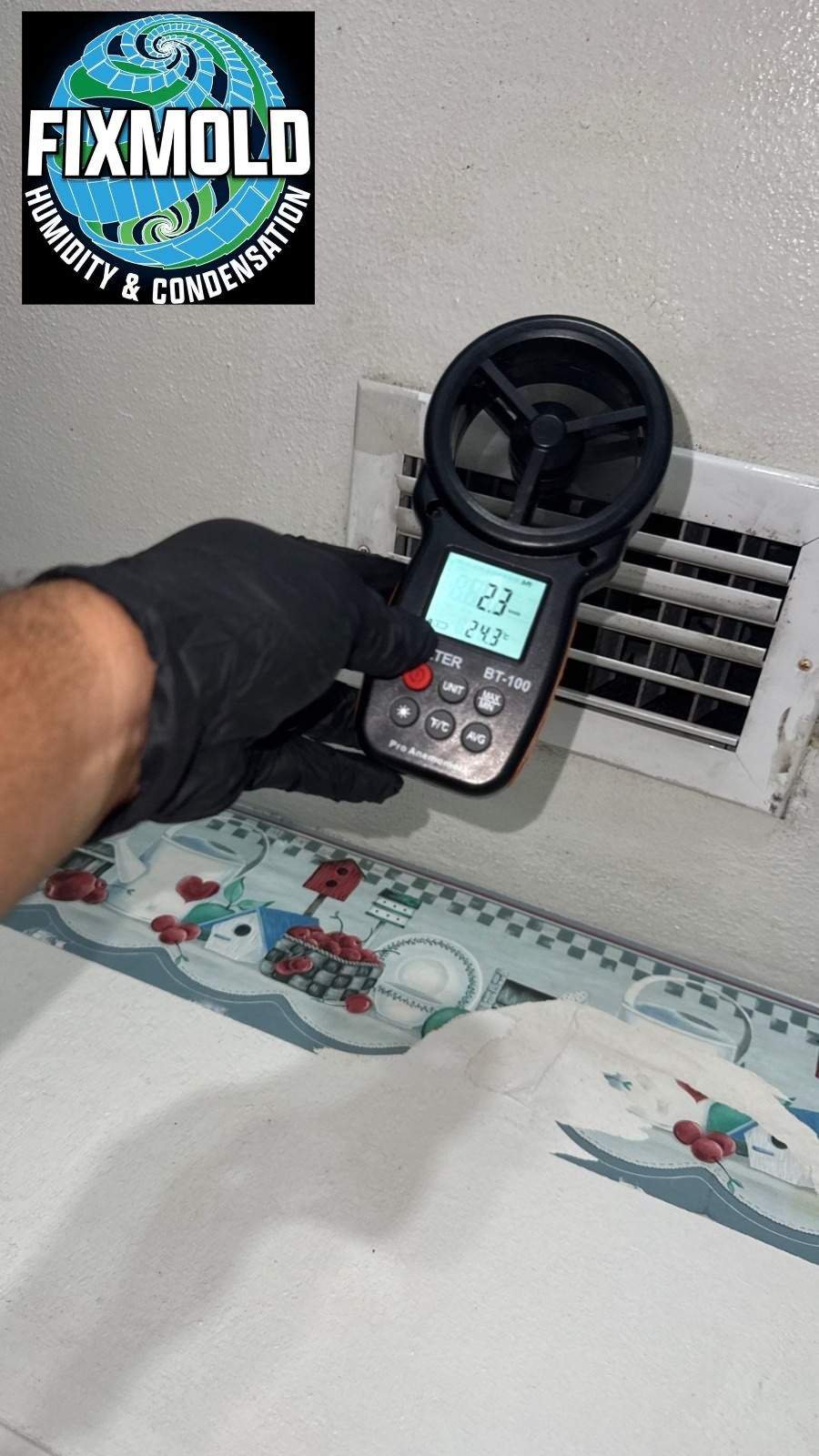
Many homeowners first notice indoor air quality concerns when musty odors become stronger during AC operation or when black staining appears around air vents. Dirty coils, wet insulation, clogged drain lines, sweating ducts, and poor airflow can all contribute to airborne contamination spreading throughout the home.
In condos and commercial buildings, enclosed ventilation systems may also distribute airborne particles between units or common areas. Persistent humidity problems often worsen HVAC-related contamination because elevated moisture allows microbial growth to continue inside duct systems.
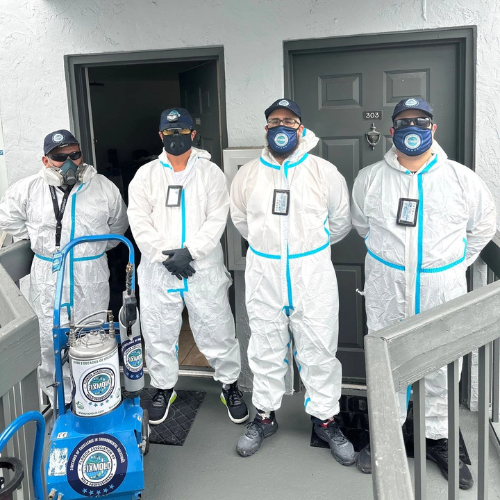
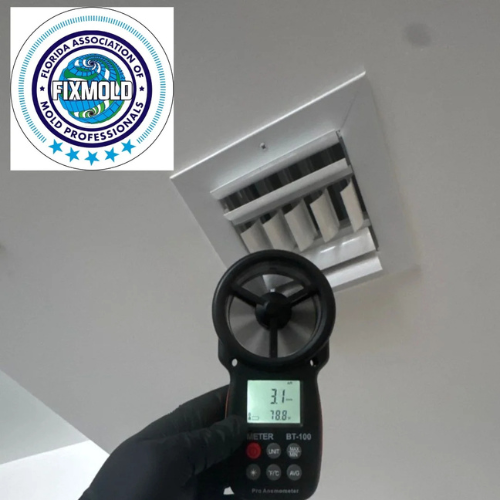
Professional indoor air quality evaluations frequently include HVAC inspection, moisture detection, airborne mold testing, and airflow analysis to determine whether the system is contributing to environmental concerns.
Proper HVAC maintenance and humidity control are important parts of maintaining healthier indoor air conditions in South Florida properties.
Homes in Miami sometimes remain humid despite air conditioning because the HVAC system may not be properly removing moisture from the indoor environment. Oversized air conditioning systems are a common issue in South Florida because they cool the air too quickly without running long enough to adequately dehumidify the property.
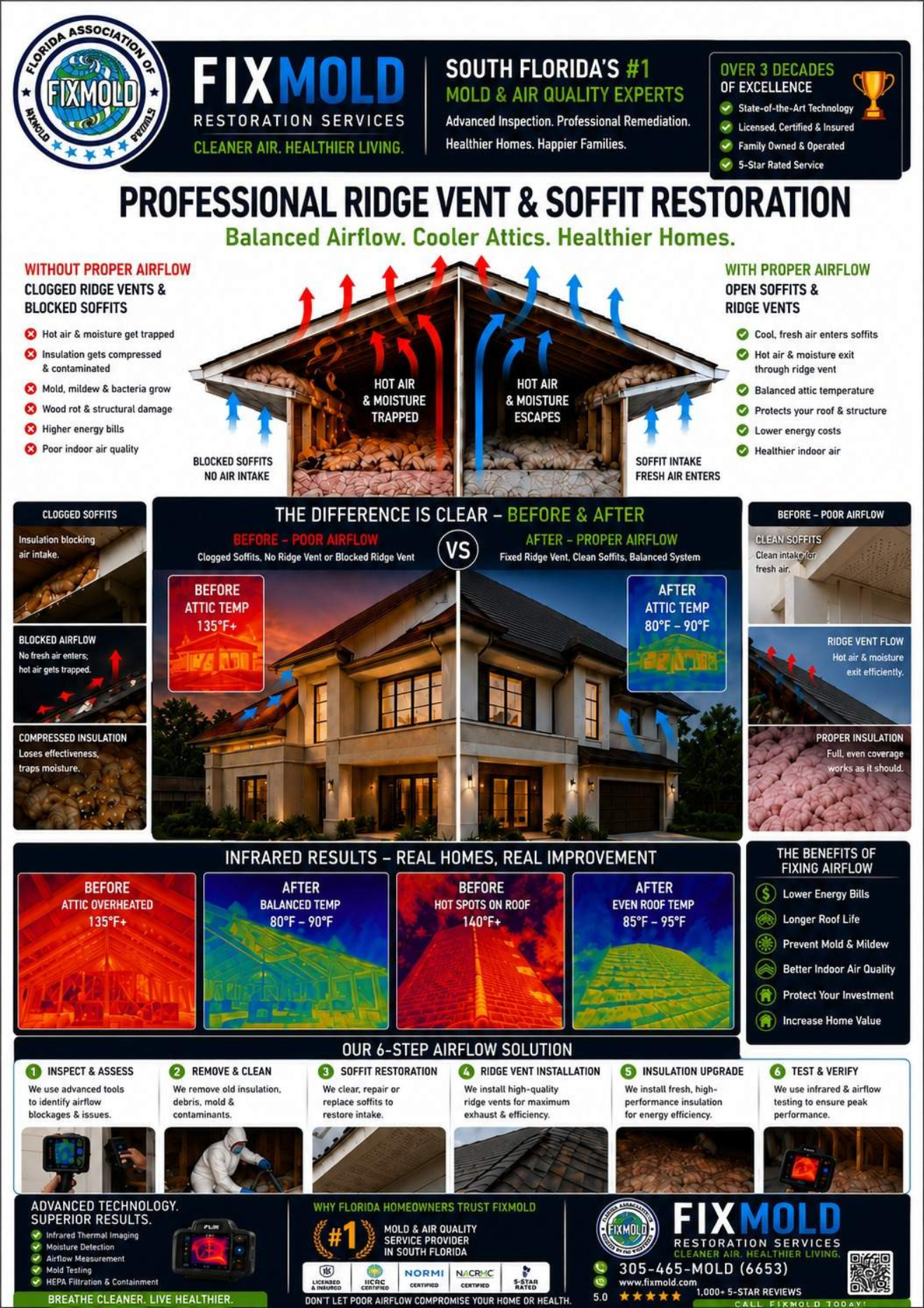
Poor airflow, clogged filters, dirty coils, insulation deficiencies, duct leakage, attic heat buildup, and ventilation problems may also contribute to excessive indoor humidity. In some cases, hidden moisture intrusion from roof leaks, plumbing leaks, or condensation inside walls further increases indoor dampness.
Persistent humidity can contribute to musty odors, condensation around windows and vents, microbial growth, and poor indoor comfort. Closets, bathrooms, laundry rooms, attics, and enclosed spaces are especially vulnerable because airflow is often limited.
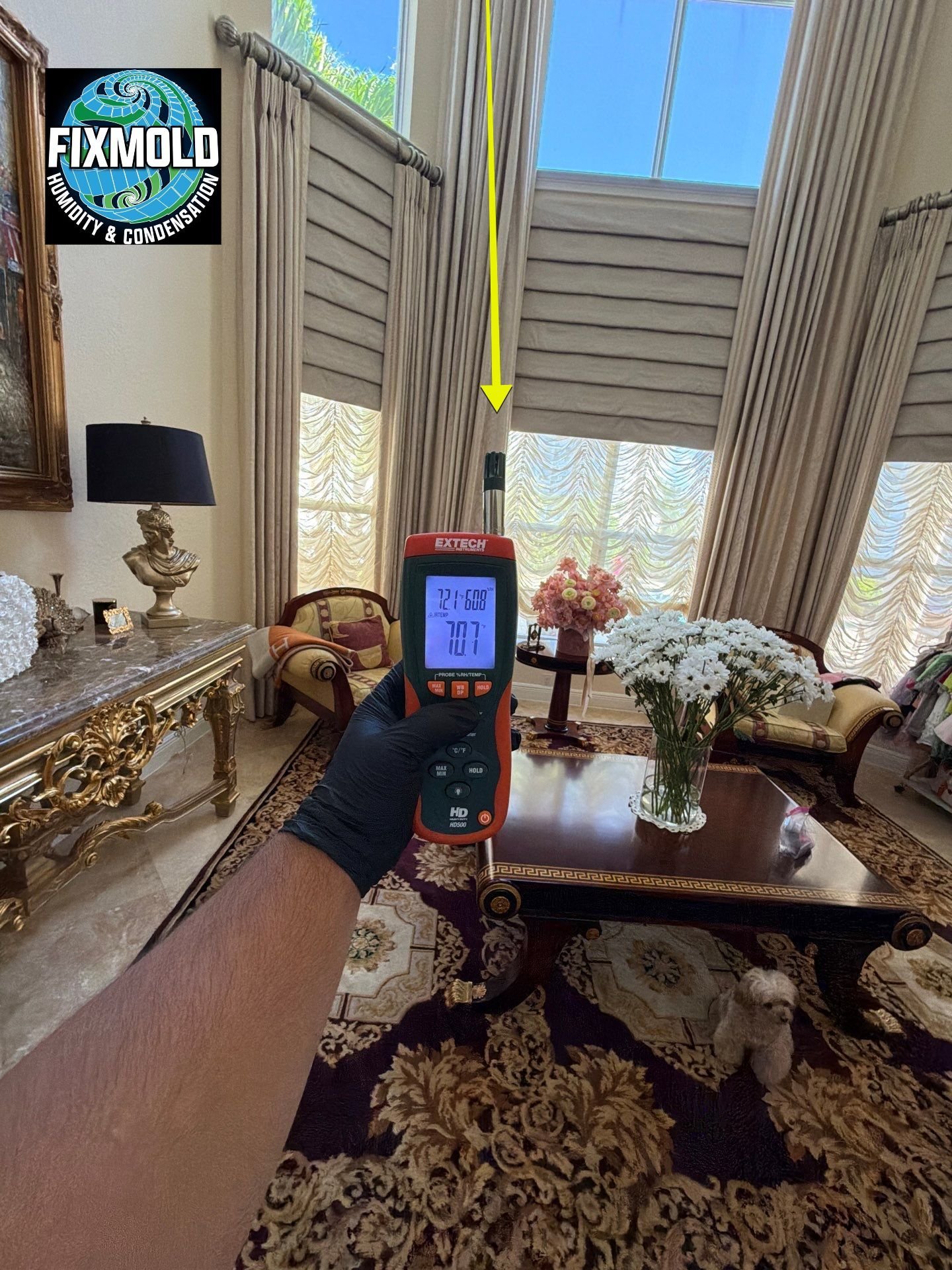
Indoor air quality inspections may involve humidity measurements, HVAC evaluation, moisture detection, and thermal imaging to identify why the property remains humid. Correcting humidity problems is important because prolonged dampness can create conditions favorable for hidden mold growth and indoor air quality deterioration over time.
Managing indoor humidity is one of the most important environmental considerations for Miami homes and buildings.
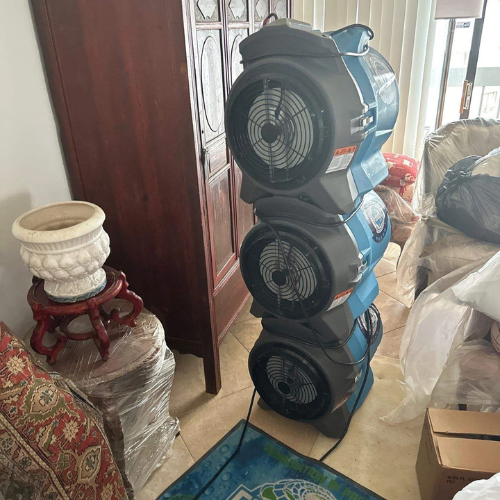
Yes. Water damage frequently affects indoor air quality even after visible water has been removed. Roof leaks, flooding, plumbing failures, storm intrusion, and AC leaks often allow moisture to spread behind walls, beneath flooring, inside insulation, and throughout HVAC systems.
In South Florida’s humid climate, damp materials may remain wet for extended periods and support hidden microbial growth long after the original water event occurred. Airborne mold spores, bacteria, and moisture-related particles may continue circulating throughout the property even when surfaces appear dry.
Indoor air quality testing helps evaluate whether airborne contamination developed after the water intrusion. Air sampling, moisture mapping, thermal imaging, and HVAC evaluation may all be used to determine whether hidden environmental conditions remain active inside the structure.
Many Miami homeowners notice musty odors, stale air, or worsening allergies after water damage even when no visible mold is present. Testing can help identify whether elevated airborne mold levels or hidden moisture issues still exist.
Early environmental evaluation after water damage helps reduce the likelihood of long-term indoor air quality and remediation problems later.
Recurring indoor air quality issues usually indicate that the underlying environmental conditions have not been fully corrected. In Miami properties, elevated humidity, hidden moisture intrusion, HVAC condensation, poor ventilation, roof leaks, and unresolved mold contamination commonly contribute to repeated indoor environmental problems.
Some homes continue experiencing stale air, musty odors, and airborne contamination because moisture remains trapped behind walls, inside ceilings, around ductwork, or beneath flooring systems. Others struggle with chronic humidity because HVAC systems are oversized or improperly balanced.
Simply cleaning surfaces or changing air filters may temporarily improve conditions without addressing hidden environmental issues affecting the indoor air. Condensation around vents, wet insulation, attic humidity, plumbing leaks, and poor airflow frequently allow contamination to redevelop over time.
Professional indoor air quality evaluations focus on identifying moisture sources, airborne contamination, and ventilation problems rather than only treating symptoms. Moisture detection, HVAC analysis, humidity measurements, air testing, and structural evaluation help determine why indoor conditions continue recurring.
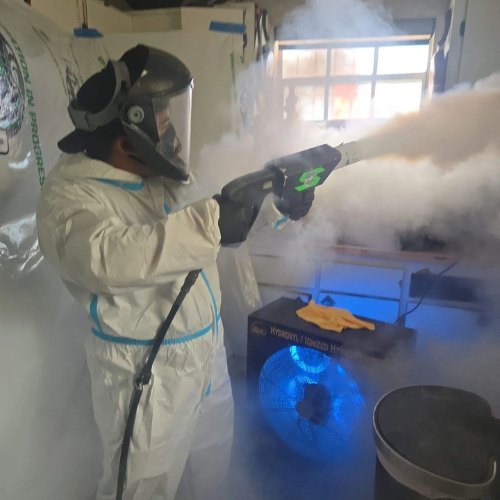
Long-term indoor air quality improvement usually requires a combination of humidity control, HVAC correction, structural drying, ventilation improvement, and moisture management strategies.