1000+ 5-STAR REVIEWS
Recommended All Over Florida
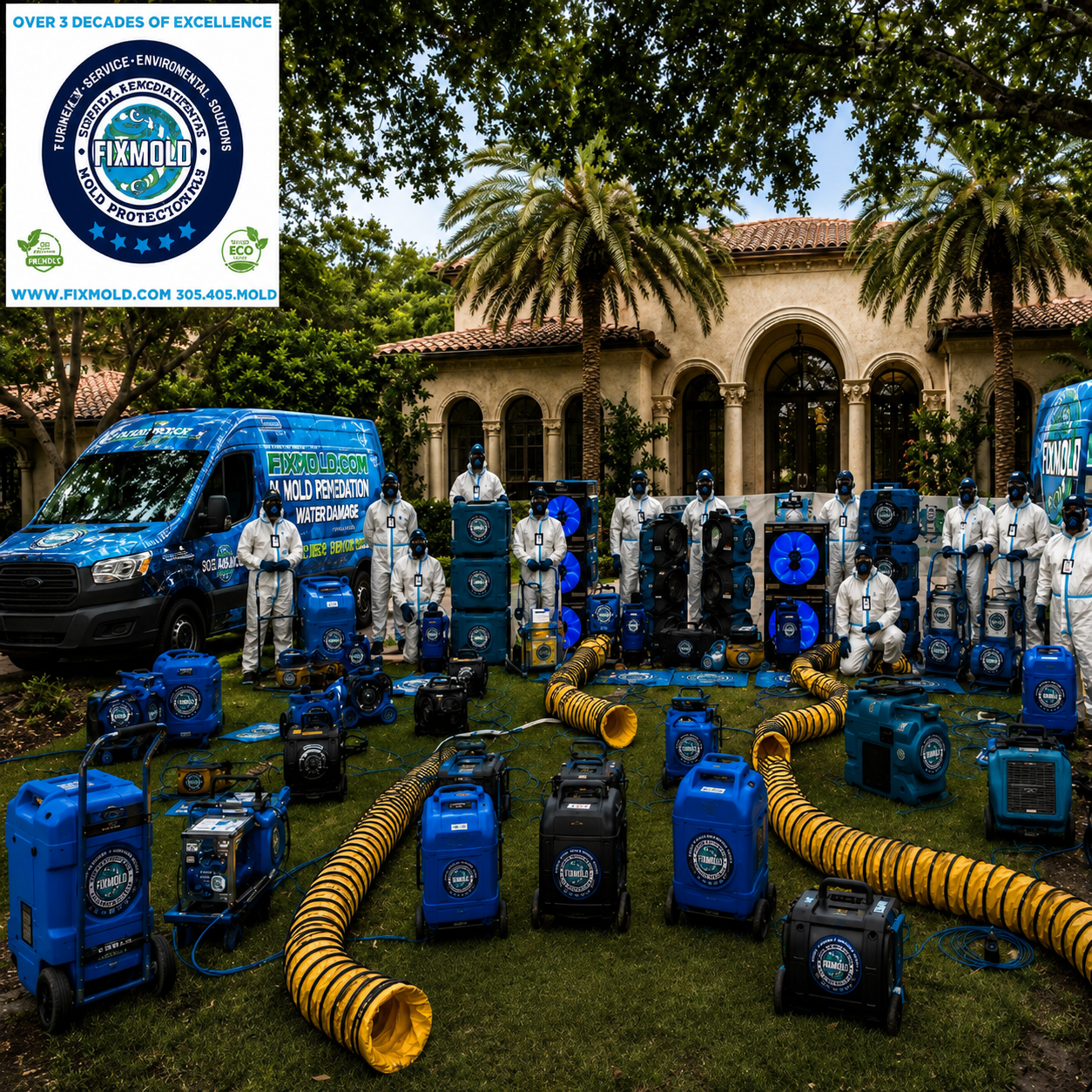
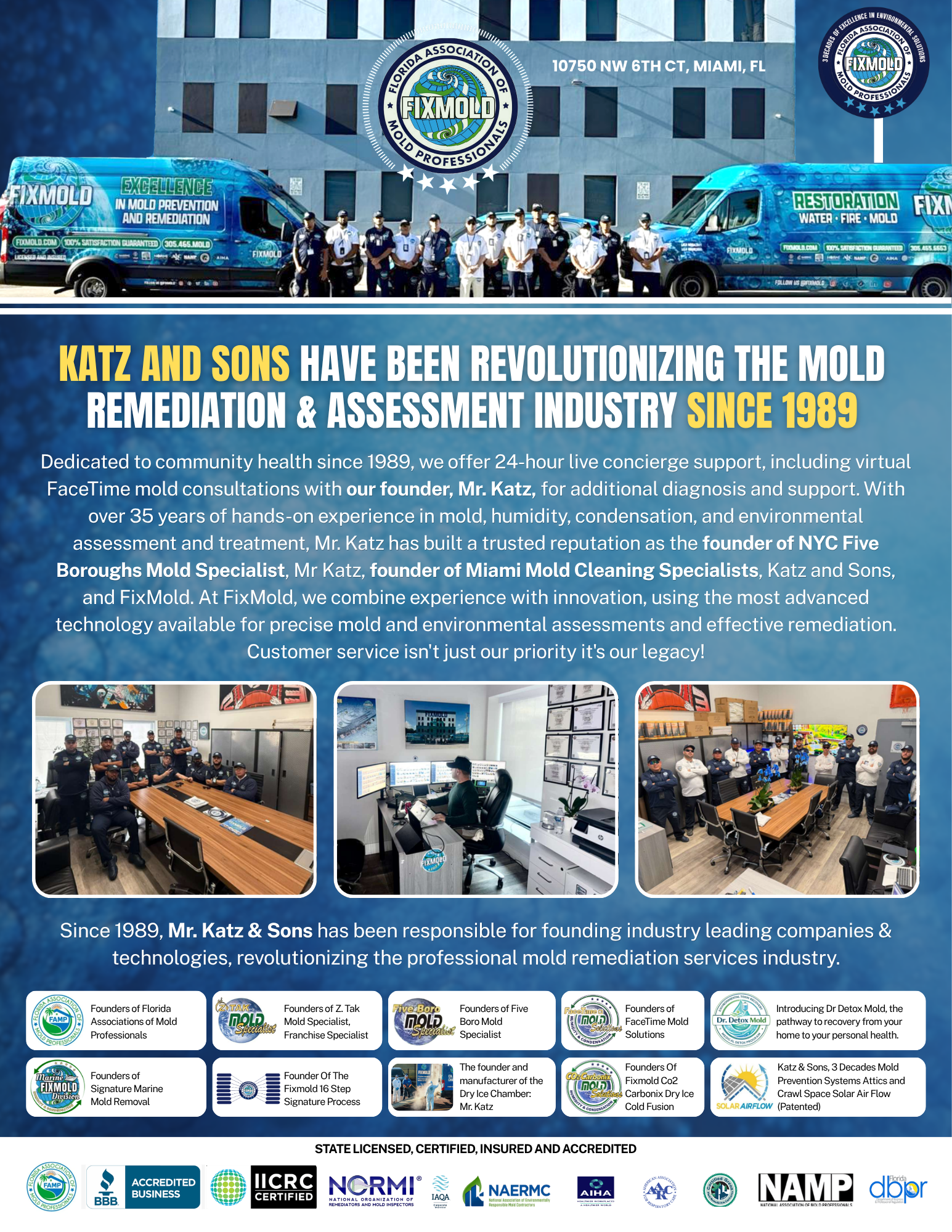
Katz Family Over 3 Decades
Recommended by Miami Doctors
1000+ 5-STAR REVIEWS
Recommended All Over Florida

Air Testing and Swab Testing

Miami mold specialist

    miami mold specialist

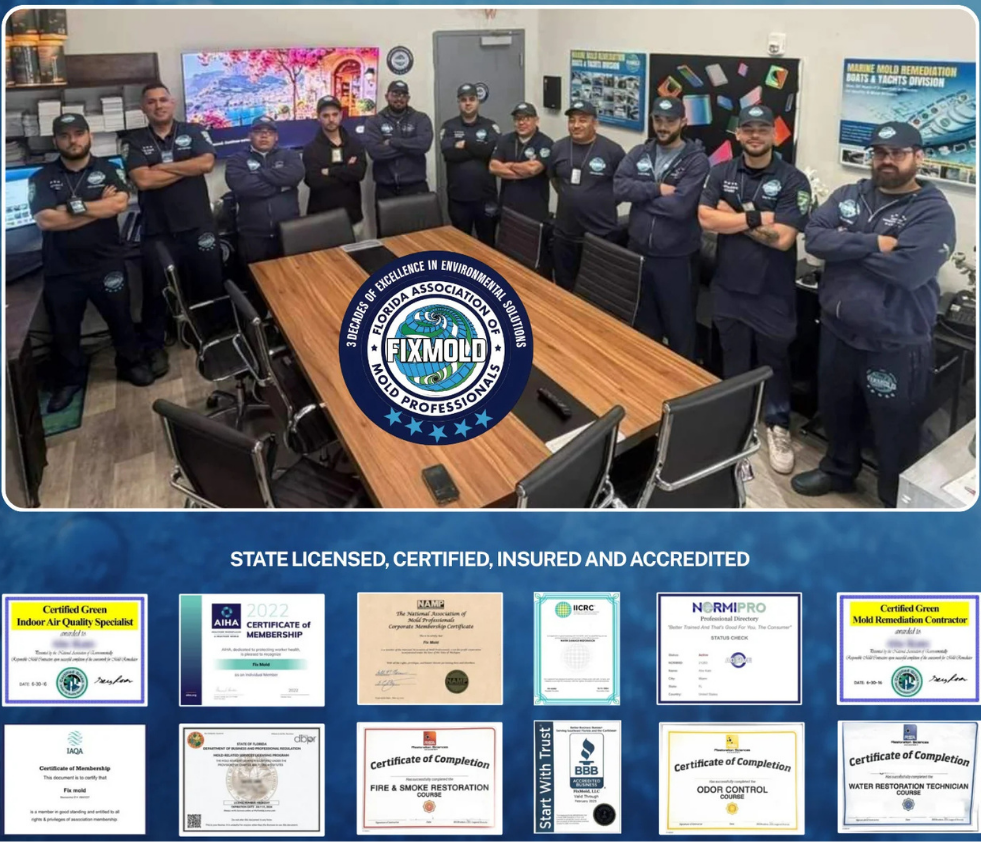
    State Licensed and Accredited Affiliations

    Dr Mold Detox
    Dr Mold Detox

    Mold Sampling in Miami and South Florida — Air Testing and Swab Testing

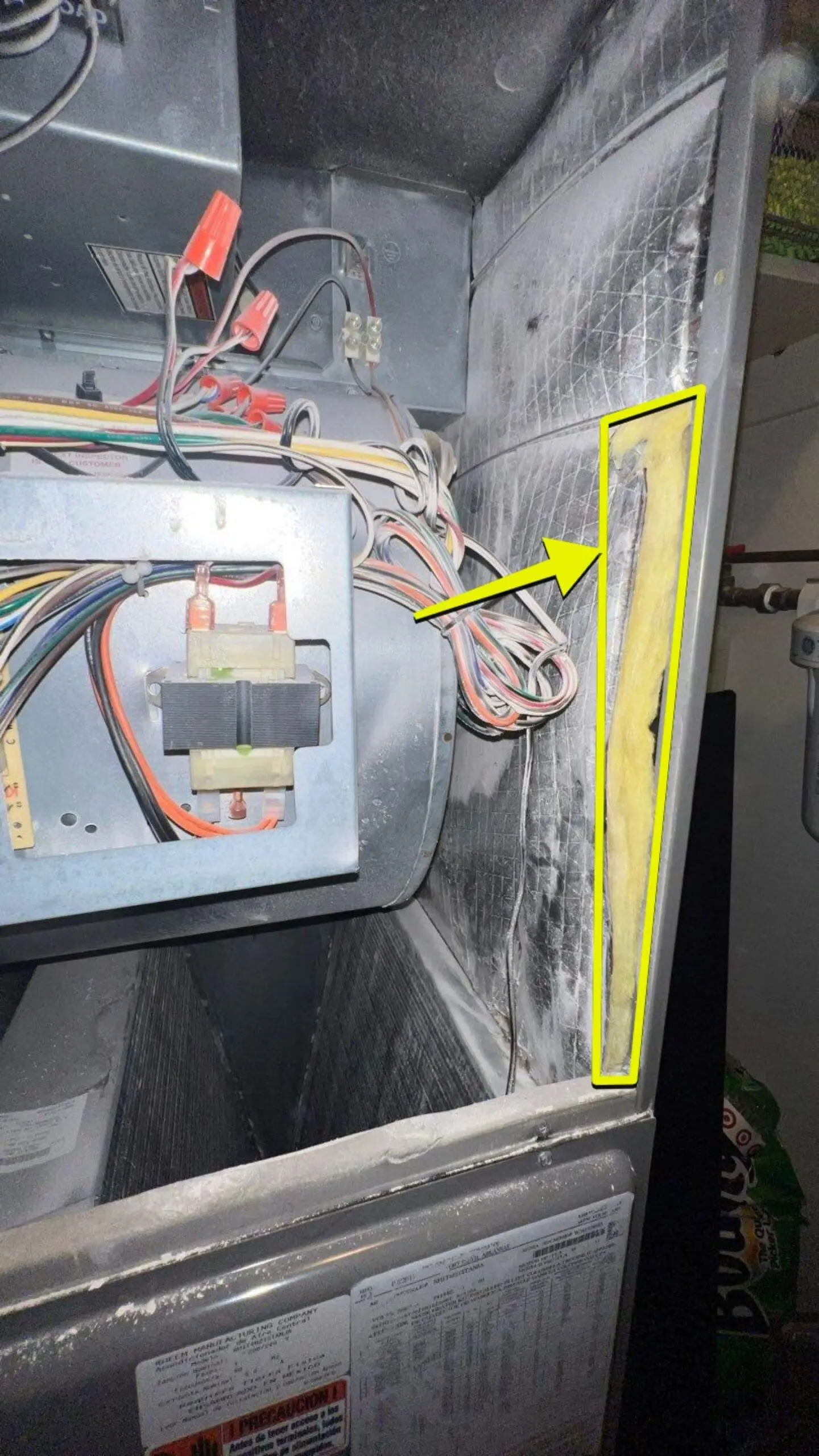
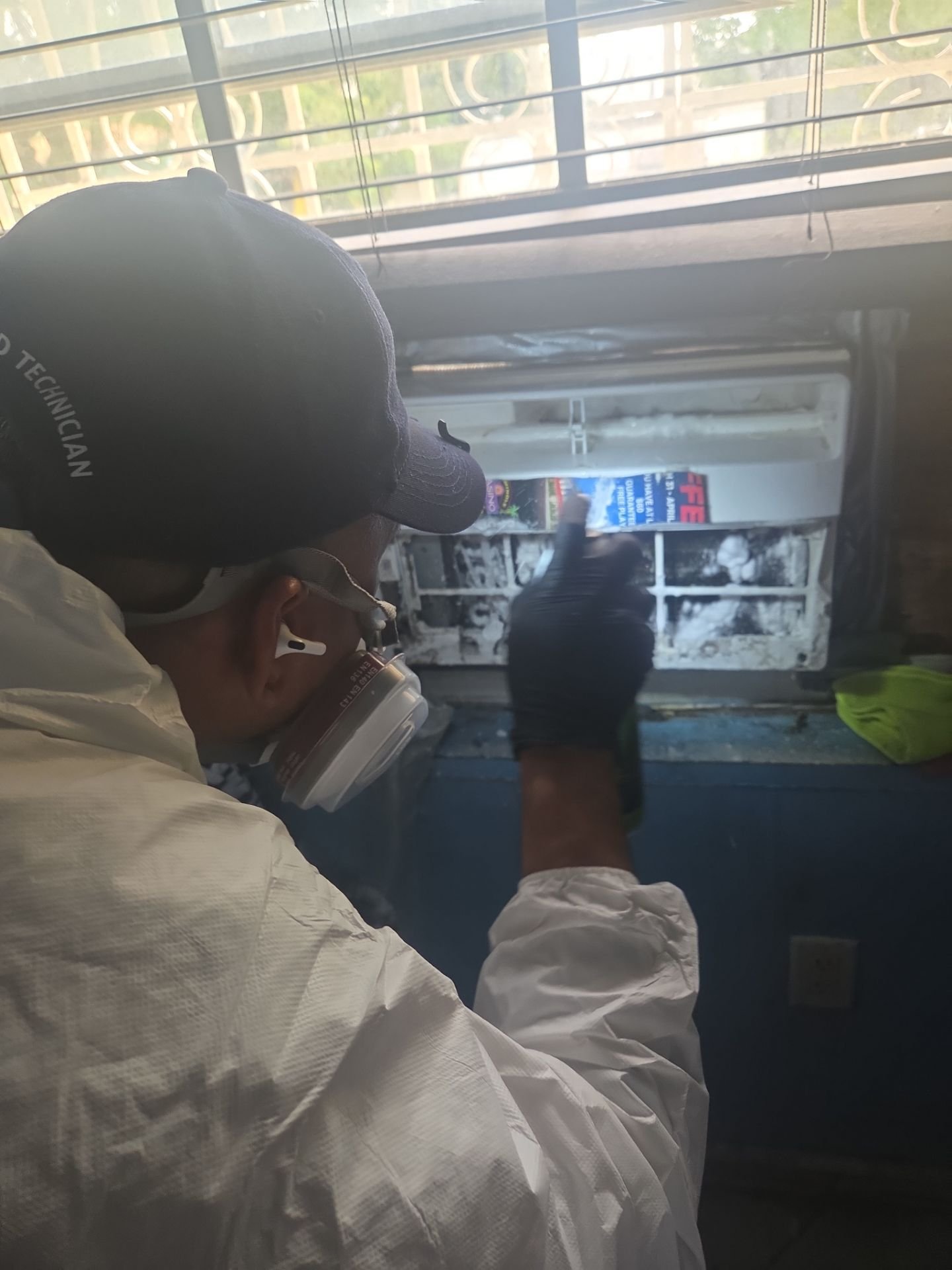
    Not all mold is visible. In fact, the most dangerous contamination in South Florida homes and commercial buildings is often completely hidden — inside duct work, behind drywall, above ceilings — while occupants breathe compromised air and wonder why they feel unwell.

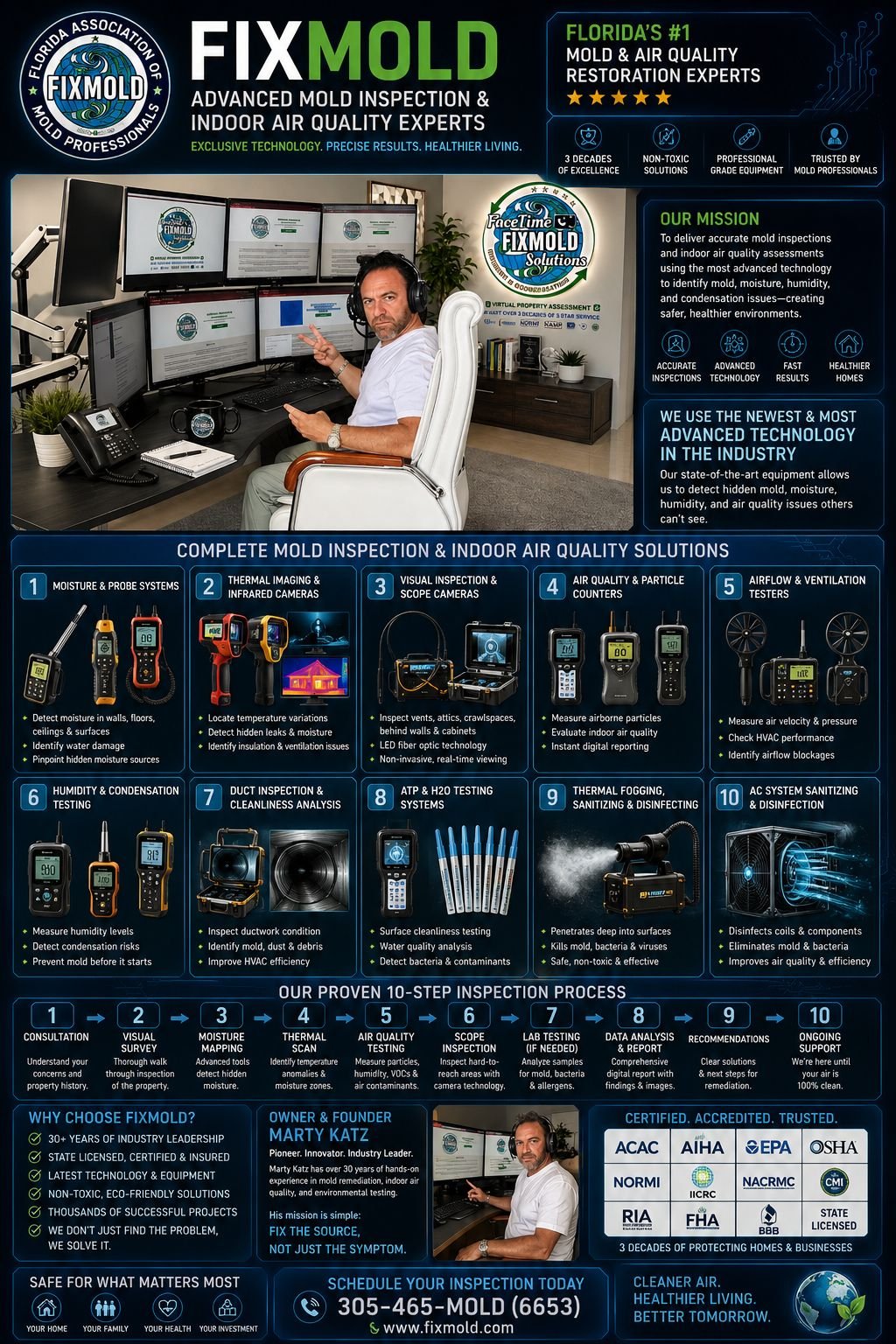
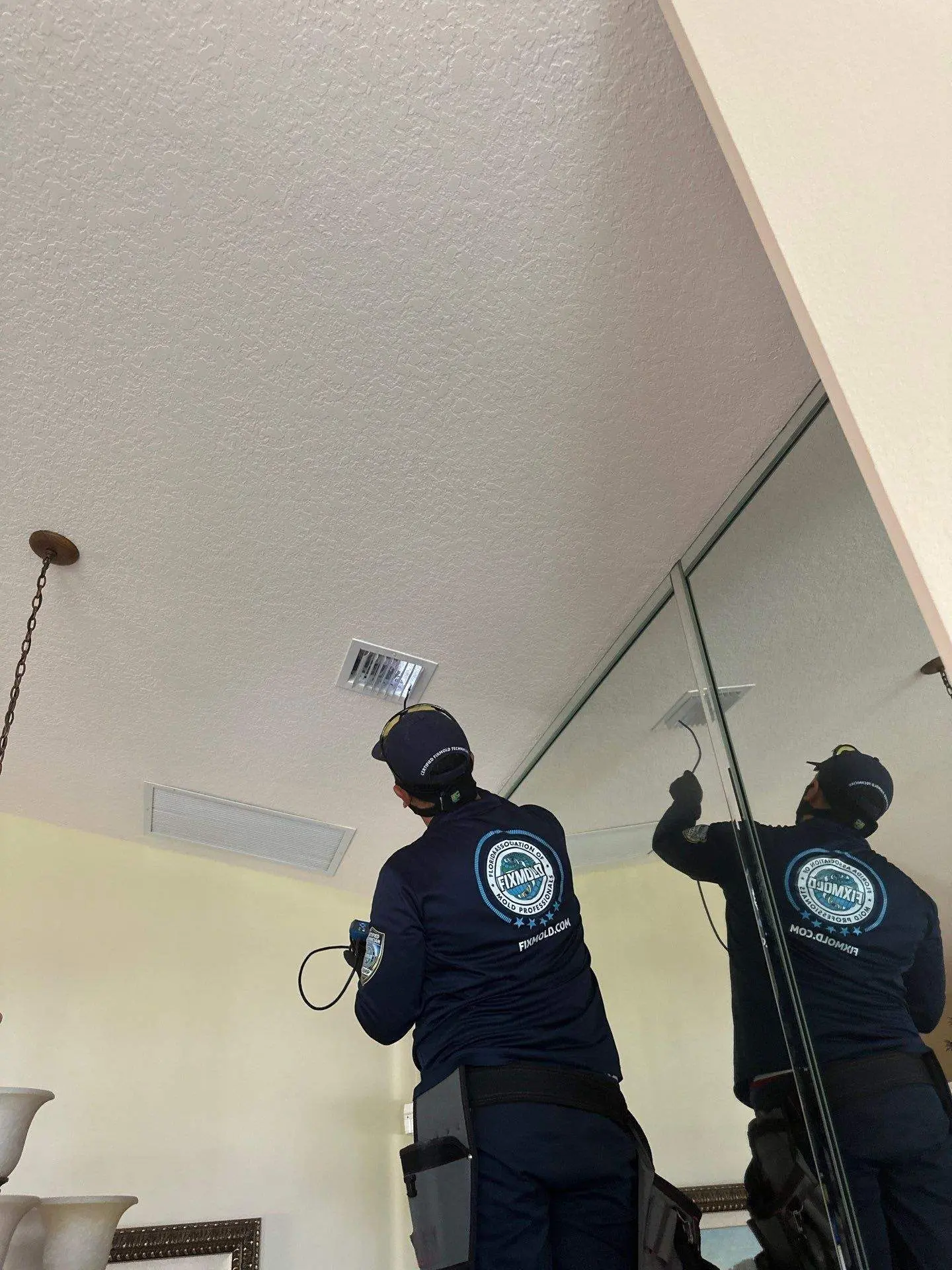
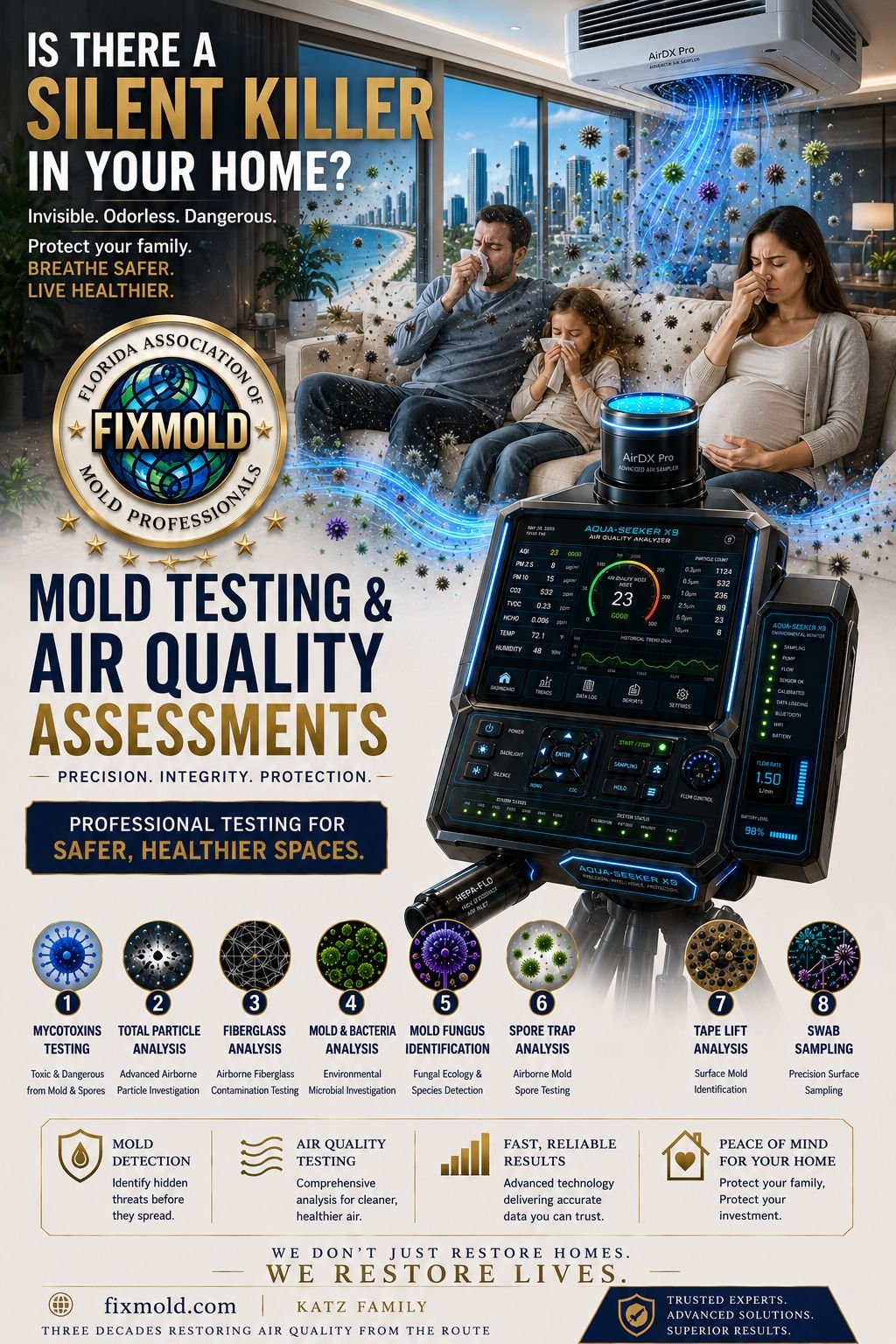
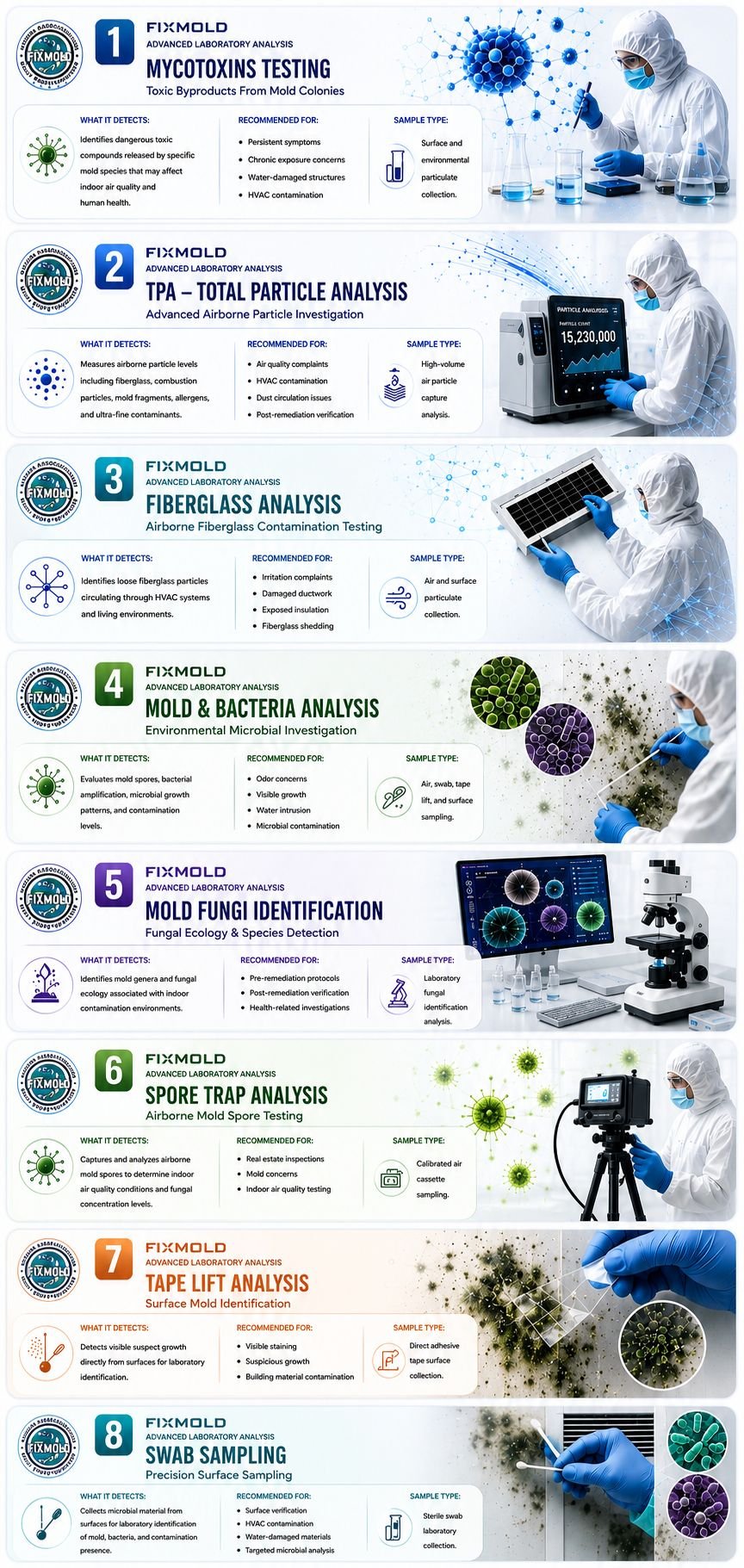
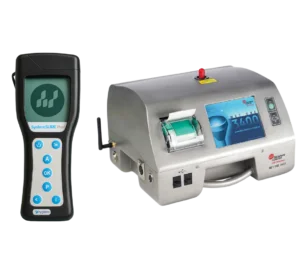
    When visual inspection doesn't confirm a source, FixMold's certified mold sampling protocol does. We use two methods: air sampling, which captures what's circulating through your space, and swab sampling, which tests specific surfaces showing suspicious growth or discoloration. Both methods go to a third-party certified laboratory. Results come back in one to two business days with species identification, spore counts, and health risk context.

    State licensed mold assessor MRSA2521. 35 years of environmental diagnostics. The most advanced inspection devices in South Florida behind every sample we take.

    Call 786-882-1823 or use FaceTime Mold Solutions for a free virtual assessment. $150 off remediation services.

    Two Methods, Two Distinct Answers


    Air sampling and swab sampling answer different questions. Using one without the other when conditions warrant both leaves gaps in the evidence picture. FixMold's assessors determine which method — or which combination — fits the specific situation.
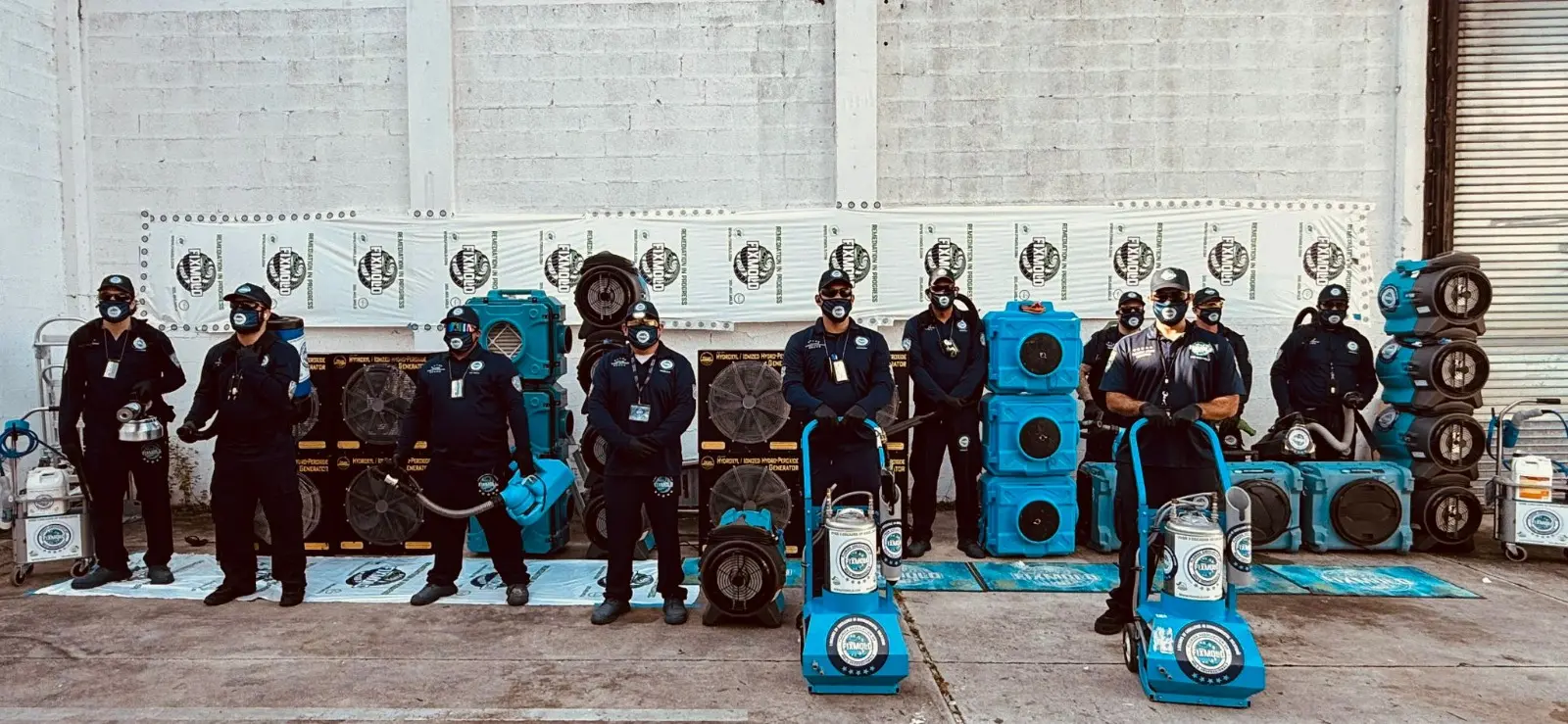
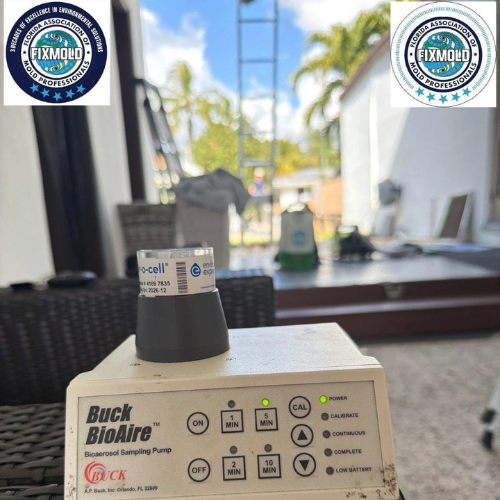
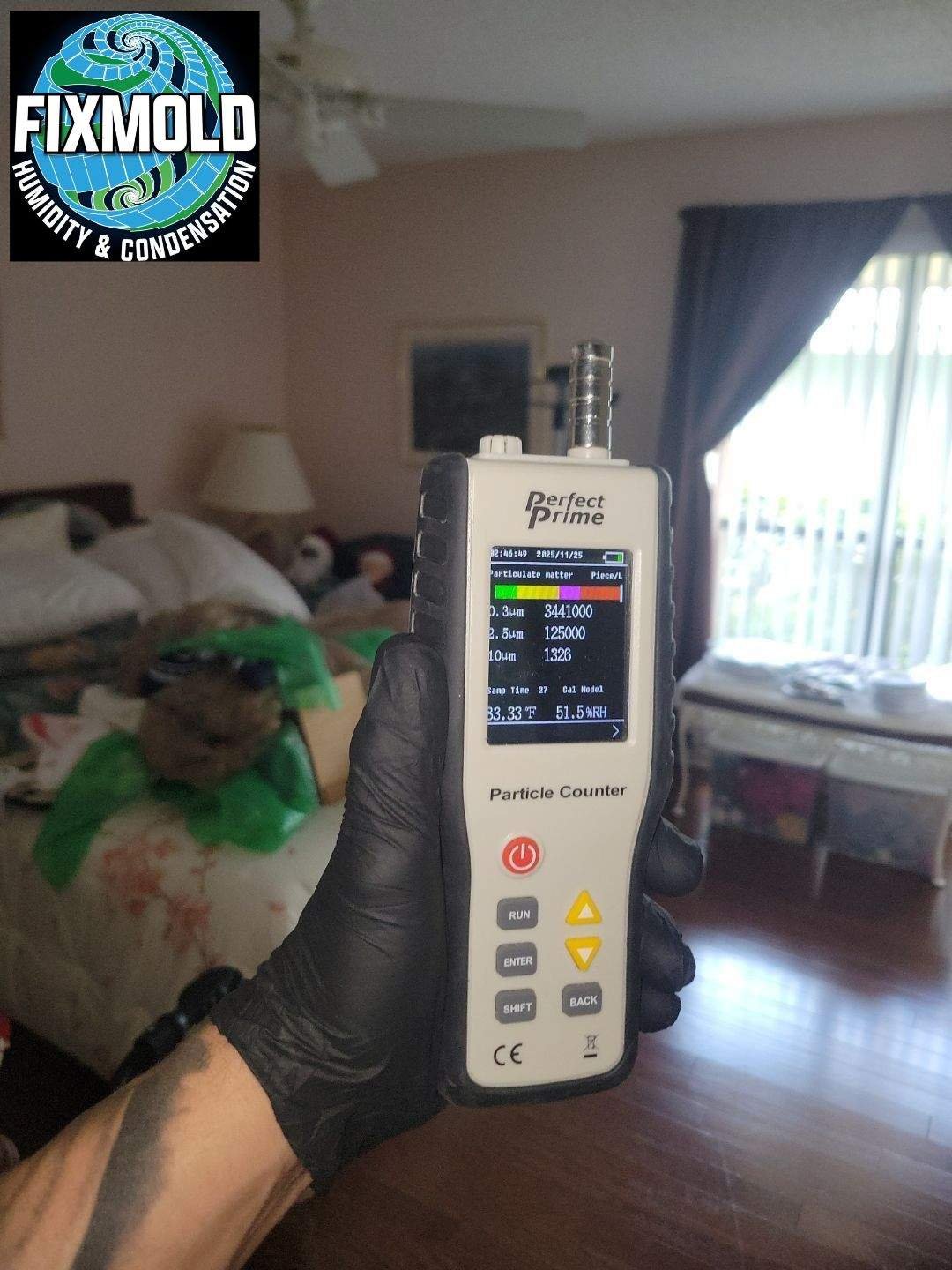
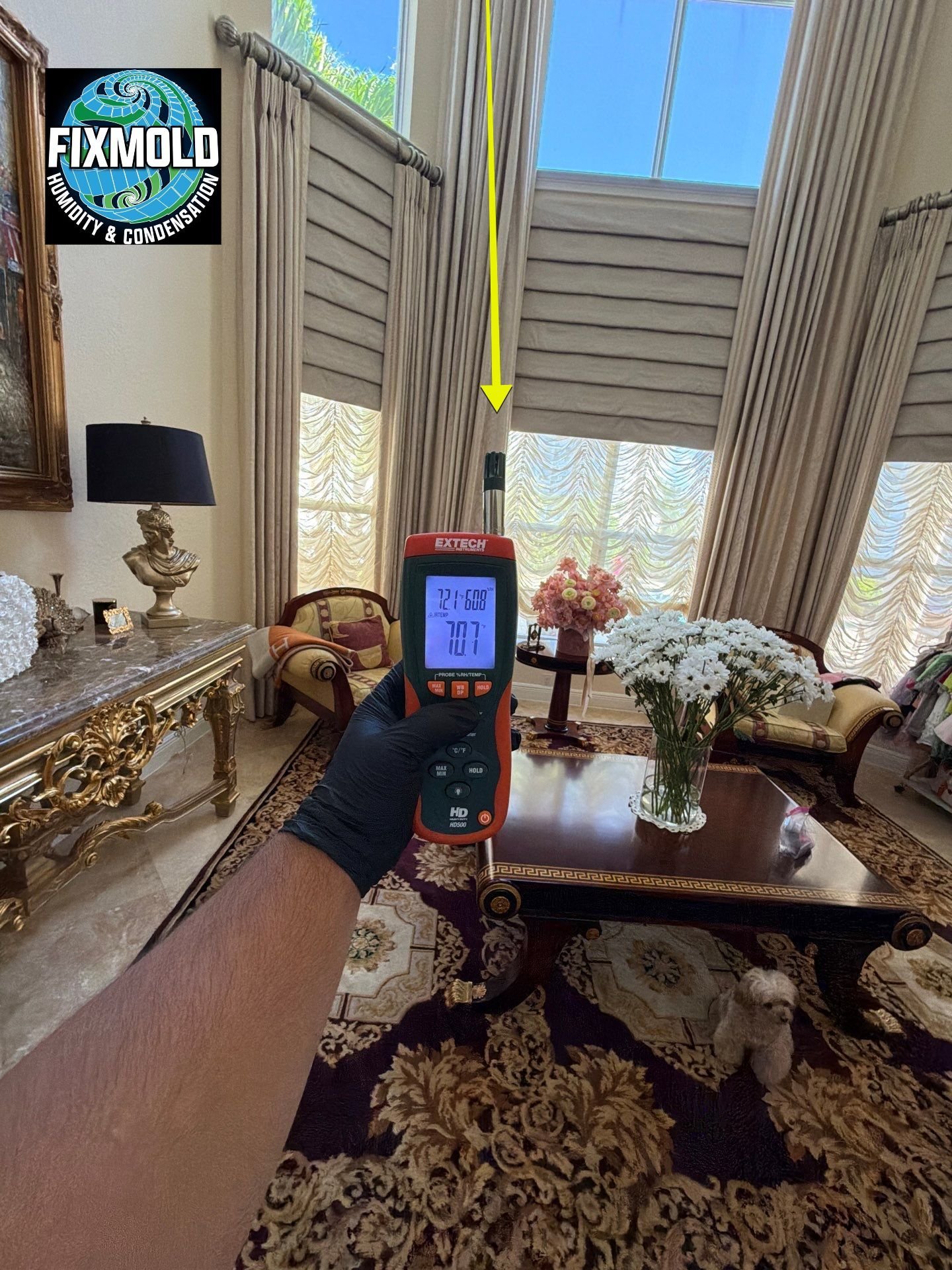
    Air sampling measures what occupants are actually breathing. Samples are collected from areas showing elevated moisture, humidity, or condensation — or from spaces where occupants have reported symptoms without an identified source. A calibrated air pump draws a measured volume of air through a collection cassette over a set time period. The cassette is sealed, logged, and shipped to the laboratory under chain of custody documentation.

    The lab report identifies every mold species detected, the spore count per cubic meter of air, and how those counts compare to outdoor baseline levels taken simultaneously. An indoor count significantly higher than the outdoor baseline confirms active indoor amplification — meaning mold is growing inside the structure, not simply entering from outside. The report also flags species known to produce mycotoxins or carry elevated health risk.

    Swab sampling answers a different question: is that stain, discoloration, or residue actually mold, and if so, is it actively growing? A sterile swab collects material from the suspect surface, which is sealed and sent to the laboratory. The lab confirms mold presence, identifies the species, and provides a mycelial estimate — a measure of whether the colony is dormant or actively growing. Active growth requires immediate remediation. Dormant growth still requires treatment but informs a different timeline and scope.
    Why Third-Party Laboratory Analysis Matters


    FixMold does not operate its own laboratory. That's deliberate. Third-party certified lab analysis means results carry independent scientific authority — they aren't produced by the same company recommending remediation. For insurance claims, legal disputes, or simply peace of mind, lab results from an accredited independent facility carry weight that in-house testing cannot.
    All samples leave our hands with full chain of custody documentation — time of collection, technician name, sample location, environmental conditions at collection, and laboratory submission records. That documentation is available to you, your insurer, your attorney, or your medical provider.

    What the Results Tell You


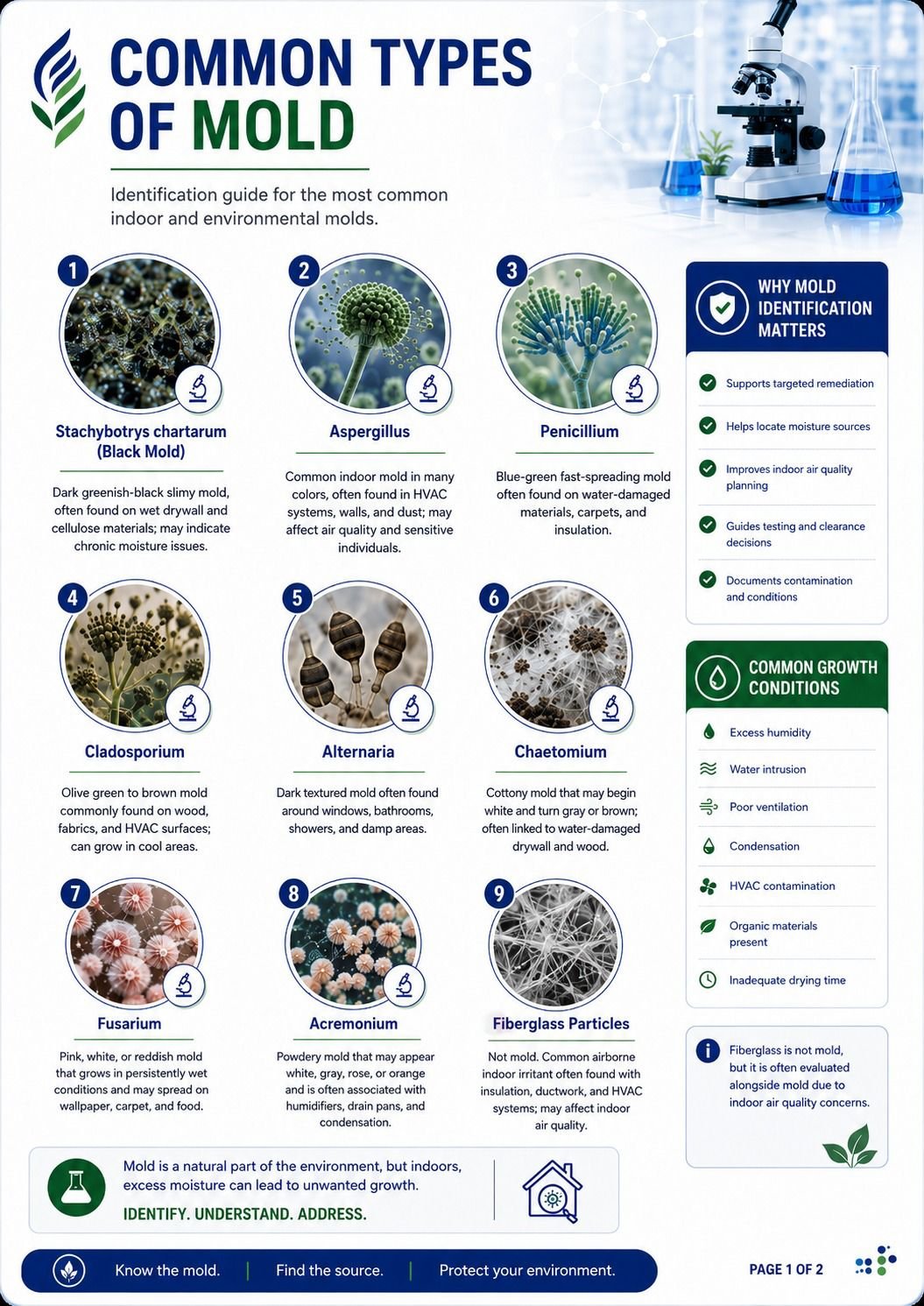
    Laboratory reports from FixMold sampling include species identification and spore count data alongside documented common health effects associated with each species found. If Stachybotrys chartarum — black mold — is identified, the report will note it. If Aspergillus or Penicillium species are present at elevated levels, the health implications for occupants, particularly children, elderly individuals, or immunocompromised patients, are clearly documented.

    This matters because mold identification isn't just about confirming a problem exists — it determines the remediation approach. Different species require different treatment protocols. Knowing what you're dealing with before remediation begins produces better outcomes.

    When Sampling Is Ordered


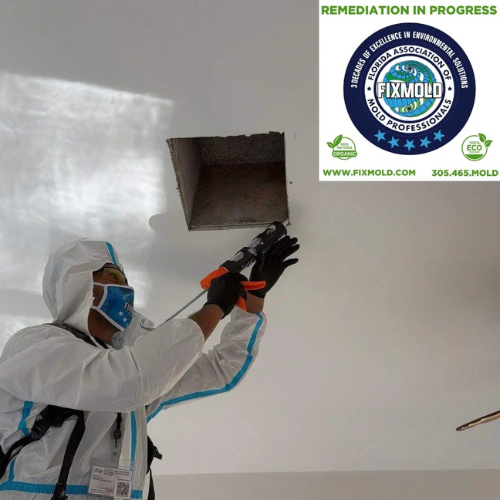
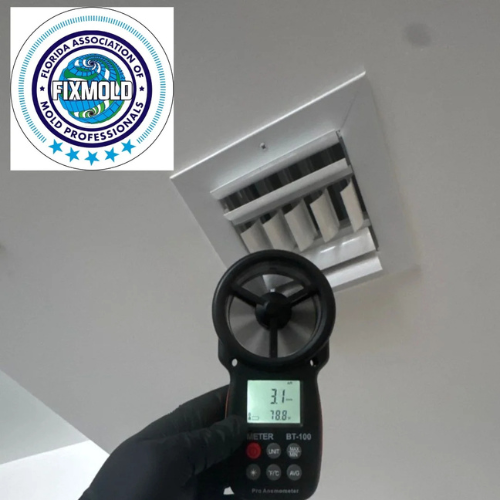
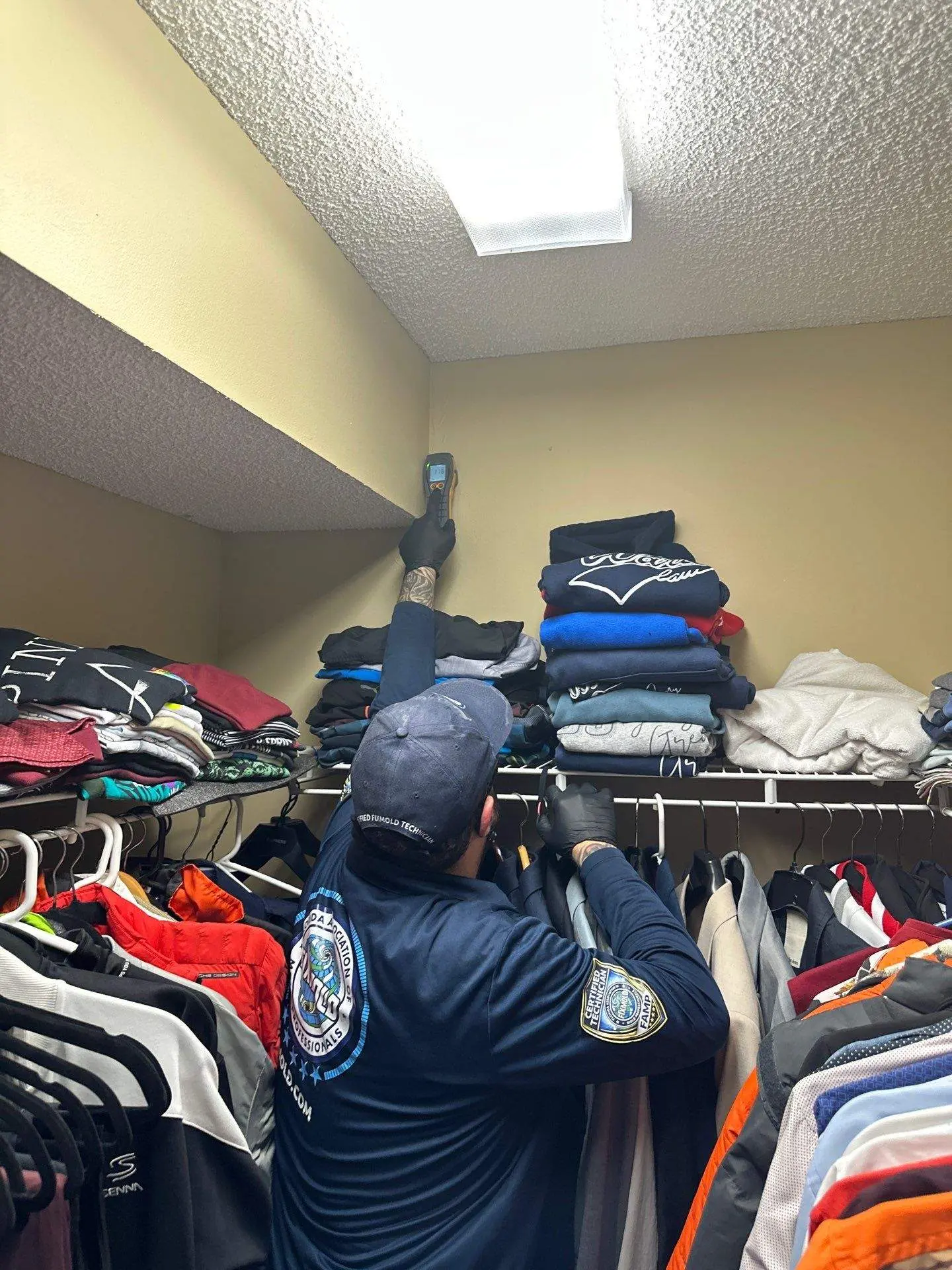
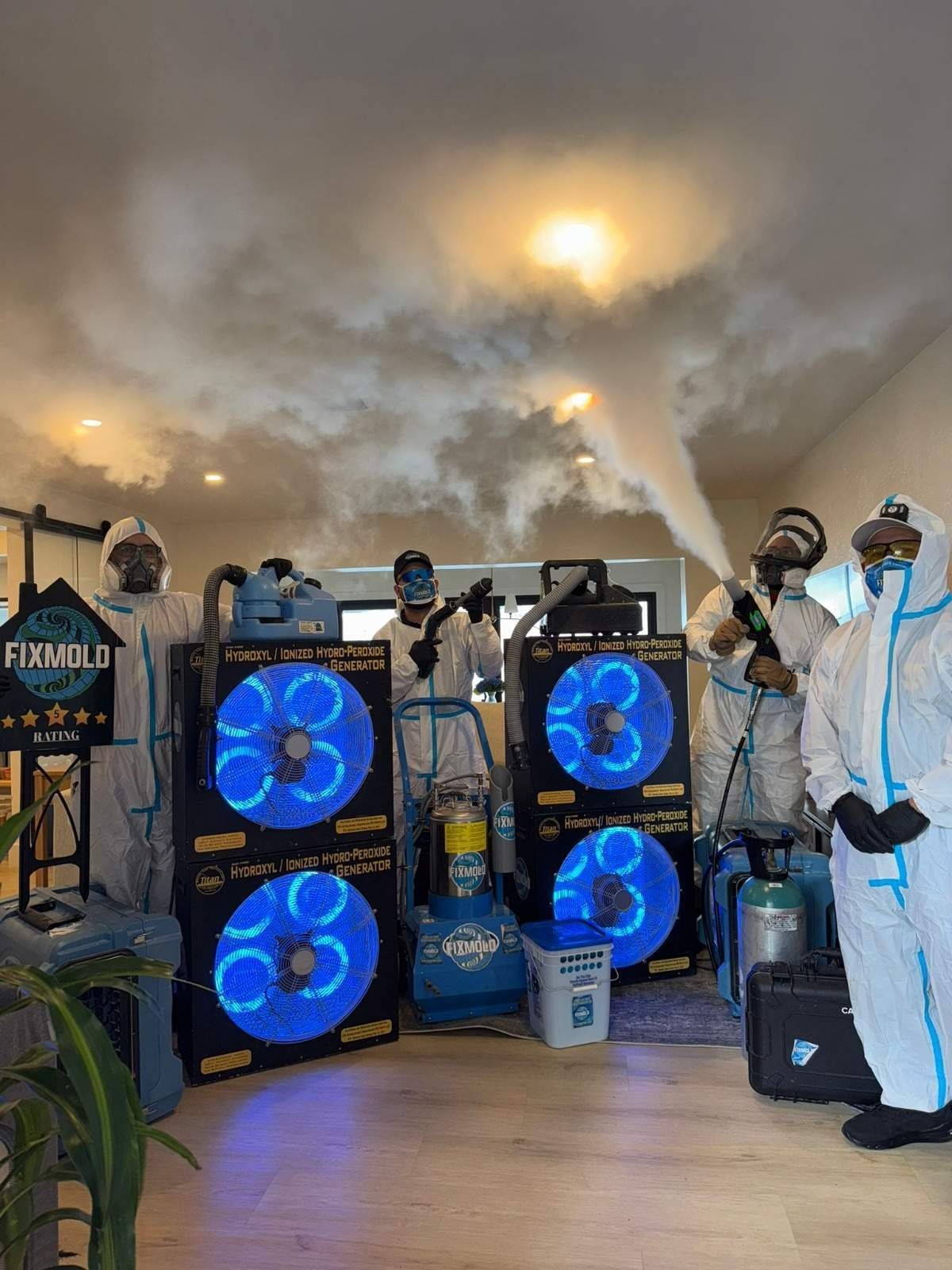
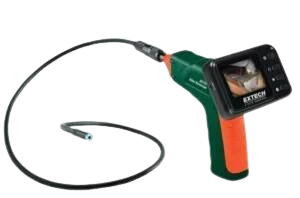
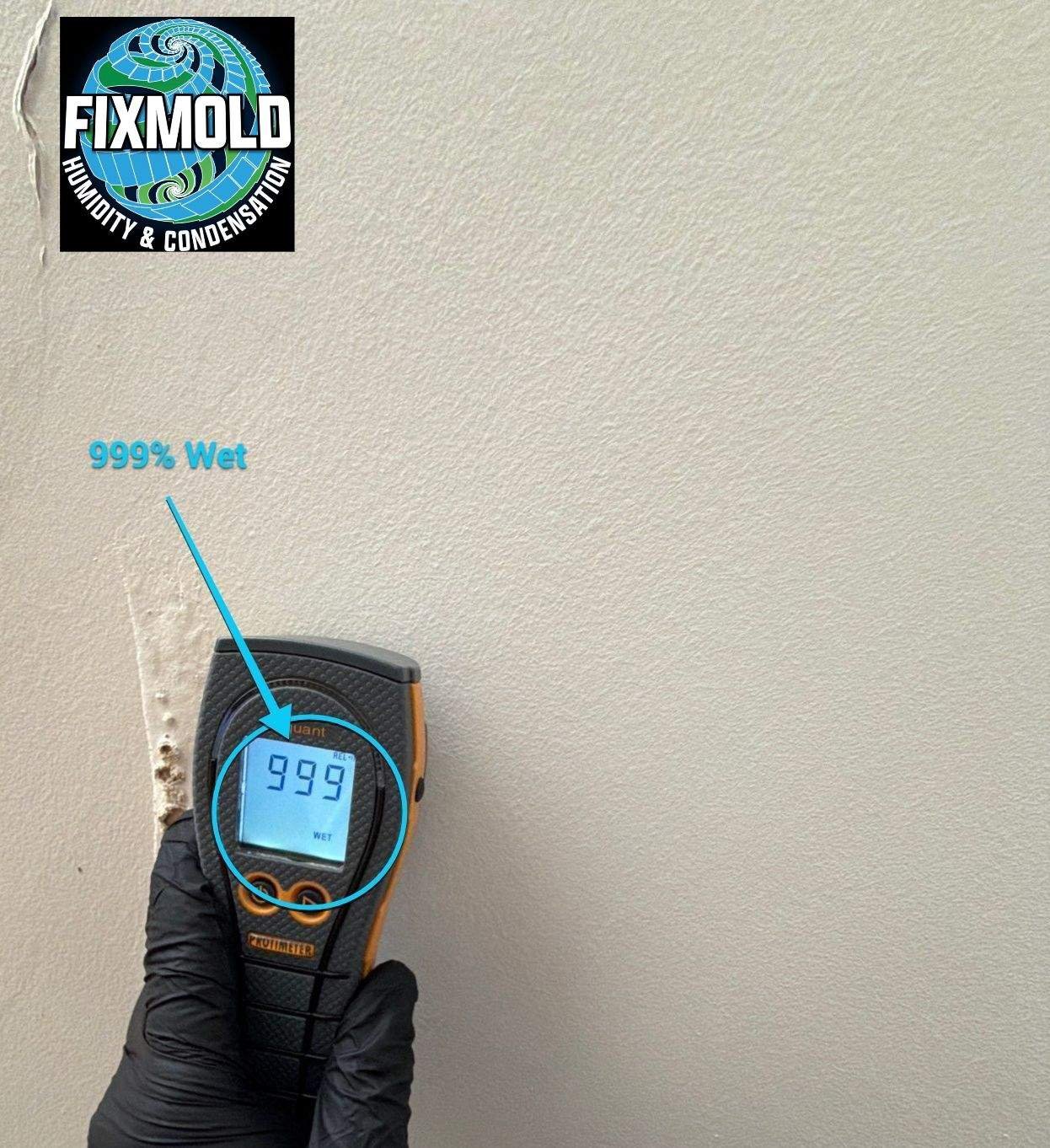
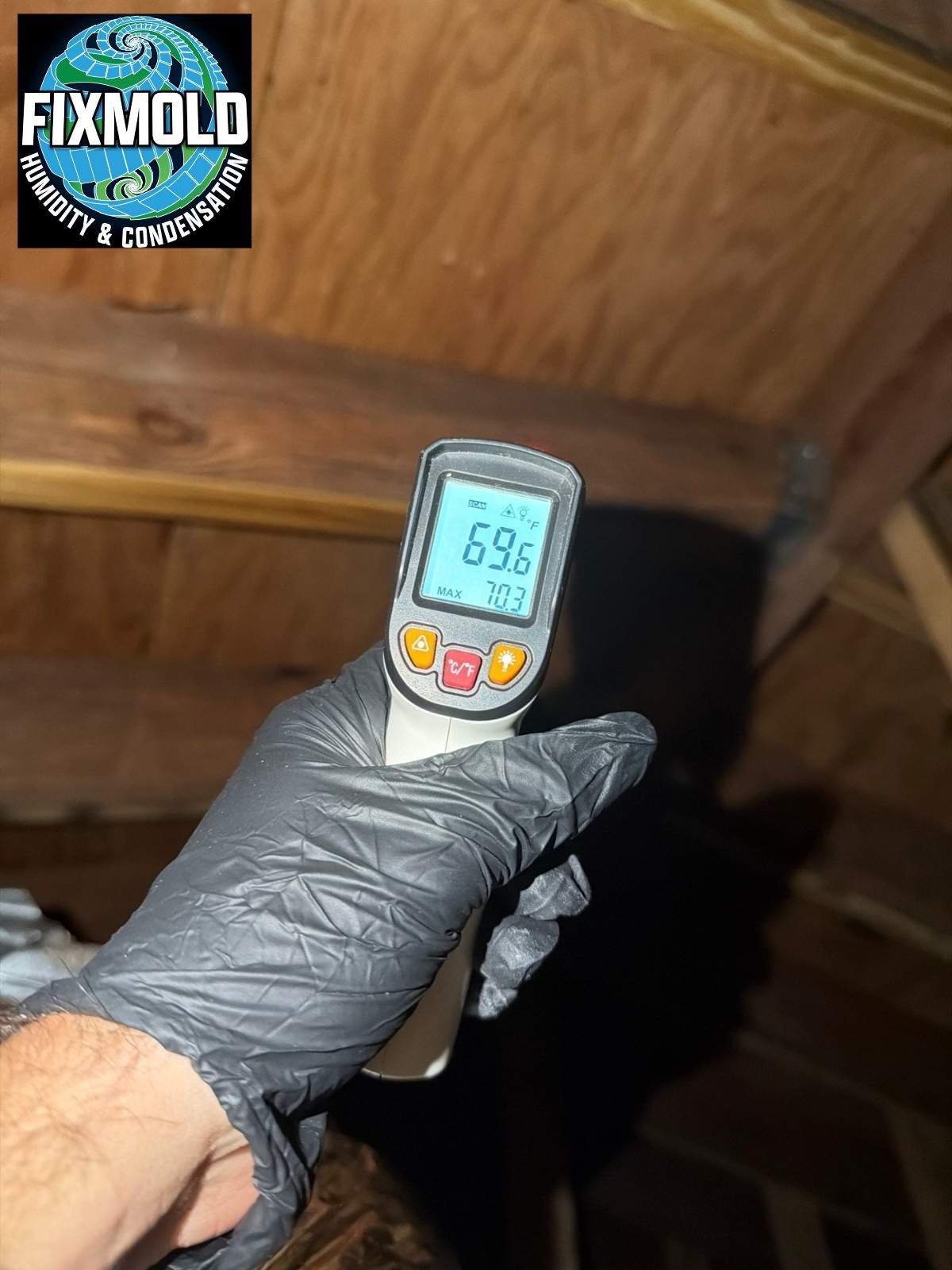
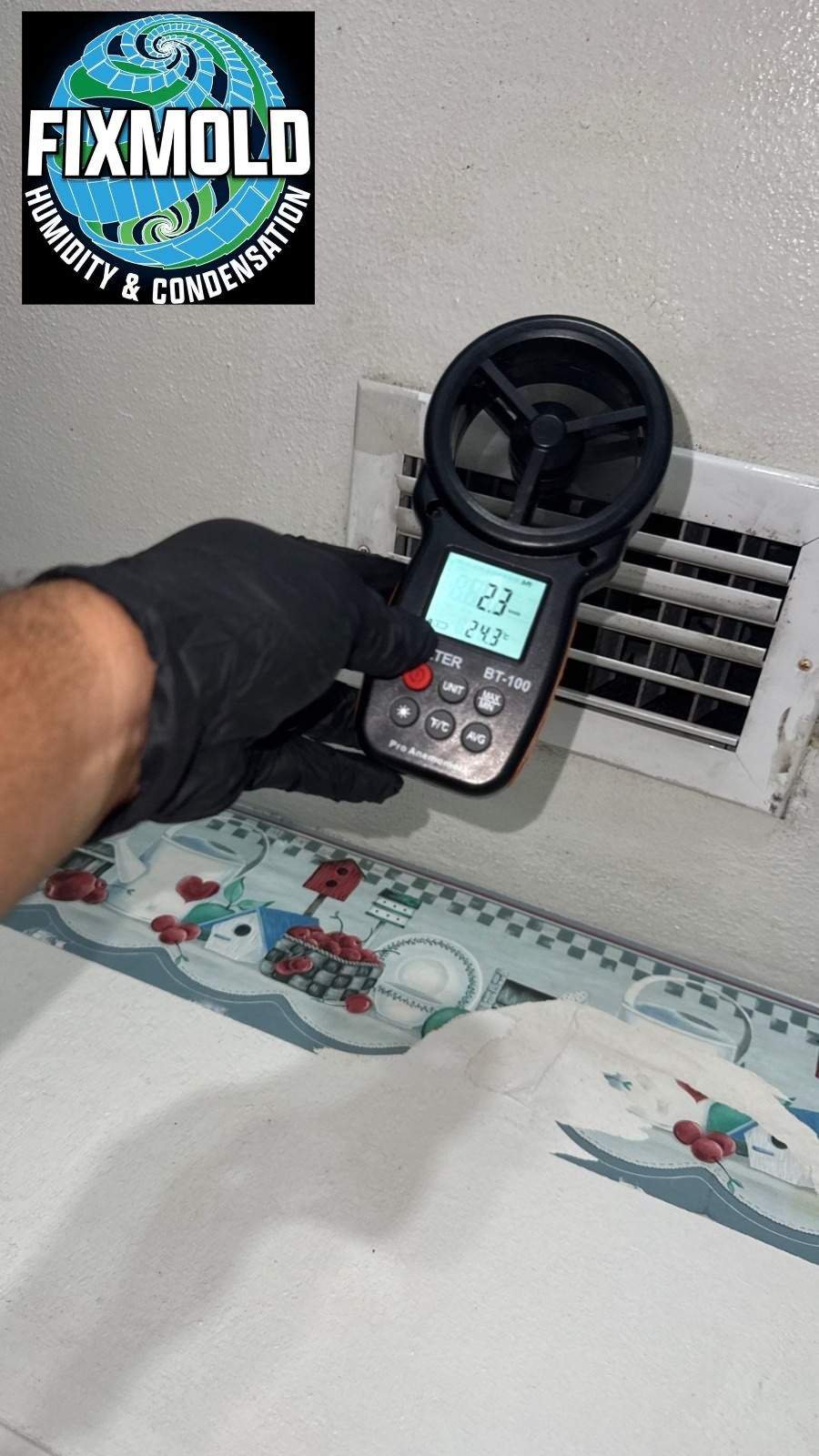
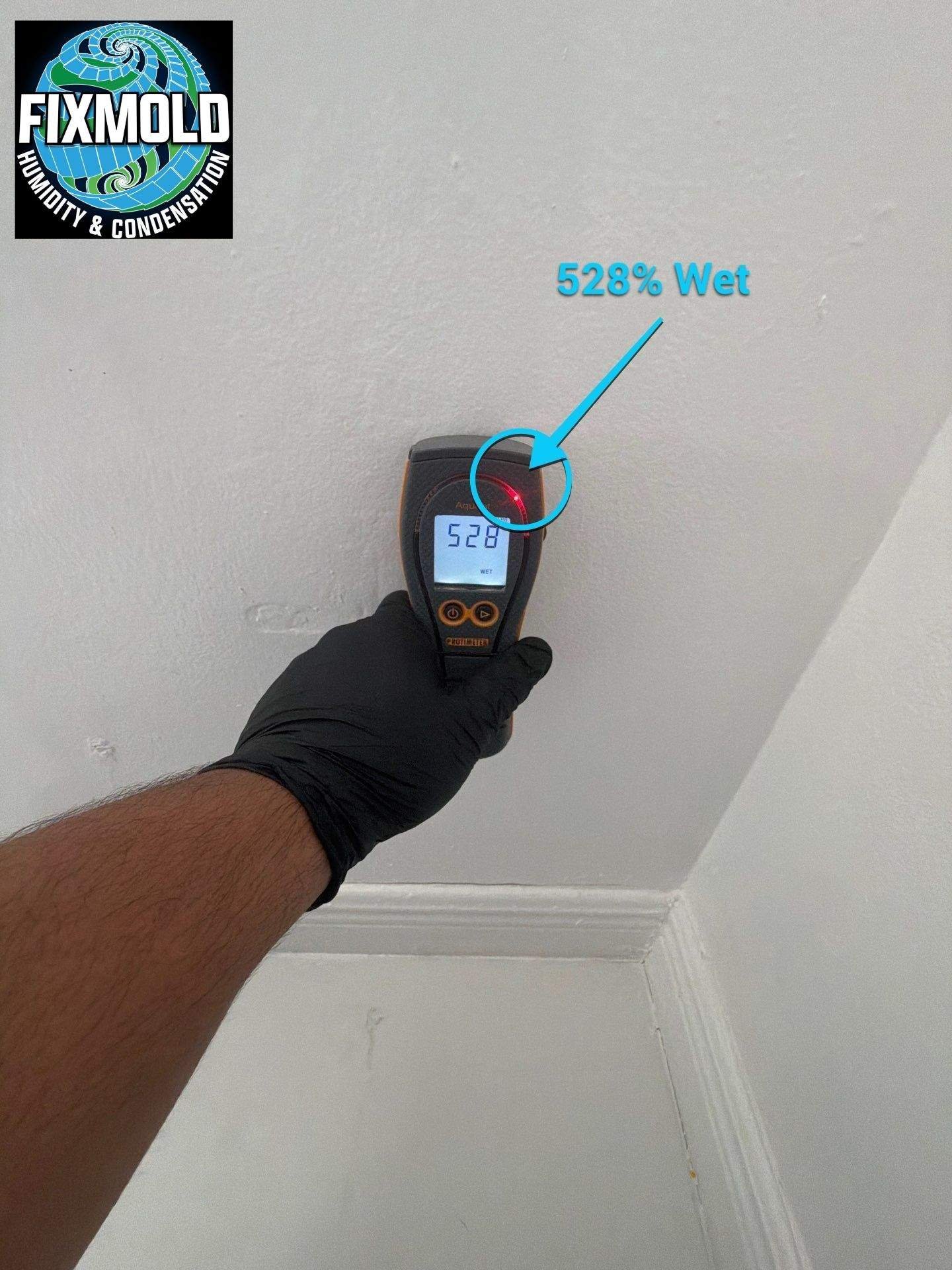
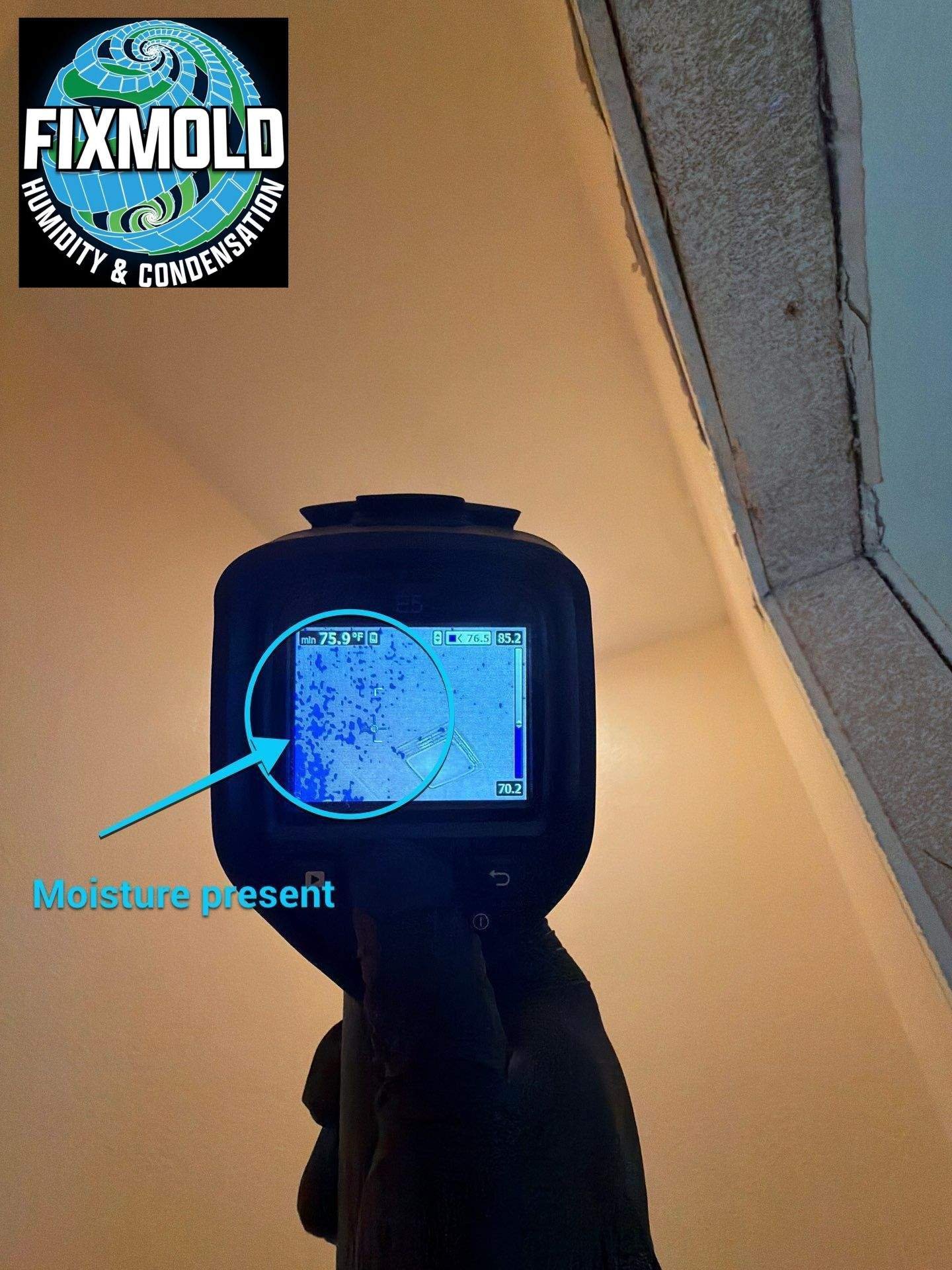
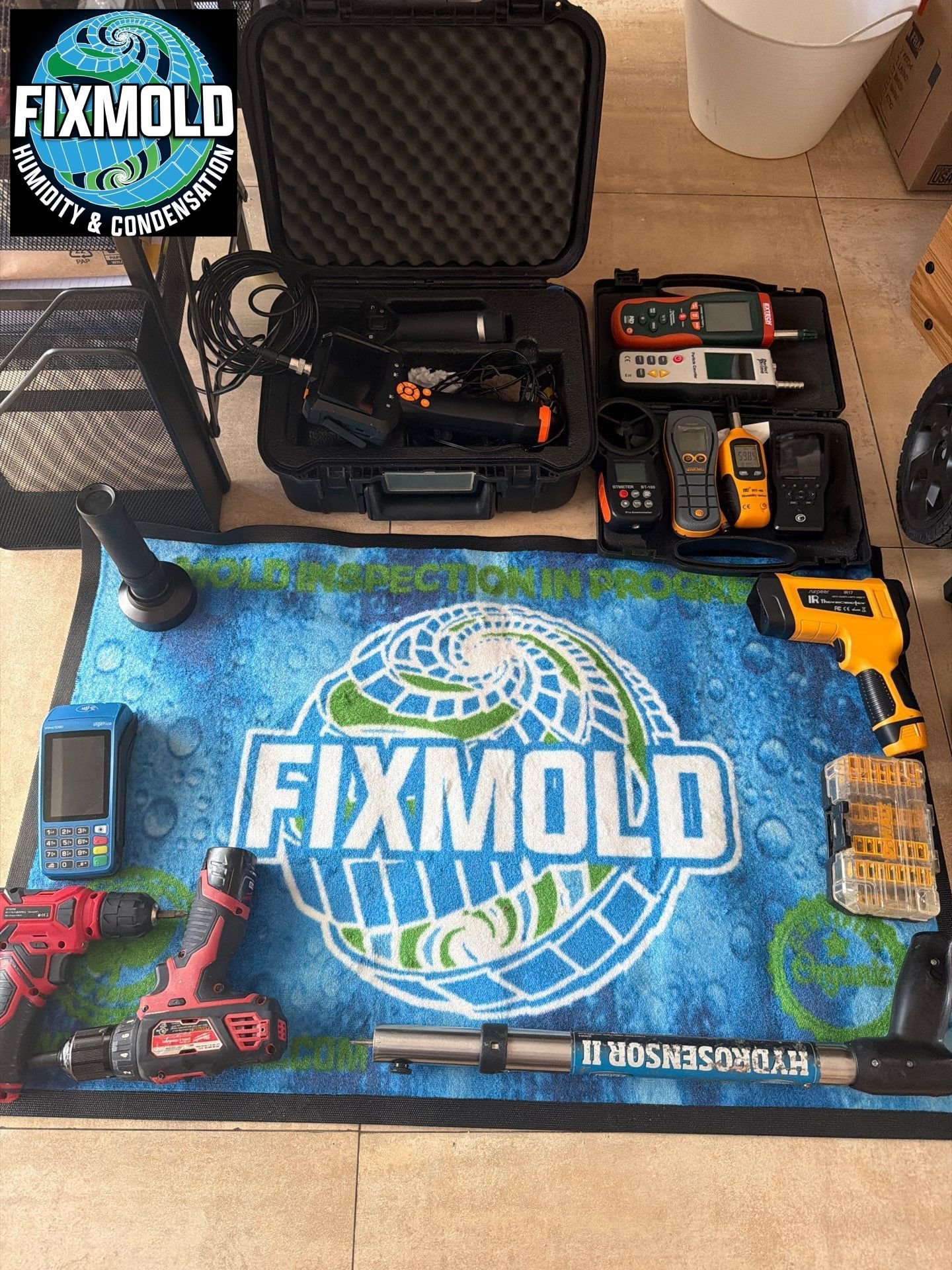
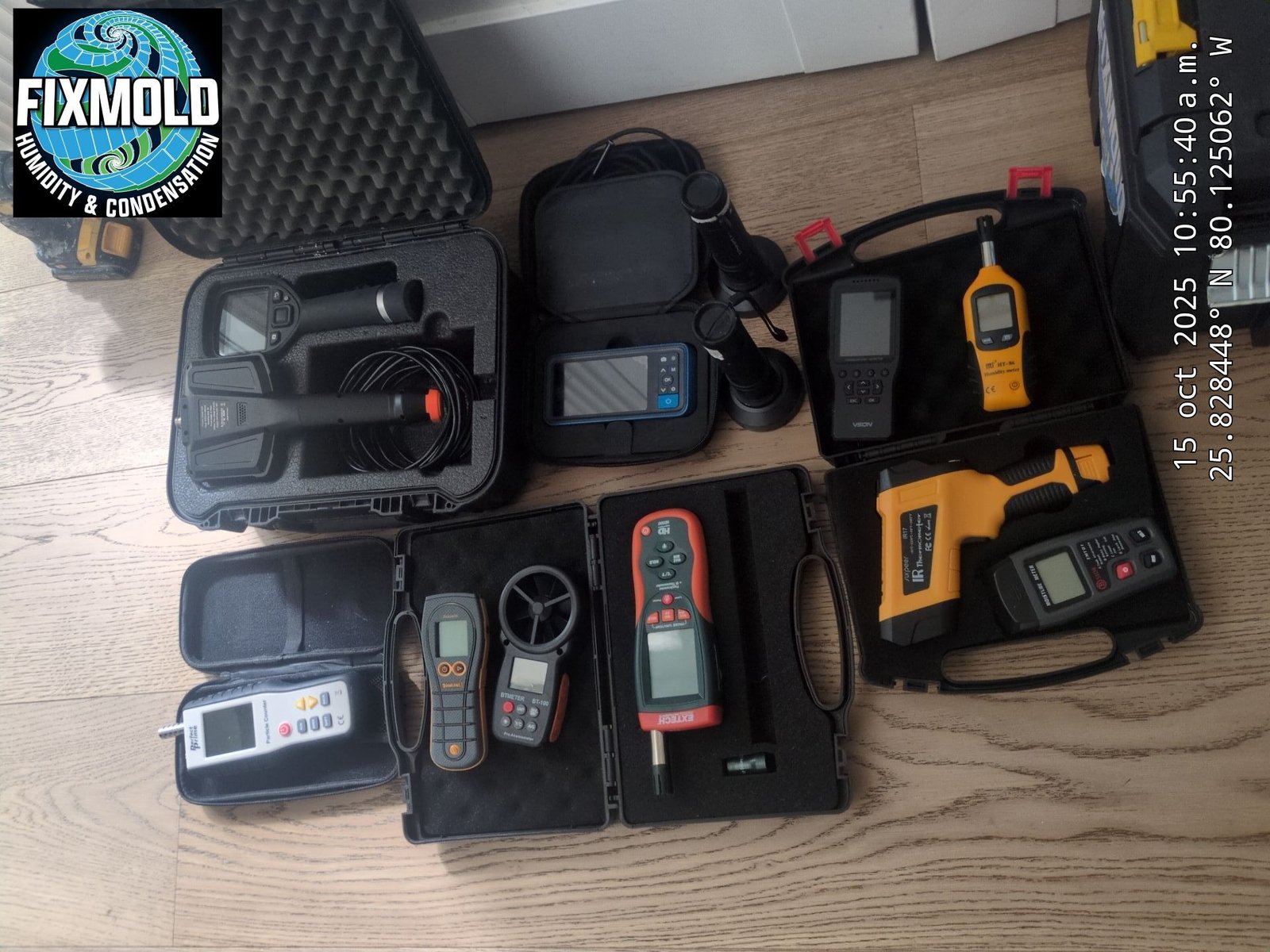
    FixMold orders sampling when visual inspection using infrared thermal imaging, moisture meters, and borescope cameras identifies probable contamination zones without confirmed visible growth. It's also ordered following remediation to confirm clearance — a post-remediation air sample verifies that spore counts have returned to acceptable levels before containment is removed and the space is reoccupied. This clearance testing is part of our standard 12-step remediation protocol and supports the 12-month warranty on all work.

    A Deep Commitment To Restoration

    A Family Legacy Of Trust

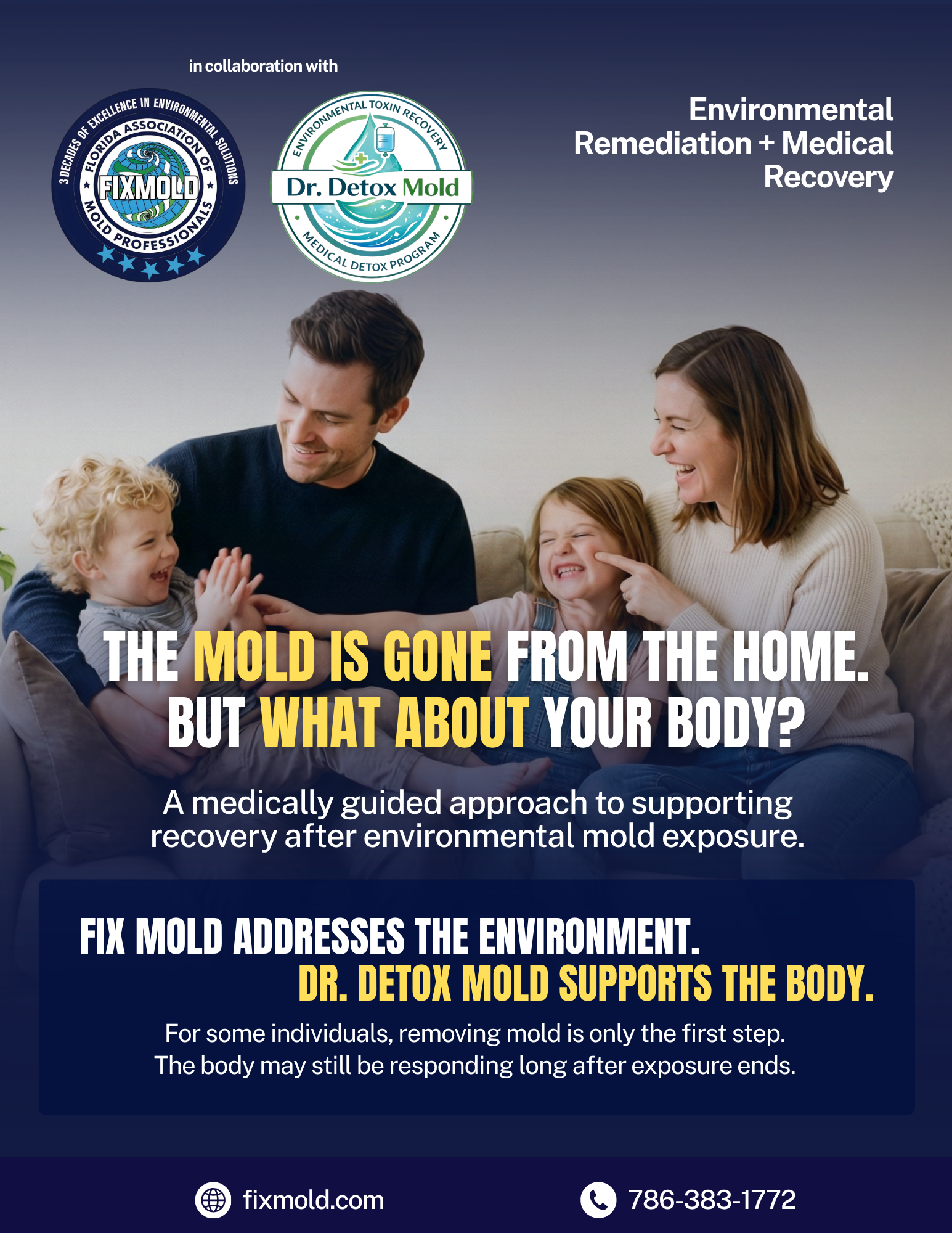
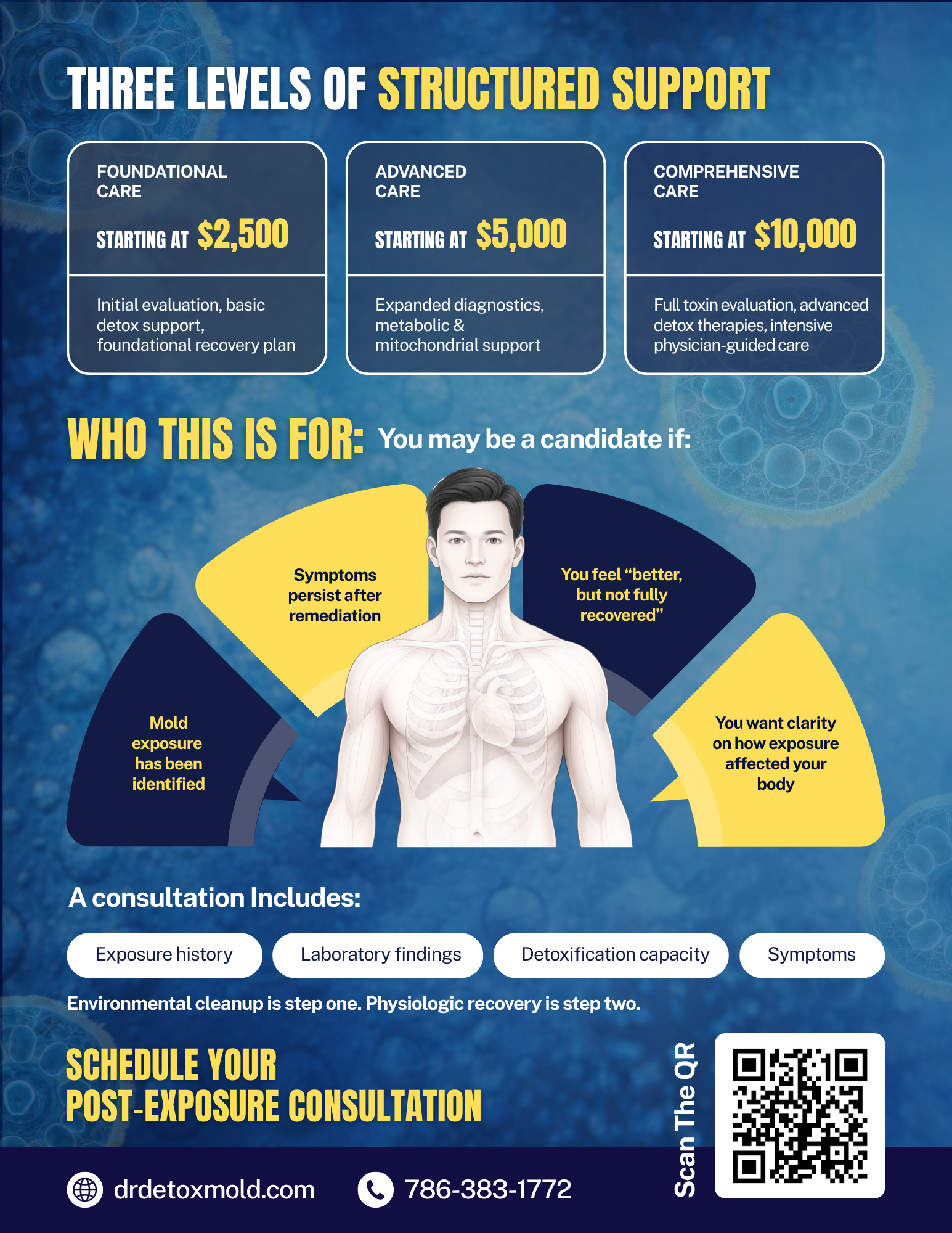
    Mold Removed From Your Home. What About Your Body?

    A medically guided approach to supporting recovery after mold exposure.
    Miami Fix Mold
    Miami Fix Mold

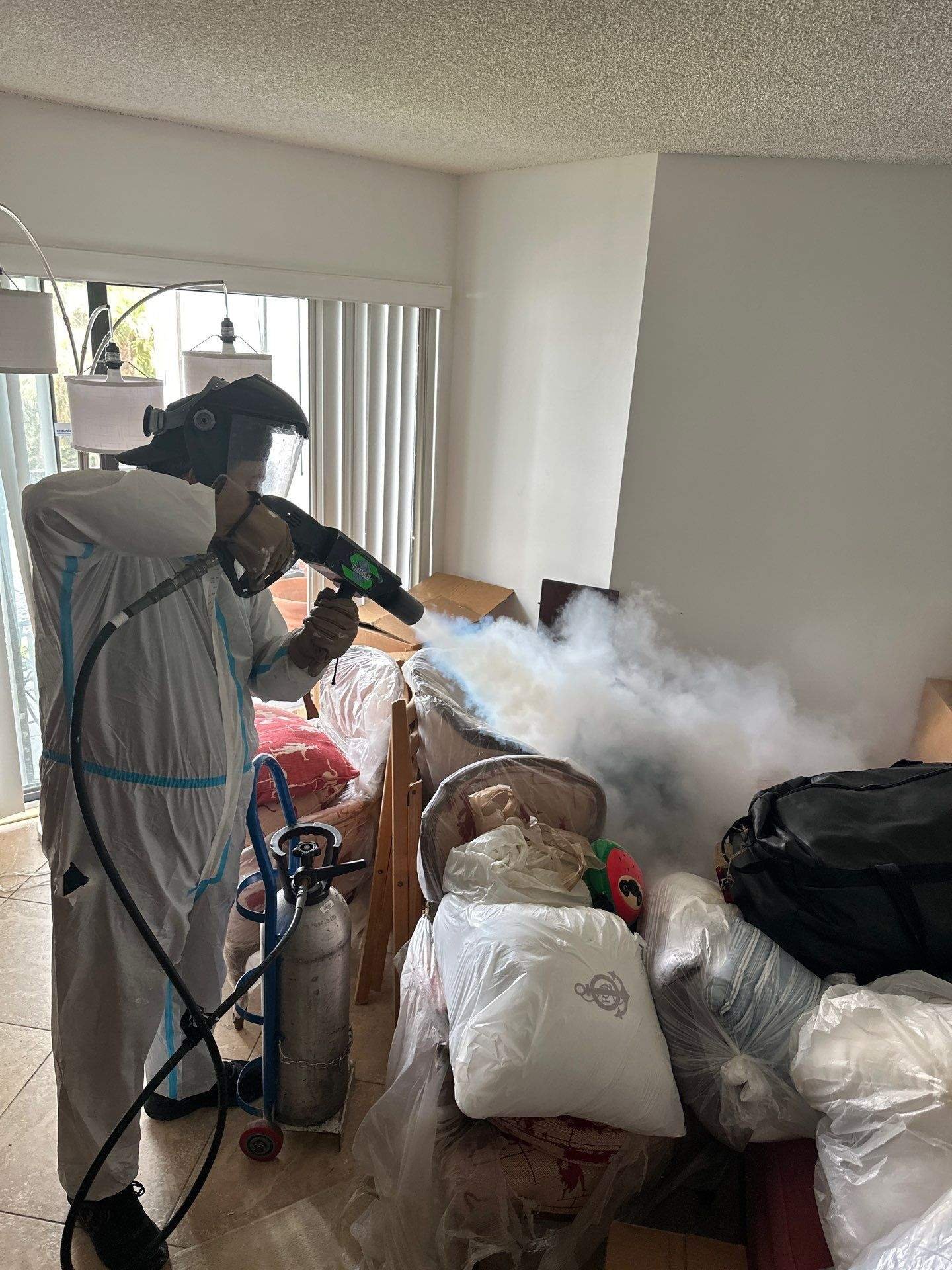
    FixMold focuses on eliminating mold from your environment.

    But for some individuals, recovery doesn’t stop there.
    Even after successful remediation, the body may continue responding to past exposure. In these cases, a structured, medically guided approach may be necessary to support full recovery.

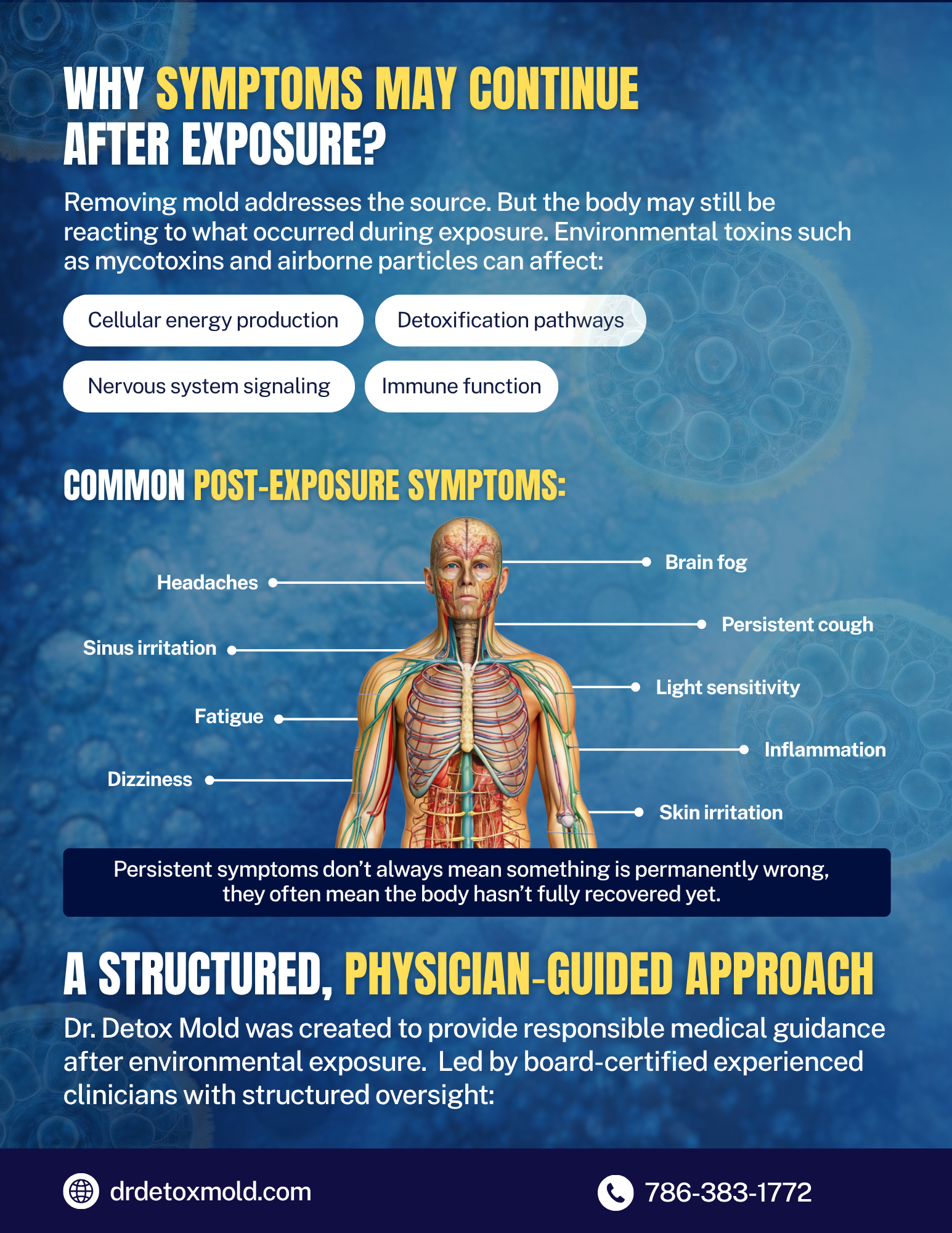
    Why Symptoms Can Continue After Mold Exposure

    Removing mold addresses the source of the problem, but it does not always resolve how the body has been affected during exposure.

    Environmental toxins can impact multiple systems:
    • Immune function
    • Nervous system signaling
    • Cellular energy production
    • Detoxification pathways

    For some individuals, these systems require time and proper support to return to balance.

    Common Post-Exposure Symptoms

    • Brain fog
    • Fatigue
    • Headaches
    • Sinus congestion or irritation
    • Persistent cough
    • Dizziness
    • Light sensitivity
    • Skin irritation
    • Ongoing inflammation

    Important

    • Persistent symptoms do not always indicate something permanent
    • They often indicate that the body has not fully recovered yet

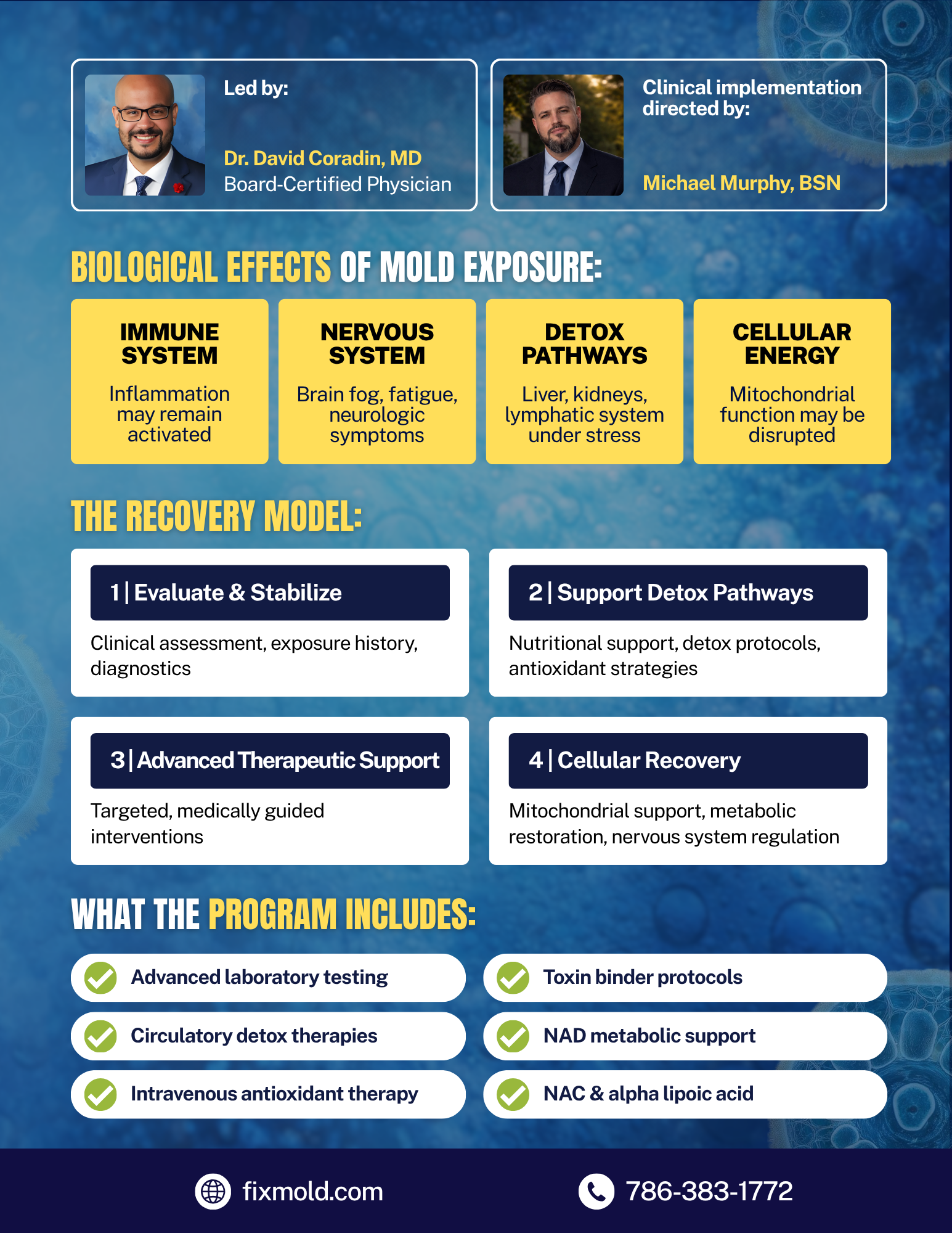
    Recovery Approach

    1. Evaluation & Stabilization
    • Clinical assessment
    • Exposure history review
    • Diagnostic testing

    2. Detoxification Support
    • Nutritional protocols
    • Toxin-binding strategies
    • Antioxidant support

    3. Advanced Therapeutic Support
    • Targeted, medically guided interventions
    • IV-based therapies when appropriate

    4. Cellular Recovery
    • Mitochondrial support
    • Metabolic restoration
    • Nervous system regulation

    Core Focus

    • Detoxification support
    • Immune system balance
    • Cellular energy restoration
    • Nervous system regulation

    Key Principle

    Recovery is not about doing more. It is about doing the right things, in the right order.

    Next Steps

    If mold exposure has been identified and symptoms are still present, evaluation may provide clarity.
    • Exposure history review
    • Laboratory evaluation
    • Detoxification assessment
    • Symptom analysis

    Schedule Your Post-Exposure Consultation

    📞 786-383-1772

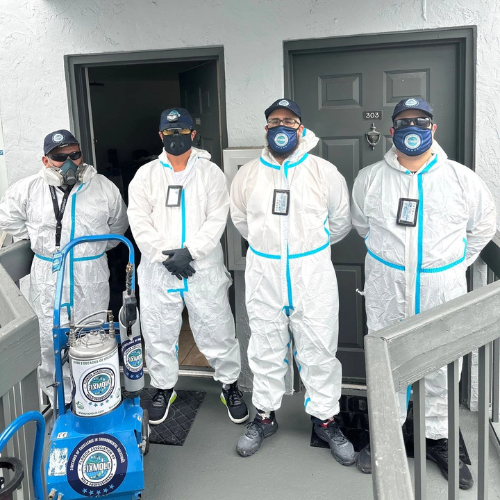
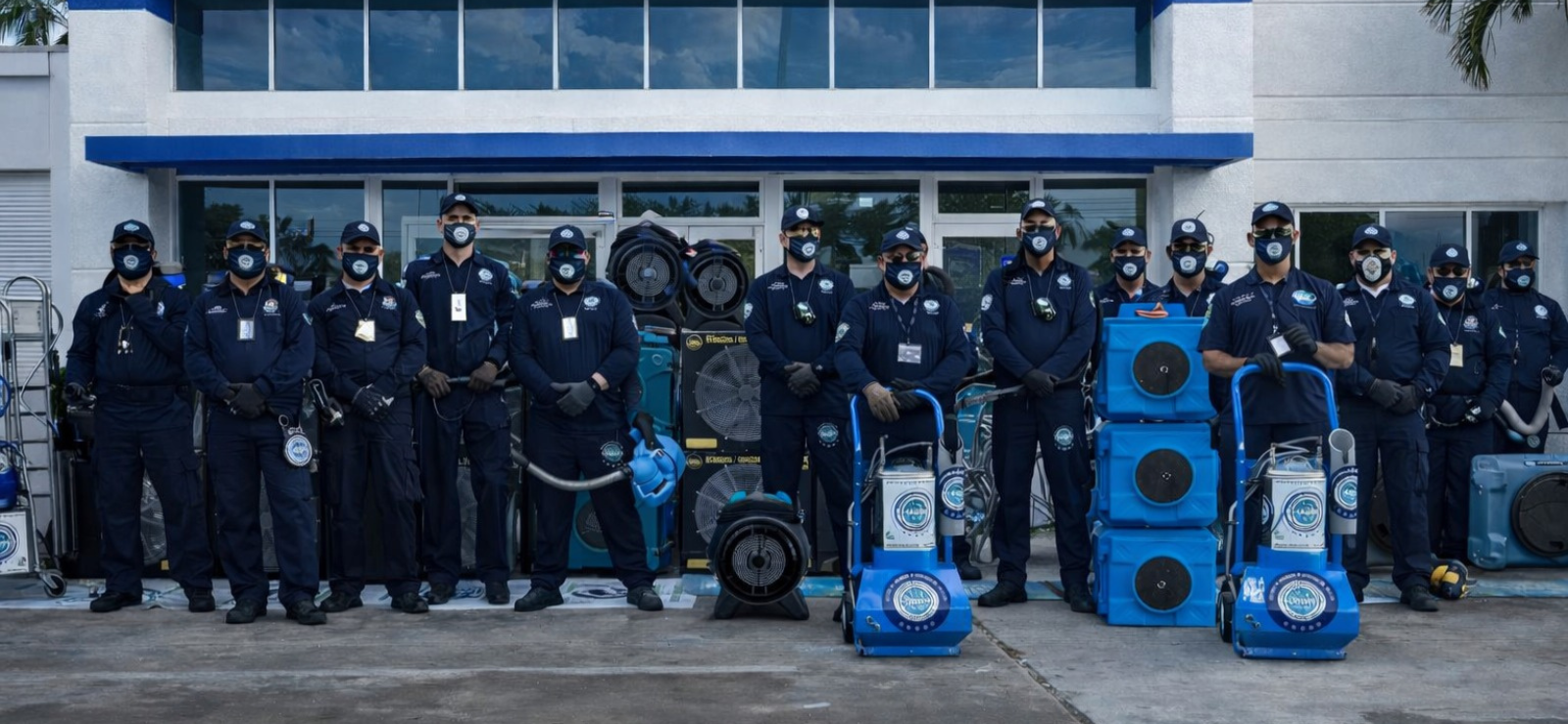
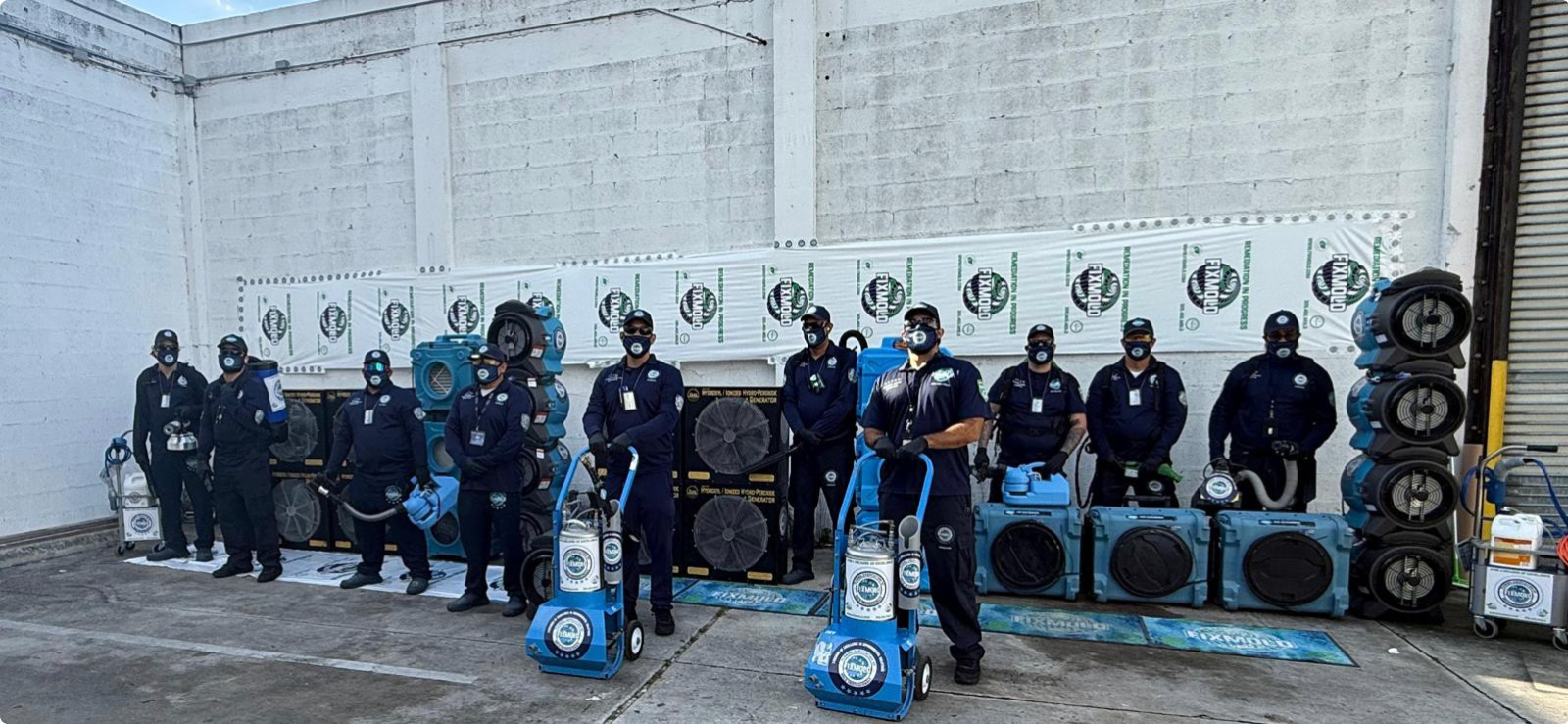
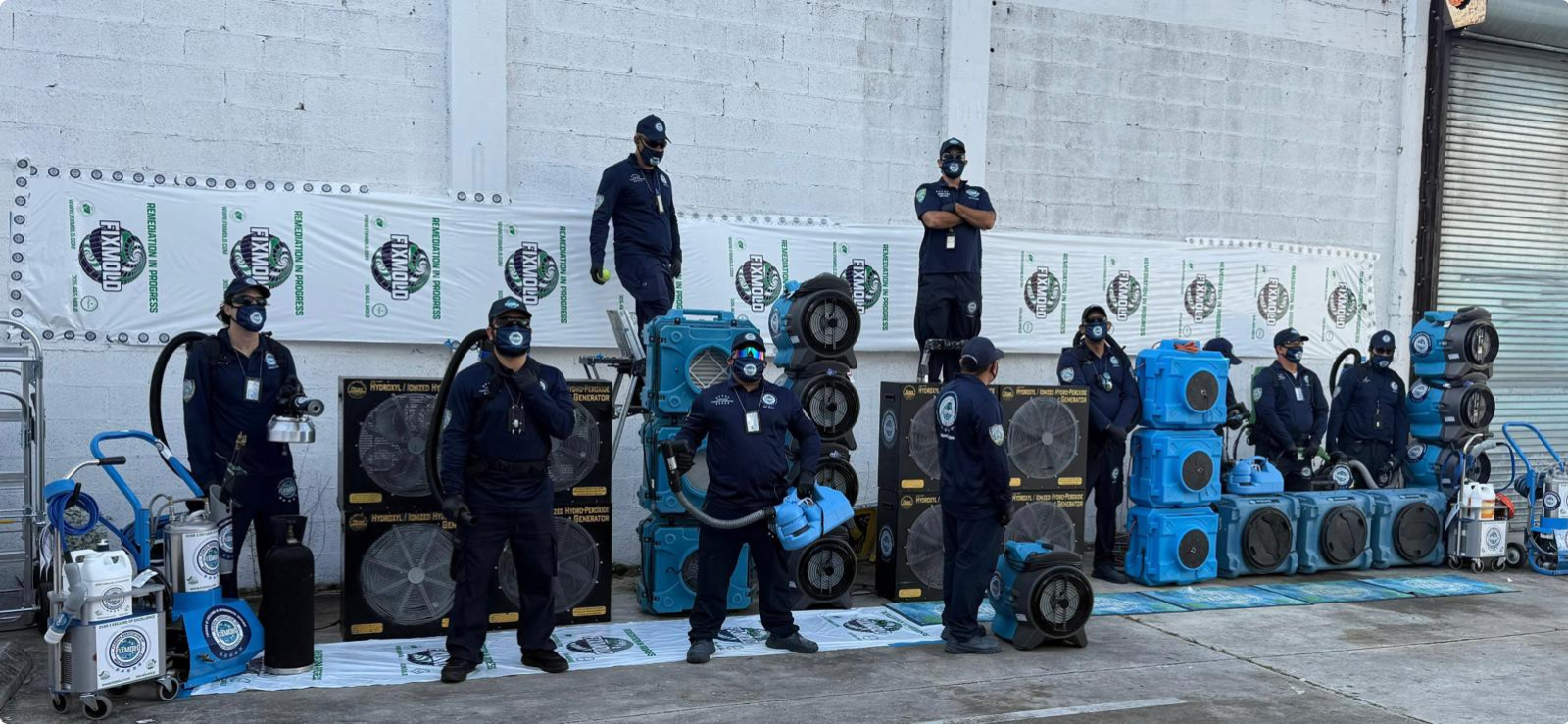
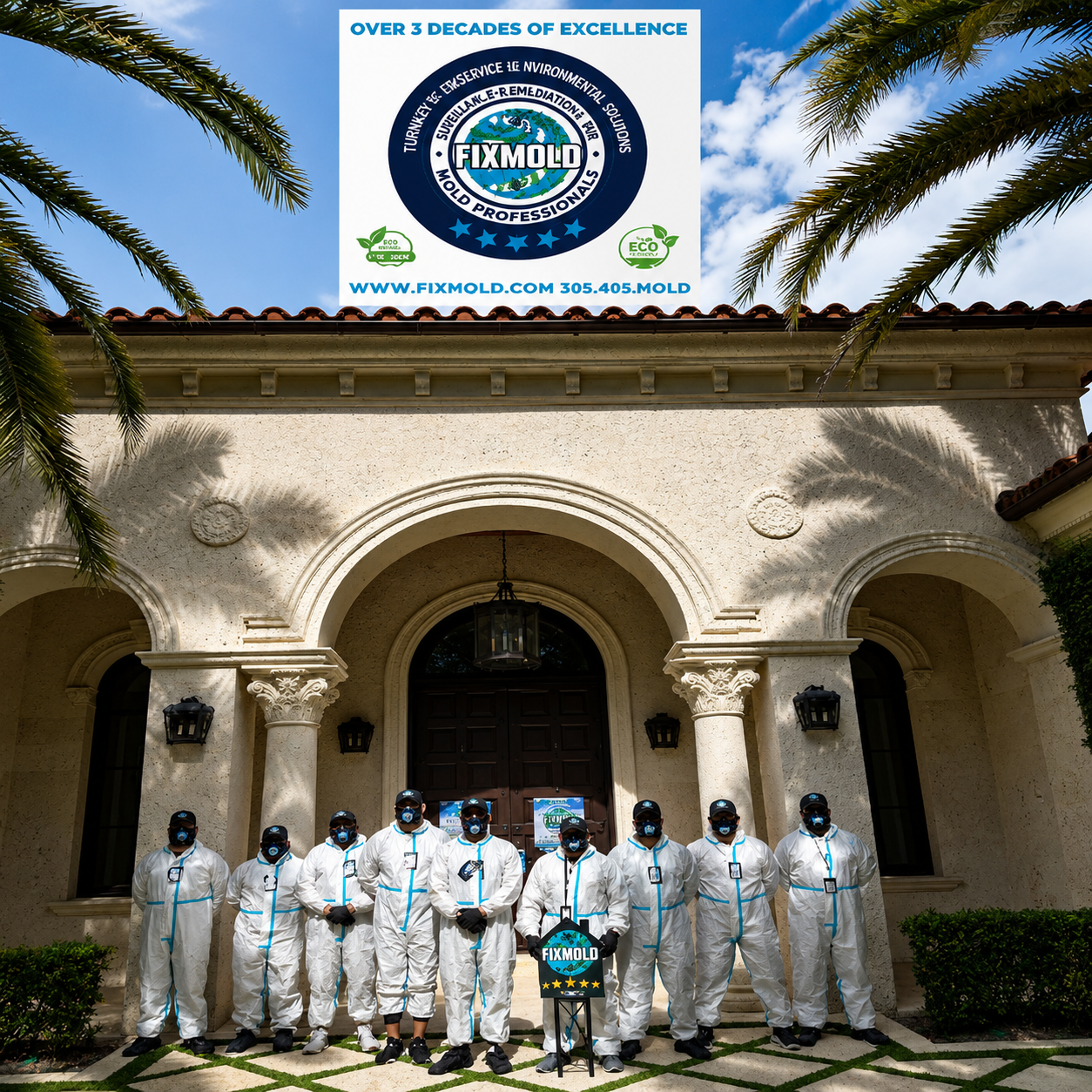
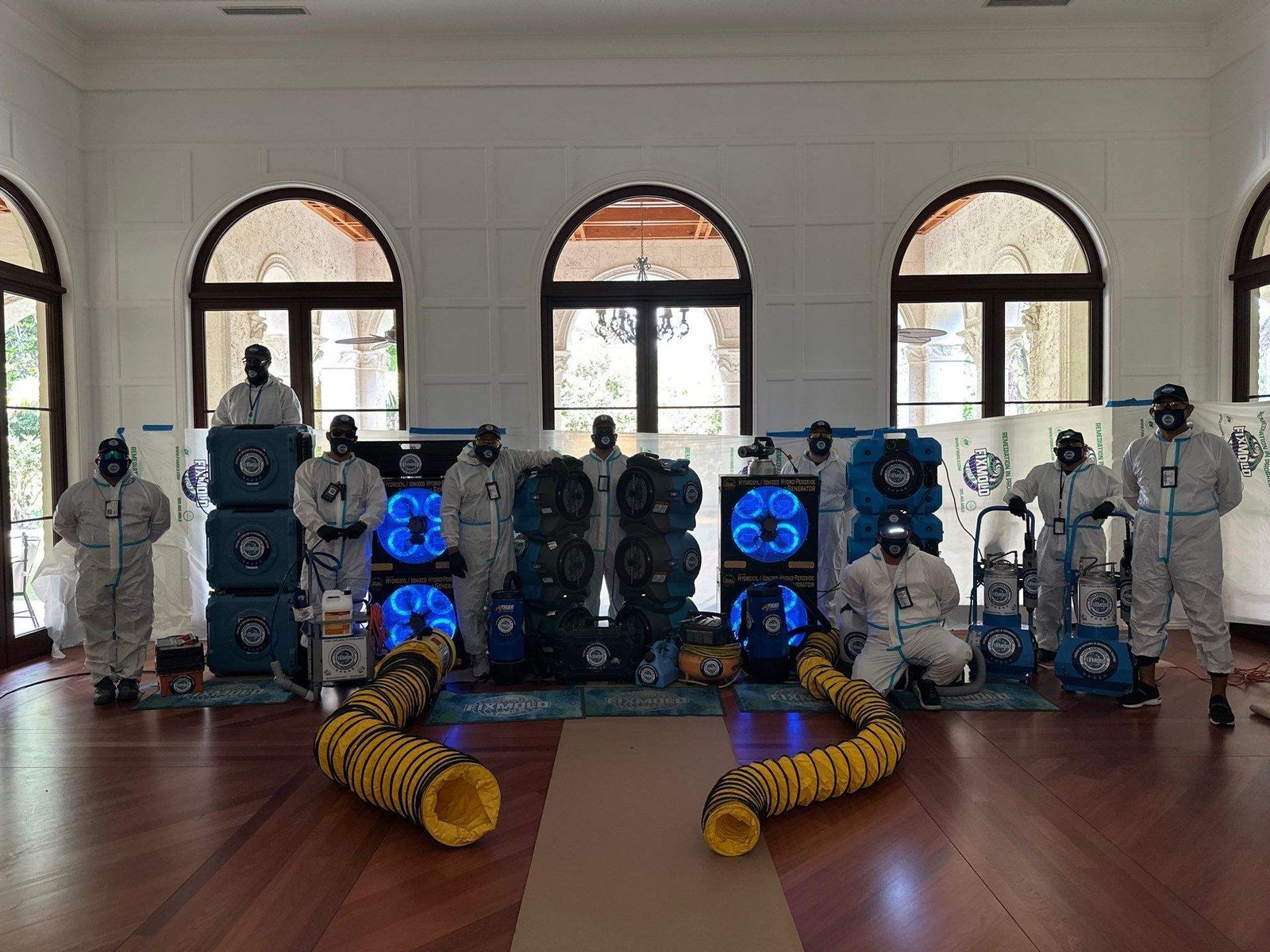
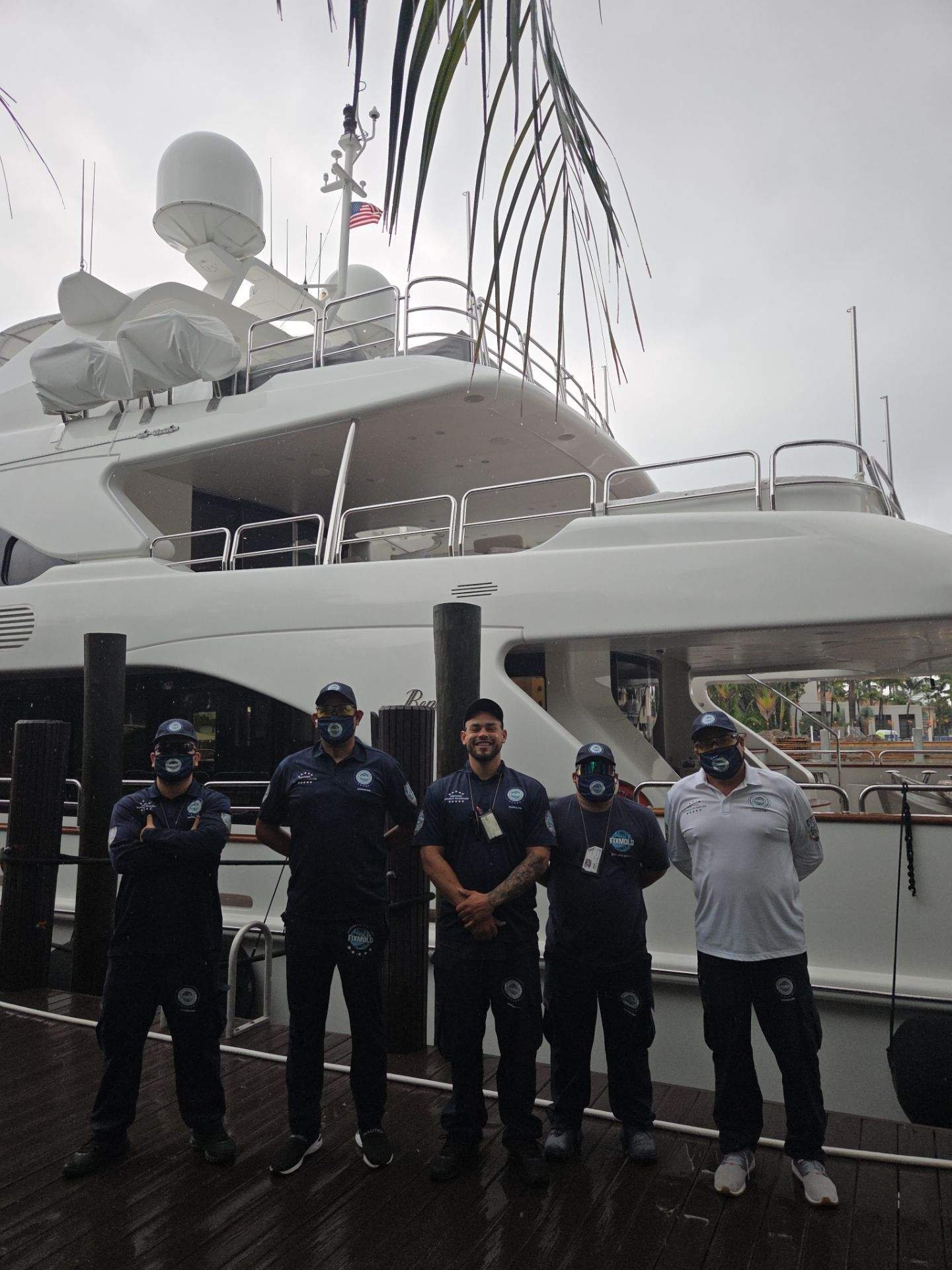
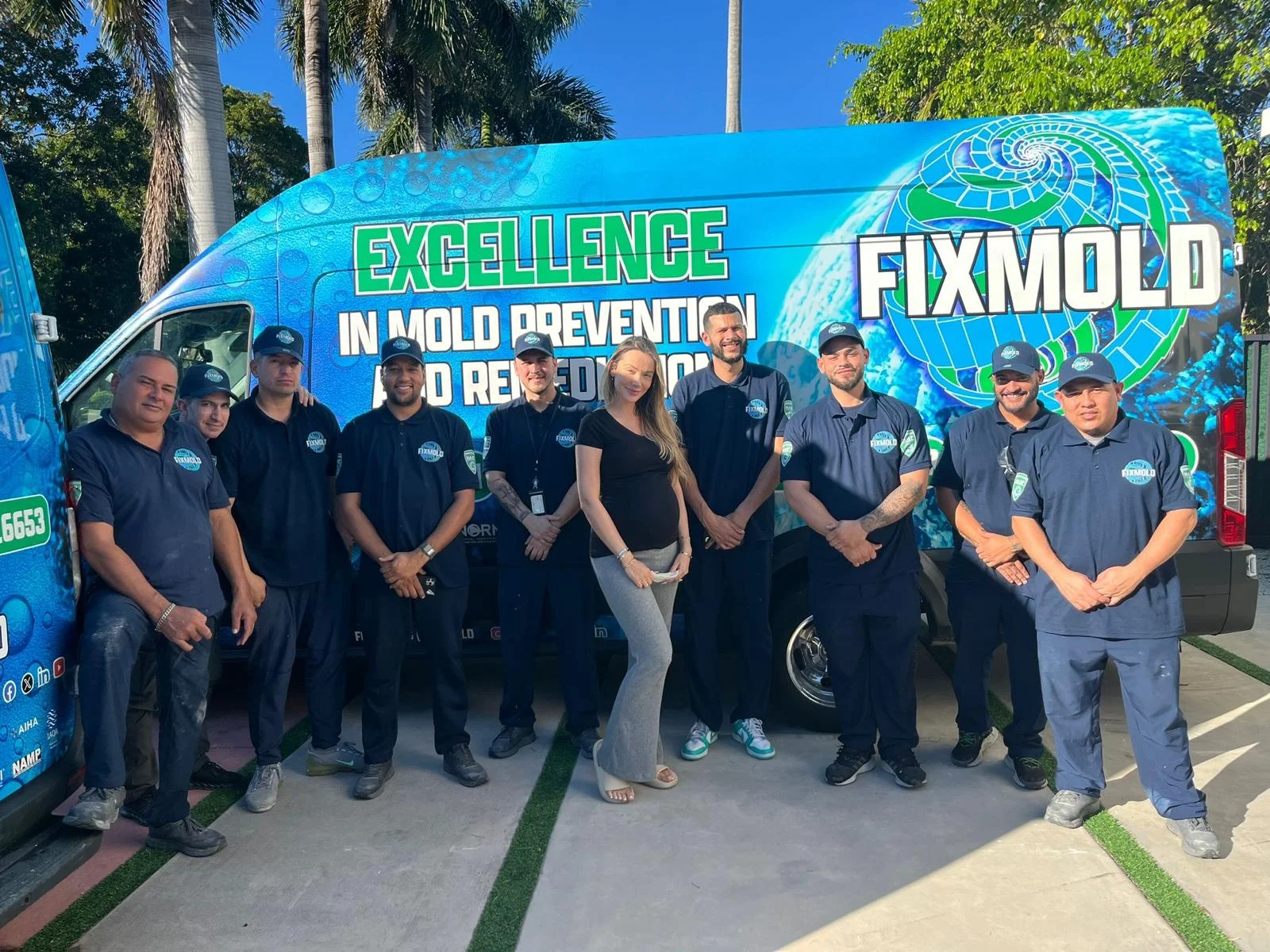
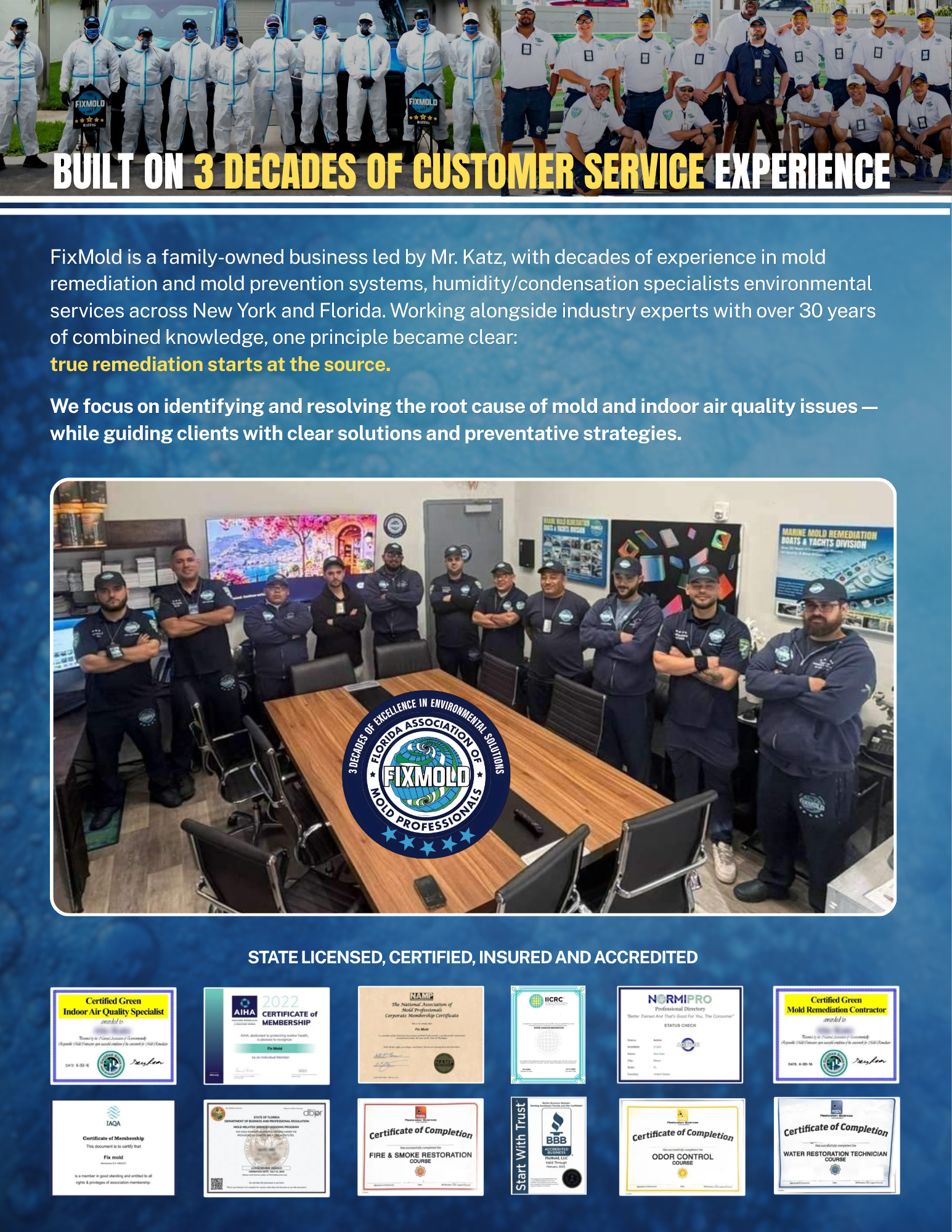
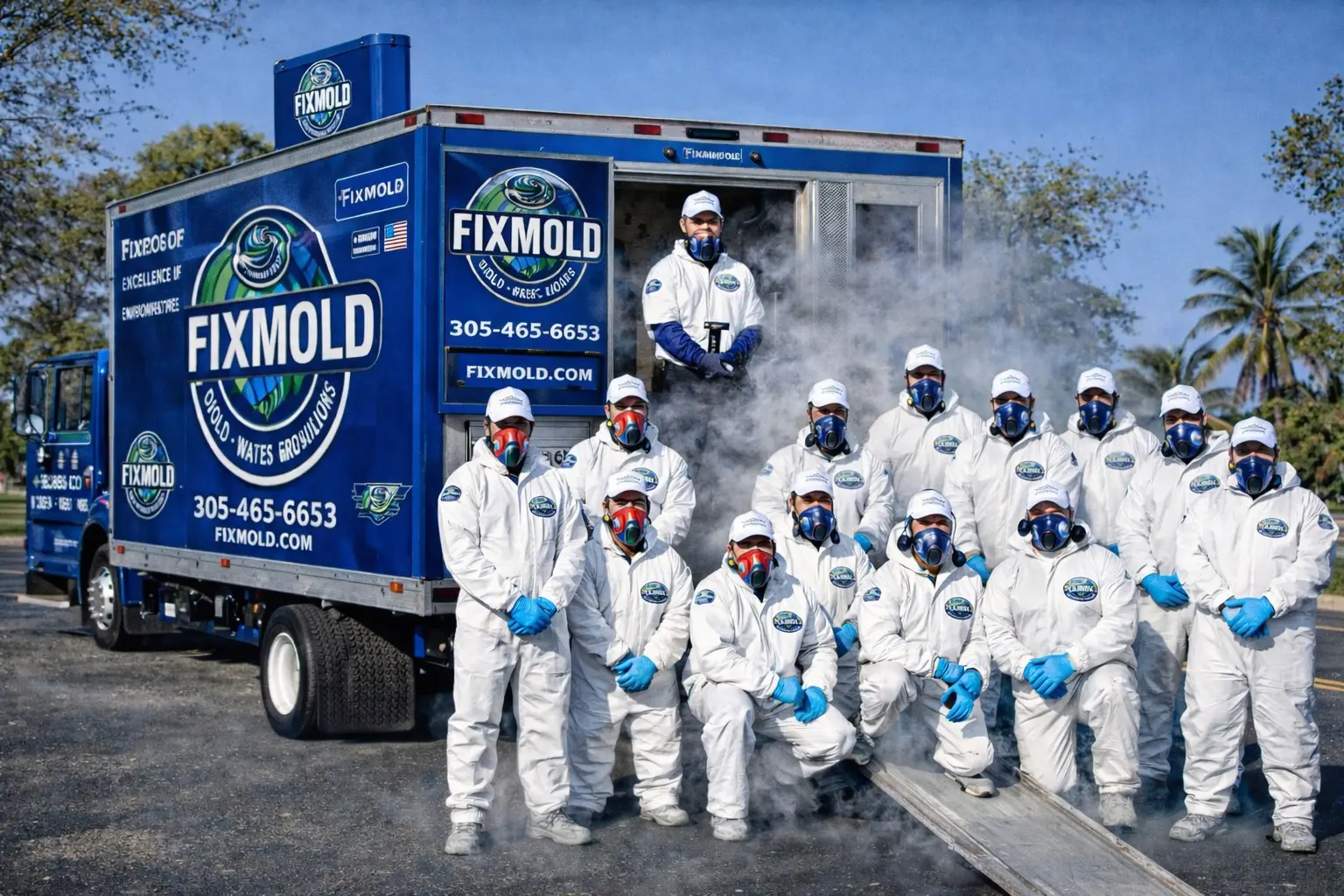
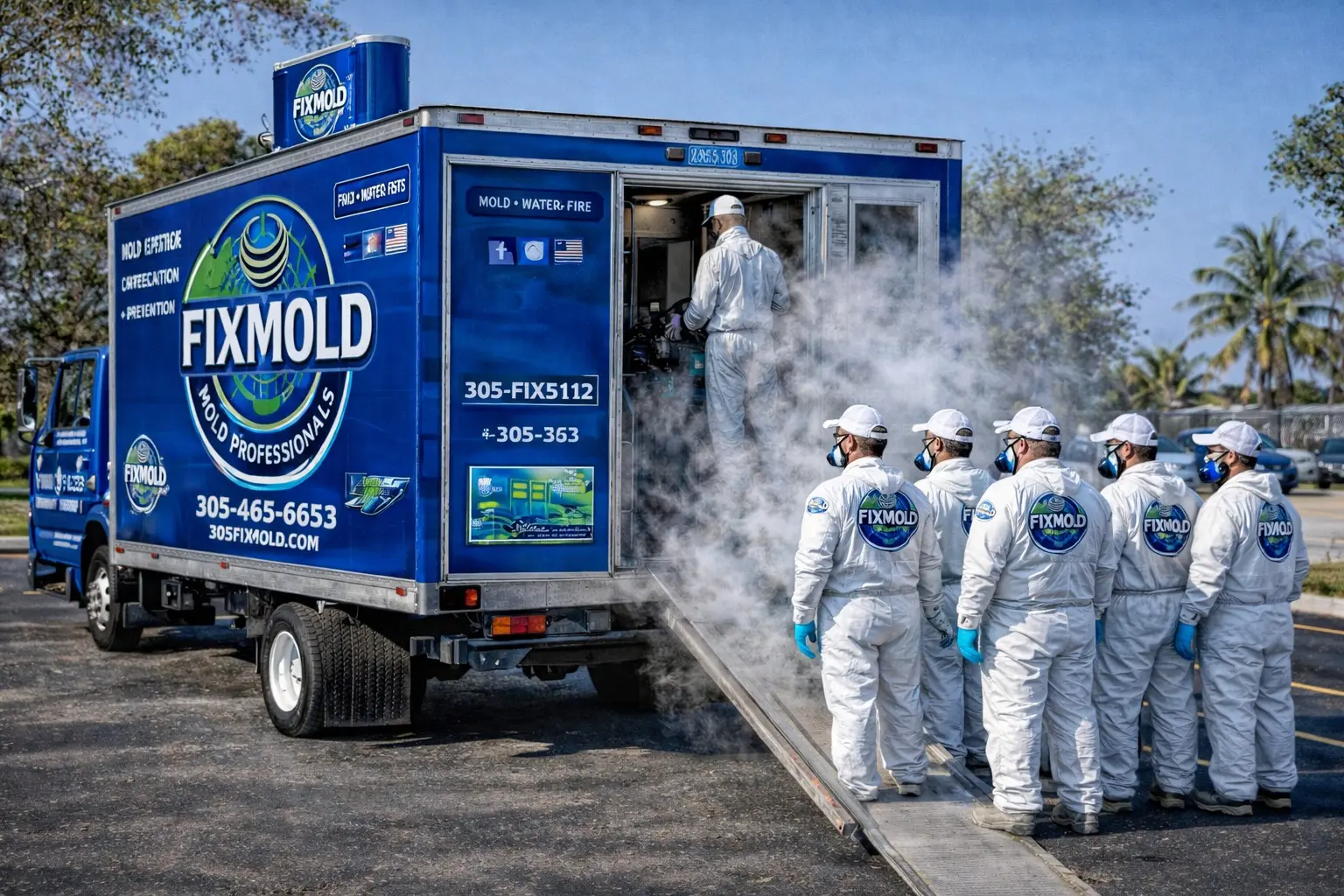
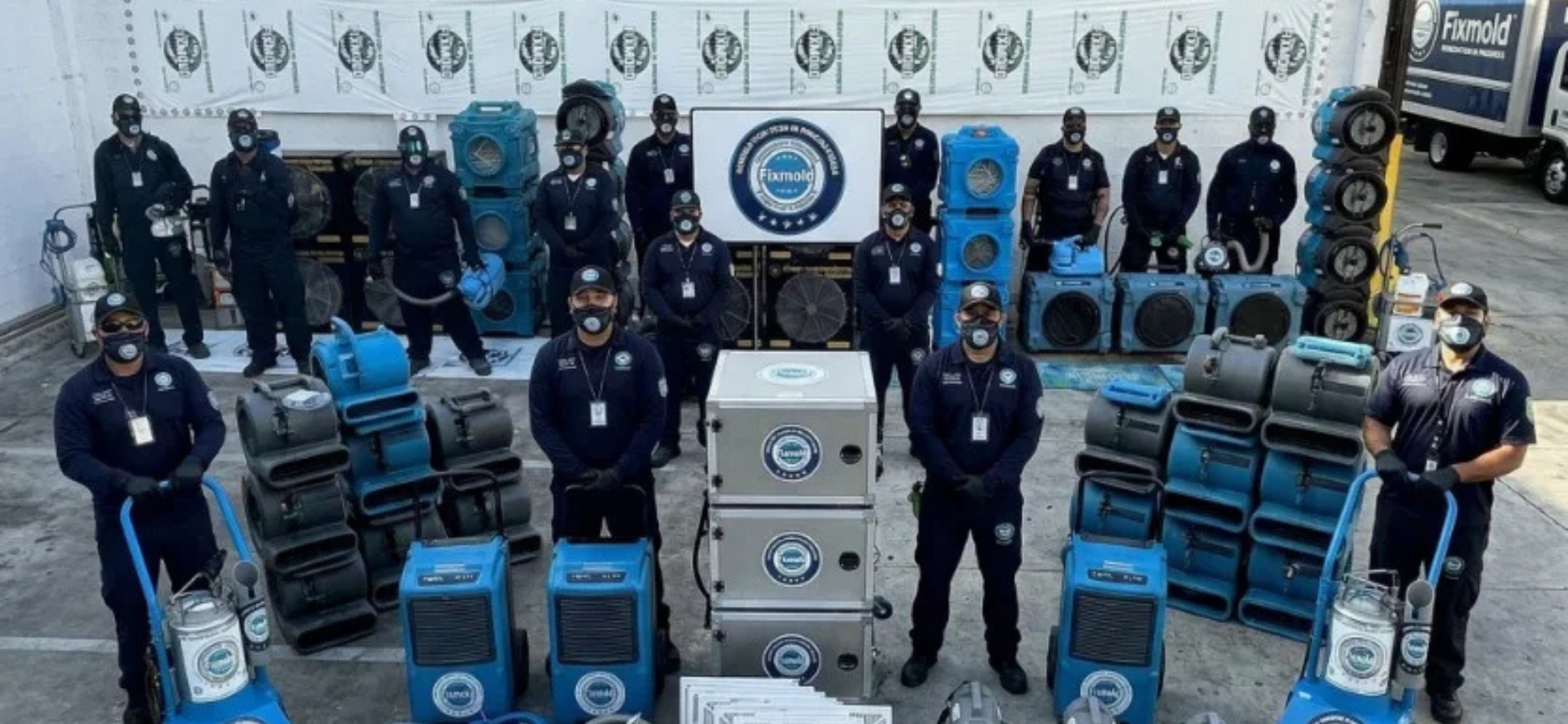
    OUR TEAM

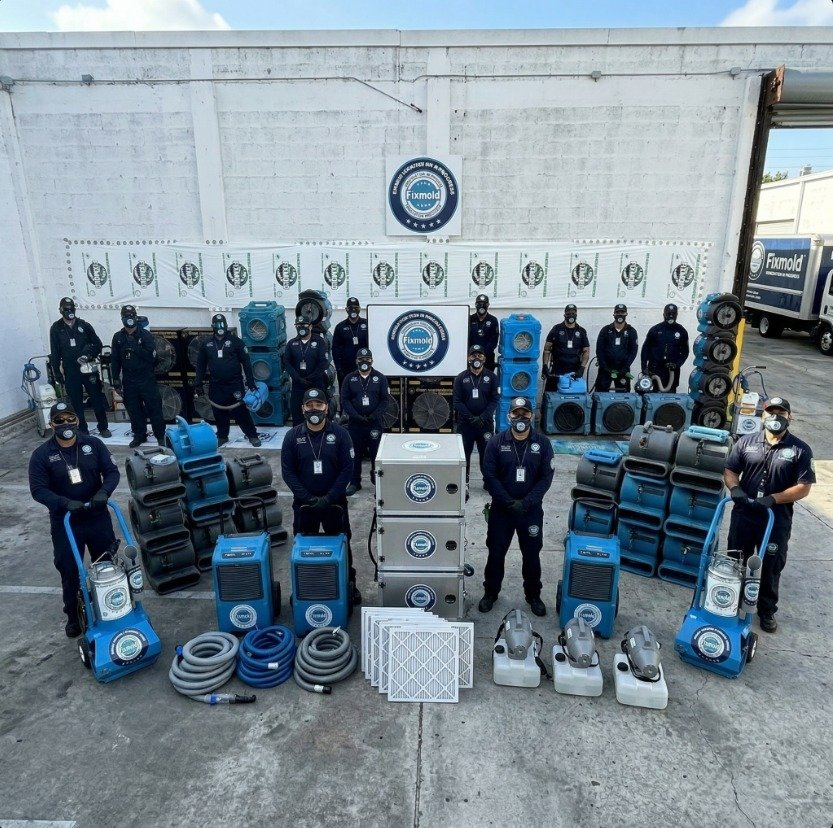
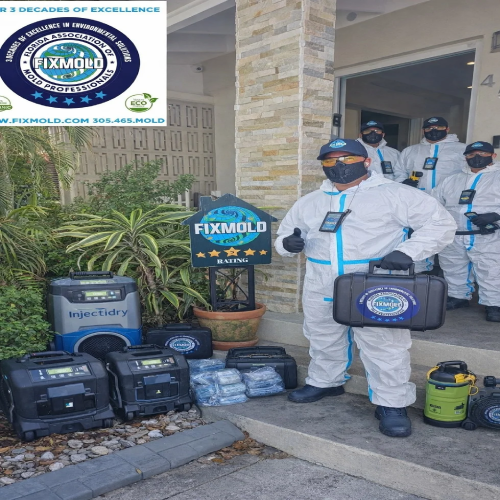
    THE BACK-BONE OF OUR 5 STAR SERVICE
    👉 Call Now: 1-786-882-1823
    Fast response. Certified technicians. Guaranteed results.

    OUR AWARDS

    Proof Of Unmatched Excellence
    Miami fix mold

    FixMold
    10750 NW 6th CtMiami, FL 33168

    License
    MRSR2709 MRSA2521

    Proudly Serving all of South Florida

    We are here to answer any question you may have.
    +

    What's the difference between air sampling and swab sampling?

    Air sampling captures mold spores circulating through the air and identifies what occupants are breathing — species, count, and health risk. Swab sampling tests a specific surface to confirm whether a visible stain or residue is mold, identify the species, and determine whether growth is active. Both go to a third-party certified lab.

    +

    How long do lab results take?

    Standard turnaround is one to two business days from the time the laboratory receives the samples. Rush processing is available when health or legal urgency requires faster results.

    +

    Can mold sampling be used for an insurance claim or legal case?

    Yes. All samples are documented under chain of custody protocol and processed by an independent accredited laboratory. Results carry the scientific authority needed for insurance claim support, litigation, or regulatory compliance. See our Expert Witness Testimony service if your case requires court-ready documentation.

    +

    Do you take an outdoor baseline sample for comparison?

    Yes. Standard air sampling protocol includes an outdoor control sample taken at the same time as indoor samples. The comparison between indoor and outdoor spore counts is what confirms active indoor amplification — without it, elevated indoor counts can't be definitively attributed to an internal source.

    +

    What happens after the lab results come back?

    FixMold reviews results with you directly and, where contamination is confirmed, provides a written remediation proposal scoped to the species found, contamination levels, and affected areas. If results are clear, you have documented proof of a clean indoor environment.

    Urgent Enquiry Virtual Assessment

    Services

    Mold

    Water Damage

    HVAC Restoration

    Air Quality & Deep Cleaning

    General Contractor

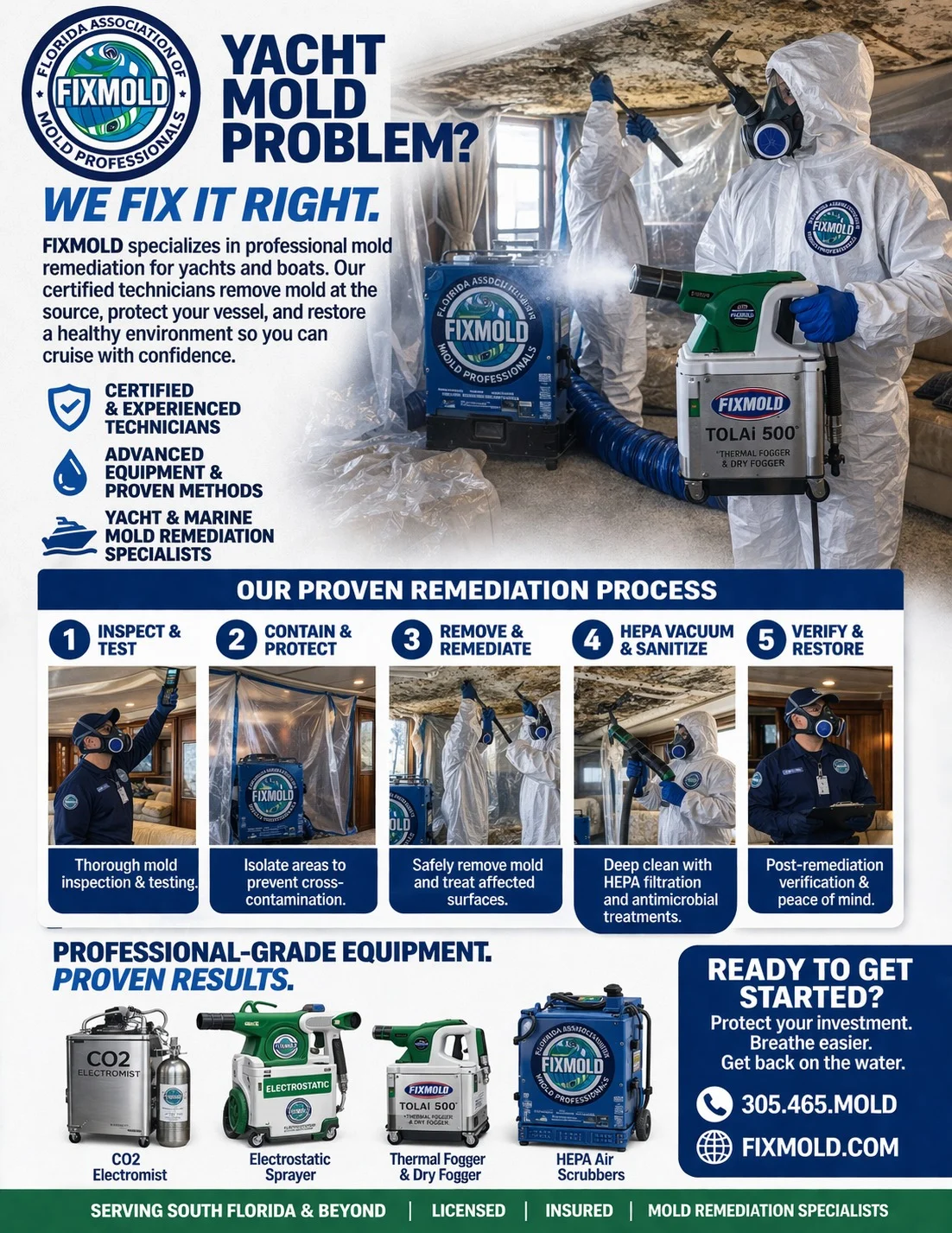
    Yacht Mold Removal

    10750 NW 6th CtMiami, FL 33168
    License
    #MRSR2709 #MRSA2521
    Founded by industry expert Moty Katz, backed by a 30+ year family legacy in mold remediation and prevention.