1000+ 5-STAR REVIEWS
Recommended All Over Florida
Katz Family Over 3 Decades
Recommended by Miami Doctors
1000+ 5-STAR REVIEWS
Recommended All Over Florida
Logo

Mold Clearance Certificates

Logo

    miami mold specialist

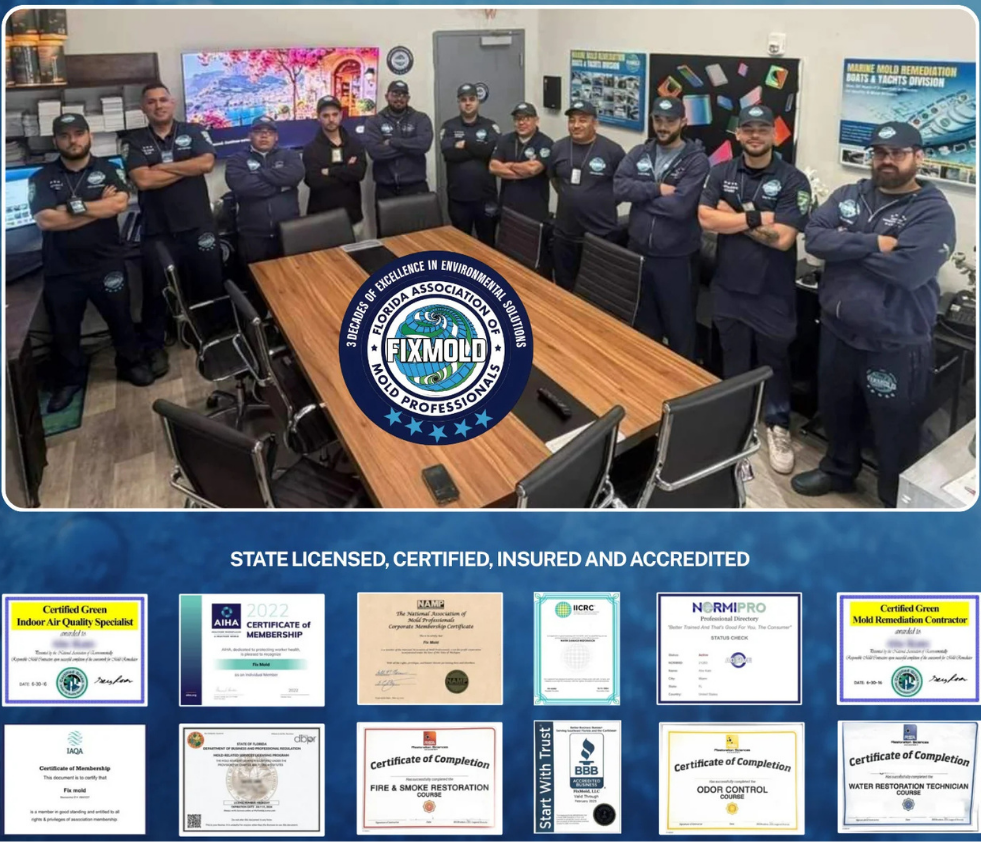
    State Licensed and Accredited Affiliations

    iicrc certifiedaccredited businessDr Mold DetoxAARCNORMI
    Indoor Air Quality SpecialistdbprAIHANAERMCNAMPCertified GreenFAMPIAQA
    Certified GreenNAMPNAERMCDr Mold DetoxIndoor Air Quality SpecialistAIHAdbpr
    AARCIAQANORMIaccredited businessiicrc certifiedFAMP

    Mold Clearance Testing and Certificates in South Florida

    Remediation is not the finish line. It's the work before the proof.

    A clearance inspection is the independent verification that mold remediation was fully successful β€” that the contamination is gone, that the remediation process didn't redistribute mold spores into other areas of the building, and that the property is genuinely safe to reoccupy. Without it, you have a contractor's word. With it, you have laboratory documentation.

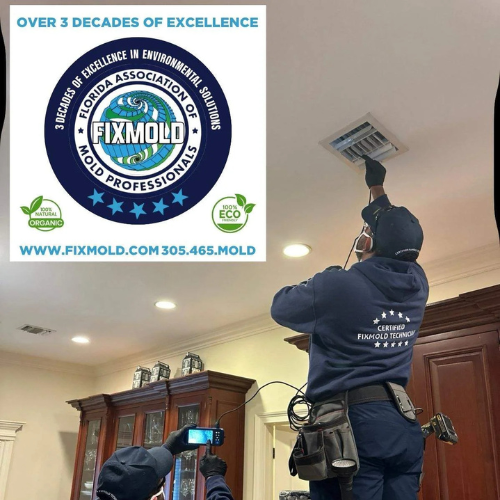
    FixMold conducts post-remediation clearance testing for properties throughout Miami-Dade, Broward, Palm Beach, and surrounding counties β€” whether we performed the original remediation or another company did. The process includes a complete visual inspection, photographic documentation of all treated areas, indoor and outdoor air sampling sent to a third-party certified laboratory, and a written Post Remediation Report with full microbial lab results delivered within one to two business days.

    State licensed mold assessor MRSA2521. Independent. Documented. Court and insurance ready.

    Call+1-305-465-6653 to schedule clearance testing. $150 off remediation if active mold is found during inspection.

    Mold Clearance Testing and Post-Remediation Verification in Miami


    Mold clearance testing and post-remediation verification have become increasingly important throughout Miami and South Florida as property owners seek confirmation that indoor environmental conditions have been properly addressed after mold remediation or water damage restoration. Clearance testing is designed to evaluate whether airborne mold levels, moisture conditions, and affected areas inside the property have returned to acceptable environmental conditions following remediation work.

    In South Florida, mold problems often develop differently than they do in drier climates. Elevated humidity, heavy rainfall, flooding, tropical storms, roof leaks, condensation, and constant air conditioning use all contribute to conditions where hidden moisture can remain trapped inside walls, ceilings, flooring systems, insulation, and HVAC components long after visible damage has been removed. Because moisture-related contamination may continue affecting indoor air quality even after cleanup, post-remediation environmental testing plays an important role in verifying the effectiveness of the remediation process.

    Property owners throughout Miami, Miami Beach, Coral Gables, Brickell, Coconut Grove, Kendall, Pinecrest, Doral, Aventura, Fort Lauderdale, Boca Raton, West Palm Beach, Naples, and surrounding South Florida communities frequently request mold clearance testing after mold removal, water damage restoration, storm intrusion, HVAC contamination, attic mold remediation, crawlspace cleanup, or major indoor environmental work.

    One of the primary purposes of mold clearance testing is to determine whether airborne mold spore levels inside the property have normalized compared to outdoor environmental conditions. Airborne mold spores naturally exist in outdoor environments throughout South Florida because of the region’s tropical climate and vegetation. However, when indoor spore concentrations become elevated or unusual species appear indoors, this may indicate active indoor contamination.

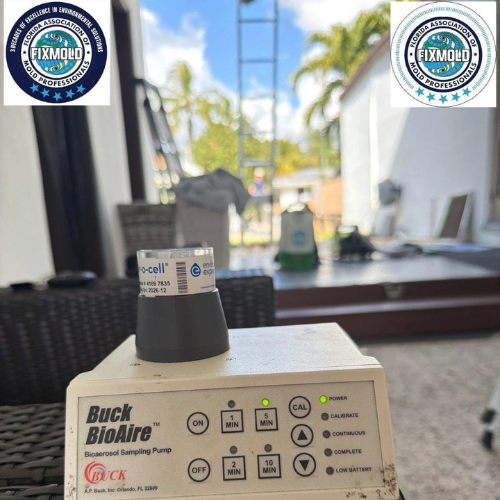
    Post-remediation air sampling typically involves collecting indoor air samples from affected areas and comparing them to outdoor control samples. Laboratory analysis helps evaluate whether indoor conditions reflect a normal fungal ecology or whether elevated airborne contamination may still be present inside the property.

    Clearance testing is especially valuable after large remediation projects involving hidden mold behind walls, extensive water intrusion, HVAC contamination, attic mold, or structural moisture problems. In these situations, contamination may have spread into concealed spaces before remediation began. Testing helps determine whether airborne particles remain elevated after cleanup and drying have been completed.

    HVAC Systems and Hidden Moisture Concerns


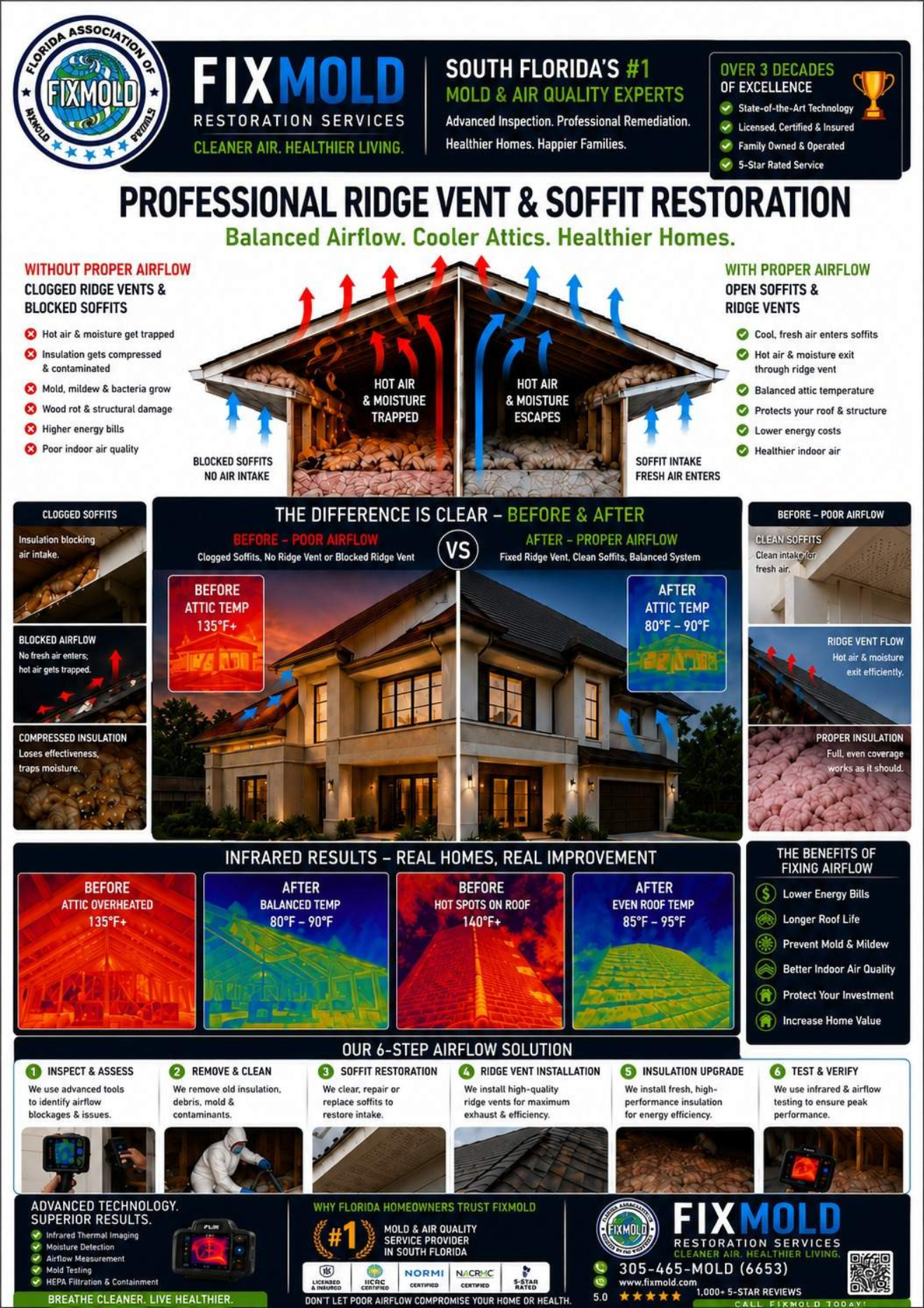
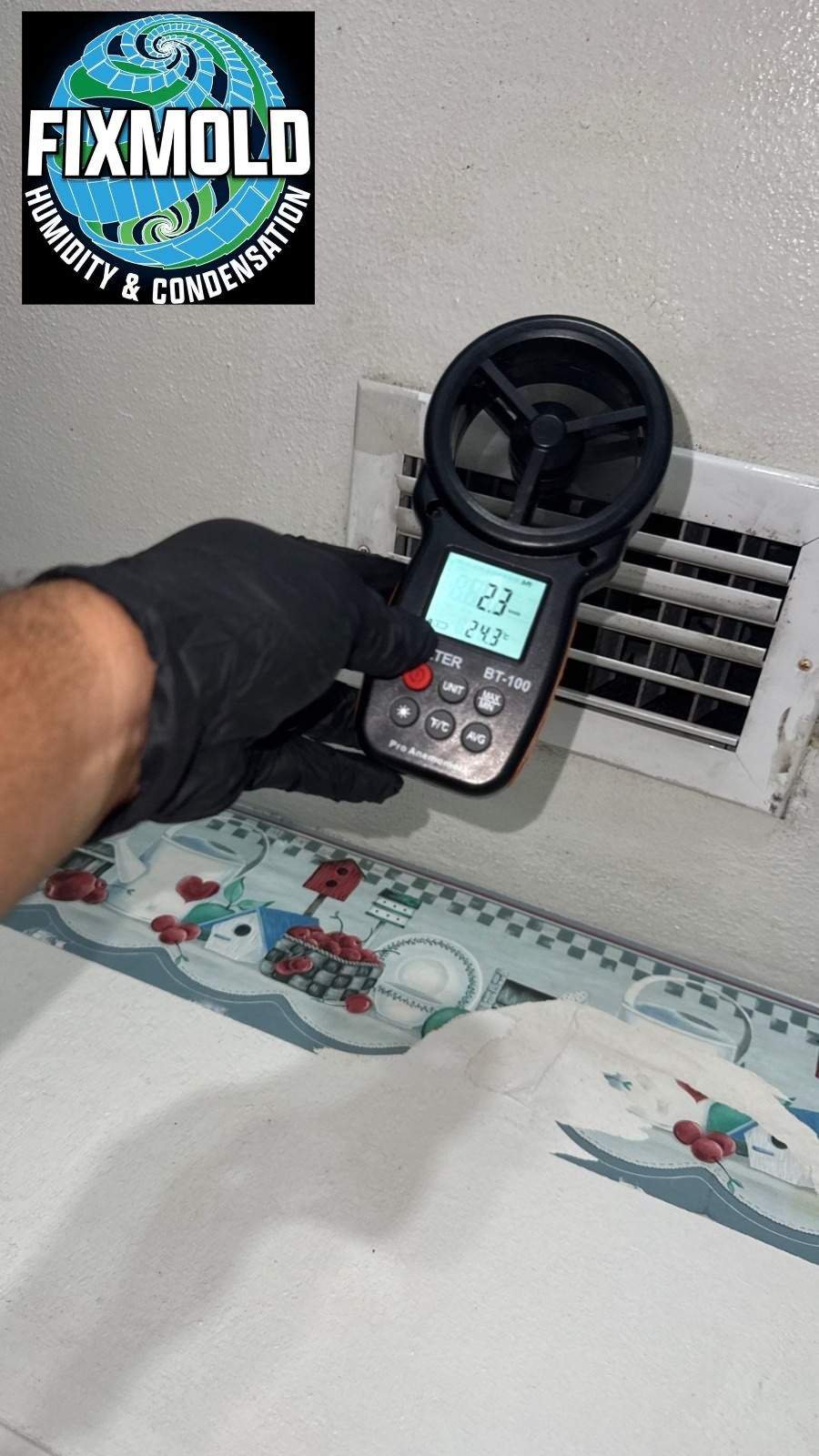
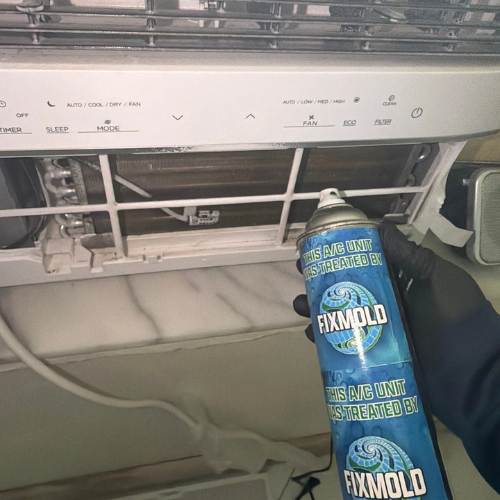
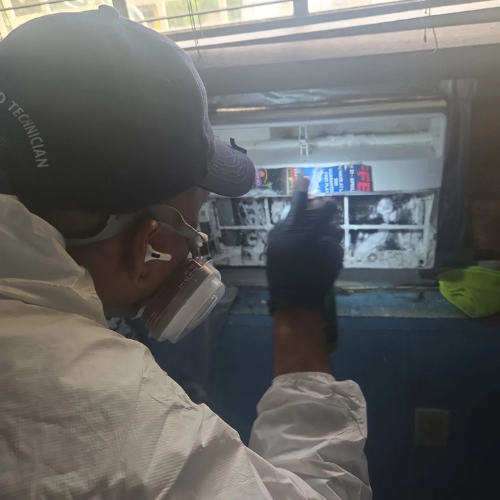
    HVAC systems are often included in post-remediation evaluations because air conditioning systems can distribute airborne spores throughout the property if contamination remains inside ducts, air handlers, insulation, or ventilation components. In Miami’s humid climate, HVAC systems frequently experience condensation-related microbial growth due to constant AC operation and elevated moisture levels.

    Many South Florida properties continue experiencing indoor air quality concerns after remediation because underlying humidity or moisture problems were never fully corrected. Condensation around vents, attic humidity, wet insulation, plumbing leaks, roof leaks, and hidden structural dampness may all contribute to recurring contamination if environmental stabilization is incomplete. Clearance testing helps evaluate whether these conditions may still be affecting indoor air quality after remediation.

    Water damage restoration projects throughout Miami often involve post-remediation environmental evaluation because flooding and moisture intrusion can affect multiple concealed areas within the structure. Hurricane exposure, roof failures, plumbing leaks, and AC condensation frequently allow moisture to spread behind walls, beneath flooring systems, and inside insulation. Even when visible materials appear dry, elevated moisture may still exist inside enclosed cavities.

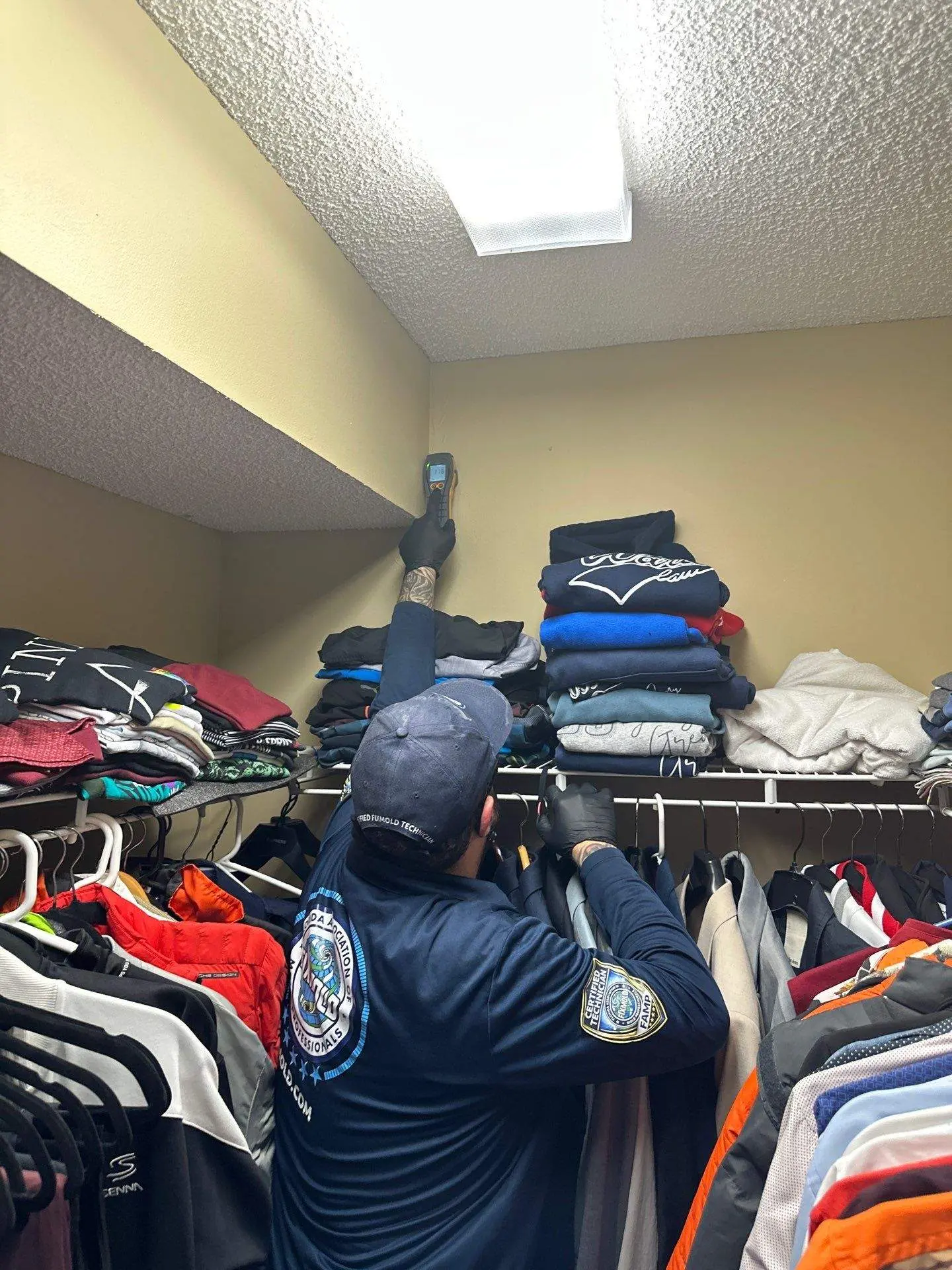
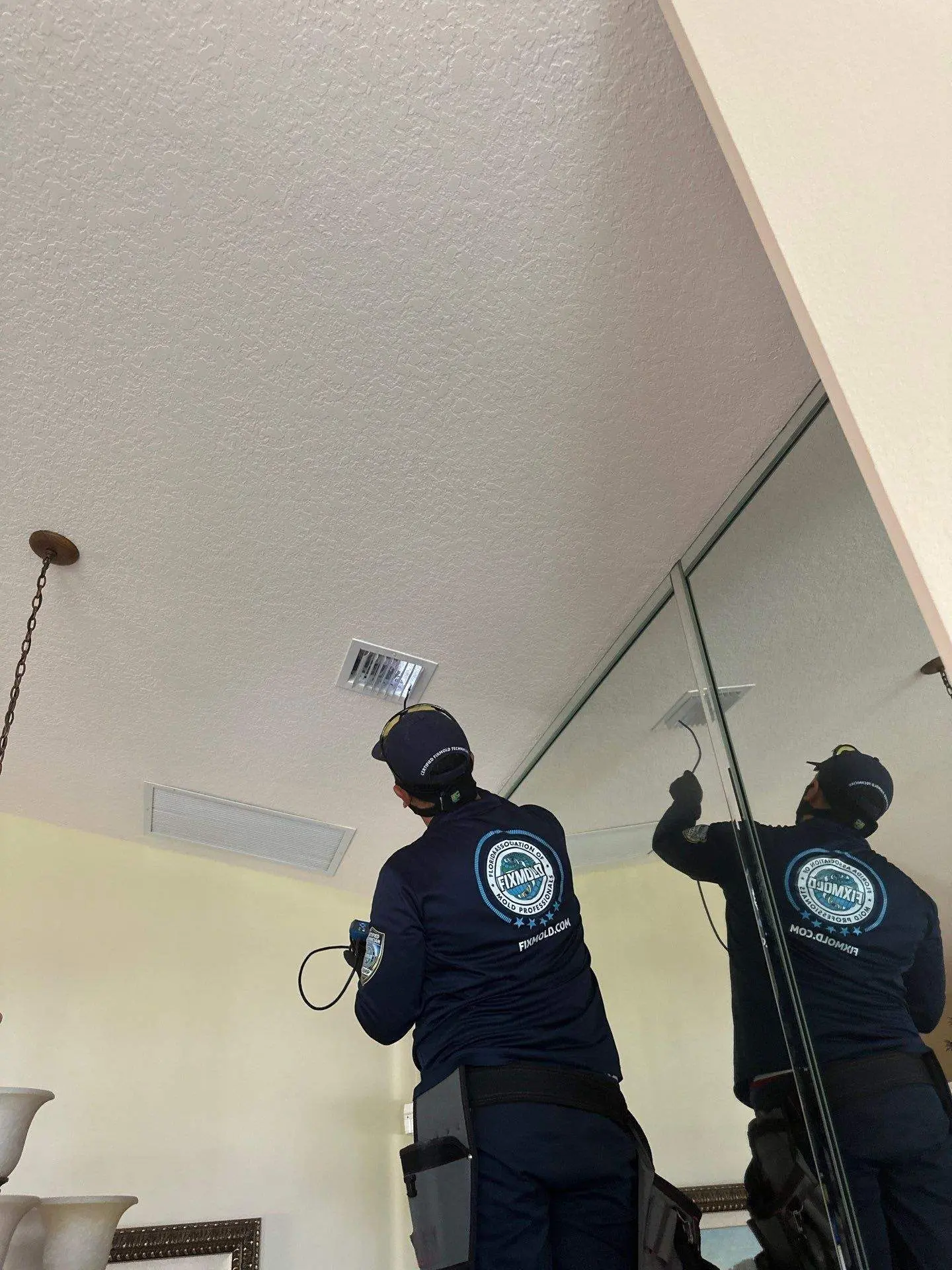
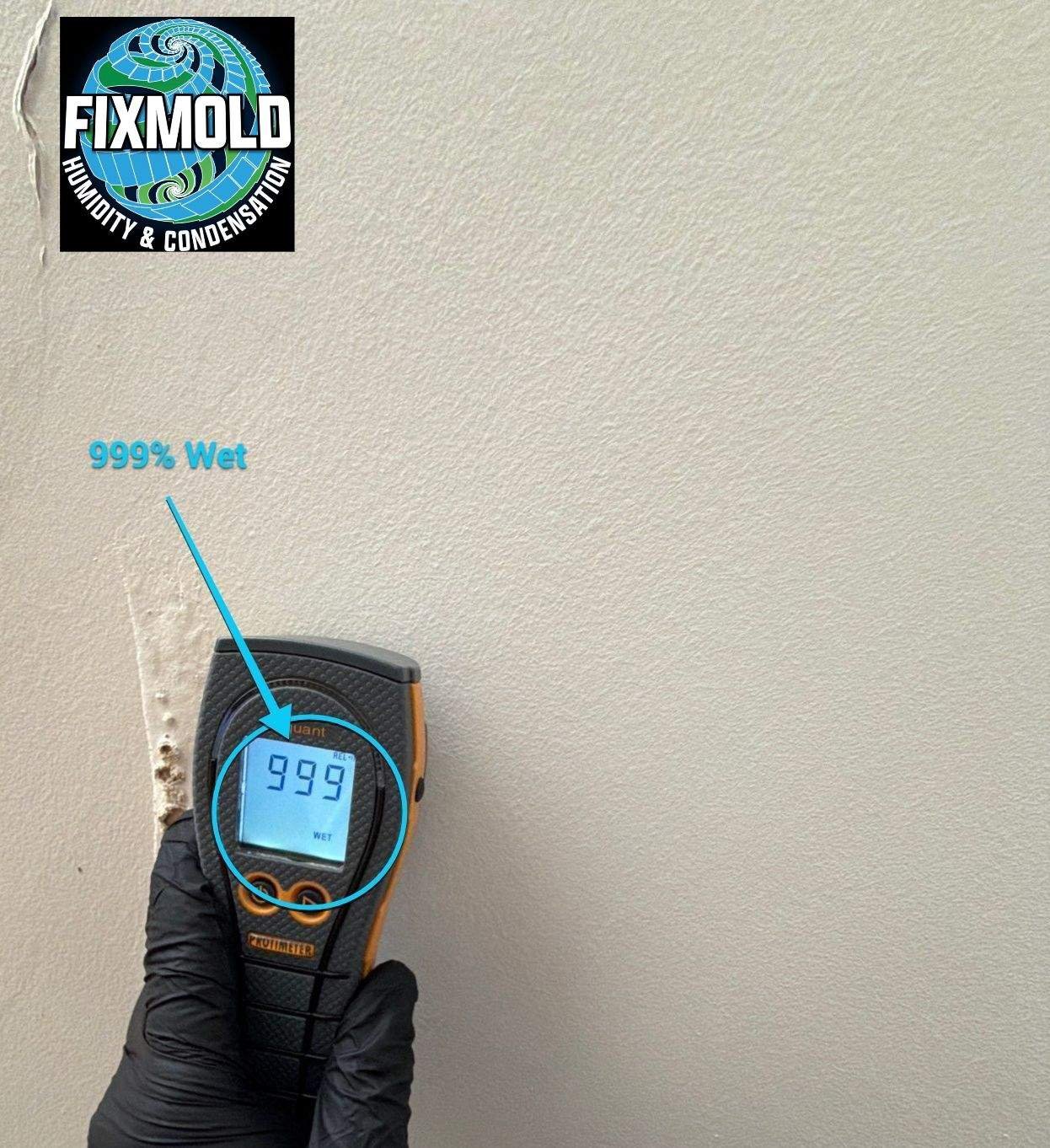
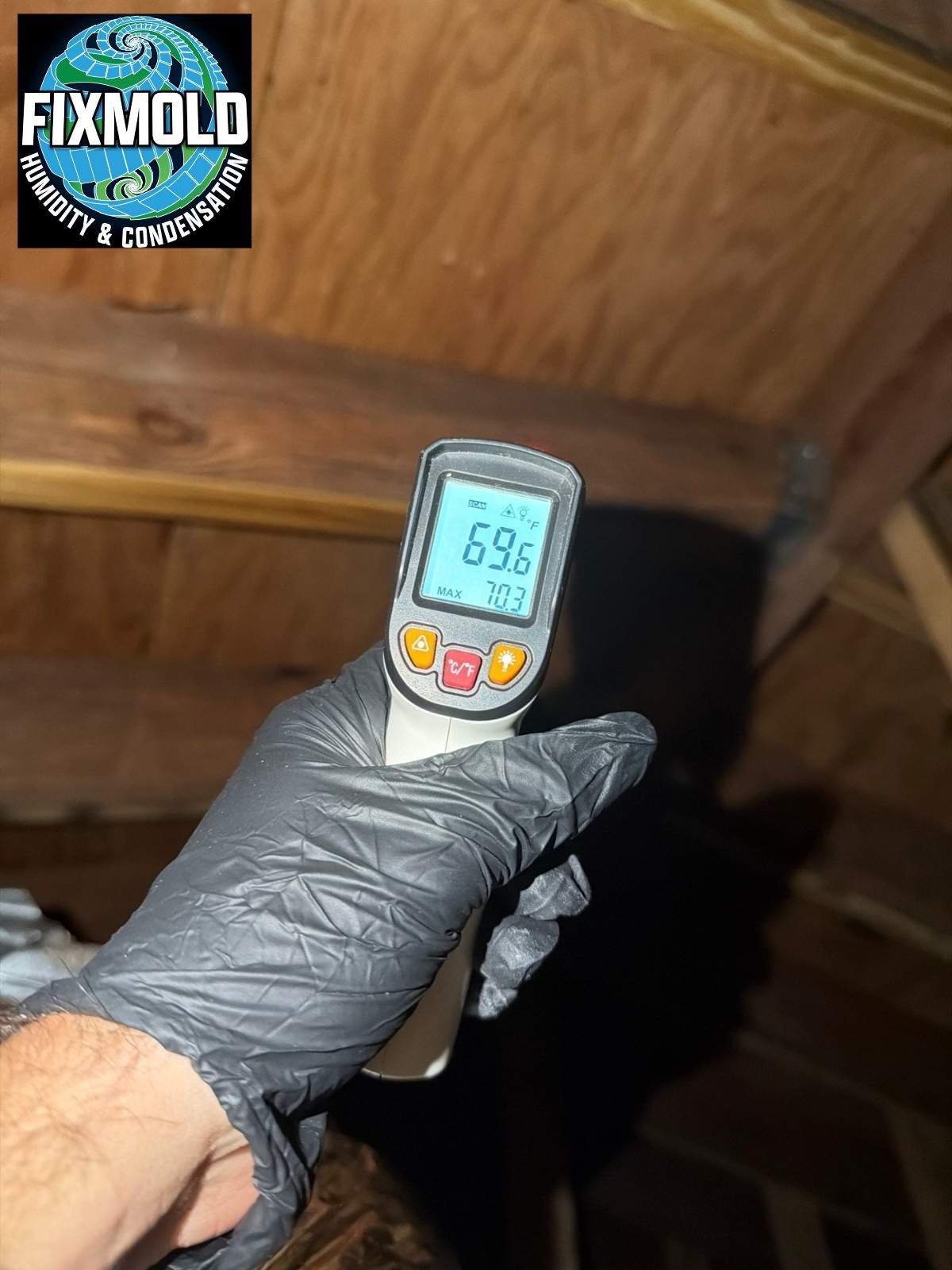
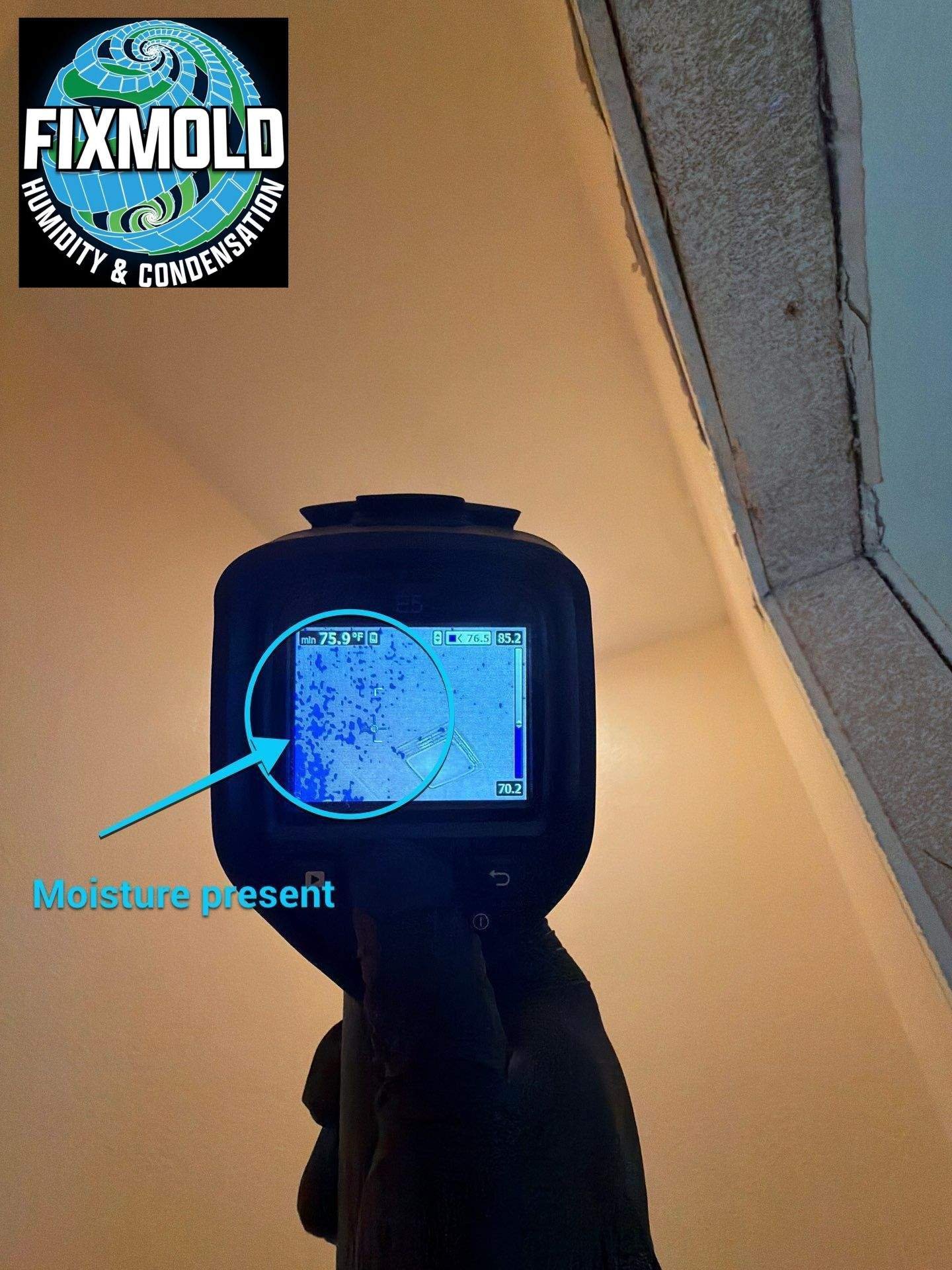
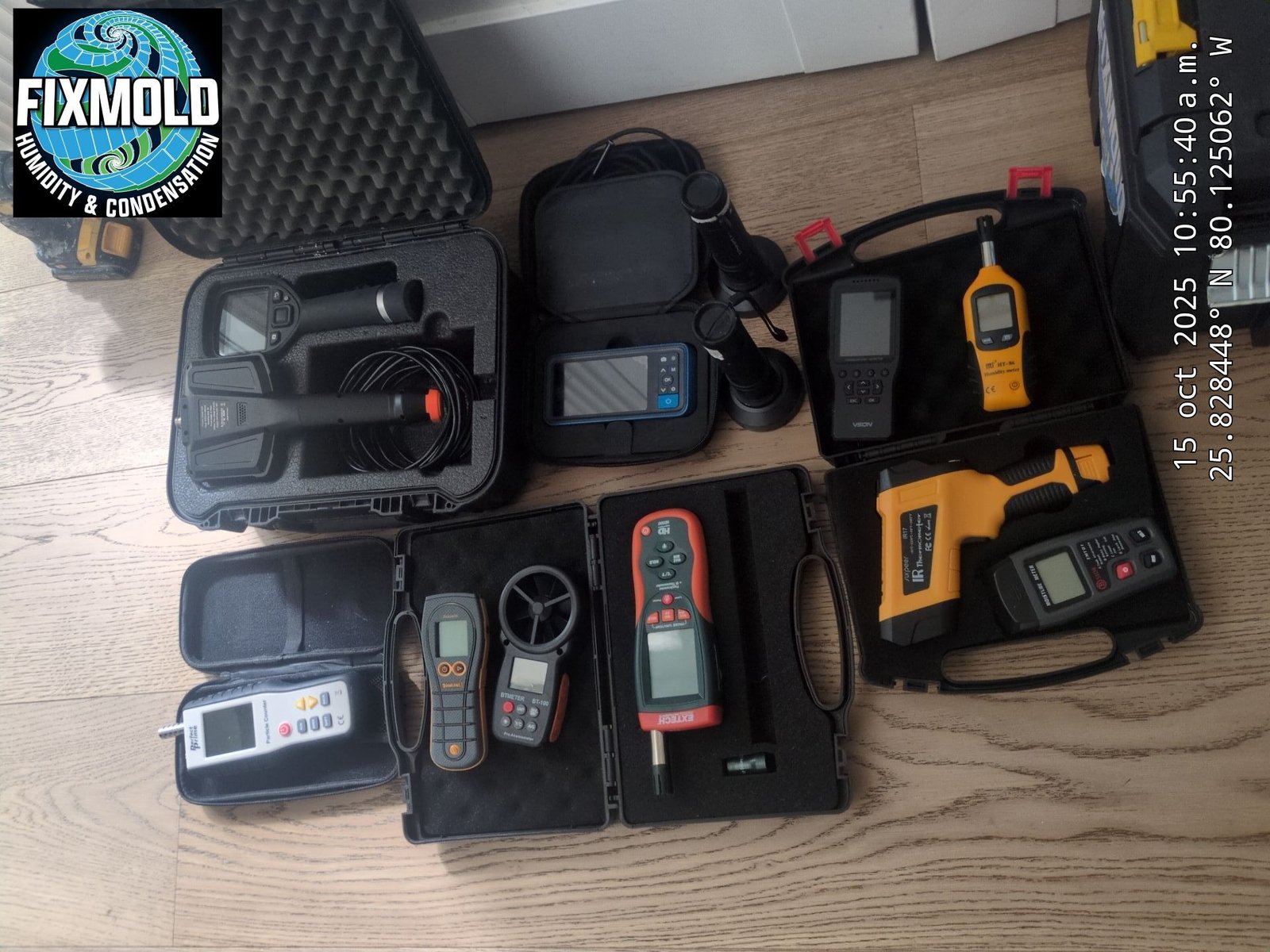
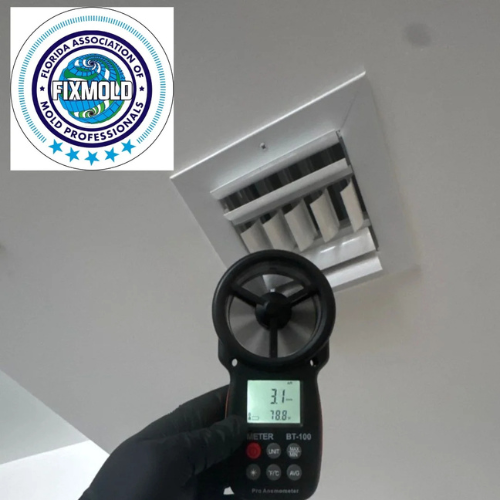
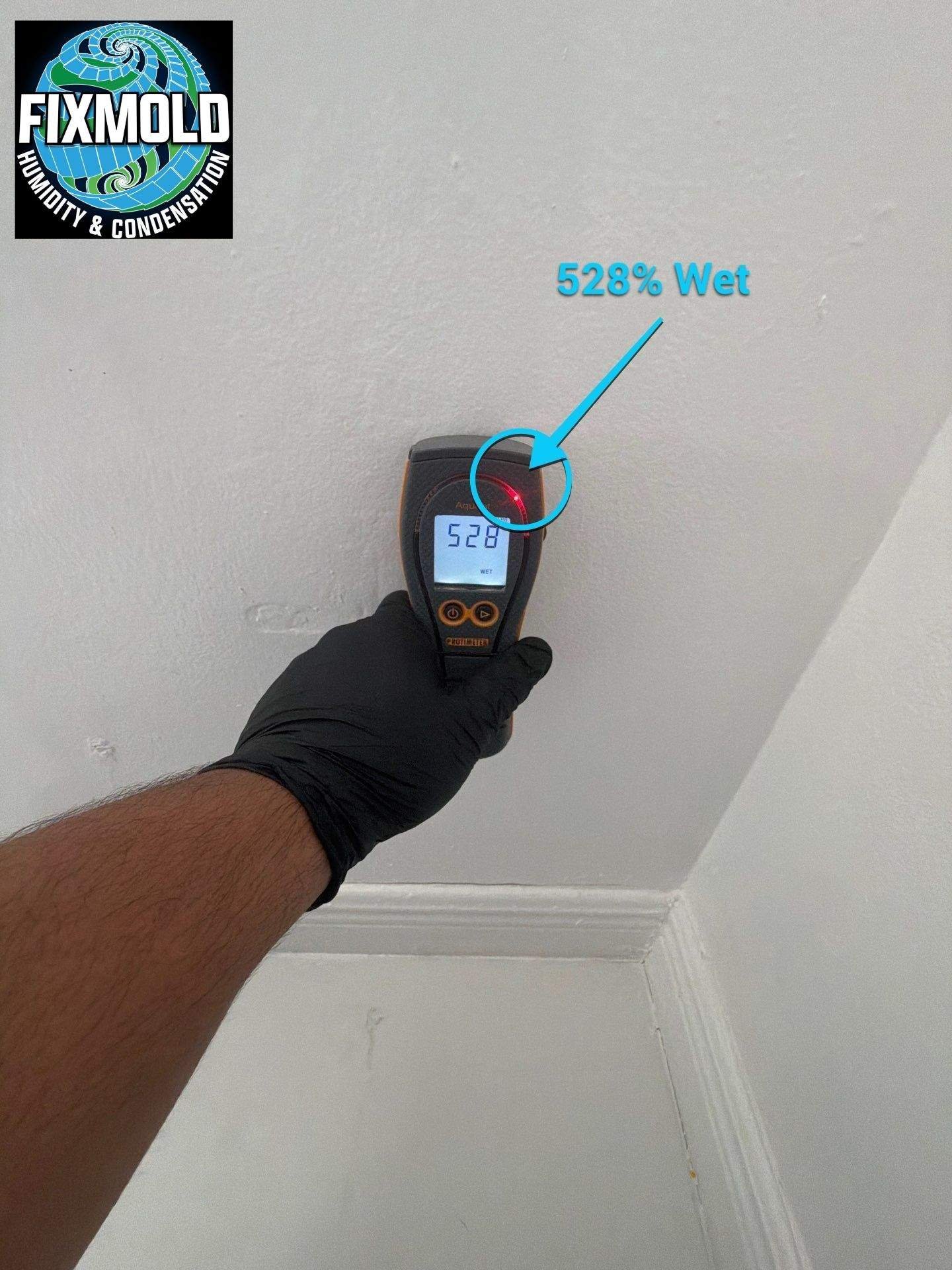
    Thermal imaging and moisture detection are commonly used during mold clearance inspections to help identify hidden dampness that could support continued microbial growth. Elevated moisture readings after remediation may indicate incomplete drying, hidden leaks, or ongoing humidity problems requiring additional attention.

    Attic, Crawlspace, and Condo Evaluations


    Attic mold remediation projects throughout South Florida also commonly require post-remediation verification because attic spaces experience extreme heat, elevated humidity, roof leaks, and poor ventilation conditions. Airborne particles from contaminated attic spaces may spread into living areas through ceiling penetrations, ventilation systems, and airflow movement. Clearance testing helps determine whether remediation successfully reduced airborne contamination levels inside both the attic and occupied living spaces.

    Crawlspaces and lower structural cavities may also require environmental clearance testing after moisture-related contamination. Elevated groundwater, poor drainage, plumbing leaks, and trapped humidity beneath structures can create ongoing moisture conditions affecting indoor air quality throughout the property.

    Condominiums and high-rise buildings throughout Brickell, Downtown Miami, Sunny Isles, Miami Beach, Hallandale Beach, and Aventura frequently benefit from mold clearance testing because shared ventilation systems and interconnected structural spaces may allow airborne contaminants or moisture intrusion to spread between units. Clearance evaluations help confirm whether affected areas have been properly stabilized following remediation or water damage events.

    Commercial and Luxury Property Clearance Testing


    Commercial buildings throughout Miami, Fort Lauderdale, Boca Raton, and West Palm Beach often require post-remediation environmental documentation after mold removal projects involving offices, schools, medical facilities, hospitality properties, retail spaces, or industrial buildings. Clearance reports may help property managers, building owners, insurance carriers, tenants, or contractors verify that environmental conditions have been re-evaluated following remediation work.

    Luxury homes and waterfront properties throughout Fisher Island, Key Biscayne, Golden Beach, Palm Beach, Naples, and Miami Beach frequently require more detailed environmental evaluation because enclosed architectural designs, advanced HVAC systems, imported materials, and waterfront humidity exposure create complex moisture conditions. Hidden condensation within structural cavities or mechanical systems may continue affecting indoor air quality even after visible remediation appears complete.

    Mold clearance certificates are commonly requested when property owners need written environmental documentation after remediation projects. These reports typically summarize inspection findings, testing results, moisture observations, environmental conditions, and post-remediation analysis performed during the evaluation. Clearance documentation may be useful during real estate transactions, insurance claims, property management reviews, contractor verification, tenant disputes, or post-restoration environmental assessments.

    Long-Term Moisture Management and Environmental Stability


    One of the most common reasons mold problems return after remediation is because the original moisture source was never fully corrected. Roof leaks, plumbing leaks, attic condensation, HVAC humidity, poor ventilation, and structural moisture intrusion may continue affecting the property long after contaminated materials have been removed. Clearance testing helps identify whether elevated moisture or airborne contamination still exists after remediation efforts are complete.

    Humidity management remains especially important in South Florida properties because elevated moisture levels create ongoing environmental pressure year-round. Some homes and buildings continue experiencing chronic humidity because of oversized HVAC systems, poor airflow, insulation deficiencies, or inadequate ventilation. Even after remediation, unstable indoor humidity may allow microbial growth to redevelop if environmental conditions remain favorable.

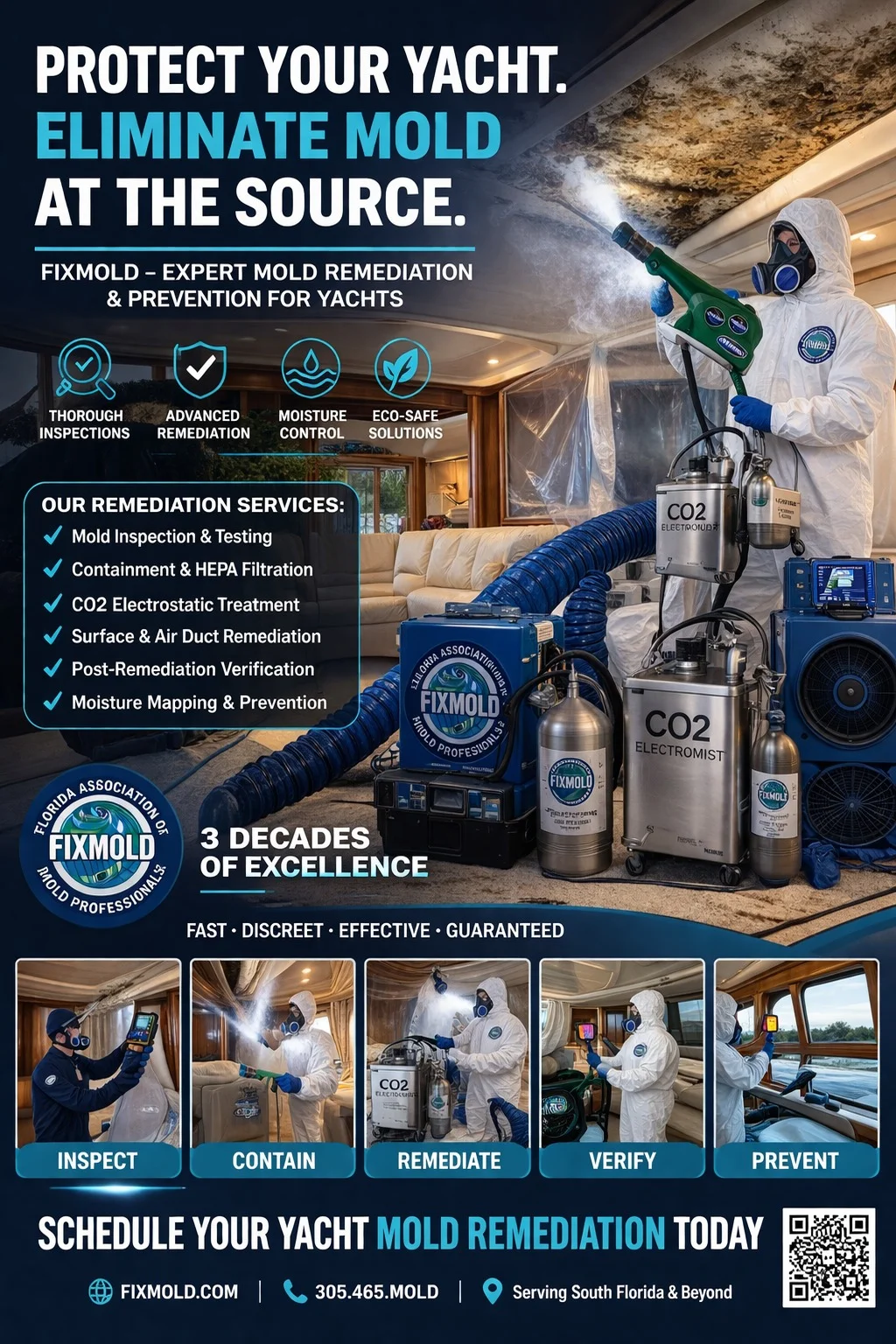
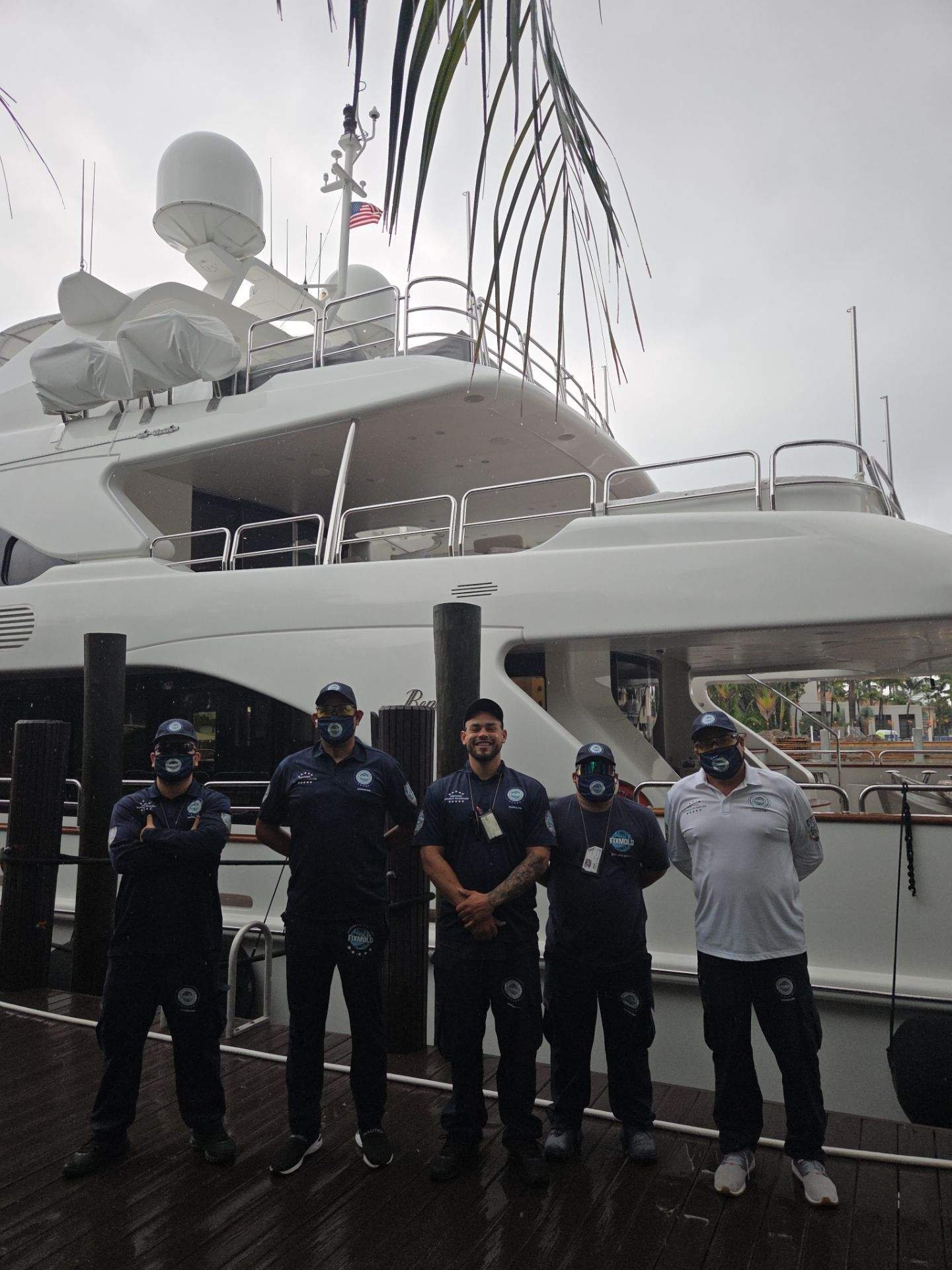
    Marine environments also create unique post-remediation challenges aboard yachts and boats throughout Miami marinas and coastal communities. Enclosed marine cabins experience constant humidity exposure, salt air, condensation, and HVAC moisture. Mold clearance testing aboard vessels may involve cabin air quality analysis, moisture detection, and environmental evaluation of marine HVAC systems following remediation work.

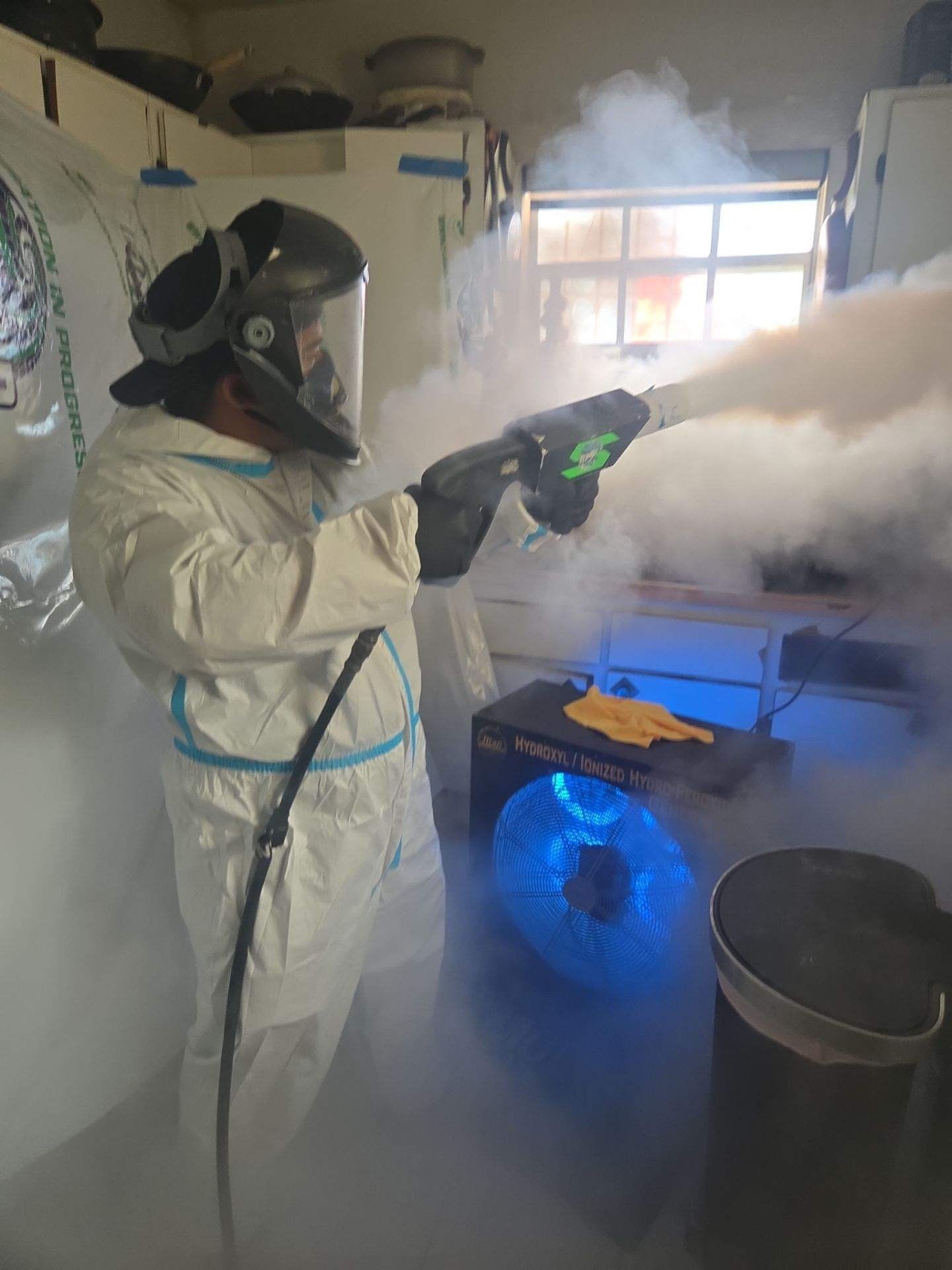
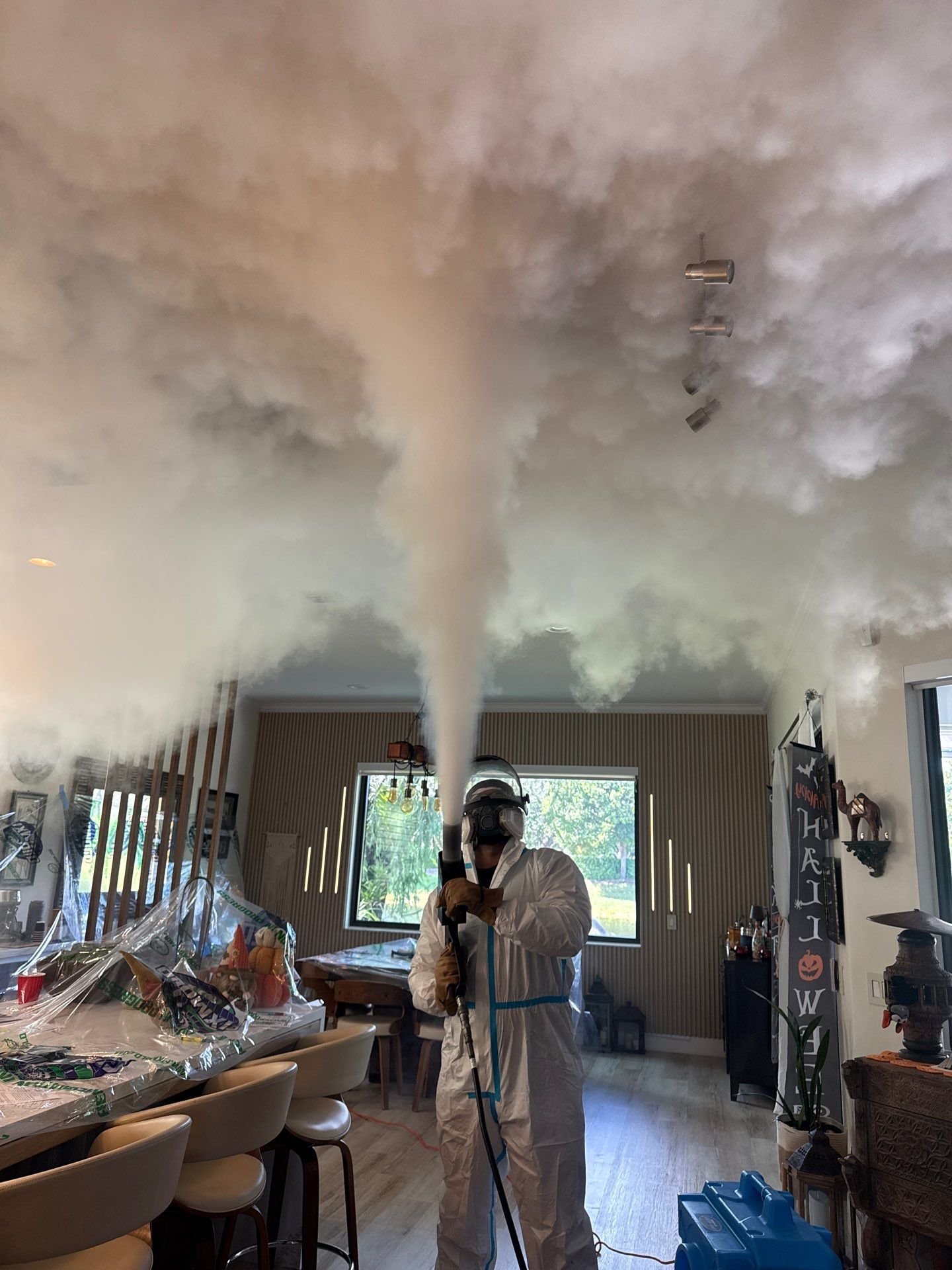
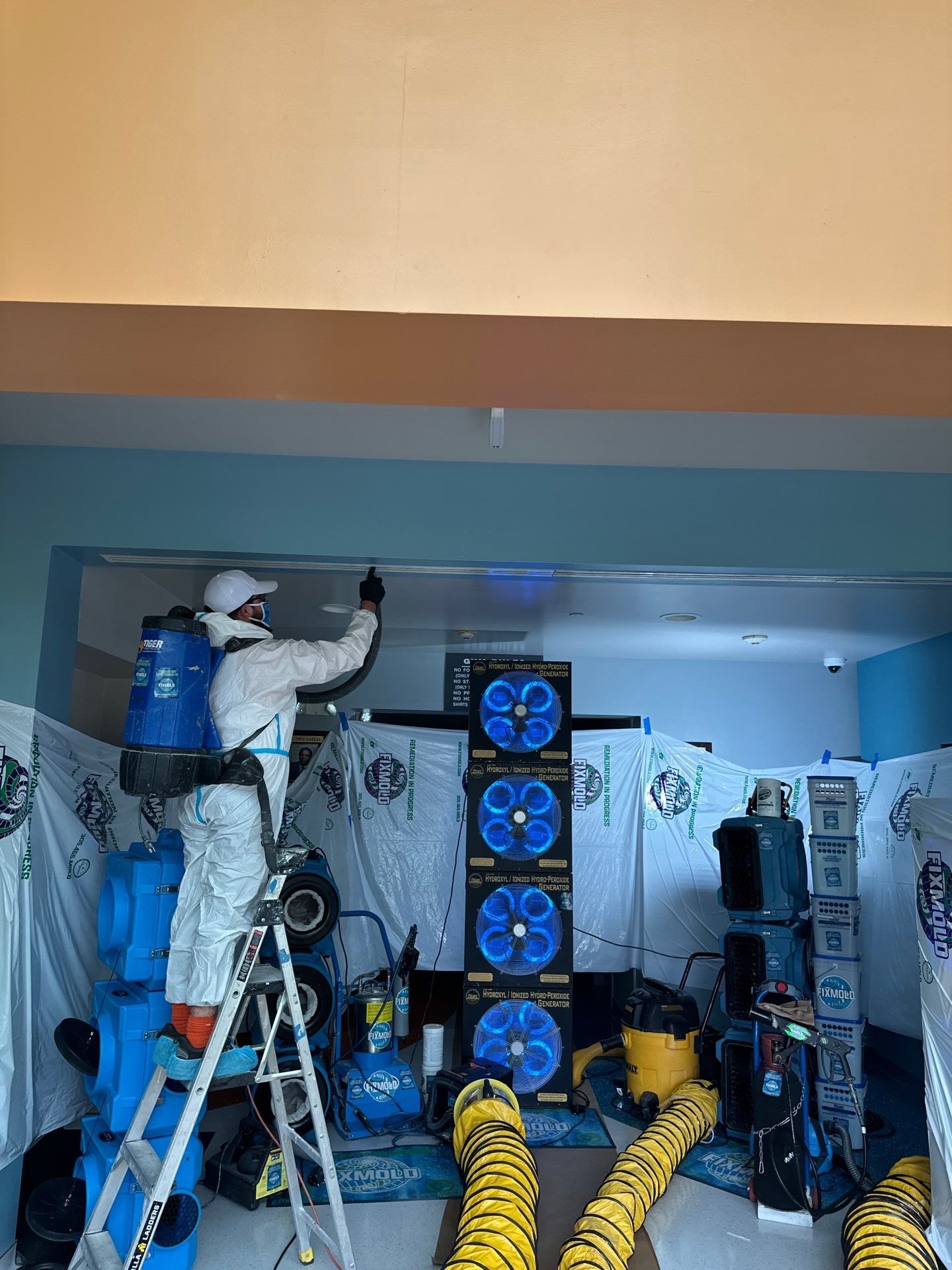
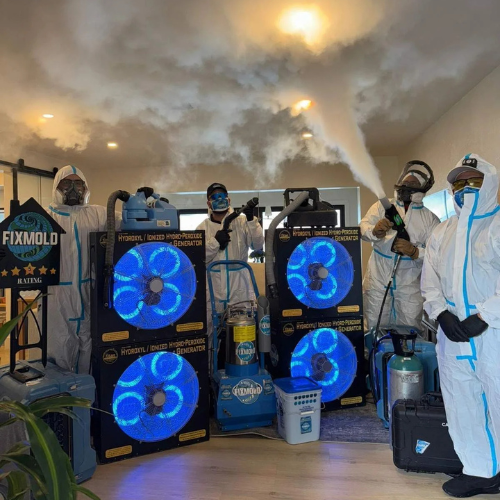
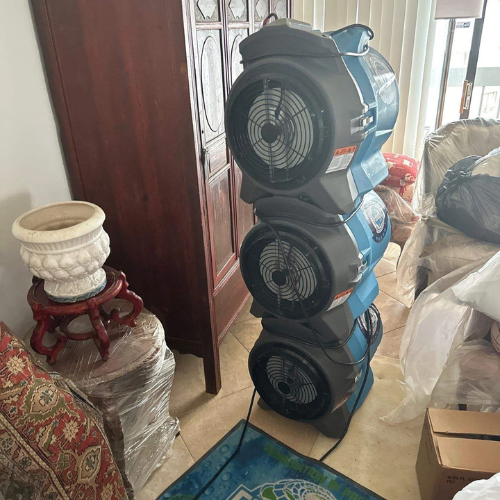
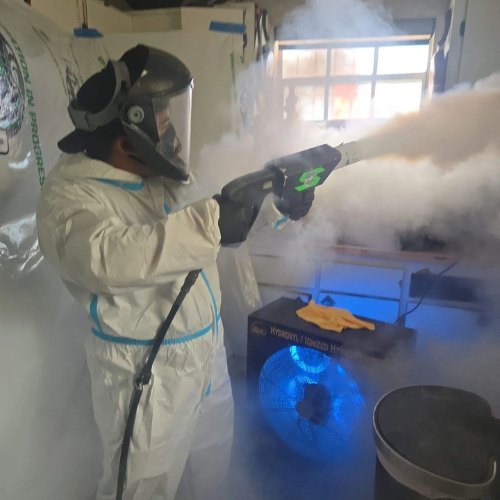
    Indoor air quality concerns often persist even after visible remediation has been completed because airborne particles may remain suspended inside enclosed indoor environments. HEPA air scrubbing and environmental cleaning are frequently used during remediation to help reduce airborne contamination before final clearance testing is performed.

    Many property owners seek mold clearance testing for peace of mind after remediation projects because hidden environmental conditions are often difficult to evaluate without professional analysis. Musty odors, recurring humidity, airborne dust, stale air, and lingering indoor discomfort may all indicate that further environmental investigation is necessary even after cleanup has been completed.

    Every South Florida property responds differently depending on construction methods, moisture history, ventilation design, HVAC performance, insulation systems, and environmental exposure. Older homes, waterfront properties, condominiums, commercial buildings, and storm-damaged structures each present unique challenges during post-remediation evaluation.

    Understanding how moisture and airborne contamination behave in Miami’s climate helps explain why mold clearance testing is an important part of long-term environmental stabilization. Verifying indoor air quality, confirming moisture control, evaluating HVAC conditions, and identifying unresolved environmental issues all help reduce the likelihood of recurring mold problems after remediation work has been completed.

    A Deep Commitment To Restoration

    A Family Legacy Of Trust
    Fixmold Miami
    Fixmold Miami
    Fixmold miami
    Fixmold

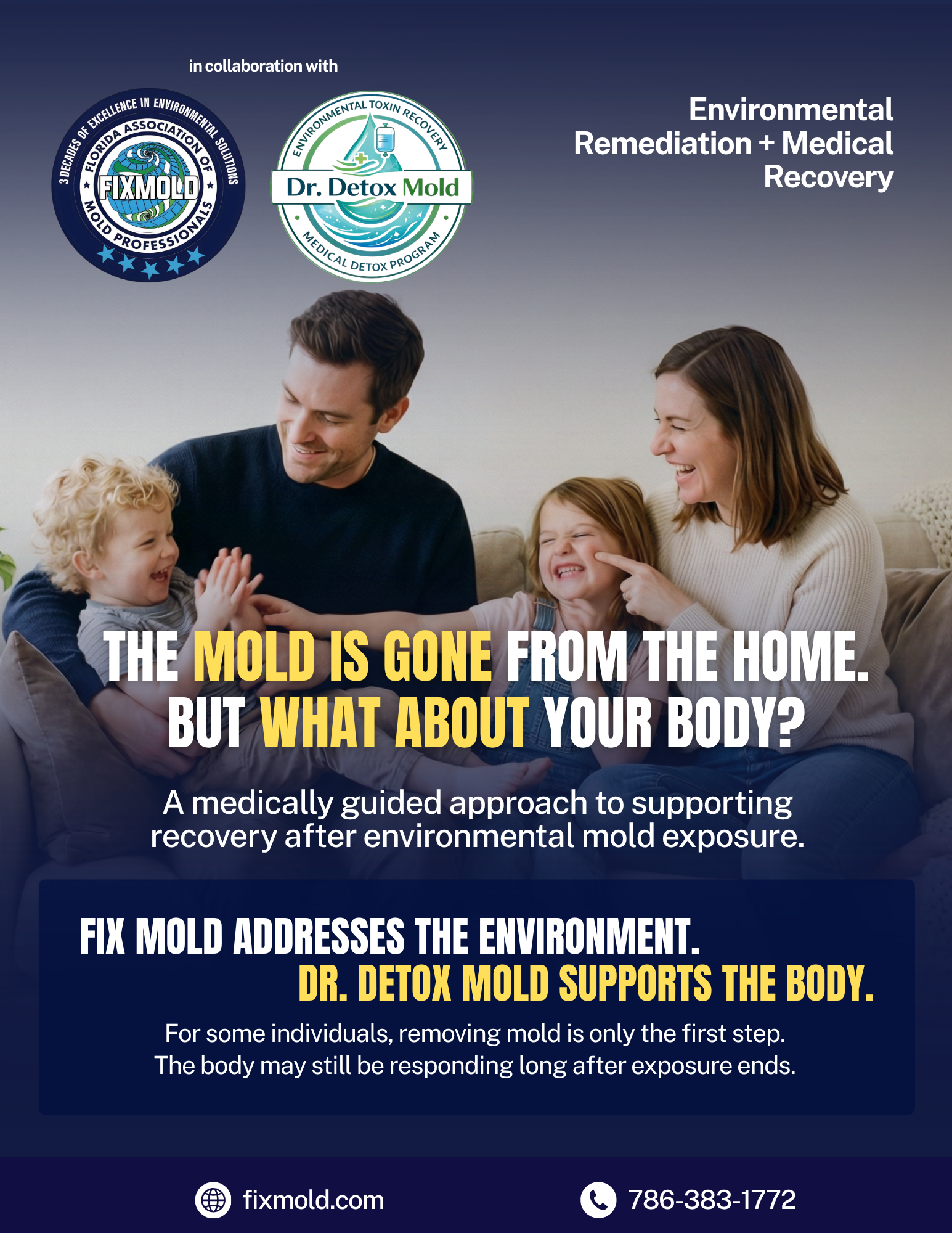
    Mold Removed From Your Home. What About Your Body?

    A medically guided approach to supporting recovery after mold exposure.
    Miami Fix MoldFixmold miami
    Fixmold miamiFixmold
    Miami Fix Mold
    Fixmold miami
    Fixmold miami
    Fixmold

    FixMold focuses on eliminating mold from your environment.

    But for some individuals, recovery doesn’t stop there.
    Even after successful remediation, the body may continue responding to past exposure. In these cases, a structured, medically guided approach may be necessary to support full recovery.

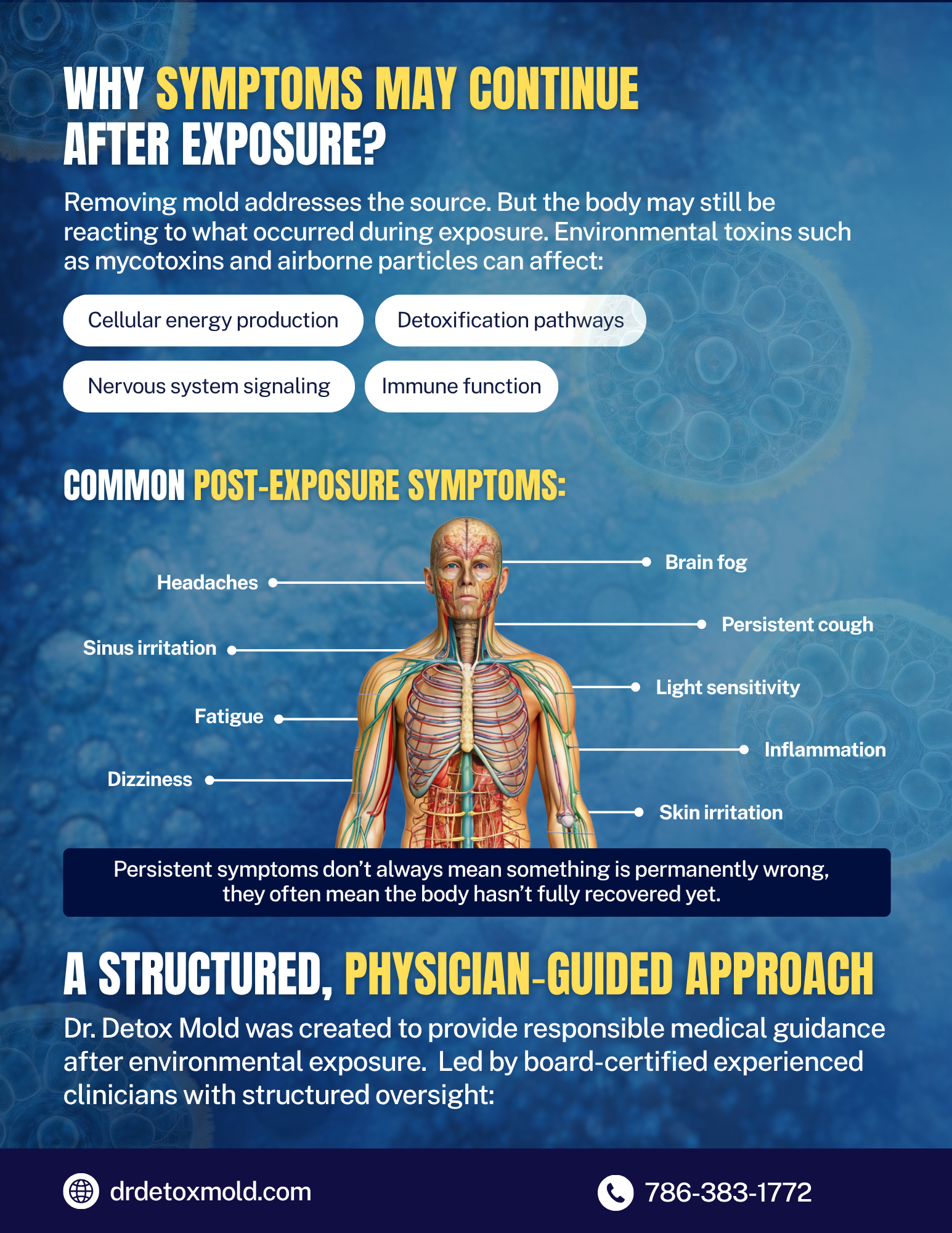
    Why Symptoms Can Continue After Mold Exposure

    Removing mold addresses the source of the problem, but it does not always resolve how the body has been affected during exposure.

    Environmental toxins can impact multiple systems:
    β€’ Immune function
    β€’ Nervous system signaling
    β€’ Cellular energy production
    β€’ Detoxification pathways

    For some individuals, these systems require time and proper support to return to balance.

    Common Post-Exposure Symptoms

    β€’ Brain fog
    β€’ Fatigue
    β€’ Headaches
    β€’ Sinus congestion or irritation
    β€’ Persistent cough
    β€’ Dizziness
    β€’ Light sensitivity
    β€’ Skin irritation
    β€’ Ongoing inflammation

    Important

    β€’ Persistent symptoms do not always indicate something permanent
    β€’ They often indicate that the body has not fully recovered yet

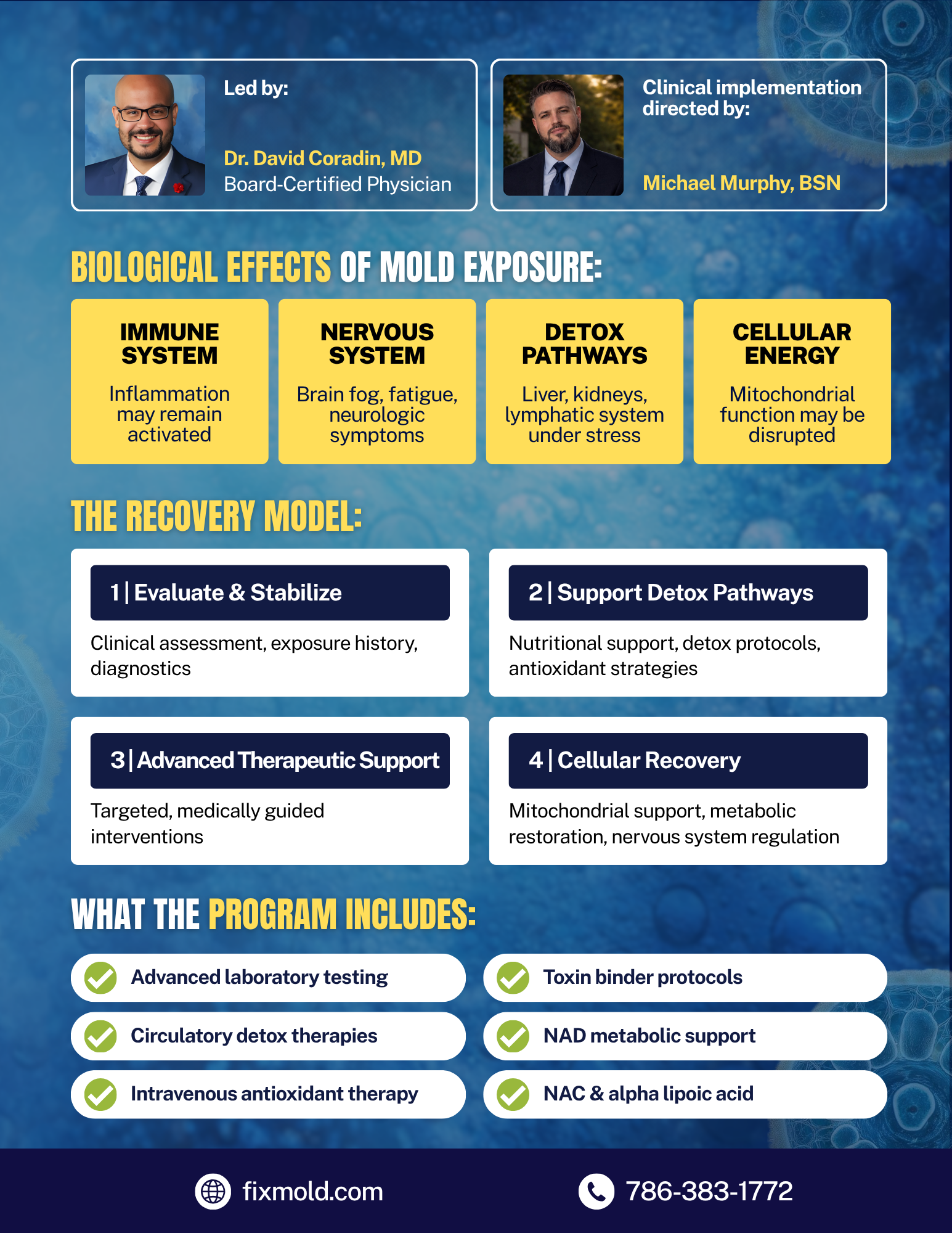
    Recovery Approach

    1. Evaluation & Stabilization
    β€’ Clinical assessment
    β€’ Exposure history review
    β€’ Diagnostic testing

    2. Detoxification Support
    β€’ Nutritional protocols
    β€’ Toxin-binding strategies
    β€’ Antioxidant support

    3. Advanced Therapeutic Support
    β€’ Targeted, medically guided interventions
    β€’ IV-based therapies when appropriate

    4. Cellular Recovery
    β€’ Mitochondrial support
    β€’ Metabolic restoration
    β€’ Nervous system regulation

    Core Focus

    β€’ Detoxification support
    β€’ Immune system balance
    β€’ Cellular energy restoration
    β€’ Nervous system regulation

    Key Principle

    Recovery is not about doing more. It is about doing the right things, in the right order.

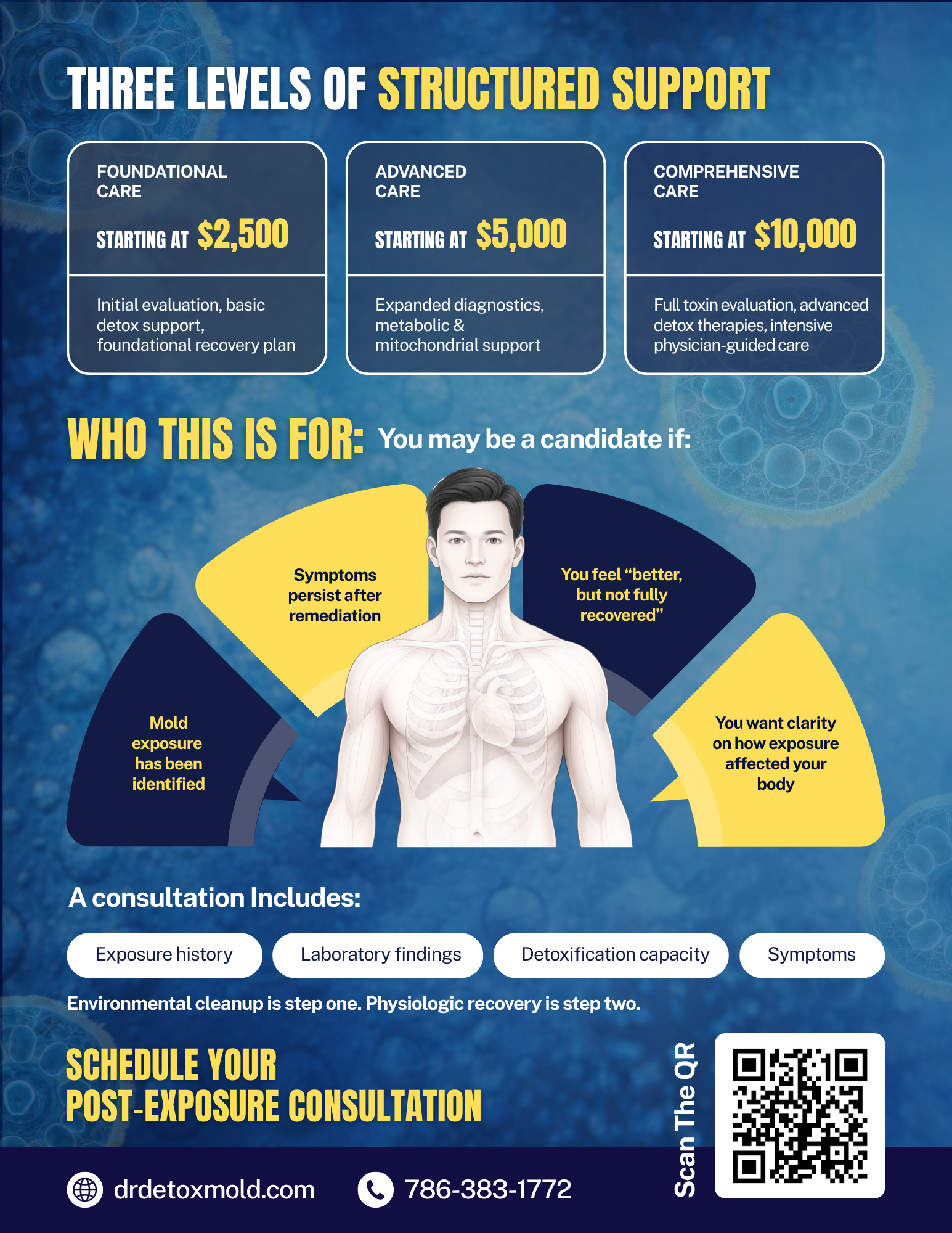
    Next Steps

    If mold exposure has been identified and symptoms are still present, evaluation may provide clarity.
    β€’ Exposure history review
    β€’ Laboratory evaluation
    β€’ Detoxification assessment
    β€’ Symptom analysis

    Schedule Your Post-Exposure Consultation

    πŸ“ž 786-383-1772

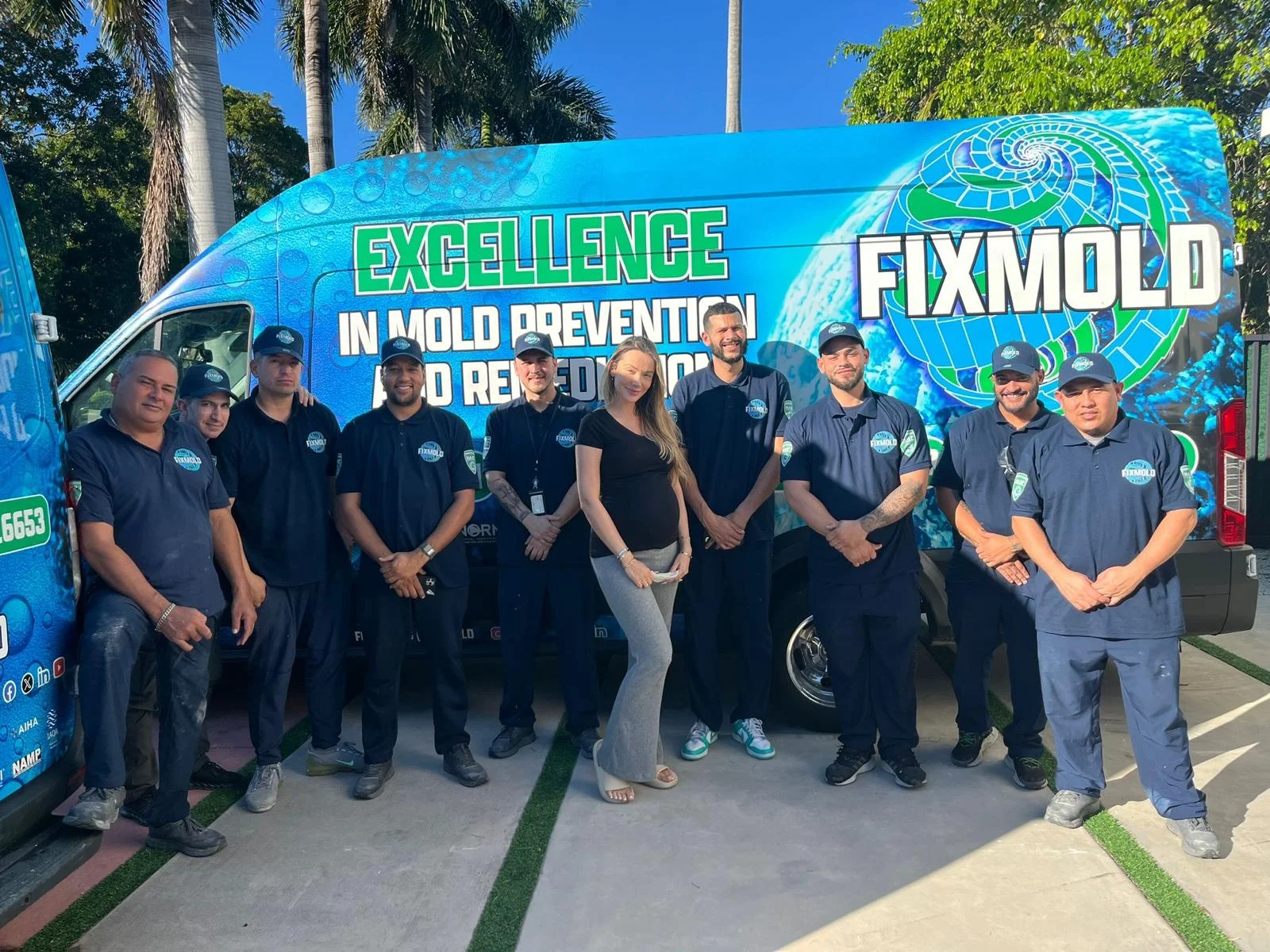
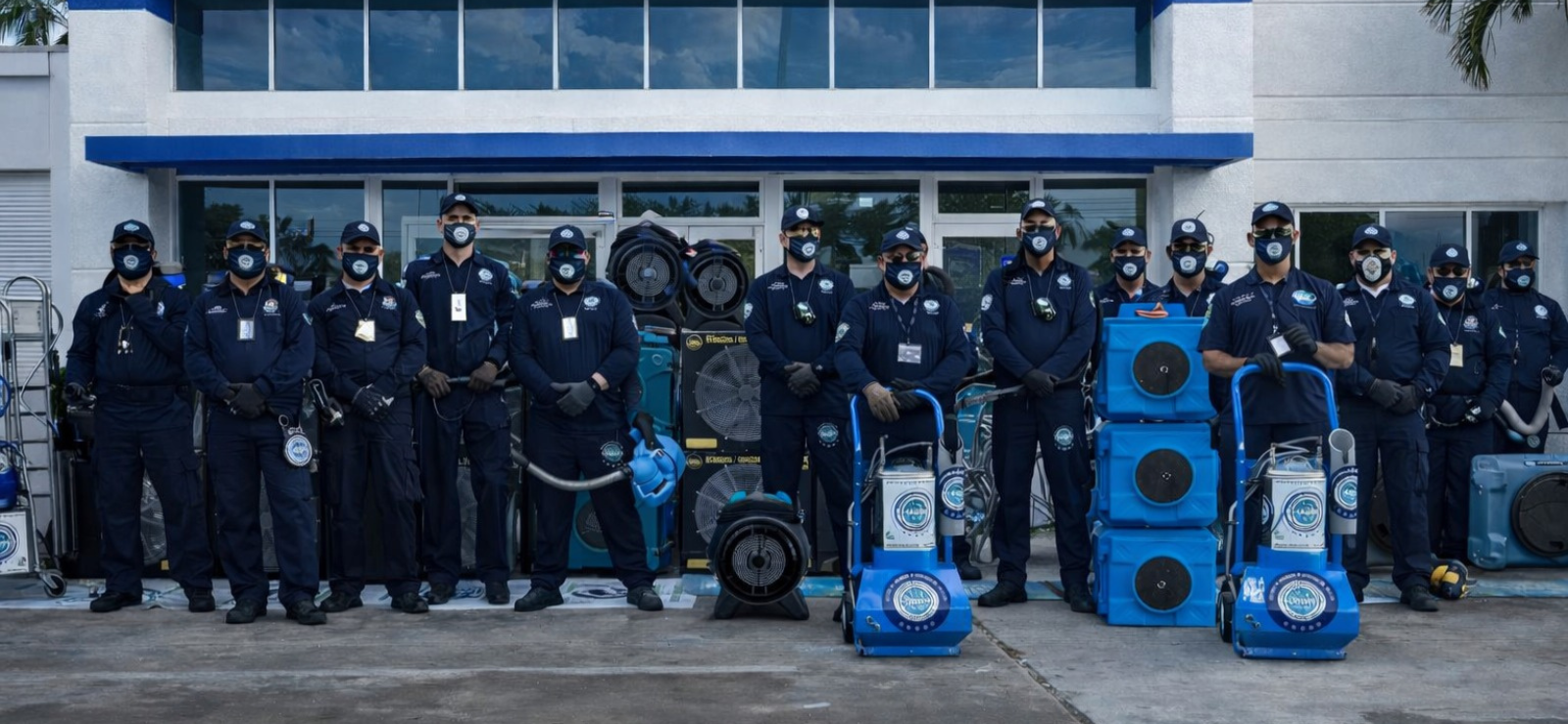
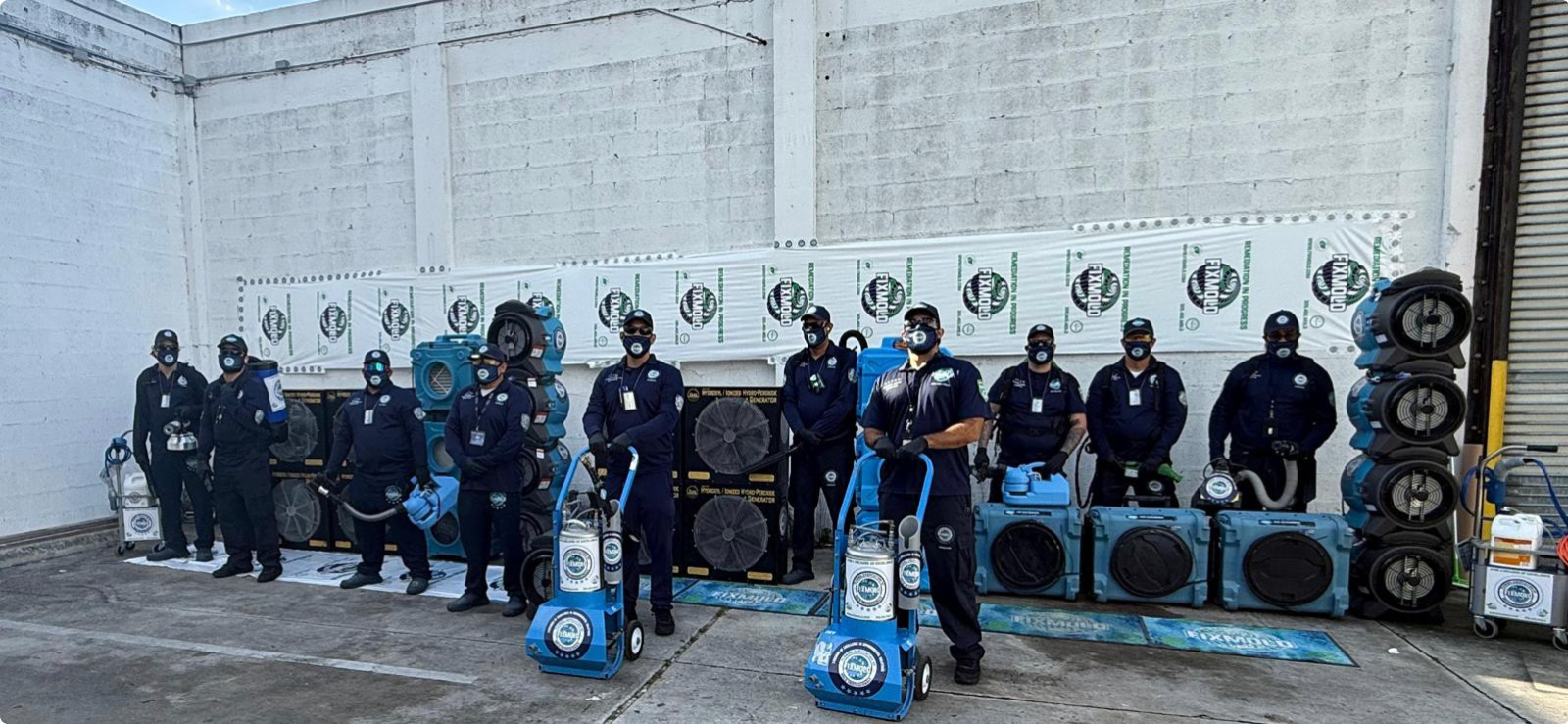
    OUR TEAM

    THE BACK-BONE OF OUR 5 STAR SERVICE
    πŸ‘‰ Call Now: +1-305-465-6653
    Fast response. Certified technicians. Guaranteed results.

    OUR AWARDS

    Proof Of Unmatched Excellence
    mold remediation certificates

      FixMold
      10750 NW 6th CtMiami, FL 33168

      License
      MRSR2709 MRSA2521

      logo

      Recent Happy FixMold Clients Across Miami & South Florida with 5-Star Reviews

      Real Homes. Mold Inspections. Mold Remediations. Mold Removal. Mold Solutions. Across The Whole State Of Florda.
      Fixmold Logo

      Recent Happy FixMold Clients Across Miami & South Florida with 5-Star Reviews

      Real Homes. Mold Inspections. Mold Remediations. Mold Removal. Mold Solutions. Across The Whole State Of Florda.
      Fixmold Logo
      Air Quality Testing. Mycotoxins.
      Hayes
      Mold Testing & Air Samples
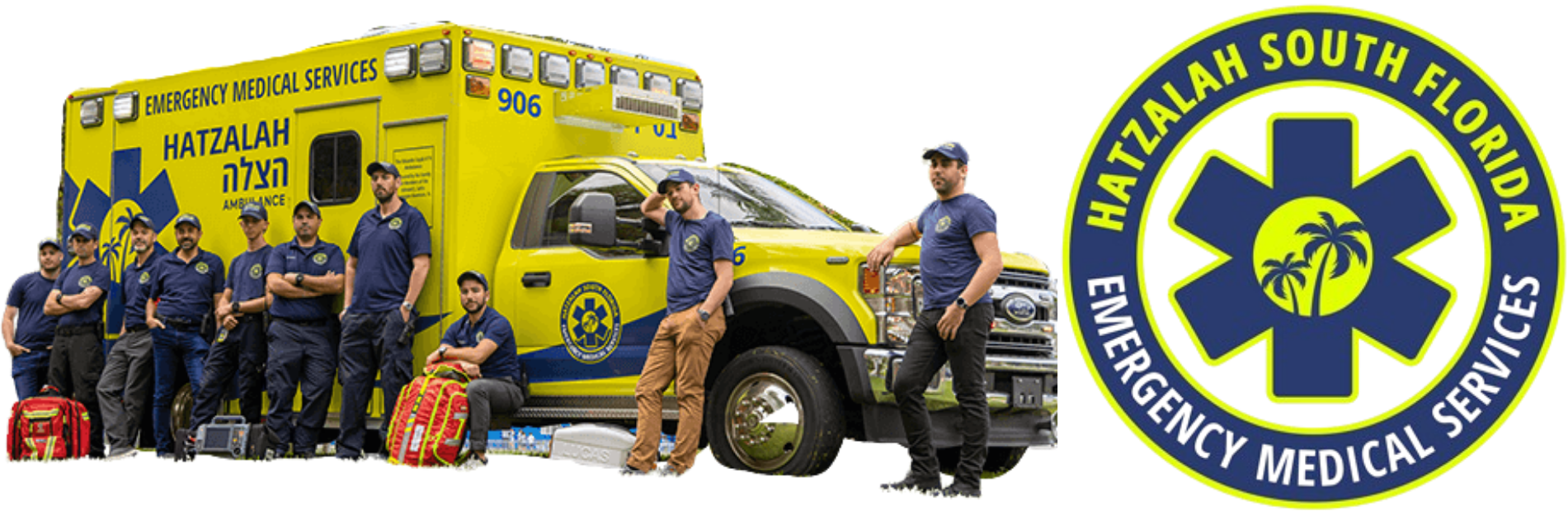
      Proud Sponsors Of South Florida
      hatzalah south florida
      Hatzalah Emergency Medical Services

      View Our Reviews Accross All PlatformsΒ Here

      Proudly Serving all of South Florida

      We are here to answer any question you may have.
      +

      What is mold clearance testing?

      Mold clearance testing is a post-remediation environmental evaluation performed after mold removal or water damage restoration to help determine whether indoor environmental conditions have been properly stabilized. The goal is to evaluate airborne mold levels, moisture conditions, and remediation effectiveness after cleanup has been completed.

      In Miami and throughout South Florida, elevated humidity and hidden moisture often allow contamination to continue developing behind walls, inside HVAC systems, beneath flooring, or within insulation even after visible mold has been removed. Clearance testing helps identify whether airborne contamination may still remain inside the property.

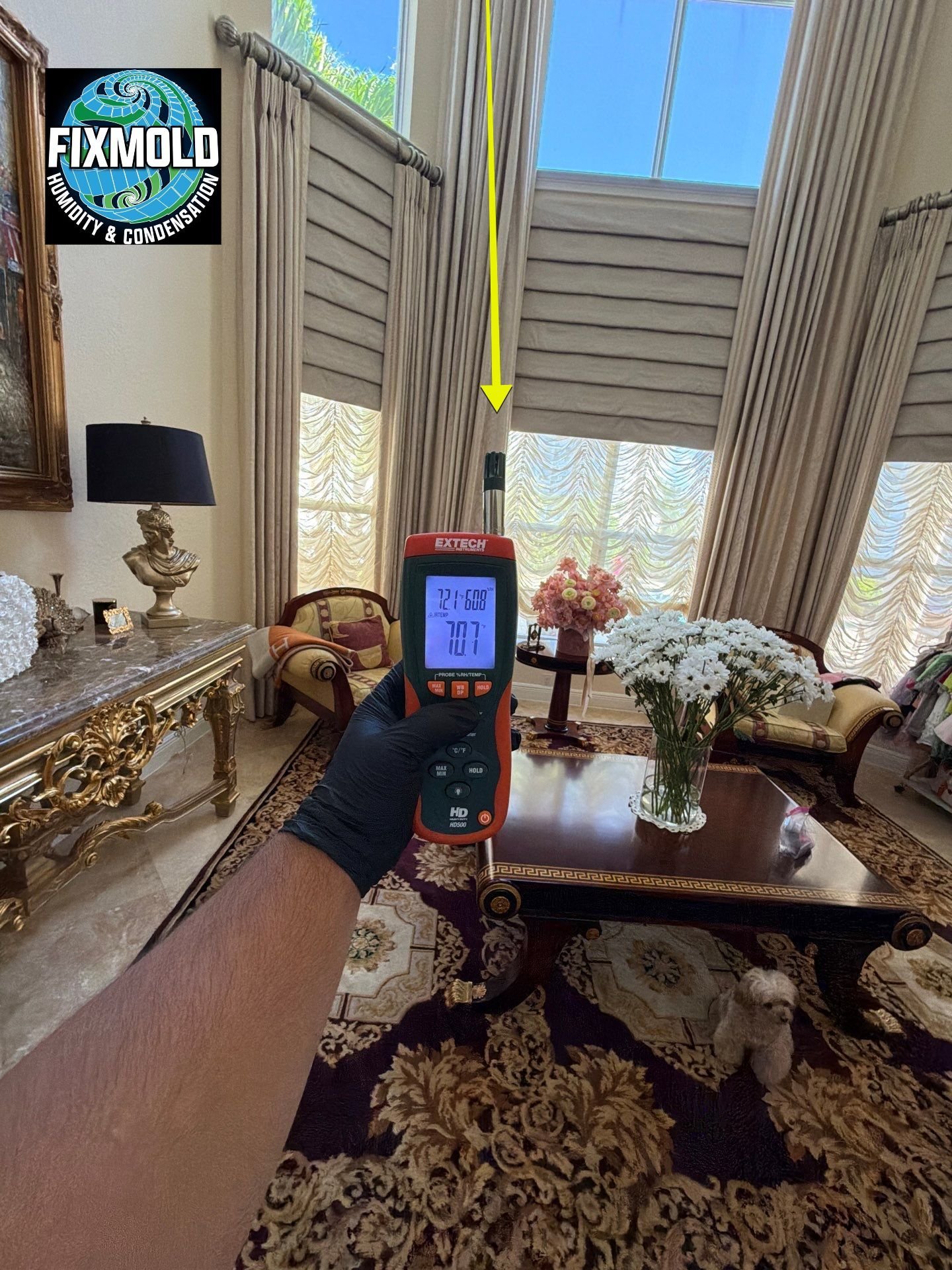
      The process often includes air sampling, moisture detection, thermal imaging, humidity measurements, HVAC inspection, and visual evaluation of remediated areas. Indoor air samples are commonly compared to outdoor control samples to evaluate whether indoor mold levels appear normal for the environment.

      Clearance testing is frequently recommended after large mold remediation projects, flooding, attic mold cleanup, HVAC contamination, or water intrusion events. Many property owners also request clearance certificates for documentation during real estate transactions, insurance claims, or contractor verification.

      Post-remediation verification provides a clearer understanding of whether environmental conditions have improved following remediation work.

      +

      Why is clearance testing important after mold remediation?

      Clearance testing helps confirm whether remediation work successfully addressed the contamination and whether indoor environmental conditions have returned to acceptable levels. Visible mold removal alone does not always guarantee that airborne spores, hidden moisture, or HVAC contamination have been fully corrected.

      South Florida’s humidity creates ongoing environmental pressure inside homes and buildings, and moisture may remain trapped inside concealed structural cavities long after remediation appears complete. Without proper post-remediation evaluation, hidden contamination or elevated airborne mold levels may continue affecting indoor air quality.

      Testing may also identify unresolved moisture problems such as roof leaks, plumbing leaks, condensation, wet insulation, attic humidity, or HVAC moisture that could allow mold to return later. In many cases, recurring mold problems happen because the original moisture source was never fully corrected.

      Clearance testing provides additional environmental verification through laboratory analysis, moisture measurements, and inspection findings rather than relying solely on visual appearance. Property owners often use the results for peace of mind, environmental documentation, or verification that remediation goals were properly achieved.

      Comprehensive post-remediation evaluation helps reduce the likelihood of ongoing indoor air quality and moisture-related problems.

      +

      Can mold return even after remediation is completed?

      Yes. Mold can return if the underlying moisture conditions were not fully corrected during remediation. In Miami’s humid climate, condensation, roof leaks, plumbing leaks, HVAC moisture, attic humidity, poor ventilation, and hidden water intrusion frequently contribute to recurring contamination.

      Many properties appear clean after remediation while elevated humidity or concealed dampness continues affecting structural materials behind walls, beneath flooring, or inside ventilation systems. Over time, microbial growth may redevelop if those moisture conditions remain active.

      HVAC systems are a common source of recurring problems because condensation may continue forming inside ducts, vents, insulation, and air handlers. Oversized AC systems, poor airflow, clogged drain lines, and high indoor humidity often contribute to repeated contamination.

      Professional clearance testing helps identify whether elevated airborne mold levels or moisture conditions still exist after remediation. Moisture detection, thermal imaging, and environmental testing provide additional insight into hidden environmental issues that may not be visible during a standard walkthrough.

      Long-term prevention depends heavily on humidity control, ventilation improvement, moisture management, and correcting the original source of water intrusion affecting the property.


      +

      What does a mold clearance certificate include?

      A mold clearance certificate or post-remediation report generally documents the environmental findings observed during the clearance inspection process. The report may include inspection notes, moisture readings, laboratory air sample results, humidity measurements, HVAC observations, remediation area evaluations, and environmental conclusions regarding the condition of the property at the time of testing.

      The specific information included depends on the scope of the inspection and the environmental testing performed. Some reports focus primarily on airborne mold analysis, while others include detailed moisture mapping, thermal imaging findings, and structural observations related to the remediation project.

      Property owners throughout Miami often request clearance certificates after mold remediation, water damage restoration, storm cleanup, or HVAC contamination projects. The documentation may be useful during real estate transactions, insurance claims, contractor verification, tenant disputes, or post-restoration environmental reviews.

      A proper clearance certificate should be based on comprehensive environmental evaluation rather than a simple visual inspection alone. Hidden moisture and airborne contamination can still exist even when surfaces appear clean.

      Thorough environmental analysis provides more reliable information about indoor conditions after remediation has been completed.

      +

      Is indoor air quality testing part of mold clearance inspections?

      Yes. Indoor air quality testing is commonly included during mold clearance evaluations because airborne contamination may remain present after remediation work has been completed. Air sampling helps evaluate whether elevated mold spore levels still exist inside the property compared to outdoor environmental conditions.

      In South Florida, airborne mold concerns are especially common because humidity and moisture remain elevated year-round. HVAC systems, hidden condensation, attic humidity, water intrusion, and poor ventilation frequently contribute to indoor air contamination even after visible remediation appears complete.

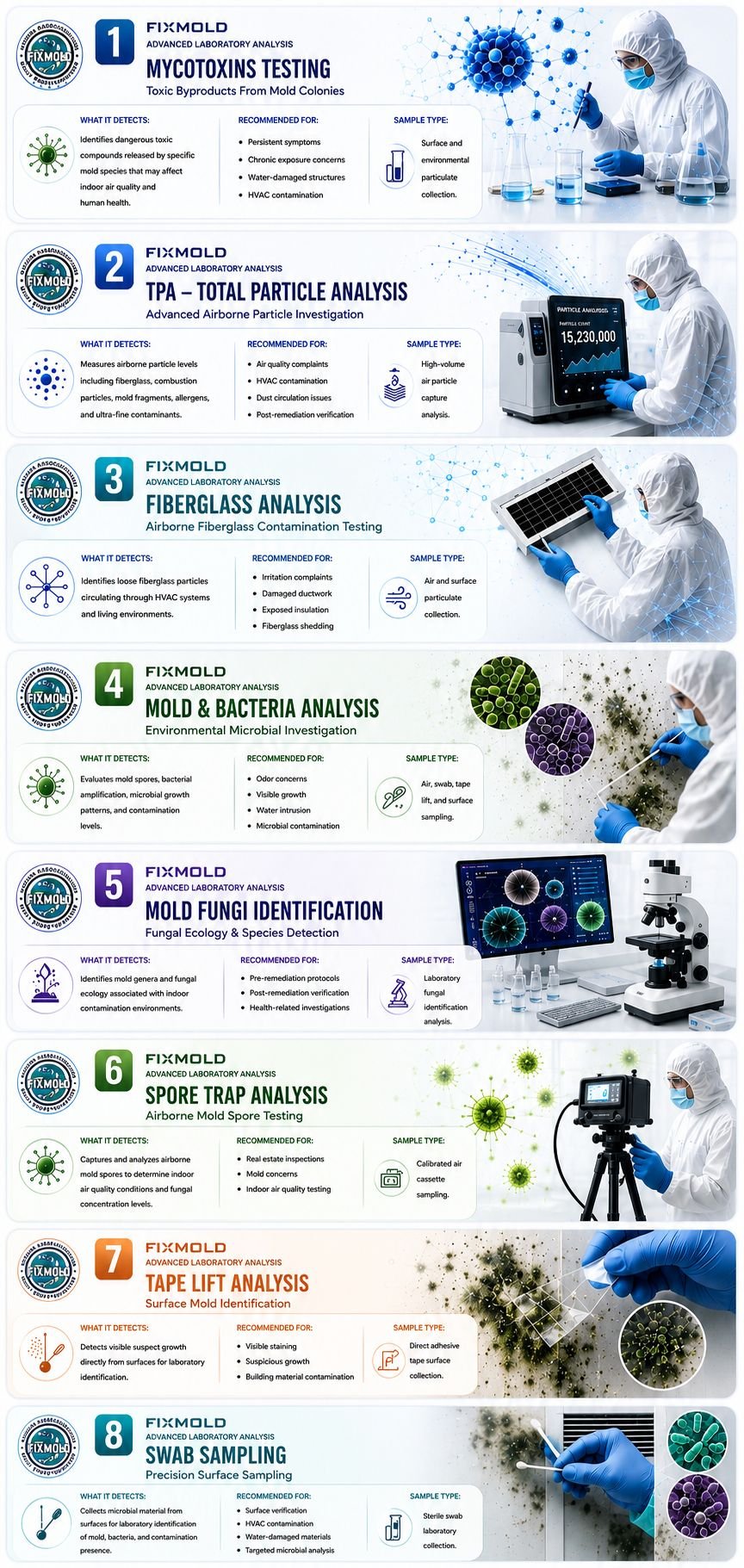
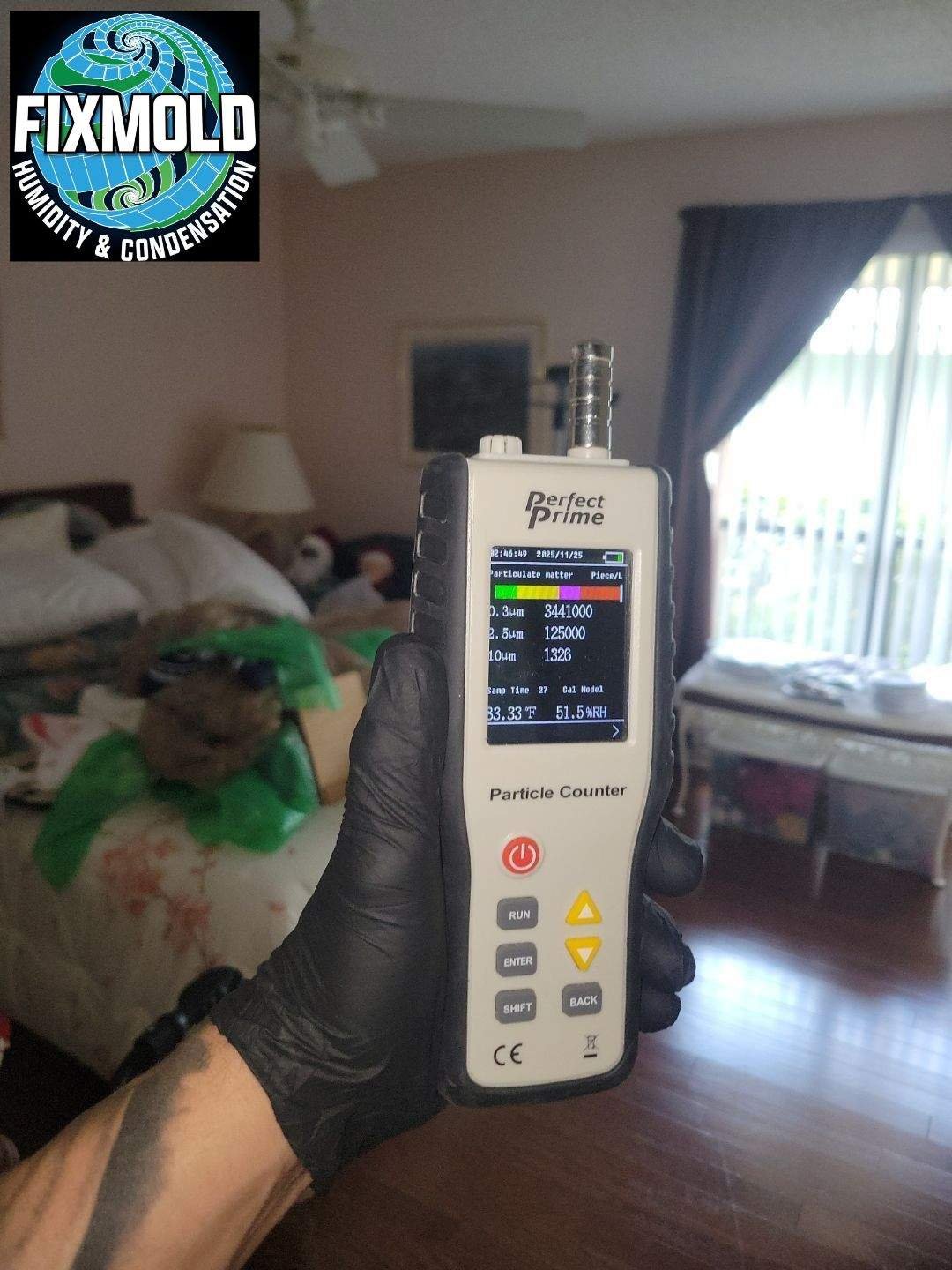
      Air quality testing may involve airborne spore analysis, particle testing, HVAC evaluation, and environmental inspection of affected areas. Some properties also require moisture mapping or thermal imaging to identify hidden dampness that could continue affecting indoor conditions.

      Property owners often request indoor air quality testing when musty odors, stale air, recurring humidity, or lingering environmental concerns remain after remediation. Testing can help determine whether airborne contamination levels have normalized or whether additional corrective work may still be necessary.
      Environmental testing provides a more complete understanding of indoor conditions following mold remediation and moisture-related restoration projects.
      Fixmold Miami
      Fixmold Miami
      Logo
      10750 NW 6th CtMiami, FL 33168
      License
      #MRSR2709 #MRSA2521
      Fixmold Miami
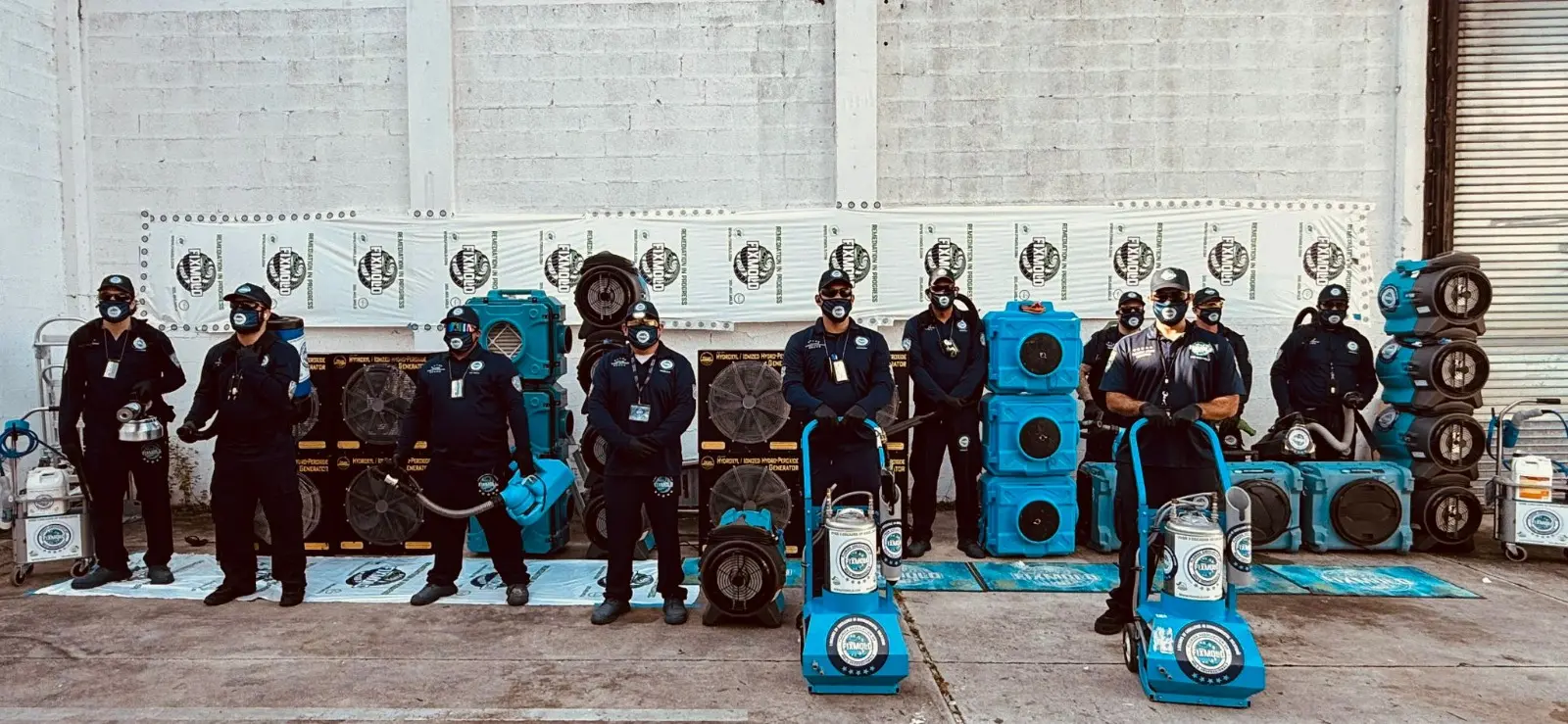
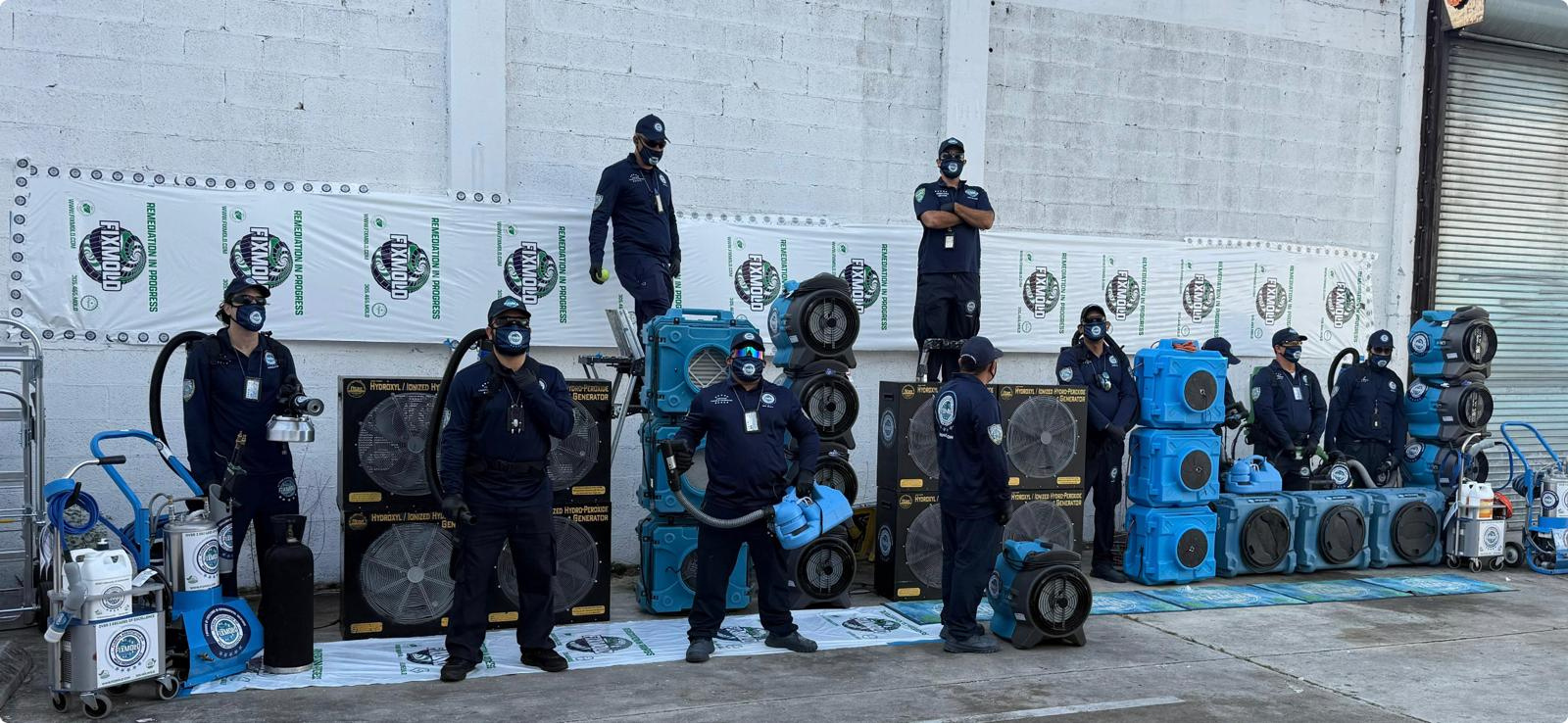
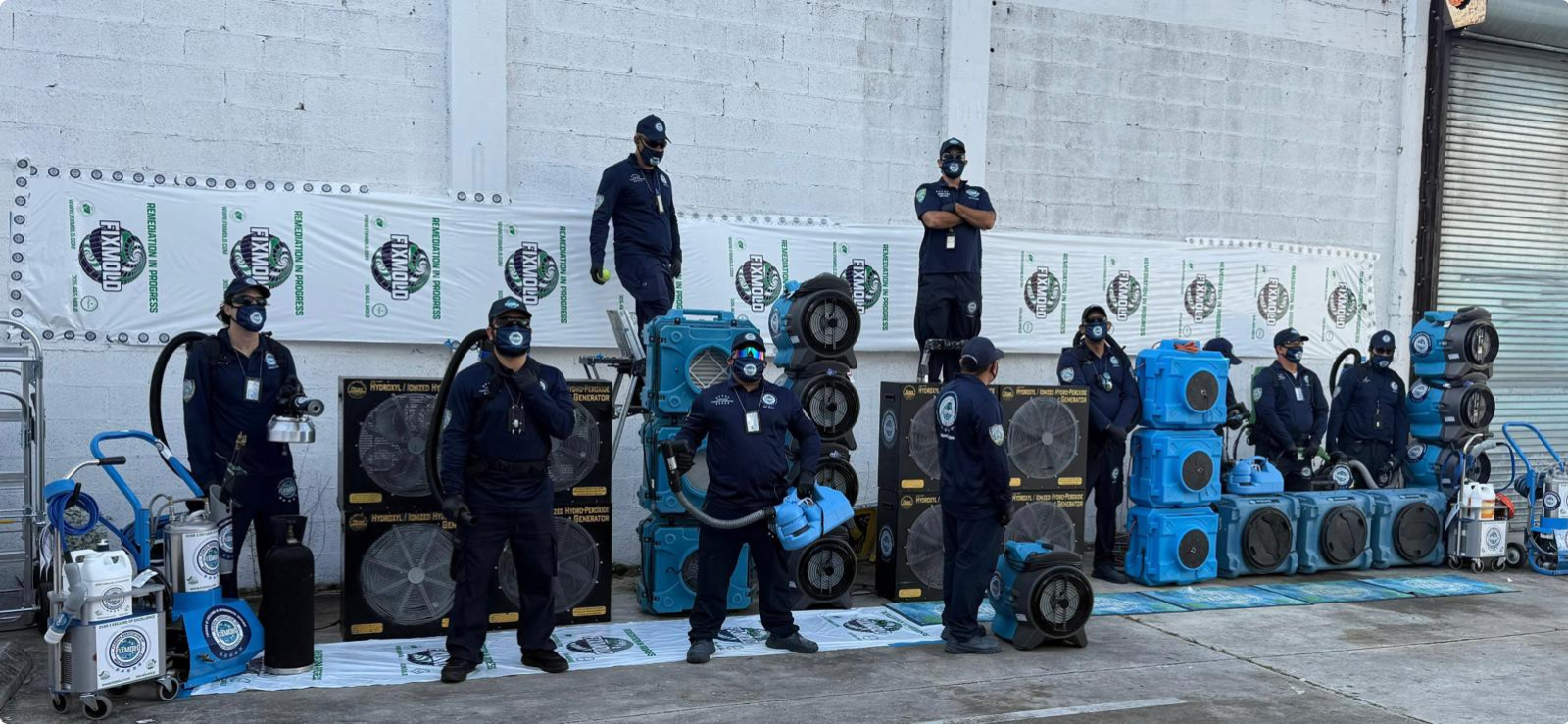
      Fixmold Team
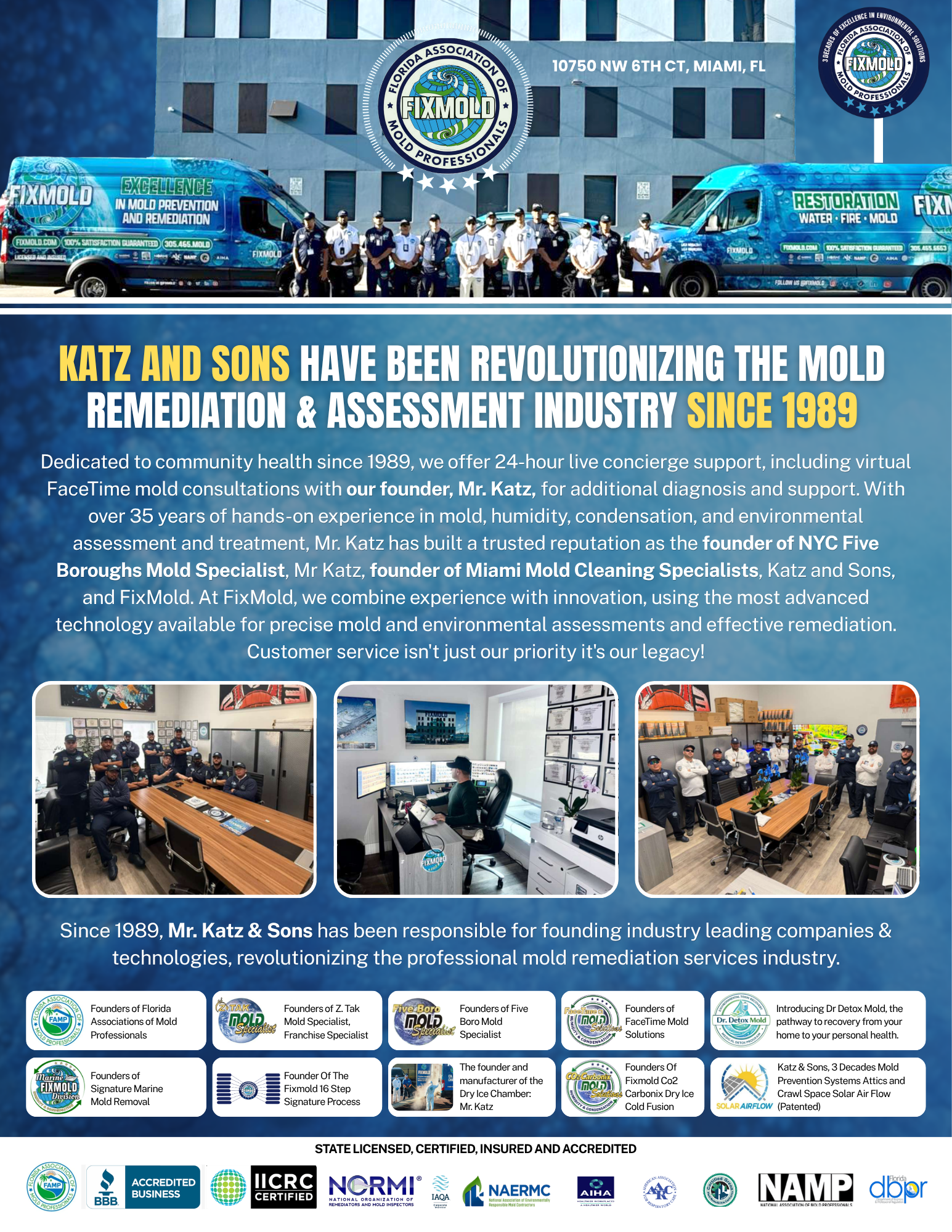
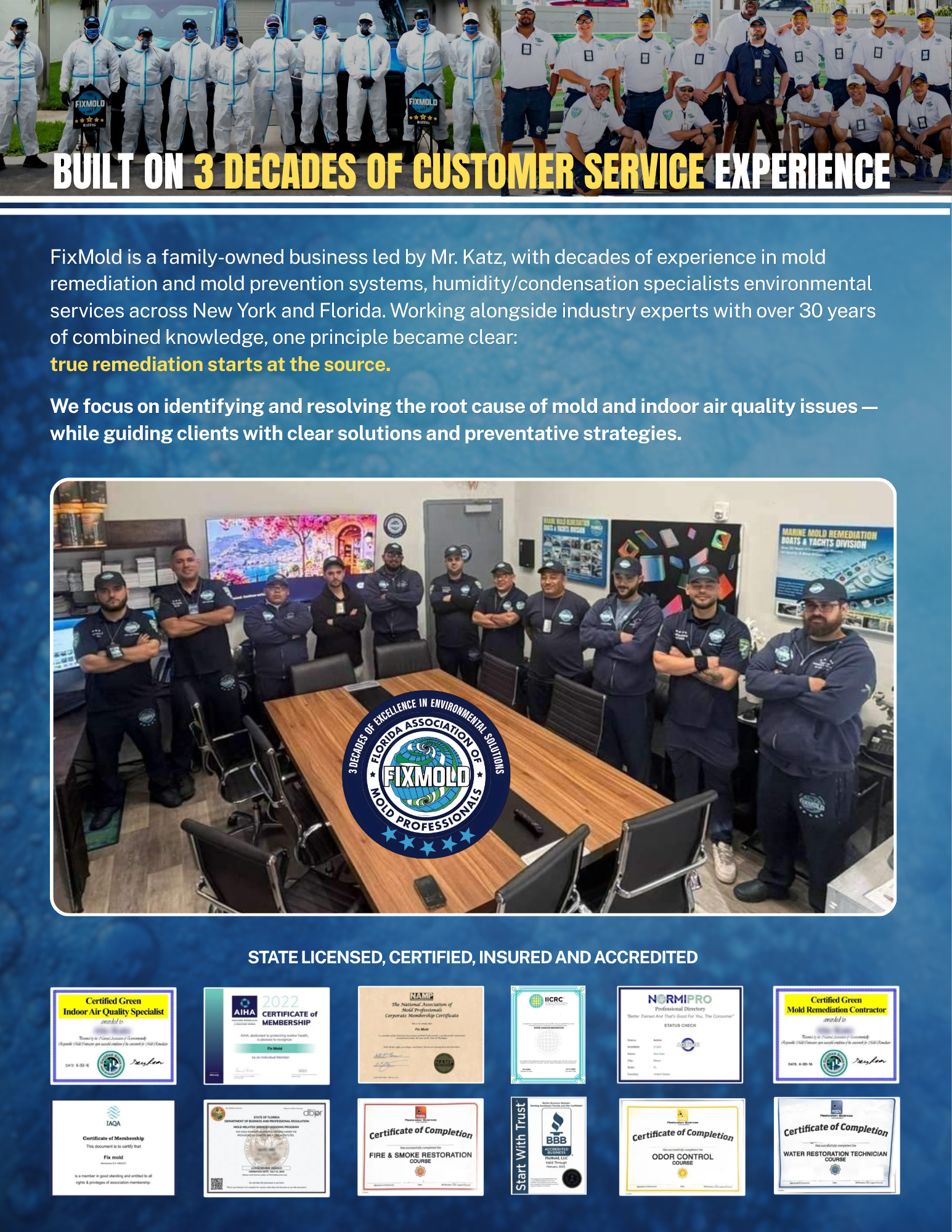
      Founded by industry expert Moty Katz, backed by a 30+ year family legacy in mold remediation and prevention.
      Air Quality Testing. Mycotoxins.
      Hayes
      Mold Testing &
      Air Samples
      Proud Sponsors Of South Florida
      hatzalah south florida
      Hatzalah Emergency Medical Services
      Air Quality Testing. Mycotoxins.
      Hayes
      Mold Testing & Air Samples
      Proud Sponsors Of South Florida
      hatzalah south florida
      Hatzalah Emergency Medical Services

      FixMold Mold Inspection, Mold Testing & Mold Remediation Services Across South Florida

      Serving Multiple Counties

      Urgent Enquiry Virtual Assessment
      🎁 Today’s Offer
      ×

      Today's Special Offers

      πŸ“ž Free Virtual Facetime Mold Assessment / Mold Solutions πŸ’² $50 Off Mold Testing / Inspection πŸ”₯ $150 Off Mold Remediation Services πŸ”₯ Additional 5% Off For Senior Citizens πŸ”₯ Additional 6% Off For Veterans πŸ”₯ Additional 5% Off For Pregnant Women πŸ”₯ Additional 5% Off For Immune Compromised & Handicaps πŸ”₯ Additional 10% Off For Pathway To Recovery (Dr. Detox Mold)