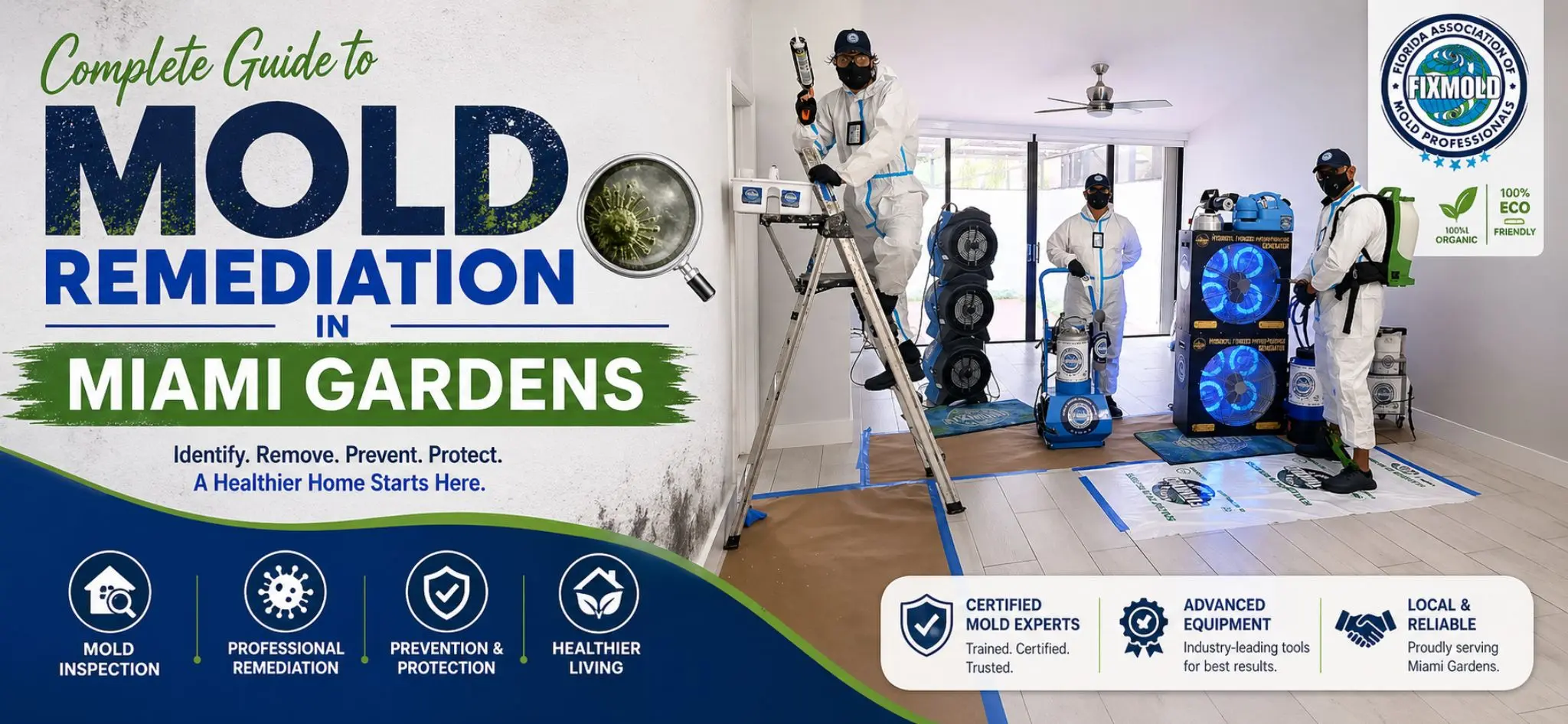
Complete Guide to Mold Remediation in Miami Gardens
milly g
April 30th, 2026
No Comments
Like what we publish? Pin Fixmold Miami as a preferred source on Google.
You noticed a dark patch behind the bathroom cabinet. You ignored it. Two months later, you’ve got a full-blown mold colony behind the drywall, your toddler is coughing every night, and a contractor just quoted you $4,800 in damage.
That scenario plays out constantly in Miami Gardens homes. And it’s almost always preventable.
Mold remediation in Miami Gardens isn’t just a seasonal concern. With year-round humidity averaging above 70%, ocean air intrusion, and homes that stay sealed and air-conditioned for months, South Florida creates near-perfect conditions for mold growth. Whether you own a single-family home near NW 183rd Street or manage a rental unit off Palmetto Expressway, mold is a problem that gets worse the longer you wait.
This guide gives you the real information — what’s actually happening inside your walls, how professional mold remediation in Miami, FL works, and when you genuinely need to call in the pros.
What Makes Miami Gardens a High-Risk Zone for Mold?
Miami Gardens sits in Miami-Dade County, where average annual humidity rarely dips below 65%. Mold only needs 60% relative humidity and an organic surface (drywall, wood framing, ceiling tiles) to start growing. That’s basically every wall in most homes here.
A few factors push local risk even higher:
Flat rooflines common in South Florida construction trap moisture and are slow to dry after rain.
AC systems running 10+ months a year create temperature differentials that cause condensation inside walls.
Older homes (pre-2000 construction) often lack the vapor barriers now required by the Florida building code.
Post-hurricane moisture intrusion frequently goes undetected for weeks.
Most homeowners don’t realize that mold can begin colonizing within 24 to 48 hours of a water intrusion event. By the time you see discoloration, the fungal network (called mycelium) may have already spread several feet in every direction.
What Does Professional Mold Remediation Actually Involve?
Answer: Professional mold remediation is the process of safely identifying, containing, removing, and treating mold growth in a structure while addressing the moisture source that caused it. Unlike simple cleaning, proper remediation follows EPA and IICRC S520 standards to prevent cross-contamination and recurrence.
Here’s how a legitimate remediation job breaks down, step by step:
Inspection and Moisture Mapping — A certified inspector uses thermal imaging and moisture meters to find every affected area, including zones not visible to the naked eye. This typically includes air quality sampling to identify spore types and concentrations.
Containment Setup — Plastic sheeting and negative air pressure machines isolate the work zone. This stops spores from migrating to unaffected rooms during removal. Skipping this step is the #1 reason DIY mold removal fails.
HEPA Filtration — Industrial HEPA air scrubbers run continuously to capture airborne spores down to 0.3 microns. Standard shop vacuums and box fans make things worse, not better.
Removal of Contaminated Materials — Porous materials like drywall, insulation, and carpet padding are removed and double-bagged per EPA guidelines. Non-porous surfaces are cleaned with EPA-registered antimicrobial solutions.
Drying and Treatment — Affected cavities are dried to below 15% moisture content. Encapsulant coatings are applied where appropriate to inhibit future growth.
Post-Remediation Verification — A clearance test confirms spore counts have returned to normal levels before reconstruction begins.
How Do You Know If You Need Remediation vs. Simple Cleaning?
This is where things usually go wrong. People grab bleach and scrub visible mold, declare victory, and then wonder why it’s back in three weeks.
A simple surface clean might be enough if:
The affected area is less than 10 square feet
The material is non-porous (glass, tile, metal)
There was no prolonged moisture exposure (more than 48 hours)
The mold is surface-level only with no musty odor lingering after cleaning
You need professional mold remediation in Miami Gardens if:
Mold keeps coming back after cleaning
You notice a persistent musty smell with no visible source
Someone in the home has unexplained respiratory symptoms, headaches, or sinus issues
You recently had a flood, a roof leak, or a plumbing failure
Mold is growing on or behind drywall, insulation, or wood framing
The affected area is larger than 10 square feet (EPA guideline threshold)
Bleach is often ineffective on porous materials. It kills surface spores but doesn’t penetrate the material, leaving the root structure intact. The mold regrows from underneath. Many Miami Gardens homeowners waste money on repeated surface treatments when the real fix requires professional removal and drying.
Health Risks You Shouldn’t Minimize
Mold exposure isn’t just an aesthetic or property issue. It’s a genuine health concern, especially for certain populations.
Common symptoms from mold exposure include nasal congestion, coughing, wheezing, eye irritation, and skin rashes. In people with asthma or compromised immune systems, exposure to species like Aspergillus, Cladosporium, or Stachybotrys chartarum (black mold) can trigger severe respiratory reactions.
The CDC notes that damp indoor environments are linked to upper respiratory tract symptoms in otherwise healthy people. Children and elderly residents are particularly vulnerable.
If you or anyone in your household has developed new or worsening respiratory symptoms, a professional indoor air quality test should be your first call — not your last resort.
These numbers assume you’re working with a licensed, insured contractor following IICRC standards. Lowball quotes from unlicensed contractors often skip containment, air scrubbing, and post-remediation testing — meaning the mold comes back and you pay twice.
Always ask for a written scope of work, proof of IICRC or state licensing, and a clear policy on post-remediation verification testing.
Mold Prevention: What Actually Works in South Florida
Remediation fixes the existing problem. Prevention stops the next one. In Miami Gardens specifically, these measures make the biggest difference:
Control indoor humidity aggressively. Keep indoor relative humidity between 45% and 55%. A $40 hygrometer from any hardware store will tell you your current level. If you’re consistently above 60%, add a portable dehumidifier to problem rooms.
Service your HVAC system every 6 months. Dirty coils and clogged drain pans are among the top causes of mold growth in South Florida homes. AC systems that run constantly need more frequent maintenance than the national average suggests.
Inspect your roof after every major storm. Even small penetrations create slow leaks that saturate insulation for months before becoming visible. Post-storm mold inspections catch moisture problems before they become remediation jobs.
Seal bathroom and kitchen grout annually. These are the most common entry points for moisture in South Florida homes. Unsealed grout in a high-humidity bathroom can support mold within weeks.
Don’t ignore that smell. A musty, earthy odor in a specific room or closet is almost always a sign of hidden mold. Don’t assume it’s just old carpet or a stale space. Get it checked.
Why Local Experience Matters for Mold Remediation in Miami FL
Not every mold company understands South Florida’s specific challenges. Seasonal humidity patterns, common local construction methods, post-hurricane protocols, and Miami-Dade County permitting requirements all require local knowledge.
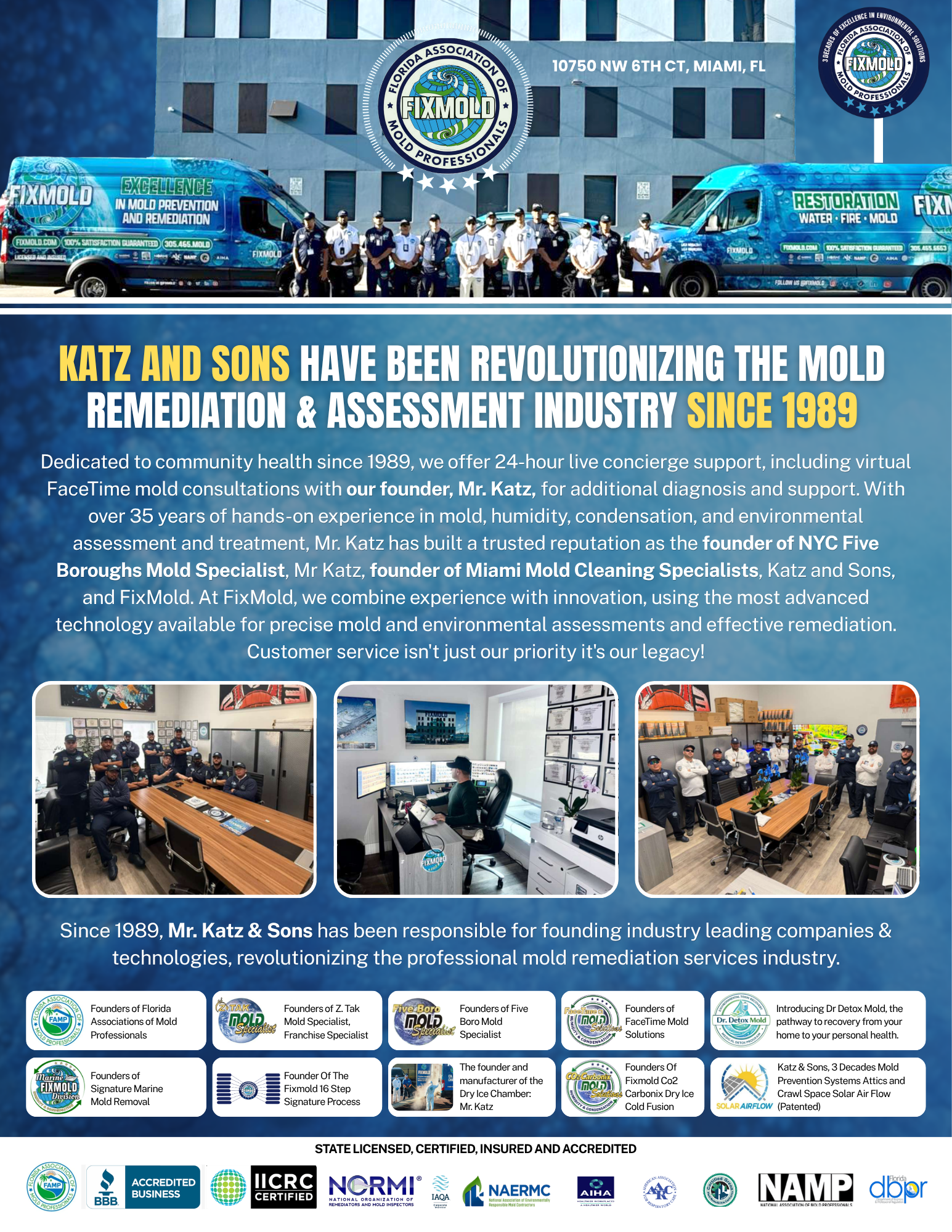
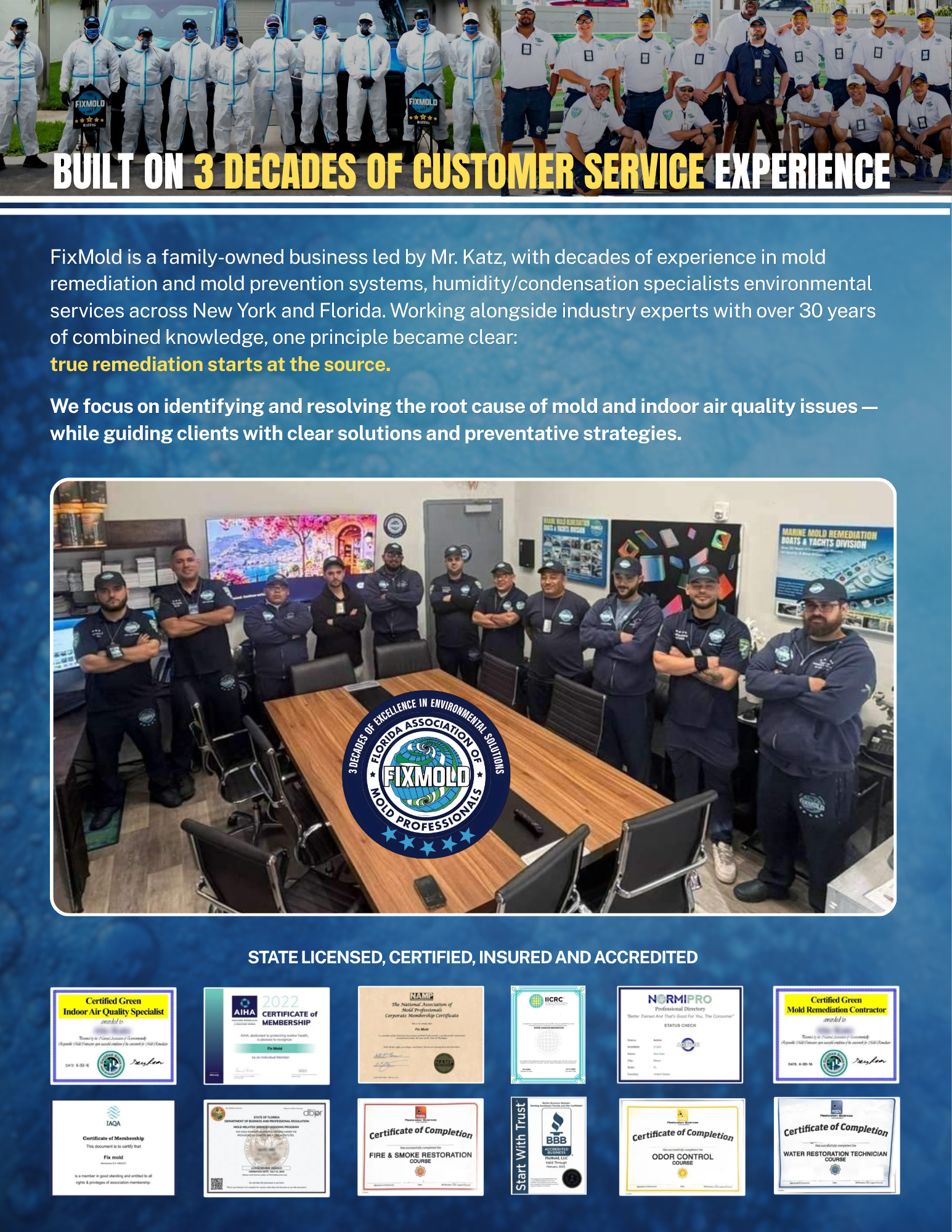
At FixMold, the team has worked in Miami Gardens properties ranging from 1960s CBS block homes to newer townhome developments. That on-the-ground experience means faster diagnosis, more accurate scoping, and remediation approaches that account for the actual way these structures are built, ventilated, and maintained.
If you’re comparing contractors, ask specifically about their experience with South Florida construction and whether they carry general liability insurance and Florida state contractor licensing.
Conclusion
Mold in Miami Gardens isn’t a matter of bad luck. It’s a predictable consequence of living in one of the most humid climates in the continental United States. The homes here are designed to keep heat out, and that often means moisture gets trapped in.
The three things to take away from this guide:
1. Act fast. Mold growth accelerates after 48 hours. The longer you wait, the more material gets affected and the higher the remediation cost.
2. Don’t confuse surface cleaning with actual remediation. If the moisture source isn’t fixed and porous materials aren’t properly removed, the mold returns.
3. Work with licensed professionals. South Florida has specific challenges that require local expertise, not just a general contractor with a bottle of bleach.
If you’re seeing mold, smelling something that shouldn’t be there, or have just gone through a water event of any kind, reach out to the FixMold team for an inspection. Catching it early is always cheaper, healthier, and less disruptive than dealing with it after it spreads.
Schedule Your Free Mold Inspection Today Visit https://fixmold.com/contacts/
Frequently Asked Questions
How long does mold remediation take in Miami Gardens?
Most single-room remediation jobs take 1 to 3 days. Larger whole-home projects or post-flood remediation can take 5 to 10 business days depending on drying time and the extent of material removal. Your contractor should provide a written timeline before work begins.
Can I stay in my home during mold remediation?
It depends on the scope and location. For contained small-area jobs, staying home is often fine if the affected room is sealed off. For large-scale remediation involving HVAC systems or multiple rooms, temporary relocation is strongly recommended, especially for households with children, elderly residents, or anyone with respiratory conditions.
Does homeowner’s insurance cover mold remediation in Miami, FL?
Most standard homeowner’s policies cover mold remediation only if it’s a direct result of a covered peril (like a burst pipe), not from long-term neglect or gradual moisture buildup. Florida-specific policies may have mold caps or exclusions. Always document the damage with photos and contact your insurer before starting remediation work.
What is the difference between mold testing and mold remediation?
Mold testing identifies what types of mold are present and at what concentration levels, both in the air and on surfaces. Mold remediation is the actual physical process of removing and treating the mold. Testing before remediation helps scope the job accurately. Testing after remediation (clearance testing) confirms the job was successful.
Is black mold more dangerous than other types of mold?
Black mold commonly refers to Stachybotrys chartarum, which can produce mycotoxins under certain conditions. However, mold color alone doesn’t determine toxicity. Many dark-colored molds are not Stachybotrys, and many dangerous molds are not black. Any significant mold growth warrants professional assessment regardless of color.
Milly is a content contributor at FixMold with a focus on mold inspection, remediation strategies, air quality improvement, and property protection. She shares practical insights and educational resources to help homeowners and businesses maintain safer, cleaner indoor environments.