Water damage is not always visible. A wall may appear dry, flooring may look undamaged, and a ceiling may show no obvious staining—while moisture is quietly spreading behind the surface.
Hidden leaks and water intrusion can originate from plumbing lines, roofs, windows, exterior walls, air-conditioning systems, bathrooms, kitchens, appliances, or condensation. Because water can travel along framing, insulation, pipes, drywall and flooring, the location where damage appears may be far from the actual source.
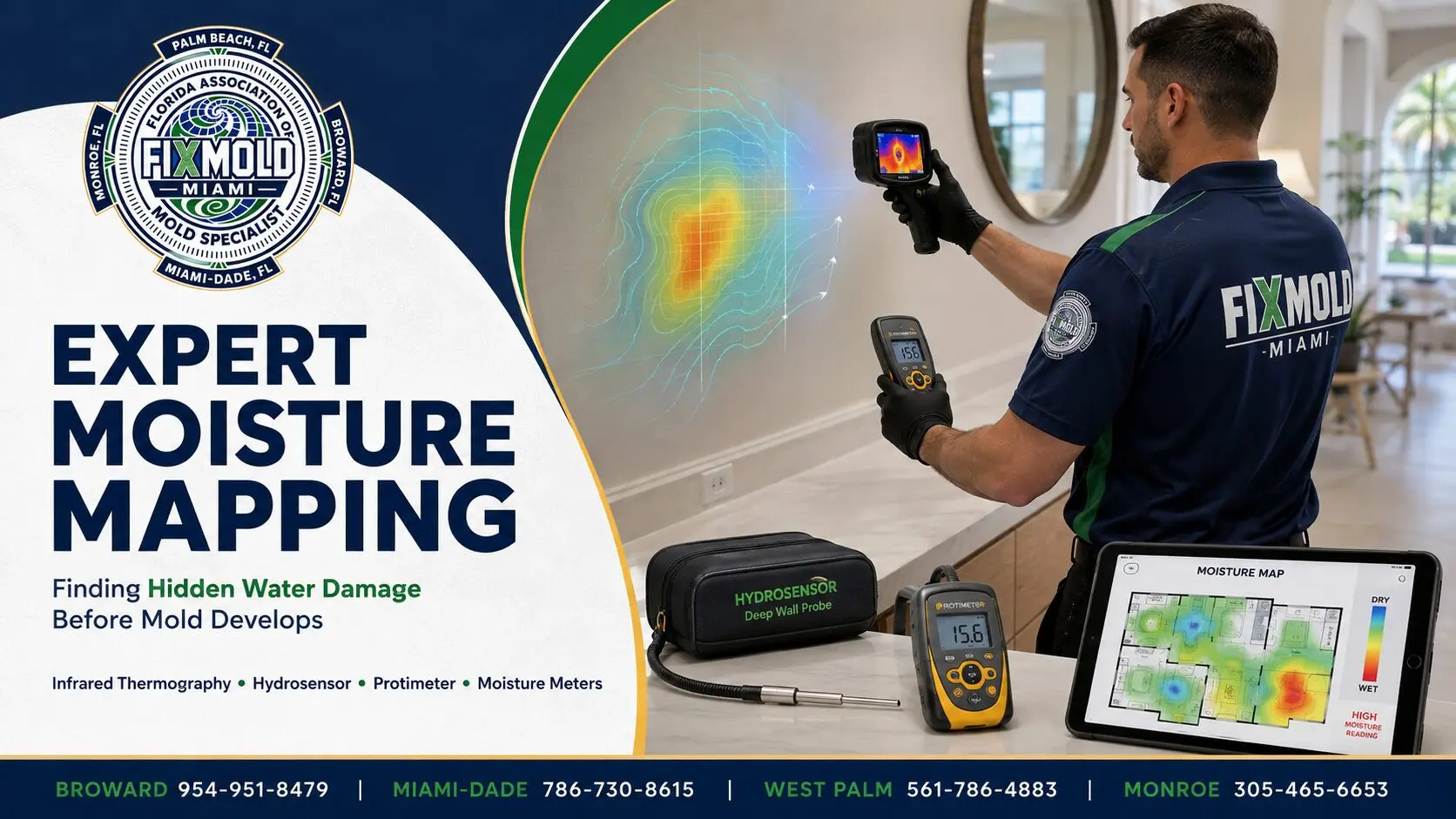
FixMold Miami’s expert moisture-mapping service combines advanced inspection instruments with systematic testing to locate suspicious moisture, document affected materials and help identify the likely source of the intrusion.
What Is Moisture Mapping?
Moisture mapping is the process of taking readings throughout a property and recording where elevated moisture is detected. Rather than checking only one visible stain, our technicians compare suspected areas with known dry materials to understand the direction, size and severity of water migration.
A professional moisture assessment may include:
- Infrared thermography
- Hydrosensor deep-wall probes
- Protimeter moisture readings
- Pinless moisture meters
- Temperature and relative-humidity measurements
- Visual inspection
- Photographic documentation
- Digital mapping of affected areas
Using multiple instruments is important because no single device provides the complete picture.
Infrared Thermography
Infrared thermography allows our technicians to scan walls, ceilings, flooring and HVAC areas for unusual temperature patterns.
Wet materials may heat and cool differently than surrounding dry materials. A thermal-imaging camera can therefore reveal temperature anomalies that may be associated with moisture intrusion, missing insulation, air leakage or condensation.
Infrared thermography does not see through walls and does not confirm mold. For that reason, every suspicious thermal pattern should be investigated and verified using direct moisture readings and additional inspection methods.
This combination helps technicians screen larger areas efficiently without immediately opening walls or damaging finishes.
Hydrosensor Deep-Wall Inspections
Surface-level readings may not reveal moisture trapped inside insulated walls or deep building cavities. A Hydrosensor uses extended probes to evaluate areas that conventional surface meters may not reach.
Hydrosensor testing can be helpful when inspecting:
- Insulated wall cavities
- Ceiling assemblies
- Areas below windows
- Exterior-facing walls
- Spaces near plumbing lines
- HVAC and air-handler areas
- Locations affected by previous leaks
This method can help determine whether moisture is present deeper within the building assembly.
Protimeter Moisture Readings
Protimeter instruments help technicians compare materials throughout the affected area. Readings can be collected from drywall, wood, ceilings, baseboards and other building materials.
The technician establishes dry reference readings and compares them with suspected wet areas. This process helps confirm elevated moisture and establish the approximate boundaries of water migration.
Protimeter readings are particularly useful for answering questions such as:
- Is the material actually wet?
- How far has the moisture traveled?
- Which areas appear unaffected?
- Is the affected area increasing?
- Are materials returning toward normal moisture conditions?
Pinless Moisture Meters
Pinless moisture meters provide non-invasive screening beneath surfaces without puncturing the material. They are useful for quickly comparing multiple areas across walls, ceilings, cabinetry and flooring.
These instruments can help identify moisture patterns while minimizing disruption to finished surfaces. When elevated readings are discovered, the technician can investigate further using additional equipment and inspection methods.
Why Hidden Moisture Creates a Mold Concern
Many common building materials can retain moisture, including drywall, insulation, wood framing, cabinetry, carpet padding and flooring systems.
When moisture remains trapped, it can create conditions that support mold contamination. Growth may develop inside a concealed wall cavity or beneath flooring before the homeowner or tenant notices staining, odors or visible mold.
Possible warning signs include:
- Musty or unusual odors
- Discoloration on walls or ceilings
- Bubbling or peeling paint
- Warped flooring or baseboards
- Condensation around vents or windows
- Repeated HVAC drain-line problems
- Unexplained increases in indoor humidity
- Previous plumbing, roof or appliance leaks
The absence of a visible stain does not necessarily mean the area is dry.
Finding the Source—not Just the Stain
Water often follows the path of least resistance. It may travel along pipes, framing, electrical penetrations, insulation and flooring before becoming visible.
For example, a ceiling stain may originate from an HVAC drain line several feet away. Moisture beneath wood flooring may come from a refrigerator line, dishwasher connection or exterior door. A damp wall may be caused by plumbing, window intrusion, roof damage or condensation.
Moisture mapping helps separate the visible symptom from the likely source.
Clear Documentation for Owners, Tenants and Property Managers
A professional moisture assessment provides more than a verbal opinion. Recorded readings, thermal images, photographs and mapped locations create a clearer picture of what was observed during the inspection.
This information can help homeowners, tenants, landlords and property managers understand:
- Where elevated moisture was detected
- Which materials may be affected
- How the moisture appears to be traveling
- Where additional investigation may be needed
- Whether mold testing or remediation should be considered
- What information may be useful when speaking with a plumber, roofer, HVAC contractor or other appropriate professional
Don’t Guess—Map It
If you suspect a concealed leak, water intrusion or unknown water damage, waiting for a large stain or visible mold can allow the affected area to grow.
FixMold Miami uses infrared thermography, Hydrosensor probes, Protimeter instruments, pinless moisture meters and documented moisture mapping to help identify what may be happening behind the surface.
Schedule an expert moisture-mapping inspection with FixMold Miami.
Broward: 954-951-8479
Miami-Dade: 786-730-8615
West Palm: 561-786-4883
Monroe: 305-465-6653
FixMold #FixMoldMiami #MoistureMapping #WaterDamage #HiddenLeaks #WaterIntrusion #InfraredThermography #MoistureInspection #MoldInspection #IndoorAirQuality #SouthFlorida
https://fixmold.com/locations/mold-remediation-coconut-grove-fl
Jerusha is a contributor at FixMold, specializing in mold remediation, indoor air quality, moisture control, and environmental wellness. She creates informative content focused on mold prevention, and advanced restoration solutions for residential and commercial properties.