A few months ago, a family in Boynton Beach contacted us after their teenage son had been dealing with chronic sinus infections for almost a year. Three different doctors. Multiple rounds of antibiotics. An allergy specialist. Nobody could figure out why he kept getting sick.
When our team walked into their home, the smell hit us before we even reached the hallway. Behind the drywall in the master bathroom, feeding off a slow leak from a toilet supply line that had been dripping for who knows how long, was one of the largest Stachybotrys colonies we had seen in a residential property in years.
The son started improving within three weeks of moving out while remediation was completed.
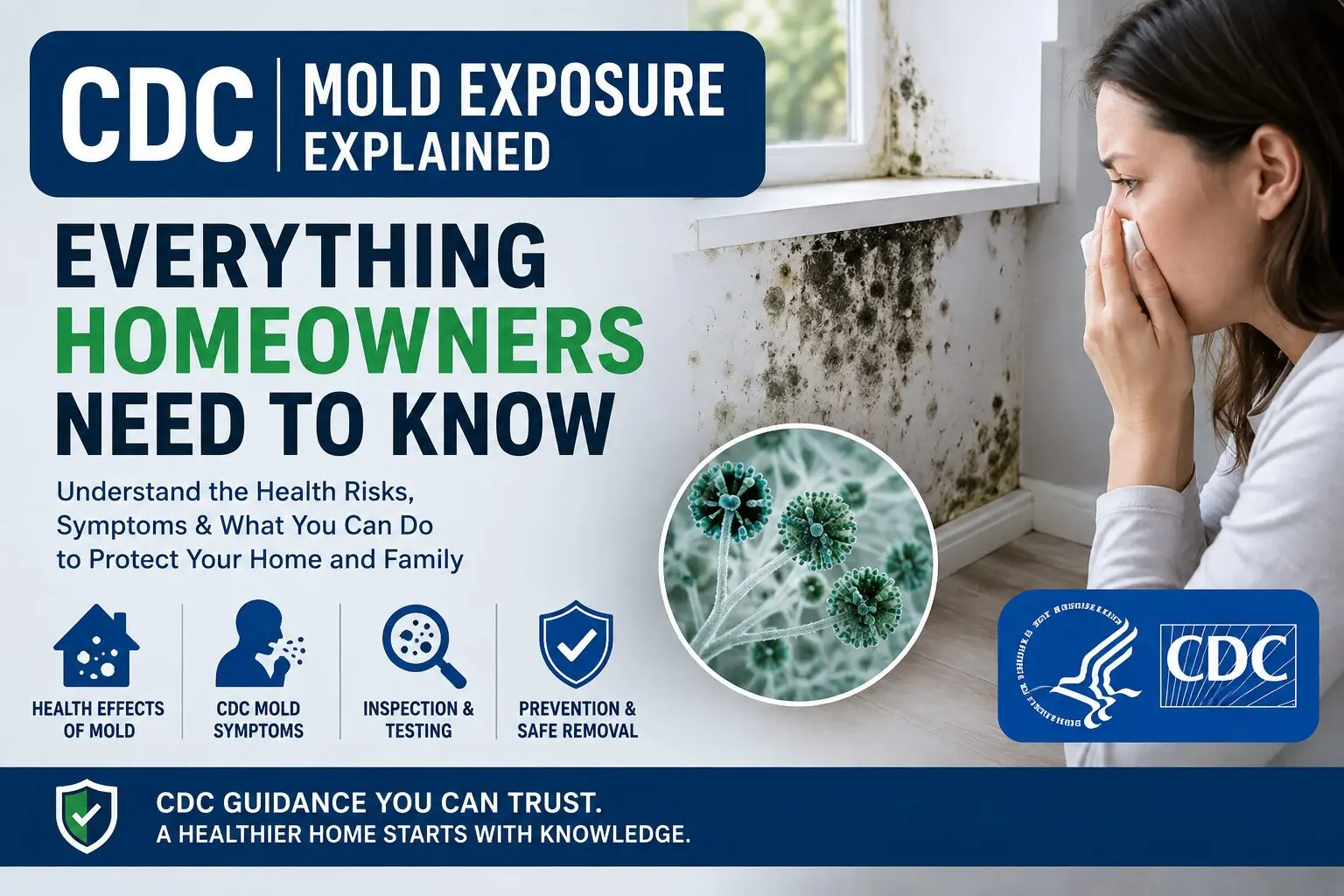
Stories like this are exactly why the Centers for Disease Control and Prevention takes indoor mold exposure seriously enough to publish dedicated guidance for homeowners, healthcare providers, and public health officials. If you have been searching for what the CDC says about mold exposure, this article breaks it down completely and honestly, without the technical language that makes government health documents hard to read.
What the CDC Actually Says About Mold Exposure
The CDC’s position on mold exposure is clear and has been consistent across years of published guidance. According to the CDC, mold can cause health effects in people, and the potential for those health effects exists wherever mold is present indoors, regardless of the species involved.
The CDC states that there is no practical way to eliminate all mold spores from an indoor environment because mold spores exist naturally in outdoor air and enter buildings constantly through doors, windows, HVAC systems, and on clothing. The goal of mold management is not elimination of all spores but prevention of indoor mold growth by controlling moisture, which is the single variable that determines whether spores develop into active colonies.
This is an important distinction. You are not trying to create a mold-free world inside your home. You are trying to prevent the conditions that allow mold to grow and colonize building materials.
The CDC also notes that sensitive groups, including people with allergies, asthma, compromised immune systems, and chronic respiratory conditions, may experience health effects from mold exposure at lower concentrations than healthy adults. There is no CDC-established safe level of indoor mold exposure because individual responses vary too significantly.
CDC Mold Health Effects: What the Research Shows
The CDC mold health effects documentation draws on decades of environmental health research and is more nuanced than most people realize. The agency does not take the position that all mold exposure causes serious harm, but it equally does not dismiss the documented health consequences of significant indoor exposure.
According to CDC guidance, mold exposure can produce the following health effects depending on the type of mold, the concentration of exposure, the duration, and the individual’s health status.
Respiratory Health Effects
Respiratory effects are the most consistently documented in CDC mold health effects literature. These include nasal and sinus congestion, throat irritation, coughing and wheezing, and in people with asthma, significantly worsened symptoms. The CDC cites research showing that damp indoor environments are associated with a range of upper and lower respiratory conditions in both children and adults.
A landmark 2004 report from the Institute of Medicine, which the CDC references in its mold guidance, found sufficient evidence to link indoor mold exposure with upper respiratory tract symptoms in otherwise healthy people, coughing and wheezing in otherwise healthy people, and asthma symptoms in people with established asthma. The report found limited but suggestive evidence linking mold exposure to development of asthma in some individuals.
Eye and Skin Irritation
Eye and skin irritation are documented in CDC mold illness guidance as common responses, particularly for individuals spending extended time in mold-contaminated environments. Itchy, watery eyes and skin rashes are reported by a significant percentage of people in water-damaged buildings.
Health Risks for People With Weakened Immune Systems
Immune system effects are addressed in CDC guidance specifically regarding people with compromised immunity. The CDC notes that individuals undergoing chemotherapy, organ transplant recipients, people with HIV, and those on long-term corticosteroids face elevated risk of serious infections from certain mold species, particularly Aspergillus, that present minimal risk to healthy people.
What the CDC Says About Mycotoxins
The CDC mold illness documentation is careful to note that while some molds produce mycotoxins, the scientific evidence connecting indoor mycotoxin exposure to specific chronic health conditions is still developing. The agency acknowledges that more research is needed while maintaining that mold-contaminated indoor environments should be remediated regardless of the species present.
CDC Black Mold Exposure: Setting the Record Straight
The phrase black mold symptoms CDC brings up one of the most searched and most misunderstood areas of indoor mold health guidance. Here is what the CDC actually says.
The CDC specifically addresses Stachybotrys chartarum, the species most commonly referred to as black mold, and its guidance is balanced. The CDC acknowledges that Stachybotrys is a toxin-producing mold that has been associated with adverse health effects but notes that the scientific evidence connecting it to severe or unique health consequences beyond those associated with other indoor molds is not conclusive based on current research.
What this means practically is not that black mold is harmless. It means the CDC’s position is that all significant indoor mold growth, regardless of species, warrants remediation because the health effects of mold exposure generally are documented and real, and because you cannot reliably assess health risk based on visual color identification alone. CDC black mold exposure guidance makes clear that professional testing is the only way to identify species accurately.
The CDC warns homeowners specifically against relying on visual identification to determine mold danger levels. Many mold species appear dark green or black. Some very light-colored molds are more toxigenic than dark ones. The color tells you almost nothing useful about the health risk.
When visible discoloration, persistent odors, or unexplained moisture are present, scheduling a professional mold inspection can help identify hidden contamination and determine the extent of the problem before it spreads further.
According to CDC guidance on black mold exposure, Stachybotrys requires sustained moisture on cellulose-rich materials to establish growth, which is why it is so consistently found in water-damaged drywall, ceiling tiles, and wooden framing. Its presence almost always indicates a prolonged, unresolved moisture problem rather than temporary dampness.
CDC Mold Symptoms: Recognizing Exposure in Your Household
The CDC mold symptoms documentation provides a practical framework for homeowners trying to determine whether health complaints in their household might be connected to indoor mold. The key patterns the CDC describes are worth understanding because they help distinguish mold-related illness from other conditions with similar presentations.
Symptoms That Get Worse at Home
Location-correlated symptoms are the most telling pattern in CDC mold illness guidance. If household members experience symptoms that are consistently worse at home and improve when spending extended time away, and then return when they come back, the CDC identifies this pattern as a meaningful indicator of an indoor air quality problem. This is one of the clearest signals available to homeowners without laboratory testing.
When Multiple Family Members Experience Similar Symptoms
Multiple household members affected is another pattern the CDC notes. When two or more people in the same home develop similar unexplained respiratory, allergic, or flu-like symptoms simultaneously without a confirmed infectious cause, the shared indoor environment becomes the primary investigation priority.
Common CDC Mold Symptoms to Watch For
Symptom clusters documented in CDC mold symptoms guidance include persistent coughing that does not resolve as expected, nasal congestion that antihistamines do not adequately control, headaches that are more frequent indoors, fatigue, and eye irritation. These symptoms individually have many possible causes. Their presence together, particularly with the location correlation pattern, is what the CDC points to as warranting environmental investigation.
The CDC emphasizes that a physician should be consulted when mold exposure is suspected because some mold-related health effects require medical treatment alongside environmental remediation. Treating the symptoms without addressing the environmental source, or remediating the home without treating an established respiratory condition, produces incomplete outcomes.
In many situations, professional mold testing provides valuable information about airborne spore levels and mold species, helping homeowners and remediation professionals make informed decisions about the next steps.
CDC Guidance on What Homeowners Should Do
The CDC’s practical recommendations for homeowners dealing with mold are more direct than many people expect from a government health agency.
Fix the Moisture Problem First
Fix the moisture source first. The CDC is explicit that cleaning mold without addressing the moisture problem that caused it will result in mold returning. Every remediation effort must begin with identifying and eliminating the water source, whether that is a plumbing leak, roof damage, condensation from inadequate insulation, or HVAC malfunction.
Cleaning Mold on Hard, Non-Porous Surfaces
Mold on hard non-porous surfaces such as tile, glass, and sealed concrete can sometimes be cleaned by homeowners using appropriate protective equipment including gloves, goggles, and an N-95 respirator. The CDC recommends scrubbing with detergent and water rather than bleach as the primary cleaning method for these surfaces.
Replace Mold-Contaminated Porous Materials
Mold on porous materials is a different matter entirely. The CDC guidance states clearly that porous materials, including drywall, carpet, ceiling tiles, and insulation that have been significantly mold-contaminated, should be removed and replaced rather than cleaned. Mold penetrates these materials and cannot be adequately removed from their surfaces.
When the CDC Recommends Professional Mold Remediation
Professional remediation is what the CDC recommends for mold growth covering more than 10 square feet, any mold growth in HVAC systems, mold resulting from contaminated water sources, and any situation where a household member has documented health conditions that increase their vulnerability to mold exposure.
The EPA, which coordinates its guidance with CDC recommendations, adds that mold in HVAC systems deserves particular urgency because the system actively distributes contaminated air throughout the entire building with every cycle.
In cases where contamination has spread through the air distribution system, complete HVAC Restoration may be necessary to remove microbial growth, improve indoor air quality, and prevent mold spores from circulating throughout the property.
The Numbers Behind Mold Exposure in American Homes
Understanding the scale of the mold problem in the United States puts CDC guidance in context.
The EPA estimates that 50% of American homes have conditions conducive to mold growth, primarily driven by moisture problems that go unaddressed. Research published in Indoor Air found that 21% of current asthma cases in the United States are attributable to dampness and mold exposure, representing approximately 4.6 million cases nationally. The estimated annual cost of asthma attributable to dampness and mold in American homes is approximately $3.5 billion.
A study in the American Journal of Public Health found that children living in homes with visible mold or mold odor had a 40% higher risk of developing asthma compared to children in homes without mold. The WHO estimates that 10 to 50% of indoor environments in developed countries are damp enough to support active mold growth at any given time.
These are not fringe statistics from advocacy organizations. They come from peer-reviewed environmental health research cited by the same federal agencies whose guidance most homeowners look to for reliable information.
What CDC Guidance Means for Florida Homeowners Specifically
Florida’s climate creates mold conditions that exceed what CDC baseline guidance was designed around. With average indoor humidity levels that frequently exceed 70% during summer months, year-round warm temperatures, and a building stock heavily reliant on drywall construction, Florida homes face mold pressure that is more sustained and more intense than most of the country.
The CDC’s 10 square foot threshold for recommending professional remediation is a nationwide minimum standard. In Florida, particularly in South Florida communities like Aberdeen, Boynton Beach, Wellington, and surrounding Palm Beach County areas, that threshold underestimates the practical reality of how quickly mold can spread in high-humidity conditions. A colony that appears to cover 8 square feet on a surface may extend significantly further inside the wall cavity behind it.
Aberdeen’s golf course communities, high water table, and prevalence of seasonal occupancy create specific mold risk patterns that differ from national averages. Homes left with AC systems running at high thermostat settings during extended owner absences frequently develop significant HVAC mold growth that is invisible until a return visit reveals the extent of the problem.
Choosing experienced mold remediation services is essential when contamination extends beyond small surface areas. Following industry standards helps ensure that both the visible mold and the underlying moisture source are addressed for long-term protection.
FixMold and CDC-Aligned Remediation
At FixMold, our remediation protocols align directly with CDC and EPA standards because those standards reflect what the research actually shows about effective mold removal. Containment, negative air pressure, proper disposal of contaminated porous materials, HEPA filtration, antimicrobial treatment, and post-remediation air quality testing are all components of our standard process because they are the components that the evidence supports.
The family in Boynton Beach whose son spent a year on antibiotics came to us after the medical system had done everything it could from a clinical standpoint. The missing piece was the environmental one. Once the source was identified, properly contained, and fully remediated with post-treatment verification, the indoor air quality data confirmed what the family already felt within weeks of the job being completed.
That is what CDC-aligned professional remediation actually produces. Not just a cleaner-looking wall. A documented, verified return to safe indoor air quality backed by laboratory results.
If you are seeing signs of mold, smelling something musty that does not go away, or dealing with health symptoms in your household that follow the location-correlated pattern the CDC describes, contact FixMold for a professional inspection. Get the environmental piece of your family’s health picture assessed properly.
Frequently Asked Questions
Q1: What does the CDC say is the safe level of indoor mold exposure?
The CDC does not establish a safe level of indoor mold exposure because individual responses vary too significantly based on health status, age, and genetic factors. The CDC’s position is that any indoor mold growth should be addressed and that the goal is prevention of indoor mold growth through moisture control rather than measuring acceptable exposure thresholds. If mold is present and growing indoors, CDC guidance supports remediation regardless of the apparent size of the colony.
Q2: According to CDC guidance, does black mold cause unique health effects compared to other molds?
CDC black mold exposure guidance does not support the claim that Stachybotrys chartarum causes unique or dramatically more severe health effects than other indoor mold species in otherwise healthy adults. The CDC’s position is that all significant indoor mold growth warrants remediation and that health effects from mold exposure are associated with the presence of mold generally rather than being uniquely tied to black mold specifically. Visual identification of mold color is not a reliable way to assess health risk.
Q3: What CDC mold symptoms should prompt a doctor visit?
The CDC recommends consulting a physician when mold exposure is suspected and symptoms are present, particularly for coughing and wheezing that does not resolve on a normal timeline, recurring sinus infections, symptoms that consistently worsen at home and improve elsewhere, and any respiratory symptoms in children or individuals with asthma, compromised immunity, or chronic respiratory conditions. Medical evaluation should happen alongside environmental assessment rather than instead of it.
Q4: How does the CDC say mold gets into homes?
According to CDC mold health effects guidance, mold spores enter homes continuously through open doors and windows, HVAC systems drawing in outdoor air, and on clothing, shoes, and pets. Spores are present in virtually all indoor air at low levels. The CDC explains that the problem begins not with spore entry but with moisture that allows those spores to germinate and establish active growth on indoor surfaces. Controlling indoor moisture below 50% relative humidity is the primary prevention mechanism the CDC recommends.
Q5: Does the CDC recommend testing before or after mold remediation?
The CDC recommends that post-remediation verification confirm that mold has been successfully removed and that indoor spore levels have returned to normal baseline. The agency notes that professional air quality testing before remediation helps establish the extent of contamination and informs the remediation plan, while post-remediation testing provides documented evidence that the work was effective. FixMold conducts both pre and post-remediation testing and provides laboratory-certified results as part of our standard process.
Milly is a content contributor at FixMold with a focus on mold inspection, remediation strategies, air quality improvement, and property protection. She shares practical insights and educational resources to help homeowners and businesses maintain safer, cleaner indoor environments.