How to Clean Mold Off a Bathroom Ceiling With Vinegar
Jerusha
December 11th, 2025
No Comments
Like what we publish? Pin Fixmold Miami as a preferred source on Google.
Bathroom ceiling mold is one of the most persistent and frustrating problems for Miami homeowners. Our year-round humidity, warm temperatures, and constant AC use make bathrooms the perfect breeding ground for mold growth. If you’ve started Googling how to clean mold off bathroom ceiling after noticing dark spots, discoloration, or fuzzy patches above your shower, you’re definitely not alone — and you’re not imagining how quickly it spreads.
The good news? Cleaning mold with vinegar can be an effective way to remove light, surface-level mold from a bathroom ceiling. The bad news? Vinegar on its own doesn’t fix what’s causing the mold in the first place — deeper moisture issues, poor ventilation, hidden leaks, or structural contamination. That’s why mold so often comes back after a “quick clean.”
This guide combines professional remediation standards, scientific insight, real-world DIY tips, and Miami-specific humidity knowledge to help you understand not just how to clean mold off bathroom ceiling safely with vinegar, but how to stop it from returning. DIY practicality, and Miami-specific humidity knowledge to help you understand:
✔ When vinegar works ✔ When it doesn’t ✔ How to clean mold off a bathroom ceiling safely ✔ How to prevent mold from returning permanently ✔ When you need professional mold remediation
Why Bathroom Ceiling Mold Is So Common
Bathroom ceiling mold is not just a cleaning issue — it’s a moisture management issue.
Top causes of mold on bathroom ceilings:
Steam from showers rising to the ceiling
Poor or underperforming ventilation
High indoor humidity (a major issue in Miami)
AC imbalances causing condensation
Dust buildup (mold feeds on dust)
Micro-leaks from plumbing or upstairs bathrooms
Cheap or non-mold-resistant paint
High-humidity zones like Coconut Grove, Brickell, Bal Harbour
In cities like Miami, mold grows up to 5× faster than the national average due to humidity and salt-air. That’s why mold keeps returning even after cleaning.
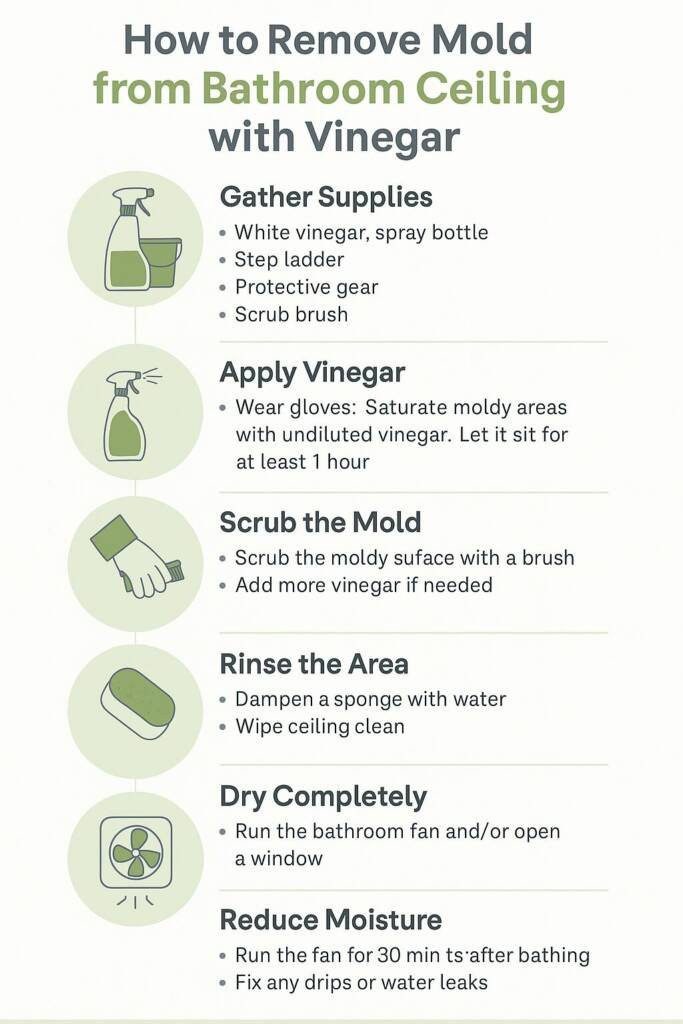
How to Clean Mold Off a Bathroom Ceiling With Vinegar (Step-by-Step)
Below is the professional recommended process for safely cleaning mold with vinegar.
Step 1 — Protect Yourself & Prep the Area
Wear:
N95 mask
Gloves
Safety glasses
Old clothes
Prep:
Turn off bathroom AC vents
Open windows or run exhaust fan
Lay towels beneath the work area
Never clean mold dry — spores spread instantly.
Step 2 — Spray Undiluted Vinegar Generously
Use 100% white distilled vinegar in a spray bottle.
Saturate the moldy area
Do not wipe immediately
Let sit for 60 minutes minimum
Vinegar must stay wet long enough to break down mold.
Step 3 — Scrub Gently With the Right Tool
Use:
Soft brush
Sponge
Microfiber cloth
Do not overscrub — you may release spores or damage the ceiling.If the ceiling shows bubbling, peeling, or softness, this indicates deeper mold and requires remediation.
Step 4 — Rinse and Dry Thoroughly
Wipe with warm water. Then:
Run a dehumidifier
Leave exhaust fan on
Keep door open
Drying is crucial — mold regrows fast in Miami humidity.
Step 5 — Apply a Mold-Resistant Coating
Recommended:
Hydrogen peroxide (3%) spray
Anti-microbial coating
Mold-resistant primer
This step adds long-term protection the competitor’s guide doesn’t include.
Can Vinegar Kill Mold on a Bathroom Ceiling?
Yes — vinegar can kill many types of surface mold on bathroom ceilings, especially on painted, sealed, or smooth surfaces.
White distilled vinegar contains 5–8% acetic acid, which disrupts mold’s cell structure and prevents regrowth.
Vinegar is effective for:
Early-stage mold
Light mold patches
Surface-level mold
Painted drywall
Ceilings with no bubbling or peeling
Vinegar is NOT effective for:
Mold embedded inside drywall
Deep water-damaged ceilings
Black mold with mycotoxin production
Mold behind paint blisters
Mold from attic condensation or leaks
If mold growth is spreading, returning, or appears textured, you likely need a professional inspection.
Is Hydrogen Peroxide or Vinegar Better for Mold?
Both work — but they work differently.
Cleaner
Best For
Effectiveness
Safety Notes
Vinegar
Light/surface mold
Kills ~82–90% of mold species
Safe, non-toxic, no fumes
Hydrogen Peroxide (3%)
Deeper, stubborn mold
Kills ~99% of mold species
Can discolor surfaces
Bleach
Non-porous tile only
Kills surface mold only
Produces fumes, NOT recommended
Commercial Cleaners
Stubborn growth
High
Some contain harsh chemicals
Winner: Hydrogen peroxide kills more mold species and penetrates better, but vinegar is safer for homeowners.
Does Dawn and Vinegar Kill Mold?
Dawn + vinegar is popular, but scientifically, this mixture is:
Good for cleaning residue
NOT ideal for killing mold
Vinegar is antimicrobial… Dawn is a surfactant. Mixing them reduces vinegar’s acidity, making it less effective against mold spores.
Better approach: Use vinegar alone → then scrub with warm water if needed.
Will Vinegar Kill Mold Permanently?
No. Vinegar does not permanently get rid of mold. It can kill a lot of surface mold, but if the cause of the mold is still there, it will eventually come back.
Even after a good cleaning, mold will return if you don’t fix:
High humidity – Bathrooms that stay steamy or don’t dry out properly.
Moisture intrusion – Water getting in from plumbing leaks, roof leaks, or gaps around tiles.
Poor ventilation – Weak or missing exhaust fans, or fans that aren’t used long enough after showers.
Recurring condensation – Cold ceilings or vents collecting moisture over and over.
Leaks or attic moisture – Water coming from above the ceiling that keeps the drywall damp.
Vinegar is great for cleaning mold off a bathroom ceiling, but permanent results only happen when you clean and correct the moisture and airflow problems causing it.
How Long Should You Leave Vinegar on a Bathroom Ceiling?
For best results, leave undiluted vinegar on mold for at least 60 minutes.
Vinegar must fully penetrate the mold structure to weaken the hyphae (roots).
Can, Leave Vinegar on Mold Overnight?
Yes, you can leave vinegar on mold overnight, and in many cases it actually works better that way. Tough or stubborn mold spots need more contact time so the vinegar can fully penetrate and break down the mold structure, not just lighten the stain on the surface.
A few important things to keep in mind:
Make sure you’re using undiluted white vinegar.
Open a window or run the exhaust fan so the smell doesn’t build up too much.
Avoid sleeping in a small, unventilated bathroom space if you’ve heavily saturated the ceiling.
Most importantly, watch how the ceiling reacts:
If you notice bubbling paint, sagging, dripping, or brown/yellow stains, stop using vinegar and don’t scrub further.
Those are signs of deeper water damage or hidden mold inside the ceiling, not just surface growth.
In that case, it’s no longer a simple DIY job, you’ll want a professional mold remediation service to check what’s happening behind the ceiling material.
If vinegar isn’t working, you may be dealing with a toxic mold species or deeper contamination.
Does Mold Come Back After Cleaning?
Yes — unless you fix the moisture source.
Mold returns when:
Humidity stays above 55%
Shower steam has nowhere to escape
AC creates condensation on ceilings
Leaks or attic moisture remain
Paint traps moisture
What Causes Black Mold on a Bathroom Ceiling?
Black mold on a bathroom ceiling is almost never random, it’s a sign that moisture is hanging around longer than it should.
Some of the most common causes include:
Poor ventilation When steam from showers has nowhere to go, it rises to the ceiling and soaks into the surface.
Long, hot showers The longer and hotter the shower, the more moisture builds up, especially if the fan is weak or not used.
Leaking pipes or roof If there’s plumbing or roofing above the bathroom, even a small leak can keep the ceiling damp from behind.
Comparison Table — Vinegar vs Peroxide vs Baking Soda vs Bleach
Method
Effective For
Not Effective For
Pros
Cons
Vinegar
Light surface mold
Deep drywall mold
Safe, natural
Not permanent
Hydrogen Peroxide
Stubborn mold
Large-area mold
Strong antimicrobial
May discolor paint
Baking Soda
Odor control
Killing mold
Gentle cleaner
Weak mold killer
Bleach
Non-porous surfaces
Porous ceilings
Strong
Toxic fumes; NOT recommended
Miami-Specific Mold Insight
Miami’s tropical humidity makes bathrooms the #1 mold hotspot in residential properties.
Humidity levels often stay above 70%, which means:
Vinegar removes the mold
But humidity brings it right back
Homes in Coconut Grove, Brickell, and Bal Harbour are especially mold-prone due to dense construction, older ventilation systems, and proximity to water.
High-end residences in Fisher Island and Star Island often experience hidden mold behind marble, stone, and imported materials.
Permanent removal requires addressing environmental factors, something FixMold specializes in.
FAQ
Does vinegar kill bathroom ceiling mold?
Yes, but only surface-level mold.
Is vinegar or peroxide better for mold?
Peroxide kills more mold species.
Can I leave vinegar on mold overnight?
Yes — for tougher stains.
Does bathroom mold come back after cleaning?
Yes, unless moisture issues are fixed.
How long should vinegar sit on a ceiling?
At least 60 minutes.
What causes bathroom ceiling mold?
Humidity, poor ventilation, and leaks.
Final Thoughts
If you live in a humid climate like Miami, bathroom ceiling mold isn’t just a one-time nuisance, it’s something your home will always be prone to. Knowing how to clean mold off bathroom ceiling with safe methods like cleaning mold with vinegar gives you a solid first line of defense, especially for light, surface-level growth.
But real, long-term protection comes from addressing what’s happening behind the scenes: humidity control, proper ventilation, fixing leaks, and making sure your ceiling and HVAC system aren’t quietly feeding mold from the inside out.
Jerusha is a contributor at FixMold, specializing in mold remediation, indoor air quality, moisture control, and environmental wellness. She creates informative content focused on mold prevention, and advanced restoration solutions for residential and commercial properties.