1000+ 5-STAR REVIEWS






Recommended All Over Florida

Katz Family Over 3 Decades
Recommended by Miami Doctors


















View Our Reviews Accross All Platforms Here
In South Florida’s humid climate, mold can begin developing surprisingly fast after water intrusion occurs. Miami properties experience consistently high humidity levels, warm temperatures, and heavy AC usage, all of which create favorable conditions for microbial growth. Even when surfaces appear dry, moisture may remain trapped behind walls, under flooring, inside insulation, or within ceiling cavities.
After roof leaks, flooding, plumbing failures, or AC-related condensation, porous materials like drywall, wood, carpeting, and insulation can absorb moisture rapidly. Once dampness remains trapped inside enclosed spaces, hidden mold growth may begin developing before visible signs appear. This is why many homeowners notice musty odors or indoor air quality changes before they ever see visible contamination.
Water damage from storms is especially problematic throughout Miami, Fort Lauderdale, Hollywood, Kendall, and nearby coastal communities because elevated humidity slows natural drying. Improper cleanup or delayed structural drying can extend moisture exposure for days or weeks.
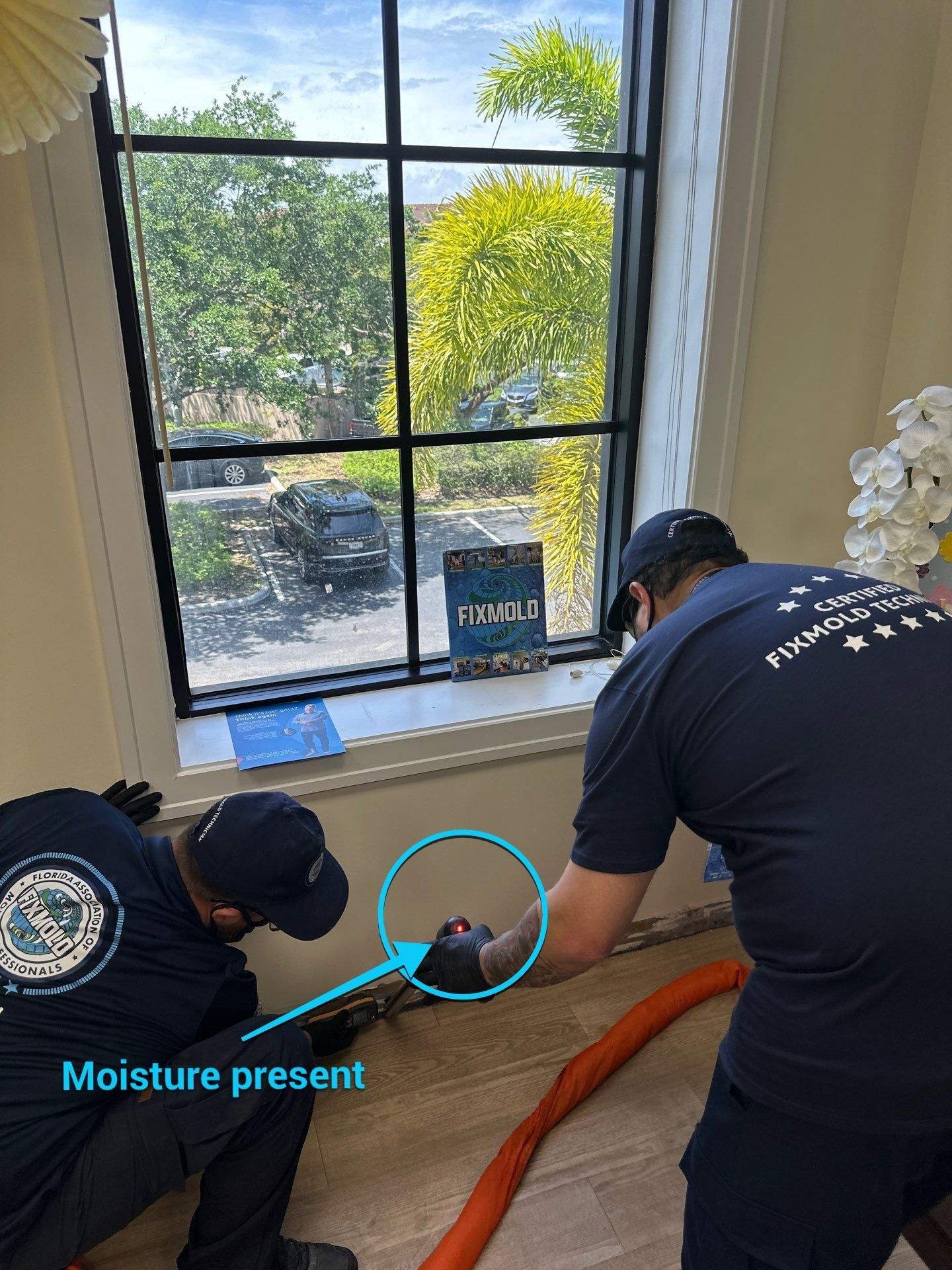
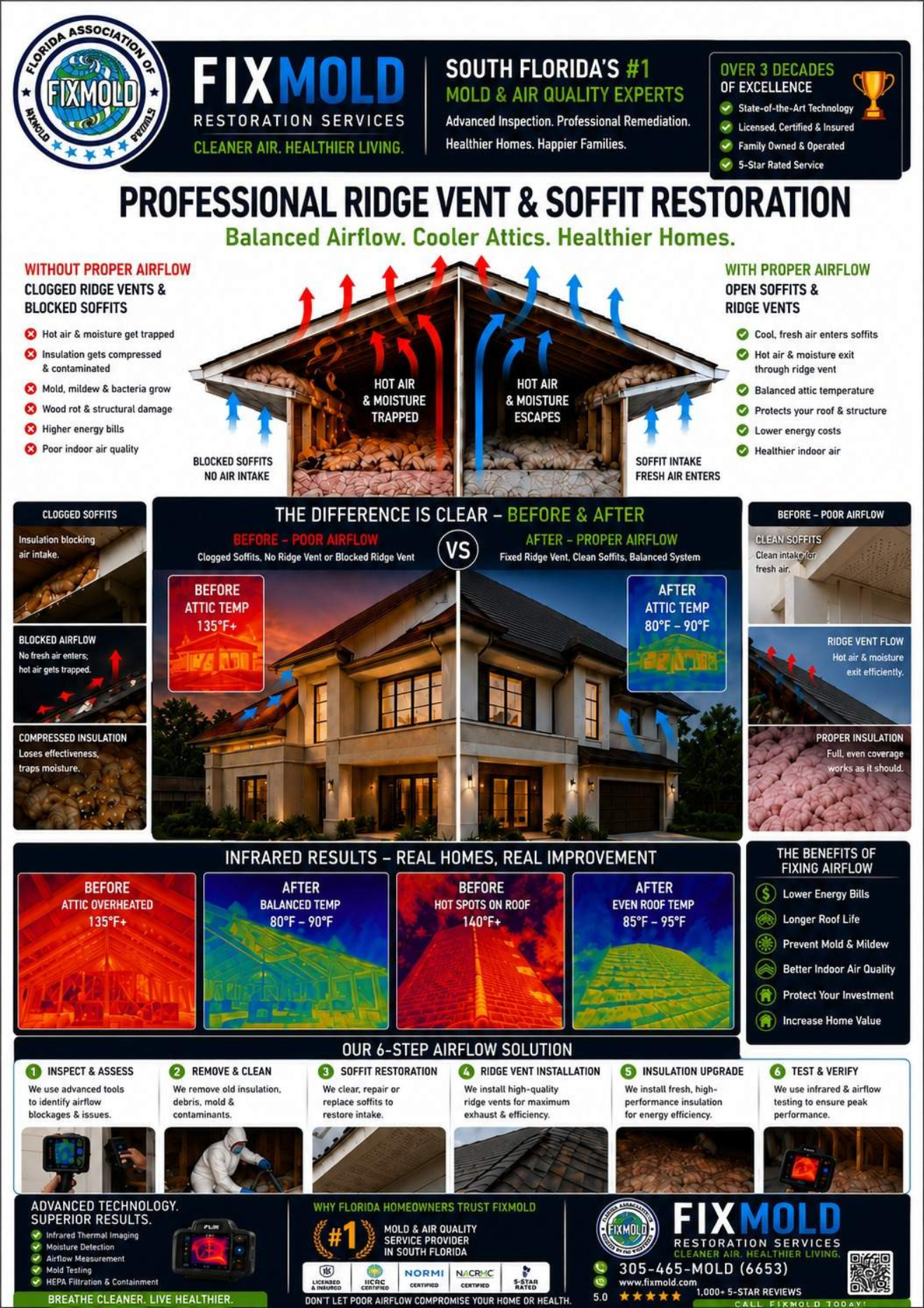
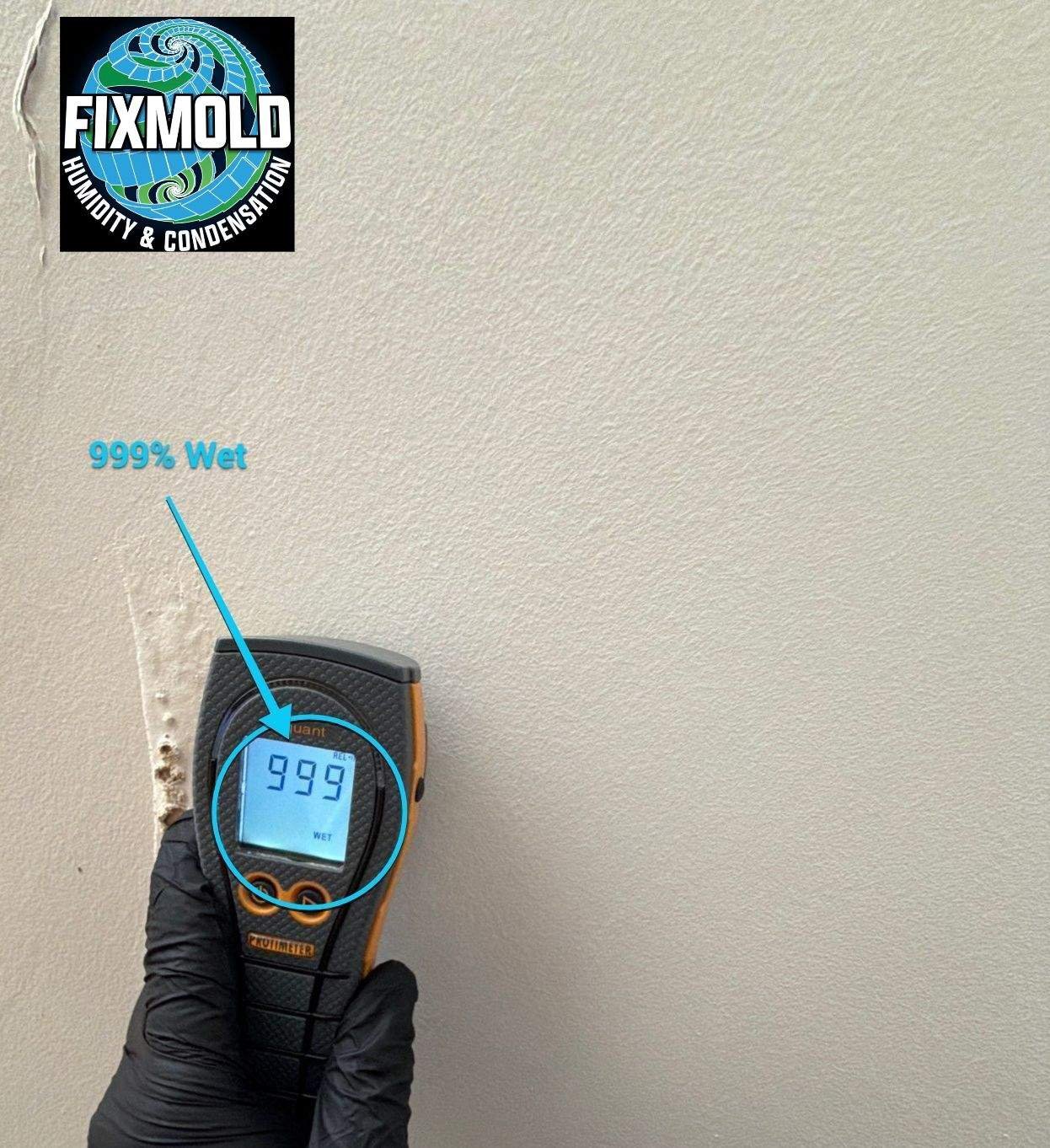
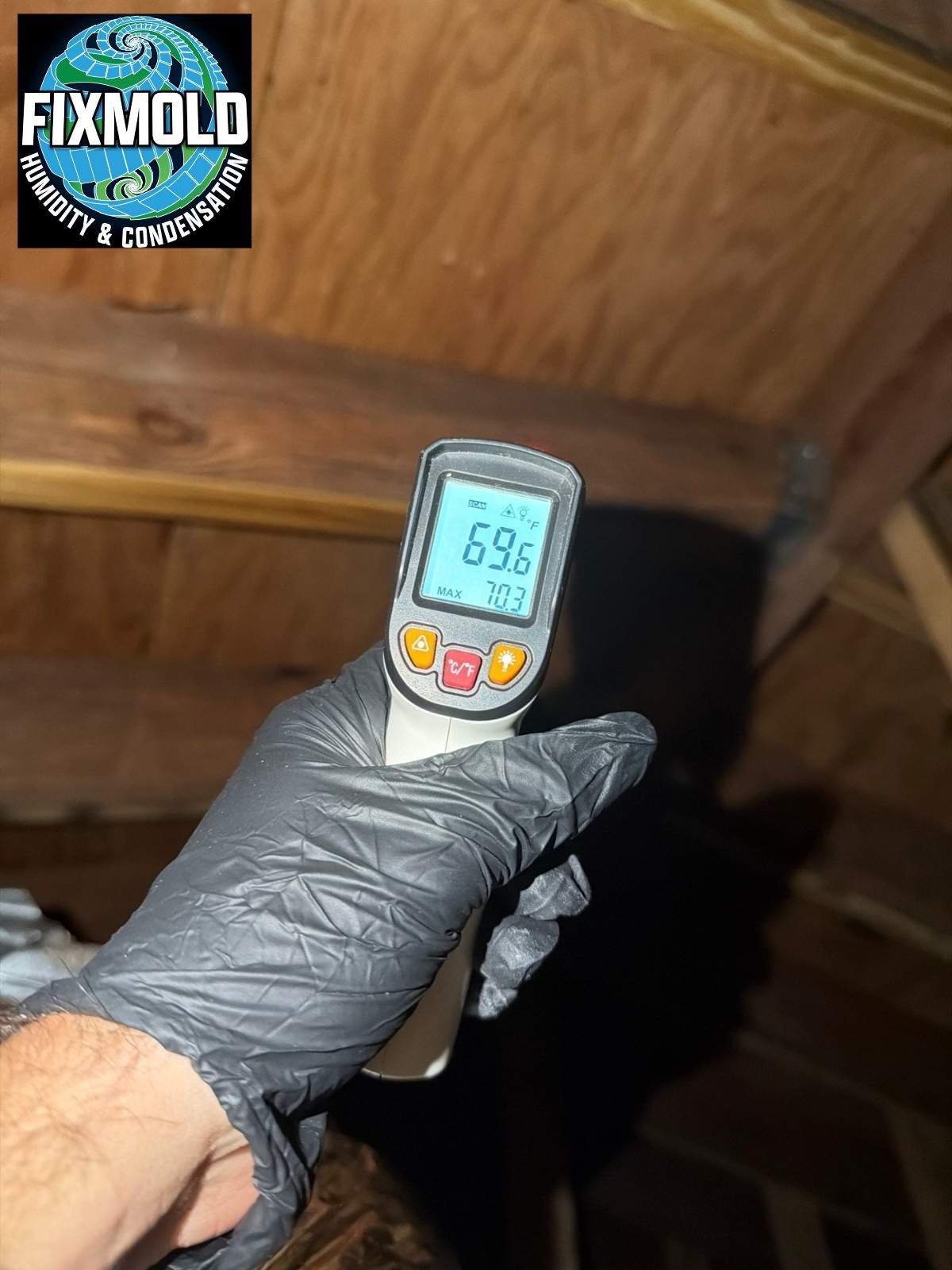
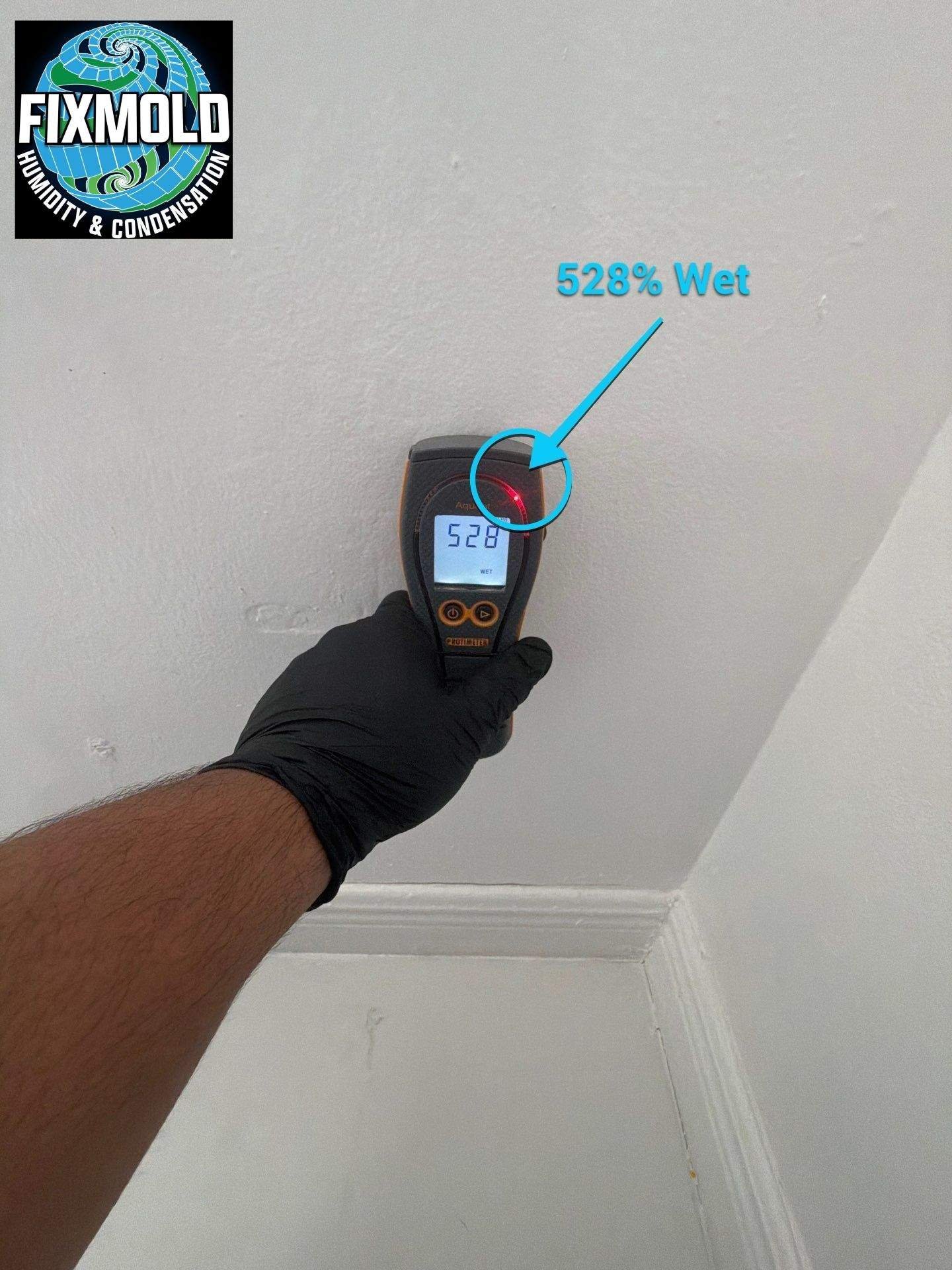
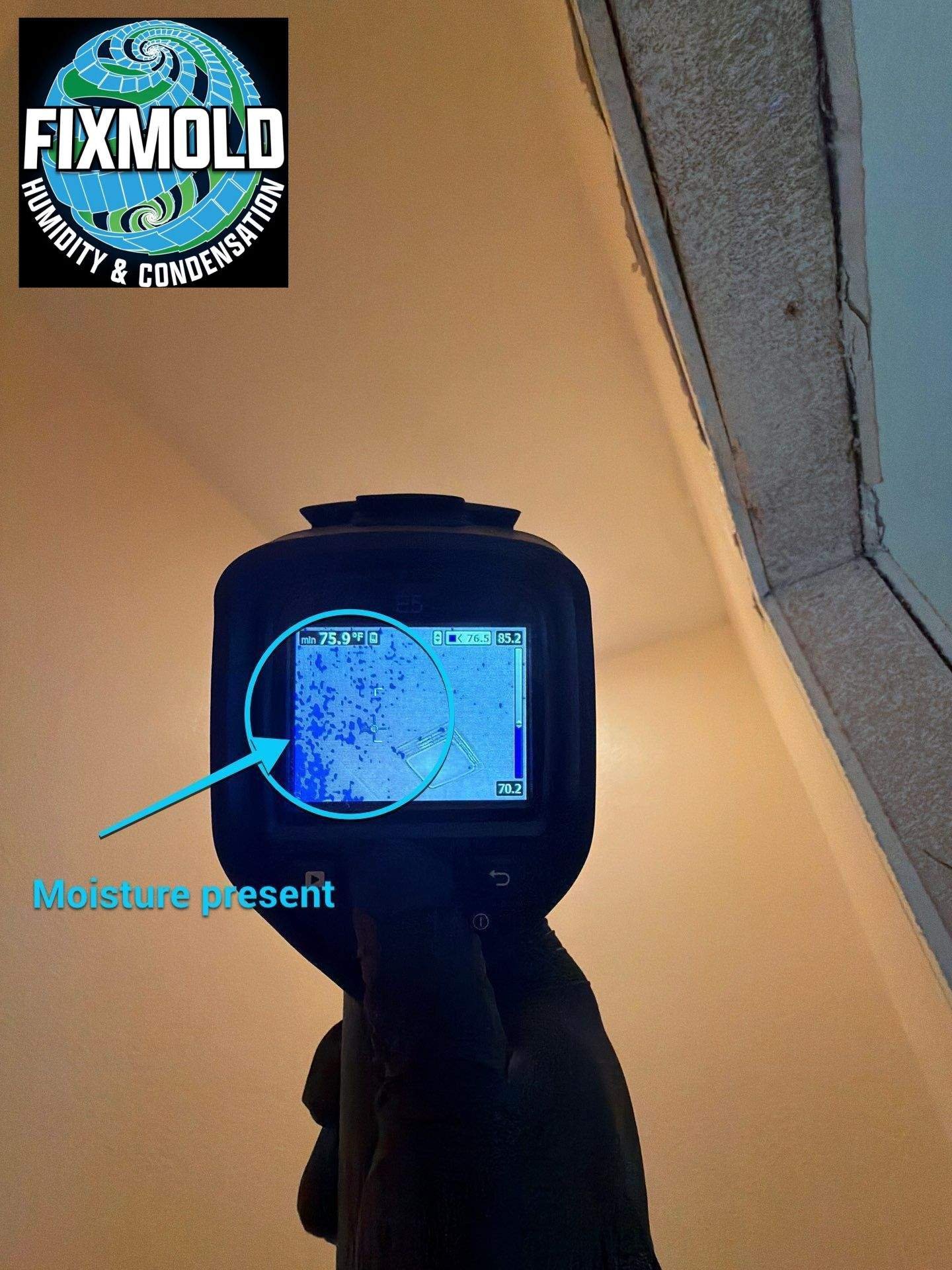
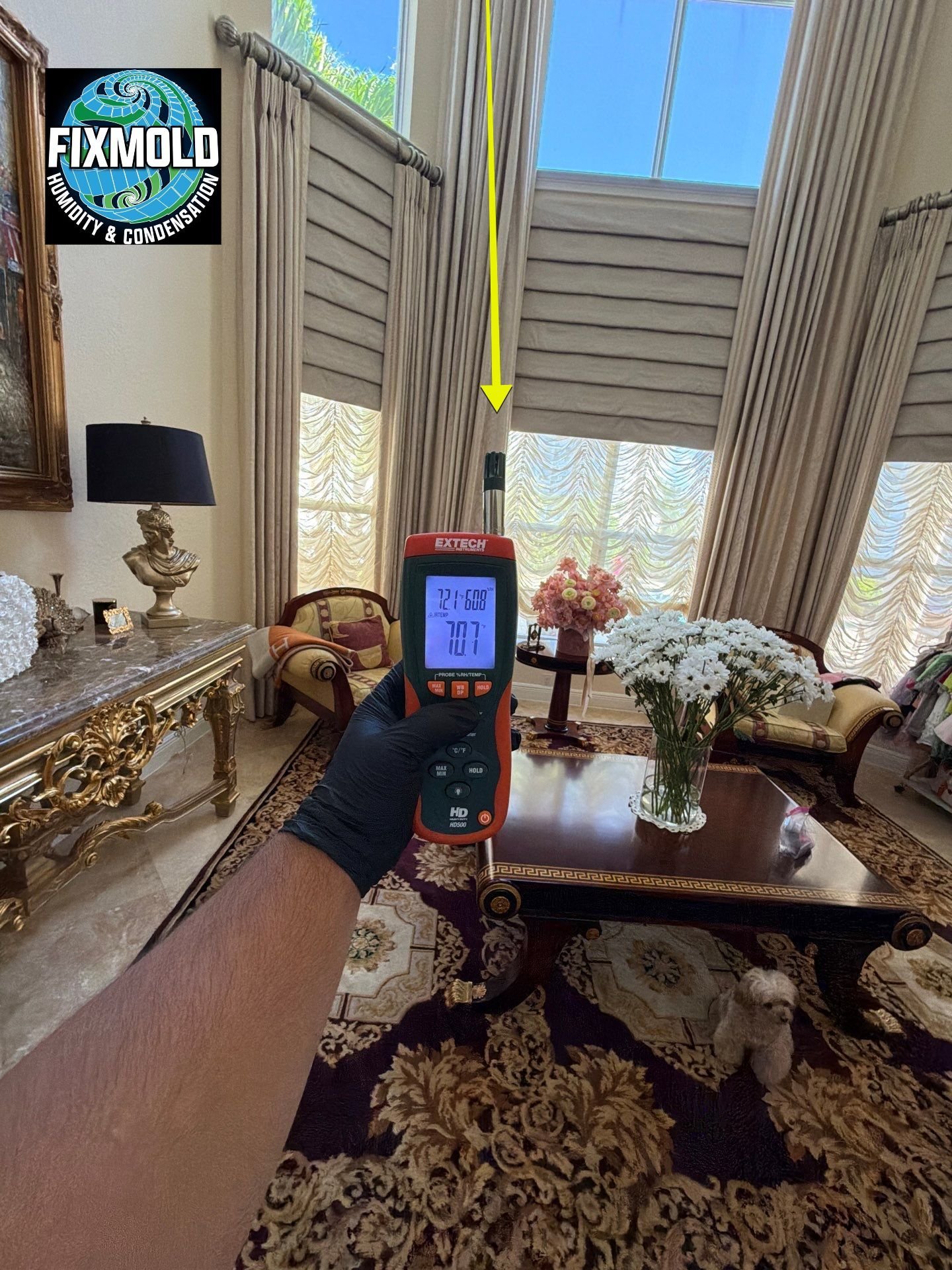
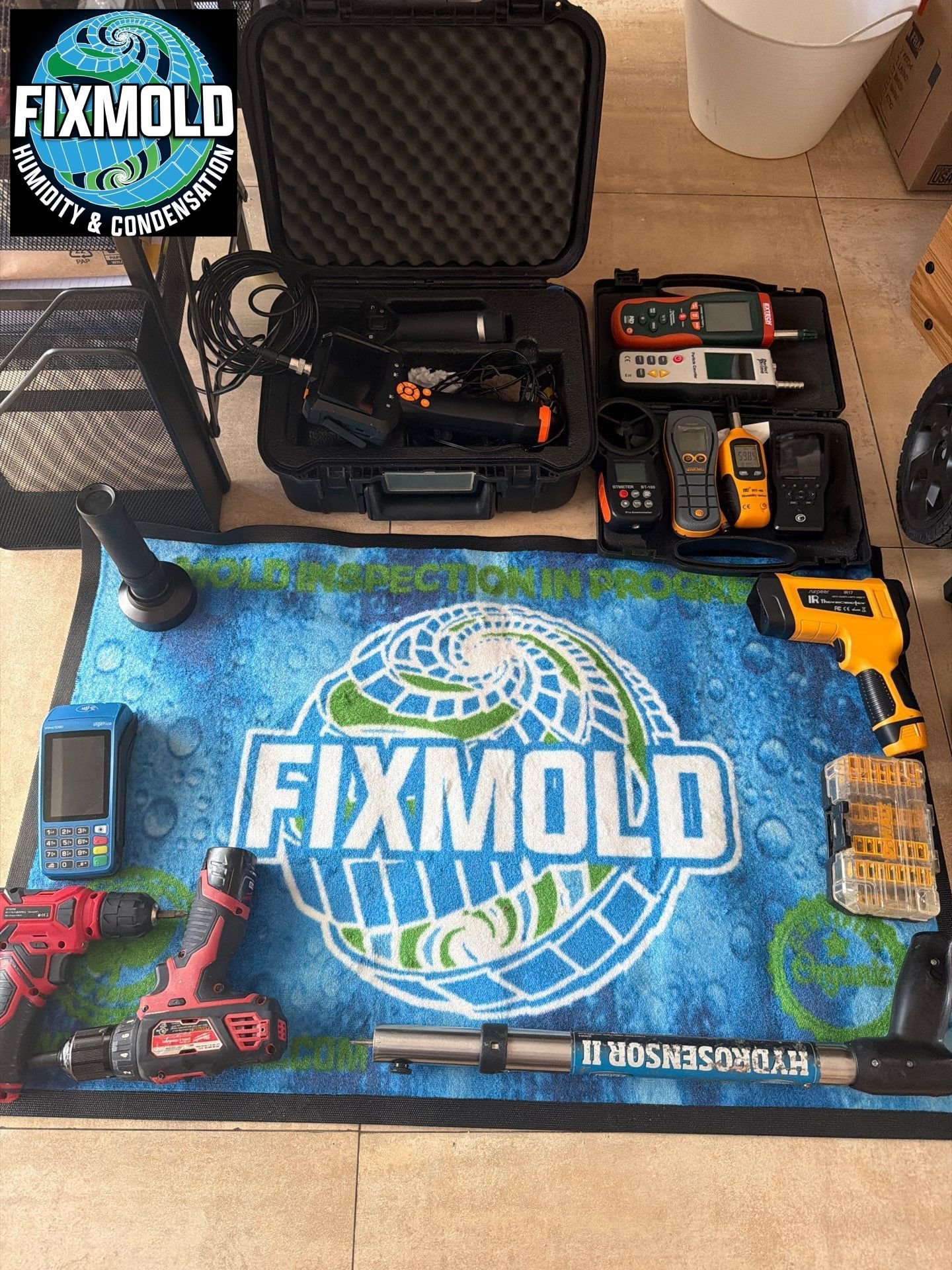
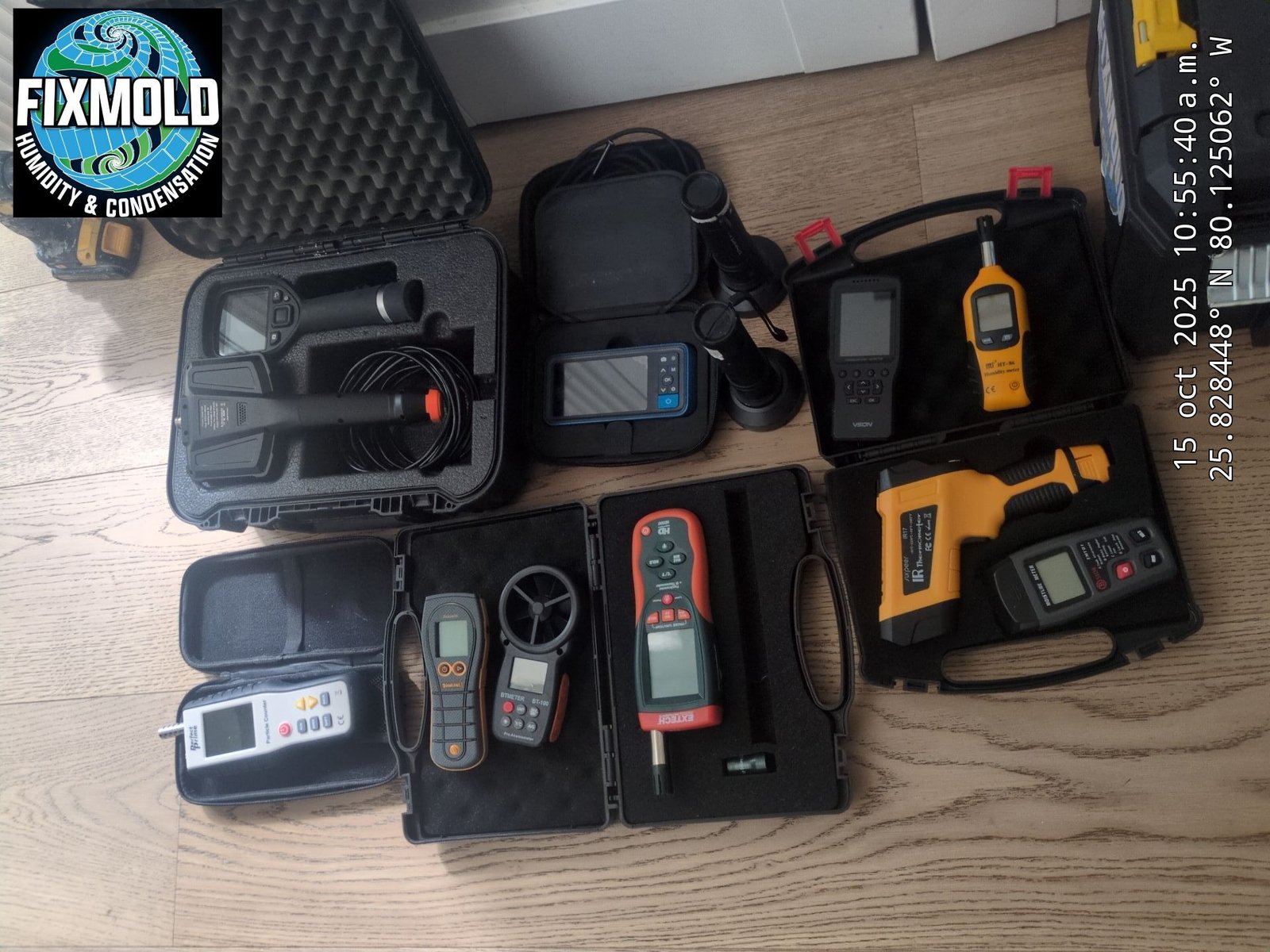
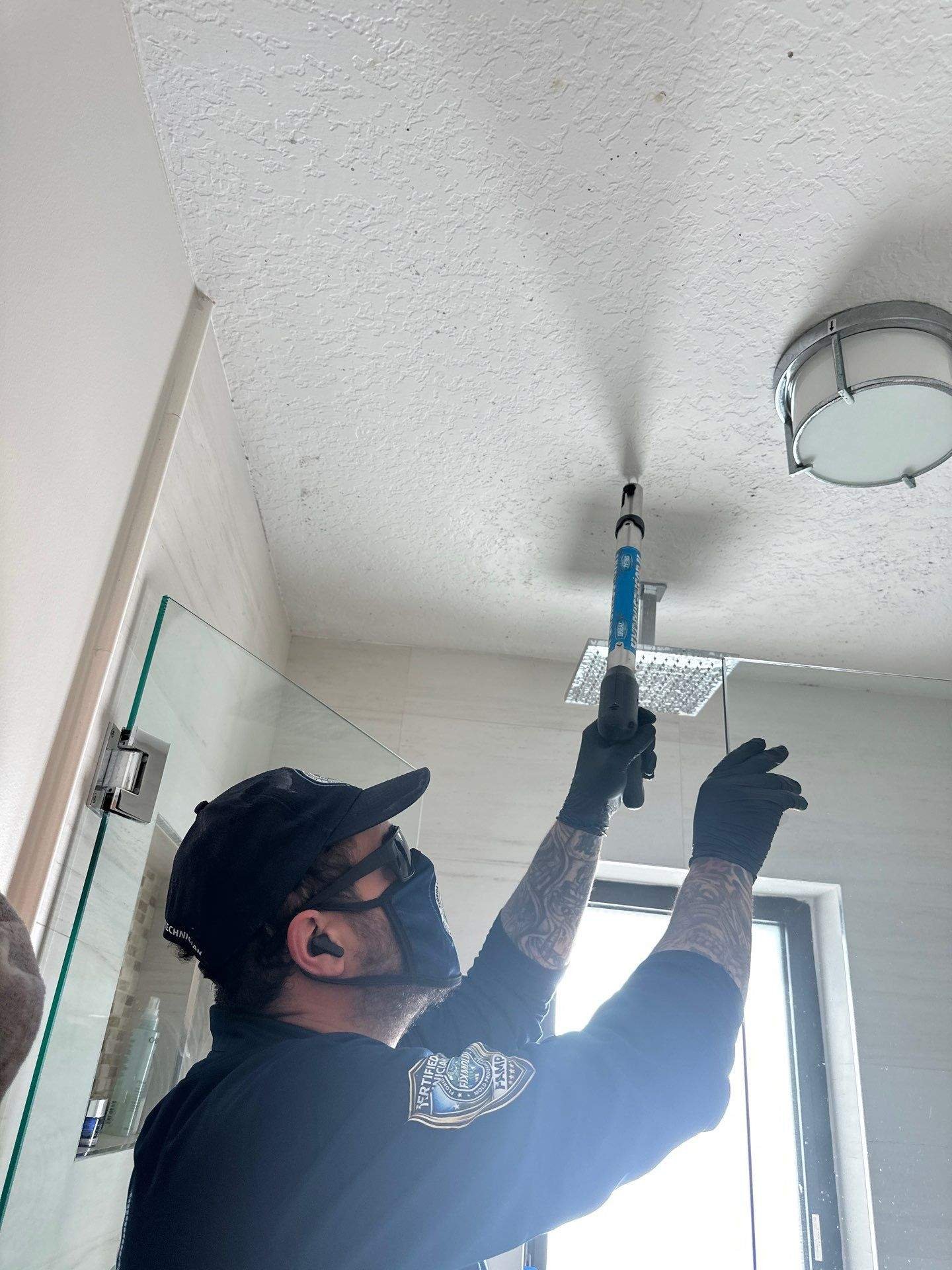
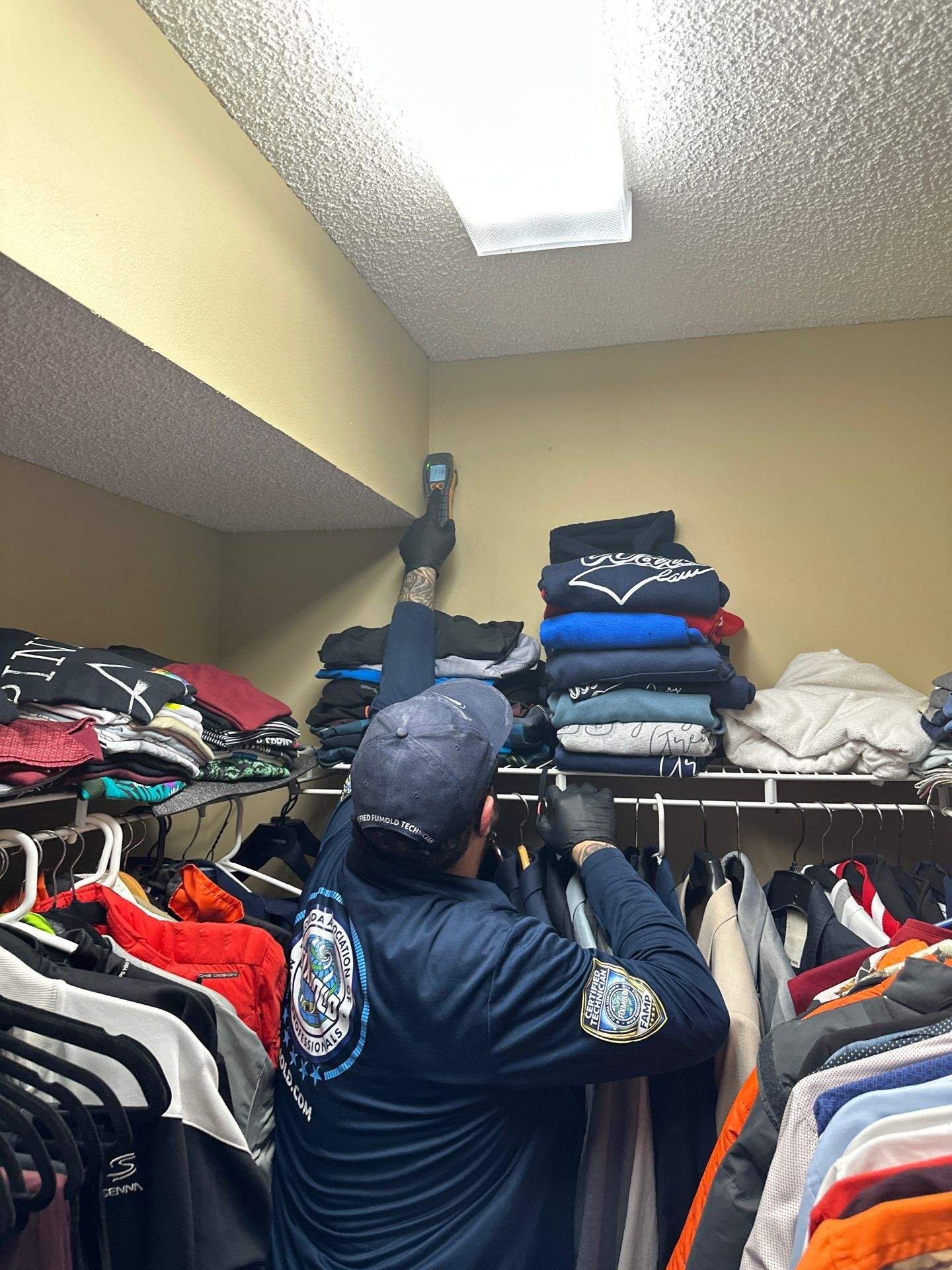
Professional moisture detection and environmental inspection help determine whether hidden moisture remains inside the structure. Thermal imaging, moisture mapping, and humidity measurements are often used to identify concealed water damage that standard visual inspections may miss. Acting early after water intrusion significantly reduces the likelihood of larger mold remediation issues developing later.
A lingering musty odor usually indicates that moisture or microbial activity is still present somewhere inside the property. Many Miami homeowners assume the issue has been resolved once visible water is removed or damaged materials are replaced, but hidden moisture can remain inside wall cavities, subflooring, insulation, HVAC systems, or ceiling spaces long after initial cleanup.
South Florida humidity often worsens the situation because damp materials dry more slowly in this climate. Even small amounts of trapped moisture can create ongoing odor problems. Air conditioning systems may also circulate odors throughout the home if contamination has spread into ductwork or around air handlers.
In some cases, painting over stains or replacing surface materials temporarily masks the smell without resolving the actual source. Odors often become stronger when the AC system runs because airflow moves airborne particles and moisture-related compounds through the property.
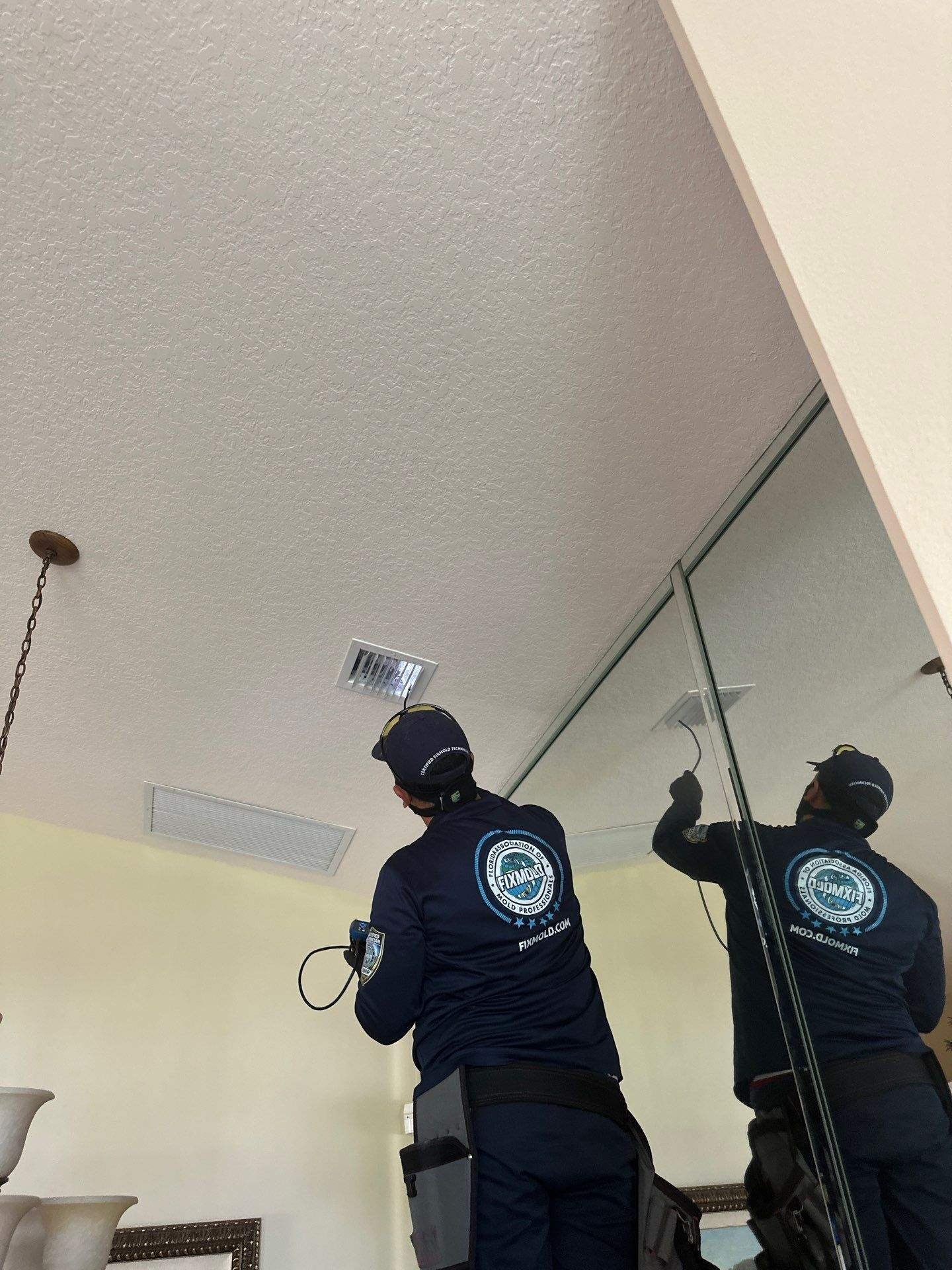
Professional inspections typically involve moisture detection, thermal imaging, humidity analysis, and indoor air quality evaluation to locate hidden problem areas. Mold testing, airborne particle analysis, and HVAC inspections may also help determine whether contamination remains active.
Persistent odors should not be ignored because they often indicate unresolved environmental conditions that can continue affecting indoor air quality over time.
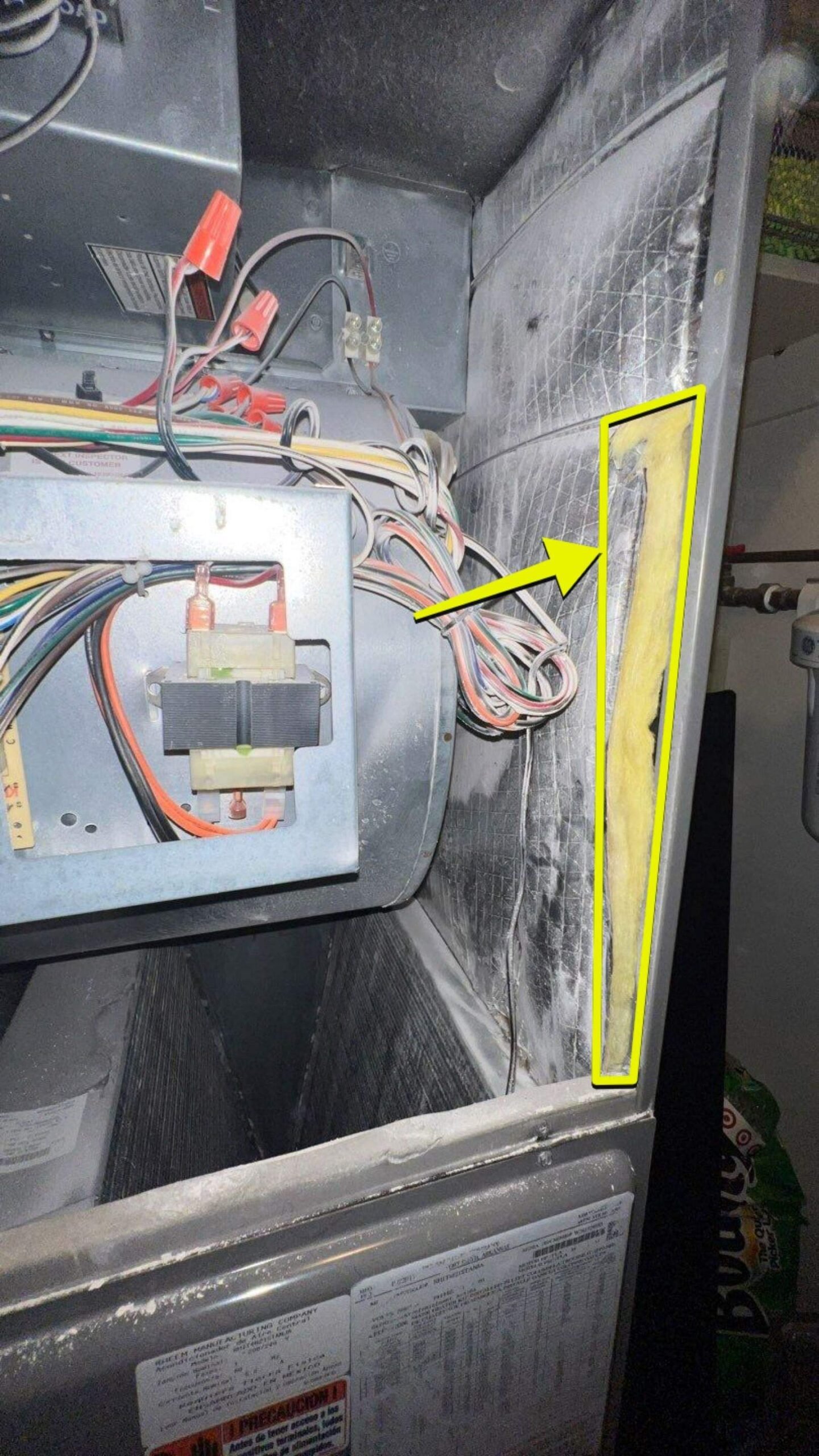
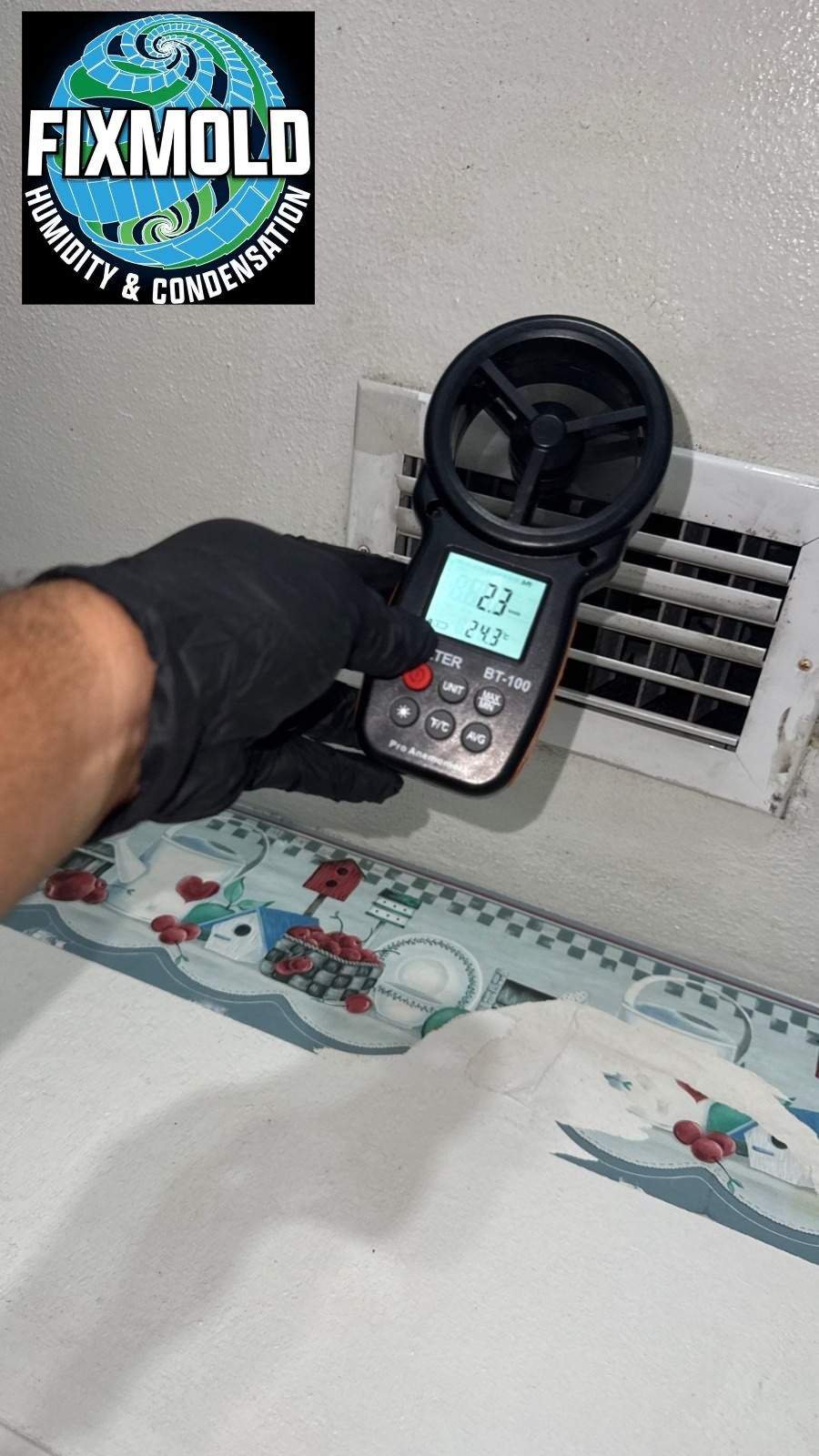
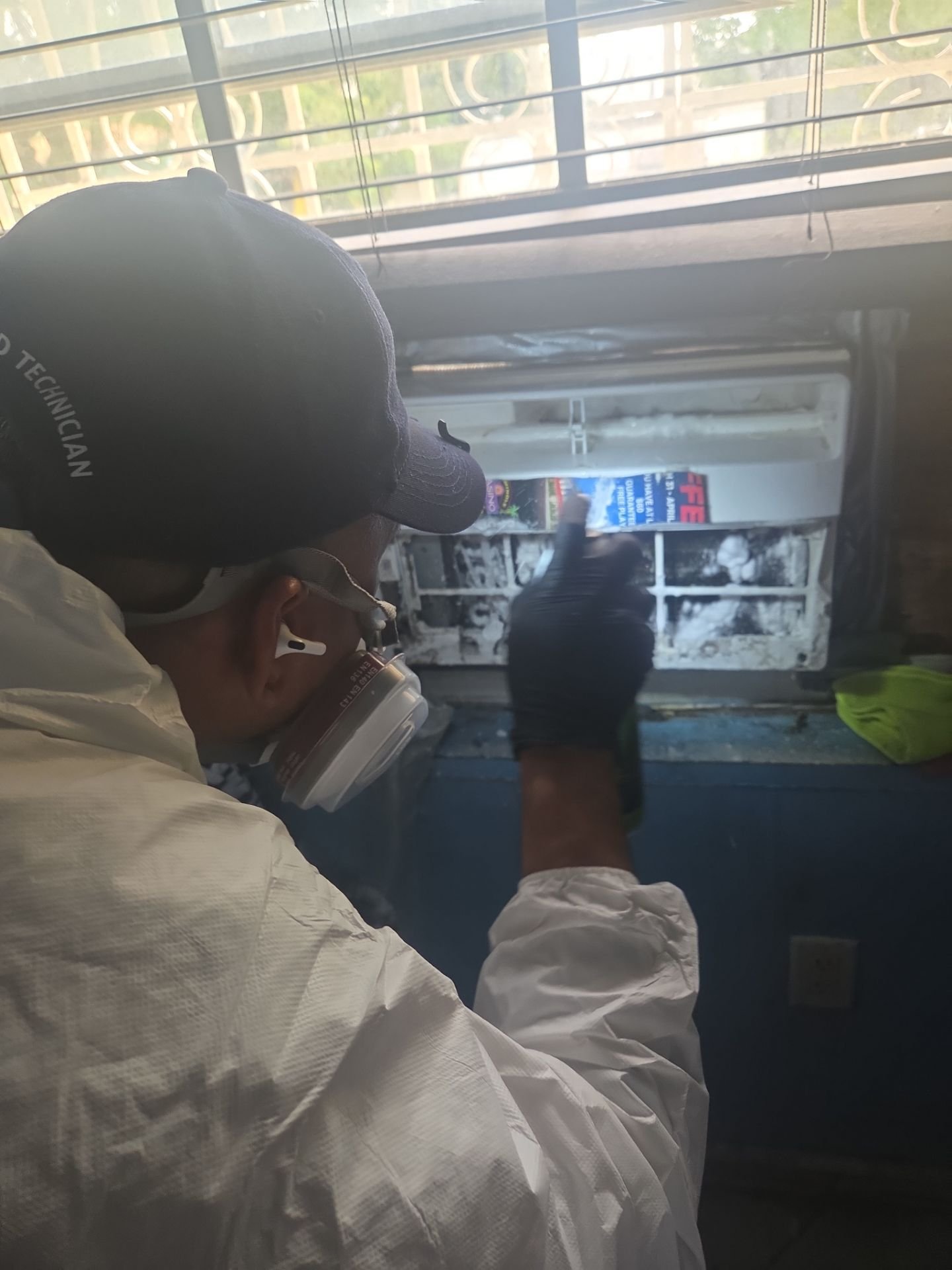
Yes. HVAC systems are one of the most common areas for hidden mold contamination in Miami and throughout South Florida. Air conditioning systems constantly manage moisture and humidity, which means condensation naturally forms around coils, drain lines, vents, and ductwork. After water damage or elevated indoor humidity, those damp conditions can contribute to mold growth inside the system.
Clogged drain lines, wet insulation, sweating ductwork, and moisture around vents are common problems in homes across Miami Beach, Coral Gables, Doral, Weston, and surrounding areas. If contamination develops inside the HVAC system, spores and airborne particles may circulate throughout the entire property whenever the system operates.
Many homeowners first notice black staining around vents, musty odors during AC operation, worsening allergies, or uneven humidity levels throughout the home. However, contamination inside ducts or air handlers often remains hidden without professional inspection.
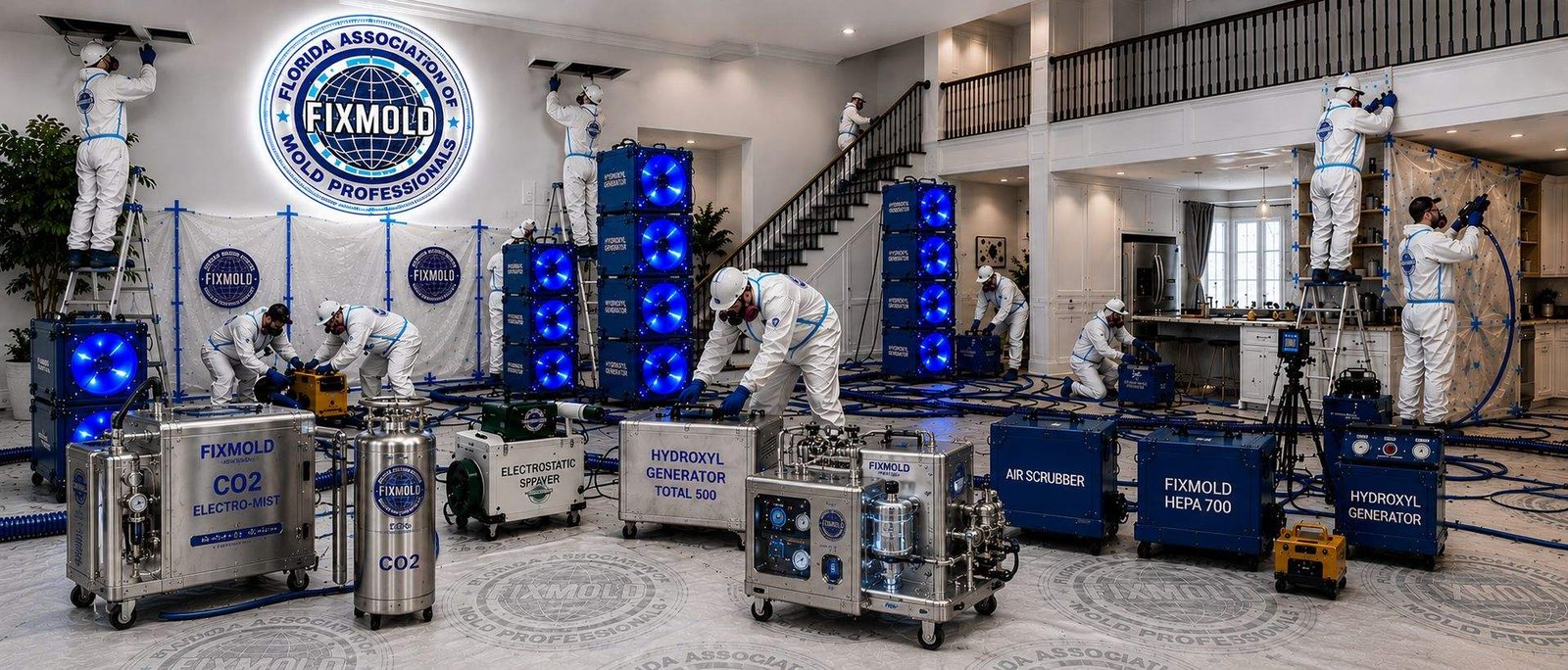
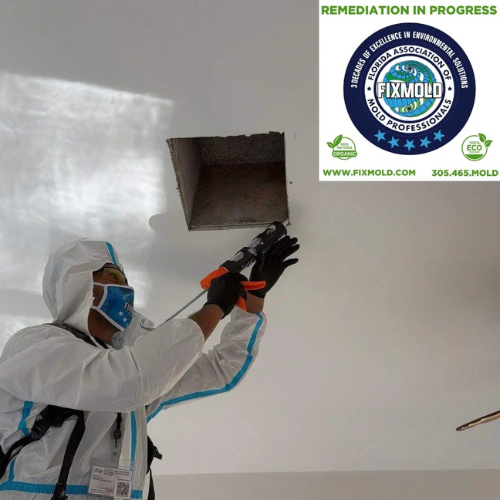
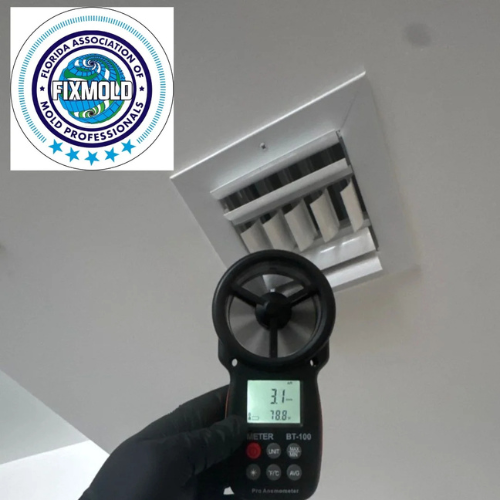
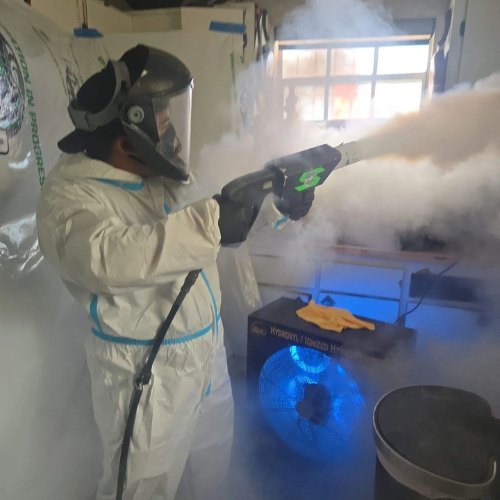
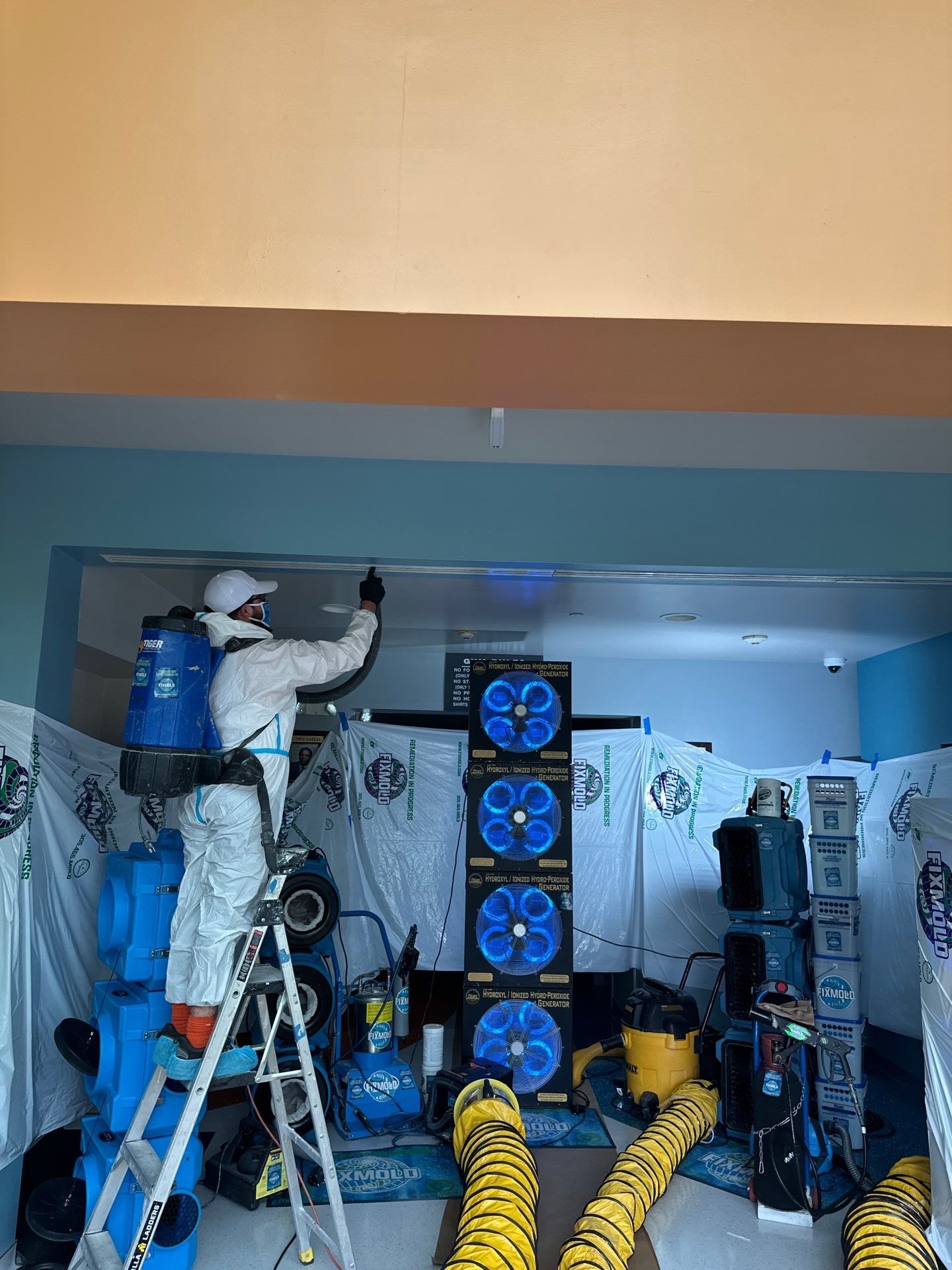
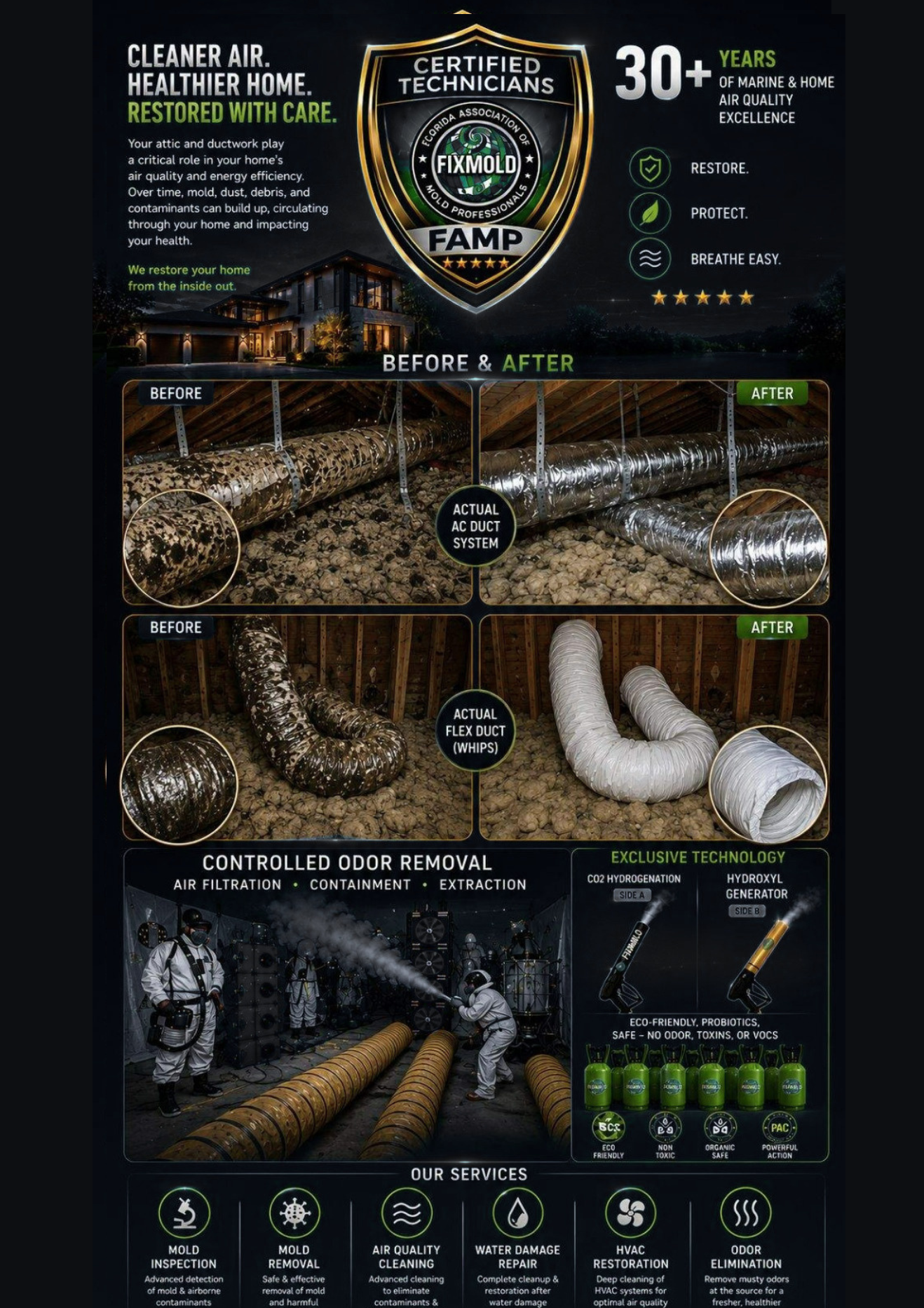
HVAC contamination assessments may include visual evaluation, moisture readings, surface sampling, and indoor air quality testing. In some situations, air scrubbing and HEPA filtration may be recommended during remediation to reduce airborne particle spread.
Addressing HVAC-related moisture issues is important because recurring condensation problems can allow mold to continually redevelop even after previous cleanup attempts.
Recurring mold problems usually mean the underlying moisture source was never fully corrected. In South Florida properties, simply wiping away visible mold or repainting affected surfaces rarely solves the actual issue. Mold returns when moisture, humidity, or condensation remains present inside the structure.
Common causes include roof leaks, hidden plumbing leaks, poorly insulated ductwork, attic humidity, window intrusion, crawlspace moisture, or ongoing HVAC condensation. Miami’s humid climate also allows damp materials to retain moisture longer than in many other regions, increasing the likelihood of repeated contamination.
In some homes, mold continues developing behind walls or beneath flooring where it cannot be seen during routine cleaning. Surface cleaning may temporarily improve appearance while hidden microbial growth continues spreading inside enclosed cavities.
Professional inspections focus on identifying the source of moisture rather than only the visible mold itself. Moisture mapping, leak detection, thermal imaging, and environmental testing help determine why the problem is recurring. Indoor humidity levels are also evaluated because excessive humidity alone can contribute to repeated microbial growth around vents, windows, closets, and poorly ventilated spaces.
Long-term correction often involves moisture control, structural drying, ventilation improvements, HVAC adjustments, and proper remediation of affected materials instead of cosmetic cleaning alone.
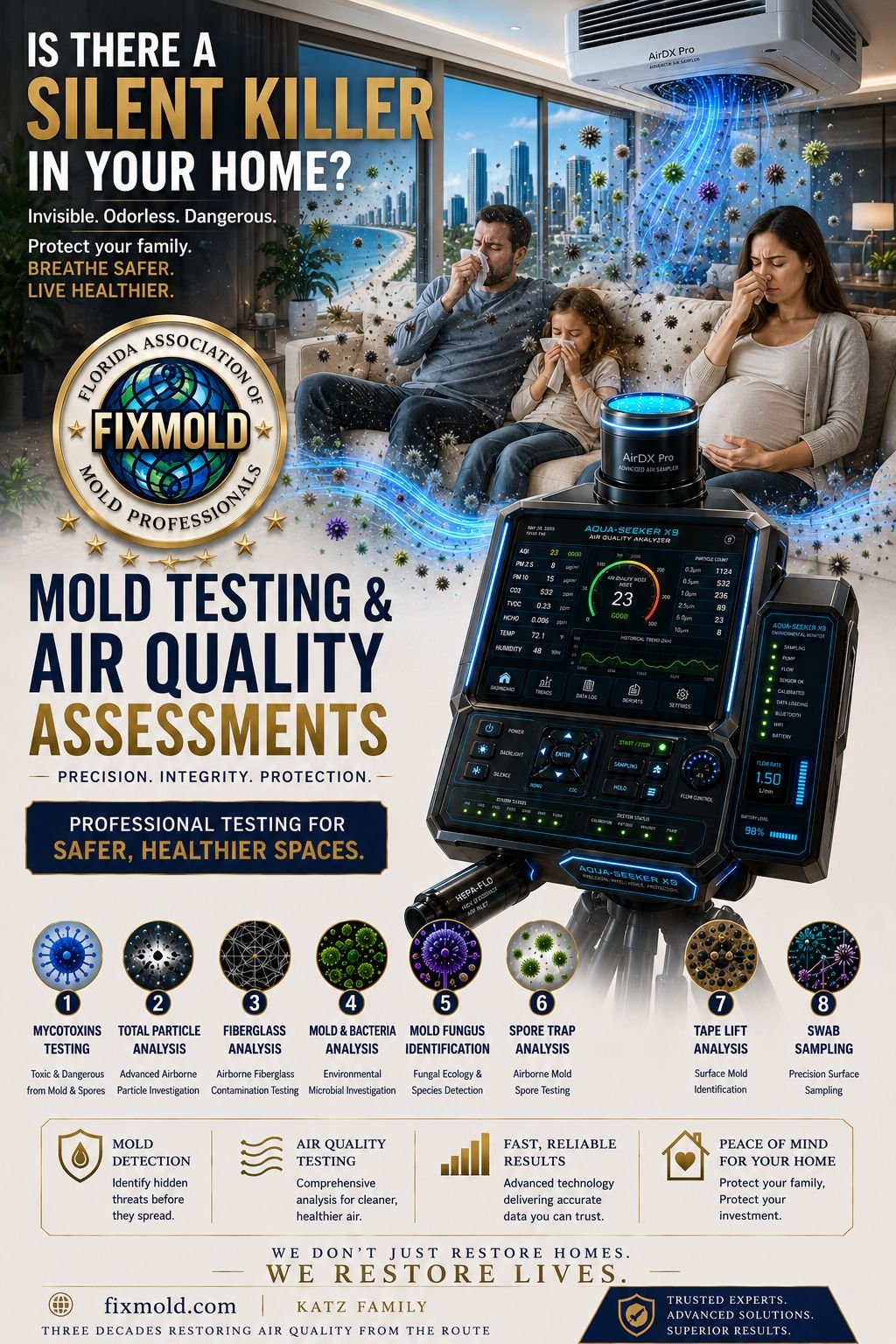
Mold testing is not always required in every situation, but it can be extremely helpful when hidden contamination, indoor air quality concerns, or recurring moisture issues are suspected. After water damage in Miami homes and commercial properties, testing helps determine whether microbial growth has developed beyond what is visibly apparent.
Many water-damaged structures contain hidden contamination inside walls, ceilings, insulation, crawlspaces, or HVAC systems. Occupants may experience musty odors, respiratory irritation, headaches, or allergy symptoms even when visible mold appears limited. Environmental testing helps evaluate what may be circulating through the indoor air.
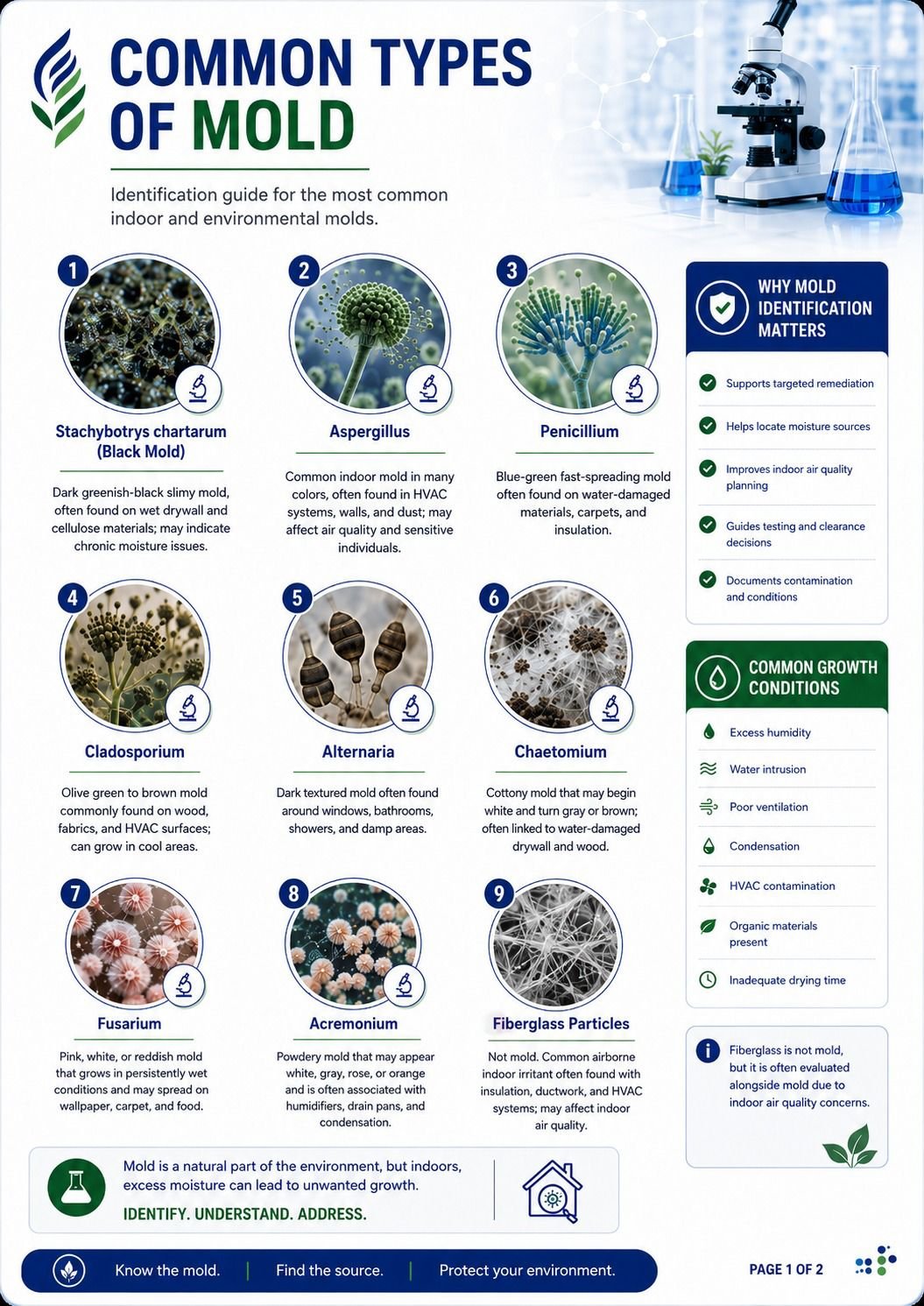
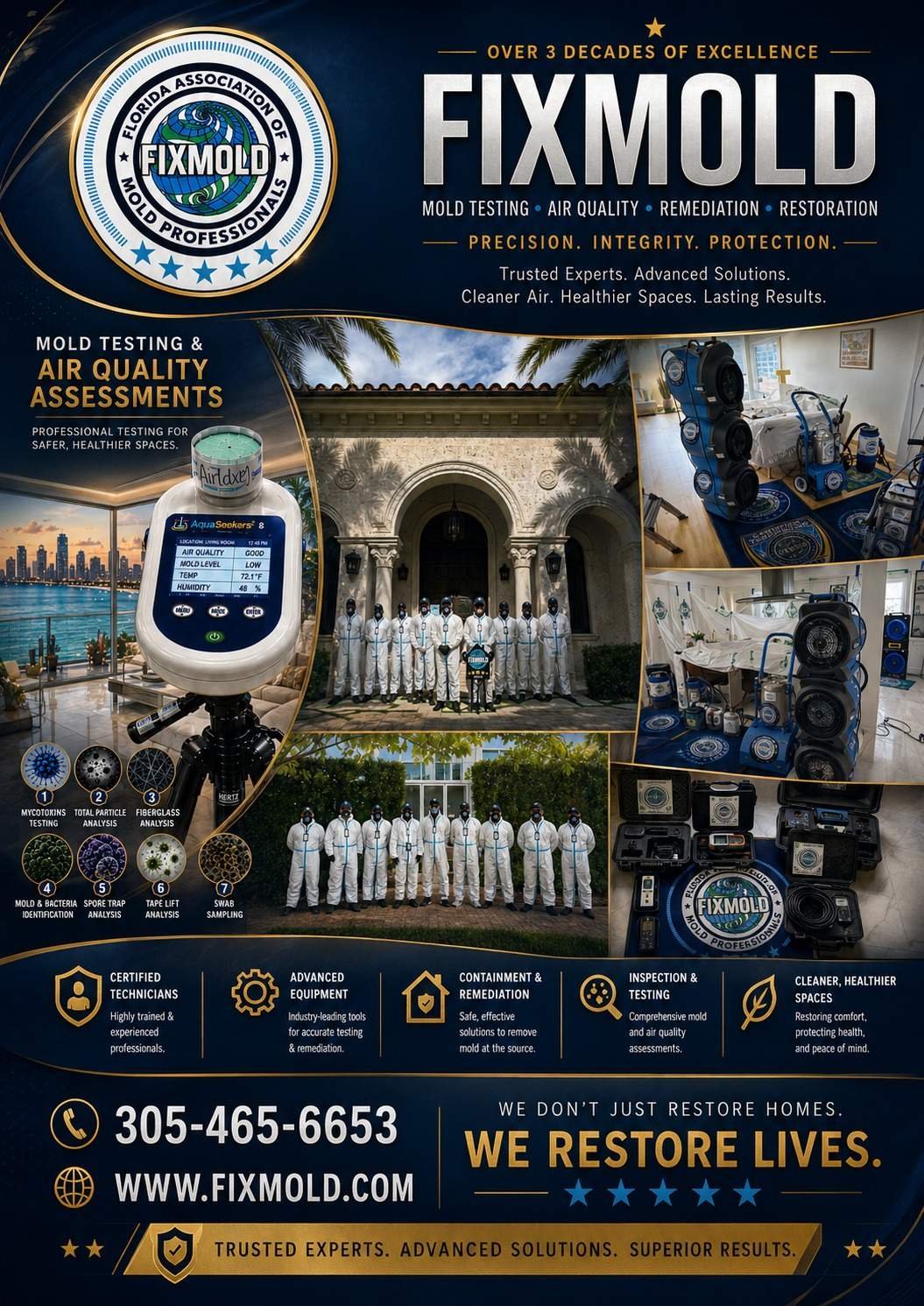
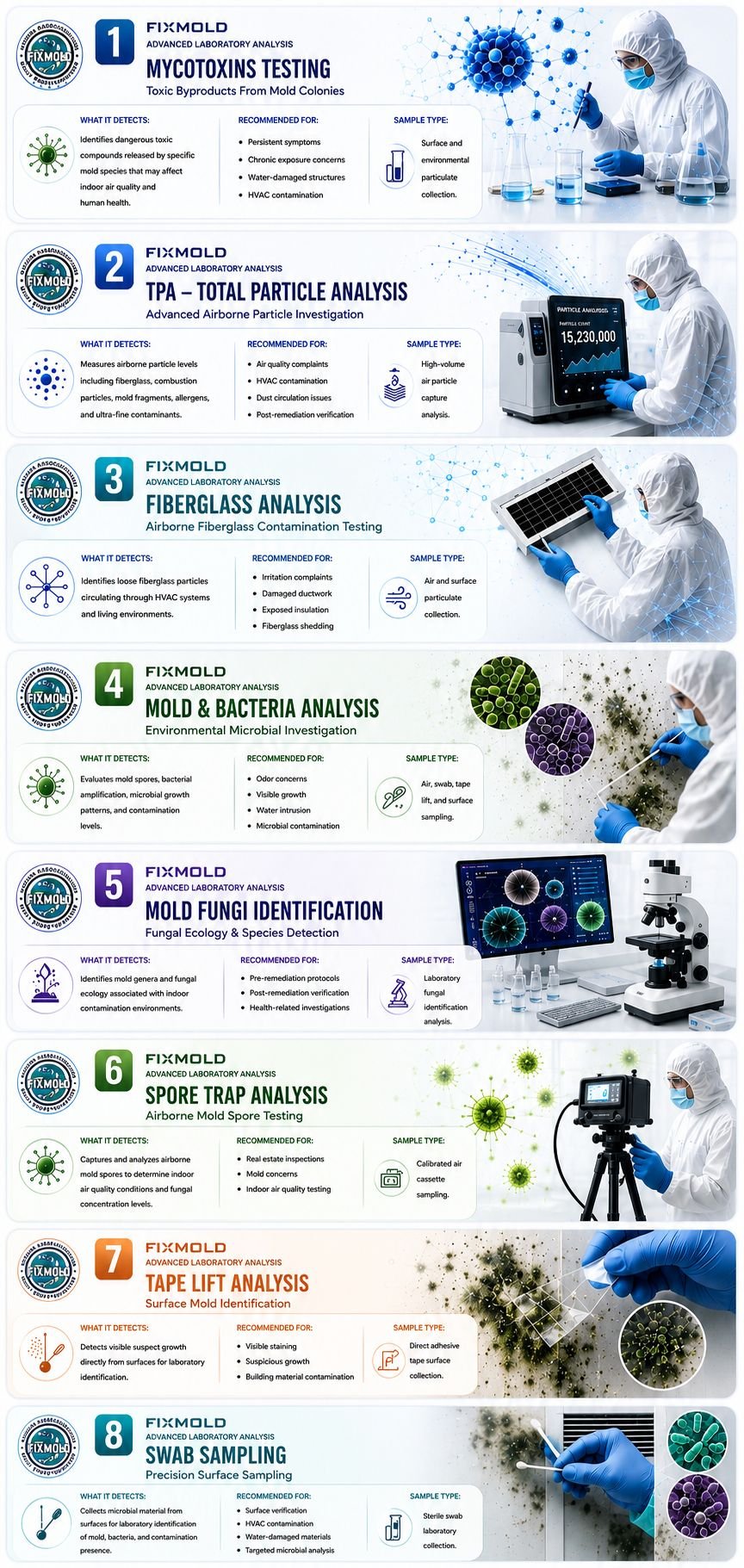
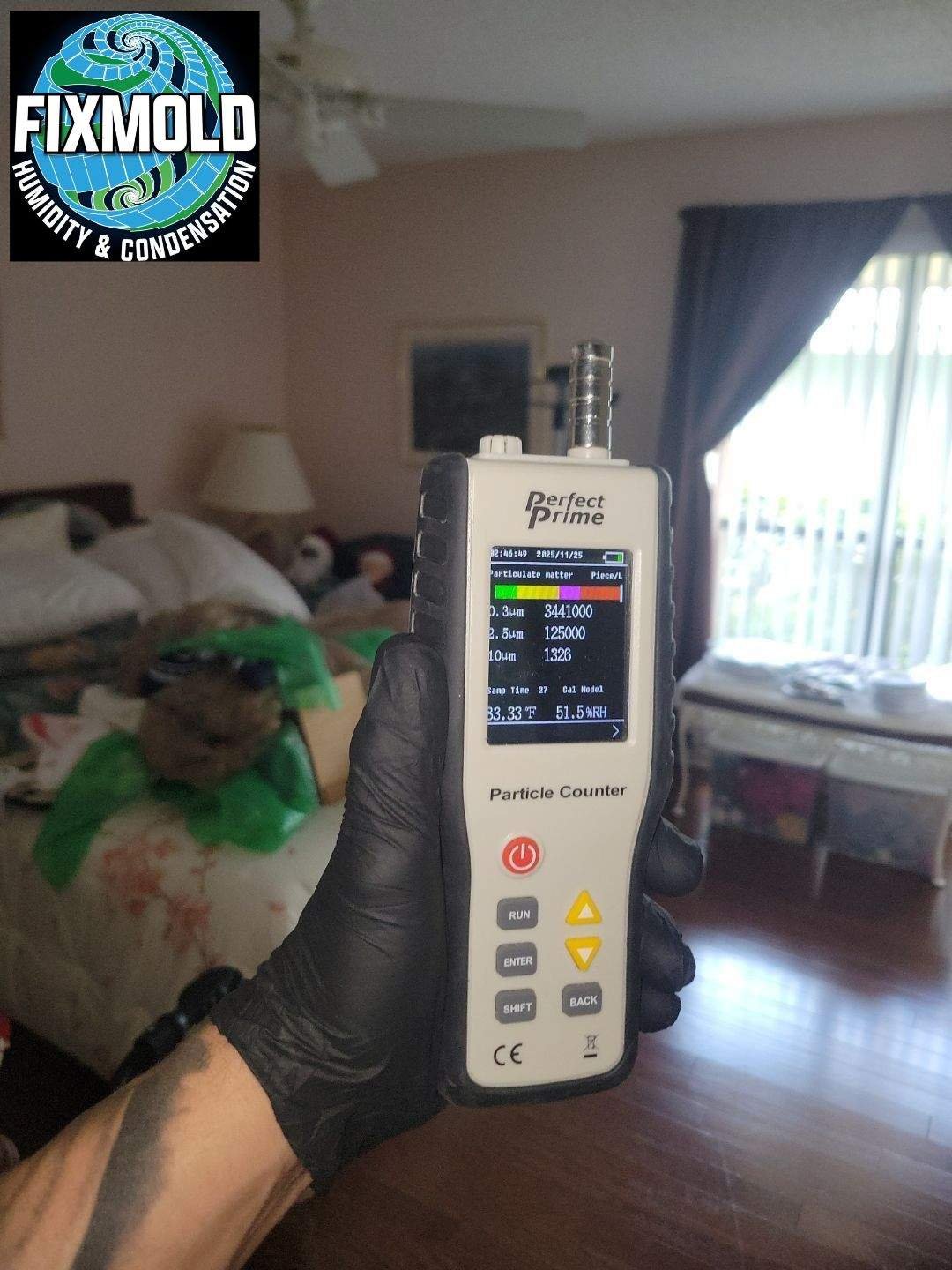
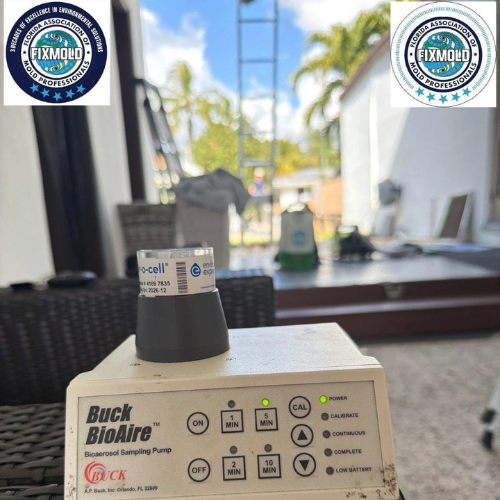
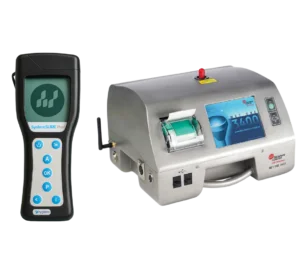
Different testing methods serve different purposes. Spore trap analysis measures airborne mold levels inside the property. Surface sampling identifies contamination growing on building materials. Mycotoxin testing may be considered in prolonged or severe contamination situations. Airborne particle testing helps evaluate overall indoor environmental conditions after water intrusion.
Testing can also help guide remediation planning by identifying affected areas that require attention. In large properties, luxury homes, condos, or commercial buildings throughout Miami, Brickell, Aventura, Boca Raton, and Fort Lauderdale, environmental testing often provides valuable information about the extent of hidden moisture-related contamination.
The main goal is understanding the environmental condition of the property so informed decisions can be made about drying, cleanup, remediation, and indoor air quality improvement.