When it comes to mold, what you see is rarely the full problem. Visible growth is usually just the “tip of the iceberg,” while hidden moisture behind walls, under flooring, and inside building materials is what actually fuels the contamination. That’s why moisture mapping is one of the most critical first steps in any professional mold remediation process.
Without it, mold removal becomes guesswork—and guesswork leads to recurrence.
What Is Moisture Mapping?
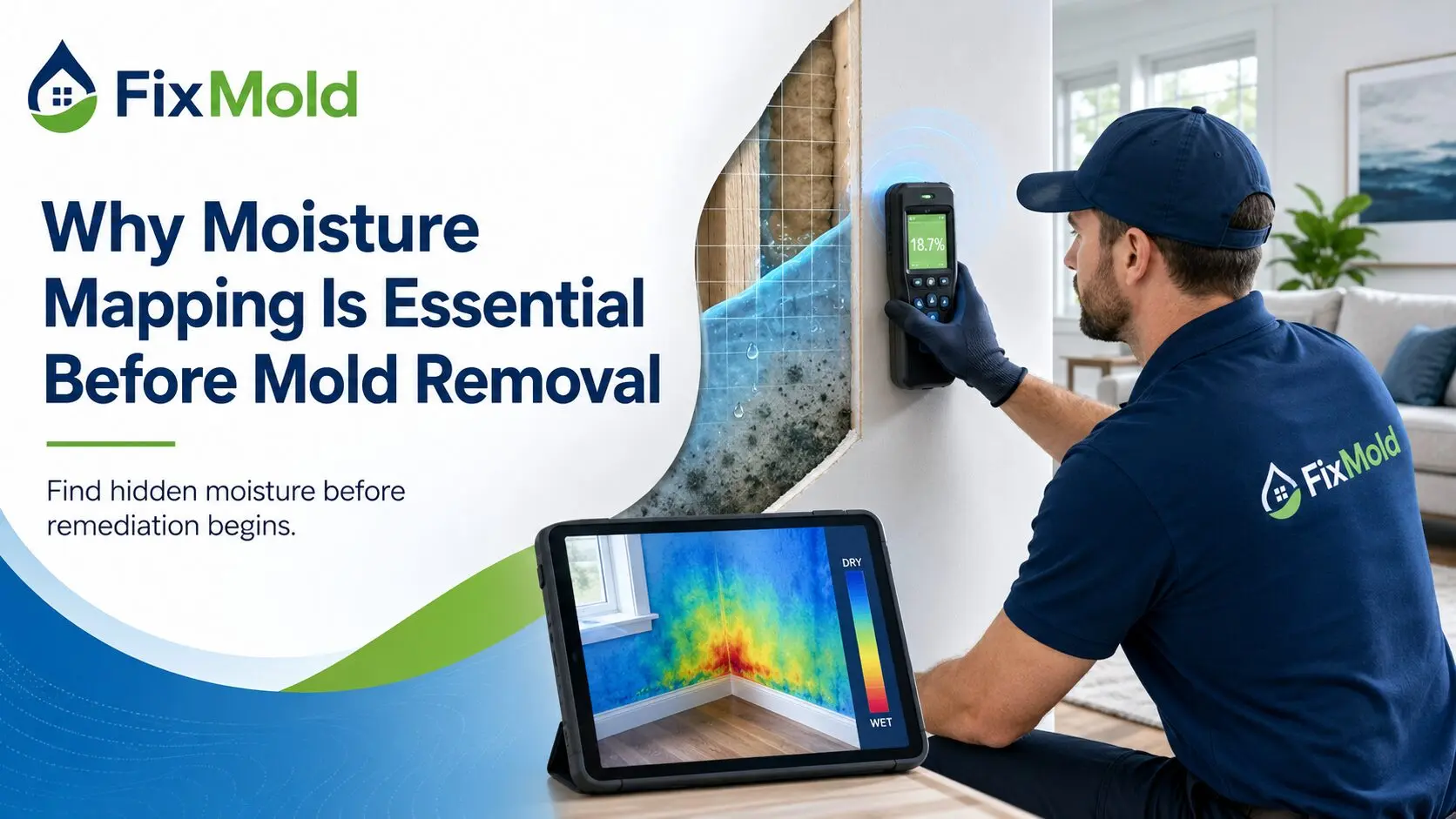
Moisture mapping is a diagnostic process used to identify and document areas of elevated moisture within a structure. Using specialized tools such as moisture meters, infrared thermal imaging, and hygrometers, technicians create a detailed “map” of wet or damp building materials.
This map highlights:
- Hidden water intrusion areas
- Saturated drywall, insulation, or framing
- Moisture migration paths
- Potential hidden mold growth zones
Rather than relying on visible staining or odors alone, moisture mapping reveals what is happening inside the structure itself.
Why Visual Inspection Alone Is Not Enough
One of the biggest mistakes in mold remediation is assuming that what you can see tells the whole story. Mold is often caused by:
- Roof leaks that travel through wall cavities
- Plumbing leaks hidden behind cabinetry
- HVAC condensation inside duct systems
- Flooding that penetrates subflooring and base materials
By the time mold becomes visible, moisture has often been present for days, weeks, or even months. That means surface-level removal without identifying the moisture source will almost always lead to regrowth.
How Moisture Mapping Prevents Mold From Coming Back
The main goal of mold remediation is not just removal—it is prevention of recurrence. Moisture mapping directly supports this goal by:
1. Identifying the True Source of Moisture
Instead of treating only contaminated surfaces, technicians can locate the origin of the water intrusion and stop it at its source.
2. Defining the Full Scope of Damage
Moisture mapping ensures that no affected materials are missed. This prevents incomplete remediation, which is one of the leading causes of mold return.
3. Guiding Proper Containment Setup
Accurate moisture data helps determine where containment barriers and negative air pressure zones should be installed, reducing cross-contamination during work.
4. Reducing Unnecessary Demolition
By clearly distinguishing wet vs. dry areas, moisture mapping can help avoid tearing out materials that are not actually affected, saving time and cost.
5. Supporting Drying Verification
After remediation begins, moisture mapping is used again to confirm that materials have returned to safe moisture levels before reconstruction starts.
The Role of Moisture Mapping in Professional Mold Remediation
A proper mold remediation plan is built in phases:
- Initial inspection and assessment
- Moisture mapping and documentation
- Containment setup
- Source control and removal of contaminated materials
- Drying and dehumidification
- Post-remediation verification
Moisture mapping is the step that connects diagnosis to action. Without it, the process lacks direction and precision.
What Happens If Moisture Mapping Is Skipped?
Skipping moisture mapping can lead to serious issues, including:
- Mold returning after “complete” remediation
- Hidden contamination remaining inside wall cavities
- Ongoing humidity problems that are never addressed
- Increased long-term repair costs
- Continued indoor air quality concerns
In many cases, homeowners believe the problem is solved—only to experience recurring mold growth weeks or months later.
Final Thoughts
Moisture mapping is not an optional step—it is the foundation of effective mold removal. It ensures that remediation is based on data, not assumptions, and that every affected area is properly identified before work begins.
By understanding where moisture is present, professionals can eliminate mold at its source and significantly reduce the risk of it returning.
In mold remediation, what you can’t see is often the most important part—and moisture mapping is what brings it into view.
#FixMoldMiami #MiamiMoldRemediation #MoldInspectionMiami #IndoorAirQuality #HealthyHome #MoldRemovalExperts #MiamiRestoration #MiamiFixmold https://fixmold.com/locations/mold-remediation-wellington-fl
Jerusha is a contributor at FixMold, specializing in mold remediation, indoor air quality, moisture control, and environmental wellness. She creates informative content focused on mold prevention, and advanced restoration solutions for residential and commercial properties.