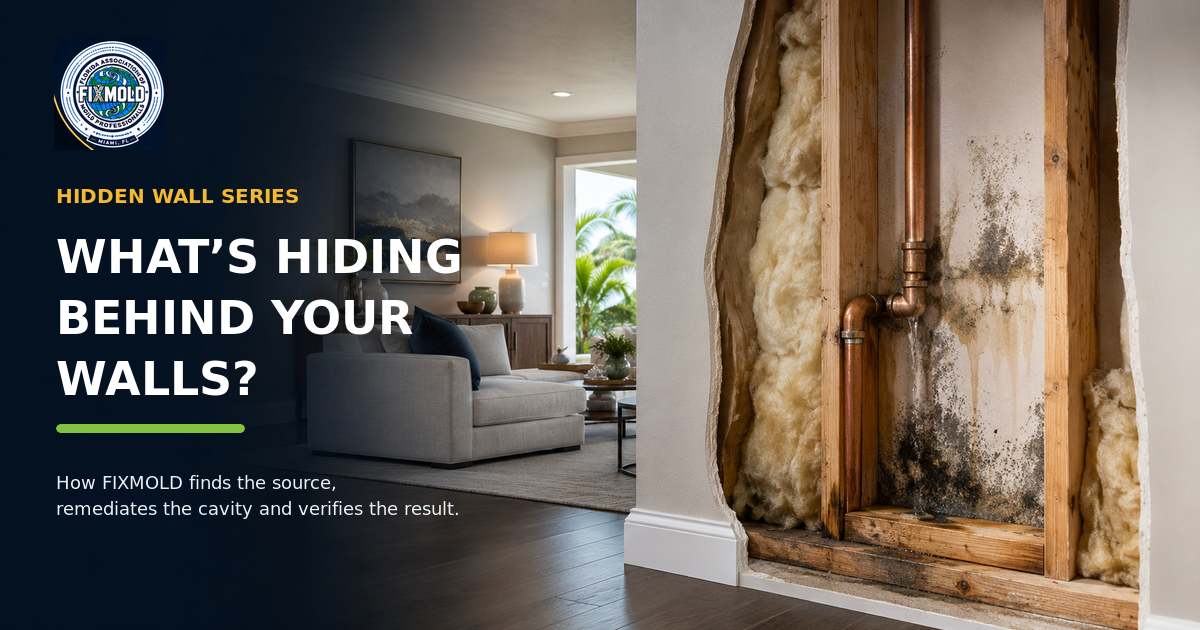
A wall can look clean, dry and perfectly normal while a moisture problem develops inside the cavity. Slow plumbing leaks, roof intrusion, condensation and damp insulation can remain hidden long enough to affect drywall, wood framing and other building materials.
Painting over a stain or cleaning the visible surface does not correct what is happening behind the wall. Effective remediation starts by finding the moisture source, determining the extent of the affected area and addressing the conditions that allowed the problem to develop.
How Mold Develops Inside Wall Cavities
Mold requires moisture to grow. Wall cavities can trap moisture while restricting the airflow needed for materials to dry properly.
Common sources of hidden moisture include:
- Leaking supply lines or drainpipes
- Roof and window leaks
- Condensation on cold pipes or ductwork
- Air-conditioning drainage problems
- Appliance supply-line failures
- Exterior water intrusion
- Flooding or previous water damage
- High indoor humidity
A small leak can wet drywall, insulation and wood framing without immediately creating a visible puddle. Moisture may also travel along pipes, studs or flooring, meaning the damage can extend beyond the first visible stain.
Warning Signs of Hidden Mold
You may not be able to see inside a wall, but the wall may still provide clues.
Watch for:
- Persistent musty odors
- Recurring stains or discoloration
- Bubbling, cracking or peeling paint
- Soft or warped drywall
- Damp baseboards
- Condensation that repeatedly returns
- Unexplained indoor humidity
- Visible growth near outlets, trim or wall corners
These signs do not confirm the exact source by themselves. However, recurring symptoms indicate that the area deserves a professional moisture assessment.
Step 1: Finding the Moisture Source
FIXMOLD begins by looking beyond the visible surface. Depending on the property and project conditions, an assessment may include visual inspection, moisture readings and thermal imaging.
Moisture meters help identify damp materials and map the area requiring further investigation. Thermal imaging may reveal temperature patterns associated with moisture, missing insulation or airflow problems. These findings guide the inspection, but they should be confirmed with appropriate moisture-testing methods.
Finding the source first supports a more focused plan and can help avoid unnecessary demolition.
Step 2: Creating Controlled Access
When inspection findings indicate moisture or affected materials inside a wall, controlled access may be necessary.
This does not mean opening every wall in the room. The objective is to access the verified work area, inspect the cavity and remove materials that cannot be safely or effectively restored.
Targeted removal can reveal wet insulation, damaged drywall backing, affected framing or an active plumbing problem that was invisible from the finished side of the wall.
Step 3: Containing the Work Area
Opening an affected wall may disturb dust and particles. Containment separates the remediation area from occupied or unaffected parts of the property.
A professional containment setup may include:
- Floor-to-ceiling plastic barriers
- A controlled entry point
- Negative-air equipment
- HEPA filtration
- Protection for flooring and nearby contents
The appropriate containment plan depends on the size, location and conditions of the project.
Step 4: Removing Damaged Materials
Porous materials that remain wet or are heavily affected may require removal. This can include drywall, insulation, baseboards or other materials that cannot be adequately cleaned and dried.
The remediation process should follow the verified extent of moisture and affected materials—not an arbitrary demolition line.
Whenever possible, clean and unaffected building materials are protected and preserved.
Step 5: Drying the Wall Cavity
A wall should not be rebuilt over an active moisture problem.
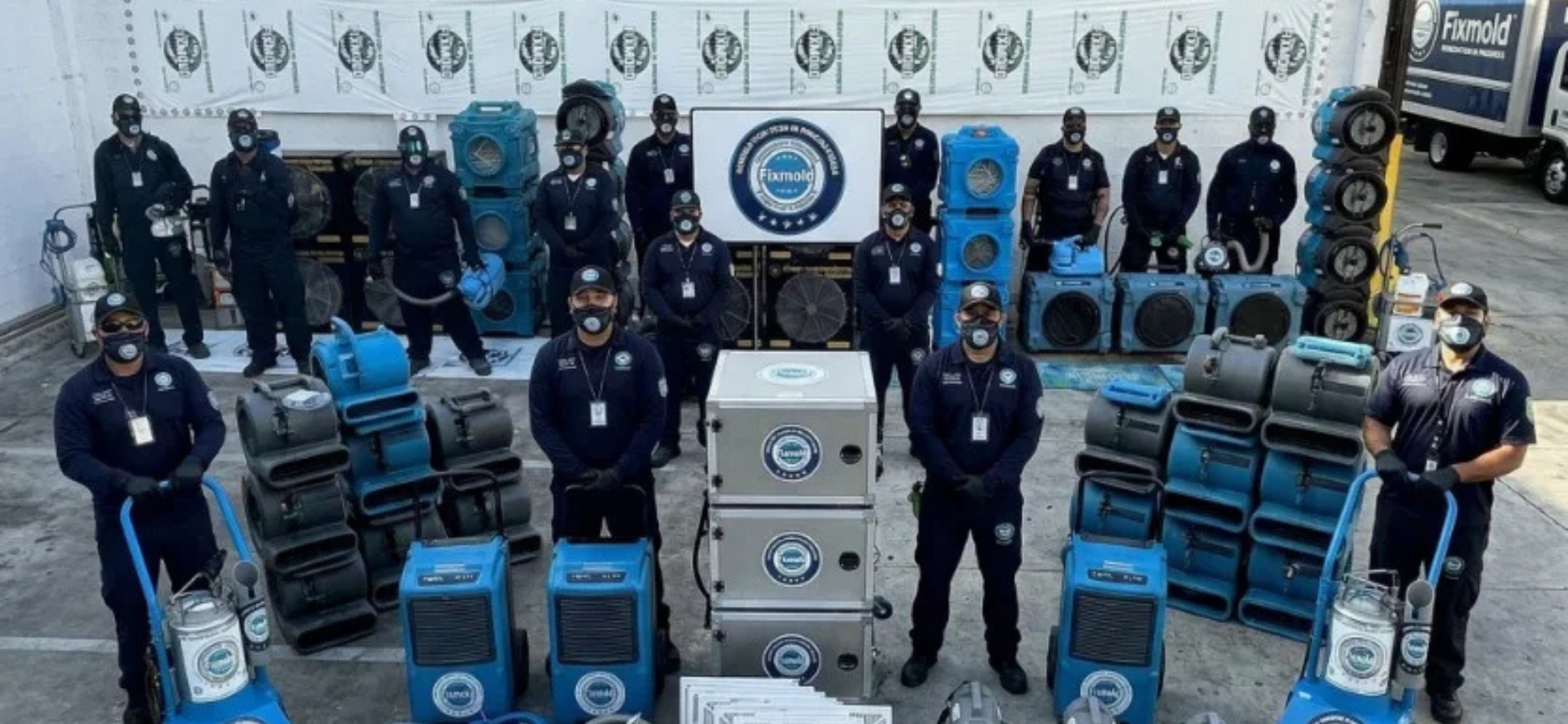
After damaged materials are removed and the source is corrected, drying equipment may be used to reduce moisture in the remaining structural materials. This may include dehumidifiers, air movers and ongoing moisture measurements.
Drying continues until materials reach an acceptable condition for the property and project.
Step 6: HEPA Cleaning and Detailed Surface Treatment
Remediation involves more than removing visible growth. Exposed framing and surrounding surfaces require detailed cleaning using methods appropriate for the material and conditions.
HEPA vacuuming helps capture fine residual particles. Additional surface cleaning may then be performed as required by the remediation plan.
The work area should be left visually clean and ready for verification.
Step 7: Verifying the Cavity Before Reconstruction
Before new drywall hides the cavity again, the area should be inspected.
Verification may include:
- Confirming the moisture source was corrected
- Checking that remaining materials are dry
- Visually inspecting exposed surfaces
- Reviewing moisture readings
- Confirming that remediation work is complete
Only after the cavity is clean, dry and ready should reconstruction begin.
Step 8: Rebuilding and Preventing Recurrence
The final objective is not simply a new coat of paint. It is a repaired moisture source, a properly remediated cavity and a plan for preventing the problem from returning.
Homeowners can reduce future risk by:
- Repairing leaks promptly
- Controlling indoor humidity
- Maintaining HVAC and drainage systems
- Inspecting plumbing and appliance connections
- Responding quickly to stains or musty odors
- Drying wet materials as soon as possible
Suspect Something Behind Your Walls?
Hidden mold and moisture problems rarely improve on their own. Covering the surface can allow the underlying issue to continue unnoticed.
If you see recurring stains, smell a musty odor or suspect hidden moisture, don’t guess. Contact FIXMOLD for a professional mold and moisture consultation.
Visit FIXMOLD.com to get started.
#FIXMOLD #HiddenMold #MoldInspection #MoldRemediation #MoistureDetection #WaterDamage #IndoorAirQuality #HomeMaintenance #FloridaHomes
https://fixmold.com/locations/mold-remediation-plantation-fl
Jerusha is a contributor at FixMold, specializing in mold remediation, indoor air quality, moisture control, and environmental wellness. She creates informative content focused on mold prevention, and advanced restoration solutions for residential and commercial properties.