When you suspect mold in your home, business, HVAC system, or other property, knowing what type of testing you need—and when you need it—can make all the difference. At FixMold, we provide specialized testing services designed to help property owners, managers, and occupants better understand their indoor environmental conditions.
Testing isn’t simply about getting a number on a laboratory report. The real benefit comes from combining professional inspection, targeted sampling, laboratory analysis, and experienced interpretation.
Mold Inspection: Finding the Source
A professional mold inspection is the starting point when there are signs of moisture, musty odors, visible growth, water damage, or concerns about indoor air quality.
Our technicians evaluate the property for conditions that may contribute to microbial growth, including:
• Visible or concealed moisture
• Water intrusion and previous water damage
• HVAC and air-conditioning conditions
• Elevated humidity and condensation
• Suspect building materials
• Attics, crawl spaces, closets, and other vulnerable areas
• Potential pathways for cross-contamination
Where appropriate, specialized instruments and sampling can be used to support the inspection.
The benefit: A thorough inspection can help identify not only where contamination may be present, but also the environmental conditions that allowed the problem to develop.
Mold Testing & Laboratory Analysis
Visual inspection is important, but there are situations where laboratory testing can provide additional information.
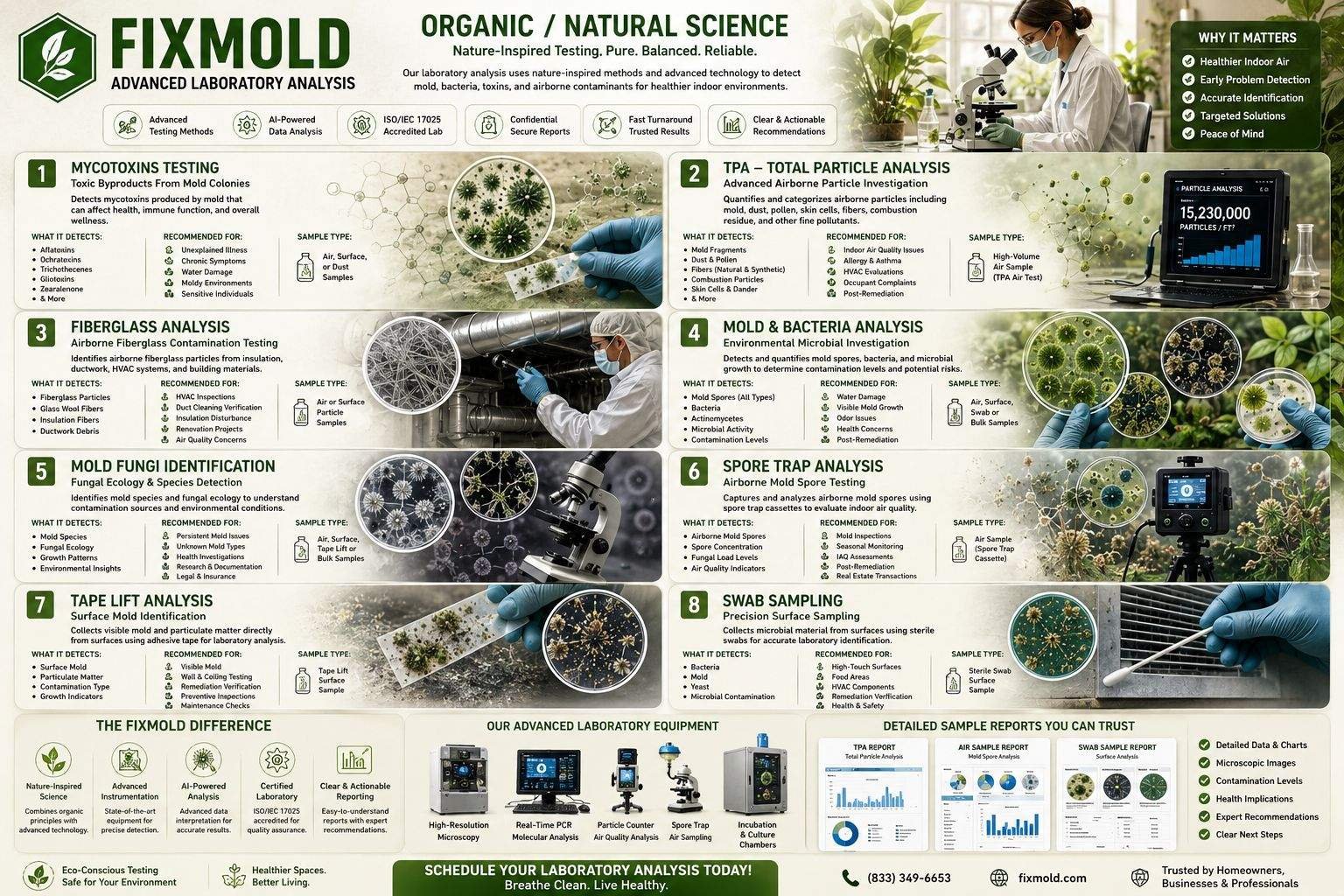
Depending on the property and circumstances, testing may include air samples, surface samples, or other targeted sampling methods. Samples can be submitted to an appropriate laboratory for analysis.
Testing may help evaluate:
✔ Fungal spore types and concentrations
✔ Areas of concern identified during inspection
✔ Differences between indoor and outdoor conditions
✔ Suspect surfaces or materials
✔ Conditions before or after remediation
Testing should always be interpreted in the context of the inspection and the property itself. A laboratory result by itself does not tell the entire story.
Clearance Testing: Verifying Remediation
One of the most important stages of a remediation project is determining whether the work has been completed appropriately.
Clearance testing is performed after remediation to evaluate the post-remediation environment against the established criteria for the project.
Depending on the circumstances, clearance may involve visual inspection, moisture evaluation, air or surface sampling, and laboratory analysis.
The goal is to determine whether:
✔ Remediation work has been completed
✔ The affected areas are visibly clean
✔ Moisture problems have been addressed
✔ Conditions are appropriate for the next stage of restoration or occupancy
✔ Testing results are consistent with the project’s clearance criteria
Why Is Clearance Important?
Without appropriate post-remediation verification, it can be difficult to objectively determine whether remediation was successful.
For property owners, clearance documentation can also provide valuable records for property management, restoration projects, insurance matters, real estate transactions, and occupant concerns.
Mycotoxin Testing: Looking Beyond Mold Spores
Mold testing and mycotoxin testing are not the same thing.
Traditional mold testing generally evaluates fungal organisms or spores. Mycotoxin testing is designed to look for specific chemical compounds produced by certain fungi.
This distinction is important because the presence of mold does not automatically mean that mycotoxins are present, and the absence of detectable mold spores at the time of sampling does not necessarily answer every question about historical exposure.
Mycotoxin testing may be considered when there is a specific reason to investigate potential exposure and should be interpreted carefully within the broader context of the property and circumstances.
An Important Distinction
A musty odor is generally associated with microbial volatile organic compounds (mVOCs) and should not be treated as a reliable indicator of the presence or concentration of mycotoxins.
That is why professional evaluation matters. Different tests answer different questions.
The Benefits of Specialized Testing
1. Better Information
Testing can provide objective laboratory data to complement the physical inspection.
2. Targeted Investigation
Sampling can help investigate specific areas of concern rather than relying solely on assumptions.
3. Remediation Verification
Clearance testing provides an additional level of post-remediation evaluation.
4. Documentation
Professional inspection and laboratory reports create valuable documentation for property owners, managers, restoration professionals, and other stakeholders.
5. Informed Decisions
Understanding the environmental conditions can help determine appropriate next steps instead of treating a problem blindly.
6. Greater Confidence
For occupants and property owners, professional testing can provide greater confidence that concerns have been investigated systematically.
Why Professional Interpretation Matters
One of the biggest mistakes in mold investigations is treating a laboratory result as a stand-alone diagnosis.
A test result needs context.
At FixMold, our approach combines field observations, environmental measurements, targeted sampling when appropriate, laboratory analysis, and professional interpretation.
Our experienced field technicians understand that every property is different. A residential home, commercial building, condominium, HVAC system, marine environment, or property with previous water damage may require a different investigative approach.
Our goal is simple:
Find the facts. Identify the conditions. Test when appropriate. Document the results. Help you make an informed decision.
FixMold Specialized Testing Services
Whether you’re dealing with suspected mold, completing a remediation project, purchasing or selling a property, investigating indoor air quality concerns, or seeking additional information about a potential environmental exposure, FixMold can help determine which evaluation and testing services are appropriate for your situation.
From initial inspection to post-remediation clearance, specialized testing gives you information you can use.
FixMold — Inspect. Test. Remediate. Verify.
📍 Serving South Florida
Mold Inspections | Clearance Testing | Laboratory Sampling | Mycotoxin Testing | Indoor Air Quality | HVAC Assessments | Mold Remediation
#FixMold #MoldTesting #MoldInspection #ClearanceTesting #MycotoxinTesting #MoldRemediation #IndoorAirQuality #MoldAssessment #HVACRemediation #SouthFloridaMold #MiamiMoldRemediation #MoldExperts
https://fixmold.com/locations/mold-remediation-kendall-fl
Jerusha is a contributor at FixMold, specializing in mold remediation, indoor air quality, moisture control, and environmental wellness. She creates informative content focused on mold prevention, and advanced restoration solutions for residential and commercial properties.