Last winter, a homeowner called us in a panic. She had found dark patches spreading across her basement drywall three weeks after a pipe burst. Her husband had already spent a Sunday afternoon scrubbing it with bleach and painting over the stained areas. By Tuesday, her daughter had developed a persistent cough that would not quit, and the musty smell that had disappeared for a few days was back, stronger than before.
This story is not unusual. We hear versions of it constantly.
If you are staring at dark growth on your walls right now and wondering whether is black mold from water damage dangerous, I want you to read this entire article before you pick up a sponge, a spray bottle, or a paintbrush. Because what you do in the next few hours genuinely matters for your family’s health and your home’s structural integrity far more than most people realize.
First, Let’s Talk About What Actually Happens After Water Damage
Water damage and mold are not separate problems that may or may not be connected. They are sequential events. One leads to the other with a reliability that fifteen years in this industry have made completely predictable to me.
When water enters your home, whether from a burst pipe, a leaking roof, a flooded basement, or even an appliance that overflowed once and seemed fine afterward, it soaks into porous building materials faster than most people expect. Drywall, wooden framing, insulation, and subfloor material all absorb and hold moisture long after the visible water has been mopped up and the surface feels dry to the touch.
This is why professional water damage restoration is so important. Proper drying and moisture removal within the first 24 to 48 hours can significantly reduce the risk of mold developing inside walls, flooring, and other structural materials.
The EPA puts the mold growth window at 24 to 48 hours after water exposure under the right conditions. In my experience, that timeline is accurate and sometimes generous. Wall cavities are dark, warm, and full of organic material that mold feeds on. Once moisture gets in there, you are not racing against a generous deadline. You are racing against a very short one.
Stachybotrys chartarum, the species most people mean when they say black mold, grows specifically on high-cellulose materials like drywall paper, wood studs, and ceiling tiles. These are exactly the materials that get saturated during water damage events. It appears dark green to black, feels slimy when active, and produces mycotoxins that have been studied extensively for their effects on human health. None of those effects are good.
Is Black Mold from Water Damage Actually Dangerous or Is That Overstated?
I have been asked this question hundreds of times, and my answer has never changed. Yes, it is dangerous. Not in a theoretical, worst-case-scenario way. In a documented, researched, clinically observed way that has real consequences for real people living in real homes.
Here is what the evidence actually shows.
The World Health Organization found that people living in damp, mold-contaminated homes are 30 to 50% more likely to develop respiratory illness than those living in clean, dry environments. The NIH classifies trichothecene mycotoxins, which are exactly what Stachybotrys produces, as among the more potent mycotoxins affecting human health. A peer-reviewed study from 2003 found that adults regularly spending time in water-damaged buildings scored measurably lower on neuropsychological tests measuring memory, attention, and processing speed.
These are not fringe findings from obscure journals. This is mainstream environmental health research that has been building consistently for two decades.
What water damage mold does to your body depends on how long you have been exposed, how large the colony is, and something most people never think about: your genetics. Roughly 25% of the population carries an HLA-DR gene variant that prevents the body from clearing mycotoxins through its normal immune pathways. For those people, the same exposure that gives someone else a runny nose and a mild cough can trigger months of systemic illness affecting the neurological system, the gut, mood regulation, and immune function simultaneously. You have no way of knowing which group you fall into without genetic testing.
So when people ask me is water damage mold dangerous, my honest answer is: it is dangerous enough that you should not assume you are one of the lucky ones who handles it fine.
What Black Mold Does to Your Health: The Specific Effects
Let me break this down by system because black mold from water damage does not limit itself to one part of the body.
Your respiratory system takes the first hit
Chronic coughing, nasal congestion that antihistamines do not touch, recurring sinus infections, post-nasal drip, and for people with asthma, a dramatic worsening of symptoms that seems to come from nowhere. The American Academy of Allergy, Asthma and Immunology has confirmed mold as a trigger in approximately 21 million asthmatic Americans. If someone in your household suddenly develops breathing problems after a water event in your home, the timing is not a coincidence.
Your brain and nervous system feel it next
Brain fog that makes concentrating feel like pushing through wet concrete. Short-term memory that slips in ways that are frightening if you do not understand why they are happening. Headaches that keep coming back. In more severe cases involving heavy prolonged exposure, tremors and coordination difficulties. Mycotoxins cross the blood-brain barrier. They do not stay in your lungs.
Your immune system gets suppressed
The NIH has confirmed that specific mycotoxins produced by black mold are clinically classified as immunosuppressants. They reduce your body’s ability to mount adequate defenses against bacteria and viruses. People living with significant black mold exposure catch more illnesses, fight them off more slowly, and find that infections they would normally shake off in a week drag on for three or four.
Your mood takes a hit too
Anxiety and depression that appeared without an obvious life trigger, emotional flatness, and irritability that does not match circumstances. Mycotoxins interfere with serotonin and dopamine production. The connection between prolonged mold exposure and mental health symptoms is better documented than most people realize, and it is one of the last things physicians typically investigate when a patient comes in with mood changes.
Why Grabbing Bleach Is the Worst Thing You Can Do
I understand the impulse. You see something that looks dirty, and your instinct is to clean it. But here is what actually happens when you scrub black mold from water damage with bleach and no containment.
You disturb a colony that was previously sitting in one place, releasing spores at a manageable rate. The physical disruption releases an enormous spike of spores into your indoor air all at once. A single square foot of active mold growth can release millions of spores when it is physically disturbed. Without negative air pressure containment, those spores travel through your HVAC system and deposit themselves in rooms throughout your home within hours.
If mold spores have entered your ventilation system, professional HVAC cleaning may also be necessary to remove contamination from air handlers, ductwork, and vents before clean indoor air can be fully restored.
Bleach does not solve the problem on porous materials. On tile and glass, it works because those are non-porous surfaces. On drywall, wood, and insulation, bleach kills the surface mold while leaving the root structure called hyphae completely intact inside the material. The mold looks gone. Three weeks later, it is back, often covering a larger area than before, because the root system that was left behind regrew from the moisture that is still present in the material.
And here is the thing that the surface cleaning misses entirely: the visible mold you found is rarely the complete picture. Mold colonies spread through porous materials well beyond their visible boundary. The patch you can see on the drywall surface is connected to growth that extends inside the wall cavity, across the back face of the drywall, and potentially along the wooden studs behind it. Cleaning only what you can see leaves the majority of the problem completely untouched.
None of this even addresses the moisture source. Without fixing whatever caused the water damage in the first place, every surface you clean will be recolonized in weeks because you have not changed the conditions that made mold growth possible.
What Proper Remediation Actually Looks Like
Professional remediation is not cleaning with better products. It is a completely different process designed around eliminating the mold, preventing it from spreading during removal, addressing the moisture source, and verifying through post-treatment testing that the job is actually done.
A professional mold remediation service does much more than remove visible mold. It identifies hidden contamination, addresses the underlying moisture source, and verifies that your home is safe through post-remediation testing.
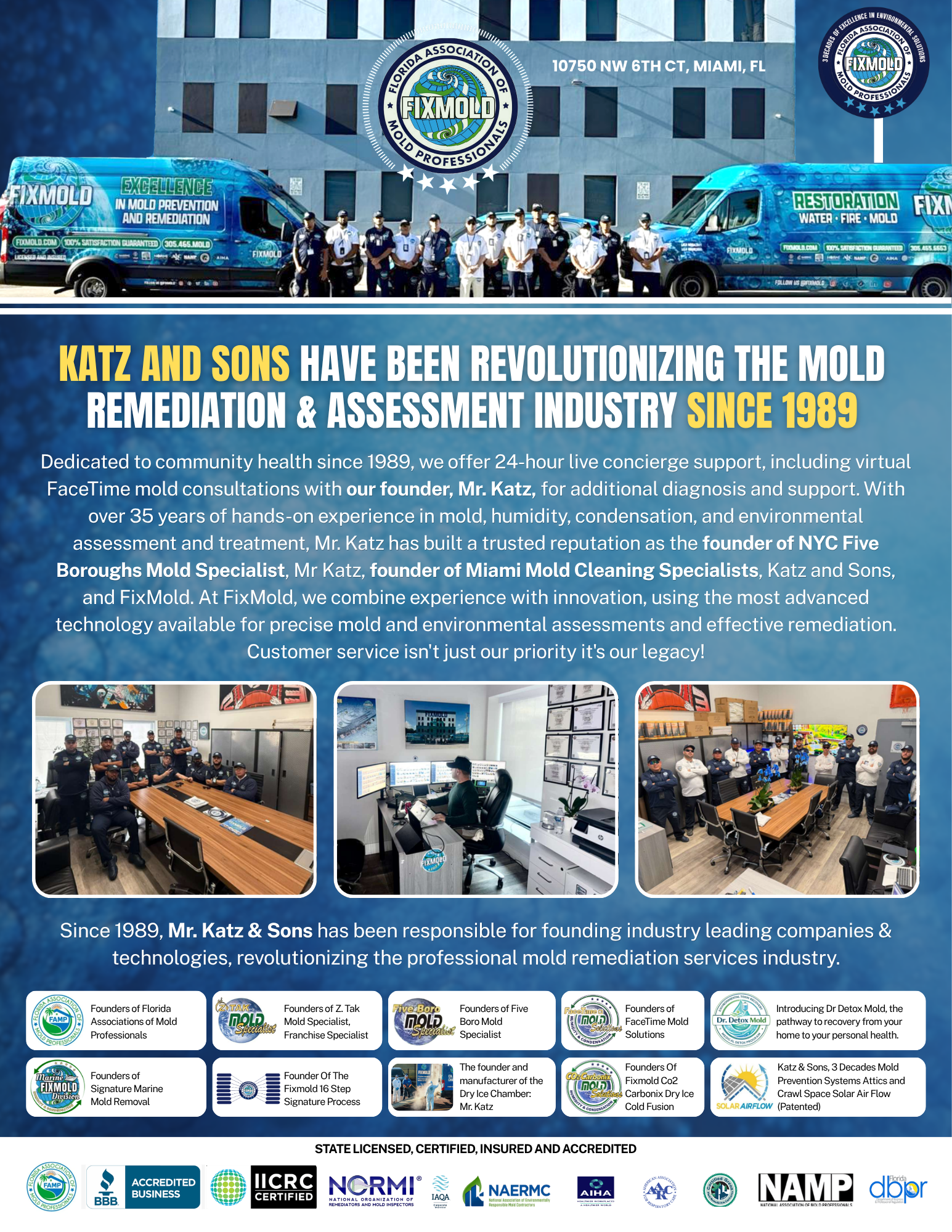
At FixMold, every job starts with a thorough inspection before anything is touched. We use calibrated moisture meters to find water inside wall materials that look and feel dry from the outside. Infrared thermal imaging identifies hidden moisture pockets in walls, floors, and ceilings that standard inspection would miss entirely. Air and surface sampling tells us exactly which species are present and what concentrations your household has been exposed to.
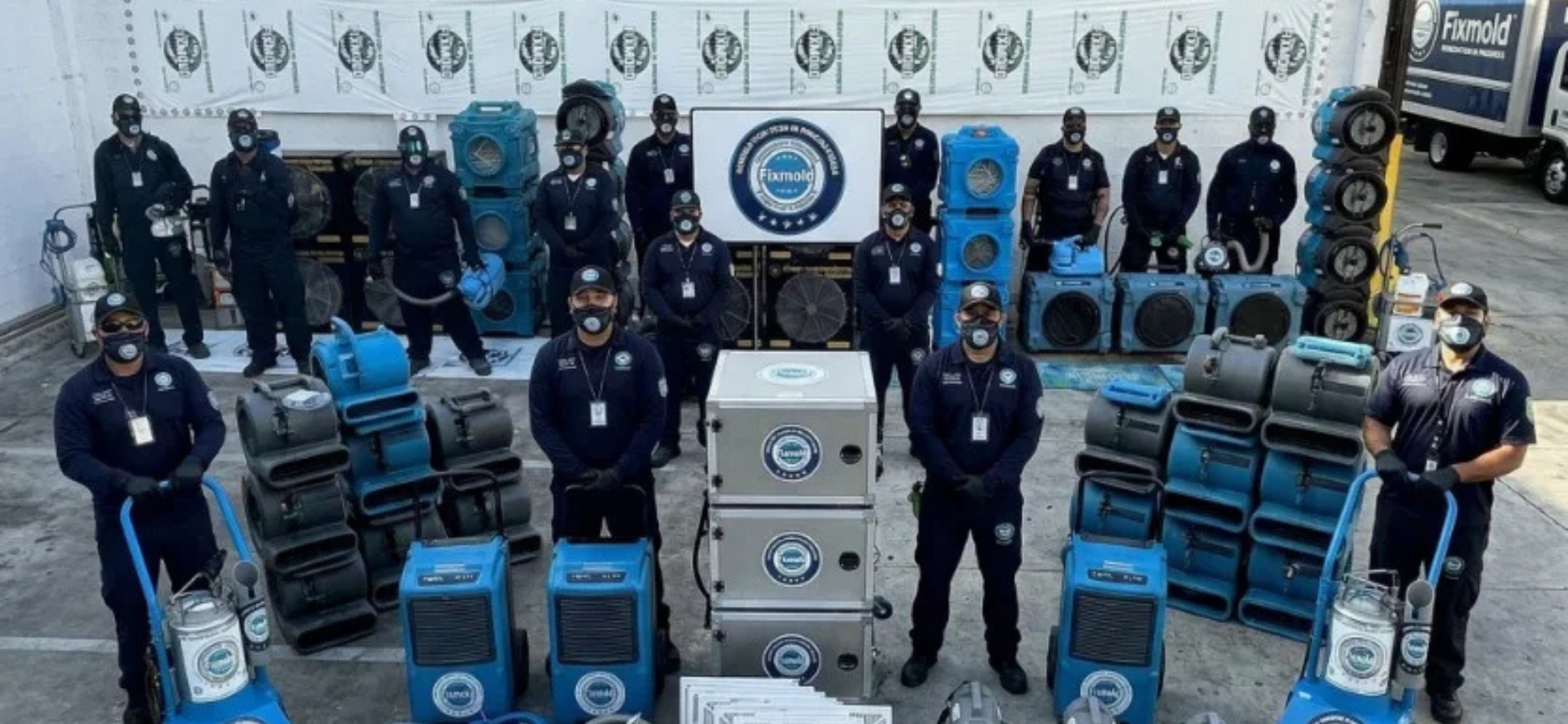
Containment goes up before any mold is disturbed. Negative air pressure systems prevent spores from migrating to unaffected areas of your home during the removal process. Contaminated materials are removed and disposed of according to EPA and OSHA protocols, not bagged up and left on the curb. Structural surfaces receive antimicrobial treatment that addresses the root hyphae, not just the surface growth.
When the work is done, post-treatment air quality testing confirms that spore levels have returned to normal baseline before containment comes down. You do not take our word for it that your home is safe. Laboratory results tell you.
The EPA recommends professional handling for any mold coverage exceeding 10 square feet. In my experience, the visible growth homeowners find almost always represents less than half of what is actually present once we open the wall.
Signs Your Water Damage Has Already Become a Mold Problem
Some of these will feel familiar if you are reading this article for a reason.
A musty, earthy smell that persists in a room even after cleaning and airing it out is the most reliable early signal. Mold produces chemical compounds as metabolic byproducts, and that distinctive smell is those compounds entering your air even when the growth itself is hidden inside a wall or under your flooring.
Paint or wallpaper that looks like it is staining from the inside, bubbling, or peeling in areas near plumbing, below windows, or anywhere that got wet after a water event is telling you there is moisture behind the surface.
Family members whose respiratory symptoms, headaches, or fatigue consistently improve when they spend a few days away from home and return when they come back. That location-linked symptom pattern is one of the clearest environmental indicators I know of.
Walls that feel subtly soft or spongy when you press them. Baseboards that are warping or separating from the wall. Flooring that has developed a slight give or bounce in areas that were previously solid.
Any of these signs following a water damage event means the situation needs professional assessment before any cleaning, renovation, or construction work disturbs what might be a significantly contaminated area.
FixMold: Call Us Before You Clean Anything
Is black mold from water damage dangerous? After everything in this article, I think you already know the answer to that.
What I want you to take away from this is that the danger is manageable when it is handled correctly and made significantly worse when it is not. The families who call FixMold early, before they have cleaned anything or opened any walls, consistently end up with faster resolutions and lower total costs than those who try to handle it themselves first and call us after the problem has spread.
Our certified team will tell you exactly what you are dealing with, how far it extends, what it will take to fix it properly, and what your indoor air quality looks like right now. No overselling. No vague assessments. Just an accurate picture and a clear plan.
If you have had any water damage in the last few weeks or you are seeing or smelling signs of mold in your home, contact FixMold before you touch anything. Getting the right information first is always cheaper than fixing the consequences of getting it wrong.
Frequently Asked Questions
Q1: Is black mold from water damage dangerous even when the patch looks small?
Small visible patches are almost always misleading. What you see on a drywall surface is connected to growth that extends inside the wall material and cavity beyond the visible boundary. Even a limited colony of Stachybotrys produces mycotoxins continuously in an enclosed indoor space where concentrations accumulate over time. The size of the visible patch does not reliably indicate how long the mold has been present, how far it has spread inside the material, or what your household has already been exposed to. Get it assessed professionally regardless of how small it looks.
Q2: How quickly does black mold grow after water damage?
Faster than most homeowners expect. The EPA puts the colonization window at 24 to 48 hours under favorable conditions, and wall cavities provide favorable conditions consistently. Dark, warm, organic, and holding moisture longer than visible surfaces. If water-damaged materials were not completely dried within that initial window, mold growth inside building materials should be assumed. Small leaks that go unnoticed for weeks or months are responsible for some of the most extensive mold situations we encounter at FixMold because the growth timeline was uninterrupted.
Q3: Is water damage mold dangerous if it is not the black mold species specifically?
Yes. Stachybotrys chartarum gets the most attention, but it is not the only species that causes serious health problems in water-damaged buildings. Aspergillus, Penicillium, Chaetomium, Fusarium, and Penicillium all grow in water-damaged environments, and all produce compounds that affect human health. Some species appear in colors other than black, including green, gray, and white. Species identification requires laboratory analysis of samples collected by a trained inspector, not visual assessment. Is water damage mold dangerous regardless of species? In sufficient quantities and with prolonged exposure, yes, it can be.
Q4: Can I stay in my home while black mold from water damage is being remediated?
It depends on the scope and location of the contamination and who is living in your home. For limited, contained growth in an isolated area away from sleeping spaces and air handling equipment, short-term continued occupancy while remediation is being arranged is generally manageable for healthy adults. For extensive contamination, growth anywhere near your HVAC system, or households including children, elderly members, pregnant women, or anyone with respiratory conditions or compromised immunity, temporary relocation during the active remediation process is strongly advisable. FixMold will give you an honest occupancy recommendation specific to your situation after assessing what we actually find during inspection.
Q5: Will my homeowners insurance cover black mold from water damage?
Coverage depends on the cause and how quickly it was reported. Sudden accidental water events like burst pipes are typically covered under standard policies, including resulting mold remediation when addressed promptly. Gradual leaks, flooding from external sources, and damage attributed to maintenance issues are frequently excluded. Professional documentation of both the water damage origin and the mold growth, combined with prompt reporting to your insurer, gives you the strongest claim position. Our documentation process at FixMold is specifically designed to support insurance claims, and we can guide you through what your insurer will need to see.
Milly is a content contributor at FixMold with a focus on mold inspection, remediation strategies, air quality improvement, and property protection. She shares practical insights and educational resources to help homeowners and businesses maintain safer, cleaner indoor environments.