When homeowners think about mold growth, they often blame the temperature. While warm weather can contribute to mold problems, humidity—not temperature—is the true driving force behind mold growth. Understanding the relationship between humidity and temperature is essential for maintaining a healthy indoor environment, protecting your property, and improving your home’s indoor air quality.
At FixMold, we specialize in helping homeowners throughout Miami and South Florida identify hidden moisture issues before they become expensive mold problems. Knowing the difference between humidity and temperature is the first step toward preventing mold before it starts.
What Is Temperature?
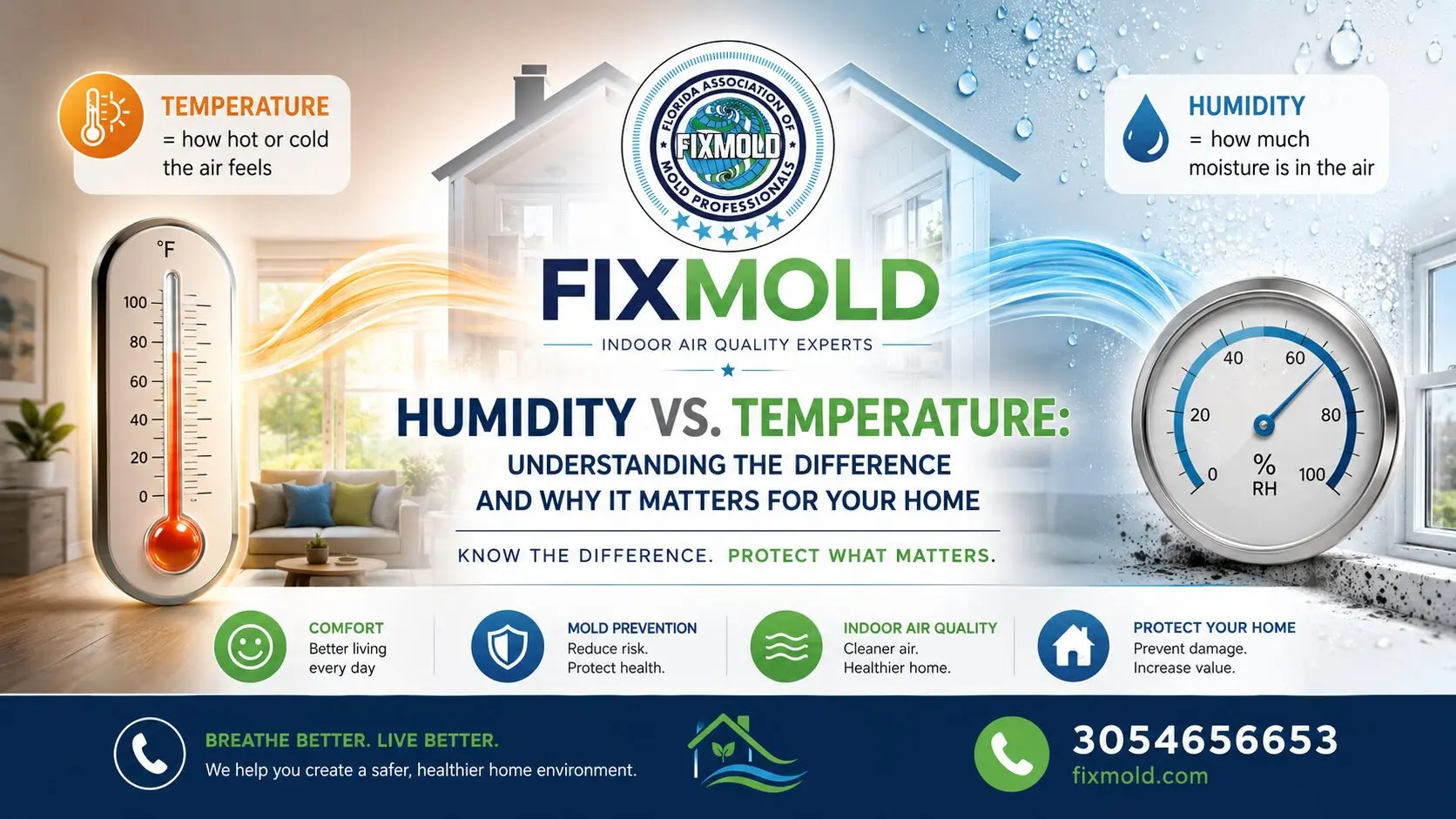
Temperature measures how hot or cold the air is. While warmer air can hold more moisture than cooler air, temperature alone does not create mold.
A home can be:
- Warm and dry with no mold issues.
- Cool and humid with significant mold growth.
- Comfortable in temperature but still have excessive hidden moisture.
Simply lowering your thermostat does not eliminate excess moisture in your home.
What Is Humidity?
Humidity refers to the amount of moisture present in the air. The most important measurement is Relative Humidity (RH), expressed as a percentage.
General indoor recommendations include:
- 30%–50% RH: Ideal indoor humidity
- 50%–60% RH: Increased monitoring recommended
- Above 60% RH: Higher risk for mold growth
- Above 70% RH: Conditions become ideal for mold, mildew, and bacterial growth
Excess humidity creates the perfect environment for mold spores to colonize surfaces such as drywall, wood framing, insulation, carpeting, HVAC systems, and air ducts.
Why South Florida Homes Are at Greater Risk
Living in Miami means dealing with naturally high outdoor humidity nearly year-round. Even if your home feels cool, moisture can still enter through:
- Air conditioning systems
- Poor ventilation
- Roof leaks
- Plumbing leaks
- Window condensation
- Crawl spaces
- Attics
- Flooding or water intrusion
This trapped moisture often goes unnoticed until mold becomes visible or indoor air quality begins to decline.
The Connection Between Temperature and Humidity
Temperature and humidity work together.
Warm air holds more moisture than cool air. When warm, humid air meets a cool surface—such as an air conditioning vent, window, wall, or ductwork—it can reach its dew point and form condensation.
That hidden moisture becomes an ideal breeding ground for mold.
Common areas where condensation occurs include:
- Air conditioning supply vents
- Air handler closets
- Ductwork
- Windows
- Exterior walls
- Bathrooms
- Laundry rooms
This is why controlling humidity is just as important as maintaining a comfortable temperature.
Signs Your Home Has Excess Humidity
Many homeowners don’t realize their humidity levels are too high until symptoms begin appearing.
Warning signs include:
- Musty odors
- Condensation on windows
- Damp air
- Peeling paint
- Bubbling drywall
- Mold around vents
- Allergies that worsen indoors
- Visible mildew
- Excessive dust accumulation
If you notice any of these signs, your home’s moisture levels should be professionally evaluated.
How High Humidity Affects Indoor Air Quality
High humidity doesn’t only encourage mold—it also impacts the quality of the air your family breathes.
Elevated moisture levels contribute to:
- Increased airborne mold spores
- Dust mite growth
- Bacteria
- Musty odors
- Reduced HVAC efficiency
- Poor respiratory comfort
- Indoor allergens
Maintaining proper humidity helps improve indoor air quality while reducing stress on your HVAC system.
How to Keep Humidity Under Control
Preventing mold begins with moisture management.
Here are several ways to reduce indoor humidity:
- Maintain indoor humidity between 30–50%.
- Service your HVAC system regularly.
- Keep your AC drain line clean.
- Repair leaks immediately.
- Improve ventilation in kitchens and bathrooms.
- Use dehumidifiers where needed.
- Schedule routine air quality assessments.
- Inspect your attic and crawl spaces for moisture.
- Address condensation as soon as it appears.
Small moisture issues today can become major remediation projects tomorrow.
How FixMold Helps Protect Your Home
At FixMold, we don’t simply remove mold—we identify and address the moisture conditions that allow it to return.
Our specialized services include:
- Professional Mold Inspections
- Indoor Air Quality Assessments
- Mold Testing
- Mold Remediation
- HVAC System Cleaning
- Air Duct Cleaning
- Moisture Detection
- Organic Mold Treatment Solutions
- Preventative Maintenance Recommendations
Our goal is to restore healthy indoor environments while helping homeowners prevent future mold growth.
Protect Your Home Before Mold Starts
Temperature may influence comfort, but humidity determines whether mold has the moisture it needs to grow. By understanding the difference between humidity and temperature, homeowners can make informed decisions that protect both their property and their family’s health.
If you’re concerned about moisture, musty odors, or declining indoor air quality, don’t wait until mold becomes visible.
Contact FixMold today for a professional mold inspection, indoor air quality assessment, and customized moisture management solutions. Together, we can help you create a cleaner, healthier, and safer home for years to come.
https://fixmold.com/locations/mold-remediation-lake-worth-beach-fl
#HumidityVsTemperature #HumidityControl #IndoorHumidity #MoldPrevention #MoldInspection #MoldTesting #MoldRemediation #IndoorAirQuality #HealthyHome #HVACMaintenance #Condensation #MoistureControl #AirQuality #SouthFloridaHomes #MiamiMold #FixMold #EcoFriendlyLiving #HomeHealth #CleanAir #ProtectYourHome
Jerusha is a contributor at FixMold, specializing in mold remediation, indoor air quality, moisture control, and environmental wellness. She creates informative content focused on mold prevention, and advanced restoration solutions for residential and commercial properties.