By FixMold Miami | Indoor Air Quality, Mold Inspection & Advanced Restoration Specialists
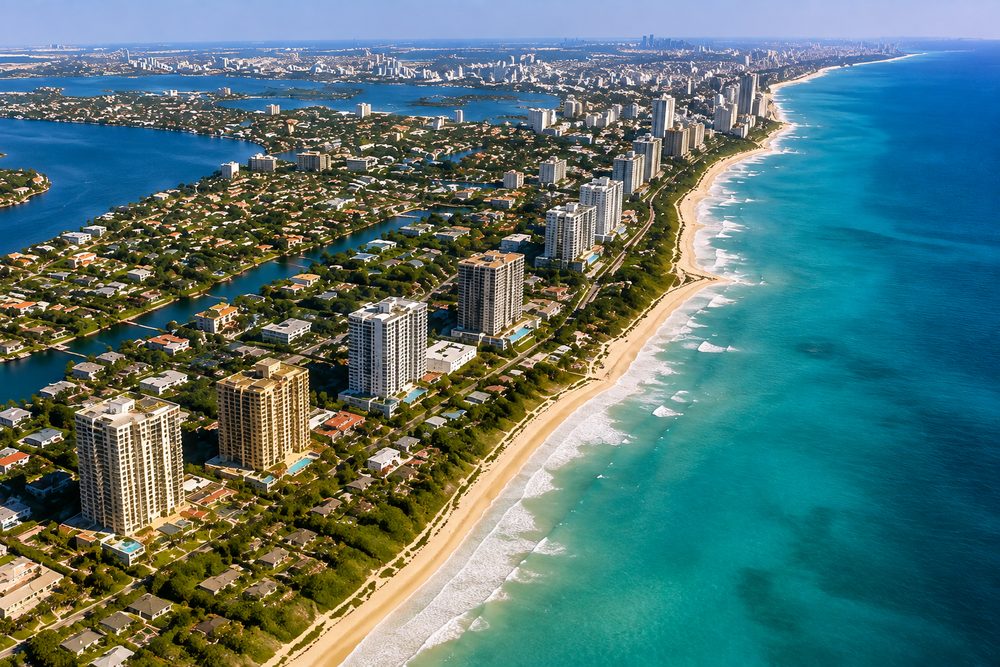
South Florida is famous for its beautiful coastline, luxury condominiums, waterfront residences, and warm tropical climate. However, beneath this desirable environment lies a serious challenge for property owners: year-round humidity and hidden moisture intrusion.
From unoccupied seasonal homes in Miami Beach to deteriorating fiberglass insulation inside air-conditioning systems and water leaks affecting neighboring condominium units, indoor environmental problems can develop without obvious warning signs.
At FixMold Miami, our approach emphasizes identifying the source of moisture, evaluating potential indoor air-quality concerns, and developing appropriate restoration solutions.
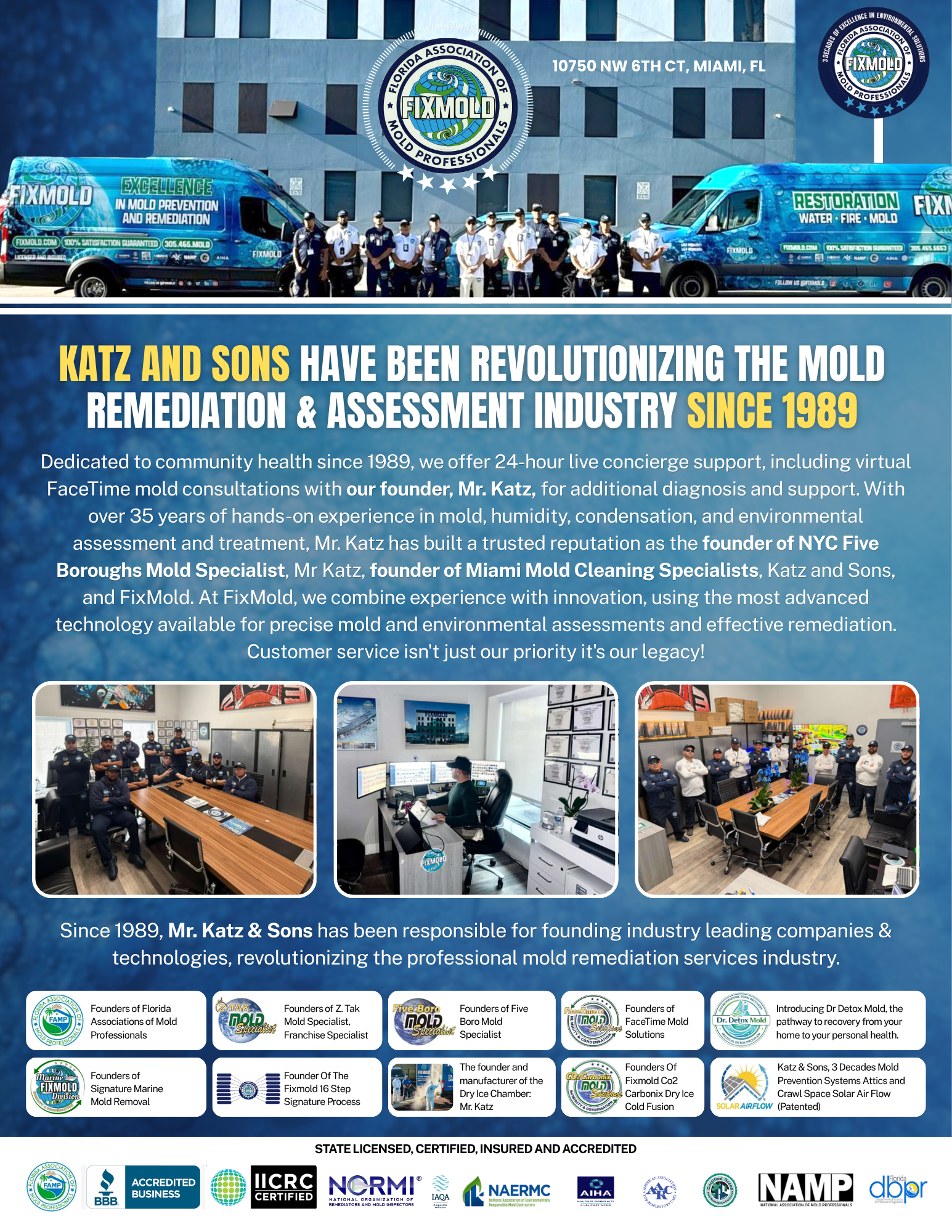
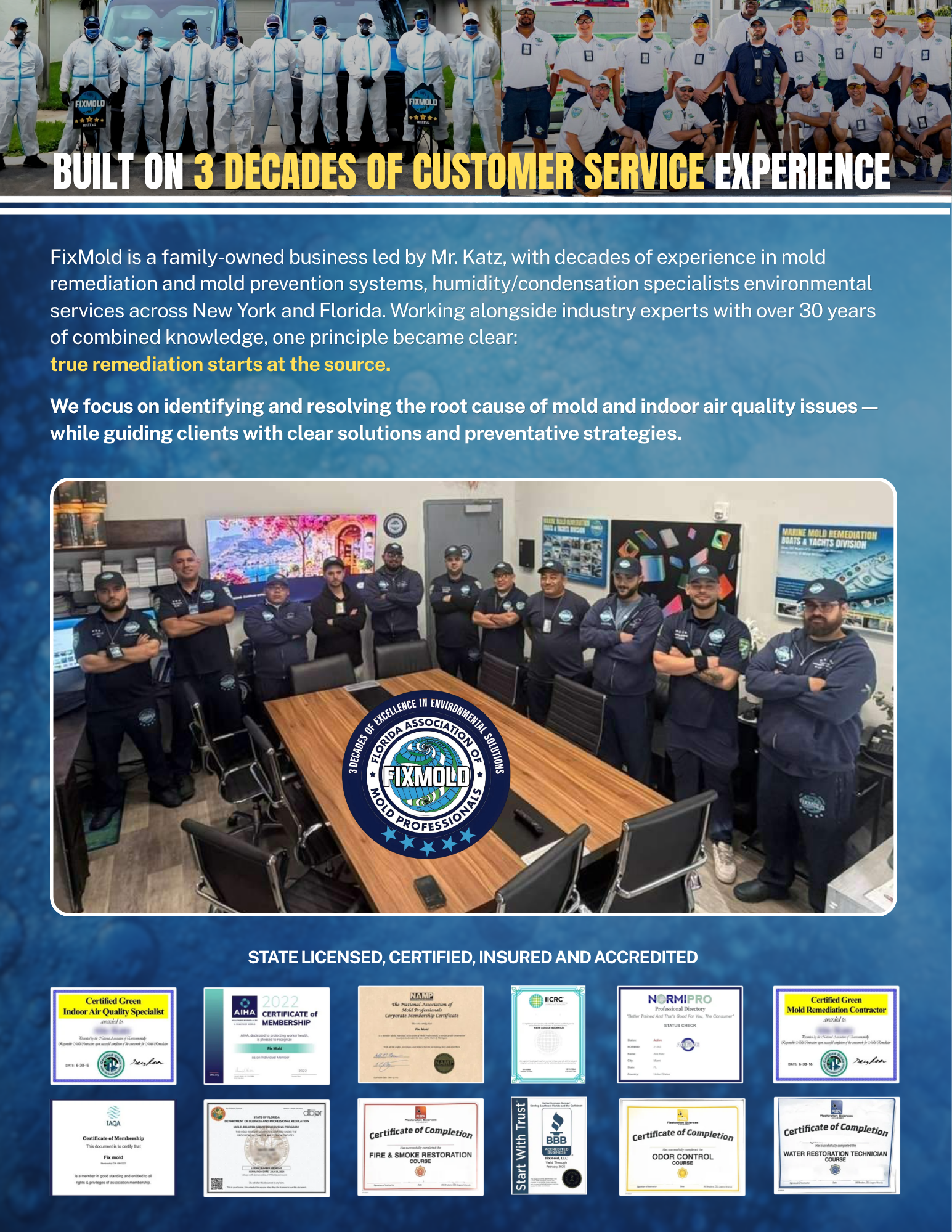
With 35 years of experience, our team serves homeowners, condominium associations, building managers, and commercial property owners throughout Miami-Dade, Broward, Palm Beach, and Monroe Counties.
1. Why Unoccupied and Seasonal Homes Face Increased Humidity Risks
South Florida attracts thousands of seasonal residents who occupy their homes for only part of the year.
Many properties remain vacant for weeks or months during Florida’s warmest and most humid periods.
Although these properties may appear secure, prolonged vacancy can increase the risk of undetected moisture problems.
What happens when a South Florida home sits vacant?
When air-conditioning systems are improperly maintained, humidity controls are inadequate, or plumbing leaks go unnoticed, moisture can accumulate in concealed areas.
Potential consequences include:
- Mold growth behind drywall and inside closets.
- Condensation around air-conditioning ducts and vents.
- Musty odors in enclosed rooms.
- Damage to furnishings, cabinetry, and building materials.
- Elevated indoor relative humidity.
- Undetected roof, window, or plumbing leaks.
Poor ventilation and uncontrolled humidity can create conditions favorable to microbial growth.
Protecting seasonal homes
Property owners should consider routine humidity monitoring, periodic inspections, HVAC maintenance, and moisture evaluations before returning to an unoccupied property.
The U.S. Environmental Protection Agency generally recommends keeping indoor relative humidity below 60%, ideally between 30% and 50%.
FixMold Miami provides inspections designed to help identify concealed moisture problems before they develop into larger restoration projects.
2. HVAC Fiberglass Contamination: An Overlooked Indoor Air-Quality Concern
When homeowners experience indoor air-quality concerns, mold is often their first suspicion.
However, another issue can originate inside the HVAC system itself: deteriorating fiberglass insulation.
Many residential and commercial air-conditioning systems contain fiberglass-based materials used for thermal insulation and acoustic control.
These materials may be found inside:
- Air-handler cabinets.
- Supply and return ductwork.
- Air-conditioning plenums.
- Internally lined ducts.
- Certain HVAC transition components.
Over time, condensation, mechanical wear, improper maintenance, and moisture exposure can contribute to the deterioration of insulation or its protective surface.
What happens when fiberglass insulation deteriorates?
When insulation becomes damaged or loose, fibers and other debris may enter the airstream.
Potential warning signs include visible fibrous debris, deteriorated internal duct lining, damaged insulation, and persistent HVAC cleanliness concerns.
Exposure to fiberglass particles may cause temporary irritation of the skin, eyes, nose, or throat. Symptoms alone, however, cannot establish that fiberglass contamination is present.
A thorough evaluation is important because dust, mold, pollen, and other airborne materials can produce overlapping concerns.
How FixMold Miami evaluates HVAC fiberglass problems
Our inspection and restoration approach may include:
Step 1: Comprehensive HVAC Inspection
Evaluate air handlers, ductwork, plenums, accessible insulation, and possible condensation problems.
Step 2: Source Identification
Determine whether insulation deterioration, moisture, or damaged building materials may be contributing to particulate contamination.
Step 3: HEPA Cleaning and Debris Removal
Use appropriate professional HEPA equipment and containment practices where cleaning is suitable.
Step 4: Fiberglass Restoration or Replacement
Depending on material condition and manufacturer requirements, recommend appropriate cleaning, sealing, encapsulation, or replacement of deteriorated components.
Step 5: Verification and Clearance
Arrange appropriate independent post-remediation evaluation or testing based on the project scope.
Not every damaged fiberglass component is suitable for encapsulation. Wet, mold-contaminated, or significantly deteriorated insulation may require replacement.
The objective is to address the source of the contamination, rather than simply treating visible debris.
3. Apartment and Condo Water-Intrusion Disputes in South Florida
High-rise condominiums are a defining feature of Miami, Fort Lauderdale, Hollywood, Sunny Isles Beach, and Palm Beach.
These buildings present unique moisture-management challenges.
A plumbing leak originating inside one apartment can affect multiple units, shared walls, ceilings, electrical cavities, and structural components.
Why condominium leaks become complicated
The location of visible water damage does not always establish the original leak source.
For example, moisture appearing on a living-room ceiling might originate from:
- Plumbing in an upstairs apartment.
- A shared building pipe or riser.
- A roof or exterior envelope deficiency.
- A neighboring bathroom.
- HVAC condensation.
- Water entering around windows or balconies.
As a result, disputes can develop between unit owners, condominium associations, management companies, and insurance carriers.
Determining repair responsibility may depend on the building’s governing documents, applicable Florida law, insurance coverage, and the actual source of damage.
Why professional documentation matters
An inspection supported by moisture readings, thermal imaging, photographs, and written findings can help establish the location and extent of moisture intrusion.
At FixMold Miami, our evaluation services can include:
Infrared Thermal Imaging
Thermal cameras help identify temperature variations that may warrant further investigation. Thermal imaging alone does not confirm the presence of moisture or mold.
Professional Moisture Mapping
Moisture meters and systematic measurements help characterize affected building materials.
Photographic Documentation
Detailed photographs record observable conditions and support accurate reporting.
HVAC and Building-System Evaluation
Assessment of potential condensation, duct leakage, and mechanical-system moisture sources where applicable.
Independent Laboratory Testing
When needed, appropriate samples may be submitted for independent laboratory analysis.
These findings help owners and property managers make informed restoration decisions and may provide useful supporting documentation during a dispute.
4. Why South Florida’s Climate Requires a Different Approach
Unlike regions with extended cold or dry seasons, South Florida experiences moisture challenges throughout the year.
Warm outdoor temperatures, elevated humidity, summer thunderstorms, tropical weather, and substantial air-conditioning demand can influence indoor conditions.
Potential moisture trouble spots include:
- Attics with inadequate ventilation.
- HVAC ducts in humid or unconditioned spaces.
- Exterior walls exposed to wind-driven rain.
- Windows with failed sealants.
- Bathrooms with inadequate exhaust ventilation.
- Condominiums with shared plumbing infrastructure.
- Closets and other poorly ventilated spaces.
- Crawlspaces affected by ground moisture.
Simply removing visible mold without correcting the underlying moisture condition can allow the problem to recur.
Effective mold remediation begins with understanding why the moisture developed in the first place.
5. The FixMold Miami Approach: Find the Source, Restore the Environment
FixMold Miami focuses on comprehensive indoor environmental evaluation and professional restoration services.
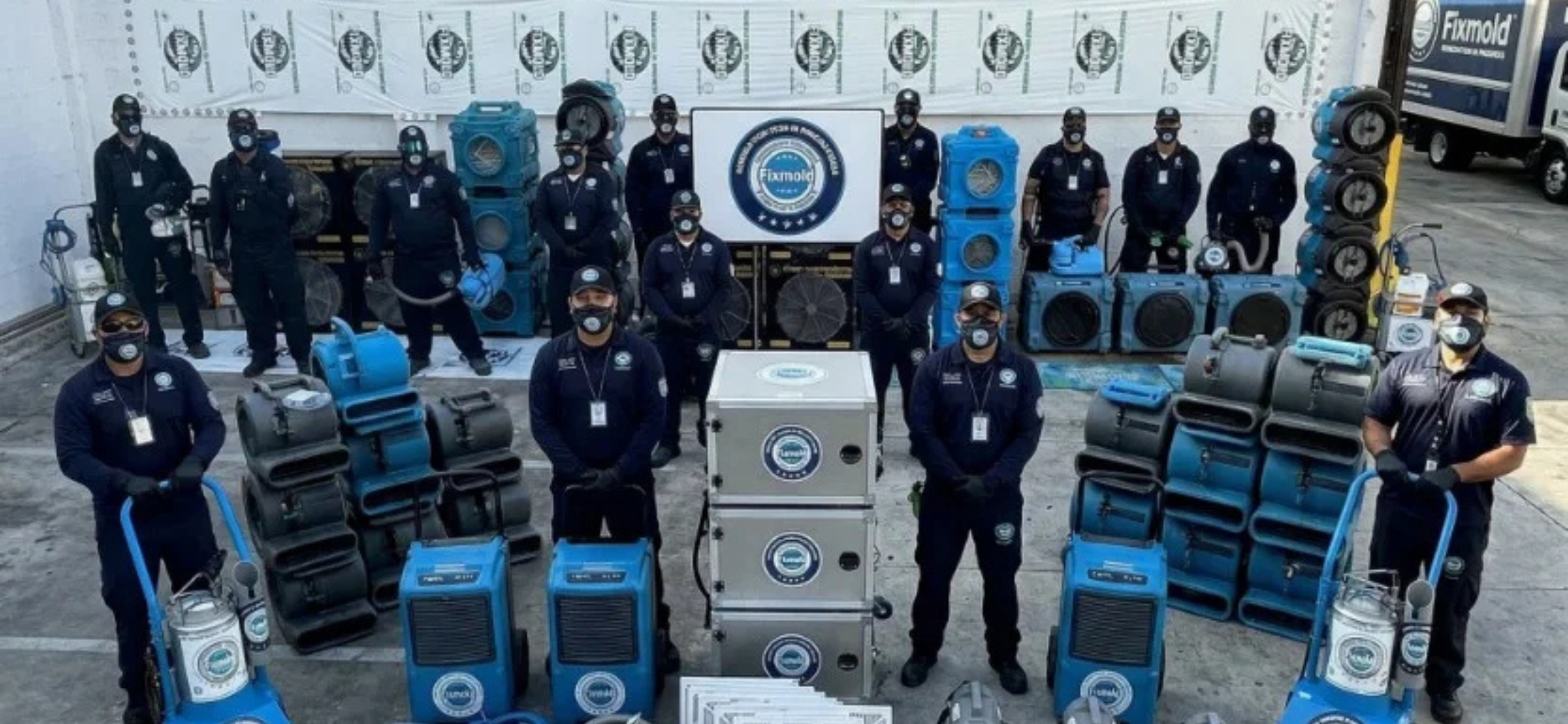
Our capabilities include mold inspection and testing, moisture detection, HVAC fiberglass evaluation, duct restoration, remediation, and independent post-remediation clearance coordination.
Rather than relying solely on visible surface conditions, we use applicable inspection technology and documentation to investigate less obvious building problems.
Serving South Florida Property Owners
Our service areas include:
Miami-Dade County: Miami, Miami Beach, Aventura, Sunny Isles Beach, Coral Gables, Doral, and surrounding communities.
Broward County: Fort Lauderdale, Hollywood, Hallandale Beach, Pompano Beach, Weston, and surrounding communities.
Palm Beach County: West Palm Beach, Boca Raton, Delray Beach, Boynton Beach, and neighboring areas.
Monroe County: The Florida Keys and surrounding service locations.
We work with residential and commercial property owners, including seasonal residents, condominium owners, and property management professionals.
6. When Should You Schedule a Professional Inspection?
Consider requesting an indoor environmental assessment if:
- You return to a seasonal property and discover musty odors.
- Your air-conditioning system contains visible deteriorating fiberglass.
- Water stains develop near ceiling penetrations or shared walls.
- Moisture reappears after previous repairs.
- You suspect hidden mold behind building materials.
- Your condominium association needs documentation of observed moisture conditions.
- You are purchasing or managing a property with a history of water intrusion.
Early investigation can help reduce uncertainty, guide repairs, and prevent avoidable delays.
Conclusion: Protect Your Property and Indoor Air Quality
South Florida’s beautiful climate creates year-round moisture-management challenges, particularly for vacant residences, aging HVAC systems, and multifamily condominiums.
Whether the concern involves hidden humidity, deteriorating fiberglass insulation, or a water leak affecting several apartments, identifying the source is essential to choosing an effective solution.
At FixMold Miami, our message is simple:
We don’t just test — we find the source of the problem.
Schedule a FixMold Miami Inspection
FixMold Miami — Mold Inspection, Indoor Air Quality & Professional Restoration
35 Years Experience
Serving Miami-Dade, Broward, Palm Beach & Monroe Counties.
Website: https://www.fixmold.com
Phone: 305-465-6653
Frequently Asked Questions
Can mold grow in an unoccupied Florida home?
Yes. Mold can develop when moisture and suitable materials are present, even when a property is unoccupied.
Can HVAC fiberglass insulation affect indoor air quality?
Damaged or deteriorating fiberglass insulation can release particles into an air-handling system. Professional inspection can help identify the source.
Can infrared cameras identify water leaks inside condo walls?
Infrared imaging can reveal temperature patterns suggesting possible moisture concerns, but additional investigation and moisture measurements are necessary.
Who is responsible for water intrusion between condominium units?
Responsibility depends on the source, applicable law, condominium governing documents, and insurance provisions.
Can deteriorated HVAC duct insulation be restored?
Some damaged materials may be suitable for appropriate restoration or sealing, while others require replacement following professional evaluation.
#FixMoldMiami #MoldInspectionMiami #MoldRemovalMiami #MoldRemediation #SouthFloridaHumidity #HVACFiberglass #FiberglassContamination #IndoorAirQuality #CondoWaterDamage #WaterIntrusion #SeasonalHomes #VacationHomeMaintenance #MiamiCondo #MoistureDetection #MoldTesting #AirDuctRestoration #PropertyManagementMiami #BrowardCounty #PalmBeachCounty #MiamiDade #FloridaMoldSpecialist
https://fixmold.com/locations
Jerusha is a contributor at FixMold, specializing in mold remediation, indoor air quality, moisture control, and environmental wellness. She creates informative content focused on mold prevention, and advanced restoration solutions for residential and commercial properties.