September may feel like just another hot month in South Florida, but inside homes, condominiums and commercial properties, the combination of heat, humidity, rainfall and constant air-conditioning can create an environment where hidden moisture becomes a serious concern.
For property owners throughout Miami-Dade, Broward, Palm Beach and Monroe County, the important thing to understand is that mold contamination does not always begin with a dramatic roof leak or burst pipe.
Sometimes the source is much less obvious.
How September Heat Can Contribute to Mold
South Florida’s outdoor air can be extremely warm and humid while indoor air-conditioning systems are working continuously to keep buildings cool.
When warm, moisture-heavy air comes into contact with cold AC components, ductwork, vents or interior surfaces, condensation can form.
That moisture can accumulate around an air handler, inside an AC closet, around supply vents and return plenums, near ductwork, behind drywall or in other areas that homeowners rarely inspect.
If those areas remain damp, they can provide conditions where mold contamination may develop.
This is why a homeowner can discover mold even when they say:
“But I’ve never had a leak.”
The problem may be related to humidity, condensation, ventilation or airflow rather than a traditional water intrusion event.
Areas FixMold Commonly Investigates
Some of the most important areas to evaluate during hot and humid South Florida weather include AC closets and air handlers, supply and return vents, duct systems, bathrooms, laundry rooms, closets, attics, crawlspaces, exterior-facing walls, window areas, baseboards and wall cavities.
Properties near the coast can face additional challenges because South Florida’s warm, moisture-heavy environment places significant demands on HVAC and ventilation systems.
A home can look perfectly clean while moisture conditions are developing somewhere that cannot easily be seen.
Warning Signs of a Possible Moisture or Mold Problem
A persistent musty odor is one of the most common reasons people begin investigating.
Other warning signs may include visible spotting or discoloration, repeated condensation around AC vents or windows, peeling paint, damaged drywall, warped materials, persistent dampness or indoor-air-quality concerns that seem to worsen when spending time inside the property.
Finding these signs does not automatically identify the source.
That requires investigating why the moisture is occurring.
FixMold’s Approach: Find the Source
FixMold’s philosophy is simple:
Don’t just address what you can see. Identify what is allowing the problem to develop.
Our assessment process can incorporate moisture mapping, thermal imaging, humidity and condensation evaluation, targeted mold inspection, indoor particle review and examination of HVAC-related conditions.
A thermal camera or moisture meter can sometimes help identify conditions that are not immediately visible from the surface.
This information helps establish where additional investigation may be appropriate.
Containment and Mold Remediation
When remediation is necessary, controlling the work area is an important part of the process.
Depending on the project, FixMold’s remediation approach may incorporate controlled containment, HEPA filtration, air scrubbers, HEPA vacuuming, removal of contaminated materials when necessary and detailed cleaning of affected surfaces.
The objective is to address contamination while helping reduce unnecessary movement of particles into unaffected areas.
Advanced Treatment and Air-Quality Solutions
FixMold also provides a range of specialized restoration technologies depending on the conditions identified at the property.
These can include organic treatment solutions, targeted disinfection, encapsulation where appropriate, thermal fogging, air-cleaning equipment and HVAC-related mold restoration.
Every property is different, which is why the appropriate solution should be based on the conditions found during the assessment.
Why Addressing the Source Matters
Removing visible mold without addressing ongoing moisture can leave the conditions that contributed to the original problem.
That moisture may originate from excessive indoor humidity, AC condensation, poor ventilation, exterior moisture intrusion, HVAC issues or another source.
This is why FixMold places such a strong emphasis on source identification.
The goal is not simply to make an affected area look clean.
The goal is to understand why contamination developed in the first place and determine what can be done to help prevent those same conditions from continuing.
South Florida Mold Specialists
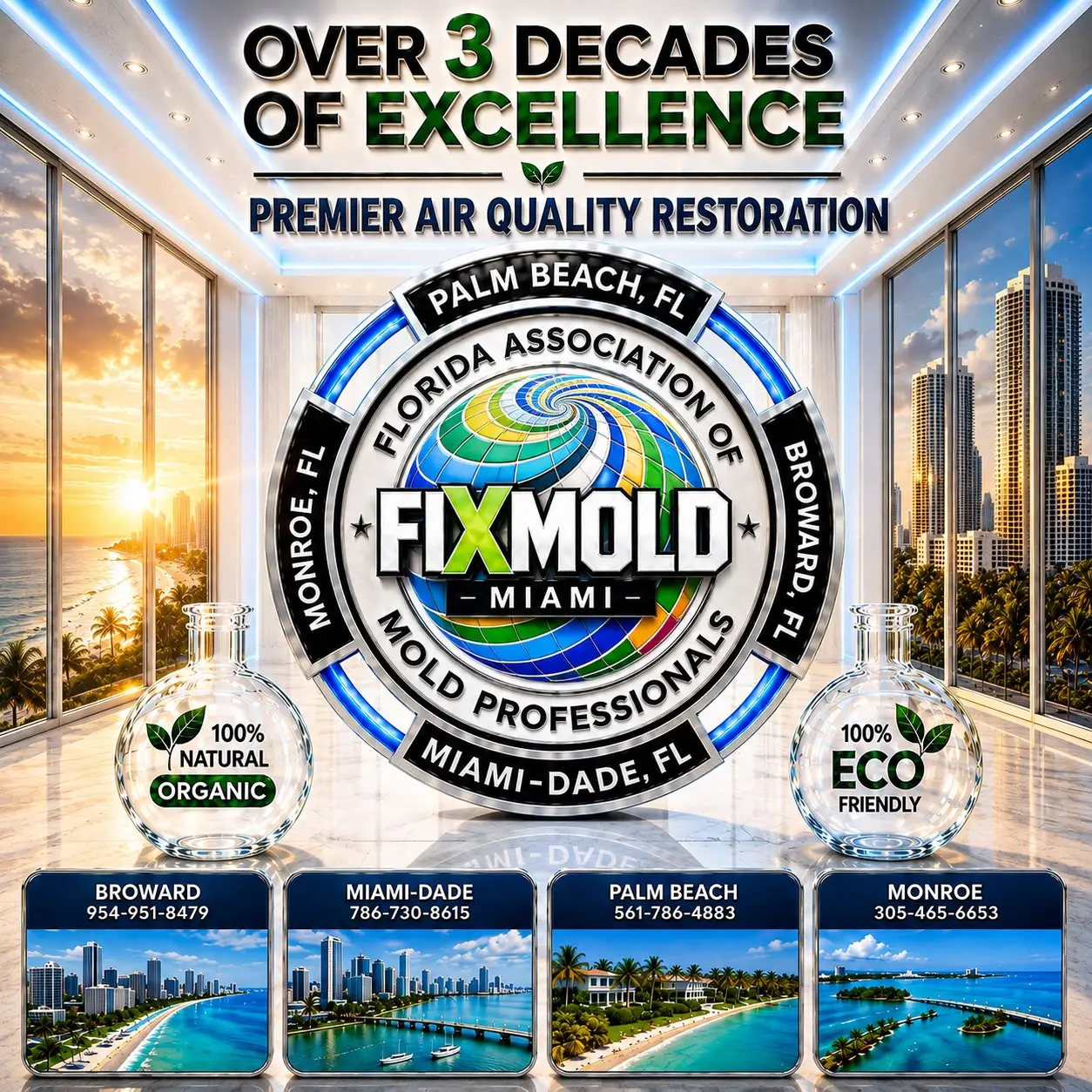
FixMold provides mold assessment, inspection, remediation and indoor-air-quality services throughout four major South Florida service areas.
Miami-Dade Mold Specialist — 305-465-6653
Serving Miami, Miami Beach, Sunny Isles, Aventura, Brickell, Downtown Miami, Coral Gables, Coconut Grove, Key Biscayne and surrounding Miami-Dade communities.
Broward Mold Specialist — 754-279-6653
Serving Fort Lauderdale, Hollywood, Hallandale Beach, Pompano Beach, Davie, Plantation, Weston and surrounding Broward County communities.
Palm Beach Mold Specialist — 561-404-6653
Serving West Palm Beach, Palm Beach, Boca Raton, Delray Beach, Boynton Beach and surrounding Palm Beach County communities.
Monroe Mold Specialist — 305-747-6653
Serving Key Largo, Islamorada, Marathon, Key West and communities throughout the Florida Keys.
September Heat Doesn’t Have to Become a Mold Problem
If you are noticing musty odors, condensation, visible growth, elevated humidity or recurring mold problems, determining the source is an important first step.
FixMold — Premier Air Quality Restoration
Visit FixMold.com to learn more or schedule an assessment.
Blog SEO hashtags/keywords:
#FixMold #MiamiMoldSpecialist #MiamiMoldRemoval #MiamiMoldRemediation #MoldInspectionMiami #BrowardMoldSpecialist #FortLauderdaleMoldRemoval #PalmBeachMoldSpecialist #BocaRatonMold #MonroeCountyMold #FloridaKeysMold #SouthFloridaMold #HiddenMold #HVACMold #ACCondensation #HumidityMold #IndoorAirQuality #MoldAssessment #MoldTesting #MoldRemediation #MoldRemoval #MoldPrevention #SeptemberMold #SouthFloridaHumidity
https://fixmold.com/locations/mold-remediation-jupiter-fl
Jerusha is a contributor at FixMold, specializing in mold remediation, indoor air quality, moisture control, and environmental wellness. She creates informative content focused on mold prevention, and advanced restoration solutions for residential and commercial properties.