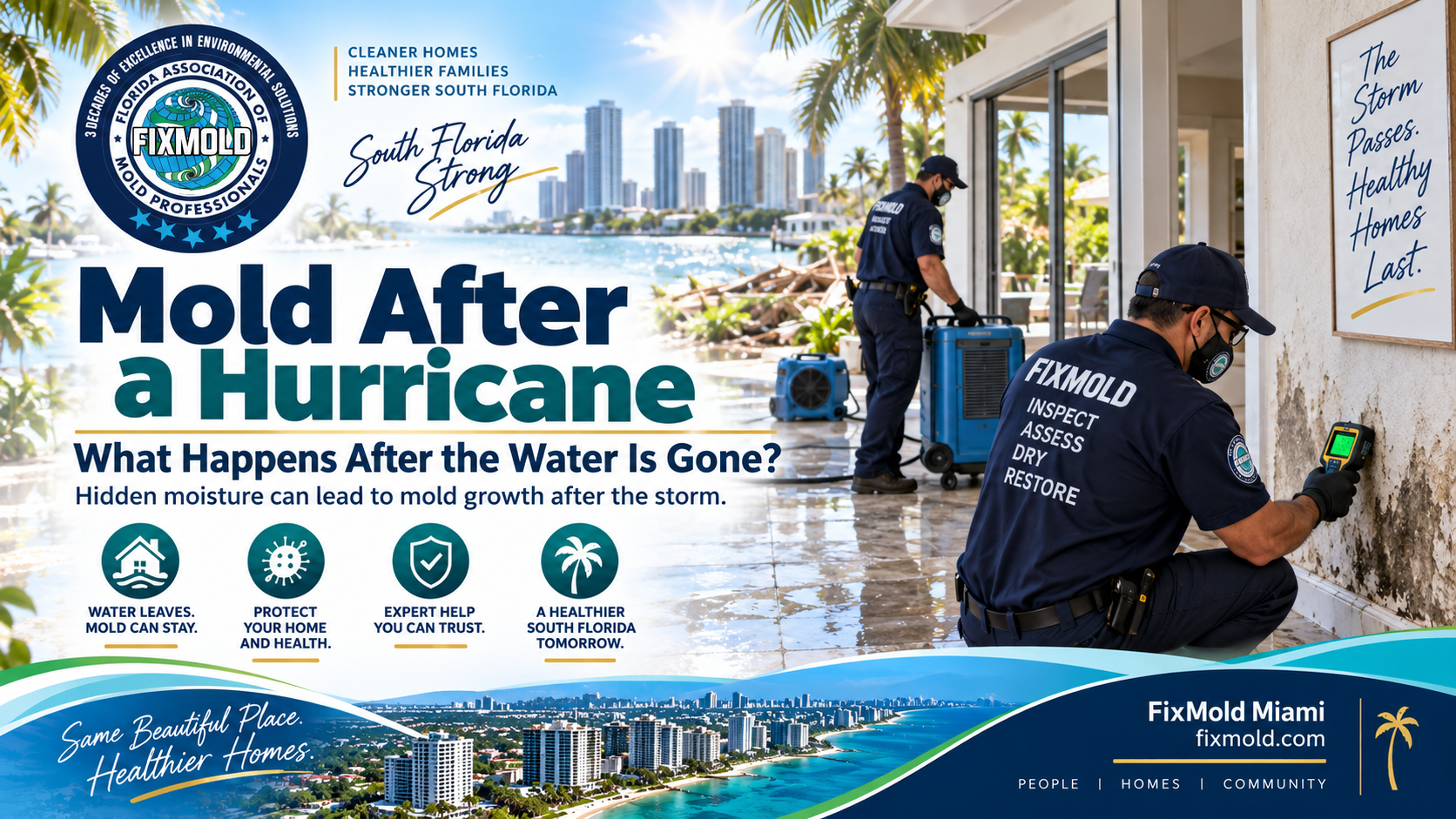
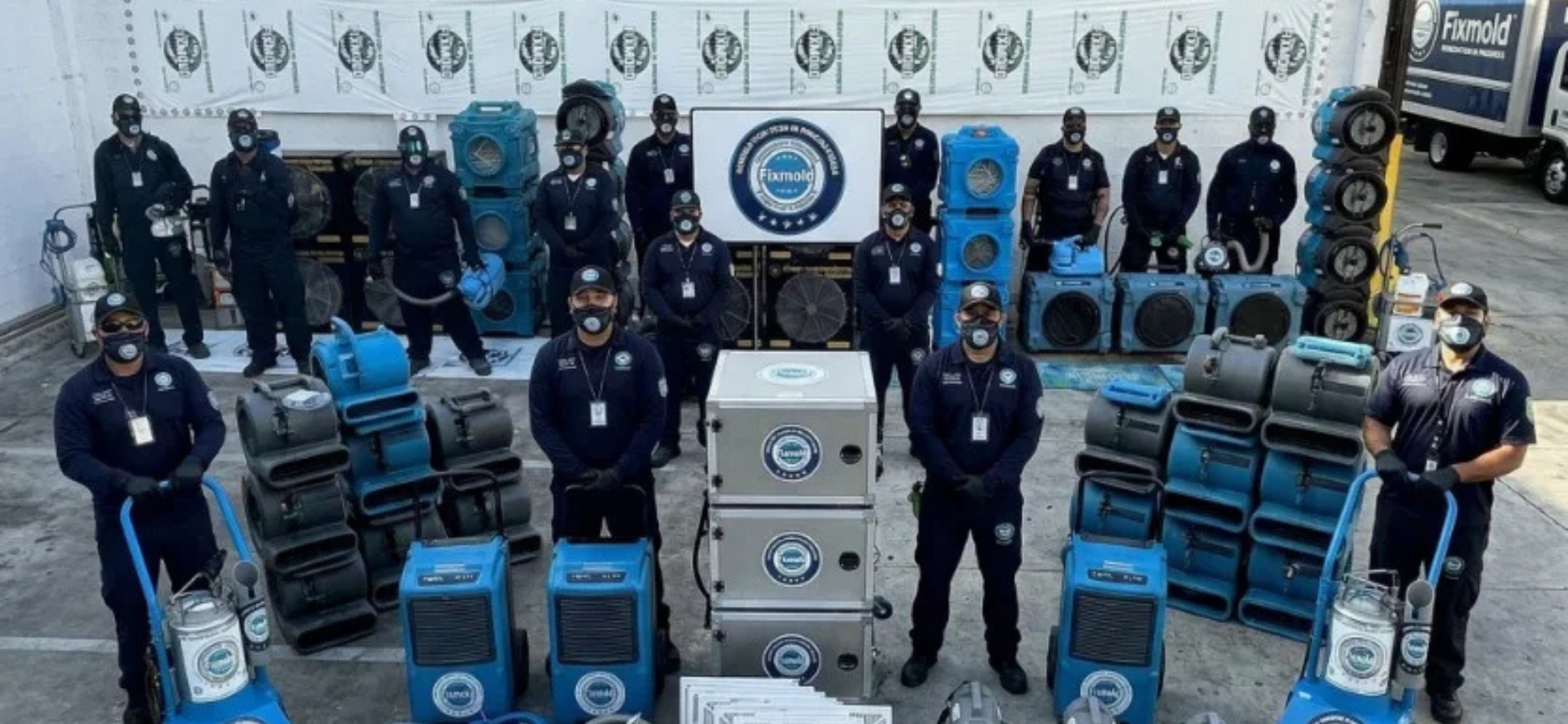
When a hurricane moves through South Florida, homeowners naturally focus on the most obvious problems first: standing water, roof damage, broken windows, soaked furniture, and debris. Once the water has been removed and the property begins looking normal again, it is easy to assume the danger has passed.
Unfortunately, when it comes to mold, the water disappearing does not necessarily mean the moisture is gone.
Moisture can remain trapped inside building materials long after floors and walls appear dry. In South Florida’s warm and humid climate, those hidden damp areas can create ideal conditions for mold growth.
Why Mold Can Become a Problem After a Hurricane
Hurricanes can introduce moisture into a property from many directions. Wind-driven rain may enter through roofs, windows, doors, exterior cracks, balconies, and damaged building envelopes. Floodwater may enter from ground level, while roof or plumbing damage can allow water to move through ceilings and walls.
Some of this moisture is easy to see. Much of it is not.
Drywall, insulation, wood framing, flooring materials, cabinets, baseboards, and other porous materials can absorb water and hold it beneath the surface.
A room may look dry while moisture remains trapped behind the wall.
Mold Can Begin Developing Quickly
Mold does not need standing water to grow. It needs moisture, a suitable temperature, and an organic material that can provide nutrients.
After a hurricane, these conditions can exist throughout a property.
Warm temperatures and high humidity can make the drying process more difficult, particularly if the air-conditioning system has lost power or the home remained closed for an extended period.
That is why rapid drying and moisture detection are so important after storm damage.
Where Hidden Moisture May Remain
Some of the most common areas to investigate after hurricane-related water intrusion include:
- Behind drywall and baseboards
- Under wood, laminate, or carpet flooring
- Beneath carpet padding
- Inside kitchen and bathroom cabinets
- Inside closets
- Around windows and exterior doors
- Behind bathroom vanities
- In attics and insulation
- Around HVAC closets and air handlers
- Inside walls near roof or window leaks
- Beneath staircases
- Inside crawlspaces
These areas may remain damp even when visible water has already been removed.
Warning Signs Homeowners Should Watch For
Not every moisture problem is immediately visible.
Homeowners should pay attention to changes in the property during the days and weeks following a storm.
Possible warning signs include musty or earthy odors, dark discoloration, peeling paint, bubbling drywall, warped baseboards, swelling cabinets, damaged flooring, condensation, persistent humidity, and unusual odors coming from HVAC vents.
A room that continually feels damp or smells different after a storm may deserve further investigation.
Humidity Matters Too
South Florida already experiences naturally high humidity, and conditions after a hurricane can make indoor humidity even worse.
If a home loses power or air conditioning, humidity can build quickly. Even after electricity returns, wet building materials may continue releasing moisture into the indoor air.
Dehumidification and proper air movement can therefore be just as important as removing standing water.
Drying the air is part of drying the building.
What Should You Do After a Hurricane?
Once it is safe to enter the property, document visible damage with photographs and video.
Remove wet belongings when it is safe to do so. Furniture, rugs, cardboard, clothing, and other damp materials can hold moisture and contribute to indoor humidity.
Begin professional drying as quickly as possible when water intrusion has occurred.
Most importantly, do not assume the property is completely dry simply because standing water has disappeared.
Moisture meters, thermal imaging, visual inspection, and other professional assessment tools can help identify areas that may require closer evaluation.
How FixMold Miami Can Help
FixMold Miami works with South Florida homeowners and property managers following water intrusion, leaks, storms, flooding, and hurricane-related damage.
Depending on the property and circumstances, services may include professional mold inspections, moisture detection and mapping, mold testing, indoor air quality assessments, drying solutions, containment, remediation, HVAC evaluation, and recommendations for the next steps.
The goal is not simply to address what can be seen. It is to identify the moisture conditions that may be hidden behind the surface.
The Water May Be Gone — But Your Next Step Matters
After a hurricane, the visible cleanup is only one part of protecting your property.
Hidden moisture can remain behind walls, beneath flooring, inside cabinets, and throughout other areas of the home. Identifying those conditions early can help prevent a small moisture problem from becoming a larger mold issue.
South Florida homes face unique challenges during Atlantic hurricane season, and knowing what to look for after the storm can make an important difference.
For more information about post-hurricane mold inspections, moisture assessments, mold testing, and remediation services, visit fixmold.com.
#FixMoldMiami #MoldAfterHurricane #HurricaneSeason #HurricaneDamage #StormDamage #WaterDamage #MoldInspection #MoldTesting #MoldRemediation #MiamiMold #SouthFlorida #IndoorAirQuality #HiddenMoisture #MoldPrevention #WaterIntrusion
Jerusha is a contributor at FixMold, specializing in mold remediation, indoor air quality, moisture control, and environmental wellness. She creates informative content focused on mold prevention, and advanced restoration solutions for residential and commercial properties.