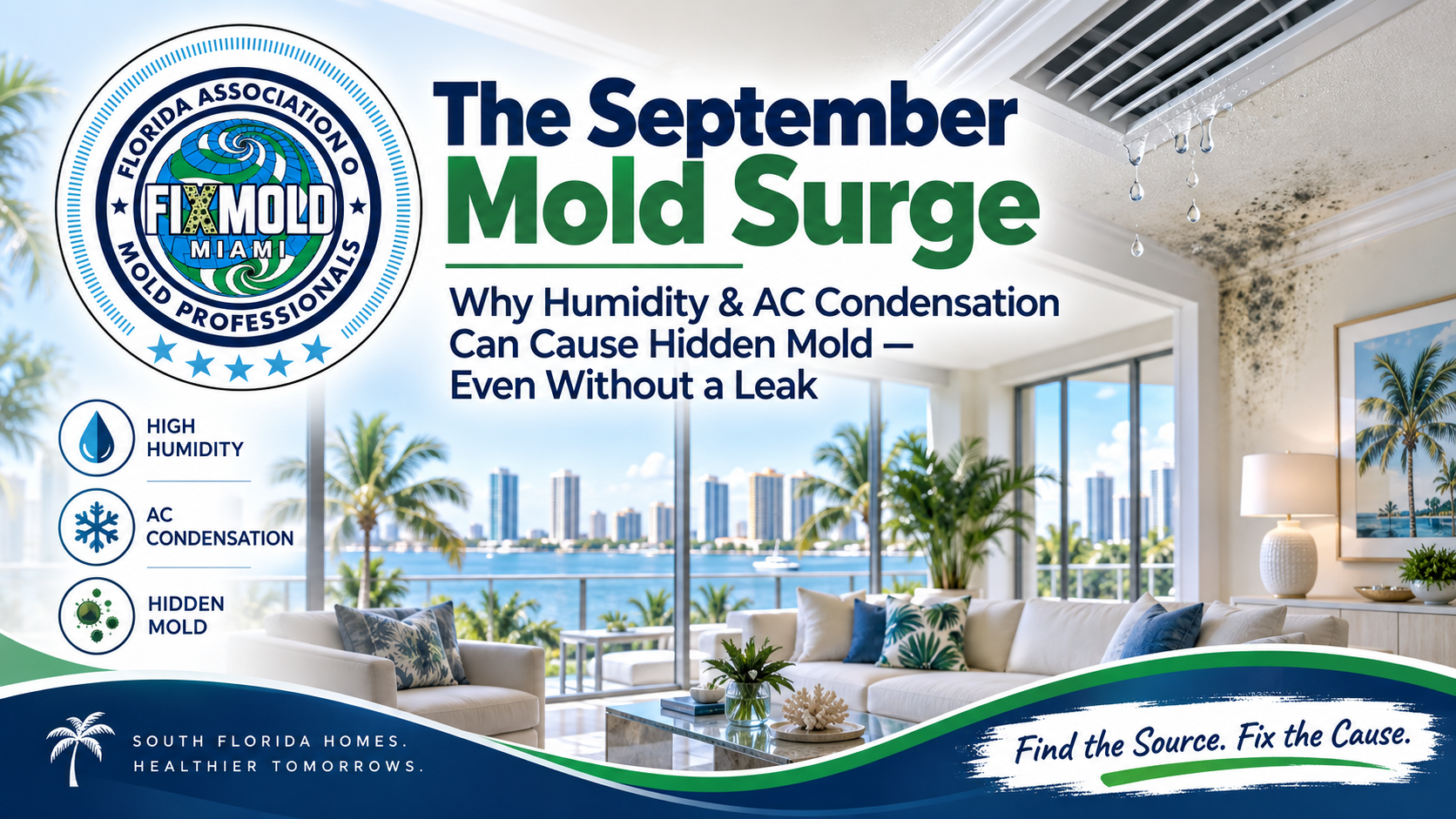
When most homeowners think about mold, they immediately think about a leaking roof, broken pipe or obvious water intrusion.
But in South Florida, mold does not always need a traditional leak.
During September, the combination of intense outdoor humidity, warm temperatures and constantly operating air-conditioning systems can create another major source of moisture: condensation.
That means a home can appear completely dry while moisture is developing around HVAC components, vents, ceilings, walls and other concealed areas.
Why September Can Be a High-Risk Month
South Florida homes are constantly balancing two very different environments.
Outside, the air can be extremely warm and humid. Inside, air-conditioning systems are working hard to maintain cooler temperatures.
When warm, moisture-filled air comes into contact with cold HVAC equipment, ductwork, vents or building surfaces, the temperature difference can cause water vapor in the air to turn into condensation.
A small amount of occasional condensation may not necessarily create a mold problem.
The concern begins when moisture repeatedly develops or remains trapped.
Over time, damp building materials can create favorable conditions for microbial growth.
Your AC System Can Create Hidden Moisture
Your air-conditioning system removes moisture from indoor air as part of its normal operation. However, several HVAC components routinely operate at temperatures cold enough to produce condensation.
Areas that should be evaluated include evaporator coils, condensate drain pans, plenums, supply ducts, air handlers, insulation surrounding ductwork and supply registers.
If drainage is restricted, insulation becomes damaged, airflow is poorly balanced or humid air repeatedly reaches cold surfaces, condensation can begin appearing in places homeowners rarely inspect.
One of the most obvious examples is a sweating AC vent.
Water droplets around a ceiling register may seem minor, but recurring moisture can eventually affect the surrounding drywall, insulation or framing.
Hidden Mold Can Develop Out of Sight
Another challenge is that the moisture source may not be visible from inside the living space.
Mold can potentially develop behind drywall, above ceilings, around duct chases, inside closets, behind furniture, around HVAC equipment or in other concealed cavities.
This is why simply cleaning visible mold may not solve the underlying problem.
If the humidity, condensation or airflow condition remains, the same problem can return.
At FixMold, we emphasize identifying the source of the moisture condition, not simply treating the visible spot.
Warning Signs Homeowners Should Watch For
A persistent musty odor can be an early indication that moisture or microbial growth may be present somewhere nearby.
Other warning signs include condensation around air vents, staining or discoloration around ceilings, recurring surface growth, unusually high indoor humidity, damp drywall or visible moisture around HVAC components.
Homeowners should also pay attention when an area is repeatedly cleaned but discoloration or odor continues returning.
That frequently means the underlying moisture condition has not been corrected.
How Professionals Find Hidden Moisture
A professional mold and moisture assessment involves more than simply looking for visible mold.
FixMold technicians can use advanced moisture detection equipment to evaluate the property and identify conditions that may otherwise remain hidden.
Moisture meters can help detect elevated moisture within certain building materials.
Infrared thermal imaging can reveal temperature patterns that may warrant further investigation.
HVAC inspections can evaluate coils, drain pans, plenums, ductwork, ventilation and airflow.
A comprehensive assessment helps determine whether condensation, humidity or another moisture condition is contributing to the problem.
Control Humidity. Control the Risk.
Keeping indoor relative humidity under control is one of the most important steps South Florida homeowners can take.
Indoor humidity is commonly targeted around 40%–50%, although conditions and equipment vary from property to property.
Homeowners should also keep AC filters clean, maintain condensate drainage, avoid blocking supply and return vents, inspect recurring condensation and have HVAC equipment professionally serviced.
If water continues forming around a vent or HVAC component, do not simply wipe it away every day.
Find out why it is happening.
FixMold: Find the Source. Fix the Cause.
FixMold provides professional mold assessments, humidity and condensation inspections, moisture mapping, HVAC evaluations and mold remediation throughout South Florida. The company also offers specialized HVAC and air-duct mold services designed to address conditions that may contribute to recurring indoor mold problems.
A beautiful home can still have moisture developing behind the surfaces.
The key is finding it early.
Hidden moisture. Hidden mold. Find the source.
Broward: 954-951-8479
Miami-Dade: 786-791-2928
West Palm: 561-944-9352
Monroe: 305-465-6653
fixmold.com
https://fixmold.com/locations/mold-remediation-west-palm-beach-fl
Jerusha is a contributor at FixMold, specializing in mold remediation, indoor air quality, moisture control, and environmental wellness. She creates informative content focused on mold prevention, and advanced restoration solutions for residential and commercial properties.