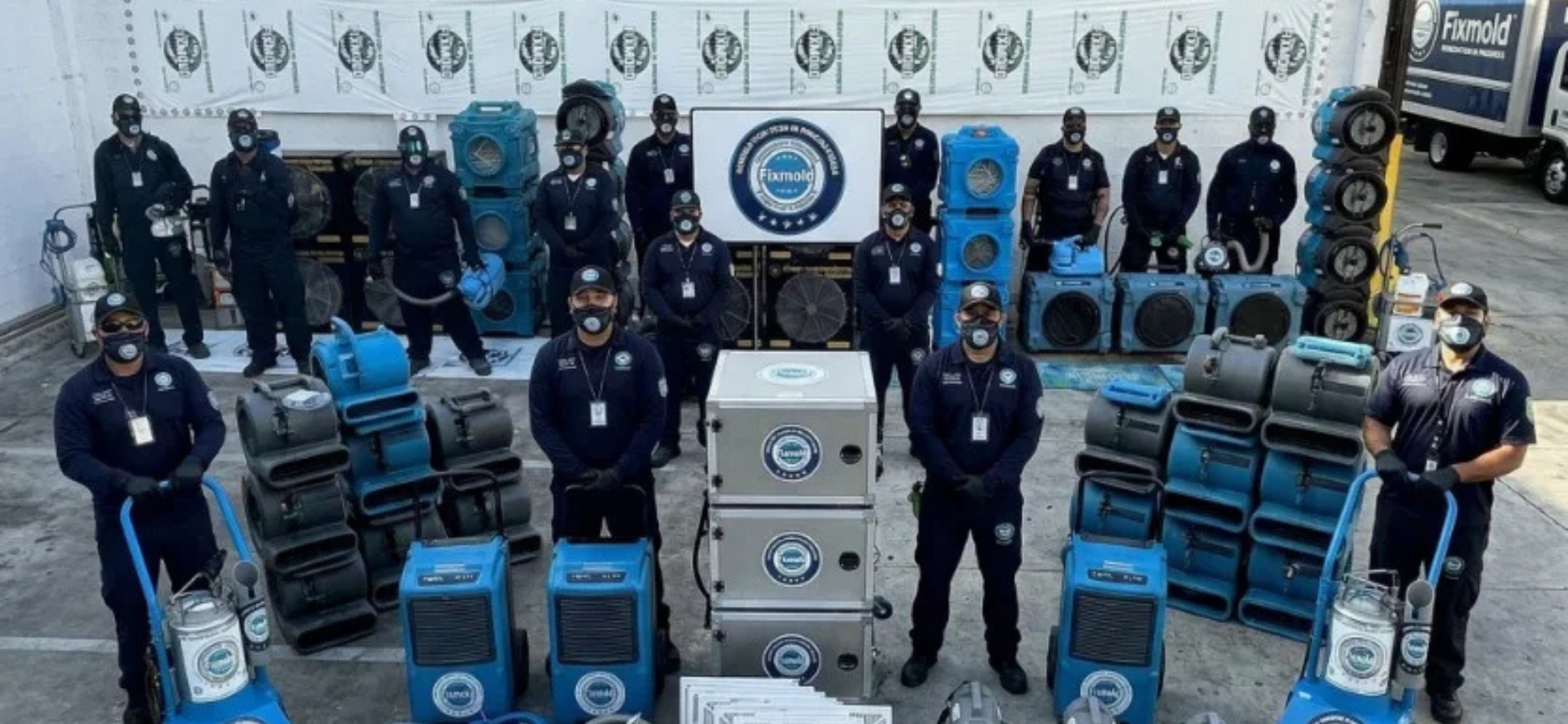
A property manager in Boca Raton contacted us after a tenant had been dealing with recurring sinus problems and respiratory irritation. The property had experienced previous moisture issues, but there were no obvious signs of active mold growth.
Air sampling told a different story. The results showed elevated levels of Penicillium and Aspergillus-type mold spores, measuring significantly above the outdoor baseline.
This situation is more common than many homeowners realize. Penicillium and Aspergillus are common environmental molds, but elevated indoor levels can indicate a moisture problem that should not be ignored.
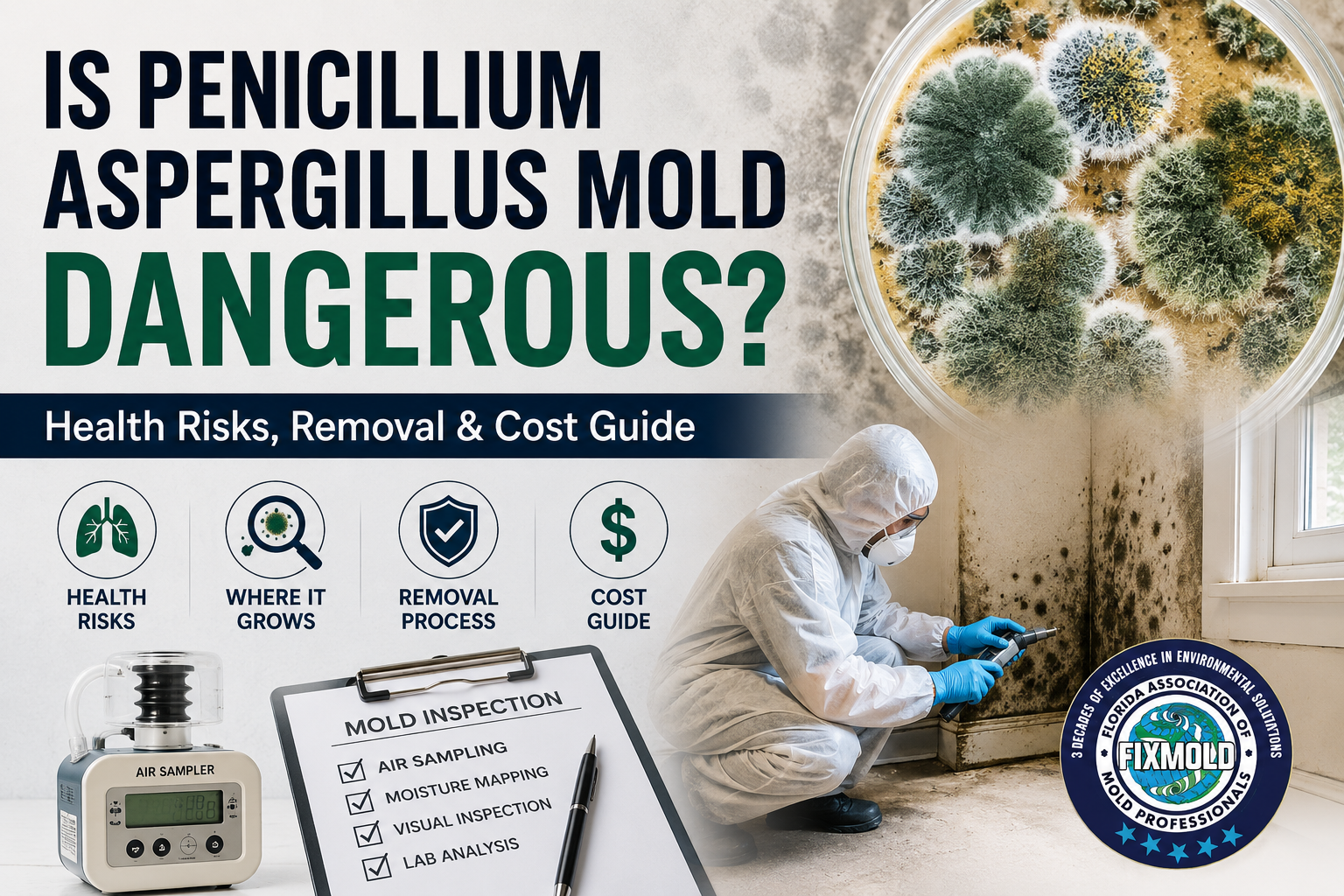
So, is Penicillium Aspergillus mold dangerous? The answer depends on the level of exposure, the condition of the property, and the health of the people exposed.
What Is Penicillium Aspergillus Mold?
Penicillium and Aspergillus are two different groups of fungi that are commonly found in the environment. Their spores can enter homes through outdoor air, doors, windows, clothing, and HVAC systems.
Small amounts of these spores indoors are not necessarily unusual. The concern begins when moisture allows mold to grow and indoor levels become elevated.
Both types can grow in damp areas, including:
- Walls and ceilings
- Bathrooms and kitchens
- Basements and crawl spaces
- HVAC systems and ductwork
- Wet insulation
- Carpet and other porous materials
- Areas affected by leaks or flooding
Because Penicillium and Aspergillus can look similar and may be reported together in testing, homeowners sometimes refer to them as “Penicillium Aspergillus mold.” In reality, they are separate mold groups that can occur in the same moisture-damaged environment. For more information, see Penicillium vs Aspergillus mold.
Is Penicillium Aspergillus Mold Dangerous?
For many people, exposure to mold can cause allergic or respiratory reactions rather than serious illness. Symptoms may include sneezing, congestion, coughing, wheezing, irritated eyes, and skin irritation.
People with asthma or mold allergies may be more sensitive to exposure. Individuals with significantly weakened immune systems can also face a higher risk of certain mold-related infections, particularly from some Aspergillus species.
The important point is that the presence of Penicillium or Aspergillus does not automatically mean a home is dangerous. What matters is the extent of the growth, moisture conditions, exposure, and individual sensitivity.
If you are experiencing persistent symptoms that you believe may be related to your indoor environment, speak with a qualified healthcare professional. At the same time, investigate the property for moisture and mold problems.
Health Risks and Symptoms to Know
Mold exposure can affect people differently. Some individuals may have no noticeable reaction, while others develop symptoms after spending time in a damp or mold-affected building.
Respiratory and Allergy Symptoms
The most commonly reported problems associated with indoor mold exposure are allergic and respiratory symptoms.
These may include:
- Persistent nasal congestion
- Sneezing
- Runny nose
- Coughing
- Wheezing
- Throat irritation
- Eye irritation
- Skin irritation
- Increased asthma symptoms
Symptoms may become more noticeable when someone spends extended periods in a building with elevated mold levels.
People With Asthma or Allergies
People with asthma or existing mold allergies may react more strongly to indoor mold. Continued exposure can aggravate respiratory symptoms and make an existing condition more difficult to manage. If symptoms repeatedly improve after leaving a property and return after coming back, the indoor environment may warrant investigation.
Immunocompromised Individuals
People with severely weakened immune systems require additional caution. Certain Aspergillus species can cause serious infections in susceptible individuals.
This does not mean that everyone exposed to Aspergillus will develop an infection. However, vulnerable individuals should discuss concerning symptoms or known exposure with their healthcare provider.
What About Mycotoxins?
Some species of Aspergillus and Penicillium can produce substances known as mycotoxins under certain conditions.
The presence of a mold species does not automatically establish that harmful levels of mycotoxins are present in a building. Health effects from indoor mold exposure are complex and depend on the type and level of exposure as well as individual susceptibility.
For this reason, it is better to focus on identifying moisture, removing active mold growth, and correcting the underlying water problem rather than assuming that every mold problem represents toxic exposure.
Who Faces the Highest Risk?
Anyone can experience irritation or allergic symptoms from indoor mold, but some people may be more sensitive.
Higher-risk groups can include:
- People with asthma
- People with known mold allergies
- Individuals with chronic respiratory conditions
- Young children and older adults
- People with severely weakened immune systems
If someone in your household is particularly sensitive to mold, addressing a moisture problem promptly becomes even more important.
Where Penicillium and Aspergillus Grow in Your Home
Moisture is the most important factor to look for. After a leak, flood, plumbing failure, roof problem, or HVAC condensation issue, materials can remain damp long after the visible water has disappeared. That hidden moisture can create ideal conditions for mold growth. Common problem areas include:
Bathrooms and Kitchens
Poor ventilation, plumbing leaks, condensation, and repeated moisture can create conditions where mold grows behind cabinets, under sinks, around walls, and beneath flooring.
Walls and Ceilings
Water-damaged drywall can support mold growth, especially when moisture becomes trapped inside wall cavities. Paint may look normal on the surface even when moisture or microbial growth is present behind it.
HVAC Systems
HVAC components can become contaminated when moisture accumulates around cooling coils, drain pans, insulation, or ductwork. Because HVAC systems circulate air throughout a property, suspected contamination should be evaluated carefully.
Areas With Previous Water Damage
A property does not have to be visibly wet to have a mold problem. Previous flooding, roof leaks, plumbing failures, or poorly dried materials can leave behind conditions that support hidden growth.
How Penicillium and Aspergillus Are Identified
Visible mold is not always enough to determine what is happening inside a property. A professional mold inspection can help identify visible growth, moisture sources, water-damaged materials, and areas where hidden contamination may exist.
Depending on the situation, mold testing may also be recommended. A professional mold testing service can provide additional information when further evaluation is needed.
Air sampling can provide information about airborne mold spores and may be useful when there is no visible growth or when the extent of a suspected problem needs additional evaluation. However, testing should not replace a proper inspection. Finding mold spores in the air does not, by itself, identify the moisture source or determine exactly how much material needs to be removed. The goal is to understand the problem and determine the appropriate remediation approach.
What Mold Removal Actually Involves
Professional remediation is more than spraying a chemical on visible mold. A proper process typically involves:
1. Finding the Moisture Source
The first step is identifying why the area became wet. This could be a plumbing leak, roof leak, condensation, flooding, or another moisture source.
2. Containing the Affected Area
Containment may be used to reduce the spread of dust and mold spores into unaffected areas during remediation.
3. Removing Damaged Materials
Porous materials that cannot be effectively cleaned may need to be removed. This can include sections of drywall, insulation, carpet, or other heavily contaminated materials.
4. Cleaning Remaining Surfaces
Surfaces that can be safely restored are cleaned using appropriate remediation methods.
5. Addressing HVAC Concerns
If HVAC components are affected, they should be evaluated and cleaned or treated as appropriate.
6. Drying and Correcting Moisture Problems
The area must be properly dried, and the source of moisture must be corrected. Otherwise, mold can return.
7. Verification
Depending on the project, post-remediation inspection or testing may be used to verify that the work was completed properly.
Common Mistakes Homeowners Make
Cleaning Visible Mold Without Finding the Moisture Source
Removing what you can see does not solve the underlying problem if water is still entering the building.
Painting Over Mold
Paint can temporarily hide discoloration, but it does not eliminate mold growing underneath or inside damaged materials.
Removing Contaminated Materials Without Proper Containment
Improper removal can spread dust and spores to other parts of the property.
Relying Only on a Home Mold Test Kit
DIY kits may provide limited information and often do not explain where the moisture problem is or how extensive the contamination may be.
Waiting Because the Mold Is Small
A small visible area can sometimes indicate a larger hidden moisture problem. Early investigation may prevent a much more expensive remediation project later.
When to Call a Professional
Professional help is worth considering when:
- Mold keeps returning after cleaning
- There has been significant flooding or water damage
- Mold is growing inside walls or ceilings
- There is a persistent musty odor
- HVAC contamination is suspected
- Multiple rooms are affected
- Someone in the property has significant respiratory or allergic symptoms
- The affected area is larger than what you can safely manage yourself
For larger or hidden problems, a professional mold removal company can help ensure the moisture source, affected materials, and potential spread are properly addressed.
Frequently Asked Questions
1. Is Penicillium Aspergillus mold dangerous?
Penicillium and Aspergillus can cause allergic and respiratory symptoms, particularly in sensitive individuals. Some Aspergillus species can cause serious infections in people with severely weakened immune systems. The presence of these molds does not automatically mean a property is dangerous, but significant growth should be investigated.
2. Can Penicillium and Aspergillus grow together?
Yes. Both can grow in damp, moisture-damaged environments, so they may be detected together during an inspection or air sampling.
3. How do I know if mold is causing my symptoms?
Mold can cause or worsen allergic and respiratory symptoms, but similar symptoms can have many causes. A healthcare professional can help evaluate your symptoms, while a qualified mold professional can investigate the indoor environment.
4. Is mold testing necessary?
Not every situation requires testing. A visible mold problem with an obvious moisture source may be straightforward to address. Testing can be useful when mold is suspected but not visible or when additional information about indoor air conditions is needed.
5. How much does Penicillium Aspergillus mold removal cost?
Costs can range from several hundred dollars for limited surface remediation to tens of thousands for extensive whole-home structural contamination. The actual price depends on the size and location of the affected area, materials involved, and extent of the moisture damage.
6. Can I remove Penicillium or Aspergillus mold myself?
Small areas of surface mold may sometimes be handled safely, but larger, recurring, hidden, or HVAC-related contamination is better evaluated by a professional. Attempting to remove extensive mold without proper precautions can spread contamination.
Conclusion
So, is Penicillium Aspergillus mold dangerous? It can be, particularly for people who are sensitive to mold, have asthma or allergies, or have severely weakened immune systems. But the presence of these mold groups alone does not tell you how serious a property problem is.
The more important questions are where the mold is growing, why moisture is present, how extensive the contamination is, and whether affected materials can be safely cleaned or need to be removed.
If your property has experienced water damage, recurring musty odors, visible mold, or unexplained indoor air concerns, do not simply cover the problem and hope it disappears. A proper mold inspection, moisture assessment, and remediation plan can help identify the source and determine the right solution.
Milly is a content contributor at FixMold with a focus on mold inspection, remediation strategies, air quality improvement, and property protection. She shares practical insights and educational resources to help homeowners and businesses maintain safer, cleaner indoor environments.