When most homeowners think about mold, they picture a leaking pipe, damaged roof, or flooded room. Although these problems can certainly lead to mold growth, they are not the only sources of indoor moisture.
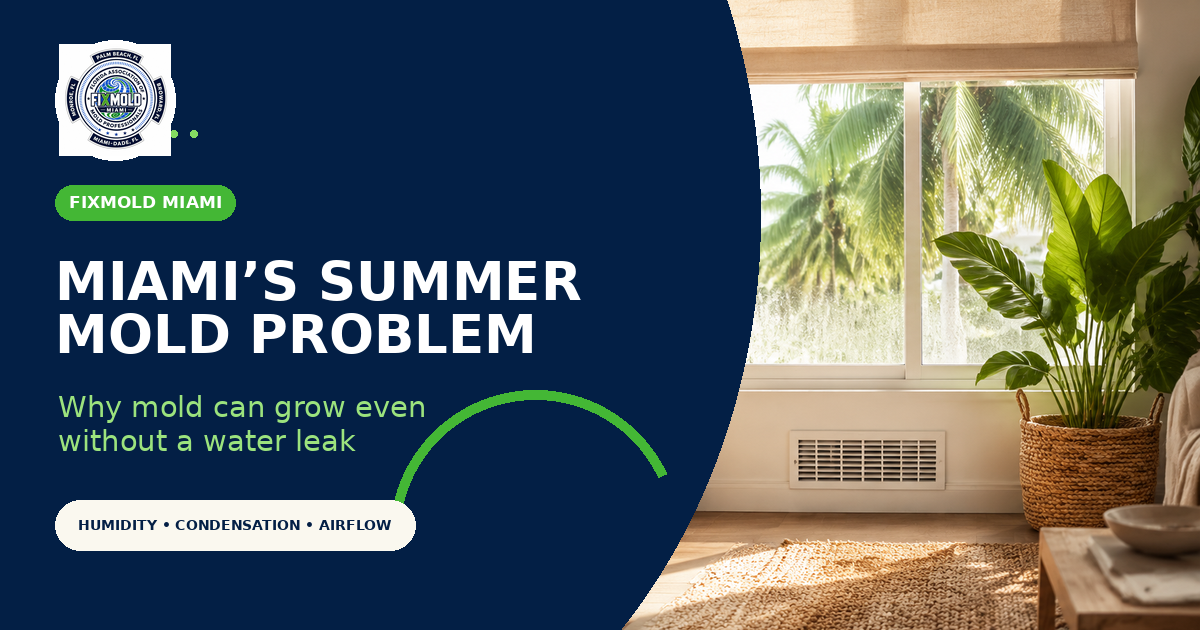
During a Miami summer, mold can develop even when a home has no obvious water leak. South Florida’s combination of high humidity, warm outdoor air, powerful air-conditioning systems, and limited indoor airflow can create ideal conditions for moisture to collect in unexpected places.
Mold Needs Moisture, Not Necessarily a Leak
Mold spores naturally exist in both indoor and outdoor air. They generally become a concern when they settle on a suitable material and receive enough moisture to begin growing.
Common indoor materials that can support mold include:
- Drywall and ceiling materials
- Wood and cabinetry
- Dust and household debris
- Carpet and upholstery
- Clothing and stored belongings
- Paper and cardboard
- Insulation and other porous materials
A plumbing or roof leak can provide moisture, but humid air, condensation, steam, and poor ventilation may also keep these materials damp enough to support growth.
Miami’s Humidity Can Become Indoor Moisture
Warm summer air can carry a significant amount of water vapor. Every time an exterior door opens, a window is left open, or humid air enters through gaps and ductwork, additional moisture may enter the home.
If the air-conditioning system cannot remove that moisture effectively, indoor relative humidity can remain elevated. Porous materials may gradually absorb moisture even when they never appear visibly wet.
When practical, homeowners should aim to keep indoor relative humidity around 30% to 50% and avoid sustained levels above 60%. An inexpensive digital humidity monitor can help reveal patterns that might otherwise go unnoticed.
Air Conditioning Can Create Condensation
Air conditioning helps control heat and humidity, but it also creates cold surfaces. Supply vents, ductwork, air handlers, windows, exterior walls, and nearby building materials may become significantly cooler than the surrounding air.
When warm, humid air touches a sufficiently cold surface, the air can reach its dew point and release moisture as condensation. This is the same process that causes water to form on the outside of a cold glass.
Recurring condensation around vents, windows, walls, or HVAC equipment can provide enough moisture for mold growth—even when every pipe in the home is completely dry.
Poor Airflow Creates Hidden Moisture Pockets
The temperature and humidity level may not be the same throughout an entire home. Areas with limited air circulation can develop their own small moisture conditions.
Common problem areas include:
- Furniture positioned tightly against exterior walls
- Crowded closets
- Closed bedrooms
- Corners behind curtains
- Areas beneath sinks
- Spaces around air handlers
- Rooms with closed or blocked air vents
- Cardboard boxes placed against walls or floors
These spaces may remain cooler, damper, and less ventilated than the center of the room. Mold can begin behind furniture or stored belongings long before it becomes visible from the occupied space.
Everyday Activities Add More Humidity
Normal household routines can release substantial moisture into the air. Hot showers, cooking, laundry, indoor clothes drying, and even repeatedly opening exterior doors can increase the indoor humidity load.
Homeowners can reduce excess moisture by:
- Running bathroom exhaust fans during and after showers
- Using kitchen ventilation while cooking
- Venting clothes dryers outdoors
- Wiping down wet bathroom surfaces
- Replacing HVAC filters as recommended
- Keeping supply and return vents unobstructed
- Using a properly sized dehumidifier when necessary
- Maintaining consistent air-conditioning operation
Turning the air conditioner completely off for extended periods during Miami’s humid season may allow indoor temperature and humidity levels to rise significantly.
Warning Signs to Watch For
Visible mold is not always the first sign of a moisture problem. Homeowners should also watch for:
- Musty or earthy odors
- Recurring window condensation
- Moisture around air-conditioning vents
- Peeling, bubbling, or discolored paint
- Warped baseboards or cabinetry
- Damp-feeling closets
- Spots that return after cleaning
- Unexplained staining on walls or ceilings
These signs do not automatically confirm a mold problem, but they may indicate that additional investigation is needed.
Find the Moisture Source, Not Just the Surface Stain
Cleaning a visible spot without understanding why it developed may only provide a temporary cosmetic improvement. If humidity, condensation, airflow, or another moisture source remains unresolved, the condition may return.
A professional mold assessment can help evaluate visible concerns, identify contributing moisture patterns, and determine whether additional testing or corrective work is appropriate.
FixMold Miami helps South Florida property owners look beyond the surface and develop a practical path forward. If you have noticed musty odors, recurring condensation, unexplained staining, or other possible warning signs, schedule a professional assessment before the condition has more time to spread.
#FixMold #FixMoldMiami #MiamiMold #MoldAssessment #MoldInspection #MoldPrevention #IndoorAirQuality #MiamiHomes #SouthFloridaHomes #HumidityControl
https://fixmold.com/locations/mold-remediation-coconut-grove-fl
Jerusha is a contributor at FixMold, specializing in mold remediation, indoor air quality, moisture control, and environmental wellness. She creates informative content focused on mold prevention, and advanced restoration solutions for residential and commercial properties.