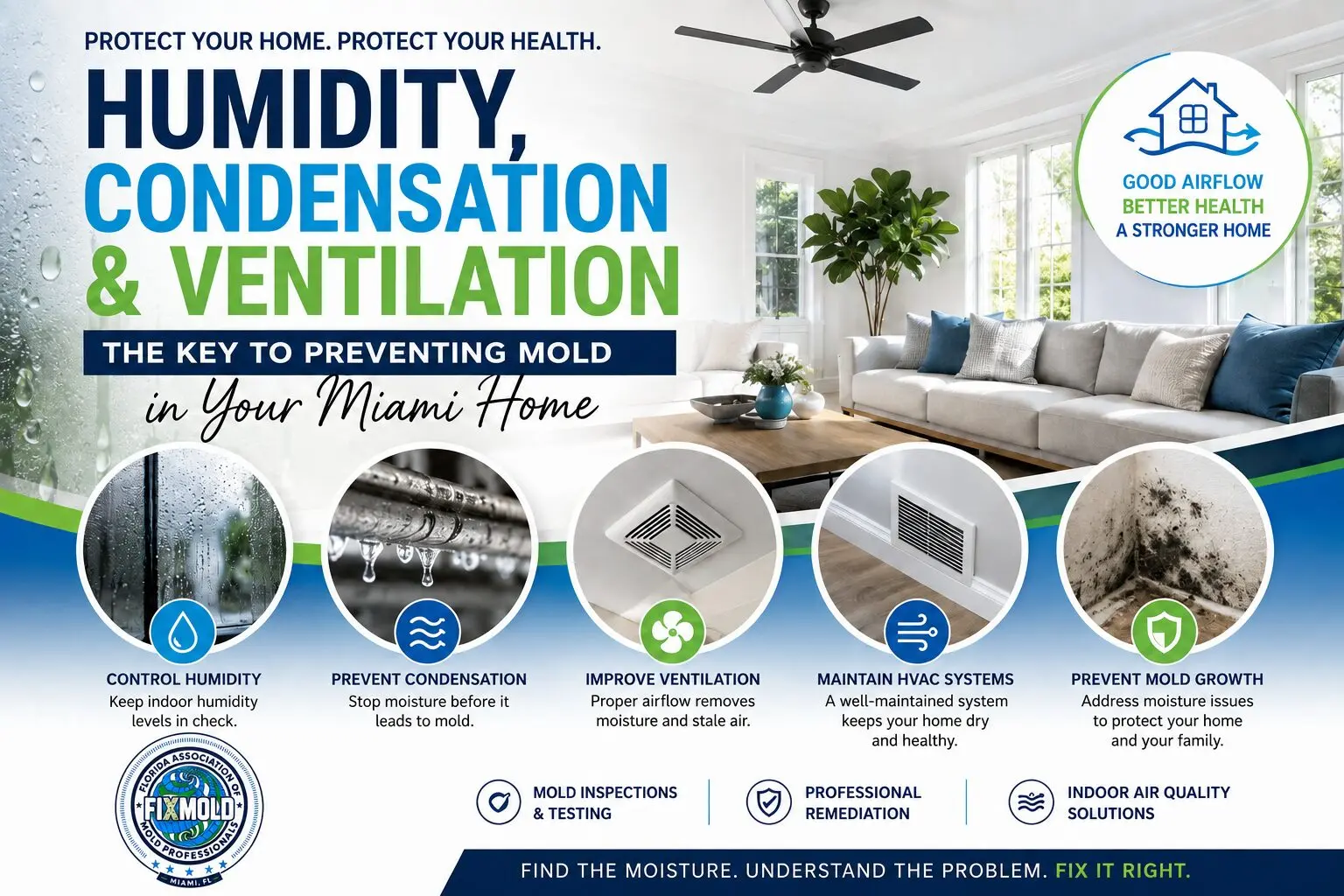
Living in Miami means dealing with heat, moisture, humidity, and frequent temperature changes throughout the year. While you may not always see moisture inside your home, excess humidity and condensation can create the perfect environment for mold growth.
At FixMold Miami, we often see mold problems that could have been prevented with better moisture control and proper ventilation. Understanding the relationship between humidity, condensation, and airflow is one of the most important steps you can take to protect your home and indoor air quality.
Why Humidity Matters
Humidity is the amount of moisture present in the air. In a warm, humid climate like Miami, indoor humidity can rise quickly, especially when air conditioning systems are not operating properly or when ventilation is inadequate.
Everyday activities such as showering, cooking, washing clothes, and even breathing release moisture into the air. If that moisture cannot escape or be properly removed, it can accumulate inside your home.
Excessive indoor humidity can contribute to:
- Mold and fungal growth
- Musty odors
- Condensation on windows and walls
- Damp building materials
- Damage to drywall, wood, insulation, and cabinetry
- Increased dust mites and other indoor air quality concerns
- Moisture accumulation around HVAC systems and ductwork
Keeping indoor humidity under control is therefore an important part of mold prevention.
Condensation: A Warning Sign You Shouldn’t Ignore
Condensation occurs when warm, moisture-filled air comes into contact with a cooler surface. Think about a cold glass of water on a hot Miami day. Water droplets form on the outside because moisture in the surrounding air reaches its dew point.
The same process can happen inside your home.
Condensation may develop on:
- Air conditioning components
- Supply vents and ductwork
- Windows and window frames
- Exterior walls
- Ceilings
- Pipes
- Closets
- Areas behind furniture
- Poorly insulated surfaces
Repeated condensation can keep building materials damp long enough for mold to develop.
If you regularly notice moisture around your air-conditioning system, windows, vents, or walls, don’t simply wipe it away and forget about it. Persistent condensation is often a sign that something else needs attention.
Ventilation Is an Essential Part of Moisture Control
Good ventilation helps move humid, stagnant air out of your home and replace it with properly conditioned air.
Bathrooms, kitchens, laundry areas, attics, crawl spaces, and other moisture-prone areas require particular attention. Exhaust fans should properly remove moisture rather than simply circulating it within the home.
Your HVAC system also plays an important role. Air conditioning does more than cool your home — it also helps remove moisture from indoor air. If your system is oversized, poorly maintained, restricted, leaking, or not operating correctly, your home may remain cool while still having excessive humidity.
This is one reason temperature alone is not a reliable indicator of indoor moisture conditions.
A home can feel comfortable while hidden areas remain damp.
Airflow Helps Prevent Hidden Moisture
Stagnant air can allow moisture to collect in areas that are difficult to see.
Furniture pushed tightly against exterior walls, crowded closets, poorly ventilated attics, enclosed bathrooms, and areas surrounding HVAC equipment can all experience reduced airflow.
Improving circulation can help reduce moisture accumulation and allow surfaces to dry more effectively.
However, ventilation should be properly designed. Simply opening windows in a humid climate does not always solve the problem. On hot, humid Miami days, bringing additional outdoor moisture into the home can actually increase indoor humidity.
Your HVAC System Is Part of Your Mold Prevention Strategy
Your air-conditioning system should be inspected and maintained regularly, particularly in South Florida.
Moisture can accumulate inside HVAC equipment when condensation drains are blocked, coils become dirty, insulation is damaged, or airflow is restricted.
Mold contamination inside an HVAC system can also create an opportunity for particles to be distributed throughout the property.
At FixMold Miami, our inspections can include evaluation of HVAC components, moisture conditions, airflow concerns, visible contamination, and areas where condensation may be contributing to a larger problem.
Don’t Just Treat the Mold — Find the Moisture
One of the biggest mistakes homeowners can make is focusing only on removing visible mold without addressing the moisture source.
Mold requires moisture to grow. If excessive humidity, condensation, leaks, or poor ventilation remain unresolved, mold can return.
A comprehensive approach should therefore consider:
Moisture → Humidity → Condensation → Ventilation → HVAC Performance → Mold Growth
Addressing the underlying environmental conditions is an important part of creating a healthier indoor environment.
What Can Homeowners Do?
There are several practical steps you can take to reduce moisture and improve indoor conditions:
1. Monitor indoor humidity
Use a reliable humidity meter to understand what is happening inside your home.
2. Maintain your HVAC system
Keep coils, filters, condensate drains, and other components properly maintained.
3. Use bathroom exhaust fans
Run ventilation during showers and for an appropriate period afterward.
4. Ventilate kitchens properly
Cooking releases significant amounts of moisture. Use an effective exhaust system when possible.
5. Watch for condensation
Repeated moisture on windows, walls, vents, or HVAC equipment should be investigated.
6. Improve airflow
Avoid blocking vents and allow air to circulate around furniture and enclosed areas.
7. Address leaks quickly
Even small plumbing or HVAC leaks can create ongoing moisture problems.
8. Inspect problem areas
Attics, closets, AC areas, bathrooms, and other enclosed spaces should receive additional attention when humidity or condensation is present.
The FixMold Miami Approach
At FixMold Miami, we believe mold prevention starts with understanding the environment that allows mold to develop.
Our professional inspections look beyond what is immediately visible. We evaluate moisture conditions, humidity, condensation, HVAC components, ventilation concerns, and potential areas of hidden contamination.
When remediation is necessary, our experienced team uses professional equipment and established remediation procedures designed to address contamination while helping identify the conditions that contributed to the problem.
Because removing mold without addressing the moisture problem is only part of the solution.
A Drier Home Is a Healthier Home
Humidity, condensation, and poor ventilation can quietly create conditions that support mold growth. In Miami’s hot and humid climate, controlling moisture should be an ongoing part of home maintenance.
Don’t wait until you see extensive mold or smell a persistent musty odor.
If you are experiencing excessive humidity, recurring condensation, unexplained odors, visible mold, or concerns about your HVAC system, a professional assessment can help identify the source of the problem.
FixMold Miami — helping homeowners understand the moisture behind the mold and take the right steps toward a cleaner, healthier indoor environment.
Contact FixMold Miami today to schedule a professional mold, moisture, HVAC, or indoor air quality assessment.
FixMoldMiami #MoldPrevention #MiamiMold #IndoorAirQuality #HumidityControl #MoldInspection #MiamiHomes
https://fixmold.com/locations/mold-remediation-doral-fl
Jerusha is a contributor at FixMold, specializing in mold remediation, indoor air quality, moisture control, and environmental wellness. She creates informative content focused on mold prevention, and advanced restoration solutions for residential and commercial properties.