When homeowners or building managers think about HVAC contamination, they often think about mold, dust, or dirty air ducts. However, another issue can develop inside HVAC systems that is frequently overlooked: loose fiberglass particles and deteriorating fiberglass duct board.
Fiberglass-lined duct systems and air-handling components can deteriorate over time. When fiberglass surfaces become damaged, exposed, or compromised, small particles and dust can accumulate on HVAC components, including coils, blower compartments, drain pans, and accessible interior surfaces.
At FixMold Miami, we specialize in identifying and addressing fiberglass contamination as part of our comprehensive HVAC and indoor air quality services.
Why Is Fiberglass Accumulating on HVAC Coils?
HVAC systems constantly move air throughout a property. When fiberglass materials inside or near the air-distribution system begin to deteriorate, loose fibers and particulate material can become airborne and migrate through the system.
Coils can become particularly important areas of concern because they are located directly within the air-handling pathway. Dust, debris, and loose fiberglass particles can accumulate on coil surfaces and other internal components.
Simply wiping visible dust from the surrounding area may not address the underlying source.
The Problem With Ordinary HVAC Cleaning
Traditional HVAC cleaning methods may not be appropriate when the contamination involves deteriorating fiberglass.
Aggressive brushing, improper vacuuming, or disturbing compromised fiberglass can potentially release additional particulate matter into the surrounding environment.
That is why fiberglass contamination requires a controlled approach that considers:
- The condition of the fiberglass
- The location and extent of contamination
- HVAC airflow patterns
- Accessible coil and air-handler components
- Potential pathways for particulate migration
- Source control and containment
- Proper extraction equipment
FixMold Miami’s Specialized Fiberglass Extraction Process
At FixMold Miami, our approach is designed to address both the visible contamination and the conditions contributing to it.
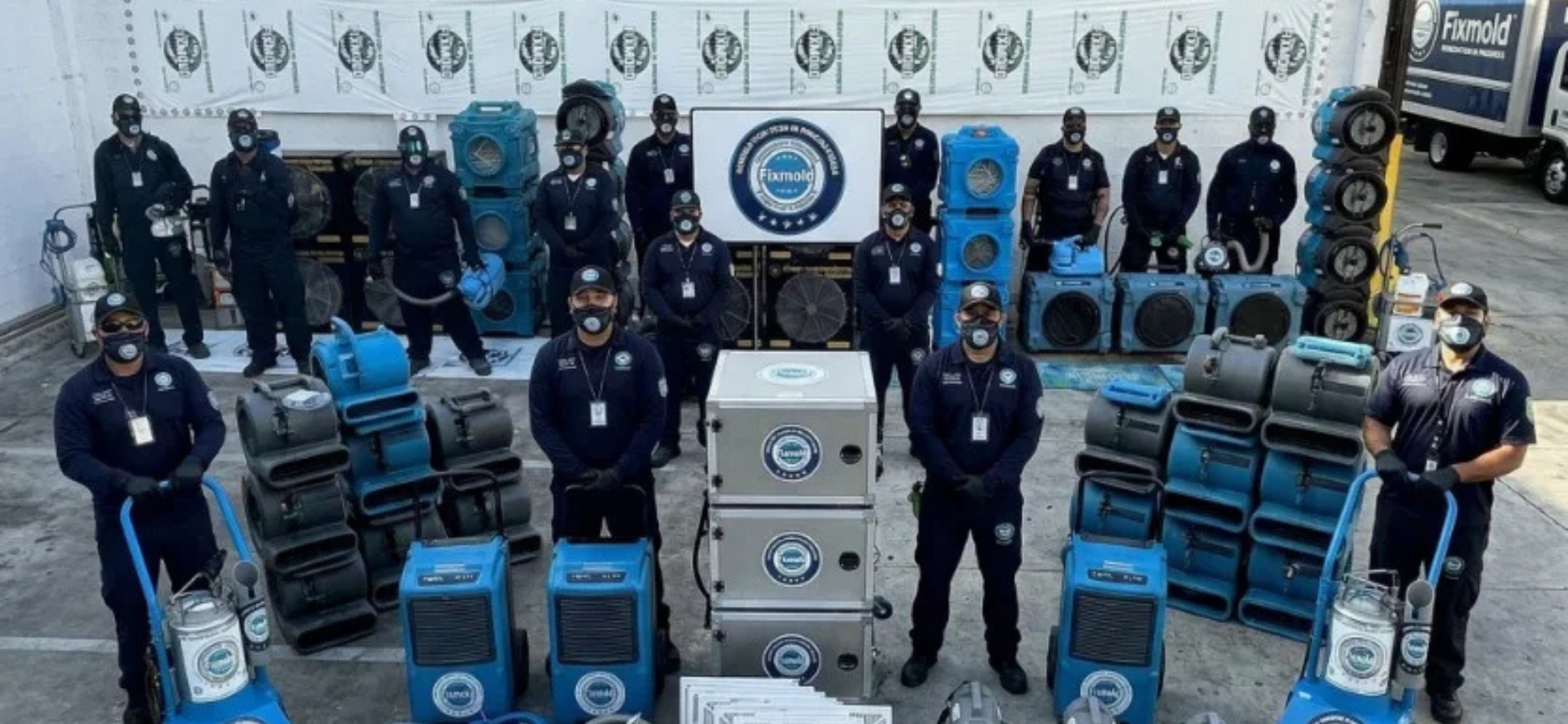
Our technicians evaluate the HVAC system and affected areas to determine where loose fiberglass particles and debris are present. Depending on the condition and accessibility of the system, we use specialized extraction and containment techniques.
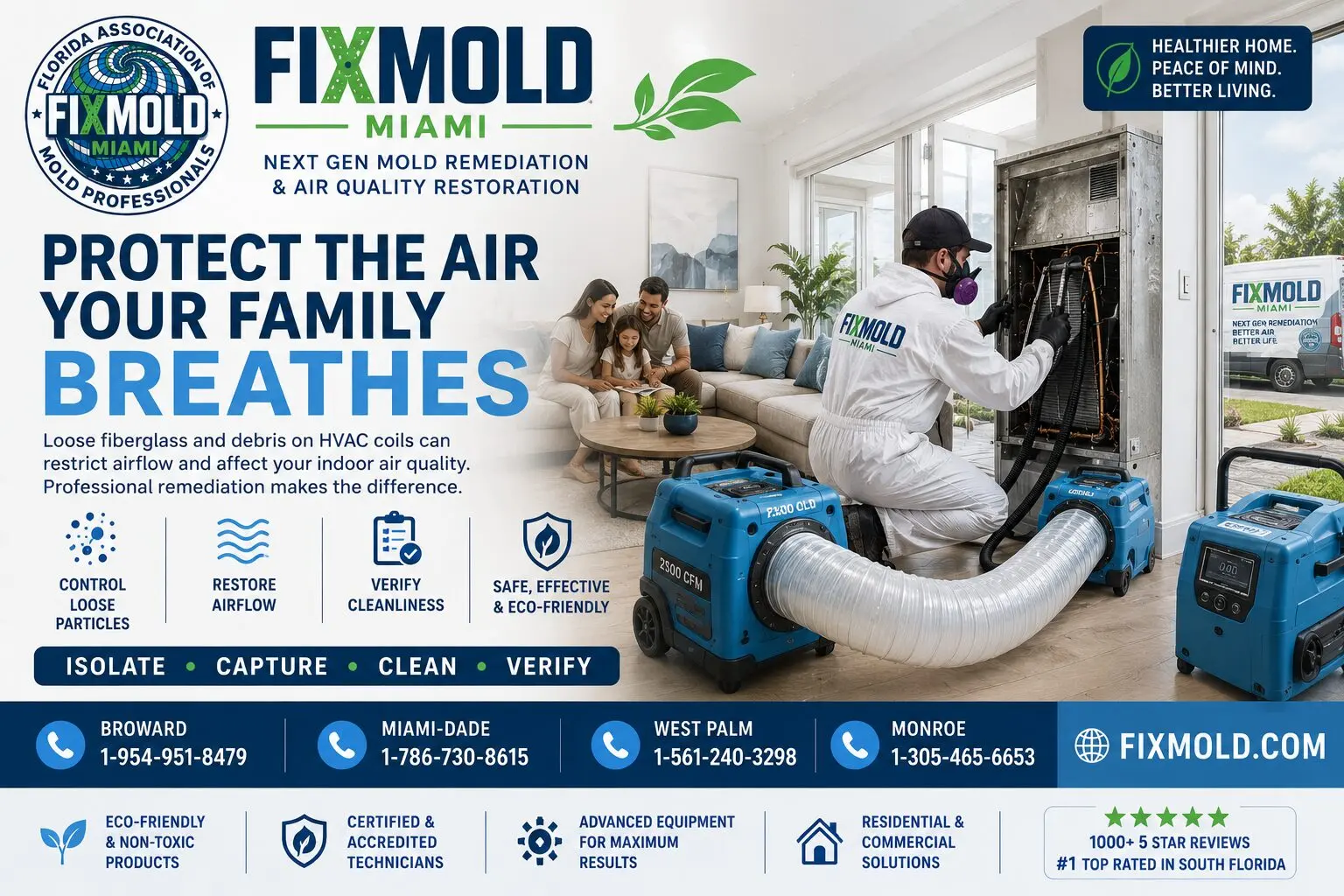
One of the key pieces of equipment utilized in our process is our 2,000 CFM fiberglass air-capture and extraction system.
The high-capacity system is designed to help control and capture airborne particulate during the remediation process, reducing the potential for contaminants to migrate into surrounding areas while work is being performed.
Our process may include:
1. HVAC Inspection
We examine the air handler, coils, accessible ductwork, fiberglass surfaces, and surrounding areas for signs of deterioration or particulate accumulation.
2. Source Identification
We determine where the fiberglass contamination is originating and evaluate whether exposed or deteriorating fiberglass materials require additional treatment.
3. Containment & Air Control
Appropriate containment and air-control measures are implemented based on the property and scope of work.
4. Specialized Extraction
Our 2,000 CFM extraction equipment assists with capturing airborne particles and removing loose fiberglass debris from affected areas.
5. Detailed HVAC Cleaning
Affected accessible components, including coils and surrounding surfaces, are carefully cleaned using appropriate methods.
6. Fiberglass Surface Treatment
Where appropriate, exposed fiberglass surfaces may require specialized sealing or encapsulation to help stabilize the material and reduce future particulate release.
7. Final Verification
The completed work is reviewed to ensure the identified areas have been properly addressed and that the HVAC system is left in an appropriate condition.
Don’t Confuse Fiberglass Contamination With Ordinary Dust
One of the biggest mistakes property owners can make is assuming that all HVAC dust is simply household dust.
If particulate accumulation is unusually heavy, appears fibrous, or is associated with deteriorating fiberglass duct board or insulation, further investigation may be warranted.
Signs that your HVAC system may require evaluation include:
- Excessive dust around air vents
- Visible fiberglass deterioration
- Fiberglass debris inside the air handler
- Unusual particulate accumulation on HVAC coils
- Damaged or exposed fiberglass duct board
- Recurring dust shortly after HVAC cleaning
- Concerns about indoor air quality
- Recent HVAC or ductwork damage
Why Professional Assessment Matters
Fiberglass-related HVAC contamination is not simply a cosmetic cleaning issue. The condition of the fiberglass material, the design of the HVAC system, and the pathway of airborne particles all need to be considered before deciding on a remediation strategy.
At FixMold Miami, we look beyond the visible dust.
Our objective is to identify the source, extent, and pathway of contamination and develop a professional solution based on the actual condition of the HVAC system.
With specialized equipment, experienced technicians, controlled extraction procedures, and detailed documentation, FixMold Miami provides a comprehensive approach to HVAC fiberglass contamination.
FixMold Miami — Specialized HVAC & Fiberglass Remediation
If you suspect loose fiberglass particles are accumulating inside your HVAC system, don’t wait until the problem becomes more extensive.
FixMold Miami provides professional HVAC inspections, fiberglass contamination assessment, extraction, cleaning, and remediation throughout South Florida.
From residential properties and luxury homes to condominiums and commercial buildings, our team is equipped to investigate hidden HVAC contamination and provide solutions designed around the specific conditions of each property.
When the problem is inside your HVAC system, professional expertise matters.
📍 Serving Miami-Dade, Broward, Palm Beach & Monroe Counties.
#FixMoldMiami #FiberglassRemoval #FiberglassContamination #HVACRemediation #HVACCleaning #HVACInspection #HVACCoils #FiberglassDuctBoard #IndoorAirQuality #MiamiMold #MoldRemediation #AirQuality #SouthFlorida #MiamiHVAC #HealthyIndoorAir
https://fixmold.com/locations/mold-remediation-palm-beach-fl
Jerusha is a contributor at FixMold, specializing in mold remediation, indoor air quality, moisture control, and environmental wellness. She creates informative content focused on mold prevention, and advanced restoration solutions for residential and commercial properties.