Miami Gardens has everything going for it: warm weather, tight-knit neighborhoods, and a year-round energy that most cities would envy. But that same warm, humid climate? It’s a paradise for mold.
Most homeowners don’t realize this until it’s too late. By the time mold is visible on a wall or ceiling, it’s often already been spreading behind drywall, under flooring, or inside your HVAC system for weeks, sometimes months.
The signs are there. You just have to know what you’re looking at. And once you spot them, delaying professional mold abatement in Miami Gardens isn’t a risk worth taking.
What Is Professional Mold Abatement, and Why Does It Differ from DIY Cleaning?
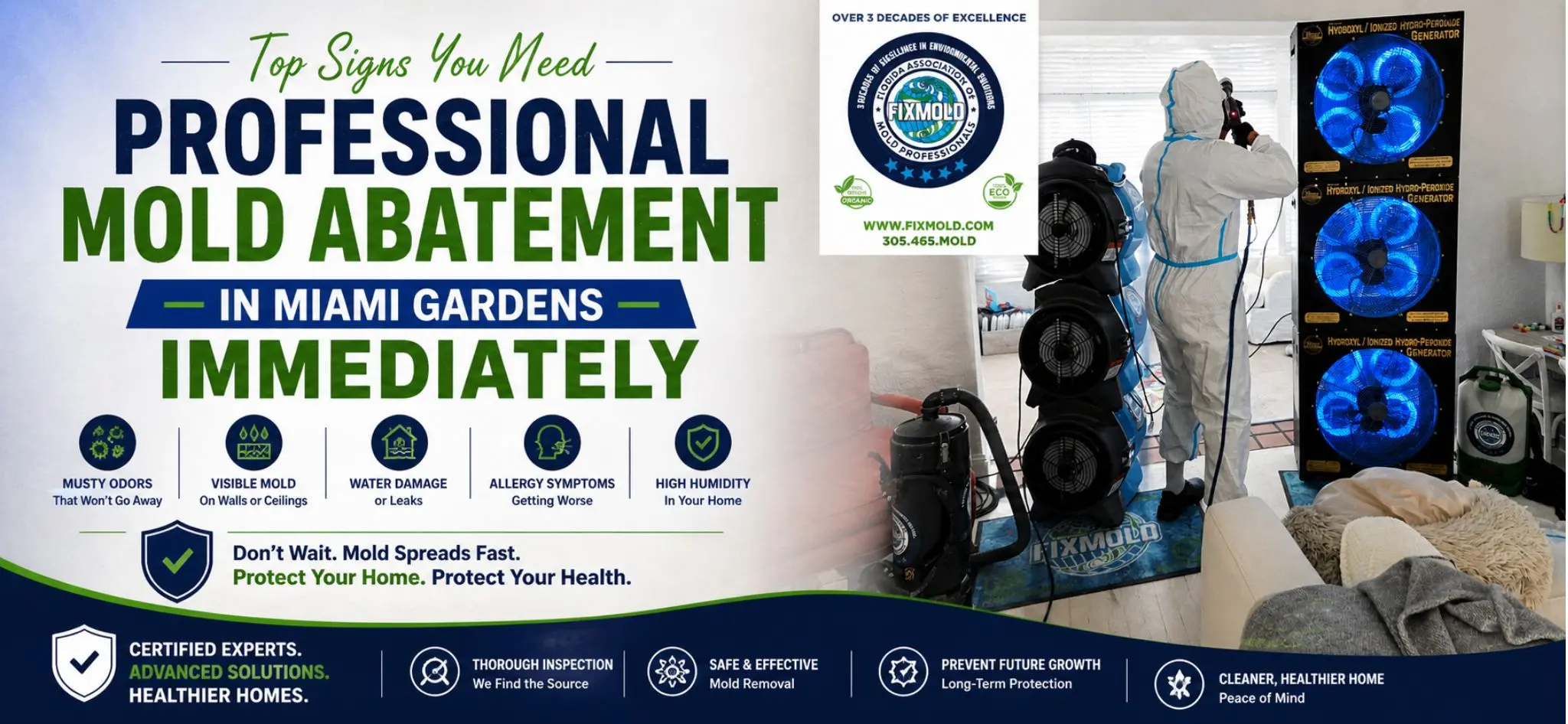
Professional mold abatement is the controlled process of identifying, containing, removing, and disposing of mold growth using industry-grade equipment and safety protocols. Unlike wiping down a surface with bleach, true abatement addresses the root cause, the moisture source, and ensures spores don’t spread during removal.
When you wipe visible mold with a household cleaner, you’re dealing with the tip of the iceberg. Mold colonies grow in depth, not just on surfaces. Disturbing them without containment sends spores airborne, making things worse. A certified remediation team uses HEPA filtration, negative air pressure, and EPA-registered biocides to handle the whole problem.
In a city like Miami Gardens, where humidity regularly tops 80% and air conditioning creates constant condensation cycles, this level of care is the standard, not a luxury.
Sign #1: A Musty Smell That Won’t Go Away
This one trips people up all the time. They assume the smell is coming from old furniture, a damp basement, or just “how the house smells.” It’s not.
A persistent musty or earthy odor, especially one that gets stronger in certain rooms, near HVAC vents, or after rain, is almost always microbial volatile organic compounds (MVOCs) from mold. These are gases released during active mold growth.
Here’s what to look for:
- Smell is worse in rooms with poor ventilation or near plumbing
- Odor intensifies when the AC turns on (a sign of mold in ducts)
- The smell doesn’t go away with cleaning or air fresheners
If that odor keeps coming back, mold is actively growing somewhere you can’t see. That’s when you stop googling and start calling.
Sign #2: Visible Mold Growth, Even Small Patches
You see a small black spot in the corner of your bathroom. Maybe a few greenish dots along a windowsill. It looks minor. It probably isn’t.
Visible mold is almost always a fraction of what’s actually present. The EPA estimates that for every visible surface colony, there are typically larger hidden colonies nearby, especially where moisture has been trapped in walls or beneath flooring.
In Miami Gardens, common hotspots include:
- Bathroom ceilings and grout lines
- Behind refrigerators and washing machines
- Around window frames where condensation collects
- Under kitchen sinks and around water heater units
Don’t scrub it and walk away. Have a professional assess the full extent of the growth. What looks like a 6-inch patch may be hiding a 6-foot colony.
Sign #3: You or Your Family Are Experiencing Unexplained Health Issues
This is the one that catches people off-guard most often. They go to the doctor for recurring sinus infections, unexplained fatigue, or worsening asthma, and no one connects the dots back to home.
Mold spores and mycotoxins (toxic compounds produced by certain mold species like Stachybotrys chartarum, commonly called black mold) can trigger a range of symptoms:
- Chronic sneezing, runny nose, or nasal congestion
- Eye irritation or persistent headaches
- Respiratory issues that improve when you leave the house
- Skin rashes or unexplained fatigue
- Worsening asthma or allergy symptoms, especially in children
Pay attention to whether symptoms are worse at home and better elsewhere. That pattern is one of the strongest indicators of an indoor air quality problem caused by mold.
Children, the elderly, and anyone with a compromised immune system face the highest health risks. If that’s your household, don’t wait on professional mold abatement in Miami Gardens.
Sign #4: Recent Water Damage or Flooding in Your Property
Mold can begin growing within 24 to 48 hours after water exposure, even when the affected area looks dry on the surface. If your Miami Gardens property has experienced flooding, a burst pipe, roof leak, or even a slow hidden leak, assume mold growth has started until proven otherwise.
Here’s where things usually go wrong: a homeowner dries out the visible water, feels good about it, and moves on. But moisture trapped inside drywall, insulation, or subfloor stays wet for weeks. That’s where mold sets up shop.
Signs of water damage that likely come with mold risk:
- Warped, bubbling, or stained drywall or ceilings
- Peeling paint or wallpaper
- Soft or spongy flooring, especially hardwood or laminate
- Water stains on baseboards or walls that have dried but weren’t treated
After any water event, whether it’s a plumbing issue or a tropical storm (Miami Gardens gets plenty of those), a professional mold inspection should be your first call once the water is gone.
Sign #5: Mold Around Your HVAC System or Air Vents
Your air conditioning system circulates air throughout every room in your house. If mold is growing inside the unit or in the ductwork, it has a direct highway to every corner of your home.
Miami Gardens properties run AC year-round. That constant cycle of cooling warm humid air creates condensation inside the system. Combined with organic dust and debris inside ducts, it’s a near-perfect mold environment.
Watch for these HVAC-related warning signs:
- Dark staining or discoloration around air vents or registers
- Musty smell when the AC first turns on
- Increased allergy symptoms that coincide with AC use
- Visible growth inside the air handler or on the drip pan
HVAC mold isn’t a DIY fix. Cleaning ducts without proper containment can send millions of spores through your entire ventilation system. A certified professional needs to assess and treat this specific problem.
Sign #6: You’ve Dealt With Mold Before and It Keeps Coming Back
Recurring mold is a red flag that the root cause was never actually fixed. Most often, that means the moisture problem wasn’t addressed. Mold removal without fixing the underlying water intrusion or humidity issue is like mopping the floor with the faucet still running.
If you’ve had mold treated once, or even cleaned it yourself, and it’s showing up again, a professional team needs to trace the moisture source. In Miami Gardens, common recurring culprits include:
- Poor attic ventilation trapping humid air
- Slab leaks or slow foundation seepage
- Bathroom exhaust fans venting into wall cavities instead of outside
- Improperly sealed windows or sliding glass doors
A real fix includes both the mold removal and correcting whatever is feeding the moisture. Anything less and you’ll be back in the same situation next season.
Why Miami Gardens Properties Face Higher Mold Risk Than Most U.S. Cities
It’s not just the heat. Miami-Dade County consistently ranks among the most humid metro areas in the United States. Average annual relative humidity sits above 74%, and during summer months it pushes past 85%. That’s enough to sustain active mold growth in buildings with even minor moisture issues.
Add seasonal rain events, hurricane exposure, older housing stock with aging plumbing, and the fact that air conditioning creates cold surfaces where warm moist air condenses, and you have a city that practically invites mold problems.
Local building materials matter too. Many older Miami Gardens homes have original drywall and insulation that absorbs and holds moisture far longer than modern materials. Once saturated, they become long-term mold breeding grounds.
This is why the threshold for calling a professional is lower here than, say, in Phoenix or Denver. The conditions that allow small mold problems to become major ones are always present.
When Should You Call FixMold for Professional Mold Abatement in Miami Gardens?
Call immediately if any of the following apply to your situation:
- Mold covers more than 10 square feet (about a 3×3 foot patch)
- Mold is visible or suspected in your HVAC system or air ducts
- Anyone in your household is experiencing mold-related health symptoms
- You’ve had recent water damage and didn’t have a professional mold inspection
- Mold has returned after previous treatment
- You’ve discovered mold during a renovation or behind walls
Don’t try to assess the full extent on your own. What’s visible is rarely the whole picture. A professional inspection uses moisture meters, thermal imaging, and air sampling to find what the eye can’t.
Don’t Wait Until It’s a Full Infestation
Mold problems in Miami Gardens don’t follow a slow, predictable timeline. The climate accelerates everything. A minor moisture issue this week can become a serious mold colony in under a month.
The signs covered here, persistent smells, visible growth, health symptoms, water damage, HVAC staining, and recurring mold, are your early warning system. Trust them.
Getting a professional assessment doesn’t have to mean a massive disruption. A certified mold inspection gives you the facts, and early intervention is almost always faster, cheaper, and healthier than waiting until the problem forces your hand.
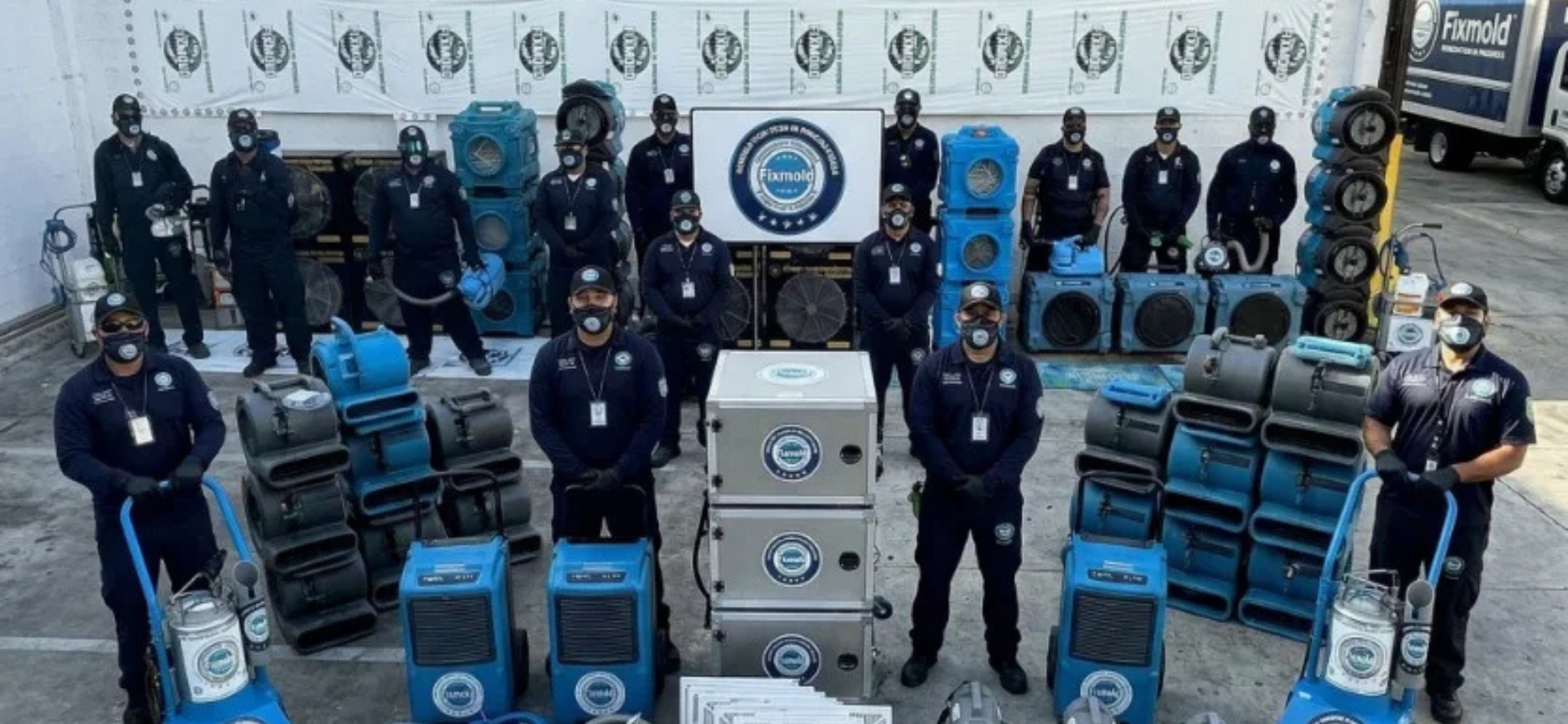
FixMold’s team serves Miami Gardens and surrounding communities with certified mold inspection, testing, abatement, and post-remediation verification. If you’re seeing any of the signs above, reach out today.
Frequently Asked Questions
How quickly does mold grow after water damage?
Mold can begin growing within 24 to 48 hours after a water event if moisture is not properly removed and the affected materials are not dried out completely. In Miami Gardens’ high-humidity climate, growth can occur even faster. Don’t assume a surface is safe just because it looks dry.
Can I remove mold myself if the patch is small?
Small surface mold on non-porous materials like tile or glass can sometimes be cleaned with an EPA-registered cleaner. However, if the area is larger than 10 square feet, on porous materials like drywall or wood, near your HVAC system, or if anyone in your home has health concerns, always call a professional. DIY cleaning without proper containment can spread spores and make the problem worse.
What does professional mold abatement actually involve?
A certified mold abatement process includes: a thorough inspection using moisture meters and air sampling, containment of the affected area to prevent spore spread, physical removal of mold-contaminated materials, HEPA air filtration, treatment with EPA-registered antimicrobial products, and a post-remediation clearance test to confirm the job is done. Some companies, including FixMold, also address the moisture source to prevent recurrence.
How do I know if my health symptoms are caused by mold?
The most telling pattern is symptoms that improve when you leave the property and return when you come back. Recurring respiratory issues, unexplained fatigue, sinus congestion, or worsening asthma that correlates with time spent at home is a strong signal. A professional air quality test can confirm whether elevated mold spore counts are present in your living space.
How much does professional mold abatement cost in Miami Gardens?
Costs vary depending on the size of the affected area, the type of mold, and whether structural materials need to be removed and replaced. Smaller, contained jobs can range from a few hundred dollars, while larger infestations involving walls, flooring, or HVAC systems can cost significantly more. Getting an inspection and written quote is the best starting point. Early action almost always keeps total costs lower.
#MoldAbatement #MoldRemovalMiamiGardens #FixMold #MoldRemediation #IndoorAirQuality #BlackMoldRemoval #MiamiGardens #SouthFloridaMold #MoldInspection #HomeMaintenanceMiami #MoldFreeLiving #MoistureControl #HealthyHome #MoldTesting #WaterDamageMiami https://fixmold.com/locations/mold-remediation-miami-gardens-fl/
Milly is a content contributor at FixMold with a focus on mold inspection, remediation strategies, air quality improvement, and property protection. She shares practical insights and educational resources to help homeowners and businesses maintain safer, cleaner indoor environments.