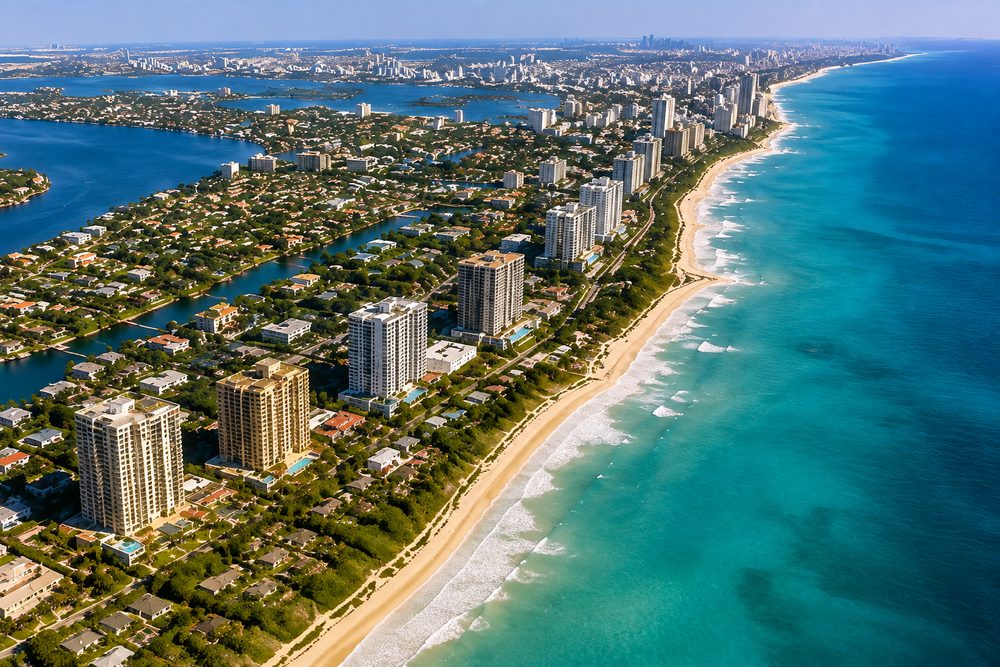
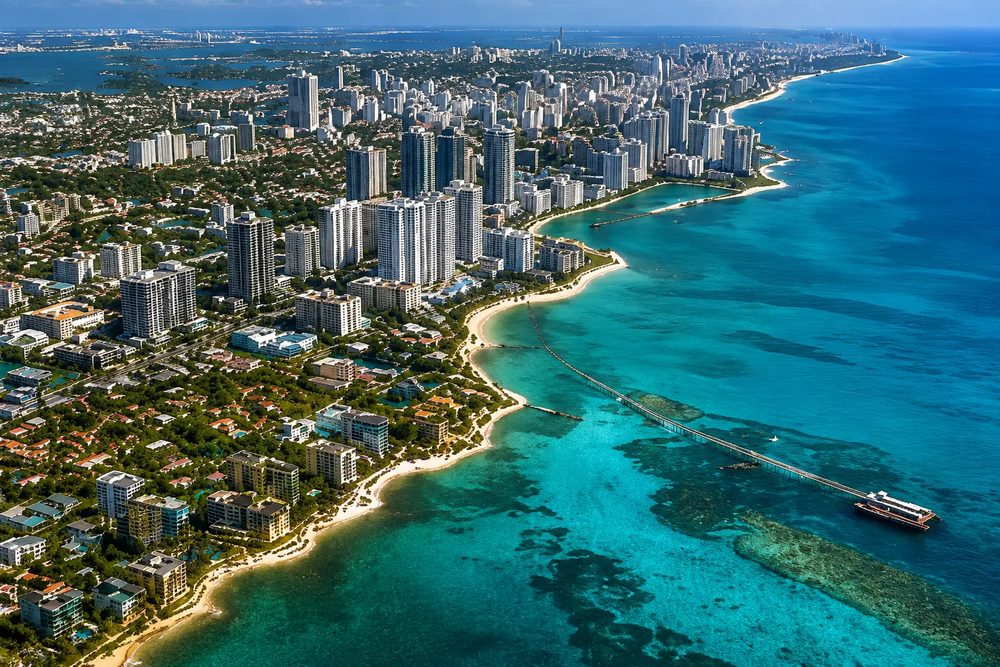
Salt air isn’t just good for your sinuses on a beach walk. In the world of building materials, it’s corrosive, moisture-retaining, and relentless. Fine salt particles carried on ocean breezes settle into porous surfaces — drywall, wood framing, insulation, grout. They’re hygroscopic, meaning they actively pull moisture out of the air and hold it against whatever surface they’ve landed on.
This is why a waterfront condo in South Beach can develop active mold growth inside a wall cavity even when there’s been no visible water leak. The materials themselves are staying wet from the outside air. Inspectors who don’t account for this often clear a job that comes back in six months.
Pro Tip: If your building is within a half mile of the ocean and you’re seeing recurring mold, don’t just treat the surface. The moisture source is often the salt-saturated building envelope itself, not a plumbing failure.
What This Means for Remediation
Standard mold remediation protocols are designed for inland environments. When applied to Miami Beach properties, they often miss two things:
- Salt-driven moisture vapor permeating walls without a traditional leak source
- Accelerated regrowth if the building envelope and humidity levels aren’t addressed simultaneously
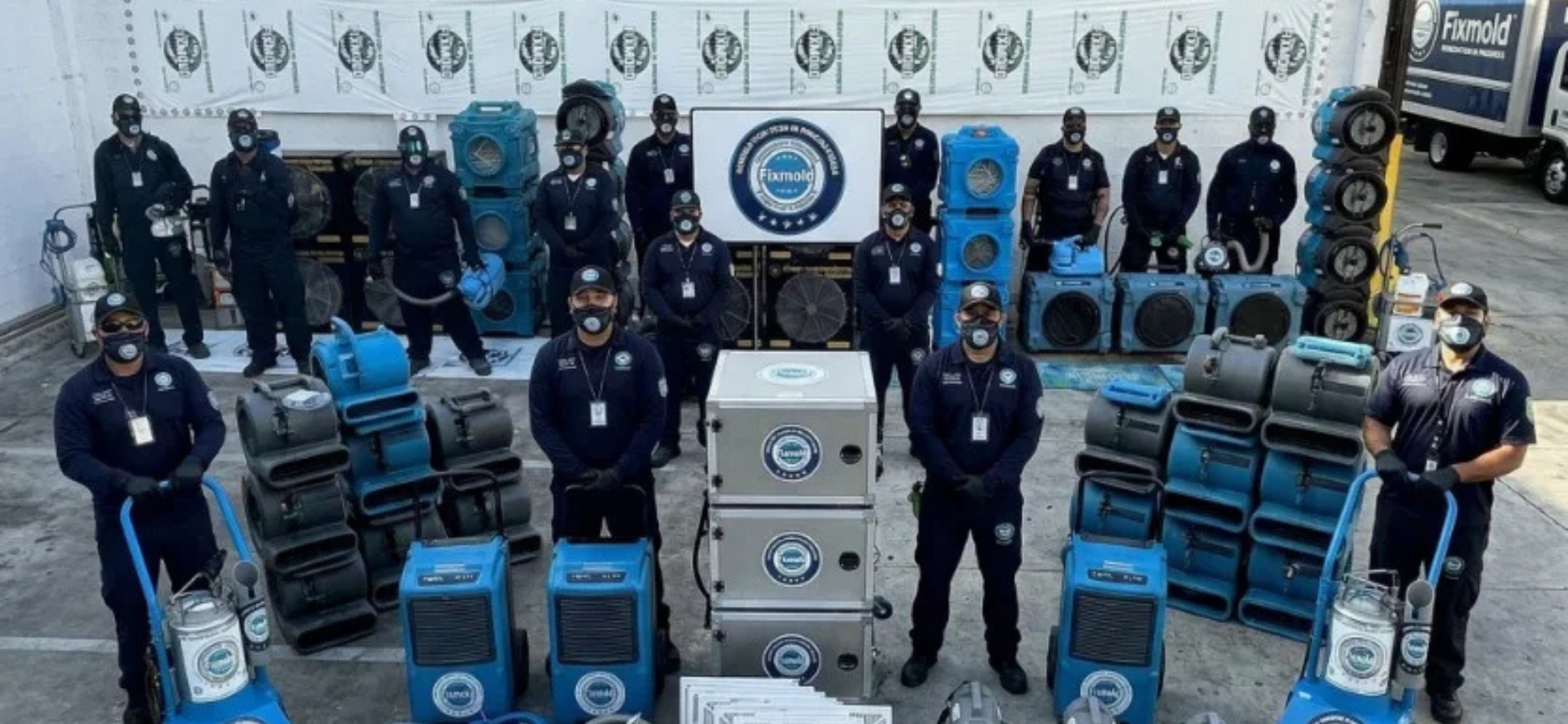
At FixMold, we use infrared thermal imaging and particle counters before any remediation plan is written. That lets us see moisture where eyes can’t — inside walls, under flooring, above ceiling tiles. It’s the only way to catch what salt air does to a Miami Beach building.
The 24/7 AC Problem: Your Cooling System Is Likely a Mold Generator
Miami Beach properties run air conditioning around the clock for nine or ten months of the year. That’s not a lifestyle choice — it’s a structural necessity. But every AC system creates condensation, and that condensation has to go somewhere.
Most homeowners don’t realize this until it’s too late: the drip pans, drain lines, air handler closets, and ductwork in their AC systems are the most common mold origin points in the entire building. And in Miami Beach, where the humidity differential between outside air and conditioned interior air is extreme, those systems are working harder and producing more condensation than anywhere else in the state.
Here’s where things usually go wrong. A slow leak in a drain line drips into the air handler cabinet for months. Mold colonizes the inside of the cabinet. The blower fan then distributes spores through every duct in the property. By the time you notice a musty smell from the vents, you’re already dealing with a whole-building contamination issue — not just a localized spot.
HVAC Mold in High-Rise Condos
In high-rise buildings along Collins Avenue or Ocean Drive, shared HVAC infrastructure adds another layer of risk. Mold in one unit’s ductwork can share airflow paths with adjacent units. We’ve seen cases where a mold problem in a vacant unit — left unoccupied for a Florida summer — spread to neighboring units through shared air systems before anyone noticed.
If you manage a condo association or own units in a Miami Beach high-rise, routine mold inspection in Miami Beach isn’t optional maintenance. It’s how you protect your entire property portfolio.
Hurricane Season: The 48-Hour Mold Window Nobody Talks About
After a major storm, everyone talks about the structural damage — the roof, the windows, the flooding. Mold rarely makes the news in the immediate aftermath. But mold doesn’t wait for the news cycle.
Mold spores can begin establishing colonies in wet building materials within 24 to 48 hours. In Miami Beach’s humidity and heat, that timeline is closer to the shorter end. A window seal blown out by storm winds, a flooded balcony that drains under the sliding door, or a compromised flat roof — these are all mold incubation scenarios in waiting.
The properties that avoid post-hurricane mold disasters are the ones where water intrusion was identified and dried out within that first 48-hour window. The ones that end up with remediation bills in the tens of thousands of dollars? Usually the owners who waited to see how bad it would get.
Key Fact: Mold can begin colonizing wet drywall in as little as 24 hours in warm, humid environments like Miami Beach. After 72 hours, affected materials often require removal rather than treatment. Speed is the single most important factor in post-storm mold prevention.
Art Deco Buildings and Historic Properties: A Special Challenge
Miami Beach has one of the largest concentrations of historic Art Deco architecture in the world. These buildings are beautiful. They’re also mold remediation nightmares.
Concrete block construction, original plaster walls, single-pane windows, and inadequate vapor barriers are features of Miami Beach properties built in the 1930s through 1960s. Unlike modern construction with moisture barriers built into the envelope, these buildings absorb. Salt air gets in. Humidity gets in. Condensation forms on interior walls when cold AC air meets warm, humid exterior walls that have no insulation separating them.
Biocide-heavy remediation approaches used in modern drywall construction can damage historic plasterwork permanently. A Miami Beach mold company that doesn’t understand the difference between a modern stucco wall and a 1940s lime plaster interior can cause irreversible damage to protected historic materials — and leave the property owner with a restoration bill on top of the remediation cost.
FixMold uses biodegradable, zero-VOC treatment systems specifically chosen because they’re safe for historic materials, occupants, and the coastal marine environment. It’s not just an ethical choice — it’s the right technical approach for Miami Beach’s unique building stock.
What Proper Mold Remediation in Miami Beach Actually Looks Like
There’s a lot of variation in how mold companies operate. Some will spray a surface treatment on visible mold, issue a clearance certificate, and move on. That approach might work in a dry inland climate where you’ve addressed a single moisture event. In Miami Beach, it’s a temporary fix at best.
Real mold remediation Miami Beach work follows a specific sequence:
- Full property assessment first: Using thermal imaging, particle counters, and moisture meters — not just a visual walkthrough
- Lab-certified air testing: Air sampling and surface swabs analyzed by a certified third-party laboratory, not just a field test kit
- Negative air pressure containment: Sealing affected areas and using HEPA negative air machines to prevent cross-contamination during removal
- Source correction: Identifying and correcting the moisture source — whether that’s an AC drain line, a building envelope issue, a plumbing leak, or humidity infiltration
- IICRC-certified remediation: Removal of contaminated materials, antimicrobial treatment of structural components, and air scrubbing
- Post-remediation clearance testing: Independent air sampling after work is complete to confirm successful remediation before the clearance certificate is issued
That last step is important. A certificate issued by the same company that did the remediation is a conflict of interest. Always ask who performs the clearance testing.
Our mold remediation in Miami Beach process addresses all of these steps and includes a 12-month warranty on completed remediation work — because we’re confident in what we do.
Health Risks of Untreated Mold in Miami Beach Homes
Let’s be direct about this. Mold isn’t just a cosmetic problem or a property value concern. Certain mold species — including the Stachybotrys (black mold), Aspergillus, and Cladosporium strains commonly found in Florida coastal environments — produce mycotoxins that can cause serious respiratory symptoms, neurological effects, and chronic illness with sustained exposure.
Seasonal residents are particularly vulnerable. If you spend summers in a cooler climate and return to your Miami Beach property in September, you’re walking into whatever mold developed during your absence. Opening the AC before doing a mold assessment means circulating whatever grew in that closed, humid space directly through the breathing environment of your home.
Common symptoms of mold exposure people often miss or misattribute:
- Persistent sinus congestion or infections that clear up when you leave Miami
- Fatigue and brain fog that seems to improve when traveling
- Worsening asthma or allergy symptoms compared to previous years
- Skin irritation or eye redness that starts at home and fades away
- Musty taste in the air that seems normal after a while
If these sound familiar, a mold inspection in Miami Beach is the first step — not a second doctor’s appointment.
The Practical Takeaway: Don’t Treat Miami Beach Like Everywhere Else
If there’s one thing this piece should leave you with, it’s this: mold remediation Miami Beach is a specialized job that requires local knowledge, the right equipment, and an approach built around coastal conditions — not a generic playbook applied to every property regardless of location.
Salt air that holds moisture in walls. AC systems that run year-round and generate continuous condensation. Hurricane seasons that can introduce water in hours. Historic building materials that don’t respond to standard biocides. These aren’t minor differences — they change every decision a remediation team makes, from the inspection tools they carry to the treatments they apply to the clearance standards they hold themselves to.
The good news: with the right company, it’s completely fixable. Most Miami Beach mold problems, even significant ones, can be resolved in two to four days. The key is acting before the problem grows beyond a localized area — because in coastal South Florida humidity, mold doesn’t wait.
If you’re not sure what you’re dealing with, start with an inspection. FixMold offers a complimentary FaceTime consultation so you can get expert eyes on the situation before committing to anything. It costs nothing and tells you exactly where you stand.
Frequently Asked Questions
How long does mold remediation take in a Miami Beach condo?
Most residential and condo mold remediation projects in Miami Beach are completed within two to four days. Larger properties, multi-unit buildings, or cases with extensive HVAC contamination may take longer. The timeline depends heavily on how quickly the moisture source is identified and controlled — which is why a thorough inspection before any work begins matters so much.
Can I stay in my Miami Beach home during mold remediation?
This depends on the size of the affected area and the mold species involved. For contained, localized remediation (a single bathroom or closet, for example), staying in the property with proper containment may be safe. For larger-scale remediation involving black mold, HVAC systems, or multiple rooms, temporary relocation is strongly recommended — both for your health and to protect the work being done from contamination through normal movement and traffic.
Does homeowner’s insurance cover mold remediation in Miami Beach?
It depends on the cause. Mold that results from a sudden, covered water event — like a burst pipe — is often covered under standard homeowner’s policies. Mold that develops from ongoing moisture issues, condensation, or gradual water intrusion is typically excluded. Florida policies vary significantly, so review your specific policy and ask your insurer directly. A good mold remediation company will document the cause of loss thoroughly to support any insurance claim you submit.
What’s the difference between mold testing and mold inspection in Miami Beach?
A mold inspection is a visual and instrument-based assessment of the property to locate mold growth, moisture intrusion, and conditions favorable to mold. Mold testing involves collecting air or surface samples that are sent to a certified laboratory for analysis — identifying specific mold species and spore concentrations. Both serve different purposes. An inspection tells you where the problem is. Testing tells you what it is and how severe the contamination is. For Miami Beach properties, lab-certified testing is worth doing before any major remediation, since the species involved affects the treatment approach.
How can I prevent mold from coming back after remediation in Miami Beach?
Mold prevention in Miami Beach is an ongoing practice, not a one-time fix. Keep indoor humidity between 45% and 55% using a properly maintained AC system and, if needed, supplemental dehumidifiers. Have your AC drain lines cleaned and checked annually. Inspect balcony doors, window seals, and flat roof areas after each storm season. Consider a whole-home air purification system if you spend summers away and leave the property unoccupied. And schedule a professional mold assessment every two to three years — not because something is wrong, but because catching minor issues early is always cheaper than fixing a major one later.
#MoldRemediationMiamiBeach #MiamiBeachMold #MoldRemoval #SouthFloridaMold #MoldInspection #IndoorAirQuality #CoastalMoldProblems #MiamiBeachRealEstate #FixMold #BlackMoldRemoval #MoldPrevention #MiamiBeachCondo #FloridaMold #HurricaneMoldDamage #MoldTestingMiami #HealthyHome #AirQualityMatters #SouthFloridaHomeowners #MoldExperts #MiamiMoldSpecialist https://fixmold.com/locations/mold-remediation-miami-beach-fl/
Milly is a content contributor at FixMold with a focus on mold inspection, remediation strategies, air quality improvement, and property protection. She shares practical insights and educational resources to help homeowners and businesses maintain safer, cleaner indoor environments.