10 Warning Signs of Mold Toxicity That May Affect Your Daily Health
milly g
June 23rd, 2026
No Comments
Like what we publish? Pin Fixmold Miami as a preferred source on Google.
Every year, millions of Americans unknowingly live and work in mold-contaminated spaces. According to the EPA, indoor mold is one of the most widespread environmental health threats in the United States — yet most people never connect their declining health to the air they breathe inside their own homes.
Mold toxicity, clinically referred to as mycotoxicosis, develops when the body is repeatedly exposed to mycotoxins — poisonous compounds released by mold species like Stachybotrys chartarum (black mold), Aspergillus, and Penicillium. Studies published in the International Journal of Environmental Research and Public Health estimate that 50% of all U.S. buildings have experienced water damage, creating ideal breeding conditions for toxic mold. More striking, research suggests that 25% of the global population carries a genetic variation (HLA-DR) that prevents the body from clearing mycotoxins naturally, leaving one in four people severely vulnerable.
The real danger? The 10 warning signs of mold toxicity look almost identical to dozens of other conditions, which is exactly why the average mold illness patient sees three to five doctors before receiving an accurate diagnosis.
If you’ve been feeling “off” and nobody can explain why, keep reading.
What Is Mold Toxicity — And Why Is It So Hard to Diagnose?
Mold toxicity is the body’s sustained inflammatory response to mycotoxin accumulation. Unlike a mold allergy — which primarily shows up in the respiratory system — mold toxicity reaches deeper. It disrupts the neurological system, destabilizes immune function, damages the gut lining, and interferes with hormone production, all at the same time.
The CDC and NIH both recognize indoor mold as a legitimate public health concern. Yet because its symptom profile overlaps heavily with fibromyalgia, chronic fatigue syndrome, Lyme disease, and depression, it gets misdiagnosed constantly. A 2003 study by the Institute of Medicine directly linked indoor mold exposure to upper respiratory illness, asthma aggravation, and hypersensitivity pneumonitis — conditions that millions of Americans are treated for without anyone investigating the mold source.
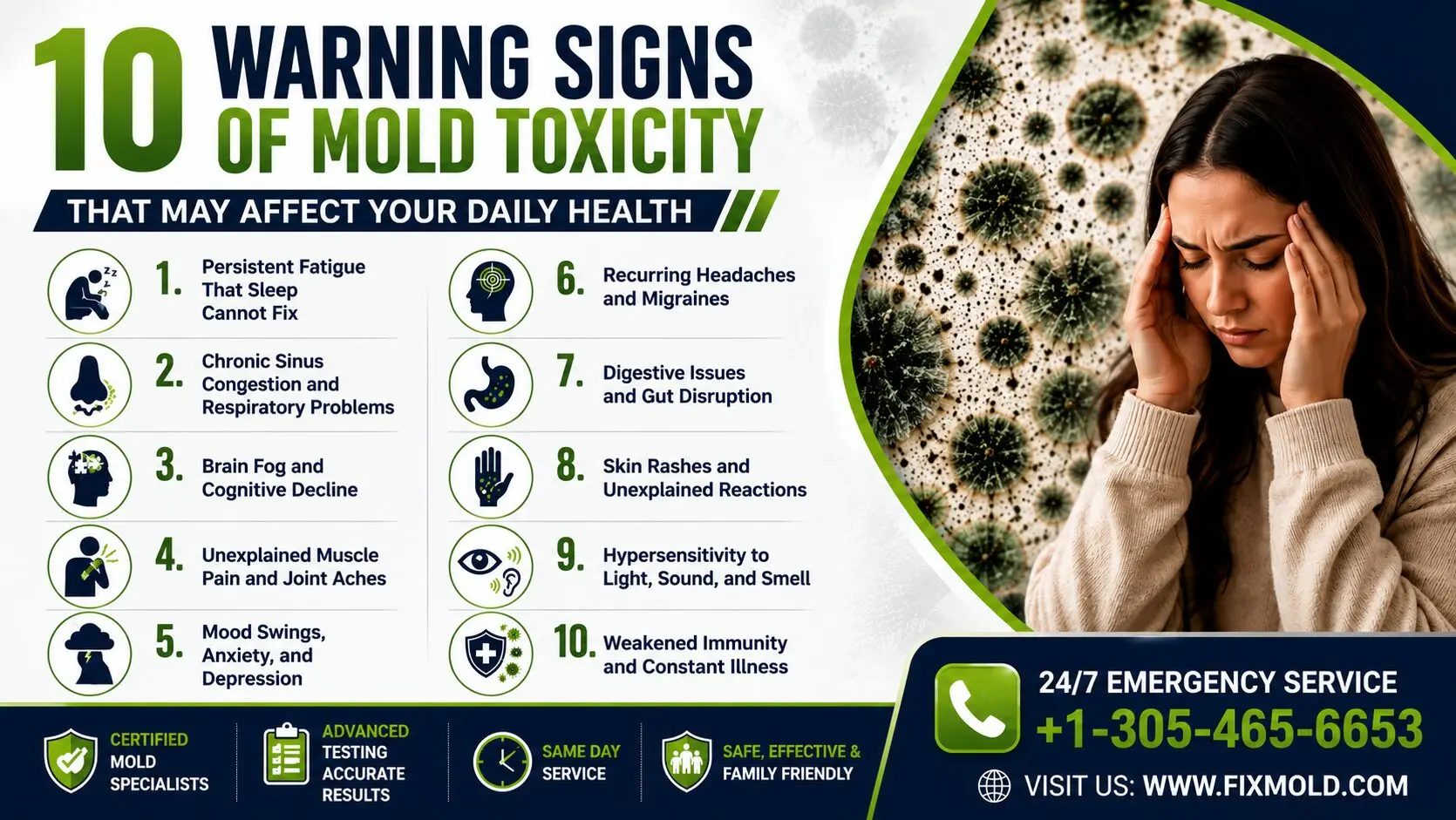
10 Warning Signs of Mold Toxicity
1. Persistent Fatigue That Sleep Cannot Fix
Exhaustion that eight hours of sleep doesn’t touch is the most universally reported symptom of mold toxicity. Mycotoxins target mitochondrial function — the cellular process that produces energy — which is why sufferers feel depleted at a biological level, and no amount of rest resolves it. A study published in Toxicology Letters confirmed that trichothecene mycotoxins directly inhibit protein synthesis, contributing to profound, treatment-resistant fatigue.
2. Chronic Sinus Congestion and Respiratory Problems
Mold spores, once inhaled, trigger persistent inflammation throughout the nasal passages and airways. Chronic sinusitis, post-nasal drip, a cough that never fully clears, and recurring chest tightness are early signs of mold toxicity that millions mistake for seasonal allergies. The American Academy of Allergy, Asthma & Immunology reports that mold is one of the top environmental triggers for chronic sinusitis, affecting approximately 37 million Americans annually.
3. Brain Fog and Cognitive Decline
Among the 10 warning signs of mold toxicity, cognitive impairment is the one patients find most distressing. Short-term memory loss, difficulty concentrating, trouble finding words mid-conversation, and a persistent mental cloudiness signal neurological interference. Mycotoxins are neurotoxic — they cross the blood-brain barrier and disrupt neurotransmitter activity directly. A 2003 peer-reviewed study found that individuals in water-damaged buildings scored significantly lower on neurological function tests than those in clean environments.
4. Unexplained Muscle Pain and Joint Aches
Waking up with widespread body pain — no injury, no overexertion — is a hallmark of systemic mycotoxin inflammation. Mycotoxins trigger the release of pro-inflammatory cytokines like IL-6 and TNF-alpha, which circulate through the bloodstream and produce musculoskeletal pain that is often misdiagnosed as fibromyalgia. Research shows that fibromyalgia is misdiagnosed in a significant percentage of mold illness patients before the environmental cause is identified.
5. Mood Swings, Anxiety, and Depression
Mycotoxins interfere with serotonin and dopamine production — the two neurotransmitters most responsible for mood stability and emotional regulation. This is why anxiety, sudden irritability, emotional flatness, and depression frequently emerge in mold-exposed individuals who have no prior mental health history. If your emotional state shifted after moving to a new home, a renovation, or a workplace change, that timing is worth examining seriously.
6. Recurring Headaches and Migraines
Chronic head pain centered around the forehead, temples, or behind the eyes is a frequently overlooked early warning sign of mold toxicity. Mycotoxins drive vascular inflammation and neurological stress simultaneously — both known migraine triggers. When standard pain medication provides only brief, partial relief and headaches return within days, the cause is likely physiological rather than situational.
7. Digestive Issues and Gut Disruption
Nausea, bloating, unexplained diarrhea, food sensitivities that appeared out of nowhere, and stubborn weight fluctuations are all documented effects of mycotoxin exposure on the gastrointestinal system. Mycotoxins degrade the gut lining, trigger leaky gut syndrome, and destroy beneficial gut bacteria — causing the immune system to overreact to everyday foods. Research in Comprehensive Reviews in Food Science and Food Safety confirmed that ochratoxin A and aflatoxins directly damage intestinal epithelial cells.
8. Skin Rashes and Unexplained Reactions
The skin is an elimination organ. When the body is overwhelmed by mycotoxins, it cannot clear them fast enough, and it attempts to expel them through the skin, producing rashes, hives, unexplained flushing, or a crawling sensation under the skin. These skin symptoms are frequently treated as contact dermatitis or eczema, with no investigation into the internal toxic load driving them.
9. Hypersensitivity to Light, Sound, and Smell
Sudden sensitivity to bright light, intolerance to loud environments, or nausea triggered by specific smells points to nervous system dysregulation — a direct neurological consequence of mycotoxin exposure. This hypersensitivity develops because mycotoxins overstimulate the central nervous system’s threat-response pathways, leaving them in a state of near-constant activation.
10. Weakened Immunity and Constant Illness
When the immune system is chronically suppressed by mycotoxins, the body loses its ability to defend itself efficiently. Recurring respiratory infections, UTIs, ear infections, or illnesses that take weeks longer than normal to resolve are a clear red flag. Research from the NIH indicates that certain mycotoxins — including aflatoxins and ochratoxins — are classified as immunosuppressants, directly reducing the body’s capacity to produce an adequate immune response.
Mold Toxicity at a Glance — Key Statistics
Fact
Data
U.S. buildings with a water damage history
50% (EPA)
Americans are affected by mold-related sinusitis annually
~37 million
Population genetically unable to clear mycotoxins
~25% (HLA-DR variant)
Average number of doctors seen before mold illness diagnosis
3–5
School and office buildings with indoor air quality issues
30% (EPA)
Children in moldy homes have a higher asthma risk
40% increased risk (WHO)
Mycotoxins classified as potential human carcinogens
Aflatoxin B1 (IARC Group 1)
Who Faces the Highest Risk?
Mold affects everyone differently — and genetics explains a large part of why. The HLA-DR gene variation prevents the body from tagging mycotoxins for removal, causing them to recirculate and accumulate rather than being expelled. Beyond genetics, the following groups carry an elevated risk:
People living in homes built before 1980 face higher exposure due to older plumbing and construction materials. Individuals with autoimmune conditions, asthma, or compromised immune systems experience more severe reactions to the same exposure levels. Children are disproportionately vulnerable because their immune and neurological systems are still developing. The elderly experience compounded effects because their detoxification pathways are less efficient with age.
Your Symptoms Deserve a Real Answer — FixMold Can Help
Recognizing these warning signs is the first step. But symptoms won’t resolve on their own if the mold source remains active in your home.
At FixMold, we’ve worked with thousands of families who spent months — sometimes years — cycling through medical appointments without answers. When they finally had their homes professionally inspected, the mold problem was hiding exactly where it couldn’t be seen: inside walls, under flooring, above ceiling tiles, and deep within HVAC systems.
Our certified mold specialists conduct thorough air and surface testing, trace contamination to its root moisture source, and perform professional remediation that meets the highest industry standards. Every project is completed with post-treatment verification — because a clean-looking home and a genuinely safe home are not always the same thing.
If several symptoms on this list feel like your daily reality, your environment may be the missing piece. Reach out to FixMold for a professional inspection and start getting real answers.
Frequently Asked Questions (FAQs)
Q1: What are the weird symptoms of mold toxicity?
Mold toxicity produces some genuinely unusual symptoms that most people — and many doctors — don’t associate with environmental exposure. Electric shock-like sensations moving through the body, a persistent metallic taste in the mouth, tinnitus (ringing in the ears), sudden ice-pick headaches, unexplained night sweats, extreme thirst unrelated to activity, and an inability to regulate body temperature are all documented neurological effects of mycotoxin accumulation. Some individuals also experience static electricity-type sensations on the skin, visual disturbances, and sudden-onset word-finding problems mid-conversation. These symptoms appear strange precisely because they reflect mycotoxins disrupting multiple body systems — neurological, hormonal, and immune — simultaneously.
Q2: How do you test yourself for mold exposure?
No single home test delivers a definitive answer, but several steps build a meaningful picture. Start by thoroughly inspecting your home — check under sinks, around water heaters, inside HVAC units, behind bathroom tiles, in basements, and anywhere a past leak or flooding occurred. A musty odor, even without visible mold, is a strong indicator of hidden growth. Track your symptom patterns: if they improve significantly after spending several days away from home and return when you come back, your environment is almost certainly involved. For clinical confirmation, a physician can order a mycotoxin urine panel through labs like Great Plains Laboratory or Vibrant Wellness, alongside inflammatory blood markers including TGF-β1, C4a, and MMP-9. A professional air and surface inspection by FixMold provides the most accurate environmental assessment of what’s actually circulating in your home.
Q3: How can you tell if mold has made you sick?
Three patterns consistently point toward mold illness. First, your symptoms appeared or worsened after a water event — a leak, flood, pipe burst, or roof damage. Second, your health improves when you leave your home for several days and declines when you return. Third, multiple people in the same household are experiencing similar unexplained symptoms without a shared diagnosis. Clinical confirmation requires mycotoxin urine testing, visual contrast sensitivity (VCS) testing — a validated screening tool for biotoxin illness — and inflammatory blood markers. Environmental testing of your property is equally important, as mold-related illness cannot be fully addressed without identifying and eliminating the contamination source.
Q4: How do you detox your body from mold?
Mold detoxification must always be guided by a physician experienced in biotoxin illness — self-treatment without proper oversight can be ineffective or counterproductive. The non-negotiable first step is removing yourself from the contaminated environment. No detox protocol produces lasting results while exposure is ongoing. Medical treatment typically involves prescription binders like cholestyramine or natural binding agents such as activated charcoal and bentonite clay, which capture mycotoxins in the gut before they are reabsorbed into circulation. Liver support through NAC, glutathione, and adequate hydration strengthens the body’s primary detox organ. Infrared sauna therapy is used by many integrative practitioners to promote toxin excretion through sweat. Gut repair through therapeutic-grade probiotics, bone broth, and an anti-inflammatory diet is essential, as mycotoxins cause measurable damage to the intestinal lining. Recovery varies significantly — some patients see improvement within four to six weeks, while others with higher toxic loads require six to twelve months of structured treatment.
Q5: What is the difference between black mold and mildew?
Mildew is a surface fungus. It grows on damp, non-porous surfaces like tiles, glass, and fabric, typically presenting as white, gray, or light brown patches. Mildew sits on top of surfaces, does not penetrate materials, and can generally be cleaned with standard household products. Black mold — Stachybotrys chartarum — is an entirely different category of problem. It colonizes deep within porous materials: drywall, wood framing, ceiling tiles, insulation, and subfloor. It requires prolonged moisture and high cellulose content to thrive, appears dark green to black with a characteristic slimy texture, and produces mycotoxins that cause serious, documented health effects. The critical distinction is that mildew is a surface issue while black mold is a structural one. Attempting to remove black mold without professional containment releases spores into the air, often spreading contamination to previously unaffected areas. FixMold’s certified team handles proper identification, safe containment, and full remediation of both.
Q6: What are the early warning signs of mold toxicity I should never ignore?
Fatigue that sleep doesn’t fix, persistent nasal congestion without a seasonal pattern, and recurring headaches are the earliest and most consistent signals. When brain fog — that feeling of mental cloudiness and slow thinking — appears alongside any respiratory symptom, the combination carries particular diagnostic weight. These early signs of mold toxicity are the body’s first warning that mycotoxin exposure has crossed a threshold its detox pathways can no longer manage alone. Catching and acting on these signals early — before months of accumulation — makes medical recovery significantly faster and more complete.
Q7: Can children show different signs of mold toxicity than adults?
Yes, and the differences are significant enough that mold illness in children is routinely missed entirely. Children in mold-contaminated homes frequently develop behavioral changes, difficulty concentrating, emotional dysregulation, frequent ear infections, recurring respiratory illness, and disrupted sleep — symptoms that are almost universally attributed to ADHD, allergies, or developmental variation. The World Health Organization has directly linked childhood exposure to damp and mold-contaminated homes with a 40% increased risk of asthma development. Parents should pay close attention when a child’s symptoms consistently improve during school holidays away from home and return shortly after coming back — that pattern is one of the clearest environmental indicators available.
milly g
Milly is a content contributor at FixMold with a focus on mold inspection, remediation strategies, air quality improvement, and property protection. She shares practical insights and educational resources to help homeowners and businesses maintain safer, cleaner indoor environments.