1000+ 5-STAR REVIEWS




Recommended All Over Florida

Hidden mold in Coral Gables homes is far more common than most homeowners realize. While Coral Gables is known for its beautiful architecture, mature landscaping, and historic charm, many properties also face persistent moisture challenges that create ideal conditions for mold to grow out of sight. Because this type of mold develops behind walls, above ceilings, or inside HVAC systems, it often goes undetected until it begins affecting indoor air quality or occupant health.
Understanding how hidden mold forms, where it hides, and when professional help is needed can make a major difference in protecting both your home and your health.
Coral Gables has a unique combination of factors that increase the risk of hidden mold. Many homes were built decades ago, using construction materials and ventilation designs that were not intended for today’s year-round humidity and modern air-conditioning systems.
Some of the most common local contributors include:
These conditions allow moisture to remain trapped behind surfaces, giving mold the opportunity to grow without visible warning signs.
Hidden mold refers to mold growth that develops in areas you cannot easily see or access. Unlike surface mold on walls or ceilings, hidden mold thrives in dark, enclosed spaces where moisture lingers and airflow is minimal.
In Coral Gables homes, hidden mold is most often found:
Even though it’s hidden, this mold can still release spores into the air and affect the entire home.
Because hidden mold isn’t visible, the first signs are often related to odors, moisture, or health symptoms rather than visible growth.
Homeowners should watch for:
When symptoms are worse inside the home and improve outdoors, hidden mold should be considered.
Hidden mold can impact indoor air quality over time, especially when spores circulate through HVAC systems. Prolonged exposure may affect people differently, but common concerns include respiratory irritation, worsening allergies, sinus issues, and general fatigue.
Children, older adults, and individuals with asthma or compromised immune systems are often more sensitive to ongoing mold exposure. Because hidden mold is frequently undetected, exposure can continue for long periods before the source is identified.
| Category | Hidden Mold | Visible Mold |
| Location | Behind walls, ceilings, HVAC | On exposed surfaces |
| Detection | Odors, symptoms, testing | Visual inspection |
| Spread risk | High if untreated | Moderate |
| Air quality impact | Often widespread | Usually localized |
| Cost impact | Increases over time | Easier to control early |
Hidden mold tends to cause broader issues because it often spreads unnoticed through ventilation systems.
In nearly all cases, hidden mold traces back to a moisture issue that goes unnoticed or unresolved.
Common causes include:
Even small moisture problems can support mold growth if they persist long enough.
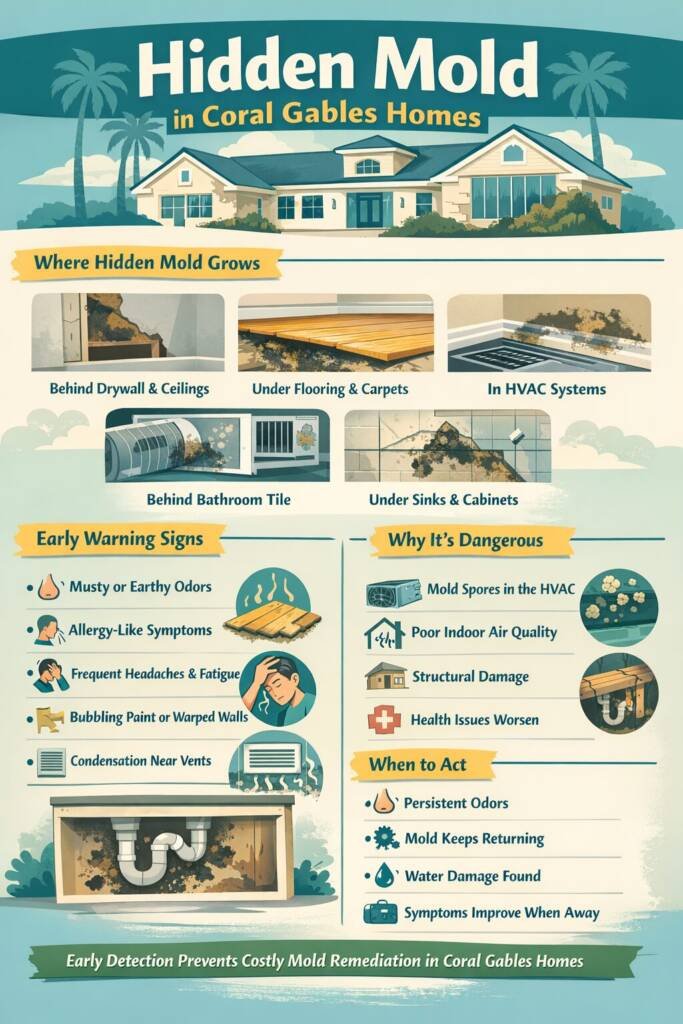
While homeowners can’t see inside walls, there are steps you can take to identify potential issues early.
What you can do as a homeowner:
If these signs are present, professional testing may be needed to confirm whether hidden mold is present.
Cleaning visible mold does not address hidden contamination. Mold remediation in Coral Gables is often necessary when mold is discovered behind walls or ceilings, when air testing shows elevated spore levels, or when mold keeps returning after repeated cleaning.
Professional remediation is also recommended when water damage is present, musty odors persist without visible growth, or HVAC systems are involved. In these cases, remediation focuses on containing affected areas, safely removing contaminated materials, controlling airborne spores, and correcting the moisture source to prevent future growth.
Addressing hidden mold early helps:
Delaying action often allows mold to spread further, making the problem more complex and expensive to resolve.
Hidden mold in Coral Gables homes is a serious but manageable issue when identified early. Because mold often grows out of sight, homeowners should pay close attention to warning signs like odors, moisture problems, and unexplained health symptoms. Understanding when professional mold remediation in Coral Gables is needed can help protect both your property and your indoor environment.
If your home has ongoing moisture issues, persistent odors, or symptoms that improve when you’re away, hidden mold may be present. Early inspection and remediation can prevent long-term damage and costly repairs.
Hidden mold in Coral Gables homes is very common due to year-round humidity, older construction, and frequent rain. Many homes develop mold behind walls or ceilings long before it becomes visible, especially if small leaks or ventilation issues are present.
Early signs include musty odors, recurring headaches, sinus irritation, fatigue, or allergy-like symptoms that worsen indoors. Other clues include peeling paint, warped drywall, or condensation near vents and windows.
Yes. Hidden mold releases spores and microscopic particles that can circulate through HVAC systems, impacting indoor air quality throughout the home—even if mold is not visible in living spaces.
Mold remediation in Coral Gables is necessary when mold is found behind walls, inside ceilings, or within HVAC systems. Surface cleaning does not address hidden contamination or prevent spores from spreading.
Professionals use moisture meters, infrared thermal imaging, air sampling, and surface testing to locate mold hidden behind walls, under floors, or inside ventilation systems.
Hidden mold can return if the underlying moisture issue is not corrected. Proper remediation includes fixing leaks, improving ventilation, and controlling humidity to prevent regrowth.
You should schedule an inspection if you notice persistent odors, unexplained moisture, recurring health symptoms at home, or mold that keeps returning despite cleaning.
