1000+ 5-STAR REVIEWS




Recommended All Over Florida
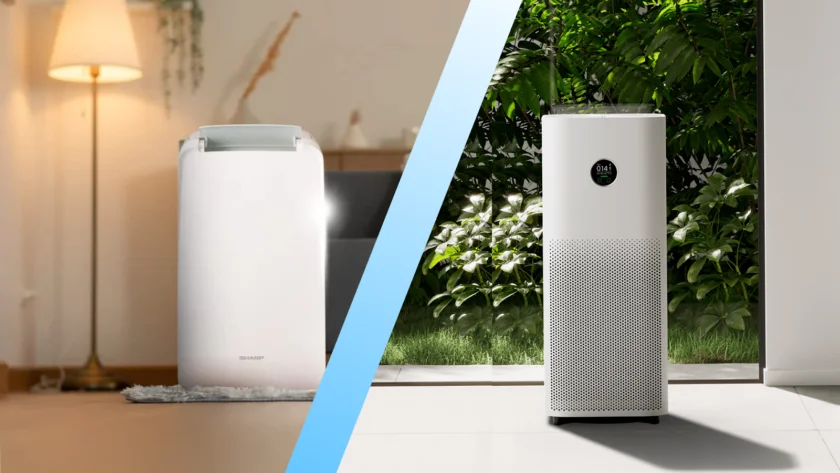
Indoor air quality plays a crucial role in maintaining a healthy home—especially in humid, tropical climates like Miami. Excess moisture leads to mold, stale air, and airborne allergens. When comparing a dehumidifier vs air purifier, it’s essential to understand their roles: dehumidifiers reduce humidity to prevent mold, while air purifiers filter pollutants and allergens. For lasting results, FixMold offers professional mold inspections, deep air cleaning, and tailored solutions that go beyond what devices alone can achieve.
Homeowners often ask:
“Is an air purifier the same as a dehumidifier?” Or more specifically:
“What is the difference between a dehumidifier and an air purifier?”
While both devices are designed to improve indoor air quality, they serve very different purposes. One controls moisture, and the other filters airborne particles like allergens and mold spores. In this blog, we’ll break down how each works, when to use them, and why especially in a climate like Miami you may need both.
Miami’s tropical climate means high humidity levels almost year-round. According to local climate data, the average indoor relative humidity in Miami homes ranges from 60% to 75%—well above the EPA’s recommended maximum of 50%.
That’s where dehumidifiers and air purifiers come in. But they’re not the same—and using the right one for your home’s needs makes all the difference.
Here’s a quick breakdown of what each device does:
A dehumidifier removes moisture from the air. It draws in humid air, condenses the water vapor, and releases drier air back into the room. This helps reduce humidity levels, making it harder for mold to grow.
An air purifier cleans the air by filtering out airborne contaminants such as dust, allergens, pet dander, smoke, and mold spores. Most use HEPA or activated carbon filters to trap particles and odors—but they do not reduce humidity.
| Feature | Dehumidifier | Air Purifier |
| Main Function | Removes moisture from the air | Removes pollutants from the air |
| Target Problem | High humidity, mold prevention | Allergens, dust, mold spores |
| Filter Type | Often uses coils, may include a mesh | HEPA, activated carbon, or UV filters |
| Best Use Case | Bathrooms, basements, humid climates | Bedrooms, living rooms, allergy-prone spaces |
| Impact on Mold | Prevents mold growth | Reduces mold spores in the air |
| Power Consumption | Moderate to high (runs continuously) | Low to moderate |
| Noise Level | Moderate (due to compressor) | Typically quiet |
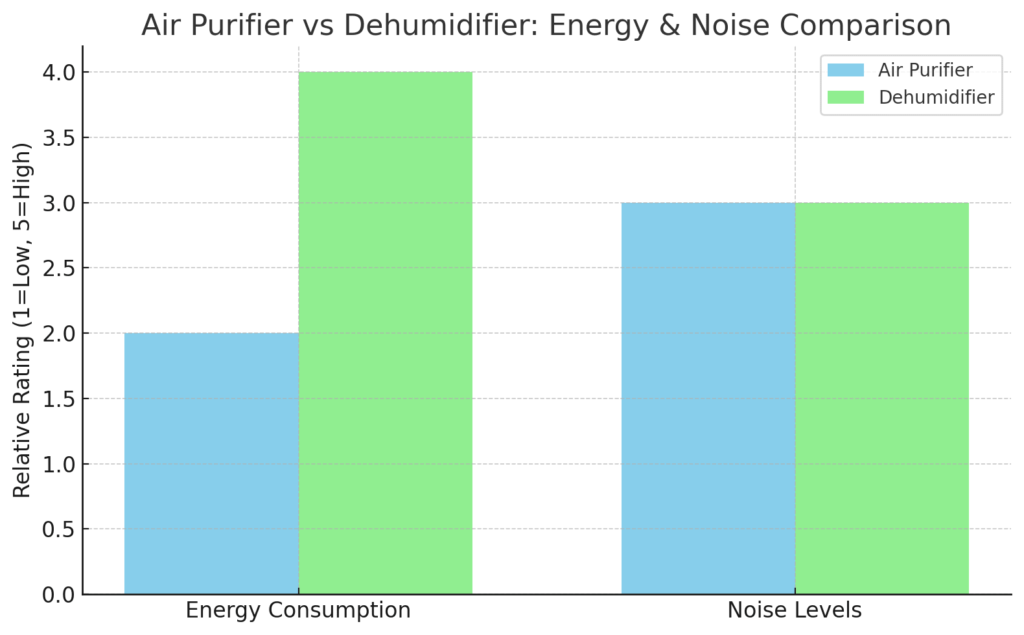
The chart above visualizes the relative energy use and noise levels (rated from 1 to 5) of both devices. Air purifiers tend to use less energy but may be noisier, while dehumidifiers use more power but are slightly quieter.
No. They serve very different purposes:
In high-humidity regions like Miami, using both devices can provide a more comprehensive approach to clean, healthy indoor air.
| Cons of air purifiers | Cons of dehumidifiers |
| Doesn’t address humidity or moisture in the air. | Can consume a lot of energy when used for long periods. |
| May not remove odors effectively in some cases. | Might make the air feel too dry, leading to discomfort (dry skin, throat irritation). |
| Requires regular maintenance, such as changing filters. | Can be noisy, especially in larger models. |
| Can be noisy, depending on the model and settings. | Requires regular maintenance, including cleaning and emptying the water tank. |
| Might not be effective in very large spaces without multiple units. | Does not improve air quality beyond moisture reduction. |
May not address humidity, and doesn’t improve air quality in terms of moisture. | Larger and bulkier than air purifiers, taking up more space. |
Mold loves Miami.
According to the Florida Department of Health, mold can start growing within 24 to 48 hours of moisture exposure. This makes mold not just a seasonal issue, but a year-round threat in Florida homes.
Using a dehumidifier in these areas helps maintain humidity levels below 50%, a critical threshold for mold prevention
While dehumidifiers prevent mold from growing, air purifiers help deal with mold spores that are already floating in the air—especially after a mold incident or during pollen-heavy seasons.
Air purifiers with True HEPA filters can remove up to 99.97% of particles as small as 0.3 microns—including harmful mold spores that could otherwise be inhaled
If you live in Miami or anywhere in South Florida, combining both devices can be especially beneficial:
✅ Use a dehumidifier to control moisture and prevent future mold growth
✅ Use an air purifier to reduce exposure to allergens and airborne pollutants
Together, they create a healthier, drier, and safer indoor environment especially for families with young children, elder members, or anyone with respiratory sensitivities.
📊 70% of South Florida homes will deal with mold at some point (Florida Department of Health)
💧 Indoor humidity over 60% significantly raises the risk of mold growth
🌀 HEPA air purifiers can capture 99.97% of airborne particles, including mold spores and allergens
🔍 Thermal imaging technology detects leaks and moisture without breaking walls.
When purchasing an air purifier, consider these key factors:
When purchasing a dehumidifier, consider these key factors:
By considering these factors, you can choose the right air purifier or dehumidifier to improve your indoor environment.
How FixMold Helps
While air purifiers and dehumidifiers can improve conditions, they don’t solve underlying issues—especially when moisture or mold is hidden behind walls or ceilings.
At FixMold, we provide comprehensive solutions beyond just recommending devices:
We don’t just treat symptoms—we address root causes to ensure long-term protection and peace of mind.
Both. A dehumidifier reduces the humidity that mold needs to grow, while an air purifier helps remove mold spores from the air to reduce exposure.
No. Air purifiers filter air, but they don’t remove moisture. In Miami’s humid environment, moisture control is key to preventing mold, and that’s what a dehumidifier does.
No. If mold is already growing, especially behind walls or in HVAC systems, you’ll need a professional inspection and possible remediation. Devices help prevent future problems—but won’t remove existing mold colonies.
Yes. In fact, it’s ideal. They perform complementary functions and won’t interfere with each other.
Yes. Devices are part of a preventive strategy, but if you’ve had water damage, a musty smell, or visible signs of mold, you should get a thermal imaging inspection to ensure there’s no hidden mold growth. If you aren’t sure which method to use or are dealing with a large-scale mold issue, it’s best to call a licensed and insured professional. A company that specializes in mold remediation in Brickell can properly assess the situation, handle safe mold removal, and help prevent future growth.
