1000+ 5-STAR REVIEWS




Recommended All Over Florida
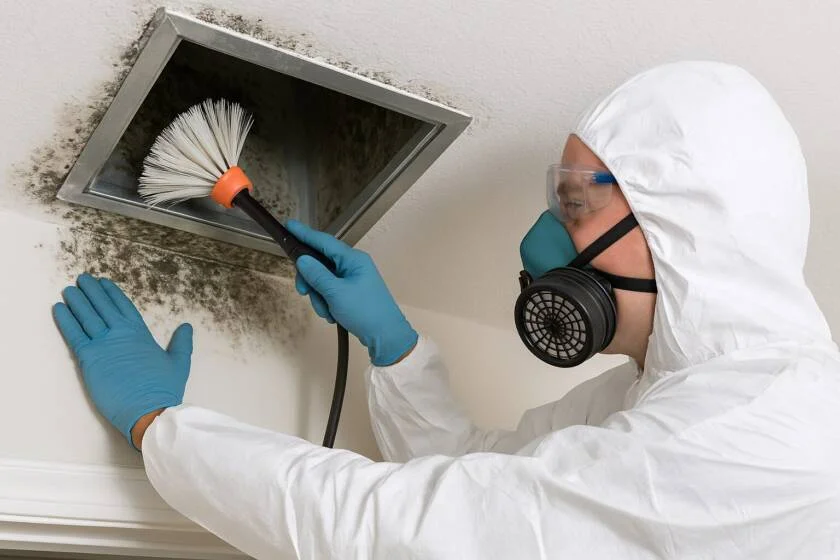
Your air ducts are meant to circulate clean, fresh air, but when mold takes hold inside them, every breath you take can become a health risk. Black mold in air ducts (usually Stachybotrys chartarum or Aspergillus niger) is one of the most serious indoor air quality issues homeowners face.
Because your HVAC system distributes air throughout your home, it also spreads microscopic mold spores to every room, contaminating surfaces, furniture, and even your lungs.
Understanding the signs of black mold in your HVAC system, how it affects health, and how to remove it safely can help you act before it becomes a full-blown household hazard.
Mold needs three ingredients to grow: moisture, organic material, and stagnant air, all of which can exist inside HVAC systems.
Florida’s humidity makes homes particularly vulnerable. Even small HVAC leaks or unnoticed condensation can create the perfect environment for black mold spores to multiply within days.
A persistent “wet basement” or mildew smell when your AC turns on is the first red flag.
Look for dark patches around air vents, registers, or drip pans. Black mold often appears slimy, while other mold types can be powdery.
If you experience unexplained allergies or breathing discomfort that improve when you leave the house, mold could be circulating through the ducts.
Mold buildup restricts airflow, causing your HVAC system to work harder and your energy bills to rise.
Moisture around vents or visible water droplets indicate poor humidity control—a precursor to mold.
🧠 Pro Tip: A professional mold inspection can confirm the type and level of contamination. Air sampling and swab testing identify whether it’s black mold or a less toxic strain.
The real danger of black mold isn’t just in the ducts, it’s in the air you breathe. Mold spores released by your HVAC system can circulate throughout your home, leading to both short-term irritation and long-term health concerns.
Children, the elderly, and those with asthma or allergies are especially vulnerable.
Warning: The longer mold circulates through your ducts, the more it embeds into walls, carpets, and upholstery—creating a full-home contamination issue.
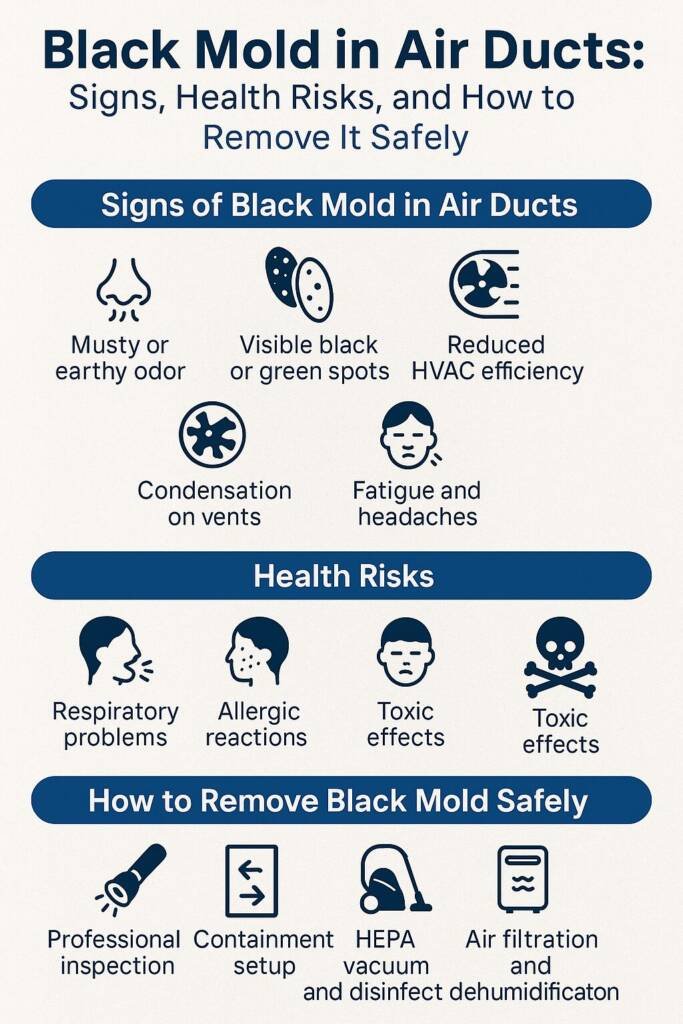
Before you start cleaning, it’s essential to know that black mold removal inside HVAC systems is not a DIY-friendly task. The ducts are confined spaces, and improper handling can spread spores throughout the home.
However, understanding the professional mold remediation process will help you know what to expect.
A certified mold remediation company will inspect the HVAC system using scopes and air sampling equipment to locate mold colonies and moisture sources.
Containment barriers and negative air pressure systems prevent spores from escaping during cleaning.
Technicians use HEPA-filter vacuums to remove visible mold and dust buildup from ducts and vents.
All ducts, coils, drip pans, and registers are treated with EPA-approved antifungal cleaners designed for HVAC systems.
HEPA air scrubbers run continuously to filter airborne spores. Industrial dehumidifiers ensure humidity stays below 50%.
Final air quality tests confirm that spore levels are back to safe, normal conditions before containment barriers are removed.
Once your air ducts are remediated, don’t overlook the rest of your home. Spores may have settled on furniture, drapes, and carpeting.
Here’s what to do next:
Black mold can return quickly if humidity or moisture problems aren’t addressed. Follow these prevention tips:
Maintain indoor humidity below 50%. Use a whole-home dehumidifier in humid climates like Florida.
Schedule bi-annual HVAC cleanings. Ensure drip pans and coils are dry, and replace filters monthly.
Proper insulation prevents condensation that feeds mold.
Installing UV-C light sterilizers in ducts kills airborne bacteria and mold spores before they spread.
Professional mold inspections can detect hidden contamination early, especially in high-risk homes.
Q: Can I clean black mold in air ducts myself?
No. DIY cleaning risks spreading spores and worsening contamination. Always use certified remediation specialists.
Q: How long does mold remediation take for air ducts?
Most HVAC mold remediation projects take 2–5 days, depending on system size and contamination level.
Q: Is it safe to use the HVAC system during remediation?
No. It should remain off until the mold remediation procedures are complete and testing confirms safety.
Q: What’s the difference between cleaning and remediation?
Cleaning removes visible mold; remediation eliminates the source, filters the air, and prevents recurrence.
Q: Does black mold in air ducts affect the whole house?
Yes—your HVAC system distributes contaminated air throughout every vent and room.
Q: Can black mold come back after remediation?
Only if humidity or leaks persist. Regular inspections and maintenance prevent recurrence.
Q: Is black mold in ducts an emergency?
Yes. Because it circulates spores directly into your breathing space, it qualifies as a 24-hour remediation emergency.
If you suspect black mold in your HVAC system, time is critical. The longer you wait, the more damage mold can do to your property and health.
FixMold provides:
Breathe easier knowing your home’s air is clean, healthy, and mold-free.
If you live in Palm Beach County and suspect mold in your HVAC system, professional help is essential. FixMold offers trusted mold remediation services in Lantana, specializing in HVAC and air duct mold removal. Our certified team identifies hidden contamination, removes mold safely, and helps prevent it from returning, so your home stays healthy, and your indoor air remains clean.
