1000+ 5-STAR REVIEWS




Recommended All Over Florida

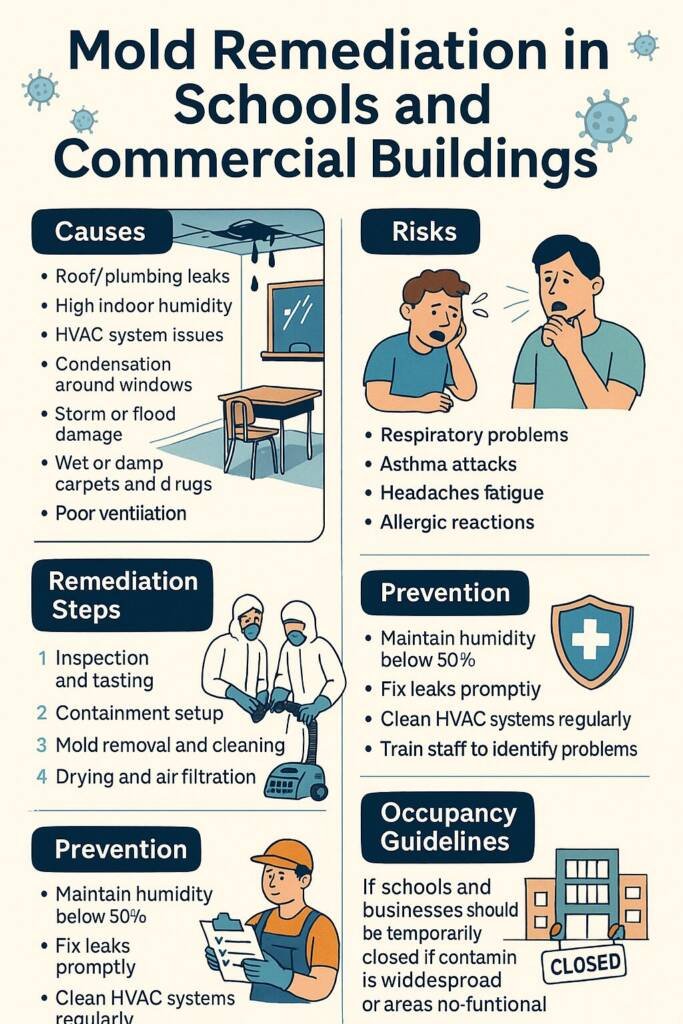
Mold isn’t just a problem in homes. Schools, office buildings, hospitals, retail stores, and other commercial properties face even higher risks due to complex HVAC systems, large foot traffic, aging infrastructures, and moisture-prone environments.
And unlike a private home, mold in commercial buildings affects dozens—sometimes hundreds—of people at once, including children, staff, customers, and tenants. This makes mold remediation in schools and commercial buildings not just a maintenance task but a public health and safety obligation.
Whether you’re a school administrator, property manager, or business owner, understanding how building mold remediation works—and how to prevent it—is crucial for legal compliance, occupant safety, and protecting your facility’s reputation.
Commercial and educational facilities have unique structural and operational challenges that make mold growth more likely.
Large buildings also tend to mask early warning signs because contaminated air travels through extensive ductwork, causing exposure long before mold becomes visible.
Mold in a commercial or educational setting can impact vulnerable groups such as:
Repeated exposure—especially in enclosed environments like classrooms—can lead to long-term respiratory issues. This is why mold remediation schools procedures follow more strict guidelines set by EPA, OSHA, and state environmental agencies.
Before remediation begins, a professional mold inspection must determine the severity, cause, and impact.
Visual Assessment
Examining classrooms, mechanical rooms, ceiling tiles, storage areas, kitchens, restrooms, and HVAC pathways.
Moisture Mapping
Using infrared cameras and moisture meters to detect hidden leaks or wet walls.
Air Quality Testing
Checking airborne mold spore concentration inside vs. outside the building.
Surface Sampling
Collecting swabs from visible mold or suspect surfaces like carpets, tiles, and vents.
HVAC Assessment
A critical step in commercial buildings since HVAC systems often spread mold.
Documentation
A certified report outlines contamination level, affected areas, and required building mold remediation steps.
While remediation steps are similar to homes, commercial environments require more extensive containment, regulation compliance, documentation, and safety planning.
Here’s the complete process:
The first and most critical phase of mold remediation in schools and commercial buildings is establishing proper containment to stop mold from spreading to unaffected areas. Because classrooms, hallways, offices, and common spaces share ventilation systems, even a small disturbance can push spores into other parts of the facility. To prevent this, technicians set up physical containment barriers using plastic sheeting, sealed zipper doors, and negative air pressure machines that pull contaminated air away from occupied zones. HVAC systems serving the affected area are temporarily shut down to prevent cross-contamination. Access is restricted to trained personnel wearing protective equipment, ensuring the safety of students, staff, and building occupants. This controlled environment allows the remediation team to safely remove mold without risking further exposure throughout the school or commercial property.
OSHA and EPA indoor air quality regulations apply to educational facilities.
During mold remediation in schools, one of the most critical stages is removing building materials that can no longer be salvaged. After containment is set, the remediation team carefully removes anything that has absorbed moisture or developed visible mold. This may include sections of damaged drywall, acoustic ceiling tiles, insulation, and carpets—materials commonly found in classrooms and hallways that can trap spores deep within their fibers. Soft furnishings, such as chairs or upholstered items, may also need to be discarded. In cases where mold has spread through the ventilation system, technicians may remove and replace portions of the HVAC ductwork to prevent contaminated air from circulating through the school. This step ensures that all compromised materials are eliminated, helping restore a safe and healthy indoor environment for students and staff.
After contaminated materials are removed, the next phase of mold remediation services focuses on deep cleaning every affected surface. Technicians use commercial-grade HEPA vacuums to capture mold spores that may have settled on walls, floors, desks, lockers, and utility areas. HEPA filtration is essential because standard vacuums simply blow spores back into the air. Once vacuuming is complete, all surfaces are scrubbed with antimicrobial and non-toxic cleaning agents safe for schools. High-touch areas—such as classroom furniture, hallway railings, gym mats, and cafeteria surfaces—are given additional attention to ensure no mold residue remains. This step prepares the area for full sanitization and helps restore a safe learning environment.
In many school buildings, mold spreads quickly through the ventilation system, which is why building mold remediation includes a dedicated focus on HVAC cleaning. Technicians inspect and disinfect air handlers, coils, drip pans, supply and return ducts, and any components contributing to moisture buildup. Because classrooms rely heavily on central air systems, even a small amount of mold inside ducts can circulate spores through multiple rooms in a single day. During remediation, HEPA-filtered air scrubbers operate continuously to capture airborne contaminants while ductwork is cleaned. This step ensures clean air delivery throughout the campus and prevents mold from re-entering previously treated areas.
A key part of mold remediation in schools is eliminating excess moisture—the root cause of most outbreaks. Industrial dehumidifiers and high-velocity air movers are used to dry wall cavities, flooring, ceiling spaces, and mechanical rooms. Schools often contain moisture-prone areas like locker rooms, cafeterias, gyms, and basement classrooms, so humidity control is essential for long-term success. Technicians monitor moisture levels with specialized equipment to ensure they reach safe thresholds before moving forward. Proper drying not only prevents future mold growth but also protects carpeting, bookshelves, wooden furniture, and classroom materials from further damage.
Once cleaning and drying are complete, certified inspectors conduct a final evaluation known as post-remediation verification. This step is especially important in mold remediation projects because it confirms the building is truly safe for students and staff to re-enter. The PRV process includes visual inspections, moisture testing, and air quality sampling to ensure mold levels fall within acceptable standards. Only when the building passes clearance testing is the affected area released for occupancy. A formal report is then provided to school administrators or facility managers, documenting the completion of the remediation process and outlining any future maintenance recommendations.
Timeline varies based on building size and severity.
General Timelines:
| Severity | Approx. Timeline |
| Minor classroom outbreak | 1–3 days |
| Multi-room contamination | 3–7 days |
| HVAC system contamination | 5–10 days |
| Full building remediation | 1–3 weeks |
Factors like square footage, accessibility, moisture levels, and safety requirements affect the schedule.
Costs are higher than residential projects due to size and complexity.
| Type of Facility | Cost Range |
| Small office | $3,000–$10,000 |
| Large office floor | $10,000–$30,000 |
| Classrooms | $5,000–$15,000 |
| Gymnasiums | $15,000–$50,000 |
| Full school building | $30,000–$150,000+ |
Primary cost factors:
Many commercial building managers miss mold because it grows in hidden or low-traffic areas.
Routine inspections prevent long-term damage.
Regular HVAC Maintenance
Large HVAC systems accumulate condensed moisture—clean twice yearly.
Keep Humidity Under Control
Target relative humidity between 30–50%.
Fix Leaks Immediately
Even small plumbing leaks can trigger major outbreaks.
Install Moisture Sensors
Critical in older facilities or areas with recurring issues.
Train Staff to Report Early Signs
Musty odors, stains, or leaks should trigger immediate investigation.
Implement a Mold Prevention Policy
Schools often require formal policies for safety compliance.
Ignoring mold problems in a school or commercial building doesn’t just create health risks—it can lead to serious legal and financial consequences for the property owner or organization. When mold issues go unaddressed, occupants may experience health symptoms that result in formal complaints, employee claims, or even lawsuits. In schools, parents and guardians can raise concerns that quickly escalate to district-level investigations. Regulatory agencies such as OSHA or local building authorities may also step in, issuing violations or shutting down affected areas until the problem is resolved. In more severe cases, parts of the building—or the entire facility—may be deemed unsafe for occupancy. Maintaining proper documentation of your mold remediation procedures is essential, as it demonstrates due diligence and helps protect against liability.
Potential legal consequences include:
Having documented mold remediation procedures protects against liability.
If contamination is extensive or HVAC systems are affected, temporary closure is often required.
Yes—once air quality passes PRV clearance testing.
Usually only when caused by a sudden event (burst pipe, storm damage). Slow leaks typically aren’t covered.
At least once per year, and after any water intrusion.
Yes—if moisture problems aren’t fixed. Prevention is key.
Responsibility depends on lease agreements, but landlords typically handle structural moisture issues.
Mold in schools or commercial buildings isn’t just a maintenance problem—it’s a health, safety, and legal priority. Fast action prevents structural damage, protects occupants, and keeps facilities compliant with environmental regulations.
FixMold specializes in:
👉 Need certified mold remediation for your school or building?
Contact FixMold today for a professional assessment.
