1000+ 5-STAR REVIEWS




Recommended All Over Florida
Most people assume they’ll see mold before it becomes a problem. But the truth is different: the earliest danger signs of mold start in your body, not your walls. Subtle symptoms like fatigue, brain fog, morning congestion, and headaches often appear long before the first patch of mold shows up visually.
These early signs of mold exposure are easy to ignore, but catching them early can protect your health, prevent costly damage, and stop a minor issue from growing into a widespread infestation.
This guide breaks down the mold exposure symptoms most homeowners overlook, how to spot them early, and what steps to take if you suspect mold is affecting your home’s air quality.
Mold spores are microscopic. You can inhale thousands without ever knowing they’re present.
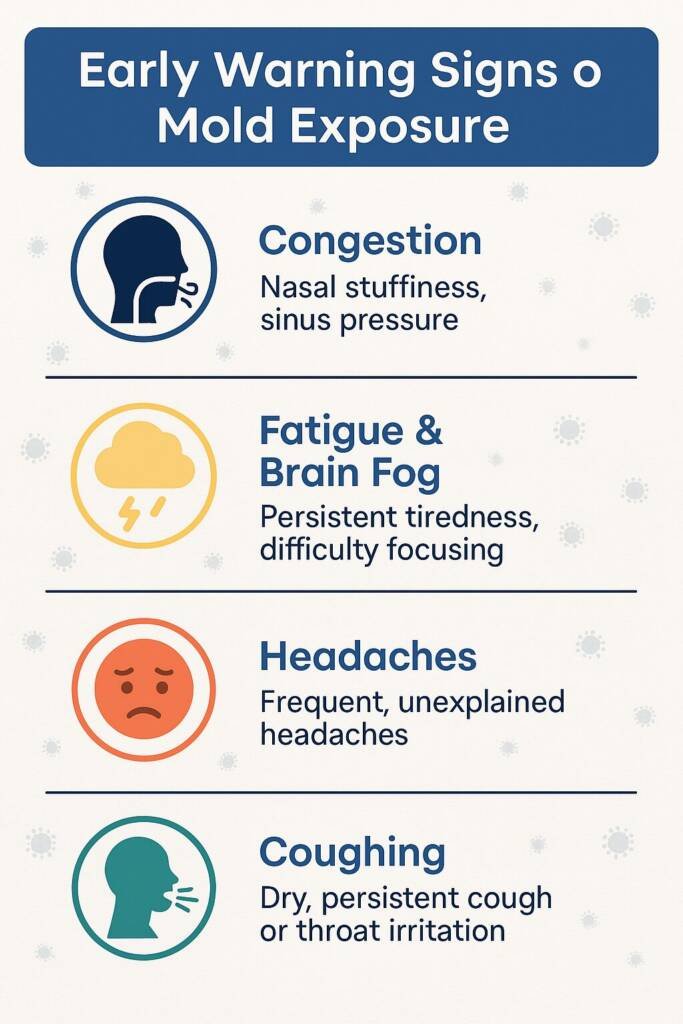
While symptoms of mold in house vary from person to person, most early reactions relate to:
Because the signs overlap with allergies or colds, homeowners often ignore the problem—sometimes for months.
To fully understand mold-related illness, see our complete breakdown here:
👉17 Signs of Mold Illness Every Homeowner Should Know
If you wake up feeling congested, but improve later in the day, your bedroom may be contaminated.
This is one of the earliest signs of mold illness, especially if mold is present in:
This pattern is a key indicator of mold inhalation symptoms during sleep.
Headaches are one of the most common early mold exposure symptoms because mold irritates the sinus and neurological system.
You may notice:
If headaches happen only at home, it’s a major red flag.
The health effects of mold exposure often start with subtle respiratory changes that people easily overlook. You may notice it feels slightly harder to take a full breath, or you experience mild wheezing that comes and goes. Some people feel a sense of chest tightness when lying down, while others develop a lingering dry cough that doesn’t quite fit the pattern of a cold or allergies. One of the clearest clues is when these symptoms ease up the moment you step outside or spend time away from home, a strong indicator that mold spore exposure may be affecting your indoor air quality.
Health effects of mold exposure often begin with subtle respiratory changes, such as:
If symptoms improve when you’re outdoors, mold spore exposure is likely.
Most people mistake this for allergies.
But eye irritation that worsens indoors is one of the earliest mold sickness symptoms, especially when mold circulates through vents.
Watch for:
This is one of the most overlooked mold toxicity symptoms.
Mycotoxins released by mold can disrupt:
If you feel mentally foggy at home but sharp elsewhere, that’s a strong early sign.
Musty, earthy, or “wet towel” smells indicate active mold growth, especially if they appear:
Intermittent odors often indicate hidden mold inside walls or ductwork.
Early mold inhalation symptoms often irritate the throat.
This may feel like:
If symptoms go away when traveling or being outdoors, mold is a likely cause.
| Symptom | Mold Exposure | Allergies |
| Worse indoors | ✔ | ✖ |
| Improves outside | ✔ | ✖ |
| Morning congestion | ✔ | Sometimes |
| Musty odor present | ✔ | ✖ |
| Headaches | ✔ | Rare |
| Brain fog | ✔ | ✖ |
Mold often grows in places homeowners never check:
If you’re experiencing two or more early mold exposure symptoms—especially ones that improve when you leave home—it’s important to take action before the problem spreads. Mold can grow quietly for months, and the longer it goes unchecked, the more difficult and costly it becomes to resolve.
Start with a professional mold inspection, which is the most reliable way to determine whether hidden mold is affecting your indoor air.
Next, consider scheduling an indoor air quality test to measure airborne mold spores, humidity levels, and potential mycotoxin activity. This is especially important if symptoms are respiratory or neurological.
While waiting for testing, check areas of your home where mold often hides such as bathrooms, HVAC closets, under sinks, crawlspaces, and behind appliances. Any sign of moisture, staining, or musty odors should be taken seriously.
If you find a leak or water intrusion, address it immediately. Mold can begin growing in as little as 48 hours, even on clean surfaces. Repairing the source of moisture early prevents larger contamination.
If testing confirms mold or if symptoms continue to worsen, professional remediation is the safest next step. Certified mold remediation ensures mold is removed fully, safely, and without spreading to other areas of the home.
South Florida’s climate makes mold exposure far more common than many homeowners realize. High humidity, salt-heavy coastal air, and year-round AC usage create conditions where mold can grow quietly behind walls or inside HVAC systems. Areas like Coconut Grove, Brickell, and Bal Harbour are especially susceptible because of their older buildings, waterfront environments, and frequent moisture intrusion. In these neighborhoods, even small leaks or ventilation issues can quickly lead to hidden mold growth. That’s why homeowners in these parts of Miami often benefit from regular inspections and indoor air-quality testing to catch mold problems before they turn into health concerns.
FixMold serves:
These locations have the perfect conditions for mold growth due to moisture, HVAC strain, and salt-air intrusion.
If you’re experiencing ongoing health effects of mold exposure, or your symptoms improve significantly when you leave home, it’s time for a full inspection.
FixMold can identify mold even when it’s:
The earliest signs of mold illness are subtle but meaningful. Paying attention to these clues—and acting early—protects your health and prevents expensive structural damage.
If you’re noticing these symptoms, don’t wait.
Early signs of mold exposure often begin with subtle symptoms like morning congestion, headaches, itchy eyes, mild shortness of breath, or fatigue that improves when you leave home. These symptoms usually occur before mold becomes visible and indicate airborne mold spores affecting indoor air quality.
You may be getting sick from mold if symptoms—such as coughing, sinus pressure, brain fog, headaches, or throat irritation—improve once you’re away from home. Consistent symptoms triggered indoors strongly suggest mold exposure or poor indoor air quality.
Yes. Mold exposure can cause headaches, dizziness, and a “pressure” sensation due to inflammation in the sinuses and neurological response to mycotoxins. These symptoms often worsen indoors and improve outside, making them easy-to-miss early warning signs.
Mold inhalation symptoms include mild shortness of breath, chest tightness, dry coughing, wheezing, and increased sensitivity to humidity. These respiratory symptoms often appear before any visible mold exists and are one of the strongest early indicators of poor indoor air quality.
Black mold symptoms can include fatigue, neurological issues, headaches, sinus inflammation, and irritation of the eyes or throat. While symptoms vary, black mold exposure tends to trigger more intense reactions due to higher mycotoxin levels in certain mold species.
Some people react quickly—within hours—while others may develop symptoms gradually over weeks or months. Short-term exposure often causes allergies, but long-term exposure can trigger chronic symptoms like fatigue, brain fog, and respiratory irritation.
Yes. Mold often grows behind walls, under flooring, inside HVAC systems, or in humid areas. The earliest warning signs usually appear in your body—such as headaches, congestion, or fatigue—before mold is visibly detectable.
Start with a professional mold inspection and indoor air quality test to confirm whether mold spores or mycotoxins are present. Avoid disturbing suspected areas, repair any leaks, and consider professional remediation if symptoms continue or test results are positive.
Yes. Mold toxins can affect neurological and immune function, often leading to unexplained fatigue, difficulty concentrating, or cloudy thinking. These symptoms typically improve when away from the contaminated environment, making them important early clues.
The most accurate method is a professional mold inspection with air sampling, surface testing, and moisture mapping. DIY kits are unreliable because they don’t show spore levels or identify hidden mold behind walls or inside HVAC systems.
