




You come home after work, and the moment you step inside, your nose clogs up. The headaches that don’t quit, the exhaustion that feels like you’re dragging through quicksand But what if the real culprit is hiding in your walls?
Across the U.S., thousands of families experience health problems connected to illness related to mold, and most don’t realize it until the symptoms become overwhelming.
This guide breaks down the 17 signs of mold illness, the differences between mold toxicity and everyday allergies, and what you can do right now to protect your health and your home.
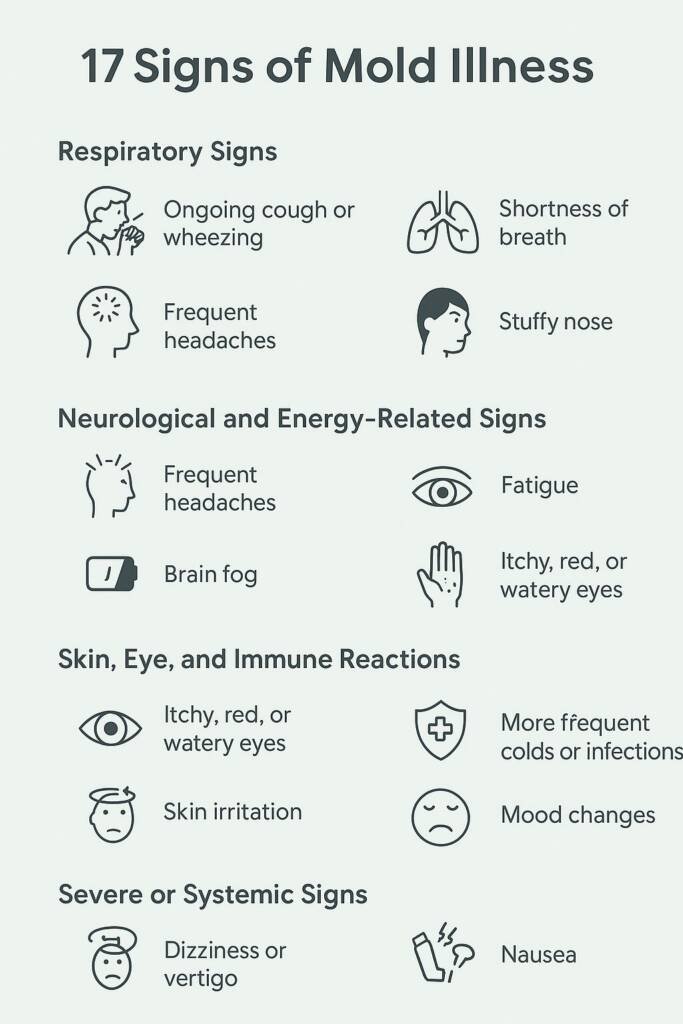
17 Signs of Mold Illness
Researchers and medical professionals agree: mold exposure affects everyone differently. But these 17 symptoms come up again and again in both studies and real-world reports:
Respiratory and Allergy-Like Symptoms
- Persistent cough or wheezing indoors
- Stuffy nose, sinus infections that don’t clear
- Shortness of breath in humid or musty rooms
Neurological and Fatigue Symptoms
- Chronic headaches or migraines
- Brain fog, memory lapses, or poor focus
- Fatigue that doesn’t improve with rest
Skin, Eye, and Immune Reactions
- Itchy, watery, or red eyes
- Rashes, hives, or skin irritation
- Frequent colds or infections due to a weakened immune system
Systemic or Severe Symptoms
- Night sweats or fever-like chills
- Joint pain or muscle cramps
- Mood changes, anxiety, or depression tied to time at home
- Dizziness, nausea, or vertigo
- Sudden worsening of asthma or allergy conditions
👉 If you notice clusters of these symptoms that improve when you leave home but return indoors, it’s a red flag for an illness related to mold.
Mold Illness vs. Allergies: Key Differences
| Symptom Pattern | Allergies | Mold Illness |
| Location | Worse outdoors, pollen-heavy seasons | Worse indoors, especially damp rooms |
| Duration | Seasonal or temporary | Year-round, often progressive |
| Fatigue | Uncommon | Common and persistent |
| Odor | Not linked | Usually paired with musty smell |
Did You Know? The EPA warns that exposure to damp and moldy environments may cause nasal stuffiness, throat irritation, coughing, and in severe cases, long-term respiratory conditions.
What Are the 10 Warning Signs of Mold Toxicity?
Medical researchers and environmental health experts often group mold toxicity into a “Top 10” list of the most telling warning signs. These are the symptoms you shouldn’t ignore:
- Chronic fatigue that feels debilitating
- Frequent headaches or migraines
- Memory problems or difficulty concentrating
- Anxiety, mood swings, or depression linked to being indoors
- Joint pain or muscle stiffness
- Sensitivity to light, sound, or odors
- Sleep problems, including insomnia or night sweats
- Recurring respiratory infections
- New or worsened asthma symptoms
- Unexplained weight changes or digestive issues
Many of these overlap with other conditions, which is why illness related to mold often goes undiagnosed. If you’ve been chasing answers without relief, mold exposure is worth investigating.
Black Mold Symptoms in Adults
While all molds can affect health, black mold (Stachybotrys chartarum) is especially concerning because of its mycotoxin production. Adults exposed to black mold often report more severe or long-lasting symptoms, including:
- Sharp, recurring headaches or migraines
- Memory loss or mental confusion
- Chronic sinus congestion and infections
- Persistent cough, sometimes producing mucus
- Muscle cramps or joint stiffness
- Skin inflammation or unusual sensitivity
Unlike common mold that may cause sneezing or mild irritation, black mold has been linked to systemic health issues, especially in people with asthma or weakened immune systems. Left unaddressed, exposure can severely compromise daily quality of life.
Mold Inhalation Symptoms
Breathing in mold spores is the most common way people are exposed, and it can have both immediate and long-term health effects. Unlike touching or ingesting mold, inhalation delivers spores directly to the lungs, where they can cause irritation, inflammation, and in some cases, infection.
Short-Term Mold Inhalation Symptoms
When you first inhale mold spores, you may notice:
• Scratchy or sore throat
• Frequent coughing fits, especially at night
• Runny nose, nasal drip, or congestion
• Chest tightness or a feeling of restricted breathing
• Itchy or watery eyes paired with throat irritation
These symptoms often resemble seasonal allergies or a cold. The key difference: they don’t go away when the pollen count drops or the cold season ends.
Long-Term Mold Inhalation Symptoms
If mold exposure continues over weeks or months, the risks become more serious. Long-term inhalation can lead to:
• Chronic bronchitis-like conditions
• Asthma flare-ups or the development of asthma in adults
• Ongoing lung inflammation that doesn’t respond well to standard allergy medication
• Shortness of breath even during mild activity
• Increased risk of fungal lung infections in those with weakened immune systems
Why Mold Inhalation Is Dangerous
Spores from molds such as Aspergillus or Stachybotrys (black mold) can carry mycotoxins. These toxins don’t just irritate the airways, they can move through the bloodstream, contributing to systemic symptoms like fatigue, brain fog, and immune suppression. For people with preexisting respiratory conditions, inhaling these spores can rapidly escalate into serious health crises.
How to Respond If You Notice Mold Illness Symptoms
Recognizing the signs is step one. Acting quickly is step two. Here’s what to do:
- Track your symptoms: Pay attention to when they worsen or improve.
- Inspect your environment: Look for visible mold, leaks, or musty smells.
- Schedule professional testing: DIY kits often miss hidden growth.
- Begin remediation: Containment, removal, and prevention are key.
- Consult a doctor: Share your suspicion of mold exposure to guide treatment.
Conclusion
Mold illness is easy to mistake for allergies or stress, but ignoring the signs can allow serious health problems to develop. From mold inhalation symptoms to the more severe black mold symptoms in adults, recognizing and acting on the warning signs early is critical.
At FixMold, we specialize in professional inspections, testing, and mold remediation services that protect both your health and your property.
Recognizing mold illness signs early can protect your health and home. Homeowners seeking trusted mold removal services in Jupiter can rely on experienced specialists for thorough inspections, effective remediation, and long‑term prevention.
📞 Contact FixMold at 305-465-6653 for expert mold inspection services in Miami and South Florida
FAQs About Mold Illness
Q: Can mold make you tired all the time?
Yes. Fatigue is one of the most common complaints of mold illness, especially with long-term exposure.
Q: How long does it take to recover from mold illness?
Recovery varies. Some feel better within days after remediation, while others take weeks or months, depending on the severity.
Q: Is black mold always dangerous?
Not every dark mold is toxic, but true black mold (Stachybotrys) produces mycotoxins linked to serious health risks.
Q: Do mold symptoms go away after remediation?
Most improve significantly once exposure is removed, though recovery timelines differ.
Q: Does insurance cover mold remediation?
Policies vary. Some cover mold from sudden water damage, but many exclude gradual leaks. Always check your policy.
Q: How fast do mold symptoms show up?
It varies. Some people notice symptoms, like sneezing or coughing, almost immediately, especially if they’re allergic. Others may not recognize anything until weeks, months, or longer.
