1000+ 5-STAR REVIEWS




Recommended All Over Florida
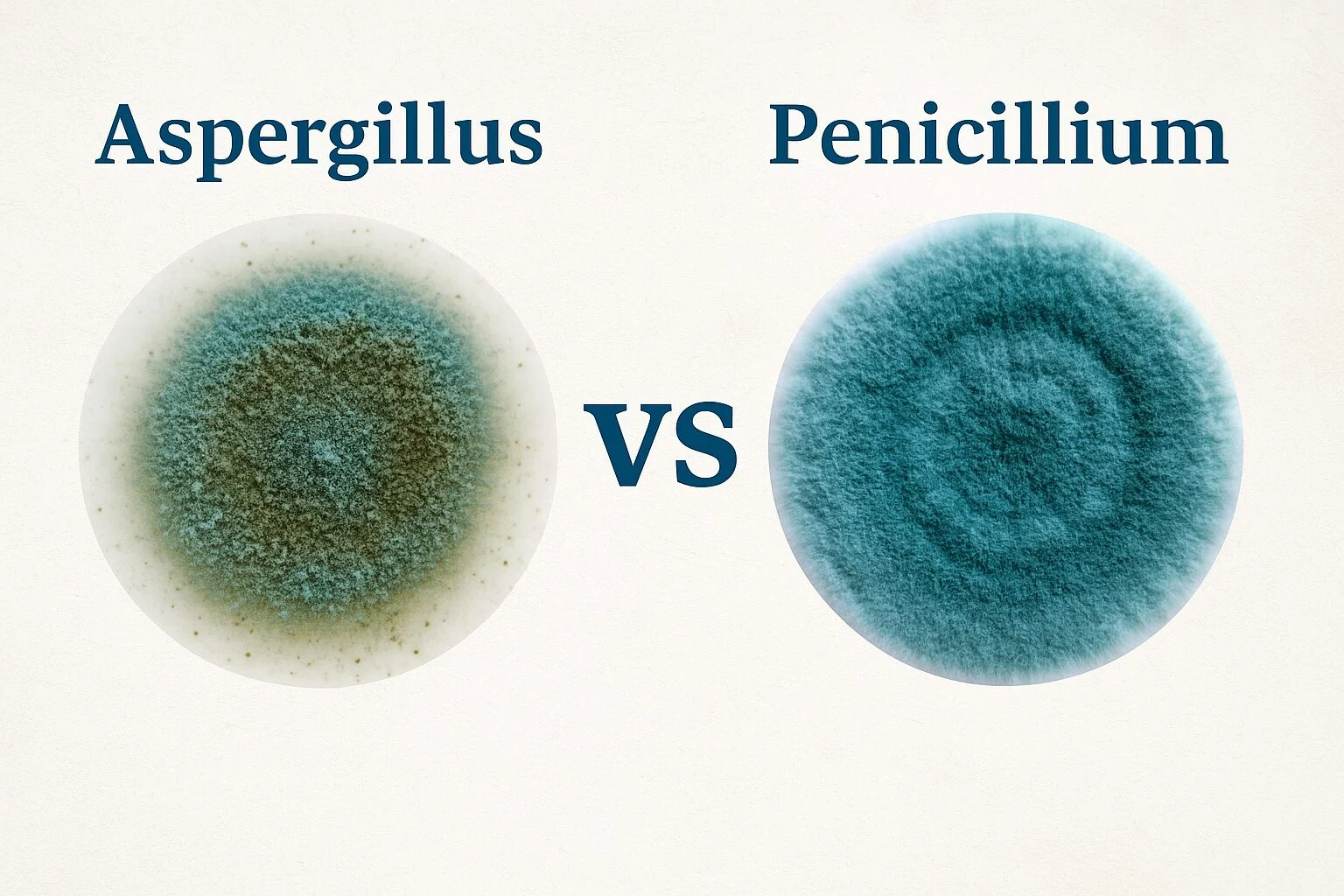
Among the most common indoor molds are Aspergillus and Penicillium, two types that thrive in damp conditions, HVAC systems, basements, and even on everyday household materials. While not every species is dangerous, high levels indoors can trigger allergies, worsen asthma, and in some cases, lead to serious health complications.
If you’ve ever wondered “Is Aspergillus Penicillium dangerous?” or “What are high levels of Aspergillus/Penicillium?”—this guide gives you the answers. By learning how to identify these molds, recognize the symptoms of exposure, and take preventive action, you can safeguard your home and your health.
These two genera of molds are among the most commonly found indoors and outdoors. While many species are harmless in small amounts, some raise concern depending on where they grow, how much, and who’s exposed.
Because their spores look similar under a microscope, many lab reports list them together as “Aspergillus/Penicillium.”
One interesting species: Aspergillus penicillioides, which can grow even in very dry conditions and is often found in house dust and indoor materials with low water content. Wikipedia
Most people breathe in spores daily without serious effects. For the average healthy person, small amounts of Aspergillus / Penicillium mold are often harmless. The danger rises when:
So yes, under the wrong conditions, is Penicillium Aspergillus dangerous, the answer is: potentially, especially for sensitive populations.
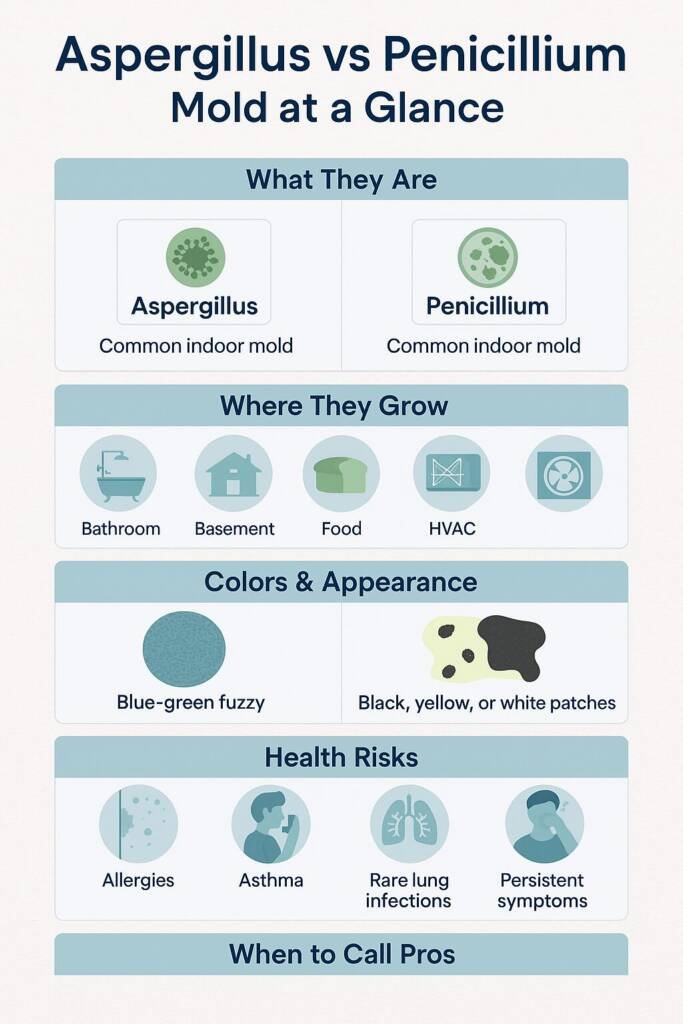
You can’t reliably know mold species just by sight, but some clues and testing can help.
Many people exposed to penicillium aspergillus report symptoms like:
More Severe Manifestations
While these severe effects are rare, they show how exposure levels, species, and individual vulnerability play big roles.
Air quality tests typically measure mold spores per cubic meter. While “safe” levels vary by individual sensitivity, these guidelines apply:
In plain terms: any time indoor mold is visible or consistently triggering symptoms, it’s considered a high level.
Homeowners searching “how to identify Penicillium mold” often look for clear signs. While exact identification requires lab testing, there are clues:
Hidden mold is trickier—it often shows up as a musty odor, unexplained allergy flare-ups, or air test results.
Out of thousands, only a subset is considered potentially harmful (allergen, pathogen, or toxigenic). Some of the most discussed:
So yes — how many types of mold are dangerous is not a fixed number, but dozens of species are flagged in health research.
| Feature | Penicillium | Aspergillus |
| Common Color | Blue-green | Black, yellow, gray, white |
| Speed of Growth | Very fast indoors | Moderate but persistent |
| Typical Locations | Damp drywall, carpets, spoiled food | HVAC systems, insulation, walls |
| Health Effects | Allergies, mycotoxin exposure | Allergies, lung infections (Aspergillosis) |
The most common complaints linked to exposure include:
For sensitive groups (children, elders, people with asthma or weak immunity), symptoms may escalate to chronic sinus infections or fungal lung infections.
Q: Is Penicillium Aspergillus always dangerous?
No — many people live with low levels without harm. Danger arises when levels are high indoors, especially for vulnerable people.
Q: What are high levels of Aspergillus/Penicillium?
Values exceeding outdoor baseline, visible growth, musty odor, persistent symptoms.
Q: How to identify Penicillium mold vs Aspergillus?
Visually, Penicillium is often green-blue. But lab confirmation is needed.
Q: Can mold symptoms mimic illness?
Yes. Many report fatigue, headaches, GI problems, brain fog. One user said mold was behind their chronic fatigue and acne issues. Reddit
Q: Does every mold cause infection?
No. Only certain species (e.g. Aspergillus fumigatus) may cause infections in high-risk people. Mayo Clinic+1
Q: Does insurance cover mold removal?
Often not fully. It depends on whether the cause was sudden (covered) versus long-term exposure (often excluded).
Aspergillus and Penicillium molds aren’t always dangerous—but under certain conditions, they can trigger health issues, especially for sensitive individuals. Recognizing what is Aspergillus Penicillium mold, knowing how to identify Penicillium mold, and understanding the risks of high levels and symptoms are key.
If you suspect mold in your home, don’t wait. Contact FixMold to schedule expert inspection, testing, and Mold remediation before the situation worsens.
For extensive or recurring mold problems, working with experienced professionals who provide Mold Remediation in Coral Springs, FL can ensure accurate assessment, safe removal, and long-term prevention.
