



Water damage is one of the most stressful problems a homeowner can face. Whether caused by a burst pipe, a leaking roof, or heavy storms, it can turn your home upside down in minutes. What makes it even more urgent is that mold can begin growing within 24–48 hours after water exposure.
That’s why taking the right steps immediately is so important. In this guide, you’ll find a practical water damage restoration checklist, tips on how to check for water damage, and when to call for 24 hour emergency water restoration services.
Why the First 24 Hours After Water Damage Matters
The first day after water damage can determine whether you’re looking at a quick cleanup or a full-scale home restoration project.
- Mold Growth: Mold spores thrive in damp environments and can begin to spread within 24 hours.
- Structural Damage: Water weakens wood, drywall, and flooring if not dried quickly.
- Health Risks: Standing water can carry bacteria, toxins, and allergens.
Acting fast helps protect your home, your belongings, and your family’s health
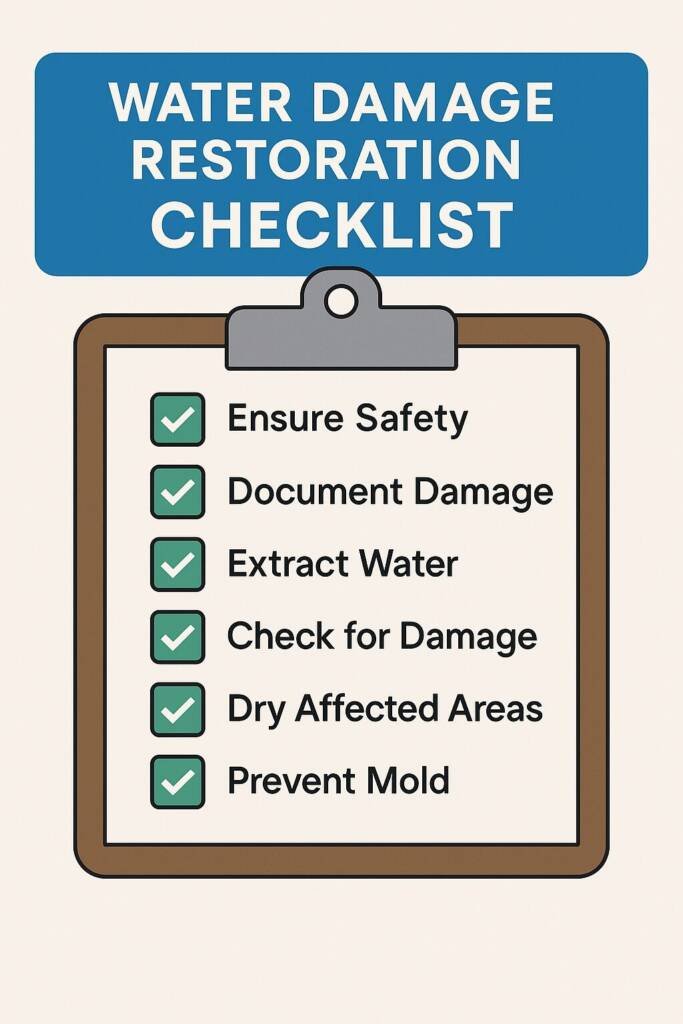
Step-by-Step Water Damage Restoration Checklist
Step 1: Ensure Safety First
Safety must come before cleanup. Entering a water-damaged space without precautions can be dangerous.
- Electric hazards: Shut off power at the breaker if water is near outlets, appliances, or wiring.
- Contaminated water: Avoid direct contact if the water is dark or smells foul. Floodwater may contain sewage, bacteria, or chemicals.
- Protective gear: Wear gloves, boots, and a mask to limit contact with contaminated water and mold spores.
If the situation looks unsafe, don’t risk it—call a 24 hour emergency water restoration team to handle it professionally.
Step 2: Stop the Source of Water
Preventing further intrusion is just as important as cleaning up what’s already there.
- Shut off the main water line if the issue comes from plumbing.
- Place tarps or containers to contain leaks until repairs can be made.
- For roof leaks, temporary coverings can reduce damage until a roofer arrives.
- If flooding is from heavy rain or a storm surge, wait until conditions stabilize before re-entering.
Stopping the source early will make every other step easier.
Step 3: Document the Damage Thoroughly
Insurance claims require proof. Begin documenting before cleanup.
- Take wide and close-up photos of every affected room.
- Capture water levels, soaked furniture, warped flooring, and damaged walls.
- Record video walkthroughs to show the extent of the damage.
- Keep a log of cleanup activities, expenses, and repair receipts.
This documentation not only speeds up insurance claims but also protects you if questions arise later.
Step 4: Remove Standing Water
Standing water is the biggest threat in the first 24 hours. The longer it sits, the more damage it causes.
- Use a wet vacuum, sump pump, or buckets to remove pooled water.
- Mop and towel-dry smaller areas.
- Open doors and windows if weather allows for ventilation.
- For large amounts of water, professional extraction is faster and safer.
Even a few inches of water can seep into walls, flooring, and insulation. Quick removal is essential.
Step 5: Dry and Dehumidify the Area
Even when the water is gone, moisture lingers. This is where mold gains a foothold.
- Run high-powered fans and dehumidifiers to pull moisture from the air.
- Lift carpets and rugs so both surfaces can dry.
- Remove and discard waterlogged insulation, drywall, or ceiling panels.
- Check hidden spaces such as closets, under cabinets, and inside wall cavities.
According to the EPA, materials left wet for more than 48 hours are at high risk for mold growth.
Step 6: How to Check for Water Damage and Mold
Knowing how to check for water damage can prevent surprises later.
- Look for warped wood, bubbling paint, or stains on walls and ceilings.
- Check floors for swelling, buckling, or soft spots.
- Smell for musty odors, which often signal hidden mold.
- Pay attention to health symptoms like coughing or congestion when inside.
If you’re uncertain, moisture meters and thermal imaging cameras can help detect dampness behind walls. Professionals use these tools during inspections.
Step 7: Salvage What You Can
Some items can be saved—others must be discarded.
- Move furniture, electronics, and valuables to a dry area immediately.
- Store important papers and photos in sealed plastic bags.
- Avoid cardboard boxes; use plastic containers instead.
- Toss porous items like mattresses, upholstered furniture, and paper that stayed soaked.
The faster you act, the higher the chance of salvaging belongings.
Step 8: Sanitize and Disinfect
Even if surfaces look dry, bacteria and toxins can remain.
- Use disinfectant cleaners on hard surfaces like tile, wood, and metal.
- Wash clothing and linens with hot water and detergent.
- Discard items that cannot be sanitized safely.
- Pay extra attention to kitchens and bathrooms where sanitation matters most.
This step reduces health risks and ensures mold has fewer chances to return.
Step 9: Call a Professional if Needed
Not every homeowner can manage full restoration alone. When the damage is widespread, the water source is contaminated, or you suspect hidden mold, call a 24 hour emergency water restoration company.
Professionals provide:
- Industrial-strength extraction and drying equipment
- Moisture testing and mold inspections
- Sanitation and odor removal services
- Full restoration planning and insurance assistance
Bringing in experts early often saves money in the long run.
How to Check for Water Damage in Hidden Areas
Sometimes water damage isn’t obvious at first glance. Here are signs to look for:
- Musty Odors: A damp, earthy smell often means hidden mold.
- Discoloration: Brown or yellow stains on ceilings and walls indicate leaks.
- Warping: Buckled floors or swollen baseboards signal moisture damage.
- Peeling Paint: Paint or wallpaper that bubbles or flakes may hide damp drywall.
- Tools: Moisture meters and thermal cameras can reveal problems behind walls.
If you’re unsure, it’s best to hire a restoration professional who can perform a full inspection.
Preventing Mold Growth After Water Damage
Even after cleanup, you need to monitor your home closely for mold. Here’s how:
- Keep humidity levels below 50% with dehumidifiers.
- Run air conditioners or fans to improve circulation.
- Check hidden spaces regularly—under sinks, behind furniture, and in basements.
- Schedule follow-up inspections if you notice musty smells.
FAQs: Water Damage and Mold
Q: How fast does mold grow after water damage?
Mold can begin within 24–48 hours if dampness remains. That’s why acting in the first day is critical.
Q: How do I know if I have hidden water damage?
Signs include musty odors, warped floors, bubbling paint, and unexplained health symptoms indoors. Moisture meters and professional inspections provide certainty.
Q: Is all water damage covered by insurance?
Not always. Sudden incidents like burst pipes are usually covered, but gradual leaks or flooding often aren’t. Check your policy carefully.
Q: Should I throw away everything that got wet?
Not necessarily. Non-porous materials like glass, metal, and some plastics can be cleaned and disinfected. Porous items like mattresses or paper usually cannot be salvaged.
Q: When should I call professionals?
If water covers more than a small area, involves sewage, or you suspect mold, call a 24 hour emergency water restoration company immediately.
Conclusion
Water damage doesn’t wait, and neither should you. The first 24 hours determine whether you can stop mold before it takes hold and whether repairs remain manageable or spiral into major restoration costs.
By following this water damage restoration checklist, you’ll know how to check for water damage, reduce risks, and act quickly to protect your home.
If you’re facing an emergency, FixMold’s expert team provides 24-hour emergency water restoration and mold prevention services. Don’t wait—your home and health deserve fast action.
👉 Contact FixMold today for professional water damage services and mold restoration.